Can D-Ribose Support Energy Levels for ME/CFS and Long COVID?
March 5, 2026
D-RiboseLong COVIDME/CFS
Share:
Disclaimer: The information provided here is for educational purposes only and is not intended as medical advice. It should not be used to diagnose, treat, cure, or prevent any medical condition. Instead, use it as a starting point for discussion with your healthcare provider. Always consult with a qualified healthcare provider before starting any new medication, supplement, device, or making changes to your health regimen.
Months, or even years, after a viral infection, many people find themselves trapped in a body that feels fundamentally out of power. If you are living with Long COVID, Myalgic Encephalomyelitis/Chronic Fatigue Syndrome (ME/CFS), or dysautonomia, you know that this isn't just "being tired." It is a profound, cellular-level energy crisis. Simple tasks—like taking a shower, walking to the mailbox, or even concentrating on a conversation—can trigger debilitating crashes known as post-exertional malaise (PEM). When your body's internal battery is broken, pushing through the fatigue only makes the damage worse, leaving you feeling frustrated, misunderstood, and physically depleted.
In the search for validating, science-backed ways to manage this profound energy deficit, many patients and practitioners are turning their attention to mitochondrial health. The mitochondria are the powerhouses of our cells, responsible for generating the energy that keeps our heart beating, our muscles moving, and our brain functioning. When these powerhouses are damaged by viral infection, chronic inflammation, or immune dysregulation, the body struggles to produce its primary energy currency: adenosine triphosphate (ATP). This is where D-ribose, a naturally occurring simple sugar, comes into the conversation. By acting as a direct structural building block for ATP, D-ribose offers a unique, mechanistic approach to supporting cellular energy recovery. Let's explore how this supplement works at a molecular level, what the clinical research says, and whether it might be a helpful tool in your comprehensive management toolkit.
TL;DR
D-ribose is a simple sugar that forms the structural backbone of ATP, the body's primary energy molecule.
It may help bypass metabolic bottlenecks to support cellular energy recovery in ME/CFS and Long COVID.
Clinical studies suggest a typical dose of 15g daily (divided) may improve energy and overall well-being.
Always take with food to prevent blood sugar drops, and avoid if you have a corn allergy.
What is D-Ribose?
The Molecular Backbone of Energy
To understand how D-ribose works, we first need to look at how a healthy body produces energy at the most fundamental, microscopic level. Every single cell in your body relies on a molecule called adenosine triphosphate (ATP) to function. ATP is universally described as the "energy currency" of the cell. Whenever your heart beats, your muscles contract, your lungs expand, or your brain fires a neuron, it "spends" ATP. In a healthy system, the mitochondria constantly produce and recycle ATP to meet the body's physiological demands. The ATP molecule itself is composed of three parts: an adenine base, three phosphate groups, and a central sugar backbone.
That central sugar backbone is D-ribose (often just called ribose). D-ribose is a naturally occurring, five-carbon simple sugar (an aldopentose). Unlike the sugar you put in your coffee (sucrose) or the sugar that primarily spikes your blood glucose (glucose), D-ribose is not primarily burned as fuel for calories. Instead, it is a fundamental structural component of biology. It forms the literal physical scaffolding of essential molecules, including your DNA, RNA, acetyl coenzyme A, and most importantly, ATP. Without an adequate supply of intracellular D-ribose, the body physically cannot construct the ATP molecule, no matter how much food you eat or oxygen you breathe.
Furthermore, because D-ribose is structurally distinct from traditional dietary sugars, it is processed differently by the body. While glucose requires insulin to enter most cells and is rapidly burned in glycolysis, D-ribose bypasses these traditional metabolic pathways. It does not raise blood sugar; in fact, it often has the opposite effect, slightly lowering blood glucose levels while directly entering the cellular pathways responsible for nucleotide synthesis.
The Pentose Phosphate Pathway Bottleneck
Under normal, healthy conditions, your body manufactures its own D-ribose from glucose through a parallel metabolic process called the Pentose Phosphate Pathway (PPP). However, the oxidative phase of this pathway is notoriously slow and highly regulated. It is strictly controlled by a rate-limiting enzyme known as glucose-6-phosphate dehydrogenase (G-6-PDH). In tissues that require massive, continuous amounts of energy—specifically the heart muscle (myocardium) and skeletal muscles—the natural genetic expression of this G-6-PDH enzyme is actually very low.
When these high-demand tissues experience intense metabolic stress, severe oxygen deprivation (ischemia), or viral damage, they burn through their local ATP reserves incredibly rapidly. Because the Pentose Phosphate Pathway is so slow and restricted by the lack of G-6-PDH, the cells cannot push glucose through the pathway fast enough to manufacture new D-ribose. This creates a severe biological bottleneck. The tissues are left starved of energy, and natural recovery of the cellular ATP pools can take days, leading to profound, lingering exhaustion and muscle heaviness.
How Chronic Illness Impacts Cellular Energy
Viral Disruption and Mitochondrial Damage
In complex chronic conditions like Long COVID and ME/CFS, the body's energy production system is deeply compromised. Emerging research indicates that during a SARS-CoV-2 infection, the virus can directly hijack and alter mitochondrial physiology. It triggers a massive increase in reactive oxygen species (ROS) and a cytokine storm, which disrupts oxidative phosphorylation—the primary, highly efficient process mitochondria use to manufacture ATP. According to a 2025 narrative review in MDPI, this sustained mitochondrial dysfunction forces cells to abandon oxidative phosphorylation and rely on less efficient energy pathways, like glycolysis.
This metabolic shift is disastrous for cellular energy reserves. Glycolysis produces only a fraction of the ATP that healthy mitochondria can generate. Magnetic Resonance Spectroscopy (MRS) studies have revealed prolonged phosphocreatine recovery and significantly reduced ATP synthesis in Long COVID patients. Furthermore, recent 2024 research published in PubMed has identified structural abnormalities in the mitochondria of Long COVID patients, including swollen mitochondria with disrupted cristae and impaired mitochondrial recycling. Clinically, this cellular energy deficit manifests as profound, unyielding fatigue, brain fog, and severe exercise intolerance.
The Vicious Cycle of PEM and Dysautonomia
This mitochondrial impairment creates a devastating vicious cycle. When patients with ME/CFS or Long COVID exert themselves—even mildly, such as walking up a flight of stairs or taking a shower—they rapidly deplete their already-low ATP pools. Because their metabolic pathways are damaged and the Pentose Phosphate Pathway is inherently slow, it takes an abnormally long time to regenerate that spent energy. This profound delay in cellular energy recovery is a core driver of the severe crashes known as post-exertional malaise (PEM). The body simply cannot keep up with the energetic demands of basic living.
Furthermore, this energy crisis heavily impacts the autonomic nervous system. In conditions like Postural Orthostatic Tachycardia Syndrome (POTS) and dysautonomia, the heart must work overtime (tachycardia) to compensate for poor blood flow, hypoperfusion, and blood pooling in the lower extremities. This constant cardiovascular overcompensation places immense metabolic stress on the heart muscle. When the myocardium is starved of ATP, it struggles to maintain proper circulatory efficiency and diastolic relaxation, exacerbating symptoms like dizziness, shortness of breath, palpitations, and profound exhaustion.
D-Ribose: Supporting ATP Production and Recovery
Bypassing the Metabolic Bottleneck
When you take supplemental D-ribose, you are providing your body with a direct metabolic "bypass." Because the supplement is already in its final structural form, it completely circumvents the slow, rate-limiting G-6-PDH enzyme of the Pentose Phosphate Pathway. It readily crosses cell membranes and is immediately phosphorylated by the intracellular enzyme ribokinase directly into a molecule called Ribose-5-Phosphate (R-5-P). This immediate conversion is a critical step in restoring cellular bioenergetics.
Once R-5-P is formed, it is converted into another crucial molecule called 5-phosphoribosyl-1-pyrophosphate (PRPP) via the enzyme PRPP synthetase. PRPP is the absolute prerequisite and rate-limiting substrate for the synthesis of all purine and pyrimidine nucleotides. By massively increasing the intracellular pool of PRPP, D-ribose drives ATP synthesis through the "salvage pathway"—a highly efficient, rapid route that allows cells to recycle ATP breakdown products (like hypoxanthine and adenine) back into usable energy. By providing the direct raw material, D-ribose rapidly jumpstarts ATP production in energy-starved tissues that would otherwise take days to recover naturally.
Supporting Cardiovascular and Muscle Function
For patients with dysautonomia and POTS, supporting cardiac muscle energy metabolism is absolutely critical. The heart relies heavily on steady, uninterrupted ATP production to maintain its ejection fraction and diastolic function (the ability of the heart muscle to properly relax and fill with blood between beats). By rapidly replenishing myocardial energy stores via the PRPP surge, D-ribose may help the heart pump more efficiently, maintain better diastolic compliance, and better tolerate the low blood flow states characteristic of orthostatic intolerance.
In skeletal muscle, D-ribose supports energy repletion after physical activity or daily exertion. While it cannot prevent PEM on its own—as PEM involves complex immune and neuroinflammatory cascades—providing the structural backbone for ATP may help reduce the duration of muscle fatigue and soreness. By accelerating the recovery of cellular energy pools that are depleted during even minor exertion, D-ribose helps the muscles clear local lactic acid buildup and restore aerobic respiration more quickly.
Synergy with Other Mitochondrial Therapeutics
In modern clinical practice, D-ribose is rarely used as a standalone intervention. It is most effective when utilized as part of a broader, comprehensive "mitochondrial reset" protocol. It is frequently combined with Coenzyme Q10 (CoQ10), which acts as a crucial antioxidant and electron carrier within the mitochondrial electron transport chain. While CoQ10 helps the mitochondria run more efficiently and combats oxidative stress, D-ribose provides the actual structural material needed to build the ATP molecule.
Furthermore, D-ribose is highly synergistic with NAD+ precursors (like nicotinamide riboside) and L-Carnitine. L-Carnitine helps transport fatty acids into the mitochondria to be burned for fuel, while NAD+ is essential for driving the metabolic reactions that produce ATP. When combined, these supplements address multiple angles of cellular energy production: fuel transport, electron flow, and structural synthesis, offering a robust approach to combating post-viral fatigue.

Symptoms D-Ribose May Help Manage
Targeting the Cellular Energy Deficit
While D-ribose is not a cure for complex chronic illnesses, its unique ability to support cellular bioenergetics and bypass metabolic bottlenecks may help manage several debilitating symptoms associated with Long COVID, ME/CFS, and dysautonomia. Here is a breakdown of the specific symptoms it targets and the mechanisms behind its potential efficacy:
Profound, Unyielding Fatigue: By directly supplying the structural backbone for ATP, D-ribose helps replenish depleted cellular energy pools. This addresses fatigue at the molecular level, potentially reducing the baseline severity of daily exhaustion and helping patients maintain a slightly higher baseline of functional energy.
Delayed Muscle Recovery and Soreness: In patients with ME/CFS, even mild exertion can lead to days of muscle pain and heaviness. By accelerating the purine salvage pathway, D-ribose helps skeletal muscles rebuild ATP faster after exertion, which may help mitigate prolonged muscle soreness, clear lactic acid, and reduce the duration of physical crashes.
Cardiovascular Strain (Dysautonomia and POTS): The constant tachycardia seen in POTS places immense metabolic stress on the heart. D-ribose supports cardiac muscle energy metabolism, helping the heart maintain efficient pumping, better diastolic relaxation, and improved tolerance to orthostatic stress and hypoperfusion.
Brain Fog and Cognitive Dysfunction: The brain is a highly energy-demanding organ, consuming roughly 20% of the body's total ATP. When neuroinflammation disrupts cerebral blood flow, brain cells struggle to maintain energy. By supporting systemic mitochondrial function and increasing ATP availability, D-ribose may help improve cognitive clarity, enhance focus, and reduce the mental exhaustion associated with neuroinflammation and post-viral syndromes.
Exercise Intolerance: While patients must still practice strict pacing and avoid pushing through fatigue, supporting ATP synthesis may slightly increase the "ischemic threshold" of tissues. This means tissues can tolerate low-oxygen or metabolically stressful states slightly longer, potentially improving tolerance for basic daily activities like showering or walking around the house.
Practical Considerations: Forms, Dosing, and Absorption
Bioavailability and Supplement Forms
D-ribose is highly bioavailable, making it an efficient supplement for clinical use. Pharmacokinetic evaluations show an absorption rate of nearly 87.8% to 99.8% in the gastrointestinal tract, with a minimal first-pass effect through the liver. This means nearly all of the ingested dose makes it into systemic circulation. Once ingested, it acts remarkably fast, reaching peak blood plasma concentrations (Tmax) in just 18 to 30 minutes. Because it is rapidly taken up by high-energy-demand tissues like the heart and skeletal muscles, very little (only about 4% to 7%) is excreted unused in the urine.
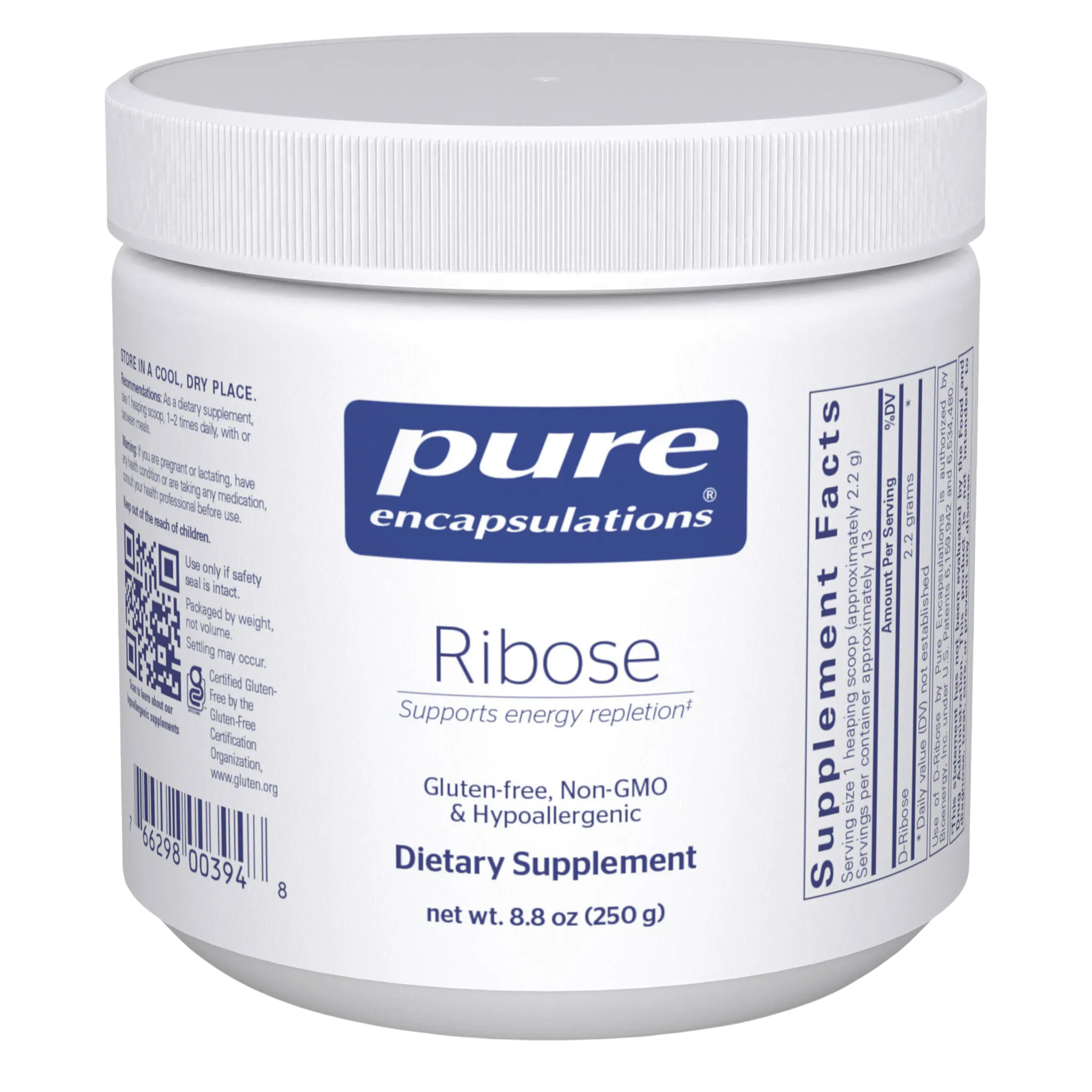
The most optimal and practical form of D-ribose is pure powder. Because the clinically effective doses are relatively high (often 5 to 15 grams per day), powder is much easier and more cost-effective to consume than swallowing multiple capsules. A standard capsule usually holds only 500mg, meaning a patient would need to swallow up to 30 capsules a day to reach clinical levels. The powder is highly water-soluble, resists settling, and has a naturally mild, sweet taste, making it easy to mix into water, herbal tea, or smoothies.
Dosing Strategies and Timing
For chronic fatigue, ME/CFS, and Long COVID support, clinical trials and practitioner guidelines typically utilize a dosage of 15 grams per day, divided into three 5-gram doses (morning, afternoon, and evening). Dividing the dose is absolutely crucial; taking 15 grams all at once can cause gastrointestinal distress, diarrhea, and rapid blood sugar fluctuations. After a few weeks of tissue saturation, or once energy levels stabilize, some patients reduce to a maintenance dose of 5 grams once or twice daily.
It is highly recommended to take D-ribose with food or a caloric beverage. Although it is a sugar, D-ribose ironically stimulates an insulin response that lowers blood glucose levels. Taking high doses on an empty stomach can trigger reactive hypoglycemia, leading to dizziness, nausea, and an adrenaline spike. For patients with hyperadrenergic POTS or MCAS, an adrenaline spike can trigger severe tachycardia and symptom flares, making it essential to buffer the supplement with a meal.
Contraindications and Interactions
While D-ribose is generally well-tolerated, its blood-sugar-lowering effect requires significant caution. Diabetics or individuals taking blood-sugar-lowering medications (like insulin, Metformin, or sulfonylureas) should absolutely avoid D-ribose unless under strict endocrinological supervision, as the combination can cause dangerous, severe hypoglycemia. Because supplemental D-ribose is typically manufactured from corn, it should also be avoided by anyone with corn allergies or insensitivities. Additionally, patients taking beta-blockers, ACE inhibitors, or blood thinners should consult their healthcare provider, as D-ribose may interact with these cardiovascular medications. It is also advised to discontinue D-ribose supplementation at least two weeks prior to any scheduled surgery to ensure stable blood glucose control.

Follow the Science: D-Ribose Clinical Research
The Teitelbaum ME/CFS and Fibromyalgia Trials
The foundational clinical evidence for D-ribose in chronic fatigue conditions comes from research led by Dr. Jacob Teitelbaum. In a landmark 2006 open-label pilot study published in the Journal of Alternative and Complementary Medicine, 41 patients with ME/CFS and/or fibromyalgia were given 15 grams of D-ribose daily. After approximately three weeks, 66% of the patients experienced significant clinical improvements. They reported an average 45% increase in energy and a 30% improvement in overall well-being, alongside statistically significant improvements in sleep quality, mental clarity, and pain intensity.
Following the success of the pilot study, a larger 2012 multicenter study evaluated 257 patients across 53 US clinics using the same 15-gram daily protocol. The results mirrored the pilot study, showing a 61.3% average increase in energy, a 37% increase in overall well-being, and a 30% improvement in cognitive function. While these studies are highly promising and form the basis for many functional medicine protocols, it is important to note their clinical limitations: they were open-label and lacked a placebo control group, meaning the placebo effect—which is often high in subjective symptom reporting—cannot be entirely ruled out.
Recent Perspectives on Long COVID and Real-World Data
As the medical community seeks answers for Long COVID, researchers are drawing heavily on ME/CFS data due to the shared pathophysiology of mitochondrial dysfunction. A 2024 review of Long COVID clinical practice guidelines notes that while interventions like D-ribose, NAC, and CoQ10 have strong mechanistic potential for addressing post-viral fatigue, they are still considered "investigational" and require large-scale, randomized controlled trials to become standard, universally recommended primary treatments.
Real-world patient data provides a nuanced, realistic picture of its efficacy. The 2025 Open Medicine Foundation TREATME Survey, which evaluated treatments across nearly 4,000 ME/CFS and Long COVID patients, found that only about 10% of patients using D-ribose reported moderate or "much better" improvement in core symptoms. This underscores a critical clinical reality: D-ribose is not a magic bullet or a standalone cure. It is a targeted metabolic substrate that works best for specific subsets of patients, particularly when combined with other mitochondrial supports, gut-brain reset protocols, and strict pacing strategies.
The Path Forward
Validating Your Experience
Living with a complex chronic condition like Long COVID, ME/CFS, or dysautonomia is an exhausting, often isolating daily reality. When your cells literally lack the energy to function, the fatigue you experience is profound, physiological, and entirely valid. It is not in your head, and it is not a lack of willpower. While there are no quick fixes or miracle cures for mitochondrial dysfunction, targeted nutritional support offers a mechanistic, science-backed way to help your body rebuild its cellular energy reserves.
Building a Comprehensive Strategy
D-ribose provides a direct, structural building block for ATP, helping to bypass damaged metabolic pathways and support energy repletion in your heart and skeletal muscles. However, it is most effective when viewed as just one piece of a comprehensive management puzzle. True recovery and symptom management require a holistic approach—working alongside radical resting, strict symptom tracking, nervous system regulation, and synergistic supplements like CoQ10 and Ketotifen for mast cell support. Furthermore, communicating these needs to your support system is vital; resources like our Caregiver Corner can help you explain the physiological reality of your condition to loved ones.
Consulting Your Care Team
Always consult with your healthcare provider or a specialist familiar with complex chronic illness before starting any new supplement, especially to ensure it won't interact with your current medications or cause unwanted blood sugar fluctuations. With careful management, targeted support, and a compassionate approach to your body's limits, it is possible to improve your cellular resilience and enhance your overall quality of life.