Can Boswellia AKBA Help Manage Inflammation and Joint Pain in Long COVID and MCAS?
March 6, 2026
Boswellia AKBALong COVIDMCAS
Share:
Disclaimer: The information provided here is for educational purposes only and is not intended as medical advice. It should not be used to diagnose, treat, cure, or prevent any medical condition. Instead, use it as a starting point for discussion with your healthcare provider. Always consult with a qualified healthcare provider before starting any new medication, supplement, device, or making changes to your health regimen.
Months or even years after a mild SARS-CoV-2 infection, many individuals find themselves battling a relentless array of symptoms. From debilitating joint pain and severe brain fog to unpredictable gastrointestinal distress, the multisystemic nature of Long COVID can feel entirely overwhelming. For many, these symptoms are driven by an immune system that has become stuck in a hyperactive state, constantly releasing inflammatory chemicals that damage tissues and drain cellular energy. When traditional pain relievers and anti-inflammatories fall short, patients and functional medicine practitioners often look toward targeted botanical interventions to help restore immune balance.
One such intervention is Boswellia AKBA, a highly concentrated extract derived from traditional Indian frankincense. Known for its profound ability to modulate specific inflammatory pathways—particularly those involving overactive mast cells and cartilage-degrading enzymes—Boswellia has emerged as a compelling tool for managing complex chronic illnesses. But how exactly does this ancient resin work at a cellular level, and what makes the AKBA compound so unique? In this comprehensive guide, we will explore the science behind Boswellia AKBA, its role in managing Long COVID and mast cell activation syndrome (MCAS), and how it supports joint, gastrointestinal, and cellular health.
TL;DR
Boswellia AKBA is a potent botanical extract that supports immune balance by targeting the 5-LOX inflammatory pathway.
It may help manage Long COVID and MCAS symptoms, including joint pain, brain fog, and GI distress.
AKBA promotes tissue repair and protects connective tissues from enzymatic degradation.
For optimal absorption, choose highly concentrated forms like 5-LOXIN and take with healthy fats.
What is Boswellia AKBA?
The Origins of Indian Frankincense
Boswellia serrata, commonly known as Indian frankincense, is a branching tree native to the dry, mountainous regions of India, Northern Africa, and the Middle East. For thousands of years, the aromatic gum resin extracted from the bark of this tree has been a cornerstone of Ayurvedic medicine, utilized primarily for its potent anti-inflammatory and analgesic properties. In a healthy body, the natural compounds found within this resin interact with the immune system to help regulate the body's response to physical stress and injury. Modern pharmacological research has isolated the active components of this resin, identifying a group of pentacyclic triterpenes known as boswellic acids as the primary drivers of its therapeutic effects.
While the raw resin contains a complex mixture of these acids, scientific analysis has revealed that they are not all created equal. The biological activity of Boswellia is heavily dependent on the specific molecular structure of these compounds. Researchers have identified several distinct boswellic acids, including alpha-boswellic acid, beta-boswellic acid, and their acetylated derivatives. However, one specific molecule stands out for its profound pharmacological potency and unique mechanism of action, making it the focal point of modern clinical applications for chronic inflammatory conditions.
The Power of AKBA
The most biologically active and powerful compound within Boswellia resin is 3-O-acetyl-11-keto-beta-boswellic acid, commonly abbreviated as AKBA. At a molecular level, AKBA possesses a unique structural configuration—specifically an 11-keto group and a hydrophilic carboxyl group at the C4 position—that allows it to interact with human cellular enzymes in ways that other boswellic acids cannot. In a healthy physiological state, AKBA acts as a targeted modulator of the immune system, specifically regulating the arachidonic acid cascade. This cascade is a fundamental biological pathway where cell membrane lipids are converted into various signaling molecules that dictate the initiation and resolution of inflammation.
AKBA's primary mechanism of action is its ability to directly interact with and inhibit the 5-lipoxygenase (5-LOX) enzyme. The 5-LOX enzyme is responsible for synthesizing leukotrienes, which are highly potent chemical messengers that recruit white blood cells and trigger localized inflammation, tissue swelling, and pain. By modulating this enzyme, AKBA helps ensure that the immune system does not overreact to minor triggers. Furthermore, AKBA supports cellular health by maintaining healthy cell signaling and regulating the cell cycle, ensuring that damaged cells are properly cleared and healthy tissues are preserved.
The 5-LOXIN Advantage
While AKBA is incredibly potent, it naturally occurs in very small quantities within raw Boswellia resin—typically making up only 1% to 3% of standard extracts. To achieve therapeutic levels of AKBA using standard Boswellia, individuals would need to consume massive, often impractical doses. To solve this problem, researchers developed 5-LOXIN®, a patent-pending, clinically studied botanical extract that is standardized to contain a minimum of 30% AKBA. This represents roughly ten times the amount of AKBA found in typical commercial Boswellia supplements.
The development of 5-LOXIN represents a significant leap forward in targeted nutritional supplementation. By providing a highly concentrated dose of this specific pentacyclic triterpene, 5-LOXIN ensures that a biologically relevant amount of the active compound survives the digestive process and reaches systemic circulation. This concentrated delivery system allows AKBA to effectively reach target tissues—such as synovial joint fluid, the gastrointestinal lining, and the respiratory tract—where it can exert its immune-modulating and tissue-protecting effects. This makes it a highly valuable tool for individuals dealing with the systemic inflammation characteristic of complex chronic illnesses.
How Long COVID and MCAS Impact Inflammation and Connective Tissue
The Mast Cell Activation Cascade
To understand why Boswellia AKBA is so relevant for chronic illness, we must first examine how conditions like Long COVID, myalgic encephalomyelitis/chronic fatigue syndrome (ME/CFS), and dysautonomia impact the body's inflammatory pathways. A central feature of these conditions is the dysregulation of the innate immune system, particularly involving mast cells. Mast cells are specialized white blood cells stationed at the boundaries between the body and the external environment—such as the skin, respiratory tract, and gastrointestinal lining. They act as the body's first line of defense, storing over 200 chemical mediators in tiny granules.
In a healthy response, mast cells release these mediators (a process called degranulation) to fight off pathogens or heal injuries. However, in conditions like mast cell activation syndrome (MCAS), these cells become hyper-reactive and unstable. Following a viral infection like SARS-CoV-2, the immune system may fail to reset, leaving mast cells in a state of chronic activation. They continuously leak inflammatory mediators—including histamine, prostaglandins, and leukotrienes—into the bloodstream. This constant chemical assault triggers widespread systemic inflammation, leading to the debilitating brain fog, profound fatigue, and unpredictable allergic-type reactions that patients experience daily.
Leukotrienes and Systemic Inflammation
Among the many chemicals released by hyperactive mast cells, leukotrienes are particularly destructive in the context of Long COVID and ME/CFS. Leukotrienes are synthesized from arachidonic acid via the 5-lipoxygenase (5-LOX) enzyme pathway. When mast cells degranulate, they produce massive quantities of leukotriene B4 (LTB4) and cysteinyl leukotrienes. These molecules are incredibly potent drivers of inflammation; they cause smooth muscle contraction, increase vascular permeability (leading to tissue swelling and fluid retention), and aggressively recruit other immune cells to the area, creating a self-perpetuating cycle of inflammation.
In the respiratory tract, excess leukotrienes cause bronchoconstriction and airway hyperreactivity, contributing to the persistent shortness of breath and "air hunger" often reported by Long COVID patients. In the gastrointestinal tract, these inflammatory mediators disrupt the delicate epithelial lining, contributing to increased intestinal permeability (leaky gut) and severe digestive distress. Furthermore, the systemic circulation of leukotrienes contributes to neuroinflammation, as these molecules can compromise the blood-brain barrier and activate microglial cells in the brain, driving the severe cognitive impairment and neuropathic pain associated with these conditions.
The Role of Matrix Metalloproteinases (MMPs)
Chronic inflammation also heavily impacts the structural integrity of the body's connective tissues. When the immune system is locked in a hyperactive state, it upregulates the production of Matrix Metalloproteinases (MMPs). MMPs are a family of enzymes responsible for breaking down the extracellular matrix and connective tissues. While they are necessary for normal tissue remodeling and wound healing, the chronic cytokine storms seen in Long COVID and autoimmune dysregulation cause MMPs to be vastly overexpressed.
Specifically, enzymes like MMP-3 (stromelysin-1) and MMP-9 (gelatinase) begin to aggressively degrade the collagen, elastin, and proteoglycans that make up articular cartilage and blood vessel walls. This unchecked enzymatic activity is a primary driver of the severe, migrating joint pain and musculoskeletal aching that plagues many patients with ME/CFS and Long COVID. Additionally, the degradation of connective tissue by MMPs can exacerbate vascular instability, worsening the symptoms of dysautonomia and postural orthostatic tachycardia syndrome (POTS) by impairing the blood vessels' ability to constrict properly upon standing.
Boswellia AKBA: Supporting Immune Balance and Joint Health
Allosteric Inhibition of the 5-LOX Enzyme
Boswellia AKBA offers a highly targeted mechanism to interrupt the vicious cycles of inflammation driven by MCAS and Long COVID. Its primary and most well-documented mechanism of action is the direct inhibition of the 5-lipoxygenase (5-LOX) enzyme. Unlike traditional non-steroidal anti-inflammatory drugs (NSAIDs) that primarily target the cyclooxygenase (COX) pathway, AKBA specifically shuts down the 5-LOX pathway, thereby halting the production of pro-inflammatory leukotrienes at their source. This makes it an invaluable tool for managing the leukotriene storms associated with mast cell degranulation.
What makes AKBA truly remarkable is how it inhibits this enzyme. According to breakthrough structural biology studies, AKBA acts as an allosteric, non-redox inhibitor. This means it does not compete with arachidonic acid at the enzyme's active site, nor does it act as a simple antioxidant. Instead, AKBA binds to a specific groove between the enzyme's domains (interacting with amino acid residues like Arg101 and Thr137). This binding induces a structural shift in the enzyme, physically locking the active cavity and preventing the synthesis of leukotrienes. This highly specific allosteric modulation allows AKBA to exert profound anti-inflammatory effects without disrupting other essential cellular processes.
Switching to Pro-Resolving Mediators
Recent pharmacological research has uncovered an even more fascinating aspect of AKBA's interaction with the 5-LOX enzyme. When AKBA binds to its allosteric site, it doesn't just turn the enzyme off; it acts as a molecular switch. Studies indicate that AKBA alters the enzyme's regiospecificity, forcing it to act like a 12/15-lipoxygenase. This fundamental shift stops the production of inflammatory leukotrienes and instead stimulates the production of Specialized Pro-resolving Mediators (SPMs).
SPMs are crucial lipid mediators that actively signal the immune system to resolve inflammation, clear away cellular debris, and initiate tissue repair. In chronic illnesses like Long COVID, the body often struggles to transition from the active inflammatory phase to the resolution phase. By promoting the generation of SPMs, AKBA helps guide the immune system back toward a state of homeostasis, actively assisting in the resolution of chronic tissue inflammation rather than merely suppressing symptoms.
Suppressing NF-κB and Cytokine Storms
Beyond its effects on the 5-LOX pathway, Boswellia AKBA is a potent modulator of broader immune signaling. It has been shown to significantly suppress the activation of the Nuclear Factor kappa B (NF-κB) pathway. NF-κB is a master transcription factor that controls the expression of numerous inflammatory genes. In Long COVID and ME/CFS, this pathway is often chronically activated, leading to the continuous release of severe pro-inflammatory cytokines such as Tumor Necrosis Factor-alpha (TNF-α), Interleukin-1 beta (IL-1β), and Interleukin-6 (IL-6).
AKBA prevents the degradation of IκBα, an inhibitory protein that keeps NF-κB locked in the cytoplasm. By preventing NF-κB from entering the cell nucleus, AKBA directly halts the transcription and release of these damaging cytokines. This broad-spectrum cytokine suppression is critical for managing the systemic inflammation that drives the profound fatigue, post-exertional malaise (PEM), and neuroinflammation seen in complex chronic conditions. Furthermore, by suppressing NF-κB, AKBA also downregulates the production of Matrix Metalloproteinases (MMPs), specifically MMP-3 and MMP-9, thereby protecting joint cartilage and vascular connective tissue from enzymatic degradation.
Protecting the Gastrointestinal Barrier
The gastrointestinal tract is heavily impacted by chronic inflammation, often leading to increased intestinal permeability and severe gut dysfunction. Boswellia AKBA provides targeted support for the GI tract by maintaining healthy immune activity in the epithelial lining. The leukotrienes produced by the 5-LOX pathway are major drivers of mucosal inflammation and tissue damage in the gut, and by inhibiting 5-LOX, AKBA drastically reduces this localized inflammation.
Moreover, in vitro studies using human intestinal cell models have demonstrated that AKBA helps preserve the integrity of tight junction proteins, such as zonula occludens-1 (ZO-1) and occludin. These proteins are the "glue" that holds the intestinal barrier together. By protecting these tight junctions from inflammatory damage, AKBA helps prevent the leakage of undigested food particles and bacterial endotoxins into the bloodstream, a process that frequently triggers systemic immune reactions and exacerbates MCAS symptoms. This dual action of reducing mucosal inflammation and strengthening the physical barrier makes AKBA a powerful ally for gastrointestinal health.

Symptoms Boswellia AKBA May Help Manage
Targeting Multisystemic Symptoms
Because Boswellia AKBA modulates fundamental inflammatory pathways at the cellular level, it can help manage a wide array of symptoms associated with Long COVID, MCAS, and dysautonomia. By targeting the root causes of leukotriene overproduction and connective tissue degradation, patients may experience relief across multiple organ systems.
Joint Pain and Stiffness: By potently inhibiting the cartilage-degrading enzyme MMP-3 and reducing localized leukotriene production, AKBA helps protect articular cartilage and significantly improves joint comfort and mobility, addressing the severe musculoskeletal aching common in ME/CFS and Long COVID.
Gastrointestinal Distress: AKBA suppresses mucosal inflammation and protects the tight junctions of the intestinal epithelial lining, helping to manage symptoms of leaky gut, abdominal pain, and unpredictable bowel habits associated with chronic immune dysregulation.
Brain Fog and Neuroinflammation: By suppressing the NF-κB pathway and reducing the systemic circulation of pro-inflammatory cytokines (like TNF-α and IL-6), AKBA helps lower the neuroinflammatory burden that drives cognitive impairment, memory issues, and neuropathic pain.
Allergic-Type MCAS Reactions: As a targeted 5-LOX inhibitor, AKBA shuts down the production of leukotrienes—one of the primary inflammatory mediators released during mast cell degranulation—helping to stabilize hyperactive mast cells and reduce the severity of MCAS flare-ups.
Respiratory Discomfort: Leukotrienes are known to cause bronchoconstriction and airway hyperreactivity. By blocking their synthesis, AKBA may help alleviate the persistent shortness of breath, chest tightness, and "air hunger" frequently reported by post-viral patients.
Connective Tissue and Vascular Instability: By downregulating the expression of matrix metalloproteinases (MMPs), AKBA helps preserve the structural integrity of collagen and elastin in blood vessels, potentially supporting vascular tone in patients managing dysautonomia and POTS.
Practical Considerations: Forms, Dosing, and Absorption
Overcoming the Bioavailability Barrier
When considering Boswellia supplementation, understanding bioavailability is absolutely critical. In its natural state, the AKBA molecule is highly lipophilic (fat-soluble) and exhibits very poor solubility in gastrointestinal fluids. Furthermore, standard Boswellia extracts undergo extensive first-pass metabolism in the liver, and the small amount of AKBA that does reach the bloodstream binds heavily to serum albumin proteins. This means that with standard Boswellia supplements, very little "free" active compound actually reaches the target tissues (like joints or the gut lining) to exert a therapeutic effect, often necessitating massive doses of up to 1,500 mg per day.
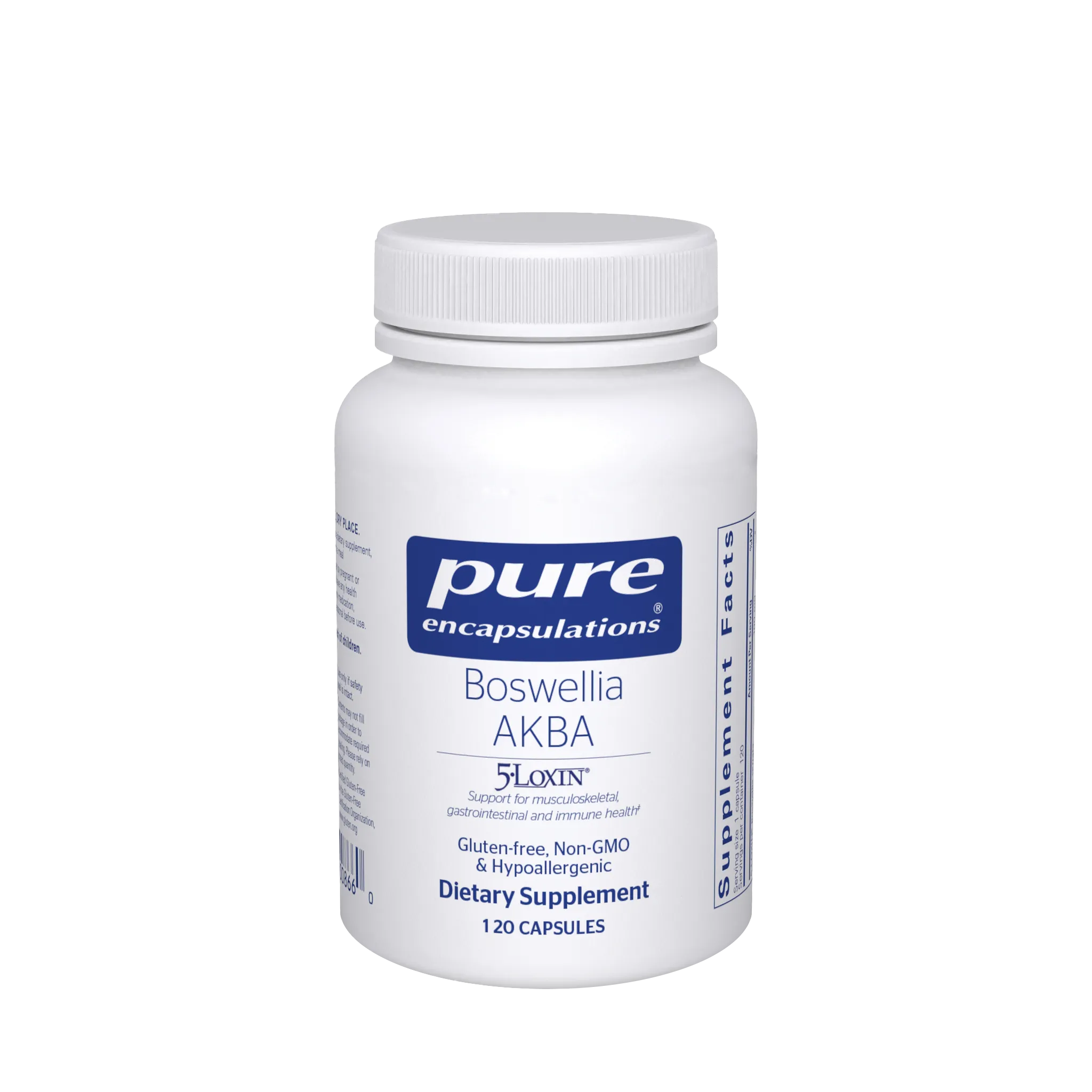
The 5-LOXIN® formulation used in Pure Encapsulations' Boswellia AKBA overcomes this barrier through profound concentration enrichment. By standardizing the extract to contain 30% AKBA—roughly ten times the concentration found in standard extracts—it ensures that a biologically significant payload survives digestion and liver metabolism. This high concentration allows the supplement to achieve therapeutic plasma levels of AKBA at much lower, more manageable doses, making it a highly efficient and effective intervention for chronic inflammation.
Optimal Dosing and Timing
Because of the concentrated nature of 5-LOXIN, the clinically effective dose is significantly lower than that of traditional Boswellia. The suggested use for Boswellia AKBA is typically 1 capsule (100 mg of 5-LOXIN, yielding 30 mg of AKBA) daily, though some clinical trials have utilized up to 250 mg daily for severe joint degradation. It is essential to work with a healthcare provider to determine the optimal dosage for your specific symptom severity and overall protocol.
Timing and administration play a crucial role in maximizing the absorption of this supplement. Because boswellic acids are highly fat-soluble, pharmacokinetic studies demonstrate that Boswellia is poorly absorbed, though it may offer small benefits for memory. Patients are strongly advised to take their daily capsule with foods rich in healthy fats, such as avocados, olive oil, nuts, or fatty fish, to ensure maximum systemic delivery. Additionally, because the elimination half-life of AKBA is approximately six hours, some practitioners may recommend splitting higher doses throughout the day to maintain steady plasma concentrations.
Safety and Potential Interactions
Boswellia serrata is generally considered very safe and well-tolerated, with a much more favorable side-effect profile than traditional NSAIDs or corticosteroids, which can cause severe gastrointestinal bleeding and immune suppression. In extensive clinical trials, the safety parameters (including blood, urine, and liver enzymes) of patients taking 5-LOXIN remained largely unchanged compared to placebo groups. The most commonly reported side effects are rare and mild, typically limited to minor gastrointestinal upset or acid reflux.
However, there are important contraindications to consider. Because Boswellia exhibits mild antiplatelet effects (inhibiting certain clotting factors), it should be used with caution in patients taking anticoagulant or antiplatelet medications (blood thinners), as it may theoretically increase the risk of bruising or bleeding. Additionally, Boswellia is historically considered an emmenagogue (a substance that stimulates pelvic blood flow) and is strictly contraindicated for pregnant or lactating women. As with any intervention for complex conditions like Long COVID or MCAS, it is vital to consult with a knowledgeable healthcare provider before adding Boswellia AKBA to your regimen.

Follow the Science
Clinical Efficacy in Joint Health
The efficacy of the 5-LOXIN extract is supported by robust, peer-reviewed clinical data, particularly in the realm of joint health and osteoarthritis. A landmark 90-day, double-blind, randomized, placebo-controlled trial published in Arthritis Research & Therapy evaluated the safety and efficacy of 5-LOXIN in 75 patients with osteoarthritis of the knee. Patients were given either 100 mg/day, 250 mg/day, or a placebo. The results were striking: the 250 mg group experienced statistically and clinically significant improvements in pain and functional ability as early as 7 days into the treatment.
By the end of the 90-day trial, the high-dose group demonstrated a massive 65.94% reduction in Visual Analog Scale (VAS) pain scores and a 62.22% reduction in joint stiffness compared to baseline. Crucially, the researchers also analyzed the patients' synovial fluid and found a 46.4% reduction in MMP-3, the enzyme responsible for degrading cartilage. This provided clear, objective biomarker evidence that 5-LOXIN does not merely mask pain, but actively alters the pathology of the disease by protecting connective tissue from enzymatic destruction.
Emerging Data in Long COVID and MCAS
As the understanding of Long COVID evolves, researchers are increasingly investigating mast cell stabilizers and 5-LOX inhibitors as primary therapeutics. An observational clinical study published in Frontiers in Nutrition (2022) monitored 51 Long COVID patients to test a unique nutraceutical formulation aimed at resolving chronic viral inflammation. The formulation included 100 mg of Boswellia Serrata extract (AKBA) combined with other mast cell stabilizers like quercetin and vitamin D.
The patients tracked the severity of 12 distinct Long COVID symptoms, including profound fatigue, brain fog, cardiac abnormalities, and joint pain. After just two weeks of supplementation, the severity of all 12 symptoms improved significantly, with further pronounced improvements noted at the four-week mark. The data revealed that each symptom was significantly attenuated in 72% to 84% of the trial participants. This study strongly supports the clinical hypothesis that combining Boswellia AKBA with other targeted anti-inflammatories like vitamin C or flavonoids can effectively mitigate the multisystemic leukotriene and cytokine storms driving Long COVID.
Gastrointestinal Clinical Trials
Boswellia's ability to protect the intestinal barrier has also been validated in clinical settings, particularly for inflammatory bowel diseases (IBD). In hallmark clinical trials involving patients with ulcerative colitis, standardized Boswellia extracts have demonstrated remarkable efficacy. One classic study compared Boswellia extract to the standard pharmaceutical sulfasalazine.
Subsequent double-blind trials evaluating Boswellia for active Crohn's disease and microscopic collagenous colitis have consistently shown that AKBA-enriched extracts significantly reduce disease activity indices and promote clinical remission. These outcomes are directly attributed to AKBA's ability to inhibit the 5-LOX pathway, thereby stopping the localized leukotriene production that drives mucosal ulceration and increased intestinal permeability.
The Path Forward
Integrating Boswellia into Your Protocol
Living with invisible, complex chronic illnesses like Long COVID, ME/CFS, and MCAS is an exhausting and deeply frustrating journey. When your immune system is locked in a state of hyper-reactivity, the resulting systemic inflammation can make every day feel like an uphill battle against your own body. It is completely valid to feel overwhelmed by the sheer unpredictability of your symptoms, from sudden joint pain and brain fog to severe gastrointestinal distress. Finding interventions that address the root mechanisms of this inflammation, rather than just masking the symptoms, is a critical step toward reclaiming your quality of life.
Boswellia AKBA represents a scientifically grounded, targeted approach to modulating the immune system. By specifically inhibiting the 5-LOX enzyme, suppressing the NF-κB pathway, and protecting connective tissues from MMP degradation, the 5-LOXIN extract provides potent support for joint comfort, gastrointestinal integrity, and overall cellular health. Its ability to halt the production of inflammatory leukotrienes makes it an invaluable tool for stabilizing hyperactive mast cells and reducing the systemic cytokine storms that drive post-viral illness.
A Holistic Approach to Recovery
However, it is important to remember that no single supplement is a cure-all for complex chronic conditions. Boswellia AKBA is most effective when utilized as one piece of a comprehensive, individualized management strategy. This strategy should include careful symptom tracking, aggressive pacing to avoid post-exertional malaise (PEM), dietary modifications to support gut health, and the use of complementary mast cell stabilizers like Aller-Essentials or Balanced Immune.
Always consult with your healthcare provider before introducing a new supplement to your regimen, especially to ensure it aligns with your current medications and specific health needs. By combining targeted nutraceuticals like Boswellia AKBA with compassionate medical care and lifestyle management, you can take meaningful steps toward reducing systemic inflammation and supporting your body's innate ability to heal.