Can BCAA Capsules Support Energy and Prevent Muscle Wasting in Long COVID and ME/CFS?
March 5, 2026
BCAA CapsulesLong COVIDME/CFS
Share:
Disclaimer: The information provided here is for educational purposes only and is not intended as medical advice. It should not be used to diagnose, treat, cure, or prevent any medical condition. Instead, use it as a starting point for discussion with your healthcare provider. Always consult with a qualified healthcare provider before starting any new medication, supplement, device, or making changes to your health regimen.
For many individuals living with Long COVID, myalgic encephalomyelitis/chronic fatigue syndrome (ME/CFS), and dysautonomia, the physical exhaustion they experience goes far beyond standard tiredness. It often feels as though the body is running on empty, actively cannibalizing its own muscles just to survive the day. Patients frequently report profound muscle weakness, a heavy "lead-like" feeling in their limbs, and severe post-exertional malaise (PEM) after even minor physical or cognitive tasks. During severe crashes, prolonged bed rest becomes unavoidable, bringing with it the terrifying reality of rapid muscle deconditioning and atrophy. When your body's primary energy systems are broken, how do you maintain your physical strength and cognitive clarity?
Recent breakthroughs in metabolomics—the study of the chemical fingerprints left behind by cellular processes—are providing validating answers. Researchers have discovered that in post-viral conditions, the body’s normal energy production pathways are fundamentally blocked. In a desperate attempt to generate cellular energy, the body begins to aggressively break down specific proteins, leading to a systemic depletion of Branched-Chain Amino Acids (BCAAs). By understanding this metabolic hijacking, we can explore how targeted nutritional support with BCAA Capsules may help counteract muscle protein breakdown, support alternative energy pathways, and potentially lift the heavy veil of central fatigue.
TL;DR
BCAA capsules may help support muscle preservation and energy production in Long COVID and ME/CFS patients.
Research suggests BCAAs provide alternative cellular fuel when normal metabolic pathways are impaired.
Supplementation may help manage central fatigue and brain fog by balancing amino acids in the brain.
Free-form BCAAs taken on an empty stomach offer rapid absorption for targeted symptom management.
What are Branched Chain Amino Acids (BCAAs)?
Amino acids are organic compounds that serve as the fundamental building blocks of all proteins in the human body. While there are 20 standard amino acids required for human health, nine of them are classified as "essential," meaning the body cannot synthesize them on its own; they must be obtained through diet or supplementation. Among these nine essential amino acids, three share a unique, branched molecular structure: leucine, isoleucine, and valine. Together, these three compounds are known as Branched-Chain Amino Acids (BCAAs), and they make up approximately 35% of the essential amino acids found in human skeletal muscle proteins.
In a healthy, functioning body, BCAAs serve a dual purpose. First, they act as the physical raw materials required to build and repair muscle tissue, enzymes, and biological amines. Second, they act as powerful metabolic signaling molecules. When BCAA levels rise in the bloodstream, they signal to the body that it is in a state of nutritional abundance, prompting cellular machinery to shift from a catabolic state (breaking down tissue) to an anabolic state (building and repairing tissue). This delicate balance between synthesis and degradation is what maintains lean muscle mass throughout our lives, even during periods of fasting or sleep.
What makes BCAAs truly unique among all amino acids is their metabolic pathway. When you consume most amino acids, they are absorbed through the intestines and sent directly to the liver via the portal vein. The liver acts as a metabolic gatekeeper, breaking down and metabolizing these compounds before they can reach the rest of the body. BCAAs, however, completely bypass liver metabolism. They lack the specific hepatic enzymes required for their breakdown in the liver, allowing them to enter systemic blood circulation entirely intact.
Because they bypass the liver, BCAAs travel directly to skeletal muscle tissue and the brain. In skeletal muscle, they encounter a high concentration of an enzyme called branched-chain aminotransferase (BCAT). This enzyme allows muscle cells to rapidly oxidize BCAAs, converting them directly into cellular energy (ATP) during times of physical stress, starvation, or intense exertion. This direct-to-muscle delivery system makes BCAAs an incredibly efficient, rapid-acting energy substrate that does not require the complex, multi-step processing that carbohydrates or fats demand.
At the cellular level, the most critical function of BCAAs—specifically L-leucine—is the activation of the mammalian target of rapamycin complex 1 (mTORC1). The mTORC1 pathway is the master regulator of cell growth and protein synthesis in the human body. You can think of mTORC1 as the foreman on a construction site; when it is activated, it tells the cellular machinery to start building new muscle proteins. Leucine acts as the specific key that turns this pathway on. Without sufficient intracellular leucine, the mTORC1 pathway remains dormant, and muscle repair grinds to a halt.
Furthermore, while leucine acts as the trigger for muscle synthesis, isoleucine and valine play crucial supporting roles. Isoleucine significantly enhances glucose uptake into the muscle cells by promoting the translocation of GLUT4 transporters to the cell membrane, ensuring the cell has the carbohydrate fuel it needs to complete the energy-intensive process of building protein. Valine, meanwhile, plays a vital role in helping to prevent the breakdown of existing muscle tissue and supports the biosynthesis of nucleotides and other biological amines. Together, this triad of amino acids orchestrates a comprehensive defense against muscle wasting while providing accessible cellular energy.
How Long COVID and ME/CFS Impact Amino Acid Metabolism
To understand why BCAAs are so critical for patients with complex chronic illnesses, we must first look at how conditions like ME/CFS and Long COVID disrupt normal cellular energy production. In a healthy cell, glucose (sugar) is broken down into pyruvate during glycolysis. This pyruvate is then transported into the mitochondria, where an enzyme complex called pyruvate dehydrogenase (PDH) converts it into Acetyl-CoA. Acetyl-CoA is the primary fuel that feeds the Krebs cycle (TCA cycle) to generate abundant ATP. In ME/CFS patients, research suggests that this PDH enzyme complex is functionally impaired.
Because the PDH enzyme is blocked, pyruvate cannot enter the mitochondria efficiently. The cells are essentially starving for fuel despite having adequate glucose in the bloodstream. In a desperate bid to keep the Krebs cycle turning and keep the body alive, the cells are forced to seek alternative energy substrates. They begin to aggressively scavenge and burn amino acids—specifically ketogenic amino acids and BCAAs—to bypass the PDH blockage. This relentless "energy stealing" leads to a profound, systemic depletion of circulating BCAAs in the blood, leaving the body without the necessary building blocks to repair muscle or regulate immune function.
This metabolic shift is catastrophic for physical stamina. When the body is forced to burn its own structural amino acids for baseline energy, it enters a chronic catabolic state. This is why patients with Long COVID and ME/CFS often experience severe muscle weakness and a loss of lean body mass, even if their caloric intake is normal. The body is literally consuming its own muscles to harvest BCAAs to keep the lights on. This localized starvation and reliance on inefficient amino acid oxidation directly contribute to the profound physical exhaustion and post-exertional malaise (PEM) that define these conditions.
In the case of Long COVID, the depletion of BCAAs is further compounded by the direct actions of the SARS-CoV-2 virus on the gastrointestinal tract. The virus enters human cells by binding to the ACE2 receptor. In the gut, the ACE2 receptor is not just a viral doorway; it acts as a critical regulator of the B0AT1 (SLC6A19) amino acid transporter. This specific transporter is responsible for absorbing neutral amino acids, including leucine, isoleucine, and valine, from our food into our bloodstream.
When SARS-CoV-2 downregulates ACE2 in the gut, the B0AT1 transporter fails to function properly. This leads to severe amino acid malabsorption. Recent metabolomic analyses of Long COVID patients frequently show elevated levels of unabsorbed BCAAs in fecal matter, alongside drastically reduced levels of BCAAs in blood plasma. Because these essential nutrients are being excreted rather than absorbed, the body is starved of the raw materials it needs to activate the mTORC1 pathway, leading to prolonged muscle wasting, gut dysbiosis, and systemic inflammation.
The systemic depletion of BCAAs in chronic illness also triggers a devastating neurological cascade, contributing to the severe "brain fog" and central fatigue experienced by patients. BCAAs share a specific transport gateway into the brain—the Large Neutral Amino Acid (LNAA) transporter—with another amino acid called tryptophan. Tryptophan is the sole precursor to the neurotransmitter serotonin. Under normal conditions, BCAAs and tryptophan compete for this transporter, keeping brain serotonin levels balanced.
However, because ME/CFS and Long COVID cause blood BCAA levels to plummet, this competition is lost. Without BCAAs guarding the gate, massive amounts of free tryptophan flood across the blood-brain barrier. Once inside the brain, this excess tryptophan is rapidly converted into serotonin and neurotoxic kynurenine metabolites. While we often think of serotonin as a "happy" chemical, a massive spike in brain serotonin during times of physical stress actually depresses motor neuron excitability, induces extreme lethargy, and creates a profound perception of physical exhaustion. This phenomenon, known as the Central Fatigue Hypothesis, perfectly mirrors the neurological crash patients experience during PEM.
BCAA Capsules: Supporting Energy and Muscle Preservation
For patients experiencing severe crashes, dysautonomia flares, or prolonged post-exertional malaise, bed rest is often a necessary and unavoidable management strategy. However, prolonged physical inactivity rapidly downregulates muscle protein synthesis, leading to disuse atrophy. Supplementing with targeted BCAA Capsules can provide a powerful biochemical intervention to help counteract this muscle protein breakdown. By flooding the bloodstream with free-form leucine, the supplement artificially triggers the mTORC1 signaling pathway, sending a strong "build and preserve" signal to the muscles even in the absence of mechanical exercise.
Clinical models of prolonged bed rest, such as those conducted by NASA and spaceflight researchers, have demonstrated the effects of BCAAs. In these studies, healthy individuals confined to strict bed rest who were given high doses of BCAAs exhibited greater nitrogen retention, though there was no effect on whole body or muscle protein synthesis compared to controls. For a patient with ME/CFS or Long COVID who is temporarily bedbound, providing the body with exogenous BCAAs ensures that the muscles have the necessary substrates to maintain their structural integrity, helping to prevent the rapid deconditioning that makes recovering from a crash so difficult.
Beyond preserving muscle tissue, BCAA supplementation offers a fascinating mechanistic approach to managing the neurological exhaustion and brain fog associated with post-viral syndromes. By introducing a concentrated dose of leucine, isoleucine, and valine into the bloodstream, patients can artificially raise their blood BCAA concentrations. This directly addresses the amino acid imbalance that drives the Central Fatigue Hypothesis.
When blood BCAA levels are restored, these amino acids once again aggressively compete with free tryptophan for access to the Large Neutral Amino Acid (LNAA) transporter at the blood-brain barrier. By physically crowding out tryptophan, BCAAs may help prevent the massive influx of this precursor into the brain. This blunts the excessive synthesis of fatigue-inducing serotonin and neuroinflammatory kynurenine pathway metabolites. For patients, this biochemical blockade may translate to a reduction in the heavy, neuro-muscular lethargy that characterizes central fatigue, helping to lift the cognitive fog and improve mental stamina without relying on traditional, often poorly tolerated stimulants.
Finally, BCAA capsules provide a critical source of alternative energy for struggling mitochondria. Because patients with mitochondrial dysfunction have impaired glucose oxidation (the blocked PDH enzyme), their cells require alternative substrates that can bypass this bottleneck and enter the Krebs cycle directly. This process of replenishing depleted metabolic intermediates is known as anaplerosis.
Isoleucine and valine are highly effective anaplerotic substrates. Once inside the muscle cell, they are broken down into Succinyl-CoA, a compound that enters the Krebs cycle downstream of the PDH blockage. This allows the mitochondria to resume producing ATP, bypassing the damaged glucose pathways. By providing these specific amino acids in a highly bioavailable capsule form, patients can feed their starving cells a direct, easily oxidizable fuel source. This may help stabilize cellular energy levels, reduce the body's need to cannibalize its own tissues, and slowly expand the patient's daily energy envelope.

Symptoms BCAA Capsules May Help Manage
Severe Muscle Weakness and Heaviness: By activating the mTORC1 pathway via L-leucine, BCAAs stimulate muscle protein synthesis and counteract the catabolic breakdown of muscle tissue, potentially reducing the "lead-like" feeling in the limbs often reported during crashes.
Post-Exertional Malaise (PEM) Recovery: BCAAs provide an alternative, anaplerotic energy substrate (Succinyl-CoA) that bypasses impaired glucose metabolism in the mitochondria. This direct fuel source may help cells recover more efficiently after minor physical or cognitive exertion, potentially shortening the duration of PEM.
Central Fatigue and Brain Fog: By aggressively competing with tryptophan at the blood-brain barrier, BCAAs may help prevent the excessive brain uptake of tryptophan. This blunts the overproduction of fatigue-inducing serotonin and neurotoxic kynurenine, helping to lift neurological exhaustion and improve cognitive clarity.
Muscle Wasting During Bed Rest (Disuse Atrophy): For patients who are temporarily bedbound due to severe ME/CFS or dysautonomia flares, BCAAs provide a powerful anabolic signal that helps preserve lean body mass and maintain a positive nitrogen balance in the absence of physical movement.
Exercise Intolerance: For those engaged in careful, paced physical therapy or autonomic conditioning protocols (like CHOP for POTS), taking BCAAs prior to activity can saturate the blood with energy substrates, reducing exercise-induced muscle damage and lowering the metabolic cost of the activity.
Practical Considerations: Forms, Dosing, and Absorption
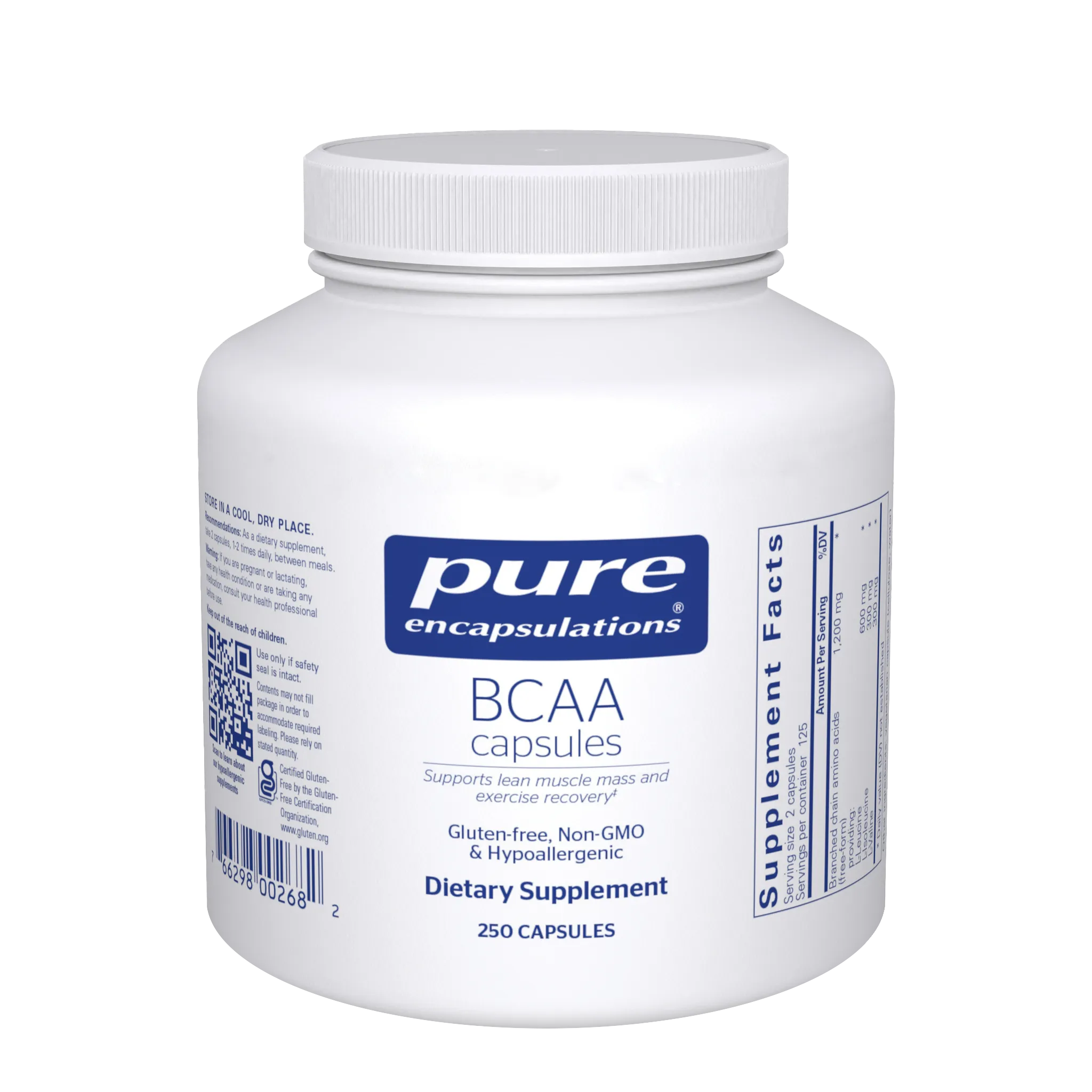
When considering amino acid supplementation, the physical form of the nutrient dictates its clinical efficacy. Pure Encapsulations BCAA capsules utilize "free-form" amino acids. Unlike the amino acids found in dietary proteins (like meat or eggs) or protein powders (like whey or casein), free-form amino acids are not bound together in complex peptide chains. They do not require stomach acid or pancreatic enzymes to be broken down and digested.
Because they are pre-digested, free-form BCAAs are exceptionally bioavailable. Upon ingestion, they pass rapidly through the stomach and are immediately absorbed across the intestinal lining directly into the bloodstream. Pharmacokinetic studies demonstrate that plasma concentrations of free-form leucine, isoleucine, and valine spike rapidly, reaching peak saturation in the blood within exactly 30 to 90 minutes. This rapid, predictable absorption curve allows patients to strategically time their dosage to combat fatigue or support physical activity with precision.
The specific ratio of the three branched-chain amino acids is critical for achieving the desired metabolic effects. Pure Encapsulations BCAA capsules provide a scientifically validated 2:1:1 ratio (600 mg L-leucine, 300 mg L-isoleucine, and 300 mg L-valine per serving). This ratio mimics the natural concentration of BCAAs found in human skeletal muscle.
Leucine is dosed highest because it is the primary metabolic trigger for the mTORC1 pathway and muscle protein synthesis. However, taking leucine in isolation can rapidly deplete the body's stores of isoleucine and valine, leading to further metabolic imbalances. By including isoleucine to support cellular glucose uptake and valine to assist in nucleotide biosynthesis, the 2:1:1 ratio ensures a balanced, synergistic effect that supports both structural muscle repair and mitochondrial energy production without causing secondary amino acid deficiencies.
To maximize the absorption of free-form BCAAs, timing is everything. It is highly recommended to take BCAA capsules on an empty stomach, between meals. If taken alongside a heavy, protein-rich meal, the BCAAs will have to compete with other large neutral amino acids for the same intestinal transporters, significantly slowing their absorption and blunting the desired spike in blood plasma levels. Taking them 30 to 60 minutes before planned physical exertion or cognitive tasks ensures peak blood saturation exactly when the body needs the alternative fuel.
While BCAAs are generally recognized as safe and well-tolerated, there are important clinical considerations. Because BCAAs influence glucose metabolism and insulin secretion, patients taking medications for diabetes or insulin resistance should monitor their blood sugar levels carefully. Additionally, individuals with rare metabolic disorders like Maple Syrup Urine Disease (MSUD), or those with advanced kidney disease who are on protein-restricted diets, should avoid BCAA supplementation. As always, patients with complex conditions like MCAS or Long COVID should introduce new supplements slowly and consult with their healthcare provider to ensure it aligns with their comprehensive treatment plan.

Follow the Science
The efficacy of BCAAs in helping to prevent muscle wasting during periods of inactivity is strongly supported by ground-based spaceflight analogs. A 2022 study published in Frontiers in Nutrition analyzed data from the WISE (Women’s International Space Simulation for Exploration) study, which subjected healthy women to 60 days of strict bed rest. The researchers found that during the first 15 days of immobility, the group receiving a high-protein diet enriched with excess leucine exhibited a remarkable 42% lower loss of lean body mass compared to the control group, alongside a significantly greater nitrogen balance.
Similarly, research conducted by NASA published in the Journal of Applied Physiology investigated BCAA supplementation during a 14-day bed rest period. The study demonstrated that nitrogen retention was significantly greater in the BCAA group (56 +/- 6 mg N/kg/day compared to 26 +/- 12 mg N/kg/day in controls). However, the study found no effect of BCAA supplementation on either whole body, muscle, or plasma protein synthesis, or the rate of 3-MeH excretion.
Emerging research into Long COVID (Post-Acute Sequelae of COVID-19) is revealing similar metabolic derangements. Recent metabolomic analyses have shown that SARS-CoV-2 infection downregulates the ACE2 receptor in the gastrointestinal tract, which directly impairs the B0AT1 amino acid transporter. This leads to the severe malabsorption of neutral amino acids, including BCAAs and tryptophan. Studies frequently report reduced blood plasma levels of BCAAs in Long COVID patients, alongside elevated unabsorbed BCAAs in fecal matter, linking gut dysbiosis directly to systemic energy deficits and muscle weakness.
Furthermore, the Central Fatigue Hypothesis, originally proposed by Eric Newsholme, provides a mechanistic explanation for how this BCAA depletion drives neurological symptoms. Studies have demonstrated that BCAA supplementation during exercise can lower ratings of perceived exertion by 7% and mental fatigue by 15%. The plasma concentration ratio of free tryptophan to BCAAs remained at basal levels during and after exercise in the BCAA trial, offering a scientifically grounded rationale for using BCAA capsules to manage the severe brain fog and central exhaustion reported by Long COVID haulers.
The Path Forward
Living with the relentless fatigue, muscle weakness, and unpredictable crashes of Long COVID, ME/CFS, or dysautonomia can feel like an uphill battle against your own biology. It is profoundly validating to understand that these symptoms are not in your head—they are the result of measurable, physiological disruptions in how your cells generate energy and process essential amino acids. When your body is forced to cannibalize its own muscle tissue just to survive the day, finding targeted ways to support your metabolic pathways becomes a crucial part of reclaiming your quality of life.
While there is no single miracle cure for complex post-viral conditions, strategic nutritional support can play a vital role in a comprehensive management plan. By providing your body with highly bioavailable, free-form Branched-Chain Amino Acids, you are offering your starving mitochondria an alternative fuel source, sending powerful signals to preserve lean muscle mass during periods of bed rest, and potentially lifting the heavy veil of central fatigue. When combined with careful symptom tracking, aggressive pacing, and nervous system regulation, targeted amino acid therapy can help you slowly rebuild your physical resilience.
If you are struggling with severe muscle weakness, post-exertional malaise, or the cognitive fog of central fatigue, BCAA supplementation may offer the metabolic support your body is desperately seeking. Always consult with your healthcare provider before starting any new supplement regimen to ensure it is safe and appropriate for your unique clinical picture. Explore BCAA Capsules today and take a science-backed step toward supporting your cellular energy and protecting your physical strength.