Can Carnitine Synergy™ Support Energy and Brain Fog in Long COVID and ME/CFS?
March 5, 2026
Carnitine SynergyL-CarnitineAcetyl-L-Carnitine
Share:
Disclaimer: The information provided here is for educational purposes only and is not intended as medical advice. It should not be used to diagnose, treat, cure, or prevent any medical condition. Instead, use it as a starting point for discussion with your healthcare provider. Always consult with a qualified healthcare provider before starting any new medication, supplement, device, or making changes to your health regimen.
Months or even years after recovering from an initial viral infection, many individuals find themselves fighting a daily, exhausting battle against debilitating symptoms. This phenomenon, widely recognized as Long COVID, shares a striking and complex clinical overlap with myalgic encephalomyelitis/chronic fatigue syndrome (ME/CFS). Patients frequently describe a profound, crushing fatigue that does not improve with rest, accompanied by a thick, disorienting cognitive impairment commonly referred to as "brain fog." For those living with these invisible illnesses, the frustration of navigating a medical system that often lacks clear answers can be just as exhausting as the physical symptoms themselves. You might find yourself wondering why your body, which once produced abundant energy, now feels like a drained battery after the simplest of tasks.
Emerging scientific research is increasingly pointing toward the cellular level to explain these profound energy deficits. Specifically, researchers are investigating the mitochondria—the microscopic powerhouses within our cells responsible for generating the energy required for every bodily function. When mitochondrial function is disrupted by viral infections, chronic inflammation, or immune dysregulation, the body loses its ability to efficiently convert food into usable energy. This is where targeted nutritional support comes into play. Carnitine Synergy™, a specialized supplement combining two highly bioavailable forms of carnitine, offers a science-backed approach to supporting these critical metabolic pathways. By understanding the intricate biochemistry of how our cells produce energy, we can better explore how targeted interventions might help restore balance and improve quality of life for those navigating complex chronic conditions.
TL;DR
Carnitine Synergy™ combines L-Carnitine and Acetyl-L-Carnitine to support cellular energy and mitochondrial function.
L-Carnitine targets physical fatigue and muscle function by helping transport fatty acids into mitochondria.
Acetyl-L-Carnitine crosses the blood-brain barrier, which may help improve cognitive function and reduce brain fog.
Research suggests targeted carnitine supplementation may support energy recovery in patients with Long COVID and ME/CFS.
What is Carnitine Synergy™?
The Conditionally Essential Role of L-Carnitine
To understand the profound impact of Carnitine Synergy™, we must first explore the natural function of its primary components in a healthy body. L-carnitine is a conditionally essential amino acid derivative synthesized primarily in the liver and kidneys from the essential amino acids lysine and methionine. It is highly concentrated in tissues that rely heavily on fatty acid oxidation for their energy demands, such as skeletal muscle, the heart, and the brain. In a healthy physiological state, carnitine plays a foundational role in maintaining metabolic homeostasis and cellular energy balance.
While the human body can produce a certain amount of carnitine endogenously, it heavily relies on dietary intake—primarily from animal proteins like red meat—to meet its daily metabolic requirements. During states of chronic illness, intense physical stress, or prolonged viral infection, the body's demand for carnitine can rapidly outpace its ability to synthesize or absorb it. This leads to a state of relative deficiency that severely impairs cellular function. When carnitine levels drop, the body loses its ability to efficiently utilize fat stores for energy, forcing it to rely on less efficient metabolic pathways that generate toxic byproducts and contribute to systemic fatigue.
The primary function of L-carnitine is to act as a critical transport vehicle within the microscopic landscape of our cells. To fully grasp its importance, we must look at the mitochondria, the double-membraned organelles responsible for producing adenosine triphosphate (ATP), the universal energy currency of the human body. The outer mitochondrial membrane is relatively permeable, but the inner mitochondrial membrane is strictly impermeable to long-chain fatty acids. These fatty acids are a dense, crucial source of potential energy, but they cannot cross into the mitochondrial matrix—the innermost compartment where energy production occurs—without a specialized transport mechanism. L-carnitine is the essential key that unlocks this barrier.
The Carnitine Shuttle and the Mechanics of Beta-Oxidation
The process by which L-carnitine transports fats into the mitochondria is known as the carnitine shuttle, a highly coordinated biochemical pathway involving three specific enzymes. First, free fatty acids in the cellular cytoplasm are activated by binding to Coenzyme A (CoA), forming a complex called long-chain acyl-CoA. Because this large molecule cannot penetrate the inner mitochondrial membrane, an enzyme located on the outer membrane called Carnitine Palmitoyltransferase 1 (CPT1) steps in. CPT1 strips the CoA away and attaches the fatty acid chain directly to a molecule of L-carnitine, creating an acylcarnitine conjugate. This step is widely considered the rate-limiting bottleneck of fatty acid metabolism; if there is not enough free L-carnitine available, the entire energy production line grinds to a halt.
Once the acylcarnitine is formed, a specialized carrier protein called Carnitine-Acylcarnitine Translocase (CACT) shuttles it across the inner mitochondrial membrane and into the mitochondrial matrix. Simultaneously, this translocase pushes an empty, free L-carnitine molecule back out into the cytoplasm to pick up another fatty acid, creating a continuous, highly efficient loop. Upon entering the matrix, a third enzyme, Carnitine Palmitoyltransferase 2 (CPT2), reverses the initial process. It removes the L-carnitine and reattaches the fatty acid to a new CoA molecule inside the mitochondria. The newly reformed acyl-CoA is now perfectly positioned to enter the beta-oxidation pathway, a series of chemical reactions that break down the fatty acid chain to generate Acetyl-CoA, NADH, and FADH2.
These newly generated molecules are the direct fuel sources for the Tricarboxylic Acid (TCA) cycle, also known as the Krebs cycle, and the electron transport chain. As electrons flow through the four protein complexes of the electron transport chain, they create a proton gradient that powers ATP synthase, the molecular motor that churns out massive amounts of cellular energy. Without the carnitine shuttle operating at full capacity, the cell is starved of its primary fuel source, leading to a profound drop in ATP production. This intricate biochemical dance highlights why maintaining adequate carnitine levels is absolutely vital for systemic energy and muscular endurance.
Acetyl-L-Carnitine: Bypassing the Blood-Brain Barrier
While standard L-carnitine is highly effective at supporting skeletal muscle and cardiovascular tissue, it struggles to penetrate the central nervous system. This is where Acetyl-L-Carnitine (ALCAR), the second key ingredient in Carnitine Synergy™, becomes crucial. ALCAR is an esterified form of L-carnitine with an acetyl group attached to its molecular structure. This seemingly small chemical modification drastically alters its pharmacokinetics, making the molecule highly lipophilic (fat-soluble). Because of this lipophilicity, ALCAR can easily cross the highly restrictive blood-brain barrier, allowing it to deliver targeted metabolic support directly to energy-starved neurons and glial cells in the brain.
Once ALCAR enters the brain tissue and crosses into the neuronal mitochondria, it performs a unique and vital function that standard L-carnitine cannot. Enzymes cleave the ALCAR molecule, separating it back into free L-carnitine and a free acetyl group. This free acetyl group can bind directly to CoA to form Acetyl-CoA, providing an immediate, direct fuel source for the TCA cycle. This means that ALCAR can supply the brain with energy substrates without requiring the complex, multi-step process of beta-oxidation. For patients suffering from neuroimmune conditions where cellular energy pathways are severely compromised, this direct fuel injection can be a game-changer for cognitive function.
Furthermore, the donated acetyl group from ALCAR serves a critical secondary purpose: it is the rate-limiting precursor for the synthesis of acetylcholine. Acetylcholine is a primary neurotransmitter responsible for memory formation, learning, attention span, and autonomic nervous system regulation. The enzyme choline acetyltransferase takes the acetyl group provided by ALCAR and binds it to circulating choline, creating this vital chemical messenger. By directly supporting acetylcholine production, ALCAR helps clear the neurological static that patients often describe as brain fog, while simultaneously providing antioxidant protection to delicate brain tissues.
How Long COVID and ME/CFS Impact Mitochondrial Function
The Acylcarnitine Deficit in Chronic Illness
To understand why Carnitine Synergy™ is so relevant for complex chronic conditions, we must examine how illnesses like Long COVID and ME/CFS fundamentally alter cellular metabolism. A growing body of evidence suggests that these conditions are characterized by severe, systemic mitochondrial dysfunction. A comprehensive systematic review and meta-analysis analyzing multiple clinical studies found that patients with ME/CFS exhibit significantly lower serum levels of acylcarnitines compared to healthy controls. This biological marker is a glaring red flag indicating that the carnitine shuttle—the very mechanism responsible for transporting fats into the mitochondria—is broken or severely impaired.
When acylcarnitine levels are depleted, the mitochondria are effectively starved of their primary fuel source. The long-chain fatty acids that should be burned for energy instead accumulate outside the mitochondria, leading to a state of lipotoxicity and cellular stress. This metabolic roadblock explains why patients with ME/CFS and Long COVID experience such profound, unyielding fatigue. Their bodies are literally unable to access and utilize the stored energy required to power basic physiological functions, let alone the energy needed for physical exertion or complex cognitive tasks. This deficit is not a result of deconditioning or a lack of effort; it is a measurable, biochemical failure at the cellular level.
Viral Disruption of the Cellular Powerhouse
The pathophysiology of this mitochondrial failure often begins with a viral infection. Viruses, including SARS-CoV-2 (the virus responsible for COVID-19) and Epstein-Barr Virus (frequently implicated in ME/CFS), are known to hijack the host's cellular machinery to replicate. During this process, they directly damage mitochondrial structures and alter metabolic pathways. Research on skeletal muscle adaptations in Long COVID patients has revealed intrinsic mitochondrial dysfunction, endothelial abnormalities, and a muscle fiber type shift towards a more glycolytic phenotype. This rapid skeletal muscle tissue damage and intramuscular infiltration of immune cells contribute to PEM-related symptoms.
This viral-induced mitochondrial dysfunction is further compounded by chronic neuroinflammation and immune dysregulation. Research identifying CD8 T-cell dysfunction in both ME/CFS and Long COVID highlights how an overactive, yet ineffective, immune response continuously drains cellular energy reserves. The constant production of pro-inflammatory cytokines creates a hostile cellular environment that damages the delicate inner mitochondrial membrane, specifically targeting cardiolipin—a unique lipid essential for anchoring the electron transport chain complexes. As cardiolipin degrades, the mitochondria become "leaky," further reducing energy output and exacerbating systemic fatigue.
The Shift to Anaerobic Metabolism and Lactic Acidosis
When the mitochondria cannot produce enough ATP through aerobic respiration (using oxygen and fats via the carnitine shuttle), the body is forced into a metabolic emergency state. It shifts to anaerobic glycolysis, a highly inefficient process that generates energy by breaking down glucose without oxygen. While this pathway provides a quick burst of ATP, it produces lactic acid as a toxic byproduct. Studies investigating muscle dysfunction in chronic fatigue syndrome have shown that patients exhibit an overreliance on this anaerobic metabolism even during low-level, everyday activities, leading to prolonged intramuscular acidosis and a slowed ability to clear protons from the tissue.
This rapid accumulation of lactic acid and the resulting drop in cellular pH is a primary driver of post-exertional malaise (PEM), the hallmark symptom of ME/CFS and Long COVID. PEM is characterized by a severe, delayed exacerbation of symptoms following minimal physical or cognitive exertion. The muscles become heavy, painful, and weak because they are quite literally drowning in acidic byproducts that the dysfunctional mitochondria cannot clear. This vicious cycle of energy depletion, anaerobic shift, and lactic acidosis creates a biological trap that keeps patients locked in a state of chronic exhaustion, highlighting the critical need to restore aerobic mitochondrial function.
Carnitine Synergy™: Supporting Energy and Cognitive Function
Restoring the Carnitine Shuttle and Cellular Energy Production
Supplementing with Carnitine Synergy™ provides a direct, mechanistic intervention to address the metabolic roadblocks seen in chronic illness. By supplying a highly concentrated dose of L-carnitine (from L-Carnitine Tartrate), the supplement effectively forces the carnitine shuttle back into motion. This influx of free carnitine overcomes the rate-limiting bottleneck at the CPT1 enzyme, allowing the cell to rapidly convert accumulated long-chain fatty acids into acylcarnitines. As these fats are finally transported across the inner mitochondrial membrane, the mitochondria are resupplied with the substrate necessary to resume beta-oxidation and generate robust amounts of ATP.
This restoration of aerobic energy production is critical for breaking the cycle of post-exertional malaise. By enabling the cells to burn fat for fuel rather than relying exclusively on anaerobic glycolysis, L-carnitine helps prevent the rapid, toxic accumulation of lactic acid in skeletal muscle tissue. This metabolic shift improves muscular endurance, reduces the heavy, burning sensation associated with minimal exertion, and helps patients expand their energy envelope. For individuals who have been trapped in a state of severe exercise intolerance, restoring this fundamental biochemical pathway is a crucial step toward regaining physical capacity and improving overall quality of life.
Clearing the Fog: Acetylcholine Synthesis and Neurological Support
While the L-carnitine component targets physical fatigue, the Acetyl-L-Carnitine (ALCAR) in Carnitine Synergy™ is specifically designed to address the neurological manifestations of Long COVID and ME/CFS. Because ALCAR effortlessly crosses the blood-brain barrier, it acts as a highly targeted therapy for cognitive dysfunction. Once inside the brain, ALCAR donates its acetyl group to the enzyme choline acetyltransferase, directly driving the synthesis of acetylcholine. This surge in neurotransmitter production enhances synaptic transmission, improves neuronal communication, and helps lift the dense, disorienting brain fog that so many patients experience.
Beyond cognitive clarity, acetylcholine plays a vital role in regulating the autonomic nervous system via the vagus nerve. Many patients with Long COVID and ME/CFS also suffer from dysautonomia, a condition where the autonomic nervous system loses its ability to regulate heart rate, blood pressure, and digestion. By supporting acetylcholine levels, ALCAR may help improve vagal tone, thereby understanding the mechanisms of dysautonomia and providing a stabilizing effect on the autonomic nervous system. This dual action—sharpening cognitive focus while calming autonomic hyperarousal—makes ALCAR an invaluable tool for comprehensive neurological support.
Buffering Toxic Buildup and Enhancing Metabolic Flexibility
Carnitine Synergy™ also plays a vital role in cellular detoxification and metabolic flexibility. In a state of mitochondrial dysfunction, partially metabolized fatty acids can build up inside the mitochondria, forming toxic acyl-CoA compounds that inhibit essential enzymes and cause severe oxidative stress. L-carnitine acts as a biochemical buffer, binding to these toxic acyl groups and shuttling them out of the mitochondria and into the bloodstream for excretion—a process known as "fatty acid dumping." This detoxification process relieves the metabolic pressure on the mitochondria, allowing them to repair and function more efficiently.
Furthermore, both forms of carnitine in this supplement exhibit potent antioxidant properties. They help neutralize reactive oxygen species (ROS) generated by dysfunctional electron transport chains, protecting delicate cellular structures from oxidative damage. ALCAR, in particular, has been shown to stabilize cardiolipin, the crucial lipid that anchors the mitochondrial membrane. By preventing the degradation of cardiolipin, ALCAR helps maintain the structural integrity of the mitochondria, ensuring that the electron transport chain remains tightly coupled and capable of producing maximum ATP with minimal oxidative leakage.
The Strategic 4:1 Ratio of L-Carnitine to Acetyl-L-Carnitine
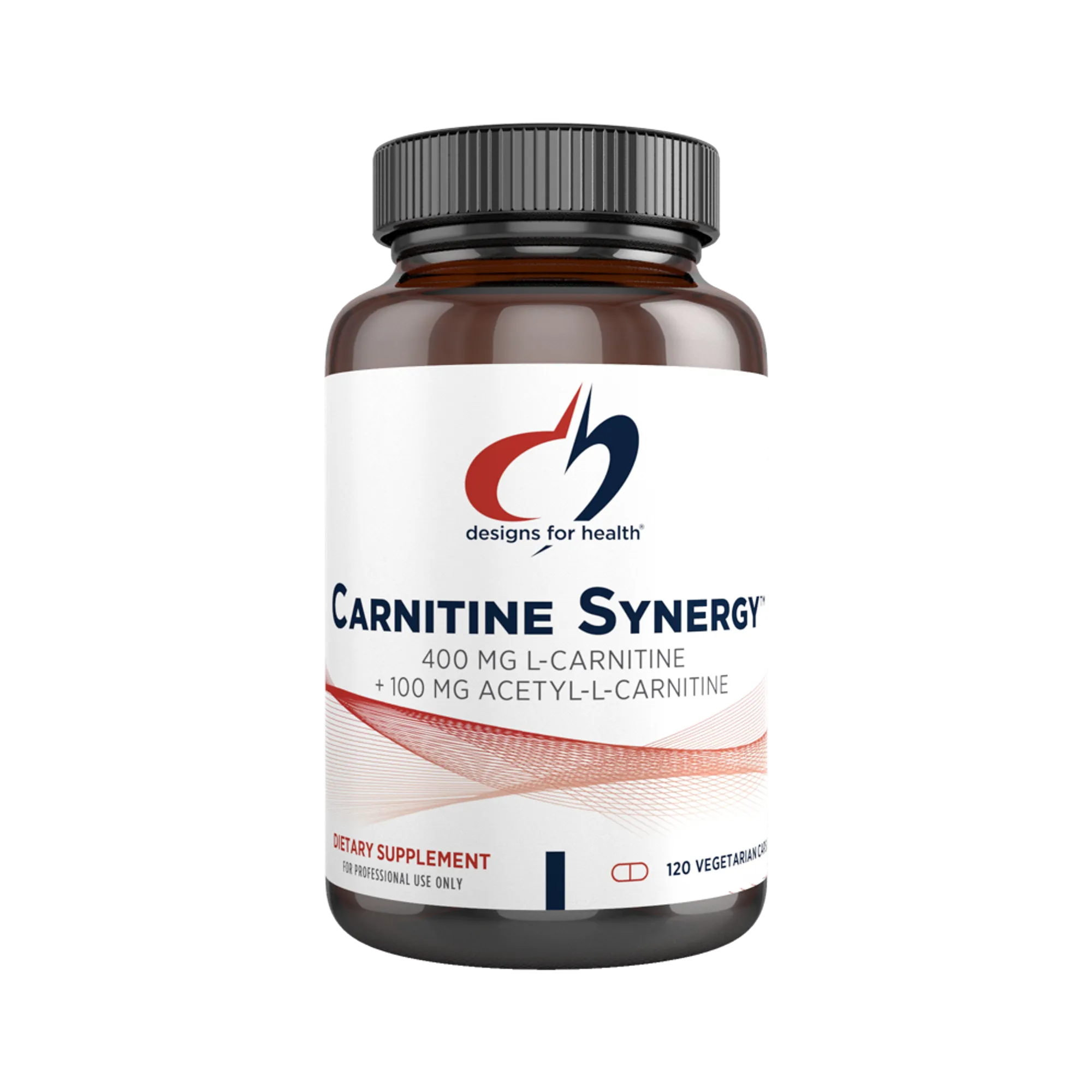
Designs for Health formulated Carnitine Synergy™ with a highly specific 4:1 ratio of L-Carnitine to Acetyl-L-Carnitine (400 mg to 100 mg per capsule). This synergistic blend is intentionally designed to address the multi-systemic nature of chronic fatigue. The higher dose of L-carnitine ensures that the massive energy demands of skeletal muscle and cardiovascular tissue are met, actively combating physical exhaustion and muscular weakness. Meanwhile, the targeted dose of ALCAR provides just enough lipophilic support to cross the blood-brain barrier, synthesize acetylcholine, and protect neuronal mitochondria without overwhelming the system.
This combined approach is particularly important because clinical trials in ME/CFS have shown that different forms of carnitine target different symptom clusters. By providing both forms in a single, balanced capsule, Carnitine Synergy™ offers a comprehensive metabolic intervention. It acknowledges that the fatigue experienced in Long COVID and ME/CFS is not monolithic; it is a complex interplay of physical, cognitive, and autonomic dysfunctions. This synergistic formulation ensures that every cell in the body, from the muscles to the brain, receives the specific type of carnitine it needs to restore energy production and promote healing.

Symptoms Carnitine Synergy™ May Help Manage
Targeting Physical Exhaustion and Muscular Dysfunction
Carnitine Synergy™ is designed to address a wide spectrum of debilitating symptoms by targeting the root cause of cellular energy failure. By restoring mitochondrial function and fatty acid metabolism, patients may experience relief from several profound physical challenges:
Profound Physical Fatigue: By overcoming the CPT1 bottleneck and restoring the carnitine shuttle, the supplement helps the body generate sustained, aerobic ATP, reducing the crushing, leaden feeling of systemic exhaustion.
Post-Exertional Malaise (PEM): By shifting the body away from inefficient anaerobic glycolysis, carnitine helps prevent the rapid, toxic buildup of lactic acid that triggers severe symptom crashes after minimal exertion.
Muscle Aches and Weakness: The "fatty acid dumping" mechanism clears toxic acyl-CoA compounds from muscle tissue, reducing intramuscular oxidative stress and alleviating chronic myalgia and weakness.
Exercise Intolerance: Improved mitochondrial respiration and enhanced oxygen utilization in skeletal muscle can slowly help patients safely expand their energy envelope without triggering immediate relapses.
Addressing Neurological and Cognitive Symptoms
The inclusion of Acetyl-L-Carnitine (ALCAR) allows this supplement to cross the blood-brain barrier, providing targeted relief for the neurological and cognitive symptoms that frequently accompany post-viral syndromes:
Brain Fog and Cognitive Dysfunction: By directly donating acetyl groups for the synthesis of acetylcholine, ALCAR enhances neuronal communication, improving memory retrieval, focus, and mental clarity.
Mood Disturbances and Depression: ALCAR's ability to restore neuronal energy metabolism and lipid function in the brain has been linked to antidepressant-like effects in animal models, suggesting potential support for emotional regulation.
Neurological Fatigue: By providing a direct source of Acetyl-CoA that bypasses the need for beta-oxidation, ALCAR delivers immediate fuel to energy-starved brain cells, reducing the sensation of mental exhaustion.
Supporting Cardiovascular and Autonomic Health
Because the heart relies almost exclusively on fatty acid oxidation for its massive energy needs, carnitine supplementation also provides vital cardiovascular and autonomic support, which is particularly relevant for patients managing the complex symptoms of Postural Orthostatic Tachycardia Syndrome (POTS):
Cardiovascular Strain: By ensuring a steady supply of long-chain fatty acids to the cardiac mitochondria, L-carnitine supports healthy heart muscle function and improves the heart's ability to pump efficiently under stress.
Dysautonomia-Related Fatigue: By supporting acetylcholine production and improving vagal tone, ALCAR helps stabilize the autonomic nervous system, potentially reducing the severity of heart rate spikes and blood pressure fluctuations.
Endothelial Dysfunction: Carnitine's potent antioxidant properties help protect the delicate endothelial cells lining the blood vessels from oxidative damage, promoting healthy blood flow and microcirculation.
Practical Considerations: Forms, Dosing, and Absorption
Understanding Bioavailability and Absorption Dynamics
When incorporating Carnitine Synergy™ into a treatment protocol, it is crucial to understand the nuances of bioavailability and absorption. The human body naturally absorbs between 54% and 75% of the L-carnitine found in dietary sources like red meat. However, oral carnitine supplements have a significantly lower absolute systemic bioavailability, typically ranging from 14% to 18%. This means that a large portion of the ingested supplement is not immediately absorbed into the bloodstream. To counteract this, Carnitine Synergy™ utilizes L-Carnitine Tartrate (LCT), a specific salt form of carnitine that has been scientifically engineered for rapid absorption. Pharmacokinetic studies demonstrate that LCT reaches peak plasma concentrations much faster than standard free-base carnitine, making it highly effective for quickly delivering metabolic support to skeletal muscles.
The absorption profile of Acetyl-L-Carnitine (ALCAR) is slightly more complex. While it is often marketed as having superior systemic bioavailability, clinical data actually shows that ALCAR has a lower overall accumulation in blood plasma compared to LCT. This is partly because ALCAR is partially hydrolyzed (broken down into standard L-carnitine) by enterocytes in the intestines during the absorption process. However, the true advantage of ALCAR is not its absolute plasma concentration, but its lipophilicity. The portion of ALCAR that does survive intact is uniquely capable of crossing the blood-brain barrier, a feat that LCT cannot achieve. By combining the rapid systemic absorption of LCT with the targeted neurological penetration of ALCAR, Carnitine Synergy™ maximizes the therapeutic benefits of both forms.
The Gut Microbiome Factor and TMAO Production
Because a significant portion of oral carnitine remains unabsorbed in the gastrointestinal tract, it interacts heavily with the gut microbiome. Certain gut bacteria metabolize this unabsorbed carnitine into a compound called Trimethylamine (TMA). TMA is then absorbed into the bloodstream and processed by the liver into Trimethylamine N-oxide (TMAO). High circulating levels of TMAO have been identified as a biomarker associated with an increased risk of cardiovascular disease and systemic inflammation. This gut-mediated conversion highlights a critical practical consideration: when it comes to carnitine supplementation, massive, excessive doses are not necessarily better and can actually be counterproductive.
To mitigate the risk of elevated TMAO while maximizing the therapeutic benefits of carnitine, clinical guidelines suggest adhering to moderate, divided doses rather than single massive boluses. The 500 mg total carnitine dose provided in a single capsule of Carnitine Synergy™ is strategically formulated to fall well within the safe, highly utilized range, minimizing the amount of unabsorbed carnitine left in the gut. Additionally, maintaining a healthy gut microbiome through diet and targeted probiotics can help reduce the populations of TMA-producing bacteria, further optimizing the safety and efficacy of carnitine supplementation.
Optimal Dosage, Timing, and Synergistic Pairings
For optimal absorption, carnitine is generally best taken on an empty stomach, roughly 30 to 60 minutes before a meal. However, because carnitine transport into the muscles is heavily mediated by insulin, some functional medicine practitioners recommend taking it alongside a small amount of complex carbohydrates to trigger a mild insulin response, which actively drives the carnitine into the muscle cells. The suggested use for Carnitine Synergy™ is one capsule per day, though healthcare providers may adjust this dosage based on individual metabolic needs, symptom severity, and clinical response. It is essential to start with a lower dose and gradually titrate up to assess tolerance, particularly for patients with severe ME/CFS who may be highly sensitive to metabolic shifts.
Carnitine also works exceptionally well when paired with other mitochondrial support supplements. For example, exploring how CoQ10 supports energy levels reveals a powerful synergy: while carnitine shuttles the fuel (fatty acids) into the mitochondria, CoQ10 acts as the spark plug within the electron transport chain to convert that fuel into ATP. Similarly, combining carnitine with the role of Ketotifen in managing MCAS can help address both the metabolic and inflammatory drivers of chronic fatigue. As always, it is crucial to consult with a healthcare provider before starting any new supplement regimen, especially if you are taking medications for thyroid function or blood thinners, as carnitine can occasionally interact with these pathways.

Follow the Science
Landmark Clinical Trials in ME/CFS
The therapeutic use of carnitine for chronic fatigue is supported by a robust foundation of clinical research, particularly within the ME/CFS patient population. One of the most heavily cited landmark studies, conducted by Vermeulen et al. in 2004, provided critical insights into how different forms of carnitine affect specific symptom clusters. In this randomized, comparative trial, 90 patients with ME/CFS were given either 2 grams per day of Acetyl-L-Carnitine (ALCAR), 2 grams per day of Propionyl-L-Carnitine (PLCAR), or a combination of both over a 24-week period. The results were highly illuminating and fundamentally shaped how practitioners approach carnitine supplementation today.
The Vermeulen study found that ALCAR specifically and significantly improved mental fatigue and cognitive concentration (p = 0.015), validating its ability to cross the blood-brain barrier and support neurological function. Conversely, PLCAR was found to be significantly more effective for alleviating general, physical fatigue and muscular weakness (p = 0.004). Interestingly, the patients who received the combined treatment experienced less overall improvement than those taking either form individually, suggesting that massive doses of competing carnitine forms might overwhelm cellular transport mechanisms. This data underscores the importance of the carefully balanced 4:1 ratio found in Carnitine Synergy™, which provides a dominant dose of L-carnitine for physical support alongside a targeted, non-competing dose of ALCAR for cognitive clarity.
Emerging Research in Long COVID and Post-Viral Syndromes
As the medical community grapples with the long-term consequences of the SARS-CoV-2 virus, researchers are increasingly turning to carnitine as a potential therapeutic intervention for Long COVID. A notable 2022 case-control study by Scaturro et al. evaluated 60 patients suffering from Post-COVID Syndrome to determine if ALCAR supplementation could enhance the effects of physical rehabilitation. The patients were given 500 mg per day of ALCAR alongside a structured functional rehab program. The findings demonstrated that the ALCAR group experienced statistically significant improvements in musculoskeletal pain, depressive symptoms, and overall quality of life compared to the control group, with drastic reductions in both the Fibromyalgia Impact Questionnaire (FIQ) and Patient Health Questionnaire (PHQ-9) scores.
Further supporting these findings, a 2024 study by Kuryata and Frolova investigated the efficacy of 2 grams per day of L-carnitine in post-COVID patients dealing with long-term systemic complications. The research revealed that patients receiving L-carnitine saw a notable increase in their Glomerular Filtration Rate (GFR), indicating improved kidney function, alongside a highly significant improvement in their overall quality of life parameters. These emerging clinical trials strongly suggest that the mitochondrial support provided by carnitine is not just theoretical; it translates into measurable, clinical improvements for patients battling the complex sequelae of post-viral syndromes.
Meta-Analyses on Metabolic Biomarkers and Acylcarnitine
Beyond interventional trials, extensive biomarker research has solidified the link between carnitine deficiency and chronic illness. A comprehensive systematic review and meta-analysis published in the Journal of Translational Medicine analyzed data from seven distinct studies encompassing over 400 patients. The meta-analysis conclusively found that serum acylcarnitine levels were significantly lower in patients with ME/CFS compared to healthy controls. This measurable deficit provides objective, biochemical proof of the mitochondrial dysfunction that patients experience, validating their symptoms and highlighting the carnitine shuttle as a primary target for therapeutic intervention.
As the search for blood-based biomarkers in ME/CFS and Long COVID continues to evolve, metabolic panels measuring acylcarnitine and other mitochondrial intermediates are becoming increasingly recognized as vital diagnostic tools. By identifying these specific metabolic roadblocks, healthcare providers can move away from generalized fatigue management and toward targeted, precision medicine interventions like Carnitine Synergy™, directly addressing the underlying cellular failures that drive these debilitating conditions.
The Path Forward
Validating the Chronic Illness Experience
Living with Long COVID, ME/CFS, dysautonomia, or MCAS is a profoundly challenging experience that often requires navigating a medical system ill-equipped to handle complex, multi-systemic illnesses. The crushing fatigue, the unpredictable post-exertional crashes, and the disorienting brain fog are not manifestations of anxiety or a lack of willpower; they are the direct results of measurable, biochemical dysfunctions at the cellular level. Understanding that your symptoms are rooted in real, physiological processes—like the breakdown of the carnitine shuttle and the failure of mitochondrial energy production—can be incredibly validating. It shifts the narrative away from self-blame and toward targeted, science-backed solutions.
A Comprehensive, Multi-System Approach to Recovery
While the science behind Carnitine Synergy™ is compelling, it is important to remember that no single supplement is a magic cure for complex chronic conditions. True recovery and symptom management require a comprehensive, multi-faceted approach. Supplements like carnitine are most effective when used as part of a broader strategy that includes aggressive pacing, meticulous symptom tracking, dietary modifications, and nervous system regulation. By combining targeted mitochondrial support with lifestyle adaptations that respect your body's energy envelope, you can slowly begin to rebuild your cellular resilience and improve your daily quality of life. For additional support, consider exploring how Adenosyl/Hydroxy B12 can relieve severe fatigue to further enhance your metabolic protocol.
Next Steps in Your Health Journey
If you are struggling with the profound energy deficits and cognitive impairments associated with Long COVID or ME/CFS, Carnitine Synergy™ may offer a valuable tool to help restore your cellular energy pathways. By providing a synergistic blend of L-Carnitine Tartrate for physical endurance and Acetyl-L-Carnitine for neurological clarity, this supplement addresses the multi-systemic nature of chronic fatigue head-on. As always, we strongly encourage you to consult with a knowledgeable healthcare provider who understands complex chronic illness before beginning any new supplement regimen, ensuring that it aligns safely with your individual health needs and current medications.
Sources
Skeletal muscle adaptations and post-exertional malaise in long COVID
Understanding Muscle Dysfunction in Chronic Fatigue Syndrome
Clinical efficacy of L-carnitine in the management of post-COVID-19 syndrome
Acetyl-L-Carnitine in Dementia and Other Cognitive Disorders: A Critical Update
Metabolic signature in nucleus accumbens for anti-depressant-like effects of acetyl-L-carnitine