Can Adenosyl/Hydroxy B12 Relieve Severe Fatigue and Brain Fog in Long COVID and ME/CFS?
March 5, 2026
AdenosylcobalaminHydroxycobalaminVitamin B12
Share:
Disclaimer: The information provided here is for educational purposes only and is not intended as medical advice. It should not be used to diagnose, treat, cure, or prevent any medical condition. Instead, use it as a starting point for discussion with your healthcare provider. Always consult with a qualified healthcare provider before starting any new medication, supplement, device, or making changes to your health regimen.
Months or even years after a viral infection, many individuals find themselves trapped in a cycle of debilitating fatigue, profound cognitive impairment, and unpredictable autonomic symptoms. If you are living with Long COVID, myalgic encephalomyelitis/chronic fatigue syndrome (ME/CFS), or dysautonomia, you are likely intimately familiar with the frustration of post-exertional malaise (PEM) and the feeling that your body's battery simply will not hold a charge. You may have undergone countless blood tests, only to be told that your results—including your serum Vitamin B12 levels—are completely "normal." Yet, your lived experience tells a very different story of profound energy depletion and neurological dysfunction.
Emerging clinical research is beginning to validate what patients have long suspected: the standard reference ranges for blood tests often fail to capture what is happening at a cellular level. In complex chronic illnesses, the body can experience a "functional" deficiency, where essential nutrients are present in the bloodstream but fail to reach the mitochondria and nerve cells where they are desperately needed. One of the most critical nutrients implicated in this cellular energy crisis is Vitamin B12. However, not all forms of B12 are created equal. In this article, we will explore the deep biochemical mechanisms of Adenosylcobalamin and Hydroxycobalamin—two highly specialized forms of Vitamin B12—and how they work synergistically to support mitochondrial function, repair damaged nerves, and potentially improve the quality of life for those battling complex chronic conditions.
TL;DR
Adenosyl and hydroxy B12 are unmethylated forms that support mitochondrial energy and nerve repair.
Functional B12 deficiency can occur in Long COVID and ME/CFS despite normal blood tests.
Targeted B12 supplementation may help manage fatigue, brain fog, and autonomic dysfunction.
Unmethylated B12 is often better tolerated by patients with sensitive methylation pathways.
What is Adenosyl/Hydroxy B12?
The Dual Nature of the Vitamin B12 Family
Vitamin B12, scientifically known as cobalamin, is a complex, water-soluble vitamin that is absolutely essential for human survival. Unlike simpler vitamins, cobalamin contains a rare trace mineral—cobalt—at the center of its molecular structure, which allows it to participate in highly specialized biochemical reactions. In a healthy body, Vitamin B12 is responsible for synthesizing DNA, producing red blood cells, and maintaining the structural integrity of the central and peripheral nervous systems. However, cobalamin does not exist as a single, uniform molecule; rather, it comes in several different forms, known as vitamers, each with a unique chemical ligand attached to its cobalt core.
In the context of dietary supplements, you will most frequently encounter four main forms: cyanocobalamin, methylcobalamin, adenosylcobalamin, and hydroxycobalamin. While cyanocobalamin is a synthetic, lab-created form commonly used in fortified foods, the other three are naturally occurring and bioidentical to the forms used by human cells. To truly understand how B12 impacts chronic illness, we must look beyond basic deficiency and examine the specific, localized roles of the unmethylated forms: adenosylcobalamin and hydroxycobalamin. These two vitamers work in tandem to support the body's most energy-demanding tissues, particularly the brain, heart, and skeletal muscles.
Adenosylcobalamin: The Active Mitochondrial Coenzyme
Adenosylcobalamin (AdoCbl) is one of the two biologically active coenzyme forms of Vitamin B12, meaning it is ready to be used by the body immediately without requiring complex enzymatic conversion. Crucially, research indicates that AdoCbl is the primary form of Vitamin B12 stored and utilized exclusively within the mitochondria—the microscopic powerhouses responsible for generating the vast majority of our cellular energy. Inside the mitochondrial matrix, AdoCbl acts as an indispensable cofactor for a specific enzyme called methylmalonyl-CoA mutase (MMUT). Without adequate levels of this specific coenzyme, the mitochondria simply cannot perform their primary metabolic functions.
The role of the MMUT enzyme is highly specific but absolutely vital for sustained energy production. It catalyzes the conversion of L-methylmalonyl-CoA into succinyl-CoA, a biochemical process that allows the breakdown products of certain amino acids, odd-chain fatty acids, and cholesterol to enter the tricarboxylic acid (TCA) cycle, also known as the Krebs cycle. By facilitating the production of succinyl-CoA, adenosylcobalamin ensures a continuous, uninterrupted flow of metabolic fuel into the TCA cycle. This cycle generates the reducing equivalents (NADH and FADH2) that power the electron transport chain, ultimately culminating in the production of adenosine triphosphate (ATP), the universal energy currency of the cell.
Hydroxycobalamin: The Stable Precursor and Cellular Protector
Hydroxycobalamin (OHCbl), on the other hand, is a naturally occurring, unmethylated precursor form of Vitamin B12. While it is not an active coenzyme in its raw state, it is highly prized in clinical settings for its exceptional stability, long half-life, and superior bioavailability. Once hydroxycobalamin enters the bloodstream, it exhibits a profound affinity for transcobalamins, the transport proteins that carry B12 to the tissues. This strong binding prevents the rapid urinary excretion that plagues synthetic forms like cyanocobalamin, allowing hydroxycobalamin to remain in circulation longer and providing a sustained, steady-state delivery of B12 to starving cells.
Upon entering the cell, hydroxycobalamin acts as a versatile building block. It is transported directly into the mitochondria, where a specialized enzyme known as ATP:Cob(I)alamin adenosyltransferase transfers an adenosyl group from ATP to the cobalamin molecule, efficiently synthesizing fresh adenosylcobalamin right at the site of energy production. Furthermore, hydroxycobalamin possesses a unique and highly protective pharmacological mechanism: it is a potent scavenger of cellular toxins. It has a high affinity for cyanide and nitric oxide radicals, binding to these toxic byproducts and preventing them from inhibiting cytochrome c oxidase (Complex IV) in the electron transport chain. This dual action makes hydroxycobalamin both a reliable precursor and a direct protector of mitochondrial respiration.
How Long COVID and ME/CFS Impact Mitochondrial and Nerve Health
Viral Disruption of Cellular Energy Pathways
The profound, crushing fatigue experienced by individuals with Long COVID and ME/CFS is not merely a symptom of being "tired"; it is a manifestation of a systemic failure in cellular energy production. Emerging evidence suggests mitochondrial dysfunction is a central component of these complex syndromes. When pathogens like SARS-CoV-2 infiltrate the body, they can hijack and reprogram mitochondrial function to serve viral replication, inflicting direct structural damage to the mitochondrial network. This viral interference disrupts the delicate balance of mitochondrial dynamics, leading to an imbalance in fusion and fission processes and resulting in swollen, dysfunctional mitochondria with degraded cristae.
This structural damage directly impairs the electron transport chain, drastically reducing the cell's ability to produce ATP. As a result, the body is forced to rely on inefficient anaerobic glycolysis, rapidly depleting cellular energy reserves and generating excessive lactic acid. This metabolic shift is a primary driver of post-exertional malaise (PEM), where even minor physical or cognitive exertion triggers a disproportionate and debilitating crash. Understanding what causes Long COVID requires recognizing this fundamental shift from aerobic respiration to an emergency, low-energy metabolic state that leaves patients feeling perpetually drained.
Functional B12 Deficiency and the Methylmalonic Acid Trap
In the context of chronic neuro-immune conditions, the body's demand for Vitamin B12 skyrockets as it attempts to repair damaged tissues and combat systemic inflammation. However, chronic oxidative stress can damage the transport proteins and cellular receptors required to pull B12 from the bloodstream into the cells. This creates a "functional" B12 deficiency: a patient's standard blood work may show normal or even high serum B12 levels, but the intracellular environment—particularly the mitochondria—is entirely depleted of active coenzymes like adenosylcobalamin.
When the mitochondria lack adequate adenosylcobalamin, the MMUT enzyme cannot function. This creates a severe metabolic bottleneck, causing L-methylmalonyl-CoA to accumulate and hydrolyze into methylmalonic acid (MMA). Elevated intracellular MMA is highly toxic; it directly inhibits the respiratory chain complexes and exacerbates oxidative stress by triggering lipid peroxidation. This vicious cycle of B12 depletion and MMA accumulation traps the cell in a state of chronic dysfunction, accelerating cellular aging and further suppressing ATP generation.
Demyelination and Autonomic Nervous System Dysfunction
The impact of functional B12 deficiency extends far beyond the mitochondria, profoundly affecting the nervous system. Vitamin B12 is absolutely critical for the synthesis and maintenance of myelin, the lipid-rich protective sheath that insulates nerve fibers and ensures the rapid transmission of electrical signals. When B12 levels drop within the nervous tissue, the body cannot produce adequate S-adenosylmethionine (SAMe), a universal methyl donor required for myelin basic protein synthesis. Furthermore, the accumulation of toxic MMA forces the body to incorporate abnormal, branched-chain fatty acids into the myelin sheath, structurally destabilizing it and leading to demyelination.
This structural degradation of the nerves is a key factor in the development of dysautonomia and Postural Orthostatic Tachycardia Syndrome (POTS), which frequently co-occur with Long COVID and ME/CFS. The autonomic nervous system relies on heavily myelinated baroreceptors and sympathetic nerves to regulate heart rate and blood vessel constriction. Research published in Pediatrics found that nearly half of adolescents with a POTS pattern had underlying B12 deficiency. When these nerves are damaged by demyelination and neuroinflammation, they fail to signal blood vessels to constrict upon standing. This results in blood pooling in the lower extremities, prompting the heart to race in a desperate attempt to maintain blood flow to the brain—a hallmark symptom of dysautonomia.
Adenosyl/Hydroxy B12: Supporting Energy Production and Nerve Repair
Restoring the TCA Cycle and Maximizing ATP Generation
Supplementing with a targeted blend of adenosylcobalamin and hydroxycobalamin provides a direct, highly bioavailable intervention to address the metabolic bottlenecks seen in chronic illness. By delivering pre-formed adenosylcobalamin, this supplement bypasses the complex intracellular conversion steps that are often impaired by genetic mutations or chronic oxidative stress. This immediate influx of AdoCbl directly saturates the mitochondrial matrix, reactivating the dormant MMUT enzymes and restoring the critical conversion of L-methylmalonyl-CoA into succinyl-CoA.
The restoration of succinyl-CoA production is a metabolic turning point for exhausted cells. It effectively unblocks the tricarboxylic acid (TCA) cycle, allowing the efficient breakdown of fatty acids and amino acids to resume. As the TCA cycle regains its momentum, it generates a robust supply of NADH and FADH2, the essential electron carriers that fuel the electron transport chain. This cascade of restored biochemical reactions ultimately culminates in a significant increase in ATP production, directly combating the profound cellular energy deficit that drives severe fatigue and post-exertional malaise.
Clearing Toxic Byproducts and Mitigating Oxidative Stress
Beyond simply producing energy, the combination of adenosyl and hydroxy B12 acts as a powerful cellular cleanup crew. As adenosylcobalamin reactivates the MMUT enzyme, it rapidly clears the toxic backlog of L-methylmalonyl-CoA, preventing its conversion into destructive methylmalonic acid (MMA). By lowering intracellular MMA levels, AdoCbl removes a major source of mitochondrial inhibition, allowing the respiratory chain complexes to function without interference. This clearance also suppresses the hyperactive mitochondrial unfolded protein response (UPRmt), a cellular stress signal that, when chronically activated, contributes to systemic inflammation.
Simultaneously, hydroxycobalamin provides a robust defense against reactive oxygen species and environmental toxins. Because of its unique molecular structure, hydroxycobalamin acts as a potent scavenger, binding to excess nitric oxide and cyanide radicals that accumulate during chronic inflammatory states. By neutralizing these toxins before they can bind to cytochrome c oxidase (Complex IV), hydroxycobalamin protects the structural integrity of the electron transport chain, ensuring that the newly restored ATP production is not derailed by ongoing oxidative stress.
Synthesizing Myelin and Supporting Nerve Regeneration
For patients struggling with the neurological symptoms of unraveling the connection between Long COVID and ME/CFS, the dual action of adenosyl and hydroxy B12 is particularly beneficial for nerve repair. Adenosylcobalamin's ability to clear MMA is crucial for preventing the incorporation of abnormal fatty acids into neuronal lipids, thereby protecting the structural stability of existing myelin sheaths. This mechanism halts the progression of demyelination that drives neuropathic pain, tingling, and autonomic dysfunction.
Furthermore, the hydroxycobalamin component serves as a versatile, sustained-release reservoir. As it circulates in the bloodstream, it can be taken up by nerve cells and converted in the cytosol into methylcobalamin, the form required to drive the methylation cycle. This conversion supports the production of SAMe, providing the necessary methyl groups to synthesize new myelin basic protein and phosphatidylcholine. Together, these two forms of B12 orchestrate a comprehensive repair program, supporting axonal sprouting, enhancing Schwann cell activity, and gradually rebuilding the damaged neural pathways responsible for dysautonomia and cognitive impairment.
Symptoms Adenosyl/Hydroxy B12 May Help Manage
Targeted Relief for Complex Chronic Conditions
Profound Fatigue and Post-Exertional Malaise (PEM): By directly supplying the active coenzyme required for the TCA cycle, adenosylcobalamin helps restore cellular ATP production, addressing the root metabolic deficit that causes debilitating crashes after minor exertion.
Brain Fog and Cognitive Impairment: Hydroxycobalamin's ability to scavenge neurotoxic radicals and support the synthesis of neurotransmitters helps reduce neuroinflammation, potentially improving focus, memory, and mental clarity.
Neuropathic Pain, Tingling, and Numbness: The synergistic action of both B12 forms supports the synthesis of SAMe and prevents the accumulation of toxic fatty acids, providing the necessary building blocks to repair damaged myelin sheaths and soothe irritated peripheral nerves.
Orthostatic Intolerance and Tachycardia (POTS): By supporting the structural integrity and remyelination of the autonomic nervous system, B12 therapy helps restore the proper function of baroreceptors, improving the body's ability to regulate heart rate and blood pressure upon standing.
Muscle Weakness and Exercise Intolerance: Adenosylcobalamin facilitates the efficient breakdown of branched-chain amino acids and odd-chain fatty acids, ensuring that skeletal muscles have a continuous supply of metabolic fuel during physical activity.
Practical Considerations: Forms, Dosing, and Absorption
Why Form Matters: Unmethylated vs. Methylated B12
When selecting a Vitamin B12 supplement, the specific chemical form is of paramount importance, particularly for individuals with complex chronic illnesses. Many patients with ME/CFS, Long COVID, or mast cell activation syndrome (MCAS) possess genetic variations, such as MTHFR or COMT mutations, that alter their methylation pathways. For some of these individuals, high doses of pre-methylated B12 (methylcobalamin) can cause over-methylation symptoms, including anxiety, jitteriness, and paradoxical fatigue.
This is where the adenosyl/hydroxy blend truly shines. Because both adenosylcobalamin and hydroxycobalamin are unmethylated forms, they provide all the profound mitochondrial and neurological benefits of bioidentical B12 without forcing methyl groups into a potentially sensitive system. The body can utilize the adenosylcobalamin immediately for energy production, while the hydroxycobalamin serves as a stable, adaptable precursor that the body can convert into methylcobalamin at its own pace, strictly on an as-needed basis.
Bioavailability and Tissue Retention
Another critical advantage of the adenosyl/hydroxy combination is its superior bioavailability and tissue retention compared to synthetic forms like cyanocobalamin. Cyanocobalamin has a low affinity for blood transport proteins, meaning it is rapidly filtered by the kidneys and excreted in the urine. Furthermore, the body must expend valuable antioxidants, such as glutathione, to cleave off and detoxify the attached cyanide molecule before the B12 can be used—a metabolic cost that chronically ill patients can ill afford.
In contrast, clinical reviews demonstrate that hydroxycobalamin boasts the highest affinity for plasma proteins (transcobalamins) of any B12 form. This strong binding ensures that the B12 remains in circulation significantly longer, providing a sustained, steady-state delivery to tissues over time. When combined with adenosylcobalamin, which is immediately absorbed into the mitochondria, this formulation offers both rapid, active support and a long-lasting cellular reservoir, maximizing the therapeutic impact of every dose.
Dosing Strategies and What to Expect
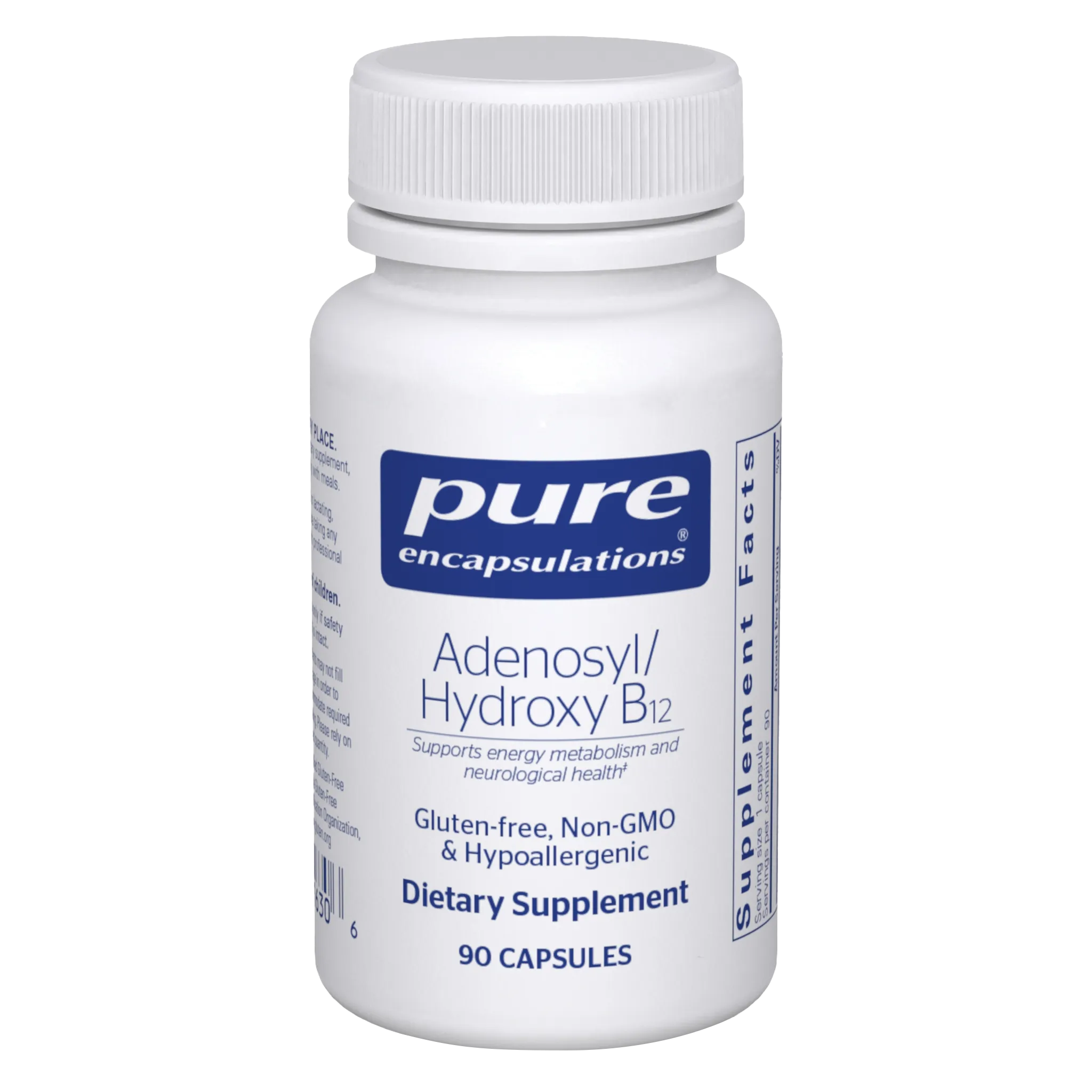
The Pure Encapsulations Adenosyl/Hydroxy B12 formula provides a robust 2,000 mcg dose per capsule, split evenly between the two forms. This high dosage is intentional and clinically relevant. Because oral B12 absorption relies heavily on intrinsic factor—a stomach protein that is often deficient in patients with dysautonomia or gastrointestinal issues—the body must rely on a process called passive diffusion. At high oral doses like 2,000 mcg, passive diffusion allows approximately 1% to 2% of the vitamin to be absorbed directly through the intestinal wall, ensuring therapeutic amounts reach the bloodstream even in cases of malabsorption.
When integrating this supplement into your routine, it is generally recommended to take it with meals to optimize absorption. Because repairing mitochondrial dysfunction and regenerating myelin sheaths are complex, structurally demanding processes, patience is key. While some patients may notice subtle improvements in energy and cognitive clarity within a few weeks, it typically takes several months of consistent supplementation to experience significant changes in neuropathic symptoms or autonomic stability.
Follow the Science
B12 and ME/CFS Clinical Outcomes
The clinical evidence supporting Vitamin B12 for neuro-immune conditions is robust and growing. A landmark 2015 study by Regland et al. demonstrated that patients with ME/CFS responded highly favorably to frequent, high-dose Vitamin B12 therapy. The researchers noted a clear dose-response relationship, where higher and more frequent administration yielded significant improvements in both physical fatigue and cognitive function. This underscores the concept of functional deficiency, proving that saturating the tissues with B12 can overcome cellular transport barriers.
More recently, research has continued to explore the metabolic underpinnings of these conditions. A recent study identified novel biomarkers of mitochondrial dysfunction in Long COVID patients. These findings further reinforce the central role of cellular energy deficits in these complex syndromes, highlighting the potential importance of foundational mitochondrial support strategies.
Long COVID and Epigenetic Regulation
Researchers are also uncovering fascinating mechanisms regarding B12's role in modulating the hyper-inflammatory state characteristic of Long COVID. Recent studies published in Frontiers in Immunology investigated Vitamin B12 as an "epidrug"—a compound capable of influencing epigenetic gene expression. The researchers discovered that introducing Vitamin B12 to the blood cultures of Long COVID patients successfully normalized the mRNA levels of pro-inflammatory genes, such as CCL11, which are heavily implicated in neuroinflammation and cognitive deficits.
This epigenetic regulation, combined with B12's ability to support mitochondrial dynamics, directly addresses the core pathophysiology of the virus. By downregulating the inflammatory cytokines that perpetuate the Long COVID cycle and simultaneously upregulating neuroprotective factors, bioidentical forms of Vitamin B12 offer a multi-targeted approach to cellular recovery, helping to stabilize the immune system while rebuilding energy reserves.
Neuropathy and Myelin Regeneration Trials
The efficacy of bioidentical B12 in repairing damaged nerves is well-documented in clinical trials focusing on peripheral neuropathy. A 2021 double-blind, placebo-controlled trial published in Nutrients investigated patients suffering from severe B12 deficiency and neuropathy. After 12 months of high-dose supplementation, the active group showed statistically significant improvements in nerve conduction velocity and action potentials, indicating active structural repair and remyelination of the nerves.
Furthermore, these patients experienced significant reductions in subjective pain scores and improvements in vibration perception and reflex response. These findings are highly relevant for patients navigating how long Long COVID lasts, as the small fiber neuropathy and autonomic nerve damage seen in Long COVID and dysautonomia share similar mechanisms of demyelination. By providing the essential substrates for myelin synthesis, adenosyl and hydroxy B12 can play a vital role in halting and potentially reversing this neurological damage.
The Path Forward
Validating Your Experience
If you have been struggling with the invisible, unpredictable, and often overwhelming symptoms of Long COVID, ME/CFS, or dysautonomia, it is crucial to know that your experience is valid. The profound fatigue, cognitive dysfunction, and autonomic instability you feel are not in your head; they are rooted in complex, measurable physiological disruptions at the cellular level. Understanding the mechanisms of mitochondrial dysfunction and functional nutrient deficiencies can be an empowering first step toward reclaiming your health.
A Comprehensive Approach to Healing
While targeted supplementation with adenosylcobalamin and hydroxycobalamin offers a powerful tool for supporting cellular energy and nerve repair, it is not a standalone cure. Managing complex chronic illness requires a comprehensive, multi-disciplinary approach. Managing your energy envelope through careful pacing, tracking your symptoms to identify triggers, and working closely with a healthcare provider who understands neuro-immune conditions are all essential components of a successful management strategy.
Explore Comprehensive B12 Support
Restoring your body's cellular energy reserves and supporting neurological health is a journey that requires patience, self-compassion, and the right metabolic building blocks. By choosing bioavailable, easily utilized forms of essential nutrients, you can provide your mitochondria and nervous system with the support they need to begin the repair process. Always consult with your healthcare provider before starting any new supplement regimen to ensure it aligns with your specific clinical needs and medical history.
Sources
Vitamin B12—Multifaceted In Vivo Functions and In Vitro Applications (MDPI)
Novel biomarkers of mitochondrial dysfunction in Long COVID patients (PubMed)
Differences in Tissue Distribution of Cyano–B12 and Hydroxo–B12 (Nutrients)
Response to Vitamin B12 and Folic Acid in Myalgic Encephalomyelitis and Fibromyalgia (PLoS One)
Postural Orthostatic Tachycardia Syndrome and Vitamin B12 Deficiency in Adolescents (Pediatrics)