Can Advanced Iron Complex Support Energy and Oxygen Transport in Long COVID and POTS Patients?
March 6, 2026
Advanced Iron ComplexLong COVIDPOTS
Share:
Disclaimer: The information provided here is for educational purposes only and is not intended as medical advice. It should not be used to diagnose, treat, cure, or prevent any medical condition. Instead, use it as a starting point for discussion with your healthcare provider. Always consult with a qualified healthcare provider before starting any new medication, supplement, device, or making changes to your health regimen.
Months or even years after a viral infection, many individuals find themselves battling a relentless, invisible exhaustion that sleep cannot fix. For those living with Long COVID, myalgic encephalomyelitis/chronic fatigue syndrome (ME/CFS), and postural orthostatic tachycardia syndrome (POTS), this profound fatigue is often accompanied by dizzy spells, a racing heart, and a brain fog so thick it makes daily tasks feel insurmountable. When standard blood tests come back "normal," the frustration can be overwhelming. However, emerging research is pointing toward a complex, often overlooked piece of the chronic illness puzzle: cellular oxygen starvation driven by iron and B-vitamin dysregulation.
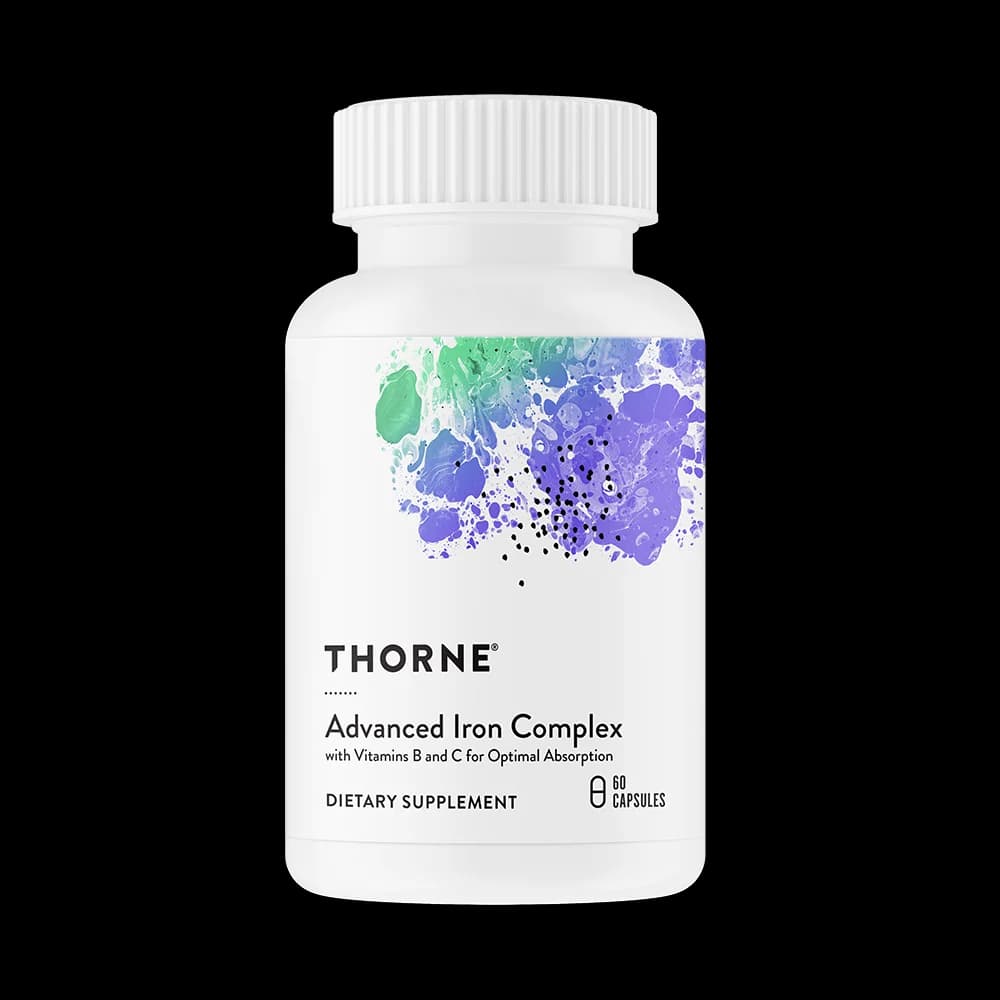
In a healthy body, iron and specific B vitamins work together like a highly coordinated assembly line to build red blood cells and deliver oxygen to every tissue. But chronic inflammation, viral persistence, and autonomic nervous system dysfunction can severely disrupt this process. The result is a body gasping for air at the cellular level, triggering a cascade of debilitating symptoms. Advanced Iron Complex (formerly Ferrasorb) by Thorne is designed to address these specific nutritional bottlenecks. By combining a highly bioavailable, chelated form of iron with the active, methylated forms of essential B vitamins and vitamin C, this formulation offers comprehensive support for red blood cell formation, oxygen transport, and mitochondrial energy production.
TL;DR
Chronic fatigue and brain fog may stem from cellular oxygen starvation due to iron and B-vitamin dysregulation.
Advanced Iron Complex combines chelated iron with active B-vitamins to support red blood cell formation and energy.
Chelated iron offers high absorption and minimizes the gastrointestinal distress common with traditional iron supplements.
Active vitamins like L-5-MTHF and Methylcobalamin bypass genetic absorption issues to effectively support cellular health.
What is Advanced Iron Complex?
The Role of Iron in Oxygen Transport
To understand why Advanced Iron Complex is so critical for energy, we must first look at the fundamental role of iron in the human body. Iron is a trace mineral that is absolutely essential for the formation and function of healthy red blood cells. At the molecular level, iron is the central component of hemoglobin, the complex protein inside red blood cells responsible for binding to oxygen in the lungs and transporting it through the bloodstream to every tissue and organ. Without adequate iron, the body cannot produce enough healthy hemoglobin, leading to a condition known as iron deficiency anemia. This results in smaller, paler red blood cells that are highly inefficient at carrying oxygen, leaving the body's cells starved for the very fuel they need to produce energy.
Beyond oxygen transport, iron is deeply involved in cellular energy production. Inside your cells, the mitochondria—often called the powerhouses of the cell—rely on iron to function properly. Iron is a crucial structural component of the cytochromes within the mitochondrial electron transport chain. This chain is responsible for generating adenosine triphosphate (ATP), the primary energy currency of the body. When iron levels drop, even if they haven't dropped low enough to cause clinical anemia, the mitochondria begin to struggle. This localized, cellular iron deficiency can lead to profound muscle weakness, delayed recovery from exertion, and the severe, crushing fatigue that is a hallmark of complex chronic illnesses.
The Synergistic Power of Vitamin Cofactors
While iron is the star player in oxygen transport, it cannot build healthy blood on its own. The creation of red blood cells, a process called erythropoiesis, requires a highly coordinated symphony of nutrients. Advanced Iron Complex recognizes this biological reality by including essential vitamin cofactors: Vitamin C, Vitamin B6, Folate (Vitamin B9), and Vitamin B12. These vitamins act as the mechanics on the cellular assembly line. Vitamin C is required to chemically reduce dietary iron into a form the gut can actually absorb. Once the iron is in the bloodstream, Vitamin B6 steps in to help synthesize the heme ring that will eventually hold the iron molecule.
Simultaneously, Folate and Vitamin B12 are working behind the scenes in the bone marrow, where red blood cells are born. These two vitamins are intimately connected through the methionine cycle and are strictly required for DNA synthesis. When a young red blood cell (an erythroblast) is maturing, it needs to rapidly divide and synthesize DNA. If Folate or B12 is missing, this division process stalls. The resulting red blood cells become abnormally large, fragile, and inefficient—a condition known as megaloblastic anemia. By providing all these nutrients together, Advanced Iron Complex ensures that the entire red blood cell production pathway is supported from start to finish.
Understanding the Chelated Advantage
One of the most significant challenges with traditional iron supplementation is absorption. Conventional iron supplements, such as ferrous sulfate, are notorious for being poorly absorbed by the gastrointestinal tract. When unabsorbed iron sits in the gut, it causes severe irritation, leading to nausea, cramping, constipation, and dark stools. This GI distress is the primary reason many patients abandon their iron therapy before their levels have a chance to recover. Advanced Iron Complex utilizes Ferrochel® Ferrous Bisglycinate Chelate, a highly specialized form of iron designed to bypass these issues.
In a chelated iron molecule, the iron is securely bound (chelated) to two molecules of the amino acid glycine. This unique structure gives the compound a neutral charge, allowing it to pass through the highly acidic environment of the stomach completely intact. Instead of breaking down and irritating the gastric mucosa, the chelated iron is absorbed directly into the intestinal cells. Clinical studies have demonstrated that ferrous bisglycinate has an estimated bioavailability of up to 90.9%, compared to just 26.7% for standard ferrous sulfate. This means your body gets more of the iron it needs, with a drastically reduced risk of the debilitating stomach pain associated with traditional supplements.
How Chronic Illness Impacts Iron and Blood Health
The High Ferritin Paradox in Long COVID
The intersection of iron metabolism and chronic, infection-associated illnesses like Long COVID is a rapidly evolving area of medical research. In a healthy body, ferritin is a protein that safely stores iron for future use. However, ferritin is also an acute-phase reactant, meaning its levels spike dramatically in response to systemic inflammation and viral infections. Recent studies published in 2024 and 2025 have uncovered a fascinating and frustrating paradox in Long COVID patients who transition into developing ME/CFS: they often present with highly elevated ferritin levels alongside symptoms of severe cellular oxygen starvation.
This phenomenon is driven by the body's innate immune response. When the SARS-CoV-2 virus persists or triggers chronic inflammation, the immune system attempts to starve the pathogen by pulling iron out of the bloodstream and sequestering it inside cells. This results in high serum ferritin (iron storage) but low circulating serum iron and compromised hemoglobin production. The body is essentially hoarding iron, making it unavailable for red blood cell formation and mitochondrial energy production. This "functional" iron deficiency leaves patients experiencing the severe fatigue and brain fog of anemia, even though their total body iron stores appear artificially high on standard lab tests.
Absolute Iron Deficiency in POTS and Dysautonomia
For individuals living with postural orthostatic tachycardia syndrome (POTS) and broader dysautonomia, absolute iron deficiency (low ferritin) is a major, often overlooked driver of debilitating symptoms. POTS is characterized by an abnormal increase in heart rate upon standing, accompanied by dizziness, blood pooling, and near-syncope (fainting). Because iron is essential for transporting oxygen, a deficiency forces the cardiovascular system to work exponentially harder. When the brain senses a lack of oxygenated blood upon standing, the autonomic nervous system hits the panic button, triggering a massive release of adrenaline to force the heart to pump faster to compensate.
A pivotal 2014 study published in the journal Neurology highlighted this exact mechanism. Researchers discovered that patients with a serum ferritin level below 50 ng/mL were 2.84 times more likely to exhibit POTS than patients with ferritin above that threshold. While mainstream medicine often considers a ferritin level of 15-30 ng/mL to be "normal," dysautonomia specialists recognize that these lower limits are entirely insufficient for patients whose autonomic nervous systems are already hypersensitive. For these individuals, restoring ferritin levels to at least 50-70 ng/mL is often a critical step in calming the compensatory tachycardia and improving orthostatic tolerance.
ME/CFS and the Functional Iron Trap
Myalgic encephalomyelitis/chronic fatigue syndrome (ME/CFS) is characterized by profound, unrefreshing sleep and post-exertional malaise (PEM)—a severe worsening of symptoms following even minor physical or cognitive exertion. In classic ME/CFS, both absolute iron deficiency and functional iron dysregulation can play a role. When iron levels are low, the mitochondria simply cannot produce enough ATP to meet the body's demands. If a patient attempts to push through this energy deficit, the cells are forced into anaerobic metabolism, producing lactic acid and triggering the systemic crash known as PEM.
Furthermore, chronic viral infections—which are often implicated in the onset of ME/CFS—can hijack circulating iron for their own replication. This creates a vicious cycle where the host's immune system is constantly battling the pathogen, depleting iron stores, and leaving the mitochondria starved. While iron is a key piece of the puzzle, clinical observations indicate that addressing concurrent vitamin deficiencies—such as B12 and Folate—is also critical for improving fatigue and orthostatic intolerance in autonomic disorders. However, because of the complexities of inflammation and hepcidin (a hormone that blocks iron absorption during illness), using a highly bioavailable form of iron alongside specific cofactors is essential for overcoming this functional trap.
Advanced Iron Complex: Supporting Red Blood Cell Formation and Energy
The Iron and Vitamin C Electron Transfer
Advanced Iron Complex is engineered to overcome the specific metabolic roadblocks that chronic illness creates. The first major hurdle is absorption, which is where Vitamin C (Ascorbic Acid) plays a critical, mechanistic role. Most dietary iron, particularly from plant sources, exists in the oxidized ferric (Fe³⁺) state, which the human gut struggles to absorb. Vitamin C acts as a powerful electron donor. At the cellular level in the duodenum, an enzyme called duodenal cytochrome b (Dcytb) transfers an electron from Vitamin C directly to the ferric iron, reducing it to ferrous iron (Fe²⁺).
This reduction is non-negotiable for proper absorption, as only ferrous iron can be effectively transported into the intestinal cells by the Divalent Metal Transporter-1 (DMT-1). Furthermore, in the highly acidic environment of the stomach, Vitamin C chelates the iron, keeping it soluble as it moves into the alkaline environment of the intestines. By including 15 mg of Vitamin C directly in the capsule, Advanced Iron Complex ensures that this vital electron transfer can occur immediately, maximizing the amount of iron that successfully enters the bloodstream to combat the cellular starvation seen in Long COVID and ME/CFS.
Vitamin B6 and the Biosynthesis of Heme
Once the iron is successfully absorbed, the body must build the protein structure to hold it. This is where Vitamin B6 (as Pyridoxal 5'-Phosphate or P5P) becomes essential. Vitamin B6 acts as a crucial coenzyme in the biosynthesis of heme, the iron-binding component of hemoglobin. Specifically, P5P facilitates the very first, rate-limiting step of heme production: the formation of delta-aminolevulinic acid (ALA) in the mitochondria.
If a patient is deficient in Vitamin B6—a common occurrence in chronic illness due to poor gut absorption or high metabolic demand—the body simply cannot synthesize the heme ring. Even if you flood the body with iron, without B6, that iron has nowhere to go. This leads to a specific type of microcytic anemia where red blood cells are small and pale, entirely incapable of carrying the oxygen required to prevent the severe fatigue and brain fog associated with dysautonomia. By including the active, P5P form of B6, this supplement bypasses the need for liver conversion, immediately supplying the mitochondria with the tools needed to construct functional hemoglobin.
Folate, B12, and the DNA Synthesis Pathway
The final step in red blood cell formation involves the rapid division and maturation of the cells in the bone marrow. This process requires massive amounts of DNA synthesis, which is entirely dependent on Folate (L-5-MTHF) and Vitamin B12 (Methylcobalamin). These two vitamins are intimately connected via the methionine cycle. Vitamin B12 acts as a cofactor for the enzyme methionine synthase, which takes a methyl group from Folate and transfers it to homocysteine. This specific biochemical reaction is the bottleneck for creating the purines and thymidylate required to build new DNA.
In patients with chronic neuroimmune conditions, this methylation cycle is frequently impaired by genetic mutations (like MTHFR) or chronic oxidative stress. When DNA synthesis stalls, the red blood cells cannot divide properly, resulting in large, fragile cells that die prematurely (megaloblastic anemia). By providing 667 mcg DFE of active L-5-MTHF and 300 mcg of Methylcobalamin, Advanced Iron Complex ensures that the "methyl-folate trap" is avoided. These active forms immediately enter the cellular pathways, supporting the rapid production of healthy, mature red blood cells capable of surviving their full 120-day lifespan and delivering vital oxygen to oxygen-starved tissues.
Symptoms Advanced Iron Complex May Help Manage
Cardiovascular and Autonomic Symptoms
Advanced Iron Complex targets the foundational mechanisms of oxygen transport, which can have a profound impact on the cardiovascular and autonomic symptoms frequently seen in POTS and dysautonomia. By supporting healthy red blood cell formation, this supplement helps ensure the brain and heart receive adequate oxygen, reducing the need for compensatory autonomic responses.
Rapid Heart Rate (Tachycardia): By improving the oxygen-carrying capacity of the blood, the heart does not have to pump as fast or as hard to deliver oxygen to tissues, particularly when standing up.
Dizziness and Lightheadedness: Enhanced hemoglobin levels ensure that the brain receives a steady, sufficient supply of oxygenated blood, reducing the frequency of orthostatic dizziness and near-syncope.
Shortness of Breath (Air Hunger): When red blood cells are healthy and abundant, the lungs can efficiently transfer oxygen into the bloodstream, alleviating the sensation of not being able to take a deep, satisfying breath.
Palpitations: Stabilizing blood volume and oxygen delivery helps calm the autonomic nervous system's "fight or flight" response, reducing the incidence of bounding or irregular heartbeats.
Energy and Cognitive Symptoms
The profound fatigue and cognitive dysfunction experienced by patients with Long COVID and ME/CFS are intimately tied to mitochondrial health and cellular oxygenation. By providing the specific nutrients required for ATP production and neural support, Advanced Iron Complex addresses energy deficits at the cellular level.
Debilitating Fatigue: Iron is a structural component of the mitochondrial electron transport chain. Restoring localized iron levels helps the mitochondria produce ATP more efficiently, raising the baseline energy floor.
Post-Exertional Malaise (PEM): Better oxygen delivery means cells are less likely to be forced into anaerobic metabolism during minor exertion, potentially reducing the severity of lactic acid buildup and subsequent crashes.
Brain Fog and Cognitive Impairment: The active B-vitamins (Methylcobalamin and L-5-MTHF) are critical for synthesizing neurotransmitters and maintaining the myelin sheath around nerves, supporting clearer thinking and memory recall.
Decreased Mood Quality: Vitamin B6 and Folate are essential cofactors in the production of serotonin and dopamine. Supporting these pathways can help stabilize mood fluctuations associated with chronic illness.
Physical and Peripheral Symptoms
Iron and B-vitamin deficiencies often manifest in visible, physical symptoms that affect daily comfort and quality of life. Addressing these nutritional gaps can lead to noticeable improvements in peripheral circulation and tissue health.
Cold Hands and Feet: Improved red blood cell count and hemoglobin concentration enhance peripheral microcirculation, helping to deliver warm, oxygenated blood to the extremities.
Pale Skin and Nail Beds: As healthy, iron-rich blood cells repopulate the vascular system, natural color and vitality return to the skin and mucous membranes.
Muscle Weakness: Iron is a key component of myoglobin, the protein that stores oxygen in muscle cells. Replenishing these stores supports muscle endurance and reduces feelings of heaviness.
Numbness or "Pins and Needles": The active Vitamin B12 (Methylcobalamin) in this complex is vital for nerve repair and helping to manage the peripheral neuropathy often associated with long-term B-vitamin deficiency.
Practical Considerations: Forms, Dosing, and Absorption
Ferrous Bisglycinate vs. Traditional Iron Salts
When considering iron supplementation, the specific chemical form is the most critical factor for both efficacy and tolerability. Traditional iron supplements, such as ferrous sulfate or ferrous fumarate, are inorganic salts. While inexpensive, they are highly susceptible to dietary "anti-nutrients." Compounds like phytates (found in grains and beans) and tannins (in coffee and tea) can bind to these free iron salts in the gut, decreasing their absorption by up to 60%. This leaves a massive amount of unabsorbed iron to irritate the intestinal lining, causing the severe constipation and nausea that force many patients to quit their treatment.
Advanced Iron Complex utilizes Ferrochel® Ferrous Bisglycinate Chelate. Because the iron is bound to two glycine amino acids, it has a neutral charge and does not interact with dietary inhibitors. A 2023 systematic review and meta-analysis of 17 randomized controlled trials found that patients taking ferrous bisglycinate experienced a 64% reduction in adverse gastrointestinal events compared to those taking traditional iron salts. Because it absorbs so efficiently, the 36 mg of elemental iron provided in this complex is often more effective at raising ferritin levels than much higher doses of conventional iron, without the debilitating side effects.
Bypassing the MTHFR Gene with Active B Vitamins
The inclusion of B-vitamins in an iron complex is only beneficial if the body can actually use them. Many standard supplements use synthetic folic acid and cyanocobalamin. However, a large percentage of the population carries genetic variations, such as the MTHFR (methylenetetrahydrofolate reductase) mutation, which severely impairs the liver's ability to convert synthetic folic acid into its active form. For these individuals, standard folic acid supplements are not only ineffective but can lead to a buildup of unmetabolized folic acid in the bloodstream.
Advanced Iron Complex solves this by providing L-5-Methyltetrahydrofolate (L-5-MTHF), the fully active, bioidentical form of folate. Clinical trials have demonstrated that L-5-MTHF absorbs over 3 times faster and has 2.6 times greater bioavailability than synthetic folic acid. Similarly, the supplement uses Methylcobalamin instead of cyanocobalamin. Cyanocobalamin contains a cyanide molecule that the body must expend energy to detoxify and cleave before the B12 becomes active. Methylcobalamin circumvents this step entirely, making it the superior clinical choice for individuals with compromised metabolisms, detoxification issues, or neuroimmune conditions like ME/CFS.
Optimal Timing and Dietary Interactions
To maximize the benefits of Advanced Iron Complex, timing and dietary habits play a crucial role. The suggested use is 1 capsule one to three times daily, or as recommended by a healthcare practitioner. While the chelated form of iron is much less susceptible to food interactions than standard iron, it is generally recommended to take iron supplements on an empty stomach (one hour before or two hours after meals) to achieve absolute peak absorption. However, if you have an incredibly sensitive stomach, the bisglycinate form is gentle enough that it can be taken with a light meal without drastically compromising efficacy.
It is vital to separate your iron supplement from certain medications and other minerals. Calcium strongly competes with iron for absorption pathways in the gut. Therefore, you should avoid taking Advanced Iron Complex at the same time as calcium supplements, dairy products, or antacids. Additionally, if you are managing thyroid issues, iron can interfere with the absorption of levothyroxine; these should be separated by at least four hours. Always consult your healthcare provider to tailor the dosing schedule to your specific lab results and medication regimen, especially since accidental overdose of iron-containing products can be dangerous.
Follow the Science
Clinical Trials on Ferrous Bisglycinate Efficacy
The scientific consensus heavily favors ferrous bisglycinate chelate over traditional iron salts for addressing iron deficiency. A 2019 double-blind randomized controlled trial followed 187 women over 8 weeks to compare the two forms. The researchers found that the ferrous bisglycinate group achieved a mean hemoglobin increase of 2.48 g/dL, compared to just 1.32 g/dL in the ferrous sulfate group. Furthermore, 89.2% of the bisglycinate group achieved a healthy hemoglobin level (>11 g/dL) versus 71.3% in the sulfate group, alongside significantly fewer gastrointestinal side effects. This demonstrates that lower doses of highly bioavailable iron are more effective clinically than high doses of poorly absorbed salts.
The Link Between Ferritin Levels and Autonomic Dysfunction
The connection between iron stores and autonomic nervous system stability is a crucial area of study for POTS patients. A pivotal 2014 study published in the journal Neurology analyzed patients with autonomic dysfunction to determine if low ferritin plays an etiological role. The study discovered that the mean serum ferritin level in POTS patients was significantly lower (37.1 ng/mL) compared to non-POTS autonomic patients (57.8 ng/mL). Crucially, the data revealed that patients with a serum ferritin level below 50 ng/mL were 2.84 times more likely to exhibit POTS. This highlights the necessity of targeting higher optimal ferritin ranges rather than settling for "normal" reference ranges when managing dysautonomia.
The Superiority of L-5-MTHF in Clinical Settings
Research consistently shows that active, methylated B-vitamins outperform their synthetic counterparts, particularly in populations with genetic polymorphisms. A clinical trial published in Food & Nutrition Research evaluated the pharmacokinetics of L-5-MTHF compared to synthetic folic acid. The study found that the active folate reached maximum plasma levels in under 1 hour, compared to 2.8 hours for folic acid. Additionally, a 24-week randomized trial demonstrated that continuous administration of L-5-MTHF significantly raised red blood cell folate levels more effectively than an equal dose of folic acid, without the risk of unmetabolized folic acid (UMFA) accumulating in the bloodstream.
The Path Forward
Validating the Invisible Struggle
Living with conditions like Long COVID, ME/CFS, POTS, and dysautonomia is an incredibly complex and often isolating journey. When you are battling crushing fatigue, dizzy spells, and brain fog, and your standard lab tests come back "normal," it is easy to feel dismissed by the medical system. It is vital to understand that your symptoms are real, physiological, and deeply rooted in cellular mechanisms like oxygen transport and mitochondrial energy production. The functional iron deficiencies and B-vitamin bottlenecks discussed here are invisible to basic blood panels, but their impact on your daily life is undeniable.
A Comprehensive Approach to Recovery
While Advanced Iron Complex offers a highly targeted, bioavailable solution for supporting red blood cell formation and oxygen delivery, it is important to remember that supplements are just one piece of a much larger puzzle. Managing complex chronic illness requires a comprehensive, multi-disciplinary approach. Pacing to avoid post-exertional malaise, tracking your symptoms, staying aggressively hydrated, and working with a literate healthcare provider are all essential components of a successful management strategy. You might also explore how gut-brain reset strategies or CoQ10 for mitochondrial support can complement your iron protocol.
Next Steps in Your Journey
If you suspect that iron deficiency, poor oxygen transport, or MTHFR genetic variations are contributing to your severe fatigue and autonomic symptoms, it may be time to look closer at your nutritional foundation. By providing chelated iron alongside the active forms of Vitamin C, B6, Folate, and B12, Advanced Iron Complex is designed to support your body's natural assembly line without the harsh GI side effects of traditional supplements. Always consult with your healthcare provider to run a comprehensive iron panel (including ferritin, TIBC, and saturation) before beginning supplementation.
Sources
Discover MedNews: Ferritin in Long COVID Patients Who Developed ME/CFS
Neurology Journal: Postural Tachycardia Syndrome Associated with Ferritin Deficiency
Oreate AI / Clinical Trials: Ferrous Bisglycinate Chelate vs Ferrous Sulfate
SPring-8 / Communications Biology: Vitamin C and the Dcytb Electron Transfer Mechanism
Blood (American Society of Hematology): Vitamin B12, Folate, and DNA Synthesis
Nutraceutical Business Review: Clinical Study on L-5-MTHF Bioavailability