Can Zinc Supreme™ Support Immune Recovery and Energy in Long COVID and ME/CFS?
March 6, 2026
ZincLong COVIDME/CFS
Share:
Disclaimer: The information provided here is for educational purposes only and is not intended as medical advice. It should not be used to diagnose, treat, cure, or prevent any medical condition. Instead, use it as a starting point for discussion with your healthcare provider. Always consult with a qualified healthcare provider before starting any new medication, supplement, device, or making changes to your health regimen.
Months after recovering from the initial SARS-CoV-2 infection, many people still fight debilitating symptoms with what we call Long COVID. But what is it that allows some people to recover within a couple of weeks while others suffer from long-term symptoms for months or even years? For patients navigating complex chronic conditions like Long COVID, myalgic encephalomyelitis/chronic fatigue syndrome (ME/CFS), and mast cell activation syndrome (MCAS), the search for answers often leads to the microscopic world of cellular metabolism and immune regulation. When the body is trapped in a cycle of post-viral inflammation, basic nutritional building blocks are rapidly depleted, leaving the immune system misfiring and cellular energy production at a standstill.
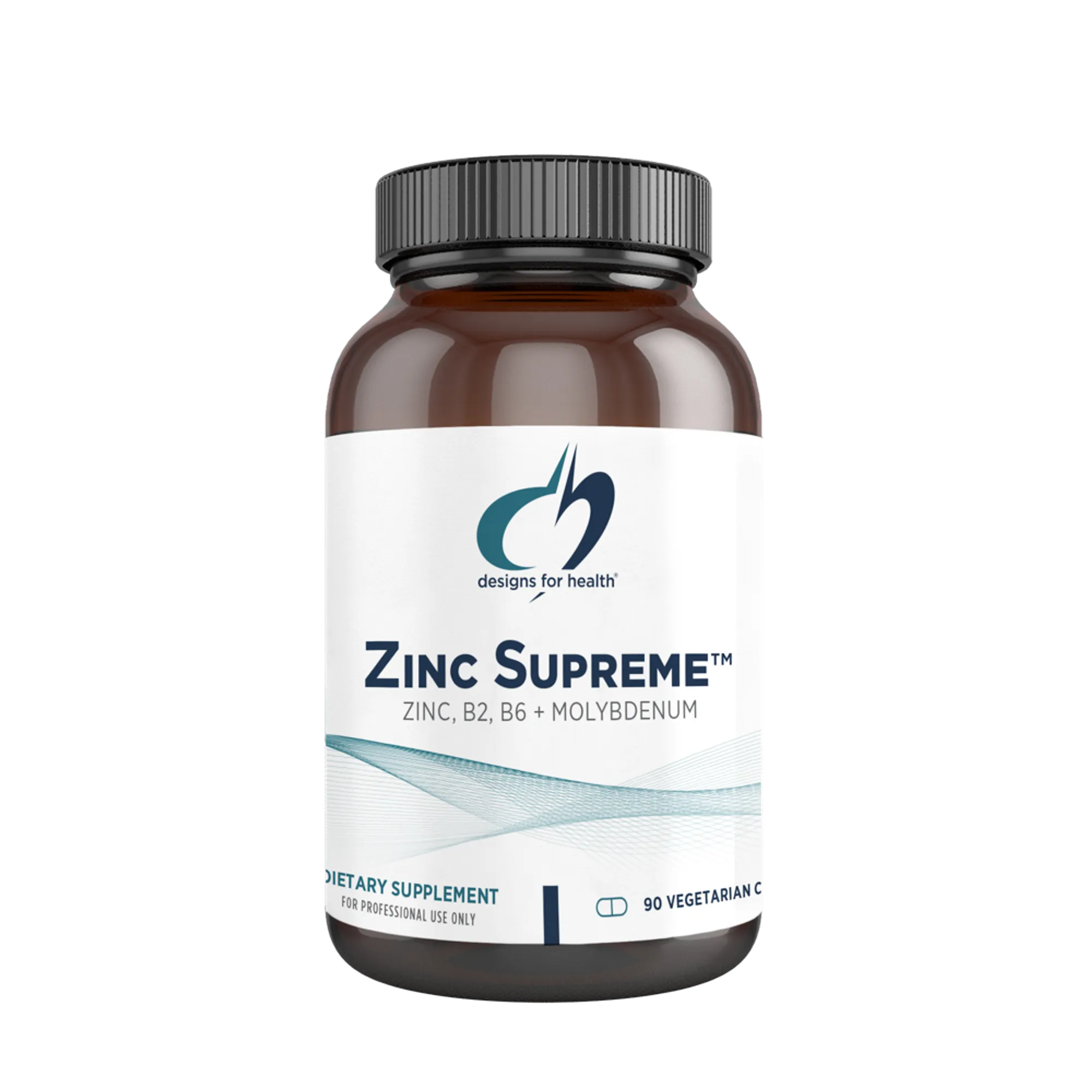
In the wake of the COVID-19 pandemic, a new health concern has emerged: Long COVID. This condition, characterized by lingering symptoms long after the acute phase of the virus, has left many searching for answers. One area of focus is the profound depletion of essential trace minerals and coenzymes. Zinc Supreme™ by Designs for Health is not just a standard zinc supplement; it is a meticulously formulated complex of chelated minerals and synergistic B-vitamins designed to bypass compromised digestive systems. By combining highly bioavailable zinc bisglycinate with molybdenum, active vitamin B6 (P5P), malic acid, and riboflavin, this formulation targets the exact biochemical pathways that are often disrupted in chronic fatigue and immune dysregulation.
What is Zinc Supreme™?
The Power of Chelated Minerals
To understand how Zinc Supreme™ functions in a healthy body, we must first look at how minerals are absorbed. In nature, minerals like zinc are often bound to other compounds. When we consume cheap, inorganic supplements like zinc oxide or zinc sulfate, the mineral ion is free-floating in the stomach. This free zinc must compete with other minerals—such as copper, calcium, and iron—for transport across the intestinal wall. Furthermore, it is highly susceptible to being blocked by dietary phytates found in grains and legumes. Zinc Supreme™ utilizes Albion Advanced Nutrition chelates, specifically zinc bisglycinate chelate. In this form, one zinc ion is covalently bound to two molecules of the amino acid glycine. This low-molecular-weight double-glycine ring protects the zinc ion, allowing it to bypass standard mineral competition and absorb efficiently through dipeptide transport channels in the intestines.
Once absorbed, zinc acts as a foundational pillar for both the innate and adaptive immune systems. It is a mandatory structural component for over 300 enzymes and 2,000 transcription factors in the human body. At the cellular level, zinc is essential for the production, activation, and proliferation of T-lymphocytes (T cells). It acts as a potent anti-inflammatory and antioxidant agent, inhibiting enzymes like caspases that control cellular death (apoptosis) and preventing the overproduction of pro-inflammatory cytokines. Without adequate zinc, the immune system cannot effectively clear viral pathogens or regulate systemic inflammation, leading to a state of chronic oxidative stress.
The Synergistic Co-Factors: Molybdenum, P5P, and Riboflavin
Zinc Supreme™ does not rely on zinc alone; it incorporates a precise blend of co-factors that drive cellular detoxification and energy. Molybdenum (as molybdenum glycinate chelate) is an essential trace mineral that acts as a mandatory cofactor for several crucial liver detoxification enzymes. The most notable is Sulfite Oxidase (SUOX), an enzyme located in the mitochondrial intermembrane space that converts toxic, highly reactive sulfites into harmless sulfates. This process is critical for preventing the accumulation of neurotoxic compounds and regulating the body's sulfur metabolism. Molybdenum also fuels Aldehyde Oxidase, which clears volatile aldehydes produced by alcohol metabolism and fungal overgrowth.
To support these mineral functions, the formula includes Vitamin B6 as Pyridoxal-5-Phosphate (P5P) and Riboflavin (Vitamin B-2). P5P is the metabolically active coenzyme form of B6, meaning it bypasses the liver conversion bottleneck required by synthetic pyridoxine. P5P and zinc share a bi-directional biochemical synergy: zinc requires P5P to synthesize picolinic acid for optimal intestinal transport, while P5P requires zinc to activate the pyridoxal kinase enzyme. Meanwhile, Riboflavin serves as the direct precursor to Flavin Adenine Dinucleotide (FAD), an essential electron carrier in the mitochondria, and the enzyme responsible for synthesizing FAD contains a molybdopterin-binding domain, highlighting the deep evolutionary and regulatory link between Riboflavin and molybdenum metabolism.
Malic Acid and the Krebs Cycle
The final key ingredient in this complex is Malic Acid, a naturally occurring dicarboxylic acid that plays a fundamental role in cellular energy metabolism. Inside the mitochondria, malic acid (in its ionized form, malate) is a direct participant in the Krebs cycle (Citric Acid Cycle). During this cycle, the enzyme malate dehydrogenase oxidizes malate into oxaloacetate. This specific oxidation step produces NADH, a vital carrier molecule that transports electrons to the mitochondrial electron transport chain, where the bulk of cellular adenosine triphosphate (ATP) is synthesized. Malate is also central to the malate-aspartate shuttle, which transfers NADH produced in the cell's cytosol across the impermeable mitochondrial membrane, ensuring a maximum yield of ATP from glucose metabolism.
How Long COVID and ME/CFS Impact Immune and Cellular Function
Viral Persistence and T-Cell Exhaustion
When exploring What Causes Long COVID?, researchers frequently point to viral persistence and severe immune dysregulation. Chronic illnesses like Long COVID and ME/CFS place an immense, prolonged demand on the body's nutritional reserves. During an acute SARS-CoV-2 infection, the immune system rapidly consumes zinc to produce T-lymphocytes and mount an antiviral defense. If this viral load is not fully cleared, the immune system remains locked in a state of chronic activation, leading to a profound depletion of systemic zinc. Clinical studies have shown that this resulting zinc deficiency directly correlates with a decrease in the expression of CD69+, an early activation marker on CD3+ and CD8+ T cells. Without sufficient zinc, T cells become exhausted and fail to function, allowing latent viruses (like Epstein-Barr Virus) to reactivate and perpetuate the cycle of illness.
Furthermore, zinc deficiency in post-viral states is statistically associated with abnormally high fibrinogen levels. Fibrinogen is a primary biomarker for blood clotting and prolonged systemic inflammation. In Long COVID, elevated fibrinogen contributes to the formation of microclots—tiny, persistent blood clots that block capillaries and prevent oxygen from reaching tissues. This microvascular dysfunction starves the muscles and brain of oxygen, directly contributing to the debilitating fatigue and cognitive impairment that define What Are the Symptoms of Long COVID?.
The Hypoxic Energy Blockade in ME/CFS
The connection between viral illness and profound energy loss is a central focus for patients wondering, Can Long COVID Trigger ME/CFS? Unraveling the Connection. In ME/CFS, patients suffer from post-exertional malaise (PEM), where even minor physical or cognitive exertion leads to a severe crash. This is driven by a phenomenon known as the "Chronic Hypoxia Hypothesis." Due to microvascular clotting and mitochondrial dysfunction, the muscle tissues in ME/CFS patients often experience abnormally low oxygen pressure (local hypoxia). Under these anaerobic conditions, a buildup of reducing equivalents inhibits glycolysis and halts ATP production. The body is forced to rely on inefficient anaerobic metabolism, which rapidly produces lactic acid and causes severe muscle pain and fatigue.
This hypoxic energy blockade is further exacerbated by the depletion of Krebs cycle intermediates. When the mitochondria cannot efficiently process glucose into ATP, the entire cellular energy grid collapses. Patients are left with profound, unyielding fatigue that does not improve with rest, as their cells literally lack the biochemical currency required to function.
Mast Cell Activation and Toxic Accumulation
Many patients with Long COVID and dysautonomia also develop mast cell activation syndrome (MCAS), a condition where mast cells become overly sensitive and repeatedly release massive amounts of inflammatory mediators, including histamine. A hidden driver of this mast cell instability is the depletion of molybdenum. In complex chronic illnesses, pathogens (like mold mycotoxins or Candida overgrowth) actively deplete the body's molybdenum stores by producing volatile aldehydes. To process this heavy toxic burden, the body’s aldehyde oxidase pathway runs in overdrive, rapidly draining systemic molybdenum.
When molybdenum is depleted, the Sulfite Oxidase (SUOX) enzyme stalls. This leads to a massive accumulation of sulfites in the bloodstream. High levels of sulfites are highly irritating to the immune system and directly trigger mast cell degranulation, causing the release of histamine. For many patients, what appears to be severe, unpredictable histamine intolerance is actually an underlying sulfite intolerance driven by a simple trace mineral deficiency. This toxic accumulation creates a vicious cycle of allergic reactions, brain fog, and systemic inflammation that makes recovery seem impossible.
Zinc Supreme™: Supporting Immune Defense and Cellular Energy
Zinc and P5P: The Ultimate Immune Gatekeepers
Supplementing with Zinc Supreme™ provides a multi-targeted approach to restoring these disrupted pathways. By delivering 30 mg of highly bioavailable zinc bisglycinate, the formula directly addresses the cellular zinc depletion seen in post-viral syndromes. At the molecular level, replenishing zinc restores the expression of CD69+ on T cells, effectively "waking up" the exhausted immune system and supporting its ability to clear lingering viral fragments. Furthermore, zinc acts as a powerful antioxidant, neutralizing the reactive oxygen species (ROS) that damage tissues and drive chronic inflammation. By downregulating the production of pro-inflammatory cytokines, zinc helps calm the systemic immune storm that characterizes Long COVID.
The inclusion of 5.2 mg of P5P (Vitamin B6) amplifies this immune-restoring effect. P5P is critical for the production of interleukins and the maintenance of the delicate Th1/Th2 immune balance. Active Vitamin B6 displays broad-spectrum anti-inflammatory properties by significantly downregulating key inflammatory mediators like CCL2 and CCL5. It also increases levels of IL-10, a potent anti-inflammatory cytokine that calms overactive macrophages. Together, zinc and P5P act as gatekeepers, stabilizing immune cells and preventing the excessive tissue damage associated with cytokine storms.
Molybdenum: Clearing the MCAS Triggers
For patients dealing with MCAS and chemical sensitivities, the 50 mcg of molybdenum glycinate chelate in Zinc Supreme™ is a critical, often overlooked intervention. By supplying bioavailable molybdenum, the supplement directly fuels the Sulfite Oxidase (SUOX) and Aldehyde Oxidase enzymes. As SUOX activity is restored, the body can rapidly convert highly reactive, toxic sulfites into harmless sulfates, which are then safely excreted in the urine. This removes a massive, hidden trigger for mast cell degranulation, often resulting in a dramatic reduction in histamine release and allergic-type symptoms.
Furthermore, restoring molybdenum levels unlocks the body's ability to tolerate sulfur-based detoxification protocols. Many chronically ill patients completely lose the ability to process sulfur, meaning that if they take master antioxidants like glutathione or N-Acetyl-Cysteine (NAC), it converts into toxic sulfites but cannot convert into sulfates, causing intense "die-off" or flare-up symptoms. By upregulating the SUOX pathway with molybdenum, patients can finally tolerate these crucial antioxidants and effectively detoxify from the cellular debris left behind by viral infections.
Malic Acid and Riboflavin: Reigniting the Krebs Cycle
To combat the profound fatigue and hypoxic energy blockades of ME/CFS, Zinc Supreme™ delivers 200 mg of Malic Acid. Because malic acid has a unique ability to stimulate ATP production even under hypoxic conditions, it acts as a metabolic bypass. It can be simultaneously reduced to succinate and oxidized to oxaloacetate, effectively clearing accumulating reducing equivalents. This allows the cells to bypass the hypoxic blockade, continuing to produce ATP and preventing the lactic acid accumulation that causes severe post-exertional muscle pain.
This energy production is further supported by 2.8 mg of Riboflavin (Vitamin B-2). As the direct precursor to Flavin Adenine Dinucleotide (FAD), riboflavin is an essential electron carrier in the mitochondria. It supports the function of mitochondrial Complexes I and II, ensuring that the electrons generated by the Krebs cycle are efficiently converted into usable ATP. Together, malic acid and riboflavin help reignite the cellular power grid, providing the biochemical currency needed to overcome debilitating fatigue.

Symptoms Zinc Supreme™ May Help Manage
Targeted Symptom Relief for Complex Conditions
When considering how to manage the multifaceted symptoms of chronic illness, understanding the specific mechanisms of your supplements is crucial. Zinc Supreme™ targets several core pathophysiological processes, offering potential relief for a variety of debilitating symptoms. Here is a breakdown of the specific symptoms this formulation may help manage:
Profound Fatigue and Post-Exertional Malaise (PEM): By providing malic acid to bypass hypoxic energy blockades and riboflavin to support mitochondrial electron transport, this complex helps restore ATP production at the cellular level, potentially reducing the severity of energy crashes.
Brain Fog and Cognitive Impairment: Zinc deficiency is linked to elevated fibrinogen and microclot formation, which restricts oxygen flow to the brain. Replenishing zinc supports vascular health and reduces neuroinflammation, helping to clear the cognitive haze associated with Long COVID.
Persistent Loss of Taste and Smell (Dysgeusia/Anosmia): Zinc is heavily concentrated in the submandibular salivary glands and is fundamentally required for gustatory and olfactory function. Restoring zinc levels is a primary intervention for recovering these senses post-infection.
Histamine Intolerance and MCAS Flares: The inclusion of molybdenum glycinate fuels the SUOX enzyme, clearing the toxic sulfites that directly trigger mast cell degranulation. This can significantly reduce unpredictable allergic reactions, hives, and tachycardia.
Chemical and Fragrance Sensitivities: Molybdenum also supports Aldehyde Oxidase, the enzyme responsible for clearing volatile aldehydes from the bloodstream, which often drastically reduces sensitivity to perfumes and environmental VOCs.
Muscle Pain and Tenderness (Fibromyalgia-like Symptoms): Malic acid helps clear lactic acid buildup and supports efficient aerobic metabolism in muscle tissues, potentially alleviating the deep muscle aches and tenderness common in ME/CFS.
Frequent Infections and Delayed Viral Clearance: By supplying zinc and active P5P, the formula supports T-cell activation and antibody production, strengthening the immune system's ability to fight off opportunistic infections and reactivated viruses.
Practical Considerations: Forms, Dosing, and Absorption
Why Bisglycinate Beats Gluconate and Oxide
When selecting a mineral supplement, bioavailability—the proportion of the nutrient that successfully enters systemic circulation—is the most crucial metric. Clinical literature widely regards zinc bisglycinate (zinc chelate) as one of the most highly bioavailable forms of oral zinc. Because the zinc ion is protected by a double-glycine ring, it does not require a highly acidic stomach environment to dissolve. This is particularly important for patients with dysautonomia or those taking antacids/PPIs, who often cannot absorb standard zinc oxide. Furthermore, because zinc chelate remains structurally intact in the stomach and does not prematurely release ionized zinc, it rarely causes the severe nausea and gastrointestinal distress associated with standard inorganic zinc salts like zinc sulfate.
The active form of Vitamin B6 (P5P) in this formulation also offers significant advantages over standard Pyridoxine HCl. Un-metabolized synthetic pyridoxine has a long half-life and can actively block the body's natural P5P enzymes, which can paradoxically cause B6 deficiency symptoms and peripheral neuropathy. Direct supplementation with P5P circumvents the liver conversion bottleneck, delivering a bio-optimized molecule that the body can use immediately for enzymatic reactions without the neurotoxic risks.
The Copper Paradox and Molybdenum
While molybdenum is vital for MCAS and detoxification, it must be used thoughtfully due to a well-documented biochemical interaction: molybdenum is a copper antagonist. Prolonged or excessively high doses of molybdenum will bind to copper and cause a copper deficiency. This is highly relevant to MCAS patients because the gut enzyme responsible for breaking down dietary histamine—Diamine Oxidase (DAO)—is a copper-dependent enzyme. If an MCAS patient takes too much molybdenum for too long without monitoring, they may deplete their copper levels, resulting in low DAO production and a sudden worsening of histamine intolerance. At 50 mcg per capsule, Zinc Supreme™ provides a safe, therapeutic dose, but practitioners advise balancing trace minerals and periodically checking serum copper and ceruloplasmin levels during long-term use.
Timing and Dietary Interactions
For optimal absorption, it is generally recommended to take Zinc Supreme™ with a meal, as directed by your healthcare practitioner. While the bisglycinate form is highly resistant to being blocked by dietary phytates (found in grains and legumes), taking it with food further minimizes any potential for mild stomach upset. It is also important to space zinc supplementation away from high-dose iron or calcium supplements, as these minerals can still compete for absorption pathways in the gut, even when chelated. Consistency is key; while some patients notice improvements in energy within a few weeks, restoring deep cellular mineral deficiencies often requires 2 to 3 months of sustained supplementation.

Follow the Science
Clinical Trials on Zinc Bioavailability
The superiority of zinc bisglycinate is well-documented in pharmacokinetic trials. A benchmark 2007 randomized crossover study by Gandia et al., published in the International Journal for Vitamin and Nutrition Research, compared single oral doses of 15 mg of elemental zinc as either zinc bisglycinate or zinc gluconate in healthy women. Researchers measured serum zinc concentrations using validated ICP-OES methodology and found that zinc bisglycinate was 43.4% more bioavailable than zinc gluconate. Furthermore, a 2015 long-term efficacy trial by DiSilvestro et al. tracked young women given 60 mg/day of either zinc glycinate or zinc gluconate for 6 weeks. Only the zinc glycinate group significantly increased plasma zinc levels at the 6-week mark compared to baseline, solidifying its status as the premier form for correcting deficiencies.
Zinc Deficiency in Post-Viral Syndromes
The clinical connection between zinc deficiency and chronic fatigue syndromes is robust. A pivotal study by Maes et al. (2006) in the Journal of Affective Disorders measured serum zinc levels in ME/CFS patients versus normal volunteers. They found that serum zinc was significantly lower in CFS patients, and this deficiency had a significant negative correlation with the severity of the illness and the patients' subjective experience of persistent infection. More recently, a massive October 2024 retrospective cohort study published in Cureus evaluated 3,726 COVID-19 survivors. The researchers found that patients with pre-infection zinc deficiency faced a significantly higher risk of developing persistent cardiac and renal Long COVID subphenotypes, highlighting zinc's protective role in post-viral recovery.
Molybdenum and B6 Research
Research also supports the synergistic roles of P5P and molybdenum. Clinical pathology literature on Molybdenum Cofactor Deficiency (MoCD) clearly demonstrates that without adequate molybdenum to fuel the SUOX enzyme, toxic sulfites accumulate rapidly, causing severe neurological and mitochondrial dysfunction. This reinforces the critical need for trace minerals in maintaining cellular detoxification pathways.
The Path Forward
A Comprehensive Approach to Recovery
Living with invisible, complex illnesses like Long COVID, ME/CFS, and MCAS is an exhausting and often frustrating journey. When your body feels like it is constantly misfiring, it is easy to feel overwhelmed by the sheer volume of symptoms. It is vital to remember that these symptoms are not in your head; they are the result of measurable, physiological disruptions at the cellular level. While no single supplement is a miracle cure, targeted nutritional support like Zinc Supreme™ can provide the essential biochemical tools your body needs to begin repairing these disrupted pathways.
When exploring How Can You Live with Long-Term COVID or How Does a Doctor Diagnose Long COVID?, it becomes clear that recovery requires a comprehensive, multi-disciplinary approach. Supplements are most effective when combined with strict pacing to avoid post-exertional malaise, detailed symptom tracking, and ongoing medical care from practitioners who understand complex chronic illness. By addressing foundational mineral deficiencies, you are taking a proactive step toward stabilizing your immune system and supporting your cellular energy grid.
Disclaimer: This content is for educational purposes only and is not intended as medical advice. Zinc Supreme™ and other supplements are not intended to diagnose, treat, cure, or prevent any disease. Always consult your healthcare provider before starting any new supplement regimen, especially if you have complex chronic conditions or are taking prescription medications.