Can Vitamin K Support Vascular Health and Bone Density for Long COVID Patients?
March 6, 2026
Vitamin KLong COVIDDysautonomia
Share:
Disclaimer: The information provided here is for educational purposes only and is not intended as medical advice. It should not be used to diagnose, treat, cure, or prevent any medical condition. Instead, use it as a starting point for discussion with your healthcare provider. Always consult with a qualified healthcare provider before starting any new medication, supplement, device, or making changes to your health regimen.
Months after recovering from an initial viral infection, many people still fight debilitating, unpredictable symptoms with what we call Long COVID. The journey of navigating complex chronic conditions like Long COVID, myalgic encephalomyelitis/chronic fatigue syndrome (ME/CFS), dysautonomia, and mast cell activation syndrome (MCAS) is often fraught with frustration. Patients frequently find themselves searching for answers to explain why their bodies feel fundamentally altered, dealing with profound fatigue, brain fog, and cardiovascular irregularities that disrupt daily life. One area of emerging scientific focus that offers a crucial piece of this complex puzzle is the profound impact of viral infections on vascular health and the body's nutrient reserves.
In the wake of the COVID-19 pandemic, researchers have uncovered a significant connection between endothelial dysfunction—the impairment of the inner lining of blood vessels—and the severe depletion of specific micronutrients. Among these, Vitamin K has emerged as a critical player. Historically recognized primarily for its role in blood coagulation, modern science now understands Vitamin K as a vital modulator of inflammation, arterial elasticity, and bone density. For individuals living with chronic illness, understanding how to support these foundational physiological processes can be a transformative step toward managing symptoms and improving overall quality of life.
TL;DR
Vitamin K2 supports bone density and cardiovascular health by directing calcium into bones and away from arteries.
Viral infections may deplete Vitamin K reserves, potentially contributing to Long COVID and dysautonomia symptoms.
Supplementing with Vitamin K may help manage fatigue, brain fog, and vascular issues in chronic conditions.
Always consult your healthcare provider before starting Vitamin K, especially if you take blood-thinning medications.
What is Vitamin K?
The Essential Role of the Vitamin K Family
When we talk about Vitamin K, we are not referring to a single isolated nutrient, but rather a family of fat-soluble vitamins that share a similar chemical structure. This family is broadly divided into two main categories: Vitamin K1 (phylloquinone) and Vitamin K2 (menaquinone). Vitamin K1 is primarily found in leafy green vegetables and is preferentially utilized by the liver to synthesize essential blood clotting factors. In contrast, Vitamin K2 is found in animal products and fermented foods, and it plays a vastly different, yet equally critical, role in the body. Vitamin K2 is further categorized by the length of its isoprenoid side chain, with MK-4 and MK-7 being the most clinically significant forms.
While Vitamin K1 ensures that we do not bleed excessively from a minor injury, Vitamin K2 acts as a powerful directing agent for calcium metabolism throughout the extrahepatic tissues—meaning the tissues outside of the liver, such as our bones and blood vessels. Recent scientific research has highlighted that a healthy body relies on a delicate balance of both K1 and K2 to maintain hemostatic equilibrium, skeletal strength, and cardiovascular integrity. Without adequate levels of these vitamins, the body's ability to manage calcium and respond to vascular stress becomes severely compromised.
The Biochemical Mechanism: Gamma-Carboxylation
To understand how Vitamin K works at a molecular level, we must look at a specific enzymatic process known as gamma-carboxylation. Vitamin K serves as an essential, non-negotiable cofactor for the enzyme gamma-glutamyl carboxylase (GGCX). This enzyme is responsible for modifying specific glutamate (Glu) amino acid residues on a group of proteins known as Vitamin K-dependent proteins (VKDPs). Through the "Vitamin K Cycle," GGCX converts these glutamate residues into gamma-carboxyglutamate (Gla) residues.
This post-translational modification is not just a minor structural change; it is the fundamental switch that turns these proteins "on." The conversion to Gla residues provides the proteins with a strong negative charge, granting them a high affinity to bind to positively charged calcium ions circulating in the bloodstream. Without a specific biochemical mechanism driven by adequate Vitamin K, these critical proteins remain in an "uncarboxylated" or inactive state, rendering them completely unable to perform their calcium-regulating duties.
The Calcium Paradox and Systemic Balance
This biochemical activation is the key to resolving what medical literature refers to as the "Calcium Paradox." For decades, patients were advised to take high doses of calcium supplements to protect their aging bones. However, researchers discovered a disturbing trend: isolated calcium supplementation often led to increased arterial calcification and cardiovascular events. The calcium was not making it into the bones; instead, it was depositing as dangerous plaque in the arteries.
Vitamin K2 is the missing link that solves this paradox. By activating specific proteins, Vitamin K2 acts as a biological traffic cop. It ensures that calcium is actively swept out of the soft tissues and blood vessels, where it can cause immense harm, and physically locks that exact same calcium into the skeletal matrix, where it is desperately needed for structural integrity. This dual action is why maintaining optimal Vitamin K status is not just about preventing deficiency, but about actively promoting systemic balance and longevity.
How Chronic Illness Impacts Vitamin K and Vascular Health
Viral Infection and the Depletion of Vitamin K Reserves
For individuals living with Long COVID, the connection between their initial viral infection and their ongoing symptoms often feels like a frustrating mystery. However, recent research on Long COVID suggests a connection between the initial viral infection and the depletion of the body's nutritional reserves. When the virus invades the respiratory system, it triggers a massive immune response, upregulating pro-inflammatory cytokines and increasing macrophage activity in the lungs. These macrophages, in their attempt to fight the virus, release enzymes that inadvertently degrade the delicate elastic fibers of the lung tissue.
To protect these vital elastic fibers from further destruction and pathological mineralization, the body dramatically upregulates the synthesis of a protective protein called Matrix Gla Protein (MGP). However, as we established, MGP is entirely dependent on Vitamin K to become active. The rapid, desperate activation of MGP in the lungs consumes massive amounts of the body's Vitamin K stores. Because the body prioritizes using its remaining Vitamin K in the liver to maintain basic survival functions like blood clotting, this localized consumption leaves the rest of the cardiovascular system—the blood vessels and arteries—severely deficient in Vitamin K.
Endothelial Dysfunction in Long COVID and Dysautonomia
This profound, virus-induced Vitamin K depletion sets the stage for endothelial dysfunction, a hallmark feature of both Long COVID and dysautonomia. The endothelium is the delicate inner lining of our blood vessels, responsible for regulating blood flow, vascular tone, and immune cell trafficking. When the blood vessels are starved of Vitamin K, the protective mechanisms fail. This leads to reduced nitric oxide bioavailability, increased vascular permeability, and a heightened risk of microvascular thrombosis (tiny blood clots).
For patients with postural orthostatic tachycardia syndrome (POTS) and other forms of dysautonomia, this endothelial impairment is disastrous. Healthy vascular tone is required to constrict blood vessels and push blood back up to the brain when standing. When endothelial dysfunction occurs, blood pools in the lower extremities, triggering the heart to beat rapidly (tachycardia) to compensate. The localized Vitamin K deficiency exacerbates this inability of the blood vessels to contract and dilate efficiently, directly contributing to the debilitating dizziness, palpitations, and exercise intolerance experienced by these patients.
The Vicious Cycle of Inflammation and Oxidative Stress
The pathophysiology of complex chronic illness is rarely linear; it operates in vicious, self-perpetuating cycles. The initial viral insult and subsequent endothelial damage trigger intense oxidative stress throughout the body. This oxidative stress can lead to "ferroptosis"—a highly inflammatory type of iron-dependent cellular death that further damages the vascular lining and surrounding tissues.
Simultaneously, the lack of adequate Vitamin K removes a critical brake on the immune system. Without sufficient Vitamin K to intercept inflammatory signaling pathways, the body continues to release pro-inflammatory cytokines, maintaining a state of chronic, low-grade inflammation. This ongoing inflammation continues to damage tissues, which in turn demands more Vitamin K for repair, further depleting the body's already exhausted reserves. Breaking this cycle is essential for patients seeking to manage fatigue with Long COVID and regain their baseline functioning.
Vitamin K: Supporting Bone Density, Blood Flow, and Cellular Repair
Activating Osteocalcin for Skeletal Integrity
Supplementing with a comprehensive Vitamin K formula offers a targeted approach to repairing the disrupted pathways seen in chronic illness. One of the primary therapeutic angles involves bone health through the activation of osteocalcin. Osteocalcin is a protein synthesized exclusively by osteoblasts, the cells responsible for building new bone. In its uncarboxylated state, osteocalcin is biologically inert. However, when Vitamin K2 facilitates its carboxylation, the protein undergoes a conformational change that allows it to tightly bind circulating blood calcium.
Once bound, activated osteocalcin physically incorporates this calcium directly into the hydroxyapatite matrix of the bone. This process is what gives bones their density, structural strength, and resilience against fractures. For individuals with ME/CFS or Long COVID who experience prolonged periods of bedbound rest or significantly reduced mobility due to post-exertional malaise (PEM), maintaining bone density is a critical concern. By ensuring that dietary calcium is efficiently utilized for bone mineralization, Vitamin K2 provides essential support against the rapid bone loss associated with chronic inactivity.
Matrix Gla Protein (MGP) and Arterial Elasticity
The second, and perhaps most crucial, mechanism of action for chronic illness patients involves cardiovascular support via Matrix Gla Protein (MGP). Synthesized by vascular smooth muscle cells in the walls of arteries, MGP is widely recognized by landmark cardiovascular studies as the most potent endogenous inhibitor of vascular calcification. When activated by Vitamin K2, MGP binds to free calcium ions in the arterial walls, safely clearing them before they can crystallize into rigid arterial plaque.
Furthermore, active MGP inhibits Bone Morphogenetic Protein-2 (BMP-2), a factor that can mistakenly trigger smooth muscle cells in the arteries to differentiate into bone-forming cells. By helping to inhibit this pathological transformation and supporting the clearance of calcium deposits, Vitamin K2 helps maintain the health, flexibility, and elasticity of the arteries. For patients dealing with the vascular pooling and impaired blood flow characteristic of dysautonomia, restoring arterial elasticity is a vital step toward improving vascular tone and stabilizing autonomic function.
Anti-Inflammatory and Antioxidant Defense Mechanisms
Beyond its role in calcium metabolism, Vitamin K exerts potent, direct anti-inflammatory effects at the cellular level. Research indicates that Vitamin K can intercept the nuclear factor-κB (NF-κB) signaling pathway, which is a primary driver of chronic inflammation. By inhibiting this pathway, Vitamin K prevents the downstream release of pro-inflammatory cytokines, such as IL-6 and IL-1β, which are frequently elevated in patients with MCAS and Long COVID.
Additionally, Vitamin K acts as a robust antioxidant within the cellular lipid membranes. It helps to neutralize reactive oxygen species (ROS) and strongly inhibits lipid peroxidation. This antioxidant capacity is particularly relevant for helping to mitigate ferroptosis, the inflammatory cell death process that ravages the endothelial lining during and after a severe viral infection. By protecting the cells from oxidative destruction, Vitamin K supports the gradual repair of the vascular endothelium.
Coagulation Factors and Healthy Blood Clotting
Finally, a complete Vitamin K formula must address the foundational need for healthy blood coagulation. Vitamin K1 acts as the indispensable cofactor for the synthesis of several crucial coagulation factors (Factors II, VII, IX, and X) in the liver. While chronic illness often involves complex microvascular clotting issues, maintaining a healthy, balanced baseline of these hepatic coagulation factors is essential for the body's natural ability to form appropriate clots when responding to physical injury.
By providing a comprehensive blend of K1 and K2, supplementation ensures that the liver's demand for coagulation support is fully met, helping to avoid the dangerous triage scenario where extrahepatic tissues are starved of Vitamin K. This holistic approach supports both hemostatic balance and widespread vascular repair, offering a multifaceted therapeutic tool for complex patient presentations.
Symptoms Vitamin K May Help Manage
Cardiovascular and Autonomic Symptoms
For patients navigating complex chronic illnesses, the systemic benefits of Vitamin K supplementation can translate into tangible improvements in daily symptom management. By addressing underlying endothelial dysfunction and supporting arterial health, Vitamin K targets several distressing cardiovascular symptoms:
Blood pooling and poor vascular tone: By activating MGP and maintaining arterial elasticity, Vitamin K supports the blood vessels' ability to efficiently constrict and dilate, potentially reducing the severe blood pooling in the lower extremities often seen in POTS and dysautonomia.
Exercise intolerance and palpitations: By mitigating oxidative stress and supporting optimal endothelial function, Vitamin K helps improve overall blood flow and oxygen delivery to tissues, which may alleviate the rapid heart rate and profound exhaustion triggered by minimal exertion.
Microvascular circulation issues: The antioxidant properties of Vitamin K protect the delicate microcapillaries from inflammatory damage, supporting better circulation to peripheral tissues and the brain.
Musculoskeletal and Inflammatory Symptoms
In addition to cardiovascular support, the bone-building and anti-inflammatory mechanisms of Vitamin K offer targeted relief for musculoskeletal and systemic complaints:
Bone and joint discomfort: By activating osteocalcin, Vitamin K ensures that calcium is properly bound to the skeletal matrix rather than depositing in joint spaces or soft tissues, promoting strong bones and potentially reducing structural discomfort.
Post-exertional malaise (PEM) and fatigue: Recent clinical trials suggest that by reducing systemic inflammation and repairing gut-lung axis permeability, Vitamin K supplementation can significantly decrease the severity of PEM and profound body fatigue in Long COVID patients.
Brain fog and cognitive dysfunction: By inhibiting the NF-κB inflammatory pathway and supporting cerebral microvascular health, Vitamin K helps reduce the neuroinflammation that frequently manifests as severe cognitive impairment and brain fog.
Easy bruising or abnormal bleeding: The inclusion of Vitamin K1 directly supports the liver's synthesis of essential clotting factors, helping to maintain healthy hemostatic balance and reduce instances of unexplained bruising.
Practical Considerations: Forms, Dosing, and Absorption
Understanding the Forms: Vitamin K1 vs. K2 (MK-4 and MK-7)
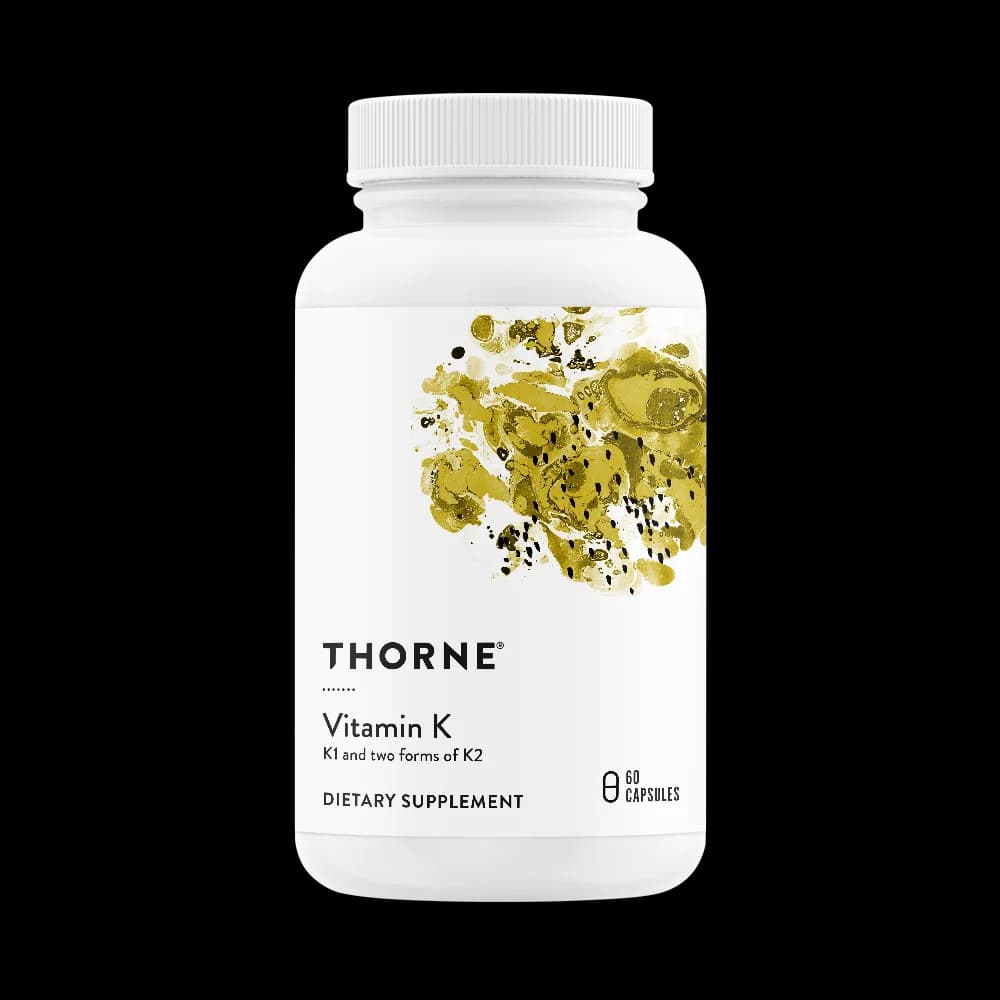
When considering supplementation, it is crucial to understand that not all forms of Vitamin K are created equal. A high-quality supplement, such as Thorne's Vitamin K, provides a comprehensive blend of three distinct, clinically studied forms: Vitamin K1, and two forms of Vitamin K2 (MK-4 and MK-7). Vitamin K1 is essential for supporting healthy blood clotting processes in the liver. However, for bone and cardiovascular health, the K2 forms are paramount.
The two K2 forms, MK-4 (menaquinone-4) and MK-7 (menaquinone-7), have different molecular structures—specifically, the length of their isoprenoid side chains. MK-4 is naturally found in animal products and is identical to the form of Vitamin K2 synthesized in small amounts by the human body. MK-7, on the other hand, is derived from bacterial fermentation, most notably from the traditional Japanese dish natto. While both forms are biologically active and capable of carboxylating osteocalcin and MGP, their differing structures dramatically affect how they are absorbed and utilized by the body.
Bioavailability and the Half-Life Factor
The most significant practical difference between MK-4 and MK-7 lies in their pharmacokinetic differences, specifically their bioavailability and half-life. A landmark 2012 clinical study by Sato et al. demonstrated that MK-4 has an extremely short half-life of just 1 to 2 hours in the bloodstream. Because it is cleared so rapidly, it requires significantly higher doses to achieve systemic benefits. Thorne's formula accounts for this by containing significantly more MK-4 than most other multiple-K products on the market, ensuring an efficacious dose.
Conversely, MK-7 is highly lipophilic (fat-soluble) and boasts an exceptionally long half-life of approximately 72 hours (3 days). This prolonged presence allows MK-7 to accumulate in the bloodstream with consistent daily dosing, providing a stable, sustained supply of Vitamin K2 to continuously activate extrahepatic proteins. Thorne utilizes MenaQ7®, the specific, well-researched form of MK-7 used in the majority of clinical trials, ensuring reliable and consistent absorption.
Optimal Dosing and Absorption Strategies
Because all forms of Vitamin K are fat-soluble, optimal absorption requires dietary fat. It is highly recommended to take your Vitamin K supplement alongside a meal that contains healthy fats, such as avocados, olive oil, or nuts. Taking it on an empty stomach will significantly reduce its bioavailability and blunt its therapeutic effects.
Furthermore, Vitamin K "pairs up" synergistically with Vitamin D in the body. While Vitamin D enhances the absorption of calcium from the intestines into the bloodstream, it is Vitamin K that directs that calcium into the bones and out of the blood vessels. Therefore, ensuring adequate Vitamin D status alongside Vitamin K supplementation is crucial for maximizing bone density and cardiovascular benefits.
Safety, Contraindications, and Drug Interactions
While Vitamin K is generally well-tolerated, there are critical safety considerations. The most vital warning concerns individuals taking anticoagulant drugs, specifically Vitamin K Antagonists like Coumadin (warfarin). Because these medications work by intentionally inducing a Vitamin K deficiency to thin the blood, supplementing with Vitamin K will directly interfere with their efficacy and can lead to dangerous clotting events. Concurrent use of these agents must be strictly avoided. Additionally, if you are pregnant, it is imperative to consult your healthcare practitioner before using this product. Always discuss new supplements with your medical team to ensure they fit safely into your specific treatment protocol.

Follow the Science
Recent Clinical Trials in Long COVID
The scientific community is rapidly recognizing the therapeutic potential of Vitamin K for complex chronic conditions. One of the most compelling pieces of evidence comes from a randomized, controlled human clinical trial published in the peer-reviewed journal Nutrients in January 2025. This trial enrolled 151 adults experiencing prolonged Long COVID symptoms and randomized them to receive either standard care or a daily supplement of Vitamin K2 (as MK-7) combined with Vitamin D3.
The results were highly significant. At the 24-week mark, the active treatment group experienced a 7.1% decrease in the proportion of participants with a severe Long COVID Research Index score, alongside a 15–20% reduction in specific debilitating symptoms, including post-exertional malaise (PEM), body pain, fatigue, and brain fog. Furthermore, biomarker analysis revealed that the K2/D3 combination significantly decreased markers of fungal translocation and gut permeability, demonstrating profound systemic anti-inflammatory benefits.
Landmark Cardiovascular and Bone Health Studies
The foundational understanding of Vitamin K2's cardiovascular benefits stems from The Rotterdam Study, a massive epidemiological observation that linked high dietary intakes of Vitamin K2 (but not K1) to a heavily reduced risk of severe aortic calcification and coronary heart disease. This observational data was later confirmed by rigorous clinical trials, such as the 3-year MenaQ7 study by Knapen et al.
In this double-blind, placebo-controlled trial, healthy postmenopausal women receiving long-term MK-7 supplementation demonstrated statistically significant improvements in bone mineral content, bone mineral density, and overall bone strength. Crucially, the supplemented group also showed improved arterial elasticity, particularly in women who had high arterial stiffness at baseline, confirming MK-7's ability to simultaneously protect both the skeleton and the cardiovascular system.
Emerging Research on Endothelial Protection
Emerging research continues to detail the precise mechanisms by which the Vitamin K family protects the vascular endothelium. Recent studies published in Vitamins K1 and K2: The Emerging Group of Vitamins Required for Human Health highlight Vitamin K's potent antioxidant capacity, specifically its potential to help mitigate ferroptosis—the iron-dependent cellular death that ravages blood vessels during severe viral infections. By actively suppressing endothelial activation and protecting against oxidative tissue damage, Vitamin K proves to be an indispensable nutrient for patients fighting to restore their vascular health after a complex illness.
The Path Forward
Integrating Vitamin K into a Comprehensive Protocol
Living with conditions like Long COVID, ME/CFS, dysautonomia, and MCAS requires a multifaceted, highly individualized approach to care. While the science behind Vitamin K's ability to support arterial elasticity, bone density, and endothelial repair is compelling, it is important to remember that no single supplement is a cure-all. Vitamin K should be viewed as a powerful, foundational tool within a broader, comprehensive management strategy.
Optimal symptom management often involves pairing targeted nutritional support with lifestyle modifications. Techniques such as rigorous pacing to avoid PEM, tracking your symptoms to identify triggers, and surviving the holidays with a chronic illness by setting firm energy boundaries are just as critical as the supplements you take. By combining these practical strategies with the physiological support of a comprehensive Vitamin K formula, you can create a more stable foundation for your body to heal.
Validating the Chronic Illness Experience
We understand that navigating the world of invisible, complex chronic illness is profoundly exhausting. When standard medical tests come back "normal" despite debilitating symptoms, it is easy to feel dismissed and overwhelmed. The emerging research on endothelial dysfunction and viral-induced nutrient depletion validates what you already know: your symptoms are real, they are physiological, and they are rooted in complex biological disruptions.
Rebuilding your health takes time, patience, and a willingness to address the body's fundamental cellular needs. While the journey is rarely linear, providing your body with the critical cofactors it needs to repair vascular damage and reduce systemic inflammation is a proactive step toward reclaiming your quality of life.
Next Steps for Your Health Journey
If you are ready to support your cardiovascular health, bone density, and healthy blood clotting, consider discussing Thorne Vitamin K with your medical team. Always consult your healthcare provider before beginning any new supplement, especially if you are managing complex conditions or taking prescription medications like anticoagulants.
Sources
nutritionaloutlook.com: Recent Scientific Research on Vitamin K
memoriallongevity.com: Biochemical Mechanisms of Gamma-Carboxylation
menaq7.com: Landmark Cardiovascular Studies and The Rotterdam Study
tandfonline.com: Pharmacokinetic Differences Between MK-4 and MK-7
uhhospitals.org: Randomized Controlled Trial on Vitamin K2 and Long COVID
mdpi.com: Vitamins K1 and K2: The Emerging Group of Vitamins Required for Human Health