Can Vegan Vitamin D3 Support Immune Recovery in Long COVID and ME/CFS?
March 5, 2026
Vitamin D3Long COVIDME/CFS
Share:
Disclaimer: The information provided here is for educational purposes only and is not intended as medical advice. It should not be used to diagnose, treat, cure, or prevent any medical condition. Instead, use it as a starting point for discussion with your healthcare provider. Always consult with a qualified healthcare provider before starting any new medication, supplement, device, or making changes to your health regimen.
Months after recovering from an initial viral infection, many people still fight debilitating, multi-system symptoms with what we call Long COVID or myalgic encephalomyelitis/chronic fatigue syndrome (ME/CFS). The profound exhaustion, autonomic instability, and unpredictable immune flares can leave patients feeling as though their bodies are constantly working against them. As researchers dive deeper into the pathophysiology of these complex chronic conditions, a familiar but often misunderstood nutrient has emerged at the forefront of clinical investigation: Vitamin D3.
While traditionally known simply as the "sunshine vitamin" responsible for building strong bones, modern science has revealed that Vitamin D3 is actually a powerful, systemic prohormone. It plays a foundational role in regulating the immune system, stabilizing hyperactive mast cells, and supporting cardiovascular health. For patients navigating the complexities of Long COVID, dysautonomia, and Mast Cell Activation Syndrome (MCAS), understanding how this vital hormone operates at a cellular level offers a crucial piece of the recovery puzzle. In this article, we will explore the intricate mechanisms of vegan Vitamin D3, how chronic illness depletes it, and the latest clinical evidence supporting its use in comprehensive management strategies.
What is Vitamin D3?
More Than Just a Vitamin: The Prohormone
Vitamin D3, scientifically known as cholecalciferol, is widely recognized as an essential nutrient, but biologically, it functions as a powerful, systemic prohormone. Unlike standard water-soluble vitamins that act primarily as enzymatic cofactors, Vitamin D3 is a fat-soluble secosteroid that fundamentally alters gene expression across the entire human body. In a healthy individual, it is synthesized in the skin upon exposure to ultraviolet B (UVB) radiation or obtained through specific dietary sources and supplementation.
Once in the bloodstream, it acts as a master regulator, overseeing calcium and phosphorus homeostasis, which is critical for maintaining robust bone mineral density. However, modern research has uncovered its vast pleiotropic, or multi-system, effects that extend far beyond the skeletal system. We now know that nearly every tissue in the body, including the brain, heart, and immune cells, possesses receptors for this vital hormone, making it indispensable for overall physiological resilience.
The Activation Pathway: From Liver to Calcitriol
Before Vitamin D3 can exert its biological effects, it must undergo a complex, two-step enzymatic conversion process within the body. When you consume cholecalciferol, it is first transported to the liver, where the enzyme 25-hydroxylase converts it into 25-hydroxyvitamin D, or 25(OH)D. This is the primary circulating form of the vitamin and the specific biomarker that doctors measure to determine your baseline nutritional status.
However, 25(OH)D is still biologically inactive and must travel to the kidneys for the second crucial step. In the kidneys, the enzyme CYP27B1 hydroxylates the molecule once more, transforming it into 1,25-dihydroxyvitamin D3, also known as calcitriol. Calcitriol is the highly active, hormonal form of Vitamin D that directly interacts with your cells to initiate widespread physiological changes. Interestingly, recent studies have shown that extrarenal tissues, particularly immune cells like macrophages, also contain the CYP27B1 enzyme, allowing them to locally synthesize calcitriol on demand during times of infection or inflammatory stress.
Genomic Regulation and the Vitamin D Receptor (VDR)
The true power of calcitriol lies in its ability to directly influence our DNA through a specialized intracellular protein called the Vitamin D Receptor (VDR). When active calcitriol enters a target cell, it binds to the VDR located within the nucleus. This newly formed complex then pairs up with another receptor known as the Retinoid X Receptor (RXR). Together, this heterodimer acts as a highly specific transcription factor, binding to specific DNA sequences called Vitamin D Response Elements (VDREs).
By attaching to these genetic control panels, the calcitriol-VDR complex can upregulate or suppress the expression of hundreds, if not thousands, of different genes. This genomic regulation controls a vast array of cellular processes, including cellular proliferation, apoptosis (programmed cell death), immune system modulation, and the production of vital structural proteins. Understanding this profound genetic influence helps explain why a deficiency in Vitamin D can lead to such widespread, systemic dysfunction in complex chronic illnesses.
How Chronic Illness Impacts Vitamin D Levels
Long COVID, ME/CFS, and the Depletion Cycle
In patients battling complex chronic conditions like Long COVID and myalgic encephalomyelitis/chronic fatigue syndrome (ME/CFS), the body is often locked in a state of persistent immune activation and chronic systemic inflammation. This relentless physiological stress rapidly depletes the body's circulating stores of 25(OH)D, as immune cells continuously consume the vitamin to synthesize local calcitriol in an attempt to calm the inflammatory fire. A 2023 study evaluating post-viral cohorts demonstrated that patients suffering from Long COVID had significantly lower Vitamin D levels compared to those who fully recovered, with this deficiency strongly correlating with the severity of neurocognitive issues like brain fog.
Furthermore, the debilitating nature of these illnesses often leads to a housebound status, drastically reducing natural sunlight exposure and halting the skin's endogenous production of cholecalciferol. This creates a vicious depletion cycle: the illness drains existing Vitamin D reserves to fight inflammation, while the physical limitations of the disease prevent the natural replenishment of those stores, ultimately exacerbating fatigue and immune dysregulation. If you are exploring What Causes Long COVID?, this cycle of nutrient depletion and immune exhaustion is a critical piece of the puzzle.
Dysautonomia, POTS, and the Calcitriol Conversion Anomaly
Dysautonomia, particularly Postural Orthostatic Tachycardia Syndrome (POTS), frequently overlaps with Long COVID and ME/CFS, presenting unique challenges regarding Vitamin D metabolism. POTS is characterized by an abnormal spike in heart rate upon standing, driven by autonomic nervous system dysfunction and poor blood volume regulation. Interestingly, research indicates that the relationship between POTS and Vitamin D goes beyond simple nutritional deficiency.
A fascinating case report in BMJ Case Reports highlighted a phenomenon known as the calcitriol conversion anomaly. In some POTS patients, standard 25(OH)D levels may appear completely normal on routine lab tests, but their levels of active calcitriol are profoundly low. This suggests a potential metabolic or genetic block that prevents the kidneys from efficiently converting the storage form of the vitamin into its active hormonal state. Without adequate calcitriol, the autonomic nervous system struggles to maintain the delicate balance between sympathetic (fight or flight) and parasympathetic (rest and digest) signaling, worsening orthostatic intolerance and cardiovascular instability.
Mast Cell Activation Syndrome (MCAS) and Spontaneous Degranulation
Mast Cell Activation Syndrome (MCAS) is another frequent comorbidity in this patient population, characterized by hyper-responsive mast cells that inappropriately release massive amounts of inflammatory mediators like histamine. Vitamin D plays a highly specific and critical role in maintaining mast cell stability. Mast cells are heavily populated with Vitamin D Receptors, and they rely on constant VDR signaling to remain in a calm, resting state.
A pivotal 2017 study published in Allergy revealed that in a Vitamin D-deficient environment, mast cells will actually activate and degranulate spontaneously, without the presence of any external allergen or trigger. The absence of calcitriol essentially removes the biological "brakes" from the mast cells, leading to a state of chronic, unprovoked histamine release. This spontaneous degranulation drives severe systemic inflammation, exacerbates allergic responses, and contributes heavily to the multi-system symptom flares experienced by patients with MCAS and Long COVID.
Vitamin D3: Supporting Immune, Bone, and Cellular Health
Modulating the Immune System and Calming Inflammation
Supplementing with Vitamin D3 provides profound immunomodulatory support, acting as a crucial intervention for patients trapped in chronic inflammatory states. At the cellular level, active calcitriol shifts the immune system's profile away from an aggressive, pro-inflammatory Th1 and Th17 response toward a more tolerogenic, anti-inflammatory Th2 response. It also promotes the differentiation and proliferation of Regulatory T cells (Tregs), which are the immune system's peacekeepers, responsible for halting autoimmune attacks and reducing tissue damage.
Furthermore, Vitamin D directly suppresses major intracellular inflammatory signaling pathways, including NF-κB and NLRP3, effectively turning down the genetic volume on cytokine production. On the defensive side, calcitriol strongly upregulates the production of endogenous antimicrobial peptides, such as cathelicidin and β-defensins. These peptides are essential for clearing lingering viral and bacterial pathogens, which is particularly relevant for patients exploring whether Long COVID can trigger ME/CFS through viral persistence or episodic reactivation.
Stabilizing Mast Cells and Reducing Histamine
For individuals managing MCAS, Vitamin D3 acts as a potent, natural mast cell stabilizer. When calcitriol binds to the VDRs on the surface of a mast cell, it initiates a cascade of intracellular events that reinforce the cell's structural integrity. Specifically, the VDR forms a complex with the Lyn kinase, a crucial signaling protein, preventing it from triggering the allergic response cascade.
This biological intervention successfully decreases the activation of MAPK pathways and directly binds to the promoter region of the TNF-alpha gene, shutting down the production of this highly inflammatory cytokine. By restoring this critical signaling, Vitamin D3 prevents spontaneous degranulation, significantly reducing the systemic burden of histamine, leukotrienes, and prostaglandins. Over time, adequate calcitriol exposure can even induce apoptosis (programmed cell death) in hyperactive, dysfunctional mast cells, helping to normalize the overall mast cell population and reduce hypersensitivity reactions.
Enhancing Calcium Absorption and Skeletal Integrity
While its immune benefits are vast, Vitamin D3 remains the absolute cornerstone of skeletal health and bone mineral density. Chronic illness often leads to prolonged periods of physical inactivity, which naturally accelerates bone resorption and weakens the skeletal architecture. Vitamin D3 counteracts this by directly binding to VDRs in the intestinal lining to massively upregulate the expression of specific transport proteins, namely TRPV6 and calbindin.
These proteins are the biological machinery responsible for pulling dietary calcium and phosphorus across the intestinal barrier and into the bloodstream. Without sufficient Vitamin D3, the body can only absorb a fraction of the calcium consumed, leading the parathyroid gland to steal calcium directly from the bones to maintain vital blood levels. By ensuring optimal transcellular absorption, Vitamin D3 supports continuous bone remodeling, enhances skeletal strength, and protects against the development of osteopenia and osteoporosis, which are significant risks for bedbound or severely fatigued patients.
Cardiovascular Support and Endothelial Function
The cardiovascular system is deeply reliant on adequate Vitamin D signaling, making it a vital nutrient for patients dealing with dysautonomia and POTS. Vitamin D receptors are densely located in cardiomyocytes (heart muscle cells) and the endothelial cells that line our blood vessels. At a mechanistic level, calcitriol acts as a natural suppressor of the Renin-Angiotensin-Aldosterone System (RAAS) by inhibiting the inappropriate release of renin from the kidneys.
Overactivity of the RAAS pathway leads to severe vasoconstriction and hypertension. By keeping this system in check, Vitamin D helps regulate blood pressure and reduces unnecessary cardiac strain. Additionally, calcitriol induces the production of nitric oxide (NO) within the endothelium, promoting healthy vasodilation and improving overall blood flow. This enhanced endothelial function is critical for POTS patients who struggle with blood pooling and orthostatic intolerance, as it helps the vascular system respond more appropriately to postural changes.

Symptoms Vitamin D3 May Help Manage
Targeting Systemic and Neurological Symptoms
Because Vitamin D receptors are distributed throughout the central nervous system and immune tissues, supplementation can address a wide array of systemic and cognitive challenges associated with chronic illness.
Debilitating Fatigue: By supporting mitochondrial function and cellular energy metabolism, Vitamin D helps combat the profound, unrefreshing exhaustion that characterizes ME/CFS and Long COVID.
Brain Fog and Cognitive Dysfunction: Vitamin D reduces neuroinflammation and supports the integrity of the blood-brain barrier, which can alleviate the confusion, memory lapses, and lack of focus commonly reported by patients.
Post-Exertional Malaise (PEM): While not a cure for PEM, optimizing Vitamin D levels helps reduce the baseline systemic inflammation that lowers a patient's threshold for exertion, potentially making crashes less severe.
Unprovoked Allergic Reactions: By stabilizing mast cells and preventing spontaneous degranulation, Vitamin D helps reduce the frequency of sudden flushing, hives, and systemic histamine flares in MCAS patients.
Addressing Musculoskeletal and Autonomic Challenges
The physical toll of complex chronic conditions is immense, and Vitamin D plays a targeted role in supporting the structural and autonomic systems of the body.
Deep Muscle and Joint Pain: Chronic Vitamin D deficiency is a well-documented cause of myopathy and generalized bone pain. Supplementation helps restore musculoskeletal integrity, alleviating the deep, aching pain often mistaken for fibromyalgia.
Orthostatic Intolerance and Dizziness: By supporting endothelial nitric oxide production and regulating the RAAS pathway, Vitamin D improves vascular tone, helping POTS patients maintain better blood pressure and cerebral perfusion when standing.
Frequent Infections: Vitamin D's ability to upregulate antimicrobial peptides like cathelicidin strengthens the innate immune system, reducing the frequency and severity of opportunistic viral and bacterial infections.
Sleep Disturbances: VDRs are present in the brain regions that regulate the circadian rhythm. Correcting a deficiency can help normalize sleep-wake cycles, improving the restorative quality of sleep for patients with dysautonomia.
Practical Considerations: Forms, Dosing, and Absorption
Lichen vs. Lanolin: The Vegan Advantage
When selecting a Vitamin D3 supplement, the source of the cholecalciferol is a primary consideration for many patients. Traditionally, Vitamin D3 is extracted from lanolin, a waxy grease secreted by the sebaceous glands of sheep. This process involves washing the sheared wool and using extensive chemical processing, often involving harsh solvents, to extract the pre-vitamin, which is then irradiated with UV light. Furthermore, the agricultural use of pesticides on sheep can leave trace residues in the lanolin.
In contrast, vegan Vitamin D3 is derived from sustainably harvested lichen, a unique symbiotic organism composed of fungi and algae. Lichen naturally produces cholecalciferol when exposed to sunlight, acting much like human skin. The extraction process for lichen-derived D3 is remarkably cleaner, utilizing food-grade solvents and bypassing the need for harsh synthetic chemicals. Crucially, scientific testing confirms that lichen-derived cholecalciferol is chemically and structurally identical to lanolin-derived cholecalciferol, ensuring that patients receive the exact same biological benefits without compromising their ethical or environmental standards.
The Importance of Fat Solubility and Liquid Formats
Regardless of the source, the bioavailability of Vitamin D3 is heavily dependent on how it is delivered to the body. Vitamin D is a fat-soluble hormone, meaning it requires the presence of dietary lipids and bile acids to be successfully absorbed across the intestinal wall. Taking dry, chalky pressed tablets on an empty stomach often results in exceedingly poor absorption rates, leaving patients deficient despite daily supplementation.
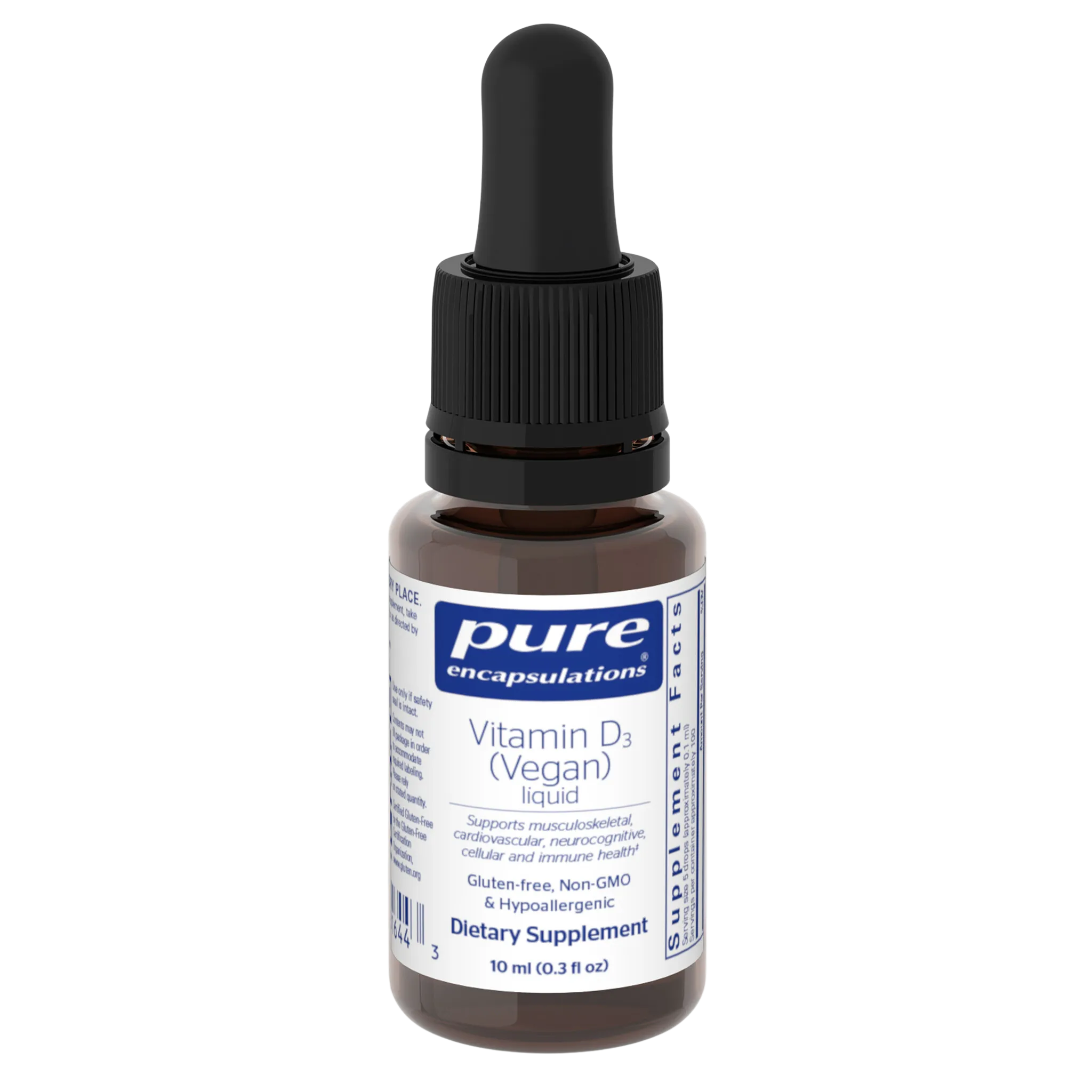
This is why liquid formats, such as the Pure Encapsulations Vitamin D3 (Vegan) liquid, are highly recommended by clinicians. By suspending the cholecalciferol in a liquid matrix, the supplement is pre-emulsified, significantly enhancing its bioavailability and uptake in the small intestine. For optimal results, patients should always take their liquid Vitamin D3 alongside a meal that contains healthy fats, such as avocado, olive oil, or nuts, to maximize transcellular transport and ensure the active compound reaches the bloodstream efficiently.
Dosing, Safety, and Monitoring Parameters
Because Vitamin D is a fat-soluble hormone, it accumulates in the body's adipose tissue, making proper dosing and clinical monitoring essential. While standard maintenance doses often range from 1,000 to 2,000 IU daily, patients with severe deficiencies or complex chronic illnesses may require significantly higher therapeutic interventions under medical supervision. It is critical to work with a healthcare provider to establish your baseline 25(OH)D levels before beginning high-dose therapy.
Over-supplementation can lead to hypercalcemia, a dangerous condition characterized by toxic levels of calcium in the blood, which can cause kidney stones, vascular calcification, and cardiac arrhythmias. Patients should undergo follow-up blood testing every 3 to 6 months to ensure their levels are safely reaching the optimal therapeutic range (typically between 50-80 ng/mL for chronic illness management) without overshooting. Additionally, clinicians often recommend pairing Vitamin D3 with Vitamin K2 and Magnesium, as these synergistic nutrients help direct calcium into the bones and prevent it from depositing in soft tissues.

Follow the Science
Clinical Trials in Long COVID and Post-Viral Fatigue
The clinical landscape surrounding Vitamin D and post-acute infection syndromes has evolved rapidly, with recent randomized controlled trials (RCTs) providing compelling evidence for its therapeutic use. A rigorous 2024 double-blind RCT investigated the impact of high-dose Vitamin D on 80 patients suffering from Long COVID. The participants were randomized to receive either 60,000 IU of Vitamin D weekly or a placebo over an 8-week period.
The results were striking: the intervention group demonstrated statistically significant improvements in chronic fatigue scores, cognitive function, and anxiety levels compared to the placebo group. Furthermore, a comprehensive 2024 clinical review from Assiut University analyzed data from millions of patients, confirming that low baseline levels of Vitamin D actively increased the risk of developing Long COVID and significantly delayed overall recovery times. This robust clinical data underscores the importance of addressing nutritional deficiencies when exploring What Drugs Are Used for COVID Long Haulers?.
Breakthroughs in ME/CFS Recovery
Some of the most groundbreaking research regarding Vitamin D has emerged in the context of ME/CFS, particularly for cases triggered by recent viral infections. A landmark 2023 review in the International Journal of Molecular Sciences highlighted that ME/CFS and Long COVID share a profound failure to resolve acute immune responses, leading to chronic systemic inflammation and mitochondrial defects. Addressing these core deficits with robust nutritional support is becoming a cornerstone of emerging treatment protocols.
Furthermore, recent preprint data regarding viral reactivation in ME/CFS and Long COVID demonstrates that immune-mediated cellular damage heavily disrupts mitochondrial dynamics. Because Vitamin D is essential for maintaining immune tolerance and preventing the chronic CD8 T-cell hyperactivation seen in these post-viral states, optimizing its levels is critical for halting the cycle of neuroinflammation and autonomic dysfunction that keeps patients bedbound.
Observational Data and the Importance of Baseline Testing
While the clinical trials focused on correcting severe deficiencies show tremendous promise, the scientific community emphasizes that Vitamin D is a targeted therapy, not a universal panacea. A 2023 observational study from Aarhus University Hospital evaluated 447 patients at a specialized Post-COVID clinic. While the researchers noted a high prevalence of Vitamin D insufficiency within the cohort, they did not find a statistically significant difference in overall symptom severity scores between those with low versus normal Vitamin D levels.
This crucial finding illustrates that Long COVID and ME/CFS are highly heterogeneous, multi-system disorders. If a patient already possesses optimal Vitamin D levels, adding massive supra-therapeutic doses will not magically resolve their symptoms and may introduce toxicity risks. Therefore, the scientific consensus strongly advocates for personalized, data-driven medicine: testing baseline 25(OH)D levels is an essential, low-risk, and highly effective first step in identifying which patients will benefit most from targeted supplementation.
The Path Forward
A Foundational Step in Complex Illness Management
Living with conditions like Long COVID, ME/CFS, dysautonomia, and MCAS is an incredibly complex and often frustrating journey. The unpredictable nature of these illnesses can make you feel as though your body is constantly working against you. However, understanding the profound biochemical role that hormones like Vitamin D play in immune regulation, mast cell stability, and autonomic function offers a tangible avenue for regaining control.
While correcting a nutritional deficiency may not be a standalone cure for the intricate web of systemic dysfunction, it is a scientifically validated, foundational step in lowering your overall inflammatory burden. By providing your cells with the biological tools they need to calm hyperactive immune responses and support mitochondrial energy production, you are laying the necessary groundwork for deeper healing and improved daily resilience. If you are struggling with How Can You Live with Long-Term COVID, addressing these core physiological deficits is a vital part of the puzzle.
Integrating Vitamin D into Your Care Plan
As you navigate your recovery, it is essential to approach supplementation as one piece of a comprehensive, multi-disciplinary management strategy. Optimizing your Vitamin D levels works synergistically alongside other critical interventions, such as strict energy pacing to avoid post-exertional malaise, nervous system regulation techniques, and targeted pharmaceutical therapies. Because every patient's biochemical makeup is unique, we strongly encourage you to work closely with your healthcare provider to test your current 25(OH)D levels and determine the precise dosage required to safely reach your therapeutic targets.
By choosing a high-quality, easily absorbable format like a vegan liquid cholecalciferol, you can ensure your body is receiving this vital prohormone in its most bioavailable state. Always consult your healthcare provider before starting any new dietary supplement, especially if you are managing complex chronic conditions or taking prescription medications.