Can Vitamin D3 & K2 Support Bone Health and Manage Long COVID Symptoms?
March 5, 2026
Vitamin D3 & K2Long COVIDME/CFS
Share:
Disclaimer: The information provided here is for educational purposes only and is not intended as medical advice. It should not be used to diagnose, treat, cure, or prevent any medical condition. Instead, use it as a starting point for discussion with your healthcare provider. Always consult with a qualified healthcare provider before starting any new medication, supplement, device, or making changes to your health regimen.
Months or even years after an initial SARS-CoV-2 infection, many individuals find themselves battling a complex web of debilitating symptoms known as Long COVID. For those living with this condition, as well as overlapping illnesses like myalgic encephalomyelitis/chronic fatigue syndrome (ME/CFS), dysautonomia, and mast cell activation syndrome (MCAS), the search for answers can feel endless. You might find yourself wondering why your body feels so fundamentally different, why your heart races when you stand, or why your bones and muscles ache with a deep, unrelenting pain. These invisible symptoms are profoundly real, and they are rooted in measurable physiological disruptions across your immune, autonomic, and cardiovascular systems.
In the pursuit of managing these complex chronic conditions, medical researchers are increasingly looking at the foundational nutrients that govern our cellular health. One of the most compelling areas of recent clinical focus is the synergistic relationship between Vitamin D3 and Vitamin K2. While Vitamin D has long been celebrated as the "sunshine vitamin" essential for immunity, science now reveals that it cannot work optimally—or safely—without its partner, Vitamin K2. Together, these two fat-soluble nutrients orchestrate a complex biological dance that regulates calcium metabolism, protects the elasticity of our blood vessels, and profoundly modulates the immune system. In this comprehensive guide, we will explore the intricate mechanisms of Vitamin D3 and K2, how chronic illness disrupts these pathways, and how targeted supplementation might offer a vital piece of the puzzle in your management strategy.
TL;DR
Vitamin D3 and K2 work synergistically to support bone health, cardiovascular function, and immune regulation.
Vitamin D3 aids calcium absorption, while K2 directs calcium into bones and away from arteries.
Chronic illnesses like Long COVID and ME/CFS can deplete these nutrients, worsening inflammation and fatigue.
Taking D3 and K2 with healthy fats maximizes absorption and supports cellular repair processes.
What is Vitamin D3 & K2?
To truly understand the power of this supplement, we must first look at how these nutrients function in a healthy body. Vitamin D3 (cholecalciferol) is often mischaracterized as just a simple vitamin, but it is actually a powerful prohormone. When your skin is exposed to ultraviolet B (UVB) sunlight, it synthesizes cholecalciferol, which is then transported to the liver and converted into calcifediol. Finally, the kidneys convert it into its biologically active steroid hormone form, known as 1,25-dihydroxyvitamin D3 (Calcitriol). This active hormone is a master regulator of human biology, influencing the expression of over 2,000 genes throughout the body.
At the cellular level, calcitriol exerts its effects by binding to the Vitamin D Receptor (VDR). These receptors are not just found in bone tissue; they are densely distributed across almost all cells in the human body, including immune cells (macrophages, T-cells, and B-cells), endothelial cells that line our blood vessels, and neurons within the central nervous system. When calcitriol binds to a VDR, it acts as a transcription factor, essentially entering the nucleus of the cell and turning specific genes on or off. One of its most critical primary functions is upregulating the intestinal absorption of calcium and phosphorus, ensuring that the body has the raw materials necessary to build and maintain a strong skeletal system.
However, Vitamin D3's role extends far beyond bone health. In the immune system, it acts as a crucial immunomodulator. It enhances the innate immune response by stimulating the production of antimicrobial peptides, such as cathelicidin, which physically dismantle invasive pathogens. Simultaneously, it prevents the adaptive immune system from overreacting, promoting the development of regulatory T-cells (Tregs) that keep systemic inflammation in check. Without adequate Vitamin D3, the body's immune response can become erratic, leading to the chronic, low-grade inflammation often seen in complex chronic illnesses.
While Vitamin D3 is responsible for bringing calcium into the bloodstream, it lacks the biological GPS required to direct that calcium to the right locations. This is where Vitamin K2 (menaquinone) becomes absolutely essential. Vitamin K2 acts as a necessary cofactor for an enzyme called gamma-glutamyl carboxylase (GGCX). This specific enzyme is responsible for a biochemical process known as "carboxylation," which structurally alters Vitamin K-Dependent Proteins (VKDPs), essentially flipping a switch that changes them from an inactive state to a highly active state.
The two most critical proteins activated by Vitamin K2 are Osteocalcin and Matrix Gla Protein (MGP). Osteocalcin is produced by osteoblasts (bone-building cells) in response to Vitamin D3, but it is produced in an inactive, undercarboxylated form. When Vitamin K2 carboxylates osteocalcin, the protein gains a high affinity for calcium ions, allowing it to grab the circulating calcium and weave it directly into the hydroxyapatite matrix of the bone. This process physically strengthens the bone tissue and increases bone mineral density, preventing the skeletal structure from becoming porous and fragile over time.
Equally important is Vitamin K2's activation of MGP, a protein found in the smooth muscle cells of our blood vessels. When MGP is activated by Vitamin K2, it becomes the most potent known inhibitor of vascular calcification. It binds to free-floating calcium in the arteries and sweeps it away, preventing the calcium from depositing into the endothelial walls. This mechanism is crucial for maintaining vascular elasticity and preventing the stiffening of arteries, which is a major risk factor for cardiovascular disease. In essence, Vitamin K2 ensures that calcium ends up in the bones where it belongs, rather than in the soft tissues where it can cause harm.
The intricate relationship between Vitamin D3 and K2 highlights a profound biological synergy. If an individual takes high doses of Vitamin D3 without adequate Vitamin K2, they risk developing a dangerous condition known as the "Calcium Paradox." This phenomenon occurs when a patient suffers from weak, calcium-depleted bones, but simultaneously has heavily calcified, rigid arteries. The Vitamin D3 successfully pulls calcium from the diet into the blood, but without Vitamin K2 to activate osteocalcin and MGP, that calcium wanders aimlessly, eventually settling in the vascular tissue as dangerous plaque.
Understanding this synergy is particularly vital for patients managing complex chronic conditions. When the body is under immense physiological stress from viral persistence, autonomic dysfunction, or mast cell reactivity, the demand for these foundational nutrients skyrockets. Recent clinical data emphasizes that co-supplementing D3 and K2 is not just a recommendation for optimal health; it is a biological necessity for safely managing calcium metabolism. By working in tandem, these two vitamins ensure that the skeletal system remains resilient while simultaneously protecting the cardiovascular system from the devastating effects of inappropriate calcification.
How Long COVID and ME/CFS Impact Bone and Cardiovascular Health
Living with conditions like Long COVID, ME/CFS, and dysautonomia places an extraordinary, unrelenting burden on the body's physiological resources. To understand what causes Long COVID, we must look at the underlying pathophysiology, which is heavily driven by chronic systemic inflammation, viral persistence, and profound immune dysregulation. When the immune system is locked in a perpetual state of high alert—constantly fighting off perceived threats or lingering viral fragments—it rapidly depletes the body's stores of crucial immunomodulatory hormones, particularly Vitamin D3.
This depletion creates a vicious cycle. As Vitamin D3 levels plummet, the immune system loses its primary "brake." The regulatory T-cells (Tregs) that normally calm inflammation begin to fail, allowing pro-inflammatory cytokines like Interleukin-6 (IL-6) and Tumor Necrosis Factor-alpha (TNF-α) to flood the system. This unchecked inflammation damages tissues, exacerbates severe fatigue, and drives the neuroinflammation responsible for the debilitating brain fog so commonly reported by patients. Furthermore, chronic inflammation directly impairs the liver and kidneys' ability to convert the inactive form of Vitamin D into its active, usable hormone form, compounding the deficiency at a cellular level.
In the context of mast cell activation syndrome (MCAS), this deficiency is particularly disastrous. Mast cells, which are responsible for releasing histamine and other inflammatory mediators, rely heavily on Vitamin D to remain stable. When Vitamin D levels drop, these mast cells become hyper-reactive, degranulating inappropriately in response to minor environmental triggers, foods, or even temperature changes. This constant state of allergic-like reactivity further exhausts the body's nutritional reserves, making it incredibly difficult for patients to find a baseline of stability.
Dysautonomia, including postural orthostatic tachycardia syndrome (POTS), involves the dysfunction of the autonomic nervous system, which controls involuntary bodily functions like heart rate and blood pressure. A key feature of these conditions is endothelial dysfunction—the impairment of the inner lining of the blood vessels. When the endothelium is damaged by chronic inflammation or viral spike proteins, the blood vessels lose their ability to constrict and dilate properly, leading to the blood pooling in the lower extremities that causes the hallmark rapid heart rate upon standing.
This vascular damage is heavily influenced by the "Calcium Paradox" discussed earlier. In patients with Long COVID and dysautonomia, oxidative stress can accelerate the deposition of calcium into the damaged endothelial walls. Without adequate Vitamin K2 to activate Matrix Gla Protein (MGP), this calcium hardens the arteries, further reducing vascular elasticity and worsening orthostatic intolerance. The stiffening of these vessels makes it exponentially harder for the autonomic nervous system to regulate blood flow to the brain, directly contributing to the dizziness, pre-syncope, and cognitive impairment experienced during a POTS flare.
Moreover, the chronic stress placed on the cardiovascular system by dysautonomia requires robust nutritional support to repair. Research indicates that Vitamin K2 is essential for maintaining the integrity of the vascular smooth muscle cells. When K2 is depleted, the body loses its primary defense mechanism against vascular calcification, allowing the endothelial dysfunction to progress unchecked and making the symptoms of dysautonomia increasingly difficult to manage.
One of the most challenging aspects of ME/CFS and Long COVID is post-exertional malaise (PEM), a severe worsening of symptoms following even minor physical or cognitive exertion. Because pushing through fatigue can trigger debilitating crashes, many patients are forced to drastically reduce their activity levels, often becoming housebound or bedbound for extended periods. While pacing is a necessary and protective strategy, this prolonged lack of mobility and sunlight exposure has profound consequences for bone health and Vitamin D synthesis.
Without regular weight-bearing exercise, the body's osteoblasts (bone-building cells) become less active, while osteoclasts (bone-resorbing cells) continue to break down bone tissue. This imbalance leads to a rapid decline in bone mineral density. Compounding this issue, the lack of sunlight exposure virtually halts the natural synthesis of Vitamin D3 in the skin. As D3 levels fall, the intestines absorb less calcium from the diet, forcing the body to leach calcium directly from the bones to maintain stable blood calcium levels for critical heart and nerve functions.
If you are wondering can Long COVID trigger ME/CFS, the answer is a resounding yes, and the resulting physical deconditioning creates a perfect storm for skeletal fragility. The deep, aching bone and muscle pain that many patients experience is often a direct clinical manifestation of this severe Vitamin D deficiency and subsequent osteomalacia (softening of the bones). Without targeted intervention using both Vitamin D3 to restore calcium absorption and Vitamin K2 to drive that calcium back into the skeletal matrix, patients are at a significantly heightened risk for osteoporosis and fractures as their illness progresses.
Vitamin D3 & K2: Supporting Immune, Bone, and Vascular Function
When navigating the complexities of chronic illness, targeted supplementation can offer a powerful way to restore disrupted biological pathways. The combination of Vitamin D3 and K2 works synergistically to rebuild the structural integrity of the skeletal system, which is often compromised by prolonged inactivity and systemic inflammation. When you supplement with Vitamin D3, it binds to the Vitamin D Receptors (VDR) in your intestinal lining, dramatically upregulating the synthesis of calcium-binding proteins. This ensures that the calcium you consume through your diet is efficiently absorbed into your bloodstream, rather than being excreted as waste.
Once the calcium is in the blood, Vitamin D3 signals the osteoblasts in your bones to produce osteocalcin. However, as we have learned, this osteocalcin is initially inactive. This is where the simultaneous supplementation of Vitamin K2 (specifically the MK-7 form) becomes a game-changer. Vitamin K2 acts as the essential cofactor for the gamma-glutamyl carboxylase enzyme, which carboxylates the osteocalcin, giving it the structural ability to bind to the circulating calcium. Clinical research has demonstrated that this specific K2-driven activation is what physically pulls the calcium out of the blood and locks it into the hydroxyapatite matrix of the bone, increasing bone mineral density and alleviating the deep skeletal aches associated with osteomalacia.
For patients who are bedbound or housebound due to severe post-exertional malaise (PEM), this mechanism is incredibly validating and protective. It provides a biochemical method to support bone density even when weight-bearing exercise is impossible. By ensuring that osteocalcin is fully activated, the D3/K2 combination helps to halt the vicious cycle of bone resorption, providing a critical layer of defense against the long-term skeletal consequences of chronic illness.
Beyond the skeletal system, the cardiovascular benefits of Vitamin D3 and K2 are profound, particularly for those managing dysautonomia and POTS. The autonomic nervous system relies heavily on the elasticity and responsiveness of the blood vessels to regulate blood pressure and heart rate upon standing. When Vitamin K2 is introduced, it activates Matrix Gla Protein (MGP) within the smooth muscle cells of the vascular endothelium. Activated MGP acts as a biological scavenger, binding to rogue calcium deposits in the arterial walls and safely removing them from the cardiovascular system.
This mechanism directly combats the endothelial dysfunction that drives so many dysautonomia symptoms. By preventing and even reversing vascular calcification, Vitamin K2 helps to restore the natural elasticity of the blood vessels. This improved flexibility allows the arteries to constrict and dilate more efficiently in response to the autonomic nervous system's signals, potentially reducing the severity of blood pooling in the lower extremities. Studies involving cardiovascular health have shown that adequate Vitamin K2 intake is strongly associated with a reduction in arterial stiffness, making it a vital nutrient for supporting cardiovascular resilience in POTS patients.
Furthermore, Vitamin D3 plays its own role in cardiovascular support by regulating the renin-angiotensin-aldosterone system (RAAS), which controls blood pressure and fluid balance. By modulating this system, Vitamin D3 helps to prevent the pathological remodeling of the heart tissue and supports overall cardiac function. Together, the D3/K2 partnership provides a comprehensive shield for the cardiovascular system, addressing both the structural integrity of the vessels and the hormonal regulation of blood pressure.
Perhaps the most exciting application of Vitamin D3 and K2 for Long COVID and ME/CFS patients lies in their profound immunomodulatory effects. Vitamin D3 is a potent regulator of the adaptive immune system. It actively suppresses the proliferation of pro-inflammatory Th1 and Th17 cells, which are responsible for the cytokine storms and chronic systemic inflammation seen in post-viral syndromes. Simultaneously, it promotes the development of regulatory T-cells (Tregs), which act as the immune system's peacekeepers, preventing autoimmune reactions and calming the neuroinflammation that drives severe brain fog.
For patients dealing with mast cell activation syndrome (MCAS), Vitamin D3 acts as one of nature's most effective mast cell stabilizers. Mast cells possess Vitamin D Receptors (VDRs), and when calcitriol binds to these receptors, it downregulates the genetic expression of inflammatory mediators, physically preventing the mast cells from inappropriately degranulating and releasing histamine. Frontiers in Immunology research highlights this mechanism as a crucial pathway for reducing the allergic-like reactivity that plagues MCAS patients, helping to raise their threshold for environmental triggers.
Vitamin K2 complements this immune support by acting as a powerful anti-inflammatory agent in its own right. Recent studies have shown that K2 inhibits the NF-κB signaling pathway, a primary driver of inflammation at the genetic level. By blocking this pathway, Vitamin K2 drastically reduces the production of pro-inflammatory cytokines like IL-6 and TNF-α. This dual-action immune modulation—D3 stabilizing mast cells and promoting Tregs, while K2 inhibits the NF-κB pathway—creates a synergistic anti-inflammatory effect that can help lower the overall burden of disease in complex chronic illnesses.

Symptoms Vitamin D3 & K2 May Help Manage
Because Vitamin D3 and K2 operate at the foundational level of cellular biology, regulating everything from gene expression to calcium transport, their combined supplementation can address a wide array of interconnected symptoms. Here are the specific systemic and immunological symptoms this synergistic formula may help manage:
Post-Exertional Malaise (PEM) and Severe Fatigue: By reducing systemic inflammation and supporting mitochondrial function through the suppression of pro-inflammatory cytokines, D3 and K2 help lower the physiological stress burden, potentially raising the energy envelope and reducing the severity of crashes.
Brain Fog and Cognitive Impairment: Vitamin D3's ability to cross the blood-brain barrier and promote regulatory T-cells helps calm the neuroinflammation driven by overactive microglial cells, supporting clearer cognition and better memory retrieval.
Mast Cell Reactivity and Histamine Intolerance: As a potent natural mast cell stabilizer, Vitamin D3 binds to VDRs on mast cells, preventing inappropriate degranulation and reducing the frequency of allergic-like reactions, flushing, and gastrointestinal distress associated with MCAS.
Frequent Infections and Immune Dysregulation: By stimulating the production of antimicrobial peptides like cathelicidin, Vitamin D3 enhances the innate immune system's ability to clear lingering viral fragments and bacterial pathogens, which is crucial for patients experiencing recurrent illnesses.
The physical toll of chronic illness often manifests in the bones, muscles, and blood vessels. By directing calcium away from the arteries and into the skeletal system, Vitamin D3 and K2 target these specific physical symptoms:
Deep Bone and Muscle Pain: By activating osteocalcin, Vitamin K2 ensures that calcium is properly integrated into the bone matrix, reversing the painful softening of bones (osteomalacia) caused by severe Vitamin D deficiency and prolonged inactivity.
Orthostatic Intolerance and Tachycardia (POTS): Vitamin K2 activates Matrix Gla Protein (MGP), which clears calcium deposits from the endothelial walls. This restores vascular elasticity, allowing blood vessels to constrict properly upon standing and reducing the blood pooling that triggers rapid heart rates.
Muscle Weakness and Deconditioning: Vitamin D receptors are highly concentrated in skeletal muscle tissue. Restoring optimal D3 levels supports muscle fiber function and strength, which is vital for patients trying to safely rebuild their physical capacity through paced rehabilitation.
Cardiovascular Palpitations and Chest Tightness: By preventing arterial stiffening and modulating the renin-angiotensin-aldosterone system (RAAS), this combination supports overall cardiac function, potentially easing the cardiovascular strain frequently reported by dysautonomia patients.
Practical Considerations: Forms, Dosing, and Absorption
When incorporating Vitamin D3 and K2 into your management protocol, understanding how these nutrients are absorbed is just as critical as the dosage itself. Both Vitamin D3 and K2 are fat-soluble vitamins, meaning their bioavailability is intrinsically linked to the presence of dietary lipids in your digestive tract. If you take these supplements on an empty stomach or with a fat-free meal, they will largely pass through your system unabsorbed, providing little to no clinical benefit.
To maximize absorption, you must take your D3 and K2 capsule with a meal that contains healthy fats, such as avocados, olive oil, nuts, or fatty fish. The presence of fat in the stomach triggers the gallbladder to release bile acids, which act as emulsifiers. These bile acids break down the fat-soluble vitamins into tiny droplets called micelles, allowing them to be efficiently transported across the intestinal wall and into the lymphatic system, eventually reaching the bloodstream. Clinical guidelines emphasize that taking fat-soluble vitamins with your largest, most fat-dense meal of the day can increase absorption rates by up to 50% compared to taking them on an empty stomach.
For patients with gastrointestinal issues, malabsorption syndromes, or those dealing with the severe nausea often seen in Long COVID and dysautonomia, timing is everything. If eating a large meal is difficult, taking the supplement alongside a small spoonful of coconut oil, MCT oil, or a handful of almonds is usually sufficient to trigger the necessary bile response and ensure the nutrients reach your cells.
Not all forms of Vitamin K are created equal, and choosing the right molecular structure is vital for achieving the desired cardiovascular and skeletal benefits. Vitamin K exists in two main forms: Vitamin K1 (phylloquinone), found in leafy greens and primarily involved in blood clotting, and Vitamin K2 (menaquinone), which is responsible for calcium regulation. Within the Vitamin K2 family, there are several subtypes, but the most clinically relevant for supplementation is Menaquinone-7 (MK-7).
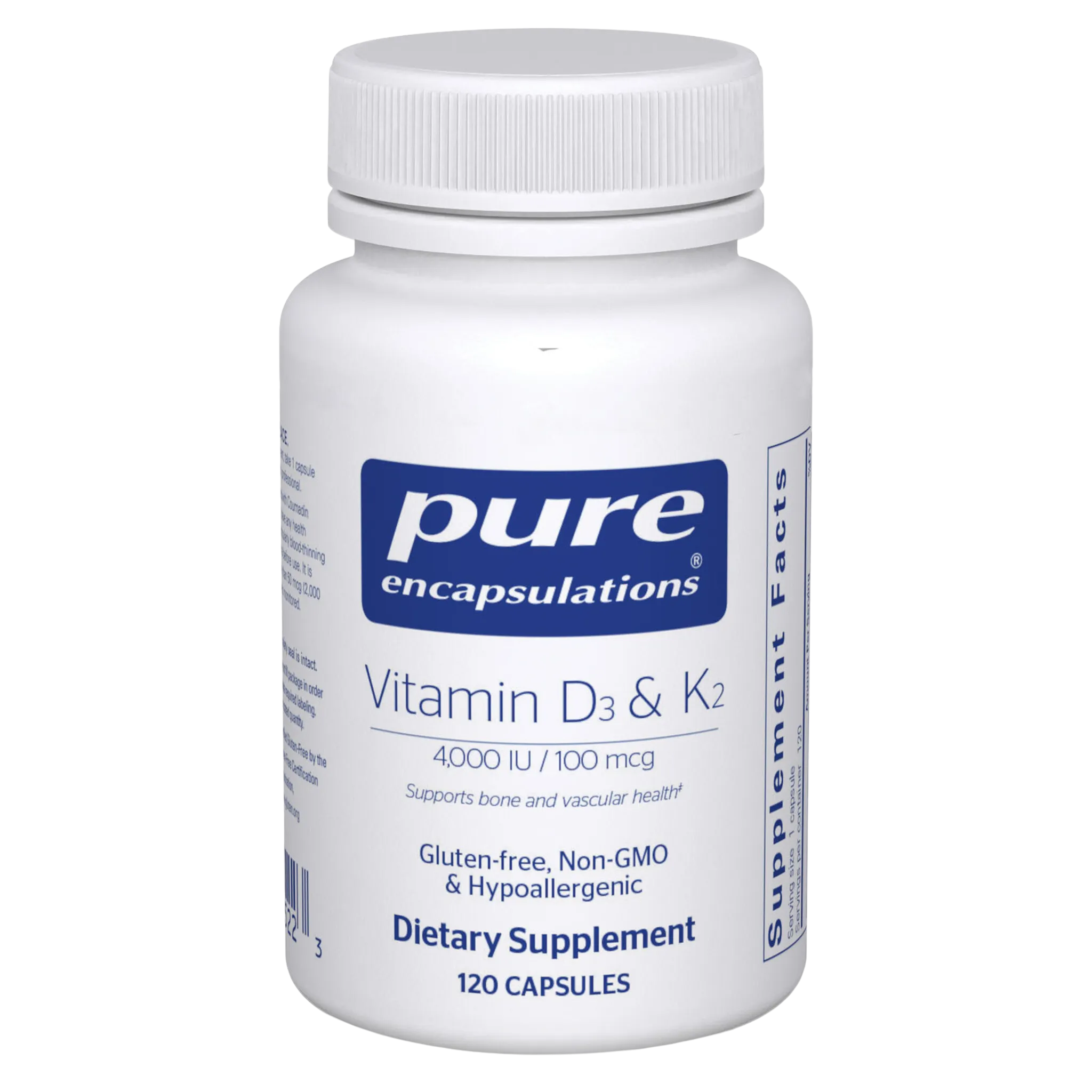
The Pure Encapsulations formula utilizes the MK-7 form because of its vastly superior bioavailability and remarkably long half-life. While other forms, such as MK-4, have a half-life of only 1 to 2 hours and require multiple large doses throughout the day, MK-7 remains active in the bloodstream for up to 72 hours. This extended presence allows for a steady, continuous activation of osteocalcin and Matrix Gla Protein (MGP) with just a single daily dose. Furthermore, high-quality supplements use the biologically active "all-trans" isomer of MK-7, ensuring that the molecule perfectly fits into the enzymatic receptors required for carboxylation.
When considering dosage, clinical studies generally recommend between 100 µg and 240 µg of MK-7 daily for optimal cardiovascular and bone support. The Pure Encapsulations formula provides a precise, evidence-based dose of 100 mcg of MK-7 alongside 4,000 IU of Vitamin D3, offering a highly effective ratio that ensures the influx of calcium triggered by the D3 is safely and efficiently managed by the K2.
While Vitamin D3 and K2 are generally safe and well-tolerated, their profound effects on calcium metabolism and blood chemistry mean they must be used with caution in specific populations. The most critical, absolute contraindication involves patients taking Vitamin K Antagonist (VKA) blood thinners, such as Warfarin (Coumadin). Because Vitamin K plays a role in the coagulation cascade, supplementing with K2 can directly compete with these medications, potentially reducing their efficacy and increasing the risk of dangerous blood clots. If you are on a VKA, you must never take Vitamin K2 without strict medical supervision.
Additionally, individuals with pre-existing hypercalcemia (high blood calcium levels), hyperparathyroidism, or granulomatous diseases like sarcoidosis should approach Vitamin D3 supplementation with extreme caution. In these conditions, the body may overproduce active Vitamin D or struggle to excrete excess calcium, and adding high-dose D3 could push blood calcium to dangerous levels, leading to kidney damage or cardiac arrhythmias. It is always recommended to have your doctor check your baseline Serum 25(OH)D and calcium levels before beginning a high-dose protocol.
Finally, be aware of potential drug interactions that can hinder absorption. Weight-loss medications that block fat absorption (like Orlistat) and cholesterol-lowering bile acid sequestrants will inherently block the absorption of D3 and K2. Furthermore, if you are learning how to live with long-term COVID and are taking broad-spectrum antibiotics for secondary infections, be aware that these drugs can destroy the beneficial gut bacteria that naturally produce a portion of your body's Vitamin K, making targeted supplementation even more critical during recovery.

Follow the Science
The scientific community is rapidly uncovering the profound impact of Vitamin D on post-viral syndromes. A significant clinical review analyzed 58 clinical studies involving more than 14 million patients with COVID-19. The results were striking: the researchers found that 86% of the studies demonstrated that having a higher vitamin D level was associated with less severe COVID-19 symptoms, and may raise the risk for and possibly delay recovery from Long COVID when deficient.
This review provides crucial insights into how foundational nutrients might support recovery. By addressing potential deficiencies, patients may help stabilize their immune response, offering a targeted approach for those wondering what drugs are used for COVID long haulers and seeking foundational nutritional support.
Similarly, research into ME/CFS has highlighted the critical nature of Vitamin D replacement. A 2026 clinical trial by Kodama et al. evaluated 91 participants who developed ME/CFS following a COVID-19 infection and had baseline Vitamin D deficiency. After a 12-week comprehensive Vitamin D replacement protocol, the intervention group saw profound symptom reduction. Astonishingly, 16 participants in the intervention group no longer met the diagnostic criteria for ME/CFS at the end of the trial, compared to only 1 in the control group. Immune symptoms improved by 45.5%, and pain by 39.1%, underscoring the necessity of correcting this deficiency.
The cardiovascular and skeletal benefits of combining D3 and K2 are supported by decades of robust clinical data. A comprehensive meta-analysis of 8 randomized clinical trials encompassing 971 participants concluded that co-supplementing D3 and K2 significantly increases total bone mineral density (BMD) compared to taking either vitamin alone or a placebo. This data validates the biochemical mechanism that while D3 absorbs calcium, K2 is absolutely required to integrate it into the bone matrix.
On the cardiovascular front, a landmark 24-month double-blind RCT involving 365 elderly men with aortic valve calcification demonstrated the protective power of the MK-7 form. The study found that high-dose supplementation with Vitamin K2 (MK-7) combined with Vitamin D3 significantly slowed the progression of heart valve calcification and reduced inactive (uncarboxylated) MGP levels compared to a placebo. This confirms that K2 actively clears calcium from the vascular tissue.
Furthermore, data from Ontario's Institute for Clinical Evaluative Sciences showed that combining D3 and K2 supplementation reduces cardiovascular events by 36% compared to taking D3 alone. For patients dealing with the endothelial dysfunction and vascular stiffness inherent to dysautonomia and POTS, this research provides a compelling, evidence-based rationale for ensuring that Vitamin K2 is always included alongside Vitamin D3 therapy.
The Path Forward
Living with invisible, unpredictable illnesses like Long COVID, ME/CFS, dysautonomia, and MCAS is an incredibly heavy burden. It is entirely normal to feel frustrated when your symptoms fluctuate, leaving you wondering do Long COVID symptoms come and go. The reality is that healing from complex neuroimmune conditions is rarely a linear path; it requires a multifaceted approach that addresses the body at a cellular level. While no single supplement is a cure, ensuring that your fundamental biological pathways have the nutrients they need to function is a critical step in regaining your quality of life.
Vitamin D3 and K2 represent a powerful, synergistic partnership that addresses several root mechanisms of chronic illness. By supporting the activation of osteocalcin for skeletal resilience, empowering Matrix Gla Protein (MGP) to protect your vascular elasticity, and providing potent immunomodulatory support to calm hyper-reactive mast cells, this combination lays a strong foundation for your body's repair processes. It is a scientifically validated way to help break the vicious cycles of inflammation and physical deconditioning.
As you continue to navigate your management strategy—balancing pacing, symptom tracking, and medical care—consider how targeted nutritional support might fit into your protocol. The Pure Encapsulations Vitamin D3 & K2 formula provides a convenient, highly bioavailable way to deliver these essential nutrients in their most effective forms, specifically utilizing the long-lasting MK-7 form of Vitamin K2.
Always remember that your body is fighting hard for you, even when it feels like it is failing. Be gentle with yourself, celebrate the small victories, and always consult with your healthcare provider before introducing new supplements, especially if you are taking blood thinners or other prescription medications. By combining compassionate medical guidance with science-backed nutritional support, you can continue to build a resilient path forward.