Can Vitamin B12 Help Clear the Brain Fog and Fatigue of Long COVID and ME/CFS?
March 6, 2026
Vitamin B12MethylcobalaminLong COVID
Share:
Disclaimer: The information provided here is for educational purposes only and is not intended as medical advice. It should not be used to diagnose, treat, cure, or prevent any medical condition. Instead, use it as a starting point for discussion with your healthcare provider. Always consult with a qualified healthcare provider before starting any new medication, supplement, device, or making changes to your health regimen.
You are sitting in your doctor’s office, desperately trying to explain the profound, unyielding exhaustion that has taken over your life since your viral infection. You describe the cognitive blankness—the "brain fog" that makes finding simple words feel like wading through wet concrete. You mention the strange tingling in your hands, the way your heart races simply from standing up, and the sleep that never actually leaves you feeling rested. Your doctor runs a standard blood panel, looks at the results, and tells you that everything is "normal." For individuals living with Long COVID, myalgic encephalomyelitis/chronic fatigue syndrome (ME/CFS), and dysautonomia, this scenario is frustratingly common. You are told you are fine, yet your body feels like it is running on a depleted battery, unable to generate the energy required for basic daily functions.
What standard blood tests often miss is the intricate, microscopic world of cellular metabolism and the specific nutrients required to keep your nervous system functioning. One of the most critical, yet frequently misunderstood, pieces of this metabolic puzzle is Vitamin B12, specifically in its active, tissue-ready form known as methylcobalamin. Far more than just a simple "energy vitamin," methylcobalamin is a fundamental biological driver that dictates how your body repairs damaged nerves, clears out toxic inflammatory byproducts, and produces the neurotransmitters necessary for clear cognitive function. When chronic illness disrupts these pathways, the resulting systemic dysfunction can be debilitating. In this comprehensive guide, we will explore the profound biochemical mechanisms of Vitamin B12, how chronic conditions like Long COVID and ME/CFS deplete it, and why targeted supplementation might be a crucial step in reclaiming your neurological health.
TL;DR
Vitamin B12, especially methylcobalamin, supports nerve repair and cellular energy in chronic conditions.
Chronic illnesses like Long COVID and ME/CFS may deplete B12, worsening brain fog and fatigue.
Targeted B12 supplementation may help manage symptoms of dysautonomia and peripheral neuropathy.
Consult your doctor before starting supplements, as medications like metformin can block B12 absorption.
What is Vitamin B12?
The Methylation Cycle and SAMe Production
To truly understand the power of Vitamin B12, we must first look at one of the most important biochemical engines in the human body: the methylation cycle. At its core, methylcobalamin functions as a mandatory coenzyme, or biological spark plug, for an enzyme known as methionine synthase. This specific enzyme acts as a biochemical bridge, driving what scientists call the "remethylation pathway" within the broader methylation cycle. Without adequate methylcobalamin, this entire engine grinds to a halt, leading to a cascade of cellular failures that manifest as profound fatigue and cognitive decline.
The reaction begins when methionine synthase takes a methyl group from active folate (5-methyltetrahydrofolate) and uses methylcobalamin to transfer that methyl group to a naturally occurring amino acid called homocysteine. This transfer converts homocysteine into the essential amino acid methionine. Methionine is then rapidly converted by the body into S-adenosylmethionine (SAMe). SAMe is widely recognized by biochemists as the body's universal "methyl donor." It travels throughout your cells, donating its methyl groups to over 200 different enzymatic reactions. This continuous donation process is what enables your body to synthesize DNA, regulate gene expression through epigenetics, and produce vital neurotransmitters like dopamine, serotonin, and melatonin.
When methylcobalamin is deficient, a dangerous biological bottleneck occurs. The methylation cycle stalls, and folate becomes trapped in an unusable state—a phenomenon clinically referred to as the "folate trap." Because the body can no longer produce adequate amounts of SAMe, the synthesis of crucial neurotransmitters drops dramatically. This biochemical starvation directly contributes to the severe mood dysregulation, sleep disturbances, and the profound cognitive blankness often described by patients as brain fog. Restoring methylcobalamin levels essentially provides the missing key to unlock the folate trap and restart the engine of cellular production.
Homocysteine Regulation and Cardiovascular Health
The methylation cycle does more than just produce SAMe; it also serves as the body's primary waste management system for homocysteine. Homocysteine is a naturally occurring intermediate byproduct of cellular metabolism. In a healthy, well-nourished individual, it is quickly recycled back into methionine or converted into other harmless substances. However, when the body lacks sufficient methylcobalamin, the conversion of homocysteine stalls. This leads to a dangerous buildup of the amino acid in the bloodstream, a clinical condition known as homocysteinemia. According to research on managing homocysteinemia, methylcobalamin plays a role in managing elevated homocysteine levels.
Elevated concentrations of homocysteine are highly toxic to the human body. It acts as a potent pro-oxidant, inducing profound oxidative stress that damages the delicate endothelial lining of blood vessels. This damage creates a prothrombotic state, meaning the blood is far more likely to form dangerous clots. Furthermore, excess homocysteine acts as a severe neurotoxin. It overstimulates NMDA receptors in the brain, leading to an influx of calcium that can literally excite brain cells to death. This neurotoxic effect is heavily linked to accelerated cognitive impairment, memory loss, and the progression of neurodegenerative diseases.
By providing the body with active methylcobalamin, you force the remethylation pathway to regain its normal, healthy activity. The body is finally able to clear the toxic backlog of homocysteine, converting it back into useful methionine. This not only protects the cardiovascular system from oxidative damage and clotting risks but also shields the brain from homocysteine-induced neurotoxicity. For patients dealing with the systemic inflammation of chronic illness, lowering homocysteine through B12 supplementation is a critical step in reducing the overall burden of oxidative stress on the body.
Myelin Sheath Synthesis and Nerve Protection
Beyond energy production and detoxification, Vitamin B12 is perhaps most famous in the medical community for its vital neuroprotective and neuro-regenerative properties. The nervous system relies on rapid, efficient electrical signaling to control everything from muscle movement to heart rate. To achieve this, nerve fibers (axons) are wrapped in a fatty, protective insulating layer known as the myelin sheath. Much like the rubber insulation around a copper electrical wire, the myelin sheath prevents electrical signals from leaking out and ensures they travel at lightning speed. The synthesis and maintenance of this myelin sheath are entirely dependent on methylcobalamin.
The creation of myelin requires vast amounts of SAMe, which, as we established, is generated via the methylcobalamin-dependent methylation cycle. SAMe provides the specific methyl groups required to methylate Myelin Basic Protein (MBP), the core structural protein of the myelin sheath. It also drives the synthesis of complex phospholipids, such as lecithin, which form the fatty building blocks of the insulation. According to research from the Linus Pauling Institute, without a constant supply of B12, the body simply cannot manufacture the materials needed to keep nerves insulated and protected.
When B12 levels drop, the resulting drop in SAMe leads to the hypomethylation of myelin basic protein. Without proper maintenance, the myelin sheath begins to degrade and break down—a process known as demyelination. Clinically, this manifests as peripheral neuropathy, characterized by numbness, painful tingling, burning sensations in the extremities, and eventual loss of motor function. In the context of the autonomic nervous system, demyelination can disrupt the signals that control heart rate and blood pressure, contributing directly to the symptoms of dysautonomia. Restoring methylcobalamin is therefore essential for halting demyelination and giving the body the raw materials it needs to repair damaged nerves.
How Chronic Illness Impacts B12 Pathways
Viral Depletion and Neuroinflammation in Long COVID
When a healthy body encounters a severe viral pathogen like SARS-CoV-2, it mounts a massive immune response. This response requires an immense amount of cellular energy and rapidly burns through the body's stored micronutrients. In the case of Long COVID, the immune system remains locked in a state of chronic activation, leading to persistent neuroinflammation and the continuous depletion of vital coenzymes like Vitamin B12. As we explore how a doctor diagnoses Long COVID, it becomes clear that functional nutritional deficiencies play a massive role in the continuation of symptoms long after the acute virus has cleared.
Observational data strongly supports this phenomenon. Research published by the European Society of Medicine, including case report series, suggests that supplementation with methylcobalamin and benfotiamine may help improve Long COVID symptoms like brain fog. The virus essentially strips the nervous system of the very nutrient it needs to repair the inflammatory damage.
This viral depletion creates a vicious cycle. The lack of B12 halts the methylation cycle, which leads to a buildup of toxic homocysteine. The elevated homocysteine creates further oxidative stress and neuroinflammation, which in turn damages the myelin sheath and worsens the cognitive dysfunction and neuropathy. Breaking this cycle requires aggressive, targeted nutritional support to replenish the cellular stores that the chronic immune response has exhausted, thereby allowing the nervous system to finally begin the healing process.
The MTHFR Gene Mutation and ME/CFS
For individuals living with myalgic encephalomyelitis/chronic fatigue syndrome (ME/CFS), the relationship with Vitamin B12 is often complicated by underlying genetics. A significant percentage of the ME/CFS population possesses mutations in the MTHFR (methylenetetrahydrofolate reductase) gene. This specific gene provides the instructions for making an enzyme that is critical for processing amino acids and converting inactive forms of folate and Vitamin B12 into their active, methylated forms. When we ask can Long COVID trigger ME/CFS, we must consider how post-viral stress interacts with these pre-existing genetic vulnerabilities.
When an individual has an MTHFR polymorphism, their body struggles to efficiently convert synthetic cyanocobalamin (the cheap form of B12 found in most standard supplements and fortified foods) into the active methylcobalamin required by the cells. This creates a paradoxical situation: a patient might have "normal" or even high levels of Vitamin B12 circulating in their blood, but their actual cells are starving for the active coenzyme. The B12 is present, but it is locked in an unusable format, leading to a functional, cellular-level deficiency that routine blood tests completely miss.
This genetic metabolic block severely impairs the body's ability to produce cellular energy and clear out neurotoxins, directly contributing to the hallmark symptoms of ME/CFS, including profound post-exertional malaise (PEM) and unrefreshing sleep. Institutions like the Open Medicine Foundation have actively investigated how bypassing this broken pathway with direct methylcobalamin supplementation can help restore methylation function, reduce debilitating fatigue, and improve cognitive clarity in ME/CFS patients.
Autonomic Dysfunction and POTS
Postural Orthostatic Tachycardia Syndrome (POTS) and various forms of dysautonomia are characterized by the severe dysfunction of the autonomic nervous system. This is the system that automatically controls your heart rate, blood pressure, and digestion. In a healthy body, when you stand up, baroreceptors (specialized nerves in your blood vessels) instantly detect the drop in blood pressure and signal your sympathetic nervous system to constrict the blood vessels, pushing blood back up to your brain. In POTS, this signaling fails, leading to blood pooling in the lower extremities and a rapid, compensatory spike in heart rate.
The connection between Vitamin B12 and dysautonomia lies in the myelin sheath. Because B12 is absolutely essential for the synthesis and maintenance of myelin, a deficiency can lead to the demyelination of the very autonomic nerves responsible for baroreceptor function. A pivotal 2014 study published in Pediatrics investigated adolescents with vasovagal syncope and POTS. The researchers discovered that B12 levels were significantly lower in the patient group compared to healthy controls, and those with the most distinct POTS patterns had the lowest levels of B12. The structural damage to the uninsulated nerves directly impaired their ability to regulate blood vessel constriction.
Furthermore, B12 plays a critical role in clearing excess adrenaline from the body. Patients with hyperadrenergic POTS often suffer from severe "adrenaline surges," causing intense tremors, anxiety, and tachycardia. The enzyme responsible for degrading excess norepinephrine and adrenaline is called COMT (catechol-O-methyltransferase). The COMT enzyme requires a constant supply of methyl groups—provided by the B12-dependent methylation cycle—to function. When B12 is deficient, COMT fails, adrenaline builds up, and the autonomic nervous system is thrown into a state of chaotic overdrive.
Vitamin B12: Supporting Nerve Repair and Energy
Rebuilding the Myelin Sheath via Schwann Cells
When patients with Long COVID or ME/CFS supplement with high-quality methylcobalamin, they are providing their bodies with the exact molecular tools needed to support neurological health. One of the most profound mechanisms of action is B12's ability to actively support the maintenance of the myelin sheath. This is not merely about stopping further damage; it is about providing the raw materials for the protective insulation around the nerves that have been ravaged by viral inflammation and oxidative stress.
While B12 is often discussed in the context of nerve repair, it is important to verify sources carefully when researching nerve health.
Despite citation errors in some literature, methylcobalamin is frequently utilized in clinical settings to support nerve health. For patients suffering from the painful tingling, numbness, and burning sensations of peripheral neuropathy, B12 supplementation may offer a physiological pathway to relief and holds promise for supporting the autonomic and peripheral nervous systems in complex post-viral syndromes.
Clearing Excess Adrenaline in Hyperadrenergic POTS
For patients dealing with dysautonomia, particularly hyperadrenergic POTS, the ability to calm the sympathetic nervous system is paramount. As previously mentioned, the COMT enzyme is responsible for breaking down and clearing excess catecholamines (like dopamine, norepinephrine, and adrenaline) from the bloodstream. This enzymatic degradation is entirely dependent on the methylation cycle, which relies on methylcobalamin to produce the universal methyl donor, SAMe.
A fascinating 2021 case report published in the BMJ Case Reports demonstrated the vital clinical importance of this pathway. A patient suffering from severe, treatment-refractory hyperadrenergic POTS—experiencing debilitating tachycardia, tremors, and massive adrenaline surges—was found to have a genetic polymorphism in their COMT pathway. By treating the patient with targeted doses of methylcobalamin alongside other methylated B vitamins, the clinicians successfully supported the COMT enzyme.
The results were dramatic. By restoring the body's ability to efficiently methylate and degrade excess adrenaline, the patient experienced a near-total resolution of their hyperadrenergic POTS symptoms. This highlights that for certain subsets of dysautonomia patients, the root cause of their autonomic chaos is not necessarily a structural heart issue, but a biochemical bottleneck in neurotransmitter clearance that can be directly addressed with active Vitamin B12 supplementation.
Epigenetic Regulation of Neuroinflammation
One of the most cutting-edge areas of Vitamin B12 research involves its role as an "epidrug"—a compound capable of altering gene expression without changing the underlying DNA sequence. In the context of Long COVID, where chronic neuroinflammation is a primary driver of cognitive dysfunction, the ability to epigenetically turn off inflammatory genes is a massive therapeutic advantage. Methylcobalamin achieves this by providing the methyl groups required for DNA methylation, a process that silences the expression of harmful genes.
A groundbreaking 2025 study investigated Long COVID patients suffering from persistent "visuoconstructive deficits"—severe cognitive impairments related to spatial and visual processing. The researchers found that adding just a microscopic amount of Vitamin B12 to the blood cultures of these patients successfully normalized the mRNA levels of CCL11. CCL11 is a potent inflammatory chemokine heavily linked to age-related neurodegeneration and the breakdown of the blood-brain barrier.
By normalizing the expression of CCL11 and upregulating other neuroprotective factors, Vitamin B12 acts as a powerful epigenetic regulator. It essentially commands the cells to stop producing the inflammatory proteins that are clouding the brain. This mechanism provides a clear, molecular explanation for why many Long COVID patients report a significant lifting of their brain fog and an improvement in mental clarity after initiating a high-quality methylcobalamin protocol.

Symptoms Vitamin B12 May Help Manage
Targeted Symptom Relief
Because Vitamin B12 operates at the foundational level of cellular metabolism, methylation, and nerve health, its benefits extend across multiple bodily systems. For patients managing the complex, overlapping symptoms of Long COVID, ME/CFS, and dysautonomia, targeted supplementation with methylcobalamin may help alleviate several debilitating issues. Here are the primary symptoms that Vitamin B12 is clinically recognized to help manage:
Brain Fog and Cognitive Dysfunction: By supporting the methylation cycle, lowering neurotoxic homocysteine levels, and epigenetically downregulating inflammatory markers like CCL11, methylcobalamin may help clear the cognitive blankness, memory deficits, and spatial processing issues commonly seen in post-viral syndromes.
Peripheral Neuropathy (Numbness and Tingling): Methylcobalamin supports Schwann cells and Myelin Basic Protein, providing the raw materials needed to support the maintenance of the myelin sheath and may reduce the painful burning, tingling, and numbness in the hands and feet.
Postural Tachycardia and Dizziness (POTS): By supporting the COMT enzyme's ability to clear excess adrenaline and supporting the autonomic nerves responsible for baroreceptor function, B12 may help stabilize heart rate upon standing and reduces the severity of hyperadrenergic adrenaline surges.
Unrefreshing Sleep and Circadian Disruption: The production of melatonin, the body's primary sleep hormone, is entirely dependent on the SAMe generated by the B12 methylation cycle. Supporting B12 levels may help regulate circadian rhythms, promoting deeper, more restorative sleep.
Profound Fatigue and Low Energy: While not a stimulant, B12 is essential for red blood cell formation and mitochondrial energy pathways. By preventing megaloblastic anemia and ensuring cells have the coenzymes needed for ATP production, it may help combat the systemic exhaustion characteristic of ME/CFS.
Practical Considerations: Forms, Dosing, and Absorption
Methylcobalamin vs. Cyanocobalamin
When selecting a Vitamin B12 supplement, the specific chemical form matters immensely, especially for patients with complex chronic illnesses. The two most common forms are cyanocobalamin and methylcobalamin. Cyanocobalamin is a synthetic compound that does not occur in nature; it contains a cyanide molecule attached to the core cobalamin ion. Because it is highly stable and cheap to produce, it is the standard form used in most over-the-counter vitamins and fortified foods. However, because it is inactive, the liver must expend cellular energy to strip away the cyanide molecule (decyanation) before the body can even begin to use it.
Methylcobalamin, on the other hand, is the naturally occurring, active coenzyme form of B12. It contains a methyl group instead of a cyanide molecule, making it immediately recognizable and tissue-ready. While there is a common misconception that methylcobalamin is vastly superior in initial gut absorption—pharmacokinetic studies suggest cyanocobalamin may absorb slightly better across the intestinal wall, but the true advantage of methylcobalamin lies in its cellular retention.
Clinical data reveals that cyanocobalamin is highly water-soluble and is cleared from the body rapidly. Studies directly comparing the two forms note that up to three times as much cyanocobalamin is excreted in the urine compared to methylcobalamin. Because methylcobalamin binds more efficiently to transport proteins, it is retained in the liver, kidneys, and nervous system for a significantly longer period. Furthermore, for individuals with MTHFR mutations or compromised liver function, methylcobalamin bypasses the metabolic bottlenecks that prevent the synthetic form from being utilized, ensuring the cells actually receive the active nutrient.
The Hidden Dangers of Metformin and PPIs
Even if you consume a diet rich in Vitamin B12, certain widely prescribed medications can completely block your body's ability to absorb it. The two most notorious culprits are Proton Pump Inhibitors (PPIs), used for acid reflux, and Metformin, the first-line treatment for Type 2 diabetes. These drugs independently—and synergistically—induce severe B12 deficiencies by disrupting entirely different stages of the digestive process.
PPIs (like omeprazole and pantoprazole) drastically reduce stomach acid production. However, stomach acid and the enzyme pepsin are absolutely essential for cleaving Vitamin B12 from dietary proteins. If the stomach environment is not acidic enough, the B12 remains tightly bound to the food and passes through the digestive tract unabsorbed. Metformin, conversely, interferes with the calcium-dependent absorption of the B12-Intrinsic Factor complex in the terminal ileum (the end of the small intestine). According to a study in the European Journal of Cardiovascular Medicine, long-term metformin use is associated with vitamin B12 deficiency, a condition with potential hematological and neurological consequences.
When these medications are combined, the risk compounds dramatically. A recent analysis of the USFDA Adverse Event Reporting System revealed that patients taking both metformin and a PPI experienced significantly higher rates of hospitalizations and life-threatening complications related to B12 deficiency (such as severe neuropathy and cognitive decline) compared to those on monotherapy. For patients on these medications, high-dose oral supplementation or injections are clinically necessary to bypass the digestive blockade.
Optimal Dosing Strategies
Because standard gastrointestinal absorption of B12 is highly complex and easily disrupted by age, low stomach acid, medications, and chronic inflammation, therapeutic dosing often needs to be significantly higher than the standard Recommended Daily Allowance (RDA) of 2.4 mcg. When oral doses exceed the capacity of the stomach's Intrinsic Factor receptors, the body absorbs the remaining B12 via a process called passive diffusion.
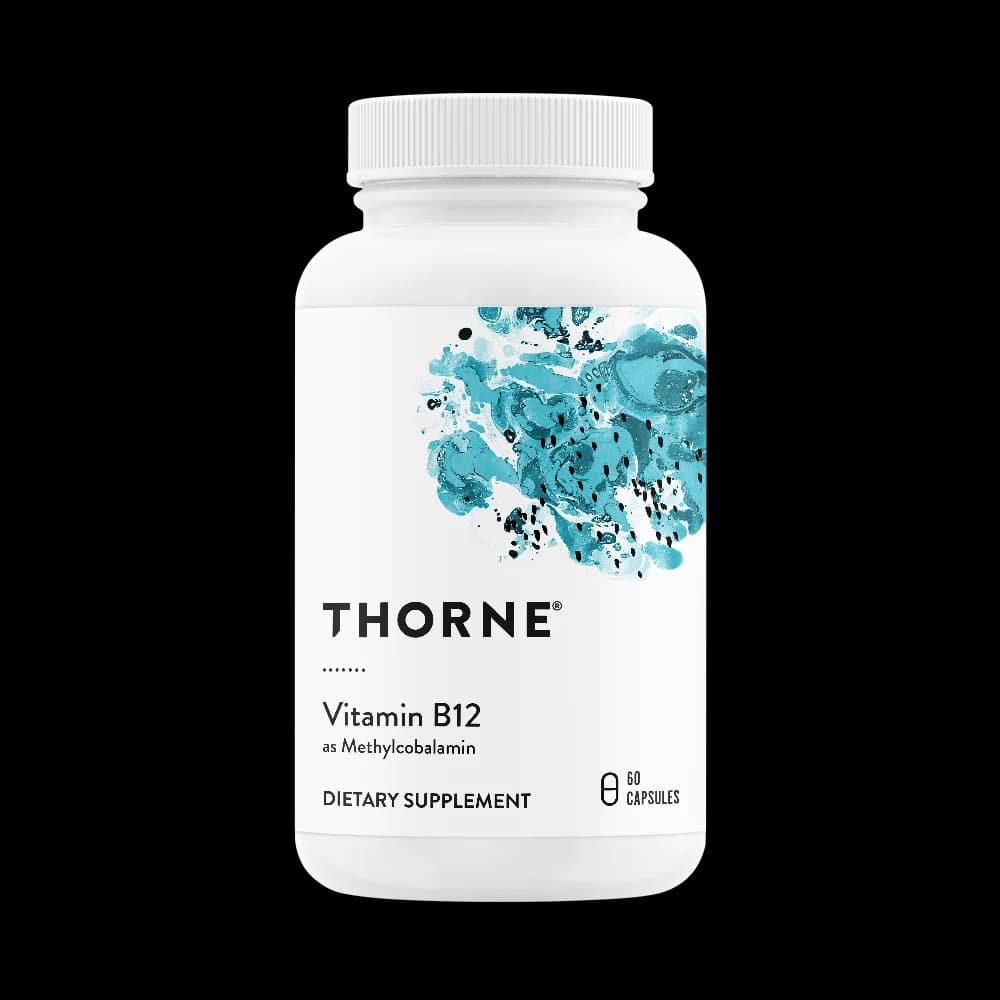
Passive diffusion allows roughly 1% to 2% of a massive oral dose to be absorbed directly across the mucosal lining, completely bypassing the need for stomach acid or Intrinsic Factor. This is why clinical supplements, such as Thorne's Vitamin B12, provide 1 mg (1,000 mcg) of methylcobalamin per capsule. By providing a high concentration of the active, tissue-ready form, patients can ensure that a therapeutically relevant amount of the vitamin successfully enters the bloodstream to support nerve repair and methylation, even if their digestive pathways are compromised.

Follow the Science
Large-Scale Observational Success in Long COVID and ME/CFS
The clinical efficacy of Vitamin B12 is not just theoretical; it is supported by robust, large-scale observational data from the patient community itself. A massive 2024/2025 observational study published in PNAS (MedRxiv preprint) analyzed data from over 3,925 patients suffering from Long COVID and ME/CFS. The researchers evaluated the patient-reported outcomes of over 150 different real-world treatments to determine which interventions provided the most significant relief.
The results were highly illuminating. The study highlighted that patients reported their experiences with over 150 treatments, identifying those with the greatest perceived benefits for core symptoms like post-exertional malaise (PEM). This underscores the importance of patient-reported outcomes in guiding management strategies.
This modern data builds upon foundational research in the ME/CFS community. A 2019 open clinical trial published in Frontiers treated 51 ME/CFS patients with high-dose hydroxocobalamin nasal drops to bypass the gut. Two-thirds of the patients reported significant clinical improvement, which was objectively accompanied by an increased number of daily steps and improved scores on validated physical functioning and fatigue scales.
Reversing Neuropathy and Cognitive Decline
The neuro-regenerative power of high-dose methylcobalamin is heavily documented in recent neurological literature. A study published by Cambridge University Press examined folate and vitamin B12 interrelationships in the central nervous system, highlighting the importance of these vitamins for neurological health.
Furthermore, research continues to explore its impact on brain health. The aforementioned literature emphasizes the critical interrelationships between folate and vitamin B12 in maintaining central nervous system function and protecting against cognitive decline.
Dysautonomia and Baroreceptor Function
The link between B12 deficiency and autonomic nervous system failure is becoming increasingly clear in pediatric and adult literature alike. The pivotal 2014 study in Pediatrics remains a cornerstone of this understanding. By comparing 125 adolescents with vasovagal syncope and POTS to 50 healthy controls, the researchers established a direct correlation between low B12 levels and sympathetic nervous system baroreceptor dysfunction.
The study concluded that because B12 is essential for myelin synthesis, a deficiency directly leads to the structural degradation of the nerves that tell blood vessels to constrict upon standing. This structural failure results in the hallmark blood pooling and compensatory tachycardia of POTS. Restoring B12 levels is therefore not just a supportive measure, but a targeted intervention aimed at repairing the very hardware of the autonomic nervous system.
The Path Forward
A Comprehensive Approach to Healing
Living with a complex, invisible illness like Long COVID, ME/CFS, or dysautonomia is an incredibly challenging journey. It is easy to feel dismissed when standard lab results return "normal," while your daily reality is defined by debilitating fatigue, cognitive dysfunction, and unpredictable autonomic swings. Understanding the deep, biochemical role of nutrients like Vitamin B12 provides a validating framework for your symptoms. Your exhaustion and brain fog are not in your head; they are the result of disrupted cellular pathways, viral depletion, and neuroinflammation.
However, it is important to remember that while methylcobalamin is a powerful tool for supporting the methylation cycle, clearing homocysteine, and repairing the myelin sheath, it is not a standalone cure. Managing post-viral syndromes requires a comprehensive, multi-layered approach. Supplements must be paired with aggressive pacing strategies to avoid post-exertional malaise (PEM), nervous system regulation techniques, and ongoing medical care from practitioners who truly understand the nuances of complex chronic illness.
Tracking Your Progress
As you introduce new interventions like Thorne's Vitamin B12 into your routine, meticulous symptom tracking becomes your most valuable asset. Because nerve repair and cellular remethylation take time, you may not notice changes overnight. By keeping a daily log of your cognitive clarity, sleep quality, heart rate upon standing, and energy envelopes, you can objectively measure the subtle improvements over weeks and months. We encourage you to explore our resources on how a doctor diagnoses Long COVID and whether Long COVID is considered a disability to better advocate for your needs in the medical system.
Explore Your Options
If you suspect that poor methylation, medication interactions, or viral depletion are contributing to your brain fog and fatigue, high-quality methylcobalamin may be a vital addition to your management toolkit. Thorne’s Vitamin B12 provides 1 mg of the active, tissue-ready form of the vitamin, designed to bypass liver conversion and directly support your nervous system and cardiovascular health. As always, please consult with your healthcare provider before starting any new supplement regimen, especially to ensure it aligns with your specific genetic profile and current medications.
Sources
Dr. Oracle: Role of methylcobalamin in managing homocysteinemia
Linus Pauling Institute (Oregon State University): Vitamin B12
European Society of Medicine: Long COVID and Neurological Symptoms
Pediatrics: Vitamin B12 Deficiency in Adolescents with POTS and Vasovagal Syncope
Healthline: Methylcobalamin vs. Cyanocobalamin Pharmacokinetics
European Journal of Cardiovascular Medicine: Vitamin B12 Deficiency in Long-Term Metformin Users
USFDA Adverse Event Reporting System: Vitamin B12 Deficiency Associated with Metformin and PPIs
MedRxiv (PNAS Preprint): Patient-Reported Treatment Outcomes in ME/CFS and Long COVID
Journal of Neurological Sciences / Nutrients: Cognitive Function and Neuropathy