Can Ubiquinol CoQ10 Support Energy Levels for Long COVID and ME/CFS Patients?
March 5, 2026
UbiquinolCoQ10Long COVID
Share:
Disclaimer: The information provided here is for educational purposes only and is not intended as medical advice. It should not be used to diagnose, treat, cure, or prevent any medical condition. Instead, use it as a starting point for discussion with your healthcare provider. Always consult with a qualified healthcare provider before starting any new medication, supplement, device, or making changes to your health regimen.
Living with a complex chronic illness often feels like running a marathon with a battery that refuses to hold a charge. For individuals navigating the debilitating realities of Long COVID, myalgic encephalomyelitis/chronic fatigue syndrome (ME/CFS), and dysautonomia, the profound exhaustion experienced is rarely just "tiredness." Instead, it is a deep, cellular depletion that impacts every system in the body, leaving patients frustrated by a lack of clear medical answers and struggling to complete basic daily tasks. When your body cannot produce the energy it needs to function, even the smallest exertion can trigger severe post-exertional malaise (PEM), leading to unpredictable crashes that severely diminish your quality of life.
In the search for validating, science-backed management strategies, medical researchers have increasingly focused on the health of our mitochondria—the microscopic powerhouses responsible for generating cellular energy. Central to this energy production is a compound known as Coenzyme Q10, specifically in its active, antioxidant form called ubiquinol. As we uncover more about what causes Long COVID and how viral infections hijack our cellular machinery, understanding how to support and restore mitochondrial function has become a critical piece of the puzzle. This comprehensive guide explores the intricate biochemistry of ubiquinol, how chronic illness disrupts its natural pathways, and the clinical evidence supporting its use in managing complex chronic conditions.
TL;DR
Ubiquinol is the active, antioxidant form of CoQ10, essential for cellular energy and mitochondrial health.
Chronic illnesses like Long COVID and ME/CFS can deplete ubiquinol, worsening fatigue and brain fog.
Supplementation may help restore energy production, neutralize free radicals, and support cardiovascular function.
Advanced delivery systems like VESIsorb® significantly improve ubiquinol absorption compared to standard CoQ10 supplements.
What is Ubiquinol CoQ10?
The Active Antioxidant Form of CoQ10
Ubiquinol is the fully reduced, active, and antioxidant form of Coenzyme Q10 (CoQ10), a naturally occurring, fat-soluble compound found in virtually every cell of the human body. In a healthy physiological state, CoQ10 exists in a dynamic, continuous equilibrium between its oxidized form (ubiquinone) and its reduced form (ubiquinol), transitioning through an intermediate radical state known as semiquinone. Because of its highly specialized chemical structure—featuring a benzoquinol ring attached to a highly lipophilic (fat-loving) tail composed of 10 isoprene units—ubiquinol resides primarily within the lipid bilayers of cellular membranes and mitochondria. This unique structural positioning allows it to play dual, indispensable roles in human biology: driving the production of cellular energy and providing a robust defense against severe cellular oxidative damage.
While the body naturally synthesizes CoQ10, the physiological ratio of ubiquinol to ubiquinone progressively decreases as we age, and this decline is often accelerated by chronic illness, metabolic dysfunction, and prolonged physiological stress. In healthy adults, standard blood plasma levels of total CoQ10 range from 0.68 to 1.1 µmol/L, with the vast majority circulating as the active ubiquinol. However, clinical studies on human plasma data have demonstrated that ubiquinol exerts a potent antioxidant action in lipoproteins, and targeted supplementation can significantly increase its protective levels in the body. Without sufficient ubiquinol, cells are left vulnerable to oxidative stress, which dramatically impairs their ability to generate the energy required for basic physiological functions.
The Electron Transport Chain and ATP Production
To truly understand the vital importance of ubiquinol, we must look at the microscopic level of the mitochondria, specifically a process known as the electron transport chain (ETC). The ETC is a series of protein complexes embedded in the inner mitochondrial membrane that work together to generate adenosine triphosphate (ATP), the primary energy currency of the cell. During cellular respiration, oxidized CoQ10 (ubiquinone) acts as a crucial receptor for electrons. It receives these electrons from Complex I (NADH-ubiquinone oxidoreductase) and Complex II (succinate dehydrogenase), as well as from other metabolic enzymes like glycerol-3-phosphate dehydrogenase. Without this initial electron acceptance, the entire energy production line would grind to an immediate halt.
By accepting two electrons and two protons during this respiratory flux, the ubiquinone molecule is chemically reduced, transforming into ubiquinol. This transformation is not merely a structural change; it is the activation step that allows the molecule to physically transport energy. Ubiquinol functions as a highly hydrophobic, mobile carrier within the dense lipid membrane of the mitochondria. It shuttles the accepted electrons away from the initial complexes and delivers them to the next stage of the energy production pipeline, ensuring that the cellular engine continues to run smoothly and efficiently.
The Q-Cycle and Cellular Energy
Once ubiquinol has secured the electrons, it travels to Complex III (the cytochrome bc1 complex) to execute a highly complex biochemical maneuver known as the "Q-cycle." Through the Q-cycle, ubiquinol transfers its electrons to another carrier protein called cytochrome c. Simultaneously, this intricate transfer process actively pumps protons (hydrogen ions) from the mitochondrial matrix into the intermembrane space. This accumulation of protons creates a powerful electrochemical gradient—much like water building up behind a hydroelectric dam. The controlled release of this gradient drives the final enzyme, ATP synthase, to rapidly produce ATP, providing the energy required for everything from cognitive processing to muscle contraction.
Upon successfully donating its electrons and pumping the necessary protons, ubiquinol reverts to its oxidized state, ubiquinone, and travels back to Complex I and II to repeat the cycle. This continuous, rapid-fire cycling between ubiquinone and ubiquinol is the fundamental heartbeat of cellular metabolism. In a healthy body, this cycle occurs millions of times per second in every single cell. However, if the availability of ubiquinol is depleted, or if the mitochondrial membrane is damaged, the Q-cycle stutters. The electrochemical gradient weakens, ATP production plummets, and the individual experiences the profound, systemic exhaustion characteristic of conditions like ME/CFS and Long COVID.
Endogenous Antioxidant Defense and Vitamin E Synergy
Beyond its critical role in cellular bioenergetics, ubiquinol holds the unique distinction of being the only endogenously synthesized (produced by the body) lipid-soluble antioxidant in human physiology. While the electron transport chain is essential for life, it is inherently "leaky," constantly producing highly reactive oxygen species (ROS) and free radicals as metabolic byproducts. If left unchecked, these free radicals attack the delicate lipid membranes of the mitochondria and the cell itself, a destructive process known as lipid peroxidation. Ubiquinol provides a robust, frontline defensive mechanism, preventing both the initiation and propagation of lipid peroxidation by readily donating its electrons to neutralize these dangerous peroxyl radicals.
Furthermore, ubiquinol works in powerful synergy with other crucial antioxidants, most notably alpha-tocopherol (Vitamin E). When Vitamin E neutralizes a free radical, it becomes oxidized and loses its protective capabilities. Ubiquinol directly interacts with this oxidized Vitamin E, efficiently donating an electron to reduce it back into its active, protective form. In vitro studies comparing antioxidant activity suggest that ubiquinol actually scavenges peroxyl radicals faster than alpha-tocopherol itself. This synergistic relationship ensures that the cellular lipid bilayer remains intact and functional, protecting the structural integrity of the mitochondria against the constant barrage of oxidative stress.
How Chronic Illness Impacts Mitochondrial Function
Viral Infection and Mitochondrial Hijacking
When a pathogen like the SARS-CoV-2 virus enters the body, it does not merely cause localized inflammation; it actively hijacks the host's cellular machinery to replicate, initiating a cascade of systemic dysfunction. Research into how Long COVID impacts the body has increasingly highlighted the profound disruption of mitochondrial health. Viruses can directly alter the mitochondrial network, shifting the cell's focus away from producing ATP for the host and toward generating the building blocks needed for viral replication. This forced metabolic reprogramming places immense stress on the electron transport chain, severely depleting the body's natural stores of CoQ10 and leading to a rapid decline in available ubiquinol.
Recent research identifying novel biomarkers in Long COVID patients has revealed significant structural abnormalities in the mitochondria of those suffering from post-viral syndromes. Studies have observed swollen mitochondria with disrupted, fragmented cristae—the inner membrane folds where the electron transport chain and ubiquinol reside. Furthermore, researchers have found elevated levels of proteins related to mitochondrial dynamics, indicating a chaotic imbalance in how mitochondria fuse and divide. This structural damage physically impairs the Q-cycle, making it incredibly difficult for the remaining ubiquinol to efficiently transport electrons, resulting in a severe bottleneck in cellular energy production.
Oxidative Stress and Lipid Peroxidation
The structural damage to the mitochondria is compounded by a massive surge in oxidative stress. As the immune system battles the chronic viral persistence or dysregulated inflammation seen in Long COVID and ME/CFS, it produces vast quantities of reactive oxygen species (ROS) as a defense mechanism. While ROS are necessary for fighting infections, an uncontrolled excess quickly overwhelms the body's antioxidant defenses. Because ubiquinol is the primary lipid-soluble antioxidant defending the mitochondrial membrane, this surge in ROS rapidly consumes the available ubiquinol pool, oxidizing it faster than the body can regenerate it.
Once the ubiquinol defenses are depleted, lipid peroxidation runs rampant. The highly reactive free radicals begin tearing electrons away from the lipid bilayer of the mitochondrial membrane, compromising its integrity. This damage causes the mitochondria to leak protons, destroying the electrochemical gradient necessary for ATP synthase to function. The result is a catastrophic drop in cellular energy output. This systemic oxidative damage is a key reason why patients experience widespread symptoms, from cognitive dysfunction (brain fog) to profound muscle fatigue, as the highly energy-dependent tissues of the brain and nervous system are starved of ATP.
The Vicious Cycle of Energy Depletion in ME/CFS and Long COVID
The combination of viral hijacking, structural mitochondrial damage, and rampant oxidative stress creates a devastating vicious cycle that traps patients in a state of chronic illness. A landmark study by Dr. Michael Maes identified a significant deficiency of Coenzyme Q10 in patients with myalgic encephalomyelitis/chronic fatigue syndrome (ME/CFS). The research explicitly linked this CoQ10 depletion to the severity of fatigue, autonomic dysfunction, and neurocognitive symptoms experienced by the patients. Without sufficient ubiquinol, the mitochondria cannot produce enough ATP to repair the cellular damage caused by the initial infection, and without cellular repair, the mitochondria remain dysfunctional.
This vicious cycle perfectly illustrates the pathophysiology behind post-exertional malaise (PEM), a hallmark symptom of both ME/CFS and Long COVID. When a patient attempts even mild physical or cognitive exertion, their energy demand spikes. However, their damaged, ubiquinol-depleted mitochondria cannot increase ATP production to meet this demand. Instead, the strained electron transport chain simply produces more toxic free radicals, further damaging the cellular machinery and triggering a massive inflammatory response. This is why pushing through the fatigue is biologically counterproductive and why understanding the connection between Long COVID and ME/CFS is crucial for developing effective pacing and supplementation strategies.
Ubiquinol: Supporting Cellular Energy and Defense
Restoring the Electron Transport Chain
When the body's natural stores of CoQ10 are depleted by chronic illness, targeted supplementation with ubiquinol aims to directly intervene in the vicious cycle of mitochondrial dysfunction. By introducing pre-reduced, active ubiquinol into the system, supplementation bypasses the body's impaired ability to convert ubiquinone, delivering the vital electron carrier directly to the inner mitochondrial membrane. Once integrated into the lipid bilayer, this exogenous ubiquinol immediately begins to restore the flow of the electron transport chain. It steps into the Q-cycle, efficiently shuttling electrons from Complex I and II to Complex III, and re-establishing the proton gradient necessary for robust ATP production.
This restoration of the electron transport chain is particularly crucial for highly metabolically active tissues, such as the brain, heart, and skeletal muscles. In patients with Long COVID and ME/CFS, the brain often suffers from hypometabolism—a state where it cannot generate enough energy to function optimally, leading to severe brain fog and cognitive fatigue. By supporting the fundamental biochemistry of ATP synthesis, ubiquinol supplementation helps to "turn the power back on" at a cellular level, providing the necessary energy for neurons to fire correctly and for muscle cells to recover from the metabolic stress of daily activities.
Neutralizing Free Radicals and Protecting Membranes
Simultaneously, ubiquinol supplementation provides a massive boost to the body's overwhelmed antioxidant defense systems. As the active antioxidant form, ubiquinol does not need to be processed by the body before it can begin neutralizing the rampant reactive oxygen species (ROS) generated by chronic neuroinflammation and immune dysregulation. It immediately begins donating electrons to quench lipid peroxyl radicals, halting the destructive chain reaction of lipid peroxidation. This protective action is vital for preserving the structural integrity of the mitochondrial cristae, ensuring that the physical environment required for energy production remains intact.
Furthermore, by restoring the ubiquinol pool, supplementation reactivates the synergistic relationship with Vitamin E. The newly introduced ubiquinol continuously recycles oxidized Vitamin E back into its active state, effectively multiplying the body's overall antioxidant capacity. This comprehensive defense mechanism helps to lower systemic oxidative stress, reducing the chronic inflammatory signals that perpetuate the symptoms of post-viral fatigue syndromes. By shielding the mitochondria from further damage, ubiquinol allows the cells to shift their resources away from constant crisis management and back toward normal physiological repair and homeostasis.
Endothelial Function and Cardiovascular Support
The benefits of ubiquinol extend far beyond basic energy production, playing a profound role in cardiovascular and autonomic health. Many patients with Long COVID and ME/CFS develop dysautonomia, specifically Postural Orthostatic Tachycardia Syndrome (POTS), characterized by an abnormally rapid heart rate and poor blood vessel constriction upon standing. Ubiquinol actively supports endothelial function—the health of the inner lining of the blood vessels. It does this by increasing the bioavailability of nitric oxide, a crucial molecule that signals blood vessels to dilate and relax appropriately. By protecting nitric oxide from being destroyed by free radicals, ubiquinol helps to stabilize blood pressure and improve overall vascular tone.
Additionally, the heart muscle itself is incredibly dense with mitochondria and highly dependent on a continuous supply of ATP and CoQ10. Meta-analyses of CoQ10 supplementation have consistently noted its efficacy in lowering systolic blood pressure and supporting cardiovascular markers in individuals with cardiometabolic disorders. By ensuring the heart has the energetic resources it needs to pump efficiently, and by protecting the cardiac tissue from oxidative damage, ubiquinol provides essential support for patients struggling with the cardiovascular manifestations of complex chronic illnesses.
Upregulating Longevity Genes and Sirtuins
Emerging research has also uncovered fascinating mechanisms by which ubiquinol may support long-term cellular health and resilience. A landmark 2014 study investigating ubiquinol-10's impact on aging utilized senescence-accelerated mice to observe the compound's effects at a genetic level. The researchers discovered that regular dietary supplementation with ubiquinol successfully decelerated the aging process and prevented age-associated physical decline. The specific mechanism identified was the activation of mitochondrial function through the profound upregulation of sirtuin genes, specifically Sirt1 and Sirt3.
Sirtuins are a family of proteins widely recognized in the scientific community as "longevity genes." They play critical roles in regulating cellular health, DNA repair, inflammation, and metabolic efficiency. By upregulating Sirt1 and Sirt3, ubiquinol essentially signals the cells to enter a state of enhanced repair and stress resistance. For patients dealing with the accelerated cellular aging and profound metabolic dysfunction associated with Long COVID and ME/CFS, this genetic signaling offers a promising pathway to support deep, foundational healing and improve overall cellular resilience against future physiological stressors.

Symptoms Ubiquinol May Help Manage
Targeting Complex Chronic Symptoms
Because ubiquinol operates at the foundational level of cellular energy and antioxidant defense, its benefits can be felt across multiple physiological systems. While it is not a cure for complex chronic illnesses, restoring mitochondrial function can help alleviate several debilitating symptoms. Here are the specific symptoms that ubiquinol supplementation may help manage:
Profound Physical Fatigue: By directly restoring the electron transport chain and increasing the production of ATP, ubiquinol provides the essential biochemical fuel required for muscle function and physical stamina, helping to lift the heavy, leaden feeling of cellular exhaustion.
Cognitive Dysfunction (Brain Fog): The brain consumes roughly 20% of the body's energy despite being only 2% of its weight. Ubiquinol helps overcome cerebral hypometabolism by ensuring neurons have the ATP necessary for rapid signaling, memory retrieval, and sustained focus, while simultaneously reducing neuroinflammation.
Post-Exertional Malaise (PEM): By enhancing the efficiency of the mitochondria and reducing the toxic buildup of reactive oxygen species during exertion, ubiquinol may help raise a patient's energy envelope, potentially reducing the severity and duration of post-exertional crashes.
Autonomic Dysfunction and POTS: Ubiquinol supports endothelial health by protecting nitric oxide bioavailability, which helps regulate blood vessel constriction and dilation. This vascular support, combined with enhanced cardiac energy production, can help stabilize heart rate and blood pressure fluctuations upon standing.
Sleep Disruptions and Unrefreshing Sleep: Clinical trials have shown that ubiquinol can help regulate the autonomic nervous system, shifting the body out of a chronic "fight or flight" sympathetic state and into a "rest and digest" parasympathetic state, which is crucial for achieving deep, restorative, and uninterrupted sleep.
Practical Considerations: Forms, Dosing, and Absorption
Ubiquinol vs. Ubiquinone: Understanding the Difference
When considering CoQ10 supplementation, it is critical to understand the difference between the two primary forms available on the market: ubiquinone and ubiquinol. Ubiquinone is the oxidized form of CoQ10 and is the most common, inexpensive version found in standard supplements. However, for ubiquinone to be utilized by the body for antioxidant defense and cellular energy, it must first be enzymatically converted into ubiquinol. As we age, or when our bodies are burdened by the systemic stress of chronic illnesses like Long COVID or ME/CFS, this conversion process becomes highly inefficient. Taking standard ubiquinone often results in poor clinical outcomes because the compromised body simply cannot process it into the active form it desperately needs.
Ubiquinol, on the other hand, is the fully reduced, active antioxidant form of CoQ10. By supplementing directly with ubiquinol, you bypass the body's impaired conversion pathways entirely. The molecule is immediately ready to be absorbed into the lipid bilayers of the mitochondria to begin neutralizing free radicals and shuttling electrons in the Q-cycle. For patients with complex chronic conditions, metabolic disorders, or those over the age of 40, choosing ubiquinol over ubiquinone is a crucial practical consideration to ensure that the supplement actually reaches the cells in a usable, therapeutic state.
The VESIsorb® Nano-Colloid Delivery System
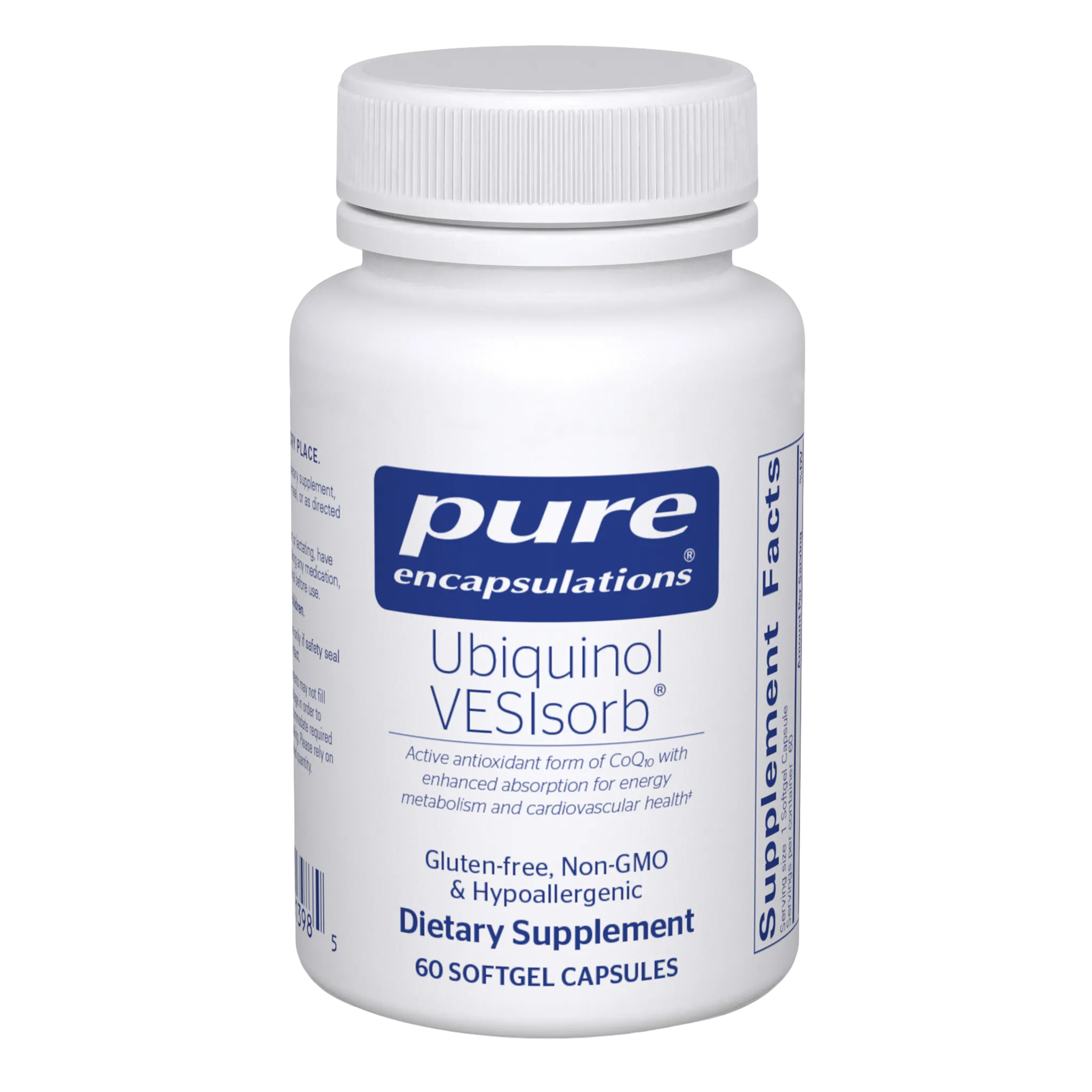
Even when utilizing the superior ubiquinol form, CoQ10 is notoriously difficult for the human body to absorb. It is a large, highly lipophilic (fat-soluble) molecule that naturally repels water. Because the human gastrointestinal tract is a primarily aqueous (water-based) environment, standard CoQ10 supplements tend to clump together in the stomach, resulting in extremely poor intestinal absorption unless taken with a very heavy, high-fat meal. To solve this significant bioavailability issue, advanced formulations utilize the patented VESIsorb® delivery system, a lipid-based nano-colloid technology designed to dramatically enhance the absorption of poorly water-soluble nutrients.
The VESIsorb® technology works by mimicking the human gastrointestinal tract's natural digestion of fats. Upon making contact with the aqueous environment of the stomach, the lipid-based formula naturally self-assembles into a colloidal delivery system. It essentially "pre-digests" the ubiquinol, encapsulating the fat-soluble molecules within water-soluble nano-droplets called micelles. These incredibly small micelles have a mean diameter of less than 100 nanometers. This nano-sizing ensures that the ubiquinol remains evenly dispersed throughout the digestive fluids, preventing the molecules from clumping together and preparing them for rapid transport across the intestinal wall.
Bypassing the Unstirred Water Layer for Maximum Absorption
The true genius of the VESIsorb® system lies in its ability to bypass the "unstirred water layer" of the gastrointestinal tract. This microscopic layer of water coats the absorptive epithelium of the intestines and acts as a significant barrier to fat-soluble molecules like standard CoQ10. Because the VESIsorb® nano-micelles feature a water-soluble exterior (with the fat-soluble ubiquinol safely hidden in the core), they can easily and rapidly diffuse across this watery barrier directly to the absorptive cells. This allows for unparalleled absorption rates, completely independent of whether the patient has consumed a high-fat meal, offering significant dietary flexibility for patients with gastrointestinal sensitivities.
The clinical data supporting this technology is highly compelling. A double-blind pharmacokinetic study comparing CoQ10 formulations demonstrated that the VESIsorb® delivery system achieved a staggering 622% increase in relative bioavailability (measured by the Area Under the Curve over 10 hours) compared to standard oil-based CoQ10 preparations. Furthermore, it achieved a 308% higher peak blood plasma concentration (Cmax). In a separate pilot study specifically utilizing Kaneka ubiquinol, the VESIsorb® formulation demonstrated a nearly 7-fold increase in peak blood levels compared to standard ubiquinol. This means patients can achieve therapeutic blood plasma levels with much smaller, more efficient doses.
Dosing Guidelines and Safety Profile
When utilizing a highly bioavailable form like Ubiquinol VESIsorb®, the standard clinical dosing typically ranges from 100 mg to 200 mg per day. Because of the enhanced absorption, a single 100 mg capsule can often provide the therapeutic equivalent of taking multiple standard CoQ10 capsules. It is generally recommended to take the supplement in the morning or early afternoon, as the boost in cellular energy production can occasionally cause mild insomnia if taken too close to bedtime. While the VESIsorb® technology allows for absorption on an empty stomach, taking it with a light meal can further optimize gastrointestinal comfort.
Ubiquinol possesses an incredibly robust safety profile. According to extensive toxicology and safety reports on CoQ10 therapeutics, the supplement is highly tolerated even at massive doses. The No-Observed-Adverse-Effect Level (NOAEL) in preclinical models maps between 300 and 600 mg/kg, giving the supplement a safety factor exponentially higher than the commonly prescribed human therapeutic dose. However, patients taking statin medications—which inherently block the body's natural production of CoQ10—should consult their healthcare provider, as they may require specific dosing to restore healthy cardiovascular blood levels. As always, it is crucial to discuss any new supplement regimen with your medical team to ensure it aligns with your comprehensive care plan.

Follow the Science
CoQ10 and Long COVID Clinical Trials
The scientific community has actively investigated the "mitochondrial dysfunction" hypothesis in post-viral syndromes, yielding valuable clinical data on CoQ10 and ubiquinol. In the context of Long COVID and chronic fatigue, research has shown significant promise. A systematic review and meta-analysis of randomized controlled trials evaluated the effectiveness of CoQ10 supplementation for reducing fatigue. The comprehensive review highlighted the potential of CoQ10 as a therapeutic option for fatigue-related conditions, emphasizing its role in supporting cellular energy production and acting as a potent antioxidant.
However, rigorous monotherapy trials have illustrated the complexity of treating Long COVID. A randomized, placebo-controlled crossover trial in Denmark tested high-dose oral CoQ10 (500 mg/day) as a standalone treatment for 6 weeks in 121 Long COVID patients. The trial failed to meet its primary endpoint, showing no statistically significant difference in fatigue severity between the CoQ10 and placebo phases. This mixed data suggests a crucial clinical consensus: while high-dose CoQ10 alone may not be a silver bullet for Long COVID fatigue, it is highly effective when utilized as part of a broader, synergistic protocol that addresses multiple pathways of oxidative stress and mitochondrial repair simultaneously.
Evidence in ME/CFS and Post-Viral Fatigue
Research on myalgic encephalomyelitis/chronic fatigue syndrome (ME/CFS) has a much longer history, and the clinical trials generally show a more consistent benefit for CoQ10 supplementation. The ReConnect® Trials, a series of randomized, double-blind studies, investigated the effects of combining 200 mg/day of CoQ10 with 20 mg/day of NADH in ME/CFS patients over 8 weeks. The participants recorded a significant reduction in overall fatigue perception and cognitive fatigue (brain fog). Furthermore, secondary endpoints showed improvements in cellular ATP production and a safe reduction in maximum heart rate during physical testing, indicating improved cardiovascular and autonomic efficiency.
Specific trials focusing on the active ubiquinol form have also yielded fascinating insights into symptom management. A placebo-controlled, double-blind study in Japan administered 150 mg/day of Ubiquinol-10 to 43 ME/CFS patients for 12 weeks. While the primary endpoint of overall perceived physical fatigue showed mixed results, the secondary benefits were profound. The ubiquinol group experienced significant improvements in autonomic nervous system function, enhanced cognitive clarity, and a marked reduction in sleep disruptions, such as night-time awakenings. This data strongly supports ubiquinol's ability to stabilize autonomic dysfunction and improve the neurological symptoms of post-viral fatigue.
Platelet Mitochondrial Respiration and Synergistic Therapies
Recent specialized research has provided even more granular evidence of ubiquinol's cellular impact. A compelling study on platelet mitochondrial respiration in post-COVID-19 syndrome found that patients exhibited severely reduced oxidative phosphorylation—the final step of the electron transport chain. The researchers discovered that when patients underwent a rehabilitation program combined with targeted ubiquinol supplementation, their mitochondrial respiration significantly improved. The supplemented group saw a 62.8% disappearance of clinical symptoms, compared to 51.8% in the non-supplemented group, demonstrating that ubiquinol accelerates the recovery of mitochondrial health at a measurable, cellular level.
The overarching takeaway from the current scientific literature is that synergy is key. In both Long COVID and ME/CFS, ubiquinol appears to be most effective when combined with other mitochondrial nutrients—such as NADH, alpha-lipoic acid, or selenium—and when integrated into a comprehensive management plan. While it may not instantly cure profound physical fatigue on its own, the clinical evidence robustly supports its ability to reduce systemic inflammation, clear cognitive brain fog, stabilize autonomic heart rate fluctuations, and provide the foundational cellular energy required for long-term healing and recovery.
The Path Forward
Validating Your Experience with Chronic Fatigue
If you are living with Long COVID, ME/CFS, or dysautonomia, it is vital to know that your exhaustion is real, physiological, and deeply rooted in the cellular biology of your body. The profound fatigue and post-exertional malaise you experience are not a lack of willpower; they are the direct result of mitochondrial dysfunction, viral hijacking, and rampant oxidative stress. Understanding the complex mechanisms behind your symptoms—from the stuttering electron transport chain to the depletion of crucial antioxidants like ubiquinol—is an empowering step. It validates your experience and provides a clear, scientific rationale for why pushing through the fatigue is counterproductive, and why targeted, cellular support is necessary.
A Comprehensive Approach to Symptom Management
While the science behind Ubiquinol VESIsorb® is incredibly promising, it is important to remember that no single supplement is a standalone cure for complex chronic illness. Restoring mitochondrial health is a gradual process that requires a multifaceted approach. Supplementation should always be paired with rigorous symptom tracking, aggressive rest, and strict pacing strategies to ensure you stay within your energy envelope and avoid triggering PEM crashes. By combining highly bioavailable cellular support with lifestyle management and ongoing medical care, you can begin to slowly rebuild your body's energy reserves and improve your overall quality of life. For more insights into managing your condition, explore our resources on how a doctor diagnoses Long COVID and the systemic impacts of the disease.
Exploring Your Supplement Options
If you are ready to support your mitochondrial function and enhance your cellular antioxidant defenses, highly bioavailable ubiquinol may be a valuable addition to your protocol. Always consult with your primary healthcare provider or a specialist before starting any new supplement, especially if you are taking prescription medications or managing multiple chronic conditions. Together, you can determine the optimal dosing and ensure it aligns safely with your comprehensive treatment plan.
Sources
In vitro Antioxidant Activity of Ubiquinone and Ubiquinol, Compared to Vitamin E
Novel biomarkers of mitochondrial dysfunction in Long COVID patients
Mechanism of action responsible for Ubiquinol-10 decelerating effects on senescence
Efficacy of Coenzyme Q10 and NADH Supplementation in ME/CFS (ReConnect)
Mitochondrial Dysfunction and Coenzyme Q10 Supplementation in Post-Viral Fatigue Syndrome