Can TriGandha™ Ashwagandha Support Mental Health and Stress Recovery in Long COVID and ME/CFS?
March 6, 2026
TriGandhaAshwagandhaLong COVID
Share:
Disclaimer: The information provided here is for educational purposes only and is not intended as medical advice. It should not be used to diagnose, treat, cure, or prevent any medical condition. Instead, use it as a starting point for discussion with your healthcare provider. Always consult with a qualified healthcare provider before starting any new medication, supplement, device, or making changes to your health regimen.
Living with a complex chronic condition like Long COVID, myalgic encephalomyelitis/chronic fatigue syndrome (ME/CFS), or dysautonomia often feels like being trapped in a body that is constantly sounding an alarm. The unrelenting physical symptoms—crushing fatigue, unpredictable heart rates, and profound cognitive dysfunction—are exhausting enough on their own. However, the secondary toll these illnesses take on your mental health and stress response system can be equally debilitating. When your body is locked in a perpetual state of "fight or flight," finding a way to calm the nervous system and restore biological balance becomes a critical priority.
For centuries, traditional medicine has relied on adaptogenic herbs to build resilience against stress, but modern clinical science is now uncovering the precise molecular mechanisms that make these botanicals so effective. Ashwagandha, in particular, has emerged as a powerful tool for modulating the body's stress pathways. In this comprehensive guide, we will explore the science behind TriGandha™, a highly specialized supplement that combines three distinct, advanced ashwagandha extracts. We will delve deep into how its active compounds work at the cellular level to dampen neuroinflammation, regulate cortisol, and support cognitive function, offering a validating and science-backed approach to managing the complex symptoms of chronic illness.
TL;DR
TriGandha™ combines three ashwagandha extracts to support the body's stress response and promote biological balance.
Active compounds called withanolides may help reduce neuroinflammation and regulate cortisol levels in chronic illness.
This blend supports cognitive clarity, energy stability, and restorative sleep without causing unwanted sedation.
Always consult your healthcare provider before starting new supplements, especially if you have complex chronic conditions.
What is TriGandha™ (Ashwagandha)?
The Biological Role of Adaptogens
Ashwagandha (Withania somnifera), commonly known as Indian winter cherry, is a foundational adaptogenic herb that has been utilized in traditional Ayurvedic medicine for thousands of years. In the context of modern clinical science, an adaptogen is defined as a metabolic regulator that increases the organism's ability to adapt to environmental factors and avoid damage from stress. Rather than acting as a simple stimulant or a direct sedative, adaptogens work by restoring homeostasis—the body's delicate internal balance. When the body is subjected to the relentless physiological and psychological stressors of complex chronic illnesses, the biological systems that govern energy production and immune regulation become profoundly dysregulated.
At the core of ashwagandha's therapeutic potential is its ability to modulate the hypothalamic-pituitary-adrenal (HPA) axis, the central hormone pathway that dictates how we respond to stress. In a healthy body, the HPA axis releases cortisol in a carefully timed circadian rhythm, providing energy in the morning and tapering off at night to allow for restorative sleep. However, in conditions characterized by chronic systemic stress, this axis becomes hyperactive or exhausted. Ashwagandha intervenes in this pathway, buffering the adrenal glands against excessive cortisol production and helping to recalibrate the body's baseline stress response.
The Power of Withanolides at the Cellular Level
The primary pharmacological drivers behind ashwagandha's clinical efficacy are a group of naturally occurring steroidal lactones known as withanolides. These bioactive compounds are heavily concentrated in the roots and leaves of the plant and possess potent neuroprotective, anti-inflammatory, and immunomodulatory properties. At the cellular level, withanolides interact directly with neurotransmitter receptors and inflammatory pathways, acting as the molecular messengers that signal the body to downregulate its "fight or flight" response.
One of the most critical mechanisms of withanolides is their ability to act as gamma-aminobutyric acid (GABA) mimetics. GABA is the primary inhibitory neurotransmitter in the central nervous system; when it binds to its receptors, it opens chloride ion channels, hyperpolarizing the neuron and preventing it from firing rapidly. By mimicking GABA, withanolides exert a profound anxiolytic (anti-anxiety) and calming effect on the brain, reducing the neuronal excitability that often manifests as hyperarousal, anxiety, and sensory overload in patients with chronic illness.
TriGandha™: A Synergistic Blend of Three Extracts
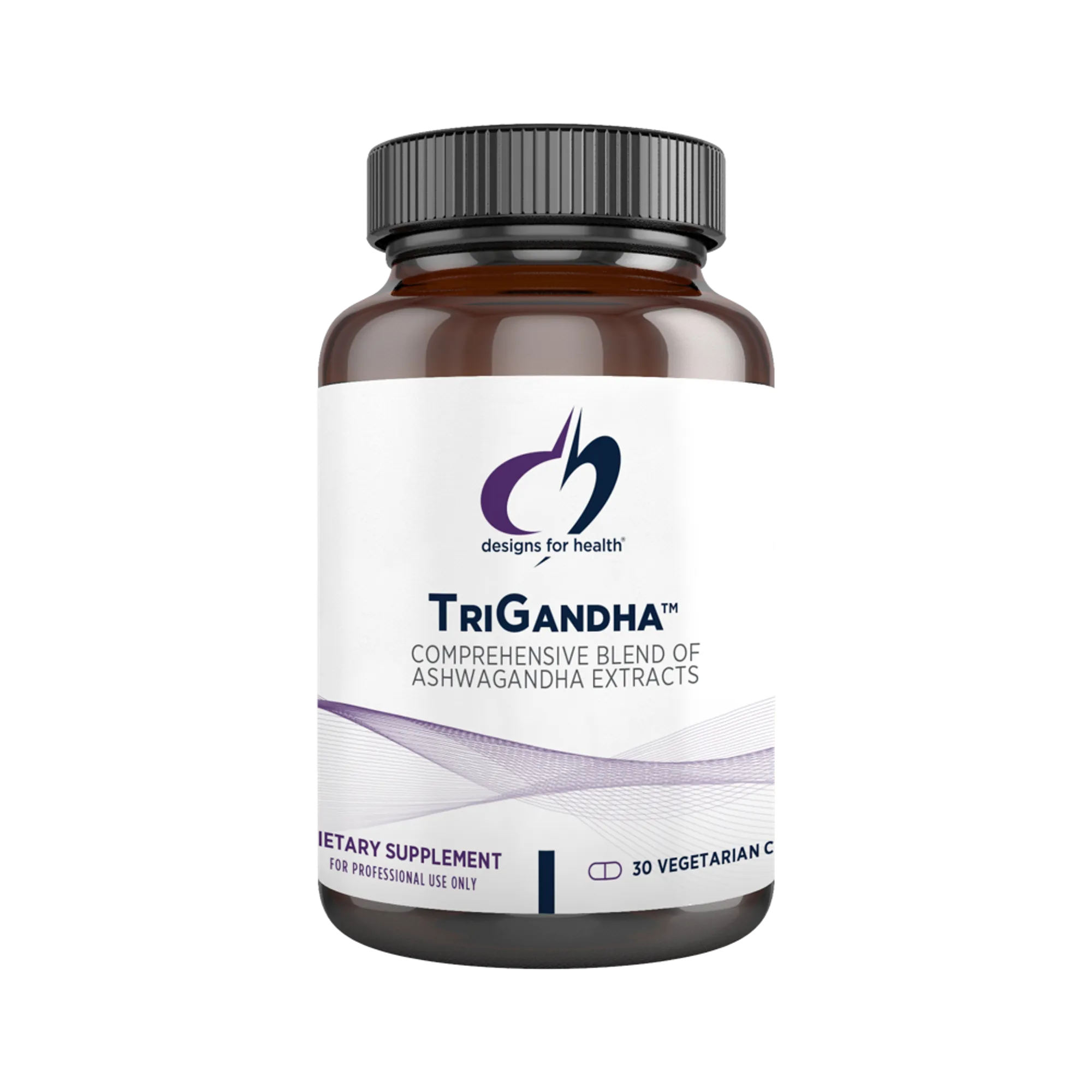
Not all ashwagandha supplements are created equal, as the concentration of withanolides and their ability to be absorbed by the body can vary wildly depending on the extraction method. TriGandha™ by Designs for Health is a uniquely formulated supplement that combines three distinct, highly researched forms of ashwagandha to provide a comprehensive adaptogenic profile. Each one-capsule serving delivers 650 mg of these synergistic extracts, ensuring a diverse range of bioactive compounds that target different aspects of the stress response.
The first component is Sensoril® (250 mg), a patented extract derived from both the root and leaf of the plant. Sensoril is standardized to contain a high concentration of withanolide glycosides and is primarily celebrated for its profound calming, stress-reducing, and sleep-promoting effects. The second component is NooGandha® (250 mg), a next-generation extract specifically engineered to be a non-sedative nootropic. While Sensoril relaxes the nervous system, NooGandha focuses on enhancing cognitive performance, memory, and mental clarity. Finally, the inclusion of a high-quality standardized ashwagandha extract (150 mg, standardized to 1.5% withanolides) ensures a consistent, foundational baseline of the herb's most critical therapeutic compounds.
How Chronic Illness Impacts the Stress Response System
The HPA Axis and Chronic Viral Infection
To understand why a comprehensive adaptogen like TriGandha™ is so relevant for patients with complex chronic conditions, we must first examine how these illnesses dismantle the body's natural stress response. In conditions like Long COVID, the initial viral infection acts as a massive physiological stressor that triggers an aggressive immune response. While the acute infection may clear, the immune system frequently fails to return to its baseline state, leaving the body in a state of chronic alarm. You can learn more about the origins of this prolonged immune response in our detailed guide on What Causes Long COVID?.
This state of chronic alarm places an immense, unrelenting burden on the hypothalamic-pituitary-adrenal (HPA) axis. The hypothalamus continuously secretes corticotropin-releasing hormone (CRH), which signals the pituitary gland to release adrenocorticotropic hormone (ACTH), ultimately forcing the adrenal glands to pump out high levels of cortisol. Over time, this constant demand leads to HPA axis dysfunction. Patients often experience a vicious cycle: initially, cortisol levels are chronically elevated, leading to hyperarousal, anxiety, and insomnia. Eventually, the adrenal glands may become exhausted, resulting in a blunted cortisol awakening response, profound fatigue, and an inability to cope with even minor physical or emotional stressors.
Neuroinflammation and the Vicious Cycle of ME/CFS
The dysregulation of the HPA axis does not occur in a vacuum; it is intimately connected to the immune system and the brain. In myalgic encephalomyelitis/chronic fatigue syndrome (ME/CFS)—a condition that frequently overlaps with or is triggered by Long COVID—neuroinflammation is a central driver of debilitating symptoms. We explore this complex relationship further in our article, Can Long COVID Trigger ME/CFS? Unraveling the Connection.
Neuroinflammation is characterized by the chronic activation of microglial cells, the primary immune responders in the central nervous system. When activated by viral remnants, autoantibodies, or chronic stress signals, microglia release a cascade of reactive oxygen species (ROS) and pro-inflammatory cytokines, such as Interleukin-6 (IL-6) and Tumor Necrosis Factor-alpha (TNF-α). This inflammatory storm disrupts neurotransmitter synthesis, damages delicate neural tissue, and severely impairs mitochondrial energy production in the brain. The result is the profound cognitive dysfunction, often described as "brain fog," and the crushing post-exertional malaise (PEM) that defines ME/CFS.
Dysautonomia and the Autonomic Nervous System
The impact of chronic illness extends deeply into the autonomic nervous system (ANS), which controls involuntary bodily functions like heart rate, blood pressure, and digestion. Dysautonomia, particularly Postural Orthostatic Tachycardia Syndrome (POTS), is a frequent complication of Long COVID and ME/CFS. In a healthy individual, the sympathetic (fight or flight) and parasympathetic (rest and digest) branches of the ANS operate in a delicate, dynamic balance.
In patients with dysautonomia, this balance is shattered. The sympathetic nervous system becomes hyperactive, constantly flooding the body with adrenaline and noradrenaline. This sympathetic dominance leads to inappropriate tachycardia (rapid heart rate), palpitations, tremors, and a pervasive sense of physical anxiety, even while resting. Because the HPA axis and the autonomic nervous system are deeply intertwined, the chronic overactivation of one system inevitably exacerbates the dysfunction of the other, creating a self-perpetuating loop of physiological stress that is incredibly difficult to break without targeted, multi-systemic interventions.
TriGandha™: Supporting the Brain, Body, and Stress Response
Dampening Neuroinflammation and Oxidative Stress
TriGandha™ provides a multi-targeted approach to dismantling the vicious cycles of chronic illness, beginning with its potent anti-inflammatory properties. The withanolides found in both the Sensoril® and NooGandha® extracts are powerful modulators of the immune system. At the cellular level, these compounds have been shown to inhibit the activation of the NLRP3 inflammasome, a multiprotein complex that triggers the release of highly inflammatory cytokines. By blocking this pathway, ashwagandha helps to quiet the overactive immune response that drives systemic inflammation in Long COVID and ME/CFS.
Furthermore, ashwagandha actively combats oxidative stress by promoting the activation of the Nrf2 pathway. The Nrf2 protein is a master transcription factor that regulates the expression of over 250 antioxidant and cytoprotective genes. When activated by the bioactive compounds in TriGandha™, Nrf2 translocates into the cell nucleus and stimulates the production of endogenous antioxidants, such as glutathione and superoxide dismutase. This robust antioxidant defense neutralizes the reactive oxygen species (ROS) that damage mitochondrial membranes and neural tissue, effectively lowering systemic biomarkers of inflammation like C-reactive protein (CRP).
Modulating the HPA Axis and Cortisol Levels
One of the most clinically validated benefits of ashwagandha is its ability to regulate the HPA axis and normalize cortisol levels. As a true adaptogen, the extracts in TriGandha™ do not simply suppress cortisol; rather, they exert a bidirectional balancing effect. In patients experiencing acute hyperarousal and elevated stress hormones, ashwagandha dampens the reactivity of the HPA axis, significantly lowering the secretion of cortisol from the adrenal glands. Recent clinical trials have demonstrated that standardized ashwagandha extracts can reduce fasting morning cortisol levels by over 20% in chronically stressed individuals.
Conversely, in patients suffering from adrenal exhaustion—where cortisol levels are abnormally low and the body struggles to mount a sufficient response to daily demands—ashwagandha helps to restore the natural circadian rhythm of hormone secretion. This balancing act is crucial for patients with Long COVID, who often experience wild fluctuations in their energy and stress levels. If you've ever wondered, Do Long COVID Symptoms Come and Go?, this HPA axis dysregulation is a major reason why. By stabilizing the HPA axis, TriGandha™ helps to smooth out these peaks and valleys, providing a more consistent and resilient foundation for daily functioning.
Enhancing Cognitive Function Without Sedation
Cognitive dysfunction, or "brain fog," is consistently ranked as one of the most debilitating symptoms of complex chronic illness. This is where the inclusion of the NooGandha® extract in TriGandha™ becomes particularly valuable. Unlike traditional ashwagandha extracts, which are primarily known for their relaxing and sedative properties, NooGandha is specifically engineered to be a non-sedative nootropic. Through a highly technical vetting process, this extract isolates specific cognitive-enhancing compounds—such as Withanoid I and Withanoid II—while minimizing the overly sedating molecules.
Clinical studies evaluating NooGandha have shown that it can significantly improve executive function, psychomotor speed, and working memory. By crossing the blood-brain barrier and interacting directly with neural networks, these specialized withanolides help to clear the inflammatory debris that impairs synaptic transmission. This allows patients to experience enhanced mental clarity, better word recall, and improved focus, without the jittery side effects associated with traditional stimulants like caffeine.
Supporting Autonomic Balance and Sleep Architecture
Finally, TriGandha™ plays a vital role in supporting the autonomic nervous system and restoring healthy sleep architecture. The Sensoril® component of the blend is particularly rich in oligosaccharides and specific withanolide glycosides that act as potent GABA agonists. By increasing GABAergic activity in the brain, Sensoril helps to counteract the sympathetic dominance (fight or flight) that characterizes dysautonomia. This shift promotes an increase in parasympathetic (rest and digest) tone, which can manifest clinically as improved heart rate variability (HRV) and a reduction in inappropriate tachycardia.
This autonomic regulation is essential for achieving restorative sleep. Many patients with ME/CFS and Long COVID suffer from "unrefreshing sleep," a condition where the brain fails to enter the deep, slow-wave stages of sleep necessary for physical repair and memory consolidation. By calming the central nervous system and lowering evening cortisol levels, the adaptogenic compounds in TriGandha™ help to facilitate the transition into deep sleep, allowing patients to wake up feeling more rested and better equipped to manage their symptoms.

Symptoms TriGandha™ May Help Manage
Cognitive and Neurological Symptoms
The neuroprotective and nootropic properties of the extracts in TriGandha™ make it a valuable tool for addressing the neurological manifestations of chronic illness. By reducing neuroinflammation and supporting neurotransmitter balance, this supplement targets several key cognitive challenges.
Brain Fog and Poor Concentration: The NooGandha® extract specifically targets executive function and working memory by enhancing synaptic transmission and clearing inflammatory cytokines from neural pathways, helping to lift the pervasive cloud of brain fog.
Sensory Overload: By increasing GABAergic activity, ashwagandha helps to filter out excessive sensory input, reducing the feeling of being overwhelmed by light, sound, or complex environments.
Nerve Pain and Neuropathy: The systemic anti-inflammatory effects of withanolides can help soothe irritated peripheral nerves, potentially reducing the burning or tingling sensations often associated with post-viral neuropathies.
Energy and Systemic Symptoms
Chronic fatigue in conditions like ME/CFS is not simply a matter of being "tired"; it is a profound cellular energy crisis driven by mitochondrial dysfunction and systemic stress. TriGandha™ addresses these systemic issues by stabilizing the HPA axis and protecting cellular infrastructure.
Post-Exertional Malaise (PEM): By acting as an antioxidant and protecting mitochondrial membranes from free radical damage, ashwagandha helps to improve cellular resilience, potentially raising the threshold at which physical or cognitive exertion triggers a debilitating crash.
Unrelenting Fatigue: By smoothing out the erratic peaks and crashes of cortisol production, TriGandha™ helps to provide a more stable, sustainable baseline of energy throughout the day, rather than relying on adrenaline-fueled bursts.
Systemic Inflammation: The activation of the Nrf2 pathway and the suppression of pro-inflammatory cytokines like IL-6 can help alleviate the generalized body aches, joint pain, and flu-like symptoms that frequently accompany chronic immune activation.
Mood and Sleep Disturbances
The psychological toll of living with a complex, invisible illness is immense. TriGandha™ provides critical support for mental health by directly modulating the neuroendocrine networks that govern mood and sleep. You can read more about the intersection of these challenges in our article on Long COVID and Mental Health.
Anxiety and Hyperarousal: The GABA-mimicking effects of the Sensoril® extract act as a natural brake on the nervous system, rapidly reducing feelings of physical anxiety, racing heart, and the constant sensation of being on edge.
Depressive Symptoms: By lowering chronic cortisol levels and supporting the synthesis of serotonin, ashwagandha can help stabilize mood and combat the depressive symptoms that often arise from prolonged illness and systemic inflammation.
Unrefreshing Sleep and Insomnia: By calming the autonomic nervous system and facilitating the transition into parasympathetic dominance, TriGandha™ helps improve sleep architecture, increasing the duration of deep, restorative slow-wave sleep.
Practical Considerations: Forms, Dosing, and Absorption
The Bioavailability Challenge of Withanolides
A significant challenge in utilizing botanical medicine is ensuring that the active compounds actually reach the systemic circulation in therapeutic concentrations. In their natural state, many of the withanolides found in the ashwagandha plant have poor water solubility and are highly susceptible to degradation by harsh stomach acids. Furthermore, once they enter the digestive tract, they undergo extensive first-pass metabolism in the liver.
During first-pass metabolism, liver enzymes (particularly the cytochrome P450 system) break down a large percentage of the bioactive withanolides before they can enter the bloodstream and cross the blood-brain barrier. This is why standard, unformulated ashwagandha root powders often require massive doses to achieve even mild clinical effects, and why the specific extraction and delivery technologies used in TriGandha™ are so critical for its efficacy.
Advanced Delivery Systems: Liposomes and Oligosaccharides
To overcome these bioavailability hurdles, TriGandha™ utilizes advanced, patented delivery systems. The Sensoril® extract is uniquely formulated to contain a minimum of 32% oligosaccharides. These complex carbohydrates act as a natural bioavailability enhancer. By binding to the withanolide glycosides, the oligosaccharides protect the active compounds during digestion and significantly increase their absorption rate across the intestinal lining, making Sensoril highly potent even at lower doses.
The NooGandha® extract employs an even more sophisticated technology known as custom cross-liposomal-micellar delivery. This process encapsulates the fragile withanolide molecules within a lipid (fat) bilayer that closely mimics the structure of human cell membranes. This liposomal shield completely protects the compounds from stomach acid and enzymatic degradation, allowing them to bypass first-pass metabolism and be absorbed directly into the lymphatic system and bloodstream. Research on Sensoril® indicates that advanced extraction and delivery methods can significantly increase bioavailability compared to standard extracts.
Optimal Dosing and Timing Strategies
Each one-capsule serving of TriGandha™ provides a robust 650 mg of total ashwagandha extracts (250 mg Sensoril, 250 mg NooGandha, and 150 mg standardized extract). Because this blend contains both relaxing and cognitive-enhancing components, the optimal timing of the dose can vary depending on your specific symptom profile.
For patients primarily struggling with daytime anxiety, brain fog, and fatigue, taking the capsule in the morning with breakfast is often recommended to support cognitive function and stabilize the HPA axis throughout the day. Conversely, for patients whose primary challenges are hyperarousal at night and severe insomnia, taking the dose in the late afternoon or early evening may help facilitate the transition into restorative sleep. Because the extracts are highly bioavailable, taking the supplement with a small amount of healthy fat (like avocado or olive oil) can further optimize the absorption of the liposomal components.
Safety, Contraindications, and Drug Interactions
While ashwagandha is generally considered safe and well-tolerated for most individuals, it is a potent biological modulator that requires careful consideration, particularly for patients with complex chronic illnesses. The most common minor side effects include mild gastrointestinal discomfort, such as nausea or diarrhea, which can usually be mitigated by taking the supplement with food. Some patients may also experience mild drowsiness as their nervous system adjusts to the GABAergic effects.
However, there are important contraindications to be aware of. Because ashwagandha can stimulate the immune system and upregulate thyroid function, it should be used with extreme caution—or avoided entirely—by individuals with hyperthyroidism or specific autoimmune conditions, such as rheumatoid arthritis or systemic lupus erythematosus. Additionally, ashwagandha can interact with immunosuppressant medications, sedatives, and medications used to treat anxiety or hypertension. As always, it is imperative to consult with your healthcare provider before introducing TriGandha™ into your regimen to ensure it aligns safely with your current treatments.

Follow the Science
The APRIL Trial and Long COVID Research
The scientific community has increasingly recognized the therapeutic potential of ashwagandha for post-viral syndromes, culminating in landmark clinical trials. The most significant of these is the APRIL Trial (Ayurveda for Promoting Recovery In Long COVID), a massive randomized, double-blind, placebo-controlled study led by the London School of Hygiene & Tropical Medicine.
This ongoing trial involves over 2,000 UK adults officially diagnosed with Long COVID. Participants are administered high-dose ashwagandha root extract over a three-month period, with researchers meticulously tracking primary outcomes related to functional status, fatigue severity, cognitive function, and quality of life. The sheer scale and rigorous design of this trial underscore the medical community's confidence in ashwagandha's ability to address the multi-systemic dysfunctions—such as neuroinflammation and HPA axis dysregulation—that drive Long COVID symptoms.
Clinical Evidence for Generalized Anxiety and Chronic Stress
Beyond post-viral applications, the efficacy of ashwagandha in treating severe chronic stress and clinical anxiety is supported by robust, recent data. A recent systematic review investigated the impact of ashwagandha extracts on stress and anxiety. The results were striking: participants across multiple studies experienced significant reductions in Perceived Stress Scale (PSS) scores, alongside decreases in serum cortisol levels.
These findings are corroborated by a comprehensive 2024 systematic review and meta-analysis that evaluated 15 randomized clinical trials encompassing nearly 900 patients. The pooled data confirmed that eight weeks of ashwagandha supplementation significantly reduced clinical markers of anxiety and absolute cortisol levels. Furthermore, a 2024 dose-dependent study in the Nutrients journal demonstrated that standardized extracts like Sensoril® not only modulate the HPA axis but also significantly decrease blood levels of pro-inflammatory cytokines such as IL-1β, IL-6, and TNF-α, directly linking stress reduction to immune regulation.
Emerging Data on ME/CFS and Neuroinflammation
The overlap between chronic stress, neuroinflammation, and profound fatigue has made ashwagandha a subject of intense interest for ME/CFS researchers. While large-scale trials directly naming ME/CFS are still evolving, studies on analogous conditions provide compelling evidence. A 2024 review evaluated the benefits of ashwagandha on brain function and sports performance, highlighting its potential to support cognitive health and mitigate stress-related fatigue.
Additionally, preclinical models investigating the neuroinflammatory basis of fatigue syndromes have shown that the withanolides in ashwagandha actively protect against neurodegeneration. By preventing lipid peroxidation in brain cells and downregulating the inflammatory pathways that drive microglial activation, ashwagandha addresses the root cellular dysfunctions that contribute to the debilitating "brain fog" and energy crashes experienced by patients with ME/CFS and Long COVID.
The Path Forward
Validating Your Experience with Chronic Illness
Living with a complex chronic condition like Long COVID, ME/CFS, or dysautonomia is an exhausting, unpredictable journey. The constant battle against invisible symptoms—the crushing fatigue, the cognitive fog, and the relentless physical anxiety—can leave you feeling isolated and overwhelmed. It is crucial to recognize that your symptoms are not in your head; they are the result of profound, measurable dysfunctions in your body's immune, nervous, and endocrine systems. Seeking solutions to help manage these physiological burdens is a vital step toward reclaiming your quality of life. You can explore more strategies for navigating this journey in our guide on How Can You Live with Long-Term COVID.
While there is no single miracle cure for these complex conditions, understanding the underlying mechanisms of your illness empowers you to make informed decisions about your care. By targeting the specific pathways that have gone awry—such as the hyperactive HPA axis and systemic neuroinflammation—you can begin to dismantle the vicious cycles that perpetuate your symptoms and create a more stable foundation for healing.
Integrating TriGandha™ into Your Management Plan
TriGandha™ offers a scientifically grounded, multi-targeted approach to supporting your body's stress response and cognitive function. By combining the calming, GABAergic properties of Sensoril® with the nootropic, focus-enhancing benefits of NooGandha®, this unique blend addresses the diverse and often contradictory symptoms of chronic illness. Whether you are struggling with hyperarousal and anxiety or profound brain fog and fatigue, the highly bioavailable withanolides in TriGandha™ work at the cellular level to restore homeostasis and promote resilience.
However, it is important to remember that supplements are just one piece of a comprehensive management strategy. True recovery requires a holistic approach that includes rigorous symptom tracking, aggressive rest, and strict adherence to pacing to avoid post-exertional malaise (PEM). TriGandha™ is designed to support these foundational lifestyle modifications, providing your nervous system with the biological buffer it needs to tolerate the demands of daily life more effectively.
Next Steps for Your Health Journey
As you navigate the complexities of chronic illness, building a toolkit of scientifically validated, high-quality interventions is essential. TriGandha™ represents the cutting edge of adaptogenic supplementation, utilizing advanced delivery systems to ensure that you receive the maximum therapeutic benefit from every dose. If you are looking for a comprehensive way to support your mental health, cognitive function, and systemic stress response, this unique blend of ashwagandha extracts may be a valuable addition to your regimen.
Always consult with your healthcare provider before starting any new supplement, especially if you have underlying health conditions or are taking prescription medications. Together, you can determine if TriGandha™ is the right fit for your unique clinical profile and integrate it safely into your broader treatment plan.
Sources
Scientific References and Clinical Trials
Transparency and scientific rigor are foundational to our approach at RTHM. Below is a comprehensive list of the clinical trials, meta-analyses, and medical literature referenced throughout this article, providing you with the resources to explore the science behind TriGandha™ and ashwagandha supplementation.
NIH: Ashwagandha (Withania somnifera) Mechanisms and HPA Axis
Nutritional Outlook: Liposomal Ashwagandha Ingredient Linked to Mood, Cognitive Benefits
Qualia Life Sciences: Sensoril® Ashwagandha Sourcing, Dosing, and Bioavailability
London School of Hygiene & Tropical Medicine: The APRIL Trial for Long COVID
BJPsych Open: Systematic Review and Meta-Analysis on Cortisol and Anxiety (2024)
Nutrients Journal: Dose-Dependent Efficacy on Chronic Stress (2024)
J Psychopharmacol: Clinical Trial on Fatigue and Stress (2023)
Identification of CD8 T-cell dysfunction associated with symptoms in ME/CFS and Long COVID
Towards a Better Understanding of the Complexities of ME/CFS and Long COVID