Can SunButyrate-TG Liquid Help Heal the Gut in Long COVID and ME/CFS?
March 5, 2026
SunButyrateButyrateLong COVID
Share:
Disclaimer: The information provided here is for educational purposes only and is not intended as medical advice. It should not be used to diagnose, treat, cure, or prevent any medical condition. Instead, use it as a starting point for discussion with your healthcare provider. Always consult with a qualified healthcare provider before starting any new medication, supplement, device, or making changes to your health regimen.
For many individuals living with complex chronic illnesses, the journey to finding relief can feel like navigating a labyrinth in the dark. Months or even years after an initial viral infection, you might still be fighting a daily battle against debilitating symptoms: profound fatigue, unpredictable gastrointestinal distress, brain fog that makes simple tasks feel impossible, and allergic-type reactions to foods you once tolerated perfectly. If you are living with Long COVID, myalgic encephalomyelitis/chronic fatigue syndrome (ME/CFS), dysautonomia, or mast cell activation syndrome (MCAS), you are likely intimately familiar with this frustrating reality. Often, standard medical tests come back "normal," leaving patients feeling invalidated and desperate for answers. However, emerging scientific research is shining a bright light on a crucial, often-overlooked piece of the chronic illness puzzle: the gut microbiome and its production of essential metabolites.
In the wake of the COVID-19 pandemic, researchers have discovered that the health of our gut is inextricably linked to the health of our immune and nervous systems. One specific molecule has emerged as a focal point in this research: butyrate. This short-chain fatty acid is normally produced by healthy gut bacteria, but in post-viral and neuro-immune conditions, the bacteria responsible for its production are often severely depleted. This localized deficiency in the gut can trigger a cascade of systemic inflammation, contributing to the complex web of symptoms you experience every day. Understanding how to restore this vital compound through targeted supplementation, such as with SunButyrate-TG Liquid, may offer a promising avenue for supporting gut barrier integrity, calming hyperactive immune responses, and improving your overall quality of life.
TL;DR
Butyrate is a vital gut molecule that supports intestinal barrier integrity and regulates immune responses.
Post-viral conditions like Long COVID and ME/CFS often deplete butyrate-producing bacteria, driving systemic inflammation.
Targeted supplementation with SunButyrate-TG Liquid may help restore gut health and manage chronic symptoms.
What is Butyrate and How Does It Function?
To understand the profound impact of SunButyrate-TG Liquid, we must first explore the natural role of butyrate in a healthy human body. Butyrate is one of the three most abundant short-chain fatty acids (SCFAs)—alongside acetate and propionate—produced in the lower gastrointestinal tract. It is not something your body synthesizes on its own; rather, it is a byproduct of a symbiotic relationship with your gut microbiome. When you consume indigestible dietary fibers and resistant starches, specific strains of anaerobic bacteria, most notably Faecalibacterium prausnitzii and Eubacterium rectale, ferment these polysaccharides in the colon. This fermentation process yields butyric acid, a remarkable molecule that serves as the primary biochemical sentinel of the gut environment.
At the cellular level, butyrate is far more than just a byproduct of digestion; it is a vital signaling molecule and metabolic fuel. Once produced by bacteria, butyrate is rapidly absorbed by colonocytes, the epithelial cells that line the colon. In a healthy gut, butyrate provides up to 70% of the energy required by these cells to function and survive. It enters the colonocytes and is transported into their mitochondria, where it undergoes a process called beta-oxidation. This biochemical pathway breaks down the fatty acid into acetyl-CoA, which then enters the Krebs cycle to produce adenosine triphosphate (ATP), the cellular energy currency. Without an adequate, continuous supply of butyrate, colonocytes essentially starve, leading to a rapid degradation of the intestinal lining and a host of downstream health consequences.
Beyond merely providing energy, butyrate plays a structural role in maintaining the physical integrity of the intestinal barrier. The lining of your gut is only one cell thick, and these cells are held together by complex protein structures known as "tight junctions." Butyrate acts as a genetic regulator, upregulating the healthy gene expression required to manufacture these crucial tight junction proteins, specifically Zonula occludens-1 (ZO-1), claudin, and occludin. By promoting the assembly of these proteins, butyrate ensures that the microscopic gaps between colonocytes remain tightly sealed, preventing the unregulated passage of undigested food particles, toxins, and pathogens into the bloodstream.
Furthermore, butyrate stimulates the production of the protective mucosal layer that coats the inside of the intestines. It does this by regulating the expression of the MUC2 gene, which is responsible for synthesizing epithelial mucin 2. This thick mucus layer acts as a physical shield, keeping harmful bacteria at a safe distance from the delicate epithelial cells. By simultaneously fueling the cells, tightening the junctions between them, and thickening the protective mucus shield, butyrate creates a robust, multi-layered defense system that is essential for maintaining gastrointestinal homeostasis and helping to prevent systemic inflammation.
Perhaps the most fascinating aspect of butyrate is its profound influence on the immune system, acting as a master regulator of inflammation. At the molecular level, butyrate functions as a histone deacetylase (HDAC) inhibitor. Histones are proteins that DNA wraps around; by inhibiting the enzymes that remove acetyl groups from these proteins, butyrate causes the DNA structure to relax, altering how specific genes are expressed. This epigenetic modulation allows butyrate to downregulate inflammatory signaling pathways, specifically by inhibiting the transcription factor NF-kB, which is a primary driver of pro-inflammatory cytokine production.
Through this HDAC inhibition, butyrate also promotes the differentiation and proliferation of regulatory T cells (Tregs) in the gut. Tregs are the "peacekeepers" of the immune system; their primary job is to suppress excessive immune responses and help prevent the body from attacking its own tissues or overreacting to harmless environmental triggers. By boosting Treg activity and suppressing pro-inflammatory cytokines like TNF-a and IL-6, butyrate helps maintain a healthy cytokine balance in the G.I. tract. This localized immune regulation is critical, as unchecked inflammation in the gut can quickly become systemic, contributing to the widespread symptoms seen in complex chronic conditions.
How Long COVID and ME/CFS Impact the Gut Microbiome
The connection between chronic illness and gut health has become a major focal point in modern medical research, particularly when trying to understand What Causes Long COVID?. In healthy individuals, the gut microbiome exists in a delicate state of balance, but acute viral infections like SARS-CoV-2 or Epstein-Barr Virus (EBV) can trigger a catastrophic collapse of this ecosystem. SARS-CoV-2, for instance, binds directly to ACE2 receptors, which are highly abundant in the gastrointestinal tract. This binding downregulates ACE2 expression, which impairs the transport of crucial amino acids and severely disrupts the local immune environment. This disruption creates a hostile environment for beneficial, butyrate-producing bacteria.
Landmark research, including a 2023 study published in Cell Host & Microbe, has demonstrated that patients with ME/CFS suffer from profound dysbiosis, characterized by a severe reduction in Faecalibacterium prausnitzii and Eubacterium rectale—the primary butyrate producers in the human gut. The researchers found that the severity of a patient's debilitating fatigue was directly, inversely correlated with their abundance of these specific bacteria. When these keystone species are wiped out by a viral trigger or chronic immune stress, the gut's primary source of butyrate vanishes. This localized deficiency sets off a vicious cycle of cellular starvation and barrier degradation that reverberates throughout the entire body, helping to explain Can Long COVID Trigger ME/CFS? Unraveling the Connection.
When the gut is deprived of butyrate, the colonocytes lose their primary energy source and begin to dysfunction. The tight junctions that normally seal the intestinal barrier begin to degrade, leading to increased intestinal permeability, commonly referred to as "leaky gut." This structural breakdown allows bacterial endotoxins, specifically lipopolysaccharides (LPS), to translocate from the gut lumen directly into the systemic bloodstream. The immune system immediately detects these foreign invaders and launches a massive, systemic inflammatory response, releasing a flood of pro-inflammatory cytokines. This is a primary driver of the Gastrointestinal Symptoms Seen with Long COVID.
This systemic inflammation does not stay confined to the body; it can cross the blood-brain barrier, leading to neuroinflammation. For patients with Long COVID and ME/CFS, this neuroinflammatory cascade is experienced clinically as profound brain fog, cognitive dysfunction, sleep disruptions, and severe post-exertional malaise (PEM). The lack of butyrate essentially removes the brakes from the immune system, allowing a localized gut issue to transform into a devastating, multi-systemic neuro-immune disorder.
For patients living with dysautonomia, particularly Postural Orthostatic Tachycardia Syndrome (POTS), the relationship with the gut microbiome is equally complex but often manifests through altered motility. The autonomic nervous system controls the involuntary movements of the digestive tract. When the autonomic nervous system is dysfunctional, as seen in POTS, gastrointestinal transit time can slow down significantly. This stagnation creates an environment ripe for Small Intestinal Bacterial Overgrowth (SIBO), where bacteria from the colon migrate upward and proliferate in the small intestine, where they do not belong.
While research suggests that POTS patients may not always have an absolute deficiency in fecal butyrate like ME/CFS patients do, the altered motility and subsequent SIBO trigger massive localized inflammation and stress responses. When bacteria overgrow in the small intestine, they ferment carbohydrates prematurely, leading to severe bloating, abdominal pain, and the release of stress hormones via the enteric nervous system. This localized gut stress can exacerbate the tachycardia and autonomic dysfunction seen in POTS, creating a feedback loop where dysautonomia worsens gut function, and poor gut function worsens dysautonomia.
SunButyrate-TG Liquid: Supporting Gut Barrier and Immune Function
When the natural production of butyrate is compromised by chronic illness, targeted supplementation with SunButyrate-TG Liquid can step in to provide the essential molecular support the gut desperately needs. By delivering a concentrated dose of butyric acid directly to the colonocytes, this supplement acts as a rescue fuel for the starving intestinal lining. Once absorbed, the butyrate immediately enters the cellular mitochondria, restarting the beta-oxidation process and generating the ATP required for cellular repair and regeneration. This influx of energy promotes the proliferation, differentiation, and renewal process of the colonocytes, helping to rebuild a damaged intestinal wall.
Simultaneously, the reintroduced butyrate resumes its role as an epigenetic signaling molecule. It upregulates the transcription of the specific genes responsible for tight-junction assembly, prompting the cells to manufacture fresh ZO-1, claudin, and occludin proteins. This molecular rebuilding process physically tightens the gaps between the cells, directly addressing the intestinal permeability ("leaky gut") that drives systemic endotoxemia. Furthermore, by stimulating healthy gene expression for mucin production, SunButyrate-TG Liquid helps restore the protective mucus barrier, shielding the newly repaired cells from further inflammatory damage and supporting optimal nutrient absorption.
For patients battling mast cell activation syndrome (MCAS), SunButyrate-TG Liquid offers a particularly fascinating mechanism of action. Mast cells line the entire gastrointestinal tract, acting as localized immune sensors. In MCAS, these cells become hyper-reactive, degranulating and releasing massive amounts of histamine and inflammatory mediators in response to minor triggers or translocated gut toxins. This constant histamine release further degrades the gut barrier, creating a vicious cycle of reactivity and permeability that leaves patients with severe food sensitivities and systemic allergic symptoms.
Butyrate has been shown to act as a direct, epigenetic mast cell stabilizer. By altering the epigenetic expression within the mast cells themselves, butyrate effectively forces these hyperactive immune cells to calm down and stop over-producing histamine. By simultaneously repairing the leaky gut barrier (stopping the triggers from entering) and stabilizing the mast cells (stopping the hyper-reaction), butyrate supplementation addresses the MCAS pathology from two critical angles.
The therapeutic benefits of SunButyrate-TG Liquid extend far beyond the physical boundaries of the gastrointestinal tract, reaching all the way to the central nervous system via the gut-brain axis. Preliminary research suggests that short-chain fatty acids like butyrate offer crucial support for blood-brain barrier (BBB) integrity. When the gut barrier is repaired and localized inflammation is suppressed, the volume of pro-inflammatory cytokines (like TNF-a and IL-6) circulating in the bloodstream drops significantly. This reduction in systemic inflammatory signaling reduces the inflammatory burden on the blood-brain barrier.
By protecting the blood-brain barrier and helping to prevent neurotoxic endotoxins from entering the brain, butyrate helps mitigate the neuroinflammation that drives the cognitive symptoms of Long COVID and ME/CFS. Furthermore, animal studies suggest that SCFA supplementation may moderate the body's corticosterone response—the physiological reaction to stress—and promote the secretion of peptide YY. This hormone not only inhibits gastric emptying and regulates intestinal transit time but also promotes a sense of satiety and neurological relaxation. By calming the enteric nervous system and reducing systemic cytokines, butyrate provides foundational support for neurological recovery.

Symptoms SunButyrate May Help Manage
Because butyrate acts as a foundational molecule for both gut barrier integrity and systemic immune regulation, restoring its levels can have a widespread impact on the diverse symptoms experienced by patients with complex chronic illnesses. While it is not a cure, targeted supplementation with SunButyrate-TG Liquid may help manage several debilitating aspects of Long COVID, ME/CFS, dysautonomia, and MCAS.
Severe Bloating and Abdominal Discomfort: By promoting healthy G.I. motility and providing energy for cellular repair, butyrate helps regulate the digestive process. Clinical trials have shown it significantly reduces bloating and abdominal cramps by calming localized inflammation and supporting the healthy transit of food through the intestines.
Food Sensitivities and Histamine Reactions: For those with MCAS, butyrate acts as an epigenetic mast cell stabilizer. By inhibiting the FcεRI-mediated signaling pathway, it reduces the inappropriate degranulation of mast cells, which may help decrease the severity of histamine-driven reactions to previously tolerated foods.
Brain Fog and Cognitive Dysfunction: By repairing the "leaky gut" barrier, butyrate prevents bacterial endotoxins (LPS) from entering the bloodstream and triggering systemic inflammation. This reduction in circulating cytokines protects the blood-brain barrier, alleviating the neuroinflammation that causes profound brain fog and cognitive fatigue.
Unpredictable Bowel Habits (Diarrhea/Constipation): Butyrate helps regulate the secretion of peptide YY, a hormone that modulates intestinal transit time. By supporting healthy mucous production and balancing the localized immune response, it helps stabilize unpredictable bowel habits often seen in post-viral dysautonomia.
Systemic Fatigue and Energy Crashes: While it doesn't replace the need for pacing, butyrate supports overall metabolic health by reducing the chronic, low-grade inflammatory burden on the body. When the immune system isn't constantly fighting endotoxins leaking from the gut, the body can redirect that conserved energy toward systemic healing and cellular function.
Nutrient Malabsorption: A damaged intestinal lining struggles to absorb vital vitamins and minerals from food. By promoting the proliferation and renewal of colonocytes, butyrate helps rebuild a healthy, functional absorptive surface, ensuring your body can actually utilize the nutrients you consume.
Practical Considerations: Forms, Dosing, and Absorption
While the clinical benefits of butyrate are well-documented, delivering it effectively to the lower gastrointestinal tract has historically been a massive pharmacological challenge. Standard oral butyrate supplements, typically formulated as sodium butyrate or calcium butyrate salts, suffer from several severe drawbacks. First and foremost, free butyric acid has a notoriously foul, rancid odor and taste, making compliance incredibly difficult for patients, especially those with the heightened sensory sensitivities common in MCAS and ME/CFS.
More importantly, standard butyrate salts have poor bioavailability for lower-gut targeting. When swallowed, these salts are rapidly degraded by the harsh, acidic environment of the stomach. Simulated gastrointestinal models have demonstrated that up to 70% of standard sodium butyrate is broken down in the stomach and upper digestive tract before it ever reaches the colon. Because the primary therapeutic targets for butyrate—the colonocytes and the lower intestinal tight junctions—are located at the end of the digestive tract, standard supplements often fail to deliver meaningful clinical results.
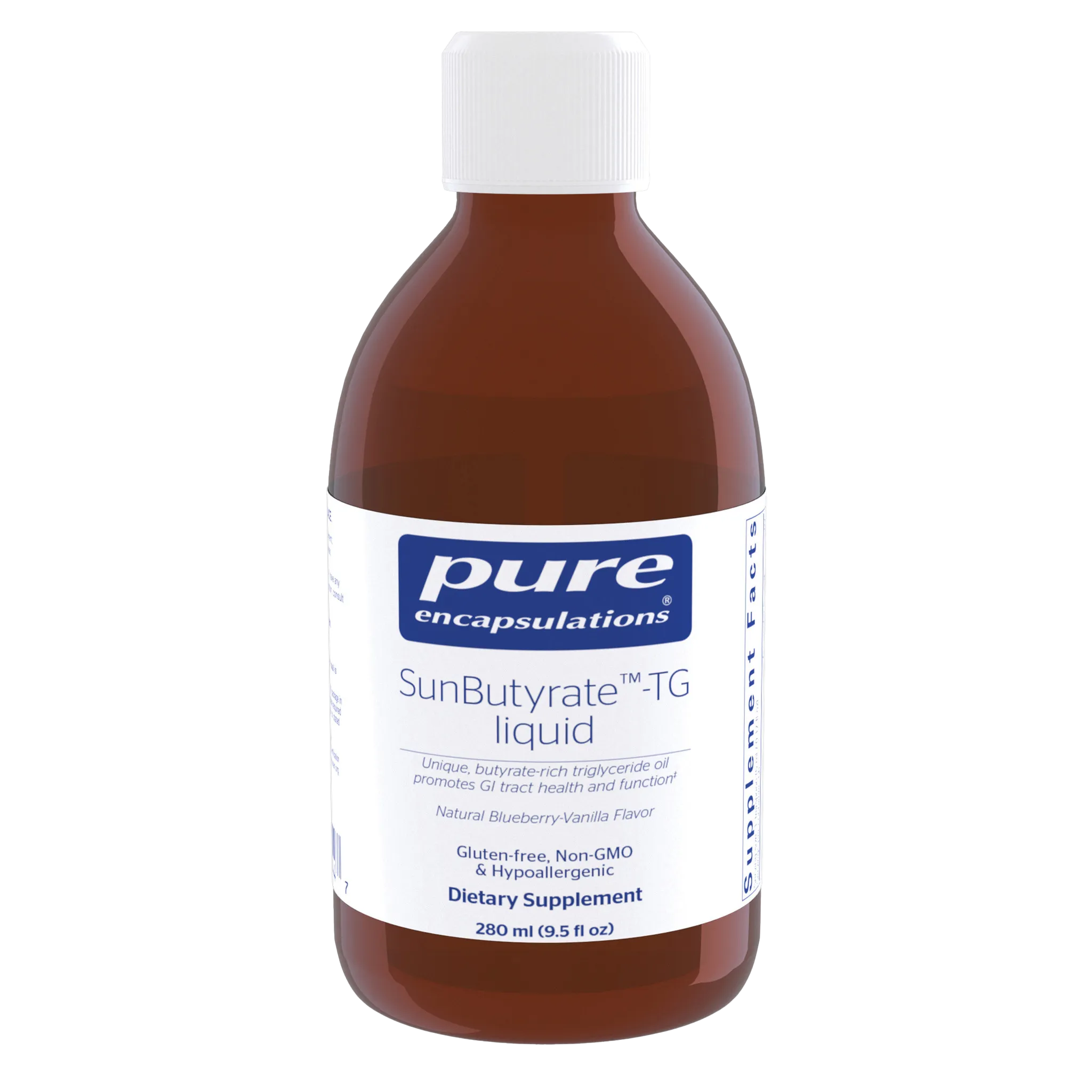
SunButyrate-TG Liquid overcomes these significant delivery hurdles through advanced molecular engineering. Instead of using a simple salt, this formulation utilizes a proprietary butyrate-triglyceride structure (often referred to as tributyrin). In this form, three molecules of butyric acid are bound to a glycerol backbone. This unique triglyceride structure acts as a molecular shield, protecting the active butyrate from degradation in the stomach. In fact, studies show that SunButyrate-TG exhibits only a 6–8% breakdown in the stomach, ensuring that the vast majority of the compound survives the journey through the upper GI tract.
Once the intact triglyceride reaches the small intestine and colon, it encounters pancreatic lipases—enzymes specifically designed to break down dietary fats. These lipases cleave the ester bonds of the triglyceride, slowly and directly releasing the 875 mg of active butyric acid exactly where it is needed most. This targeted delivery system ensures that the colonocytes receive a potent, concentrated dose of their primary energy source. Furthermore, the triglyceride oil base effectively masks the foul odor and taste of the butyrate, offering a pleasant-tasting, highly tolerable liquid alternative to traditional capsules.
The suggested use for SunButyrate-TG Liquid is 1 teaspoon (5 ml) daily, which delivers a robust 4.5 g of the SunButyrate™ triglyceride complex, yielding 875 mg of pure butyric acid. Because it is a fat-soluble triglyceride, it is often best taken with a meal to stimulate the release of the pancreatic lipases required to cleave the molecule and release the active compound. While the liquid form is highly bioavailable, patients with severe gastrointestinal distress or MCAS should always consult their healthcare provider before introducing a new supplement, and may choose to start with a smaller dose to assess tolerance.
It is also important to view butyrate supplementation as part of a broader dietary strategy. While SunButyrate-TG Liquid provides an immediate, exogenous supply of butyrate to heal the gut barrier, the long-term goal should be to restore the microbiome's natural ability to produce it. When tolerated, pairing this supplement with a diet rich in prebiotic fibers, resistant starches, and polyphenols can help feed the surviving Faecalibacterium prausnitzii and Eubacterium rectale bacteria, encouraging them to repopulate the gut and resume natural SCFA production.

Follow the Science: Butyrate and Chronic Illness
The efficacy of butyrate supplementation, particularly in advanced delivery forms, is supported by a growing body of clinical evidence. In a specific 30-day clinical trial involving 50 adult subjects, researchers evaluated the effects of targeted butyrate on general gastrointestinal distress. The participants were given 1 gram of butyrate daily—a dose closely mirroring the 875 mg found in a single serving of SunButyrate-TG Liquid. The results were highly encouraging for those suffering from motility issues and visceral hypersensitivity.
The trial demonstrated that this specific dosage successfully promoted healthy G.I. motility and significantly improved overall abdominal comfort. Most notably, the targeted butyrate supplementation reduced severe bloating, flatulence, and abdominal cramps in 68% of the trial subjects. This data strongly supports the mechanistic theory that providing colonocytes with their preferred energy source helps regulate the enteric nervous system, calm localized inflammation, and restore normal digestive rhythms, which is particularly relevant for patients exploring What Drugs Are Used for COVID Long Haulers? to manage GI symptoms.
In the realm of complex chronic illness, large-scale microbiome studies are rapidly validating the critical role of butyrate. A landmark 2025 study led by The Jackson Laboratory utilized an advanced AI platform called BioMapAI to analyze the microbiome and metabolic markers of 249 individuals. The AI achieved an astonishing 90% accuracy in distinguishing ME/CFS patients from healthy individuals purely based on these markers. The most significant finding was that ME/CFS patients showed profoundly lower levels of butyrate and disrupted tryptophan metabolism, which directly drove heightened systemic inflammation via mucosal-associated invariant T (MAIT) cells.
These findings build upon the 2023 multi-omic analysis published in Cell Host & Microbe, which definitively linked the depletion of butyrate-producing bacteria to the severity of fatigue in ME/CFS patients. Furthermore, ongoing pediatric clinical trials, such as the BASICS-Kids Study at the University of Nebraska, are currently utilizing SunButyrate-TG under an FDA Investigational New Drug (IND) protocol to see if pre-operative butyrate can structurally improve the gut microbiome to help prevent post-operative leaky gut and severe systemic inflammation in cardiac surgery patients. This highlights the profound clinical trust in this specific triglyceride formulation.
The scientific literature also provides robust support for butyrate's role in managing mast cell activation and intestinal permeability. Translational ex-vivo studies using human colonic tissues have demonstrated that pre-treating intestinal biopsies with physiological concentrations of butyrate significantly blunts stress-induced hyperpermeability. When the tissues were exposed to chemicals that trigger mast cell degranulation, the butyrate acted as a protective shield, maintaining the integrity of the tight junctions despite the inflammatory assault.
The Path Forward: Healing the Gut Barrier
Living with conditions like Long COVID, ME/CFS, dysautonomia, and MCAS is an incredibly complex and often exhausting experience. It is entirely validating to feel frustrated when your symptoms are severe, yet standard diagnostics fail to capture the underlying dysfunction. The emerging science surrounding the gut microbiome and short-chain fatty acids proves that your symptoms have a profound, measurable physiological basis. A localized deficiency in butyrate can trigger a cascade of systemic inflammation, barrier degradation, and immune hyper-reactivity that impacts every system in your body.
While no single supplement is a miracle cure for these intricate neuro-immune conditions, restoring the foundational health of your gastrointestinal tract is a critical step toward reclaiming your quality of life. SunButyrate-TG Liquid offers a scientifically advanced, highly bioavailable method to deliver the exact molecular fuel your gut lining needs to repair itself. By supporting tight-junction assembly, encouraging a healthy cytokine balance, and stabilizing hyperactive mast cells, this targeted butyrate therapy can serve as a powerful tool within a comprehensive management strategy that includes pacing, symptom tracking, and nervous system regulation, helping you navigate How Can You Live with Long-Term COVID.
If you are struggling with persistent gastrointestinal distress, severe food sensitivities, or the systemic inflammation associated with post-viral conditions, supporting your gut barrier may be a vital next step in your management plan. Always consult with your primary healthcare provider or a specialist familiar with complex chronic illnesses before adding any new supplement to your regimen, to ensure it aligns with your specific clinical needs and current medications.