Can Strontium Citrate Protect Bone Health in Long COVID and ME/CFS?
March 5, 2026
Strontium CitrateBone HealthLong COVID
Share:
Disclaimer: The information provided here is for educational purposes only and is not intended as medical advice. It should not be used to diagnose, treat, cure, or prevent any medical condition. Instead, use it as a starting point for discussion with your healthcare provider. Always consult with a qualified healthcare provider before starting any new medication, supplement, device, or making changes to your health regimen.
Months or even years after a viral infection, individuals living with complex chronic conditions often find themselves battling a cascade of invisible symptoms. While debilitating fatigue, brain fog, and autonomic dysfunction frequently take center stage in clinical discussions, a silent crisis often unfolds beneath the surface: the rapid deterioration of bone health. For patients navigating Long COVID, myalgic encephalomyelitis/chronic fatigue syndrome (ME/CFS), and mast cell activation syndrome (MCAS), the combination of systemic inflammation, prolonged inactivity due to post-exertional malaise (PEM), and immune dysregulation creates a perfect storm for accelerated bone mineral density loss.
In the search for targeted therapies to halt this structural decline, a naturally occurring trace mineral has emerged as a powerful tool in functional medicine. Strontium citrate offers a highly unique, dual-action approach to bone remodeling that sets it apart from traditional calcium supplementation. By simultaneously stimulating the cells that build new bone and inhibiting the cells that break it down, strontium provides a comprehensive mechanism for supporting skeletal integrity. In this article, we will explore the deep biochemistry of bone remodeling, how post-viral syndromes disrupt this delicate balance, and how strontium citrate may help patients protect their structural foundation.
TL;DR
Chronic conditions like Long COVID, ME/CFS, and MCAS can accelerate bone density loss through inflammation and inactivity.
Strontium citrate supports bone health by stimulating bone-building cells while inhibiting bone-breaking cells.
For optimal absorption, strontium citrate must be taken on an empty stomach, away from calcium.
Always consult your healthcare provider before starting strontium, especially if you have cardiovascular concerns.
What is Strontium Citrate?
To understand how strontium functions within the human body, we must first look at its position on the periodic table. Strontium is an alkaline earth metal that shares profound chemical and physical similarities with calcium. Because of this structural resemblance, the human body readily absorbs strontium and utilizes it in many of the exact same biological pathways that govern calcium metabolism. In a healthy individual, trace amounts of naturally occurring strontium are absorbed from the diet and incorporated directly into the crystal lattice of the skeletal system, where it helps to confer strength and flexibility to the bone matrix.
However, the therapeutic potential of strontium extends far beyond simply acting as a structural stand-in for calcium. When administered in targeted, supplemental doses, strontium acts as a potent pharmacological signaling agent that actively dictates cellular behavior within the bone marrow. The citrate form of this mineral—strontium bound to citric acid—is specifically utilized in dietary supplements because it offers exceptional solubility and bioavailability, allowing the elemental strontium to easily cross the intestinal barrier and enter systemic circulation.
The human skeleton is not a static structure; it is living, dynamic tissue that undergoes a continuous process known as bone remodeling. This delicate physiological cycle relies on the precise coordination of two primary cell types: osteoblasts, which are responsible for synthesizing and mineralizing new bone tissue, and osteoclasts, which are responsible for resorbing or breaking down old, damaged bone. In a healthy state, the activity of these two cells is perfectly coupled, ensuring that bone mass remains stable over time.
Most conventional pharmacological interventions for bone loss, such as bisphosphonates, are strictly antiresorptive—meaning they only slow down the osteoclasts but do nothing to stimulate new bone growth. Conversely, anabolic agents only stimulate the osteoblasts. According to extensive pharmacological research, strontium is entirely unique because it possesses a "dual mode of action." It simultaneously drives the differentiation and lifespan of osteoblasts while actively inhibiting the formation and function of osteoclasts, effectively uncoupling the remodeling process to heavily favor the net creation of new bone tissue.
When exploring the clinical literature on this mineral, patients will frequently encounter references to strontium ranelate. This is a patented, prescription medication approved in Europe and Australia for the treatment of severe postmenopausal osteoporosis. Strontium ranelate consists of two atoms of stable strontium bound to synthetic ranelic acid. While this formulation has been the subject of massive pharmaceutical trials, it is not approved by the FDA for use in the United States.
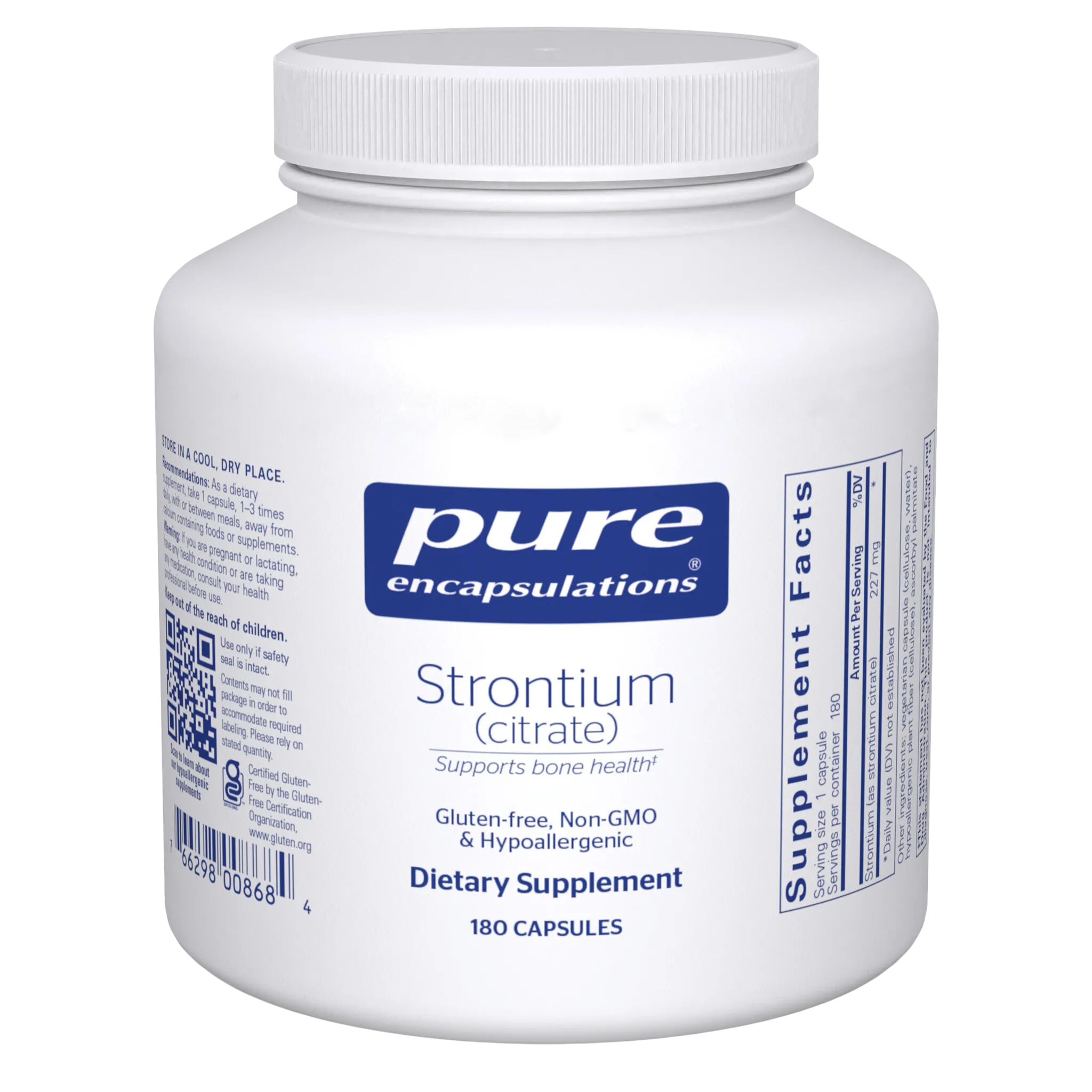
As a result, strontium citrate has become the standard over-the-counter alternative in North America. The critical distinction is that the active, bone-modulating agent in both compounds is the elemental strontium itself, not the carrier molecule. The citric acid simply acts as a highly effective delivery vehicle. By utilizing the citrate form, patients can access the profound biomechanical benefits of elemental strontium through a naturally occurring, bioavailable supplement, supporting healthy vertebrae integrity and hip bone composition without the need for synthetic pharmaceutical carriers.
How Long COVID, ME/CFS, and MCAS Impact Bone Health
The emergence of SARS-CoV-2 has revealed devastating secondary consequences for the skeletal system. During the acute phase of infection, the virus triggers a massive release of pro-inflammatory cytokines, including Interleukin-6 (IL-6) and Tumor Necrosis Factor-alpha (TNF-alpha). These inflammatory mediators are notoriously destructive to bone tissue, as they directly stimulate the hyper-proliferation of osteoclasts. Recent research from the Cleveland Clinic has even identified that a specific viral protein, ORF8, actively drives severe bone inflammation and breakdown, impairing the body's ability to synthesize new bone matrix.
As the acute infection transitions into Long COVID, this inflammatory cascade often becomes chronic. Up to 25% of individuals living with Long COVID report persistent, deep bone pain, which is frequently a clinical indicator of rapid bone mineral density loss. A 2024 systematic review demonstrated that hospitalized COVID-19 patients experienced a measurable reduction in bone mineral density during and after their acute illness. This viral-induced structural degradation leaves Long COVID patients highly vulnerable to osteopenia, frailty, and fractures.
In the context of myalgic encephalomyelitis/chronic fatigue syndrome (ME/CFS), the mechanisms driving bone loss are heavily tied to the physiological realities of the disease. The human skeleton relies on a principle known as Wolff's Law, which states that bone adapts and strengthens in response to the mechanical loads placed upon it. Weight-bearing exercise generates a piezoelectric effect within the bone matrix, sending electrical signals that command osteoblasts to lay down new minerals. Without this mechanical stress, the body rapidly begins to dismantle the skeleton to conserve energy and repurpose calcium.
The hallmark symptom of ME/CFS is post-exertional malaise (PEM), a severe and debilitating exacerbation of symptoms following minor physical or cognitive exertion. Because patients with severe ME/CFS are often housebound or bedbound, they are entirely stripped of the weight-bearing exercise required to maintain bone mass. Furthermore, the chronic systemic inflammation inherent to ME/CFS continuously drives osteoclast activity. This combination of profound mechanical unloading and immune-mediated inflammation creates a vicious cycle of accelerated osteoporosis, making proactive bone support absolutely critical for this patient population.
Mast cell activation syndrome (MCAS) introduces yet another complex layer to the pathophysiology of chronic bone loss. Mast cells are immune sentinels that, when inappropriately triggered, degranulate and release a flood of biochemical mediators into the bloodstream. The most prominent of these mediators is histamine. While typically associated with allergic reactions, histamine has a profound and highly destructive impact on bone metabolism. According to immunological research, histamine binds directly to H1 and H2 receptors located on the surface of osteoblasts, fundamentally altering their behavior.
When stimulated by histamine, osteoblasts are forced to upregulate the expression of a protein called RANKL (Receptor Activator of Nuclear Factor Kappa-B Ligand). RANKL is the primary chemical signal that activates osteoclasts. By flooding the bone marrow with RANKL, MCAS effectively supercharges the bone-resorbing cells, leading to massive and rapid bone degradation. Clinical data from osteoporosis cohorts indicates that patients with idiopathic MCAS have a significantly higher prevalence of unexplained osteoporosis and vertebral fractures, highlighting the urgent need to address bone health in mast cell disorders.
Strontium Citrate: Supporting Bone Integrity and Remodeling
The primary therapeutic appeal of strontium citrate lies in its profound ability to stimulate osteoblast differentiation and collagen formation. At the cellular level, elemental strontium binds to and activates the Calcium-Sensing Receptor (CaSR) located on the surface of osteoblasts. This activation triggers a complex intracellular signaling cascade, utilizing phospholipase C and inositol triphosphate to release intracellular calcium stores. This surge in calcium activates the ERK-MAPK signaling pathway, which commands mesenchymal stem cells in the bone marrow to rapidly differentiate into mature, active osteoblasts.
Furthermore, strontium is a potent activator of the Wnt/β-catenin signaling pathway, which is arguably the most critical genetic network for driving bone formation. By upregulating this pathway, strontium ensures that osteoblasts survive longer and synthesize higher volumes of the structural proteins required for a healthy bone matrix. This includes the robust production of Type I collagen, which forms the flexible scaffolding of the bone. By enhancing osteoblast collagen formation, strontium citrate ensures that the newly formed bone is not just dense, but structurally sound and resilient against mechanical stress.
Simultaneously, strontium executes a highly targeted suppression of the osteoclasts, halting the excessive bone breakdown driven by post-viral inflammation and histamine overload. It achieves this by modulating the delicate ratio between RANKL and Osteoprotegerin (OPG). While we know that conditions like MCAS drive up RANKL to activate osteoclasts, strontium forces the osteoblasts to secrete large amounts of OPG. OPG acts as a "decoy receptor," binding to RANKL and neutralizing it before it can ever reach the osteoclasts. By starving the osteoclasts of their activation signal, strontium effectively shuts down the bone resorption process.
Beyond simply blocking their activation, strontium actively reduces the lifespan of existing osteoclasts. Research indicates that strontium induces osteoclast apoptosis (programmed cell death) via the PKCβII signaling pathway. By simultaneously decreasing the formation of new osteoclasts and accelerating the death of mature ones, strontium citrate dramatically shifts the overall bone remodeling balance. This mechanism is particularly vital for patients with Long COVID and ME/CFS, as it directly counteracts the hyperactive bone resorption triggered by systemic cytokines and prolonged physical inactivity.
The ultimate result of this dual-action mechanism is a profound improvement in bone microarchitecture. When strontium is incorporated into the hydroxyapatite crystals of the bone, it alters the physical dimensions of the crystal lattice. Because the strontium atom is larger than calcium, it expands the lattice slightly, which has been shown to improve the bone's compressive strength and flexibility. This is clinically referred to as maintaining healthy bone tensile strength, which is the bone's ability to resist breaking under tension or twisting forces.
In clinical applications, this translates to tangible structural benefits. By promoting healthy osteoblast differentiation and maintaining balanced osteoclast activity, strontium supplementation supports the intricate, honeycomb-like trabecular bone found in the spine, as well as the dense cortical bone found in the hips. For patients navigating the complex realities of chronic illness, where managing daily symptoms is already a monumental task, fortifying the skeletal system against frailty and fractures is a critical component of long-term functional stability.
Symptoms Strontium Citrate May Help Manage
While strontium citrate is primarily utilized as a structural support supplement rather than a direct symptom-relief medication, its profound impact on bone remodeling helps manage and mitigate several downstream complications associated with chronic bone loss. By restoring the balance between osteoblasts and osteoclasts, strontium may help address the following clinical presentations:
Accelerated Bone Mineral Density Loss: By actively stimulating the Wnt/β-catenin pathway and upregulating osteoblast activity, strontium directly combats the rapid osteopenia and osteoporosis frequently observed in bedbound ME/CFS patients and those with post-viral inflammation.
Deep Bone Pain: Often reported by Long COVID patients as a lingering, aching sensation in the long bones, this pain can be a byproduct of rapid bone turnover and marrow inflammation. By suppressing osteoclast hyperactivation and lowering localized bone resorption, strontium may help stabilize the tissue and reduce structural aching.
Vertebral Fragility and Micro-fractures: The trabecular bone in the spine is highly susceptible to degradation from systemic inflammation and glucocorticoid use. Strontium specifically supports healthy vertebrae integrity by thickening the microscopic trabecular struts, reducing the risk of painful compression fractures.
Histamine-Induced Bone Resorption: For patients with MCAS, chronic histamine release constantly triggers the RANKL pathway, driving bone breakdown. Strontium acts as a biochemical countermeasure, increasing OPG production to neutralize RANKL and protect the skeleton from mast cell-driven degradation.
Loss of Bone Tensile Strength: By promoting robust osteoblast collagen formation, strontium ensures that the bone matrix retains its flexibility and tensile strength, helping to keep the bones from becoming overly brittle and prone to shattering during minor falls or physical therapy.
Practical Considerations: Forms, Dosing, and Absorption
When selecting a strontium supplement, the chemical form dictates how effectively the mineral will be absorbed across the intestinal lining. Inorganic forms, such as strontium carbonate, suffer from poor solubility and low absorption rates. Conversely, strontium citrate is an organic salt that demonstrates exceptional water solubility and high bioavailability. Pharmacokinetic data suggests that the citrate form allows for rapid dissolution in the acidic environment of the stomach, facilitating efficient transport into the bloodstream.
Once absorbed, the elemental strontium is distributed throughout the extracellular fluid and rapidly localizes to the bone surfaces, particularly in areas of active remodeling. It is important to note that the absorption of strontium, much like calcium, is highly dependent on adequate levels of active Vitamin D3. Therefore, clinicians often recommend ensuring optimal Vitamin D status through laboratory testing to maximize the therapeutic efficacy of strontium citrate supplementation.
The most critical practical consideration when taking strontium citrate involves its relationship with calcium. Because strontium and calcium are chemically homologous, they utilize the exact same carrier proteins and transport mechanisms to cross the intestinal wall. However, because calcium is a lighter and more abundant element, it possesses a higher binding affinity for these receptors. If strontium and calcium are present in the digestive tract simultaneously, the calcium will aggressively outcompete the strontium, resulting in the strontium being excreted rather than absorbed.
To bypass this competitive inhibition, strontium citrate must be taken strictly away from calcium. The standard clinical guideline is to take strontium on an empty stomach, at least two to three hours apart from any calcium-containing foods (like dairy or fortified milks) or calcium supplements. Many patients find it easiest to take their strontium citrate dose right before bed, assuming they have not consumed a calcium-heavy late-night snack. Despite this separation, maintaining adequate overall daily calcium intake remains essential, as strontium requires a steady supply of calcium building blocks to effectively construct new bone tissue.
Patients utilizing strontium citrate who undergo routine Dual-Energy X-ray Absorptiometry (DEXA) scans must be aware of a unique radiological phenomenon known as the "strontium artifact." DEXA scans measure bone density by calculating how much X-ray energy is absorbed by the minerals in the bone. Because the atomic weight of strontium (87.6 u) is more than twice as heavy as calcium (40.0 u), strontium atoms attenuate X-rays far more strongly than calcium atoms do.
When strontium incorporates into the bone matrix, it artificially inflates the bone mineral density reading on the DEXA scan. Radiological research indicates that for every 1% of calcium replaced by strontium in the bone, the DEXA BMD reading increases by approximately 10%. Clinicians estimate that roughly 50% of the BMD increase observed on a scan in a strontium patient is an artifact of this heavier metal, while the remaining 50% represents true, physical bone mass improvement. Therefore, while the massive leaps in BMD (often 8-10% in a year) are partially an illusion, the underlying improvements in bone microarchitecture and fracture resistance are highly genuine.
Follow the Science
While the prescription drug strontium ranelate has been the subject of massive Phase III pharmaceutical trials, significant clinical research has also validated the efficacy of the over-the-counter citrate form. One of the most notable studies is the COMB (Combination of Micronutrients for Bone) Study, a retrospective analysis that evaluated patients taking 680 mg of strontium citrate daily, alongside Vitamin D3, Vitamin K2, and magnesium. After 12 months, the researchers observed remarkable improvements, with average bone mineral density increases of 4% in the femoral neck, 3% in the total hip, and 6% in the total spine. The study concluded that this micronutrient protocol was highly effective at raising BMD without the use of bisphosphonates.
Further supporting these findings is the MOTS (Melatonin-micronutrients Osteopenia Treatment Study), a one-year, double-blind randomized controlled trial. This study assessed postmenopausal women with osteopenia who were given a daily combination of strontium citrate, melatonin, Vitamin D3, and Vitamin K2. The results demonstrated a statistically significant 4.3% increase in lumbar spine BMD and a 2.2% increase in the left femoral neck compared to the placebo group. Crucially, the protocol successfully decreased serum biomarkers of bone turnover, proving that the strontium protocol was actively halting bone resorption.
Longitudinal data further underscores the sustained benefits of strontium supplementation. A 7-year pragmatic clinical trial evaluating an algae-sourced calcium supplement taken alongside 680 mg of strontium citrate demonstrated a linear, significant increase in BMD of over 1% per year, culminating in an average total increase of over 7% across the study duration. This long-term data is critical for patients with chronic conditions like ME/CFS, who may require lifelong bone support due to permanent reductions in their ability to perform weight-bearing exercise.
Beyond simple density metrics, in vivo animal studies on ovariectomized mice (the standard clinical model for estrogen-deficiency bone loss) have shown that administering strontium citrate significantly increases the Tissue Mineral Density (TMD) of both trabecular and cortical bone tissues. By physically thickening the bone struts and improving the spatial organization of the collagen matrix, strontium provides a biomechanical defense against the structural degradation driven by post-viral inflammation and chronic mast cell activation.
While strontium citrate is generally well-tolerated, with mild gastrointestinal distress or transient headaches being the most commonly reported side effects, it is vital to contextualize its safety profile within the broader history of strontium therapies. The European Medicines Agency (EMA) placed severe restrictions on the prescription drug strontium ranelate after long-term data revealed an increased risk of venous thromboembolism (blood clots) and cardiovascular events in patients with pre-existing heart disease.
Although many functional medicine practitioners argue that these cardiovascular risks were specific to the synthetic ranelic acid carrier rather than the elemental strontium itself, regulatory bodies exercise caution. Health Canada, for instance, issued a precautionary warning applying to all strontium salts, advising that individuals with a history of heart disease, circulatory issues, or blood clots should avoid high-dose strontium supplementation. Patients navigating the complex diagnostic landscape of Long COVID, particularly those with endothelial dysfunction or microclotting issues, must discuss these potential cardiovascular contraindications with their healthcare provider before initiating therapy.
The Path Forward
Living with a complex chronic illness often means fighting battles on multiple physiological fronts simultaneously. When your daily reality is consumed by managing debilitating fatigue, autonomic crashes, and cognitive dysfunction, the silent loss of bone density can easily go unnoticed until a fracture occurs. However, understanding the profound impact that viral inflammation, prolonged inactivity, and mast cell degranulation have on your skeletal system is the first step toward reclaiming control. Validating these invisible structural changes is crucial; your bone pain and density loss are not in your head—they are direct, measurable consequences of your condition's pathophysiology.
Fortunately, the narrative of inevitable bone decline can be rewritten. By leveraging the unique, dual-action biochemistry of strontium citrate, patients have a powerful tool to actively intervene in the bone remodeling process. By stimulating the osteoblasts to build new, resilient bone matrix while simultaneously shutting down the hyperactive osteoclasts, strontium offers a comprehensive defense against post-viral and inflammatory bone degradation. It provides a way to support healthy vertebrae integrity and hip bone composition, even when severe PEM prevents you from engaging in traditional weight-bearing physical therapy.
As with any functional intervention, strontium citrate should be viewed as one piece of a holistic management puzzle. It works best when integrated into a comprehensive protocol that includes optimal Vitamin D3 levels, adequate (but temporally separated) calcium intake, and the careful management of systemic inflammation. Because chronic conditions like Long COVID and ME/CFS are highly individualized, it is essential to monitor your progress through specialized testing, such as DEXA scans and bone turnover biomarkers, while keeping the "strontium artifact" in mind.
If you are ready to take proactive steps to protect your structural foundation and support your long-term physical resilience, discuss this targeted trace mineral with your medical team. Always consult your healthcare provider before beginning any new supplement, especially to review potential cardiovascular contraindications and ensure it aligns safely with your current medications.