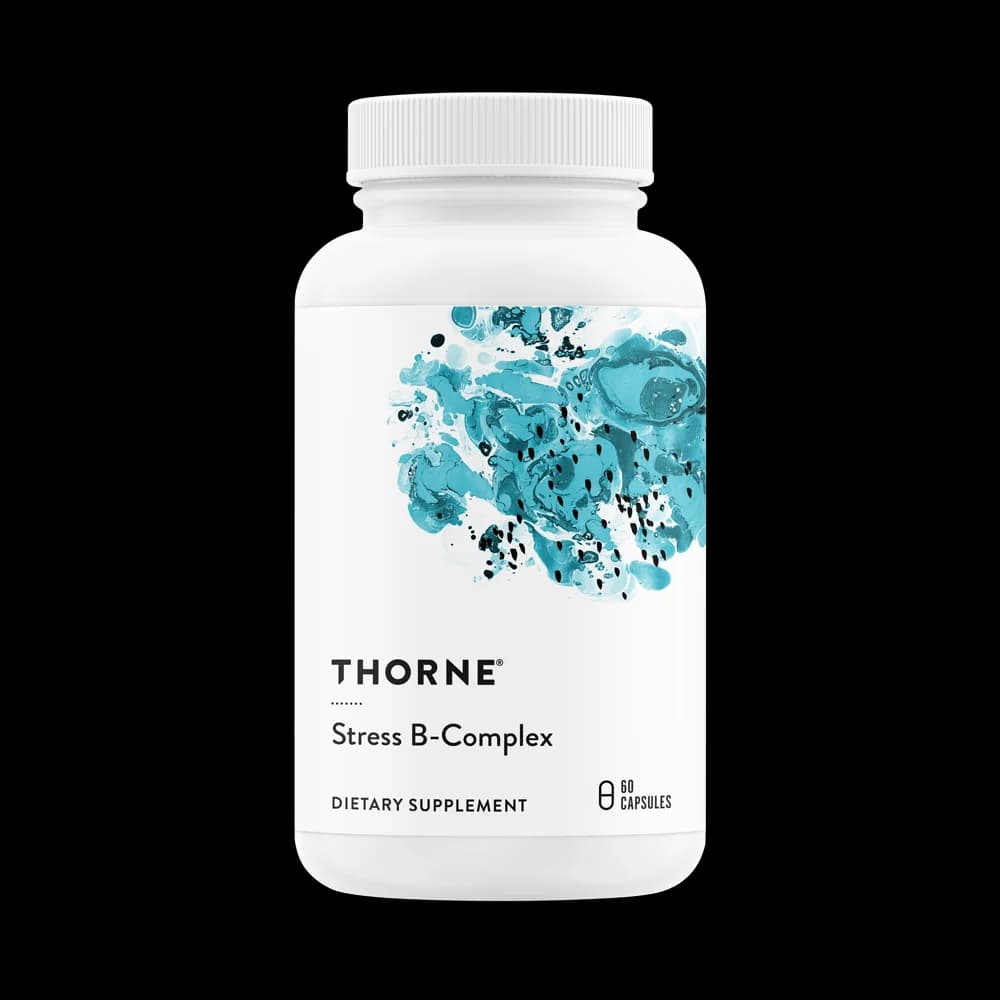
Can Thorne Stress B-Complex Support Energy and Adrenal Health in Long COVID and ME/CFS?
March 6, 2026
Thorne Stress B-ComplexLong COVIDME/CFS
Share:
Disclaimer: The information provided here is for educational purposes only and is not intended as medical advice. It should not be used to diagnose, treat, cure, or prevent any medical condition. Instead, use it as a starting point for discussion with your healthcare provider. Always consult with a qualified healthcare provider before starting any new medication, supplement, device, or making changes to your health regimen.
Living with a complex chronic illness like Long COVID, Myalgic Encephalomyelitis/Chronic Fatigue Syndrome (ME/CFS), or dysautonomia often feels like trying to run a marathon with an empty gas tank and a faulty navigation system. The profound, crushing exhaustion—known clinically as post-exertional malaise (PEM) or "crashes"—is not simply being tired; it is a fundamental breakdown in how your cells generate energy. At the same time, the erratic heart rates, digestive paralysis, and severe cognitive "brain fog" point to a nervous system that has lost its ability to regulate itself. When the body is trapped in this perpetual state of physiological stress and cellular starvation, foundational nutrients are burned through at an accelerated rate, leaving patients depleted and struggling to recover.
For decades, integrative medicine and nutritional science have pointed to the B-vitamin family as the cornerstone of cellular energy and nervous system repair. However, not all B-complex supplements are created equal. Thorne Stress B-Complex is a highly specialized formulation designed specifically for individuals facing immense physical, mental, and physiological stress. By combining active, tissue-ready B vitamins with a massive dose of adrenal-supporting pantothenic acid (Vitamin B5) and nervous system-modulating choline, this complex targets the exact biochemical pathways that are so often disrupted in post-viral and chronic fatigue syndromes. In this comprehensive guide, we will explore the deep molecular mechanisms of these nutrients, examine the latest clinical trials, and uncover how targeted B-vitamin therapy may help you rebuild your cellular resilience.
TL;DR
Targeted B-vitamins may help support cellular energy and manage fatigue in Long COVID and ME/CFS.
High-dose Vitamin B5 supports adrenal function, helping the body manage physiological stress and maintain resilience.
Choline supports acetylcholine production, which may help regulate the nervous system and improve cognitive brain fog.
Methylated, tissue-ready B-vitamins bypass genetic mutations like MTHFR, ensuring optimal absorption for sensitive patients.
What is Thorne Stress B-Complex?
The Biological Role of B Vitamins
To understand the power of a targeted B-complex, we must first look at the natural function of these nutrients in a healthy human body. The B-complex is a family of eight distinct, water-soluble vitamins that act as the fundamental catalysts for human life. While carbohydrates, fats, and proteins provide the raw fuel for our bodies, they are completely useless without B vitamins. These nutrients act as essential coenzymes—molecular "keys" that unlock and drive thousands of enzymatic reactions. Their most critical role lies deep within the mitochondria, the microscopic powerhouses inside our cells, where they facilitate the conversion of dietary macronutrients into Adenosine Triphosphate (ATP), the universal energy currency of the body.
Beyond energy production, B vitamins are the architectural builders of the nervous system and the immune response. They are required for the synthesis of DNA and RNA, the formation of healthy red blood cells that deliver oxygen to tissues, and the creation of vital neurotransmitters like serotonin, dopamine, and GABA. Because these vitamins are water-soluble, the body cannot store them in large quantities for long periods. They must be continuously replenished through diet or supplementation. When the body is subjected to chronic illness, systemic inflammation, or severe psychological stress, the metabolic demand for these coenzymes skyrockets, rapidly depleting the body's fragile reserves and leading to profound systemic dysfunction.
The "Stress" Distinction: Pantothenic Acid and Choline
What separates Thorne Stress B-Complex from standard multivitamin formulations is its highly intentional, stress-specific nutrient profile. A standard B-complex provides relatively even, low-level doses of the eight essential vitamins. However, Thorne’s formulation is anchored by an exceptionally high dose of Vitamin B5, known as pantothenic acid. Each capsule delivers 250 mg of pantothenic acid, which equates to roughly 5,000% of the standard daily value. This massive dose is not arbitrary; it is specifically designed to support the adrenal glands. The adrenal glands, which sit atop the kidneys, are the command centers for the body's stress response, and they absolutely require high concentrations of Vitamin B5 to synthesize stress hormones like cortisol and epinephrine.
In addition to the adrenal-focused B5, this complex includes 14 mg of choline citrate. Choline is an essential nutrient that is often grouped with the B-vitamin family due to its overlapping functions in metabolism and neurology. Choline is the direct biochemical precursor to acetylcholine, a master neurotransmitter governing memory, learning, and the parasympathetic nervous system. By pairing a high dose of adrenal-supporting B5 with nervous system-calming choline, this supplement is engineered to address both the hormonal and neurological fallout of chronic stress.
The Importance of Tissue-Ready, Methylated Forms
Another critical aspect of this specific supplement is its use of active, "tissue-ready" molecular forms. Many over-the-counter supplements utilize cheap, synthetic forms of B vitamins, such as folic acid (synthetic B9) and cyanocobalamin (synthetic B12). For a healthy person, the liver must perform multiple enzymatic conversions to transform these synthetic molecules into active forms the cells can actually use. However, research indicates that up to 40% of the population carries a genetic mutation in the MTHFR gene that significantly impairs this conversion process.
Thorne Stress B-Complex bypasses this genetic bottleneck entirely. It provides Vitamin B12 as methylcobalamin and Folate as L-5-Methyltetrahydrofolate (5-MTHF). These are the exact, biologically active molecules that the body uses at the cellular level. By providing the vitamins in their pre-methylated, tissue-ready states, the supplement ensures that patients with genetic variations, liver congestion, or compromised gut absorption can immediately utilize the nutrients without requiring additional metabolic work from an already exhausted system. Furthermore, the entire complex is formulated without the use of brewer's yeast, making it a safe option for patients dealing with mast cell activation syndrome (MCAS), mold toxicity, or yeast sensitivities.
How Chronic Illness Impacts Cellular Energy and the Nervous System
The Mitochondrial Crisis in Long COVID and ME/CFS
To comprehend why targeted B-vitamin therapy is so relevant, we must examine the pathophysiology of the conditions it aims to support. In illnesses like Long COVID and ME/CFS, the most debilitating symptom is often post-exertional malaise (PEM)—a severe, disproportionate exacerbation of symptoms following minor physical or cognitive effort. Current medical research heavily points to mitochondrial dysfunction as a root cause of this phenomenon. When the SARS-CoV-2 virus infects the body, it can hijack and damage the mitochondria, altering their structural dynamics and impairing their ability to produce energy.
Normally, mitochondria utilize the Krebs cycle and the electron transport chain to mass-produce ATP. However, in post-viral syndromes, this cellular engine stalls. The cells are forced to abandon efficient mitochondrial respiration and rely on a primitive, inefficient process called glycolysis, which produces very little ATP and generates toxic byproducts like lactic acid. This metabolic shift explains why patients feel as though their muscles are burning and their energy is completely drained after simply walking up a flight of stairs. Because B vitamins are the mandatory coenzymes that keep the Krebs cycle spinning, a systemic depletion of these nutrients exacerbates this mitochondrial crisis, locking the patient in a state of cellular starvation.
Dysautonomia and the Acetylcholine Deficit
Beyond energy failure, chronic complex illnesses are characterized by severe neurological dysregulation. Dysautonomia, specifically Postural Orthostatic Tachycardia Syndrome (POTS), is highly prevalent in the Long COVID community. Patients experience rapid heart rate spikes, blood pressure fluctuations, dizziness, and severe gastrointestinal paralysis. This autonomic chaos is intimately tied to the vagus nerve, the primary superhighway of the parasympathetic nervous system. The vagus nerve relies entirely on the neurotransmitter acetylcholine to send calming, regulatory signals to the heart, lungs, and gut.
Emerging research suggests that viral infections and chronic neuroinflammation can directly damage the vagus nerve or trigger the production of autoantibodies that block acetylcholine receptors. When acetylcholine signaling fails, the parasympathetic nervous system cannot apply the "brakes" to the body. The sympathetic nervous system (the "fight or flight" response) takes over completely, leaving the patient trapped in a state of perpetual hyper-arousal. Furthermore, because acetylcholine is critical for memory and learning in the brain, this localized depletion is a primary driver of the severe, disorienting cognitive impairment known as brain fog.
The "Adrenal Fatigue" Theory and Chronic Stress
When the body is trapped in this relentless state of sympathetic overdrive and systemic inflammation, the adrenal glands are forced to work overtime. The hypothalamus-pituitary-adrenal (HPA) axis continuously signals the adrenals to pump out cortisol, the body's primary stress hormone, to manage the inflammation and keep the body functioning. However, synthesizing massive amounts of cortisol requires a constant supply of specific biochemical building blocks—most notably, Vitamin B5 and cholesterol.
In functional and integrative medicine, it is theorized that prolonged periods of severe illness and stress can deplete the body's reserves of Vitamin B5, leading to a state commonly referred to as "adrenal fatigue" or HPA-axis dysfunction. While mainstream endocrinology prefers the term HPA-axis dysregulation, the clinical reality for the patient is the same: the adrenal glands struggle to mount an appropriate cortisol response. This results in a vicious cycle of profound lethargy, an inability to cope with even minor stressors, unrefreshing sleep, and a compromised immune system. The chronic illness essentially drains the very nutrients required to fight the illness.
Thorne Stress B-Complex: Supporting Energy, Adrenals, and Neurological Function
Resuscitating the Mitochondrial Engine
Supplementing with Thorne Stress B-Complex provides the exact molecular machinery needed to address these overlapping crises. At the cellular level, the broad-spectrum B vitamins act as a resuscitation protocol for failing mitochondria. Vitamin B1 (Thiamin), B2 (Riboflavin), and B3 (Niacin) are the primary drivers of the Krebs cycle and the electron transport chain. For example, Vitamin B3 is essential for synthesizing NAD+, a coenzyme required to generate ATP within the mitochondria. By flooding the cells with these active coenzymes, the supplement helps to clear metabolic bottlenecks, allowing the mitochondria to transition away from inefficient glycolysis and back toward robust ATP production, thereby targeting the root cause of post-exertional malaise.
Furthermore, these vitamins act as potent indirect antioxidants. Dysfunctional mitochondria leak highly reactive oxygen species (free radicals) that cause severe oxidative stress and tissue damage. Research published in Chemico-Biological Interactions demonstrates that B-vitamin supplementation protects mitochondrial membranes from oxidative toxicity.
Buffering the Cortisol Response with Vitamin B5
The defining feature of this complex—the 250 mg dose of pantothenic acid (Vitamin B5)—interacts directly with the exhausted HPA axis. Once ingested, pantothenic acid is rapidly converted by the body into Coenzyme A (CoA). Coenzyme A is an absolute biological requirement for the adrenal cortex to synthesize steroid hormones, including cortisol and aldosterone. Without adequate CoA, the adrenal glands simply cannot manufacture the hormones needed to regulate blood pressure, blood sugar, and the immune response.
By providing a therapeutic, high-dose supply of Vitamin B5, the supplement ensures that the adrenal glands are never starved of their primary building block. Clinical observations suggest that this does not simply "boost" cortisol indiscriminately; rather, it acts as a modulating buffer. It provides the adrenal glands with the resilience to produce adequate cortisol during acute stressors while preventing the total depletion that leads to HPA-axis crashes. This helps patients regain a sense of stress tolerance and emotional stability, mitigating the feeling of being constantly "wired and tired."
Restoring Vagal Tone with Choline
The inclusion of choline citrate provides a direct therapeutic intervention for dysautonomia and brain fog. Because choline is the mandatory dietary precursor to acetylcholine, supplementing it provides the raw materials the nervous system desperately needs to rebuild its neurotransmitter pools. By increasing the availability of choline, the body can synthesize more acetylcholine to fuel the vagus nerve.
When vagal tone is restored, the parasympathetic nervous system can finally re-engage. This helps to lower resting heart rates, stabilize blood pressure upon standing (crucial for POTS management), and stimulate proper gastrointestinal motility. In the brain, increased acetylcholine synthesis enhances neuroplasticity, improves memory consolidation, and helps lift the dense, suffocating cognitive fog that plagues so many Long COVID patients. Furthermore, acetylcholine activates the Cholinergic Anti-inflammatory Pathway, signaling immune cells to halt the production of inflammatory cytokines, thereby cooling the fires of systemic neuroinflammation.
Bypassing MTHFR Mutations for Optimal Methylation
Finally, the methylated forms of B12 (methylcobalamin) and Folate (5-MTHF) in this complex play a vital role in restoring the body's methylation cycle. Methylation is a biochemical process responsible for DNA repair, detoxification, and the clearance of homocysteine—a toxic amino acid that causes vascular inflammation and micro-clotting. In patients with MTHFR gene mutations, synthetic folic acid becomes trapped in the bloodstream, allowing homocysteine levels to rise dangerously high.
By delivering pre-methylated 5-MTHF and methylcobalamin, Thorne Stress B-Complex completely bypasses the defective MTHFR enzyme. These active molecules immediately donate methyl groups to clear toxic homocysteine, protect the vascular endothelium, and support the synthesis of mood-regulating neurotransmitters like serotonin and dopamine. This targeted approach ensures that even patients with complex genetic variations receive the full neurological and cardiovascular benefits of the B-complex.
Symptoms Thorne Stress B-Complex May Help Manage
Because B vitamins and choline are foundational to so many systemic processes, Thorne Stress B-Complex may help manage a wide array of symptoms associated with chronic, complex illnesses:
Post-Exertional Malaise (PEM) and Severe Fatigue: By supplying the mandatory coenzymes for the Krebs cycle and electron transport chain, B vitamins help restore mitochondrial ATP production, reducing the severity of cellular energy crashes.
Cognitive Dysfunction (Brain Fog): The inclusion of choline citrate provides the raw material for acetylcholine synthesis, which is critical for memory recall, sustained attention, and clearing neuroinflammation in the brain.
Dysautonomia and POTS Symptoms: Increased acetylcholine supports the vagus nerve, helping to re-engage the parasympathetic nervous system to stabilize erratic heart rates and improve digestive motility.
Stress Intolerance and "Adrenal Fatigue": A massive 250 mg dose of Vitamin B5 (pantothenic acid) directly fuels the production of Coenzyme A, allowing the adrenal glands to synthesize cortisol and maintain a healthy response to physical and emotional stress.
Mood Instability and Depression: Methylated B12 and 5-MTHF bypass MTHFR genetic mutations to ensure the proper functioning of the methylation cycle, which is required to synthesize mood-stabilizing neurotransmitters like serotonin and dopamine.
Vascular Inflammation: Active folate and B12 work synergistically to convert toxic homocysteine into beneficial methionine, reducing vascular inflammation and supporting healthy blood flow.
Practical Considerations: Forms, Dosing, and Absorption
Bioavailability and Active Nutrient Forms
When selecting a B-complex, bioavailability—the proportion of a nutrient that enters the circulation and is able to have an active effect—is paramount. As discussed, Thorne Stress B-Complex utilizes tissue-ready forms like methylcobalamin and 5-MTHF. These forms are highly bioavailable because they do not require enzymatic conversion by the liver. They are absorbed through the intestinal wall and immediately put to work in the cells. Additionally, the formula is entirely yeast-free. Traditional B-vitamins derived from brewer's yeast can trigger severe reactions in patients with mast cell activation syndrome (MCAS), histamine intolerance, or Candida overgrowth. By using synthesized, active forms, this complex provides a hypoallergenic option for highly sensitive patients.
Pantothenic Acid vs. Pantethine
There is often confusion in the supplement world regarding the best form of Vitamin B5. Some marketing materials claim that "pantethine" is a superior, more bioavailable form of B5 compared to standard pantothenic acid. However, clinical pharmacokinetics reveal a different reality. When pantethine is ingested orally, it is almost entirely hydrolyzed by digestive enzymes into free pantothenic acid and cysteamine before it can be absorbed into the bloodstream. Therefore, if the biological goal is to elevate Vitamin B5 levels to support the adrenal glands and produce Coenzyme A, standard pantothenic acid (as found in this Thorne formula) is highly efficient, rapidly absorbed via intestinal transporters, and clinically appropriate. High-dose pantethine is typically reserved specifically for targeted cardiovascular therapies, such as lowering LDL cholesterol and triglycerides, due to the unique lipid-lowering effects of its cysteamine byproduct.
Dosing, Timing, and Potential Interactions
The suggested use for Thorne Stress B-Complex is one capsule, one to three times daily, or as recommended by your healthcare practitioner. Because B vitamins are water-soluble, they are generally best absorbed when taken with a glass of water, though taking them with a light meal can help prevent the mild nausea that some individuals experience on an empty stomach. It is highly recommended to take B vitamins earlier in the day (morning and early afternoon). Because they actively stimulate mitochondrial energy production and neurological activity, taking them late in the evening can lead to overstimulation and disrupt sleep patterns.
Patients should be aware of a harmless but surprising side effect: Riboflavin (Vitamin B2) contains a naturally occurring fluorescent yellow pigment. Shortly after taking the supplement, your urine will likely turn a bright, neon yellow. This is completely normal and simply indicates that your body is excreting the excess water-soluble vitamin it does not immediately need. Regarding contraindications, patients undergoing cancer therapy with methotrexate should consult their oncologist, as 5-MTHF can interfere with the drug's anti-neoplastic activity. However, research indicates that individuals taking methotrexate for autoimmune conditions like rheumatoid arthritis can safely take folate supplements. Always consult your healthcare provider before introducing high-dose B vitamins, especially if you are pregnant, nursing, or managing complex chronic conditions.
Follow the Science: Clinical Evidence for B Vitamins in Chronic Illness
High-Dose B Vitamins for Post-Viral Fatigue
The scientific community is increasingly recognizing the critical role of B vitamins in managing post-viral syndromes. A massive 2025 observational study published in PNAS evaluated patient-reported outcomes from nearly 4,000 individuals suffering from Long COVID and ME/CFS. Researchers assessed over 150 different treatments and found that Vitamin B12 emerged in the top 20 most effective interventions. The study noted that B12 successfully improved fatigue, brain fog, and post-exertional malaise in over 40% of patients, highlighting the profound impact of restoring mitochondrial and neurological methylation pathways.
Furthermore, active clinical trials are currently testing high-dose B-vitamin combinations for Long COVID recovery. The PreVitaCOV Trial (NCT05638633), a multicenter, double-blind, randomized Phase III trial, is evaluating the efficacy of a fixed high-dose combination of neurotropic B vitamins (B1, B6, and B12) alongside low-dose corticosteroids. The primary goal of the trial is to determine if this targeted B-vitamin blend can successfully alleviate the debilitating fatigue, dyspnea, anxiety, and cognitive deficits that plague patients with Post-COVID-19 Syndrome. These trials underscore the medical consensus that B-vitamin depletion is a central feature of post-viral neurological dysfunction.
Choline, Acetylcholine, and Dysautonomia Trials
The inclusion of choline in this complex is supported by robust research into the autonomic nervous system. Advanced neuroimaging studies utilizing Magnetic Resonance Spectroscopy (MRS) have observed reduced total choline levels in specific brain regions of Long COVID patients, providing a direct structural explanation for persistent brain fog. To combat this, researchers are actively exploring therapies that boost acetylcholine. Clinical observations in Long COVID clinics have shown that administering cholinergic precursors (like Acetyl-L-Carnitine and choline compounds) can significantly drop depression and fibromyalgia impact scores within weeks by supplying the raw materials needed for neurotransmitter synthesis.
Additionally, modern trials are utilizing Transcutaneous Vagus Nerve Stimulation (tVNS) to mechanically force the vagus nerve to release acetylcholine. A 2024 pilot study on a female cohort utilizing a tVNS device resulted in significant, measurable improvements in cognitive performance, mood, and fatigue. While a supplement cannot replace a medical device, providing the body with ample choline ensures that the vagus nerve has the necessary chemical fuel to transmit these healing, anti-inflammatory signals once it is stimulated.
Pantothenic Acid and the Stress Response
The clinical justification for high-dose pantothenic acid (B5) is rooted in foundational endocrinology. Early animal studies demonstrated that a severe deficiency in pantothenic acid led directly to adrenal necrosis (tissue death) and an inability to synthesize corticosteroids. Re-introducing the vitamin successfully restored adrenal hormone production and stress resiliency. In human studies, administering active forms of Vitamin B5 during simulated high-stress events has been shown to successfully modulate and lower the excessive rise in urinary cortisol metabolites. This indicates that pantothenic acid acts as a critical buffering agent, preventing the adrenal glands from hyper-secreting cortisol and protecting the HPA axis from total exhaustion during periods of chronic physiological stress.
The Path Forward
A Foundational Piece of the Puzzle
Navigating the complexities of Long COVID, ME/CFS, and dysautonomia is an incredibly challenging journey. It is completely valid to feel overwhelmed by the sheer number of symptoms and the lack of simple medical answers. While no single supplement is a miracle cure for these intricate conditions, providing your body with the foundational nutrients it needs to generate cellular energy and regulate the nervous system is a critical step toward healing. By addressing mitochondrial starvation, buffering the adrenal stress response, and supporting vagal tone, Thorne Stress B-Complex targets the physiological root causes of fatigue and brain fog, rather than just masking the symptoms.
Pacing, Tracking, and Holistic Care
It is essential to remember that nutritional supplementation is just one piece of a comprehensive, holistic management strategy. To truly live with long-term COVID and chronic fatigue, supplements must be paired with aggressive pacing, diligent symptom tracking, and nervous system regulation techniques. You cannot simply supplement your way out of a crash if you are continuously pushing past your energetic envelope. Always work closely with a dysautonomia-literate or Long COVID-literate healthcare provider to ensure that your supplement regimen is safe, properly dosed, and tailored to your unique biochemical needs. With the right tools, patience, and compassionate care, it is possible to rebuild your cellular resilience and improve your quality of life.