Can the Soft Tissue Support Pack Manage Inflammation and Pain in Long COVID and MCAS?
March 6, 2026
Soft Tissue Support PackSystemic EnzymesLong COVID
Share:
Disclaimer: The information provided here is for educational purposes only and is not intended as medical advice. It should not be used to diagnose, treat, cure, or prevent any medical condition. Instead, use it as a starting point for discussion with your healthcare provider. Always consult with a qualified healthcare provider before starting any new medication, supplement, device, or making changes to your health regimen.
Living with complex chronic conditions like Long COVID, myalgic encephalomyelitis/chronic fatigue syndrome (ME/CFS), mast cell activation syndrome (MCAS), and dysautonomia often means battling a relentless tide of systemic inflammation. Patients frequently experience debilitating muscle aches, joint pain, brain fog, and a generalized feeling of physical heaviness that makes even simple daily tasks feel monumental. When standard over-the-counter pain relievers fail to make a dent, and the source of the discomfort seems to emanate from deep within the connective tissues and vascular system, it becomes clear that a more targeted, multi-pathway approach is necessary to address the root mechanisms of this systemic inflammatory response.
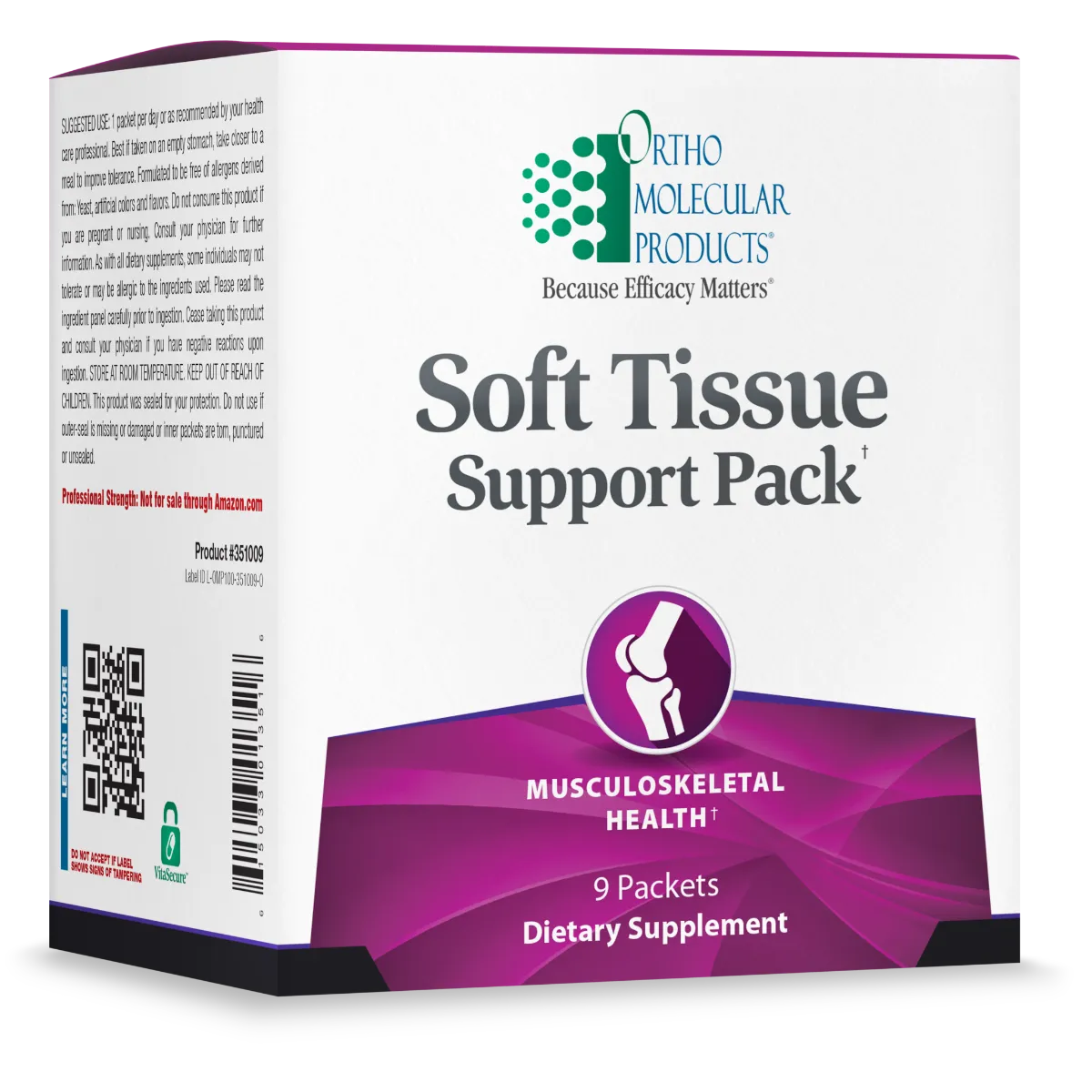
The Soft Tissue Support Pack by Ortho Molecular is designed to provide a comprehensive nutritional protocol for acute and subacute soft tissue discomfort. By combining four distinct, highly targeted formulations into a single daily packet, it addresses inflammation from multiple physiological angles. From systemic enzymes that break down cellular debris to potent flavonoids that stabilize hyperactive mast cells, and inhibitory neurotransmitters that calm an overstimulated nervous system, this pack offers a unique toolkit for those navigating the complexities of chronic illness. In this article, we will explore the intricate biochemistry behind its key ingredients and how they may support tissue repair and inflammatory balance.
TL;DR
The Soft Tissue Support Pack targets systemic inflammation using enzymes, flavonoids, and neurotransmitters.
Systemic enzymes like bromelain and serratiopeptidase may help clear cellular debris and support microcirculation.
Flavonoids such as quercetin and curcumin support mast cell stabilization and healthy inflammatory balance.
GABA and glycine provide neurological support to help calm hyperactive nervous system responses.
What is the Soft Tissue Support Pack?
A Multi-Targeted Approach to Systemic Inflammation
Inflammation is a natural and necessary part of the body’s immune response, a complex biological cascade triggered to protect the body from injury or infection and to initiate normal tissue repair. However, in healthy individuals, this inflammatory response is self-limiting; once the threat is neutralized, specialized pro-resolving mediators step in to halt the inflammation and restore homeostasis. In complex chronic illnesses, this crucial "off switch" frequently fails, leading to a state of chronic, unresolved inflammation that continuously damages healthy soft tissue, blood vessels, and nerves. The Soft Tissue Support Pack is formulated to provide a full spectrum of botanicals, systemic enzymes, and micronutrient factors designed to maintain normal inflammatory balance and address the resulting connective tissue discomfort.
Rather than relying on a single mechanism of action, this comprehensive pack combines the functional formulations of four distinct products to create an ideal nutritional protocol. By targeting multiple biochemical pathways simultaneously—ranging from the degradation of inflammatory proteins in the bloodstream to the stabilization of immune cells and the calming of the nervous system—it provides a synergistic effect that is often required to move the needle in complex, multi-systemic conditions. This multi-targeted approach is particularly relevant for individuals whose symptoms overlap across musculoskeletal, immunological, and neurological domains, requiring a broad-spectrum intervention to achieve meaningful relief.
The Four Pillars of the Support Pack
The Soft Tissue Support Pack includes four specific capsules in each daily packet: Traumeric, Vascuzyme, GABAnol, and C-Flav. Traumeric provides a potent blend of Turmeric Root Extract (standardized to high levels of curcuminoids), Quercetin Dihydrate, Bromelain, and Rutin. This formulation is primarily aimed at modulating the immune response, downregulating pro-inflammatory cytokines, and stabilizing mast cells that may be inappropriately releasing histamine and other inflammatory mediators into the surrounding tissues. By addressing the root causes of immune hyperactivation, Traumeric sets the stage for systemic calming.
Vascuzyme delivers a powerful complex of systemic enzymes, including Pancreatin (supplying protease, amylase, and lipase), Papain, Trypsin, Chymotrypsin, Bromelain, and Peptidase (Serratiopeptidase), alongside Quercetin and Rutin. Unlike digestive enzymes taken with food, these systemic enzymes are designed to be absorbed into the bloodstream where they exert profound fibrinolytic (clot-dissolving) and tissue-debriding effects. GABAnol combines Gamma Aminobutyric Acid (GABA), Glycine, and Dong Quai Root Extract to provide targeted support for the nervous system, helping to relax hypertonic muscles and calm aberrant nerve signaling. Finally, C-Flav supplies high-dose Vitamin C, Acerola Fruit Juice, Citrus Bioflavonoids, and Hibiscus to support vascular integrity, collagen cross-linking, and robust antioxidant defense against free radicals.
The Role of Botanicals and Micronutrients in Tissue Repair
At the cellular level, the repair of soft tissue—which includes muscles, tendons, ligaments, and the endothelial lining of blood vessels—requires a constant supply of specific micronutrients and enzymatic cofactors. Vitamin C, for example, is not merely an antioxidant; it is an absolute requirement for the function of prolyl hydroxylase, the enzyme responsible for stabilizing the triple-helix structure of collagen. Without adequate Vitamin C, newly formed connective tissue is weak and prone to micro-tears, exacerbating chronic pain and delaying recovery from physical exertion. This structural vulnerability is a common driver of post-exertional malaise in chronic fatigue syndromes.
Similarly, the inclusion of bioflavonoids like rutin and quercetin works synergistically with Vitamin C to protect these delicate newly formed tissues from oxidative stress. When the body is locked in a state of chronic immune activation, the localized production of reactive oxygen species (ROS) can rapidly degrade healthy tissue and perpetuate the pain cycle. By providing a steady stream of these protective botanicals alongside the structural building blocks and regulatory enzymes, the Soft Tissue Support Pack aims to create a microenvironment conducive to genuine healing rather than merely suppressing the superficial symptoms of inflammation.
How Chronic Illness Impacts Connective Tissue and Muscles
Long COVID and Endothelial Dysfunction
In the wake of the COVID-19 pandemic, researchers have increasingly recognized that Long COVID is fundamentally a vascular and endothelial disease as much as it is a respiratory or immunological one. The endothelium, the delicate single-cell layer lining the interior of all blood vessels, plays a critical role in regulating blood flow, coagulation, and the passage of immune cells into tissues. Studies have shown that acute viral infections can induce endothelial cell senescence, leading to a senescence-associated secretory phenotype (SASP) that is highly pro-inflammatory, pro-oxidant, and procoagulant. This persistent endothelial dysfunction restricts oxygen and nutrient delivery to muscles and soft tissues, fundamentally driving the severe fatigue and post-exertional malaise (PEM) characteristic of Long COVID.
Furthermore, proteomic profiling of Long COVID patients has identified a sex-specific signature of vascular endothelial growth factor A (VEGFA) associated with symptom persistence, indicating ongoing vascular damage and aberrant angiogenesis. When the endothelium is chronically inflamed, it loses its non-stick properties, promoting the formation of fibrin-rich microclots that can occlude tiny capillaries. This microvascular thrombosis starves the surrounding soft tissues of oxygen (hypoxia), forcing cells into anaerobic metabolism. The resulting buildup of lactic acid and other metabolic byproducts in the tissues triggers localized pain receptors, causing the deep, aching muscle pain and heaviness that patients frequently report.
Mast Cell Activation Syndrome (MCAS) and Systemic Inflammation
Mast cells are specialized immune cells found abundantly in connective tissues, skin, and the lining of the gastrointestinal and respiratory tracts. In a healthy body, they serve as first responders, releasing histamine, leukotrienes, and prostaglandins to orchestrate the healing process when tissue is injured. However, in Mast Cell Activation Syndrome (MCAS), these cells become highly unstable and hyper-responsive, degranulating inappropriately in response to minor triggers such as temperature changes, specific foods, or even physical exertion. This constant flood of inflammatory mediators bathes the surrounding soft tissues in a highly irritating chemical soup.
The continuous release of prostaglandins and histamine from hyperactive mast cells directly sensitizes peripheral nerve endings, lowering the threshold for pain and causing widespread hyperalgesia (increased sensitivity to pain). Moreover, mast cell mediators can directly degrade the extracellular matrix of connective tissues, contributing to joint laxity and soft tissue vulnerability. This is why MCAS is so frequently observed as a comorbid condition alongside hypermobility spectrum disorders and Long COVID. The systemic inflammation driven by mast cell mediator disorders creates a vicious cycle where tissue damage triggers mast cell degranulation, which in turn causes further tissue degradation and chronic discomfort.
Dysautonomia, Spasticity, and the Nervous System
Dysautonomia, a dysfunction of the autonomic nervous system (ANS), frequently co-occurs with Long COVID and ME/CFS, manifesting as conditions like Postural Orthostatic Tachycardia Syndrome (POTS). The ANS controls involuntary functions such as heart rate, blood pressure, and digestion. In many chronic illness patients, the ANS becomes locked in a state of sympathetic dominance—a perpetual "fight or flight" response. This constant flood of excitatory neurotransmitters like glutamate and norepinephrine not only drives an elevated heart rate and severe health anxiety but also drastically increases resting muscle tone, leading to chronic muscle tension, spasticity, and painful trigger points.
This neurological hyperarousal is often compounded by a localized deficiency in inhibitory neurotransmitters, specifically Gamma Aminobutyric Acid (GABA) and Glycine. In a healthy central nervous system, GABA and glycine act as the primary brakes, hyperpolarizing neurons to help prevent excessive firing. When chronic neuroinflammation disrupts the synthesis or receptor sensitivity of these calming neurotransmitters, the result is central sensitization—a phenomenon where the brain and spinal cord amplify normal sensory signals, turning light touch or mild exertion into severe, widespread pain. Restoring the balance between excitatory and inhibitory signaling is crucial for alleviating the muscular rigidity and neuropathic pain associated with these complex conditions.
Soft Tissue Support Pack: Supporting Inflammatory Balance and Tissue Repair
Systemic Enzymes for Fibrinolysis and Debridement
One of the most powerful components of the Soft Tissue Support Pack is the Vascuzyme formulation, which delivers a robust dose of systemic enzymes including Bromelain, Serratiopeptidase (Peptidase), Papain, and Pancreatin. Unlike digestive enzymes that break down food in the gut, these proteolytic enzymes are designed to be absorbed intact into the bloodstream when taken on an empty stomach. Once in systemic circulation, Bromelain exerts multifaceted anti-inflammatory effects by suppressing the nuclear factor-kappa B (NF-κB) signaling pathway and inhibiting the biosynthesis of pro-inflammatory prostaglandins like PGE2. This direct modulation of inflammatory cascades halts the progression of tissue damage at the molecular level.
Furthermore, these enzymes possess potent fibrinolytic properties. In conditions like Long COVID, where persistent microclotting and endothelial damage restrict blood flow, enzymes like Serratiopeptidase and Bromelain help degrade excess fibrin and reduce plasma fibrinogen levels. Serratiopeptidase, a highly specific metalloprotease, is particularly renowned for its ability to seek out and dissolve dead tissue, abnormal exudates, and circulating immune complexes without harming living, healthy tissue. By clearing this cellular debris and breaking down microvascular blockages, these systemic enzymes dramatically improve microcirculation, reduce localized edema (swelling), and ensure that oxygen and vital nutrients can reach damaged soft tissues to facilitate repair.
Flavonoids and Botanicals for Mast Cell Stabilization
The Traumeric and C-Flav capsules provide a concentrated dose of potent flavonoids, specifically Quercetin Dihydrate, Rutin, and Citrus Bioflavonoids, alongside Turmeric Root Extract (Curcumin). Quercetin is widely recognized in functional medicine as a foundational therapy for MCAS due to its profound ability to stabilize mast cell membranes. Research indicates that luteolin and quercetin can inhibit mast cell degranulation and decrease the release of histamine, leukotrienes, and pro-inflammatory cytokines. Quercetin also downregulates histidine decarboxylase, the enzyme responsible for synthesizing new histamine, thereby reducing the overall histamine burden in the tissues.
Curcumin complements this action by targeting deep-seated chronic inflammation. It is unique in its ability to block the Syk kinase pathway, a critical signaling cascade involved in mast cell activation and allergic responses. Additionally, curcumin helps repolarize macrophages away from a pro-inflammatory (M1) state toward a tissue-repairing (M2) state. Rutin, a glycoside of quercetin, works synergistically with high-dose Vitamin C to strengthen the endothelial lining of blood vessels, reducing capillary permeability and helping to prevent the leakage of inflammatory fluids into the surrounding soft tissues. Together, these botanicals create a robust shield against the continuous immune hyperactivation seen in Long COVID and ME/CFS.
Calming the Nervous System with Inhibitory Neurotransmitters
To address the neurological components of chronic pain and muscle spasticity, the GABAnol capsule supplies 250 mg of Gamma Aminobutyric Acid (GABA) and 225 mg of Glycine. GABA is the primary fast inhibitory neurotransmitter in the brain, while glycine serves a similar, highly localized role in the brainstem and spinal cord. In the context of chronic illness and dysautonomia, patients often suffer from a "glutamate-GABA tug-of-war," where excitatory glutamate overwhelms the nervous system, leading to central sensitization and mechanical allodynia (where normal touch feels painful). This imbalance keeps the body locked in a state of perpetual tension and heightened pain perception.
Supplementing with GABA and Glycine helps to restore this delicate neurological balance. These amino acids bind to specific receptors on neuronal membranes, opening chloride channels that hyperpolarize the cell and make it less likely to fire in response to minor stimuli. This mechanism directly dampens the excessive neuronal excitability that drives muscle tension, cramping, and neuropathic pain. Furthermore, by acting on the autonomic centers of the brainstem, such as the nucleus tractus solitarii, these inhibitory neurotransmitters can help offset excitatory signals, gently nudging the autonomic nervous system out of sympathetic overdrive and promoting a state of physical and mental relaxation.
Vitamin C and Bioflavonoids for Endothelial Integrity
The inclusion of high-dose Vitamin C (as Ascorbic Acid and Acerola Fruit Juice) alongside Citrus Bioflavonoids and Hibiscus in the C-Flav capsule provides essential support for the structural integrity of the vascular system. Endothelial dysfunction is a hallmark of Long COVID, characterized by oxidative damage and impaired nitric oxide signaling. Vitamin C is a potent aqueous antioxidant that directly neutralizes reactive oxygen species in the bloodstream, protecting the delicate endothelial cells from oxidative destruction and supporting the restoration of normal vascular tone.
Beyond its antioxidant capacity, Vitamin C is an indispensable cofactor for the enzymatic cross-linking of collagen fibers. Without it, the body cannot effectively repair the microscopic damage to tendons, ligaments, and blood vessel walls that occurs during periods of chronic inflammation. The bioflavonoids and Hibiscus extract work in tandem with Vitamin C to enhance its absorption and prolong its biological half-life in the body. This synergistic combination ensures that the structural building blocks necessary for soft tissue repair are not only available but are actively protected from the degrading effects of ongoing immune dysregulation.

Symptoms the Soft Tissue Support Pack May Help Manage
Musculoskeletal and Joint Symptoms
Deep Muscle Aching and Heaviness: By utilizing systemic enzymes like Bromelain and Serratiopeptidase to clear cellular debris and improve microcirculation, this pack helps restore oxygen delivery to hypoxic tissues, reducing the buildup of pain-inducing metabolic byproducts.
Joint Pain and Stiffness: The potent anti-inflammatory properties of Curcumin and Quercetin help suppress the NF-κB pathway, reducing the localized production of inflammatory cytokines within the joint capsules and synovial fluid.
Post-Exertional Muscle Soreness: Vitamin C and bioflavonoids support the rapid repair of collagen and connective tissue micro-tears that occur during physical exertion, potentially shortening recovery times and mitigating the severity of post-exertional malaise (PEM).
Vascular and Endothelial Symptoms
Microvascular Circulation Issues: The fibrinolytic action of the Vascuzyme complex helps degrade excess fibrin and circulating immune complexes, supporting smoother blood flow through the tiny capillaries that are often compromised in Long COVID.
Easy Bruising and Capillary Fragility: High-dose Vitamin C combined with Rutin strengthens the endothelial lining of blood vessels, reducing capillary permeability and helping to prevent the leakage of fluids that cause bruising and localized edema.
Localized Swelling and Edema: By breaking down abnormal proteins and mucus, systemic enzymes facilitate the reabsorption of decomposed inflammatory products into the lymphatic system, dramatically reducing tissue swelling.
Neurological and Autonomic Symptoms
Muscle Spasticity and Tension: The inclusion of GABA and Glycine provides direct inhibitory signals to the motor neurons in the spinal cord, helping to relax hypertonic muscles and ease the physical rigidity often associated with dysautonomia.
Nervous System Hyperarousal: By supporting the brain's primary calming pathways, GABA and Glycine help counteract the sympathetic "fight or flight" overdrive, promoting a sense of physical calm and reducing dysautonomia-driven health anxiety.
Histamine-Driven Flare-Ups: Quercetin acts as a foundational mast cell stabilizer, helping to prevent the inappropriate degranulation of histamine and other mediators that trigger widespread allergic-like reactions and neuroinflammation in MCAS patients.
Practical Considerations: Forms, Dosing, and Absorption
The Importance of Empty Stomach Dosing for Systemic Enzymes
To maximize the therapeutic benefits of the Soft Tissue Support Pack, proper timing and dosing are critical, particularly concerning the Vascuzyme capsule. Systemic enzymes such as Bromelain, Serratiopeptidase, and Pancreatin must be taken on an empty stomach—ideally 45 to 60 minutes before a meal or two hours after eating. If these enzymes are taken alongside food, the body will simply utilize them as digestive aids to break down the proteins, fats, and carbohydrates in the meal. When taken on an empty stomach, however, they are absorbed intact through the intestinal wall into the bloodstream, where they can exert their powerful systemic anti-inflammatory and fibrin-clearing effects.
For patients with highly sensitive gastrointestinal tracts, taking potent enzymes on a completely empty stomach may occasionally cause mild nausea or discomfort. In such cases, the manufacturer suggests taking the packet closer to a meal to improve tolerance, though this may slightly reduce the systemic absorption of the enzymes. It is often recommended to start with a lower frequency and gradually work up to the suggested use of one packet per day as the body acclimates to the powerful proteolytic activity. Always listen to your body and adjust the timing to find the optimal balance between efficacy and comfort.
Bioavailability of Curcumin and Quercetin
Standard forms of curcumin and quercetin are notoriously difficult for the body to absorb due to their poor water solubility and rapid metabolism in the liver and intestines. The Traumeric formulation addresses this by utilizing a Complete Turmeric Matrix standardized to contain high levels of curcuminoids, volatile oils, and turmerin, which naturally enhances the absorption and stability of the active compounds. Similarly, combining Quercetin Dihydrate with Vitamin C and Citrus Bioflavonoids (as found in the C-Flav capsule) significantly improves its bioavailability and extends its half-life in the bloodstream, ensuring a sustained mast-cell-stabilizing effect throughout the day.
When managing complex chronic conditions, it is important to understand that natural flavonoids and systemic enzymes often require consistent, daily use to achieve noticeable clinical results. While some patients may experience a reduction in acute muscle tension or swelling within a few days, the deeper remodeling of connective tissue, the clearing of microvascular fibrin, and the stabilization of hyperactive mast cells typically require several weeks to months of sustained nutritional support. Patience and consistency are key when utilizing these advanced functional formulations.
Potential Interactions and Contraindications
Because the systemic enzymes in the Soft Tissue Support Pack—particularly Bromelain and Serratiopeptidase—are highly effective at degrading fibrin and inhibiting platelet aggregation, they possess mild blood-thinning properties. Therefore, this product should be used with caution in patients who are actively taking prescription anticoagulants (such as warfarin or Eliquis) or antiplatelet medications, as the combination may increase the risk of bleeding or bruising. It is crucial to consult with a healthcare provider before initiating this protocol if you have a known bleeding disorder or are scheduled for an upcoming surgical procedure.
Additionally, while GABA and Glycine are naturally occurring amino acids, their nervous-system-calming effects can theoretically compound the sedating effects of prescription medications like benzodiazepines, barbiturates, or certain muscle relaxants. Patients managing severe dysautonomia or MCAS with multiple pharmaceutical interventions should always work closely with their medical team to ensure that the introduction of high-dose flavonoids and neurotransmitters does not interfere with their established treatment regimens. Open communication with your provider ensures a safe and effective integrative approach.

Follow the Science
Clinical Trials on Systemic Enzymes and Inflammation
The use of systemic enzymes for managing chronic inflammation and soft tissue pain is supported by a robust body of clinical research. A 2021 review published in Biology highlighted Bromelain's profound ability to modulate inflammatory pathways, specifically noting its success in suppressing pro-inflammatory cytokines like IL-6 and TNF-α while simultaneously improving microcirculation by breaking down plasma fibrinogen. This dual action makes it uniquely suited for conditions characterized by both inflammation and poor tissue perfusion.
Furthermore, clinical trials evaluating the combination of Serratiopeptidase and Bromelain in patients with chronic inflammatory joint diseases have demonstrated statistically significant reductions in the Erythrocyte Sedimentation Rate (ESR)—a primary blood marker for systemic inflammation—and significant improvements in pain scores. Notably, these studies highlight that systemic enzymes achieve these results with a safety profile superior to traditional NSAIDs, as they do not degrade the gastric mucosa or place undue stress on the liver and kidneys.
Research on Flavonoids in Post-Viral Illness
The therapeutic potential of flavonoids like quercetin and curcumin has gained immense traction in the context of post-viral syndromes and MCAS. Recent advances in the understanding of mast cell mediator disorders emphasize that natural polyphenols, particularly luteolin and quercetin, are highly effective at inhibiting mast cell degranulation and protecting against inflammatory mediator secretion. This research underscores the importance of utilizing natural compounds to stabilize the immune system rather than merely blocking downstream receptors with antihistamines.
In the realm of Long COVID, interventional studies have demonstrated that combining targeted antioxidants and vasoprotective strategies can significantly improve perceived exertion and endothelial recovery. These findings directly address the vascular damage and persistent immune dysregulation that drive long-term symptom persistence. By repairing the endothelial lining and reducing oxidative stress, flavonoids offer a mechanistic approach to resolving the deep-seated fatigue and post-exertional malaise that plague so many patients.
The Neurological Impact of GABA and Glycine
The role of inhibitory neurotransmitters in managing chronic pain and dysautonomia is deeply rooted in neurobiology. While serratiopeptidase plays a role in the resolution of inflammation, research into the pathophysiology of pain reveals that central sensitization is heavily driven by a localized loss of GABAergic and glycinergic inhibition in the spinal dorsal horn. By supplementing with these amino acids, it is possible to support the body's natural mechanisms for dampening excessive neuronal excitability, thereby raising the pain threshold and reducing the severity of mechanical allodynia.
Additionally, studies exploring the autonomic nervous system have shown that GABA signaling in the brainstem is critical for regulating cardiovascular reflexes and mitigating the sympathetic hyperactivity frequently observed in conditions like POTS and Long COVID. By acting on the nucleus tractus solitarii, these inhibitory compounds help restore autonomic homeostasis, allowing the body to transition out of a perpetual state of "fight or flight" and into a state conducive to healing and recovery.
The Path Forward
Integrating Nutritional Support into Your Protocol
Living with the unpredictable and often debilitating symptoms of Long COVID, ME/CFS, MCAS, or dysautonomia can feel like navigating a maze without a map. The deep muscle aches, the sudden surges of nervous system hyperarousal, and the relentless fatigue are incredibly challenging, and it is entirely valid to feel frustrated by the lack of simple medical answers. The Soft Tissue Support Pack offers a scientifically grounded, multi-targeted approach to help manage these complex symptoms. By addressing inflammation at the cellular level, clearing microvascular debris, stabilizing mast cells, and calming the nervous system, it provides a comprehensive toolkit to support your body's innate healing processes.
It is important to remember that while advanced nutritional protocols are a powerful component of chronic illness management, they are most effective when integrated into a broader, holistic strategy. Supplements should be used alongside essential lifestyle modifications, such as aggressive pacing to help prevent post-exertional malaise, diligent symptom tracking to identify specific MCAS triggers, and ongoing collaboration with a knowledgeable medical team. By combining the targeted biochemical support of the Soft Tissue Support Pack with compassionate, comprehensive care, you can take meaningful steps toward improving your quality of life and reclaiming your daily independence.
Pacing and Holistic Management
Always consult your healthcare provider before starting any new supplement regimen to ensure it is safe and appropriate for your specific medical needs. For more practical advice on navigating daily life with complex conditions, read our guides on How to Maintain Your Independence with Chronic Illness and 5 Tips for Surviving the Holidays with a Chronic Illness. These resources offer actionable strategies for managing energy envelopes and protecting your well-being.
Remember that healing from complex chronic illness is rarely a linear journey. It requires patience, self-compassion, and a willingness to adapt your management strategies as your body's needs change over time. By equipping yourself with scientifically validated tools and a supportive care team, you can build a more resilient foundation for long-term recovery and symptom management.