Can Selenium Citrate Support Thyroid Health and Immune Function in Long COVID?
March 5, 2026
SeleniumLong COVIDME/CFS
Share:
Disclaimer: The information provided here is for educational purposes only and is not intended as medical advice. It should not be used to diagnose, treat, cure, or prevent any medical condition. Instead, use it as a starting point for discussion with your healthcare provider. Always consult with a qualified healthcare provider before starting any new medication, supplement, device, or making changes to your health regimen.
Months after recovering from the initial SARS-CoV-2 infection, many people still fight debilitating symptoms with what we call Long COVID. But what is it that allows some people to recover within a couple of weeks while others suffer from long-term symptoms for months or even years? For patients navigating the complex realities of Long COVID, myalgic encephalomyelitis/chronic fatigue syndrome (ME/CFS), and dysautonomia, the search for answers often leads to the microscopic level of cellular function and immune regulation. One critical piece of this intricate biological puzzle is a trace mineral that serves as the backbone of our body's antioxidant defense system: selenium.
Selenium is not just a passive nutrient; it is a vital, active component of the enzymes that protect our cells from oxidative destruction, regulate our thyroid hormones, and modulate our immune responses. When a severe viral infection sweeps through the body, it can rapidly deplete these essential reserves, leaving the nervous and endocrine systems vulnerable to ongoing damage. In this comprehensive guide, we will explore the profound biochemical mechanisms of selenium, how chronic illness disrupts its pathways, and how highly bioavailable forms like selenium citrate may help support cellular health, restore immune function, and improve quality of life for those living with complex chronic conditions.
TL;DR
Selenium is a vital trace mineral that supports antioxidant defenses and thyroid function.
Severe viral infections like COVID-19 can deplete selenium, potentially driving chronic inflammation and fatigue.
Highly bioavailable forms like selenium citrate may help support cellular health and energy production.
Always consult a healthcare provider before starting selenium to ensure safe and appropriate dosing.
What is Selenium (citrate)?
The Foundation of Selenoproteins and Cellular Defense
Selenium is an essential trace mineral, meaning the human body cannot synthesize it and must obtain it entirely through diet or supplementation. However, unlike other minerals that float freely in the bloodstream or act merely as structural components, selenium has a unique and highly specialized biological role. It does not act independently; instead, it is incorporated directly into the genetic and physical structure of specific proteins, creating what are known as selenoproteins. The human genome encodes 25 distinct selenoproteins, each serving a critical function in maintaining cellular homeostasis, regulating metabolism, and orchestrating immune responses.
The defining characteristic of a selenoprotein is the presence of selenocysteine, a specialized amino acid that contains a selenium atom in place of a sulfur atom. This subtle chemical substitution at the active catalytic site of the enzyme grants selenoproteins extraordinary biochemical reactivity. Because selenium is more easily oxidized and reduced than sulfur, these enzymes can perform rapid electron transfers, making them uniquely suited to neutralize highly reactive and damaging molecules within the body. Without adequate dietary selenium, the body simply cannot manufacture these 25 essential proteins, leading to a cascading failure of antioxidant defenses and metabolic regulation.
Glutathione Peroxidase (GPx) and the Neutralization of Reactive Oxygen Species
Among the most vital selenoproteins is a family of enzymes known as Glutathione Peroxidase (GPx). GPx serves as the cornerstone of the body's primary antioxidant defense system. Every second, as our mitochondria burn oxygen and glucose to create cellular energy (ATP), they naturally produce metabolic exhaust in the form of reactive oxygen species (ROS), such as hydrogen peroxide (H2O2). While low levels of ROS are normal signaling molecules, an excess of these free radicals can violently strip electrons from cellular membranes, a destructive process known as lipid peroxidation. This oxidative stress damages the structural integrity of the cell and can trigger premature cell death (apoptosis).
This is where selenium-dependent GPx steps in to save the cell. GPx acts as a biological catalyst, facilitating a chemical reaction that safely neutralizes hydrogen peroxide. It does this by taking electrons from a donor molecule called reduced glutathione (GSH) and transferring them to the dangerous hydrogen peroxide, instantly converting it into harmless water and oxygen. Research published in the International Journal of Molecular Sciences highlights that without the selenium atom at its core, GPx is entirely non-functional. By continuously neutralizing ROS, selenium helps preserve the elasticity of tissues, protects mitochondrial membranes, and may help mitigate the systemic oxidative damage that drives chronic inflammation.
Thyroid Hormone Metabolism and the Deiodinase Enzymes
Beyond antioxidant defense, selenium is the absolute master regulator of the thyroid gland. In fact, the thyroid contains more selenium per gram of tissue than any other organ in the human body. This high concentration is necessary because selenium is the mandatory cofactor for a group of selenoproteins called iodothyronine deiodinases (specifically DIO1, DIO2, and DIO3). These enzymes are responsible for the activation and deactivation of thyroid hormones, which dictate the metabolic rate of virtually every cell in the body. The thyroid gland primarily produces thyroxine (T4), which is a relatively inactive storage form of the hormone.
To boost cellular metabolism, generate heat, and provide energy, T4 must be converted into the biologically active triiodothyronine (T3). The selenium-dependent DIO1 and DIO2 enzymes perform this crucial conversion by physically removing a specific iodine atom from the outer ring of the T4 molecule. If a person is deficient in selenium, this enzymatic conversion stalls. Blood tests might show normal levels of TSH and T4, but the tissues remain starved of active T3, leading to profound systemic fatigue, cognitive slowing, and metabolic dysfunction. Furthermore, the process of making thyroid hormones generates massive amounts of hydrogen peroxide; without selenium to fuel GPx in the thyroid, this oxidative stress can destroy thyroid tissue and trigger autoimmune diseases like Hashimoto's Thyroiditis, as detailed in Frontiers in Endocrinology.
The Role of Selenium Citrate as a Delivery Mechanism
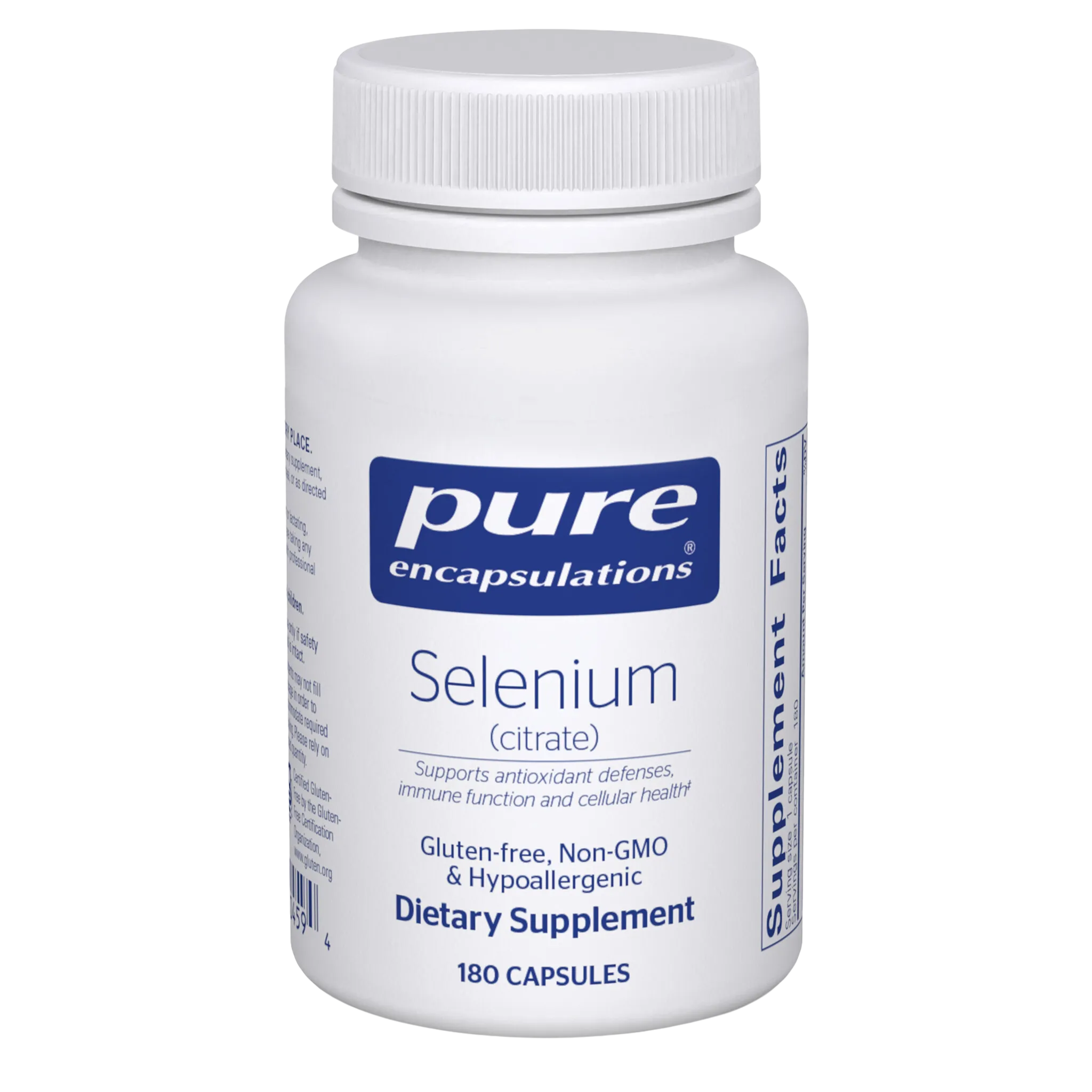
When considering supplementation, the chemical form of the mineral dictates how effectively the body can absorb and utilize it. Selenium citrate is an organic acid salt, created by binding elemental selenium to citric acid. In premium dietary supplements, this form is often derived through natural fermentation processes, such as corn dextrose fermentation, yielding a highly pure and bioavailable compound. The citric acid molecule acts as a molecular shuttle, easily dragging the attached selenium through the mucosal lining of the digestive tract and into the bloodstream.
Because citrates are naturally recognized by the body's metabolic pathways (most notably the Krebs cycle, or citric acid cycle, inside the mitochondria), selenium citrate is highly bioavailable and easily tolerated by the gastrointestinal system. Once absorbed, the body rapidly cleaves the citrate bond, freeing the elemental selenium to be immediately shuttled to the liver. There, it is rapidly incorporated into Selenoprotein P (SELENOP) for transport to the brain, thyroid, and immune cells, ensuring that the body has the immediate raw materials necessary to synthesize vital antioxidant enzymes and combat acute oxidative stress.