Can SAMe Help Lift the Brain Fog and Fatigue of Long COVID and ME/CFS?
March 6, 2026
SAMeLong COVIDME/CFS
Share:
Disclaimer: The information provided here is for educational purposes only and is not intended as medical advice. It should not be used to diagnose, treat, cure, or prevent any medical condition. Instead, use it as a starting point for discussion with your healthcare provider. Always consult with a qualified healthcare provider before starting any new medication, supplement, device, or making changes to your health regimen.
Living with complex chronic conditions like Long COVID, myalgic encephalomyelitis/chronic fatigue syndrome (ME/CFS), and dysautonomia often feels like navigating a labyrinth in the dark. You may find yourself battling a constellation of debilitating symptoms—profound exhaustion that worsens after even minor exertion, relentless brain fog, joint pain, and unpredictable mood shifts. When standard medical tests come back "normal," it can be incredibly frustrating and invalidating. However, emerging research into cellular metabolism is shedding light on why these symptoms occur and how we might support the body's recovery at a molecular level.
One of the most critical areas of focus in this research is one-carbon metabolism, a complex biochemical network responsible for energy production, neurotransmitter synthesis, and antioxidant defense. At the very heart of this network lies a remarkable molecule called S-adenosylmethionine, commonly known as SAMe. By acting as the body's primary methyl donor and a crucial precursor to our master antioxidant, glutathione, SAMe plays an indispensable role in maintaining cellular health. In this comprehensive guide, we will explore the deep science behind SAMe, how chronic illness disrupts its natural pathways, and how targeted supplementation may help you reclaim your cognitive clarity, physical energy, and overall well-being.
What is SAMe (S-Adenosylmethionine)?
The Universal Biological Methyl Donor
To understand the profound impact of S-adenosylmethionine (SAMe) on human health, we must first look at its origins and its primary role within our cells. SAMe is a naturally occurring, metabolically pleiotropic molecule found in almost every tissue and fluid in the human body. It is synthesized through a complex biochemical reaction combining the essential amino acid L-methionine (obtained through our diet) with adenosine triphosphate (ATP), the primary energy currency of our cells. This vital synthesis is catalyzed by a specific enzyme known as methionine adenosyltransferase (MAT). Without adequate ATP or functional MAT enzymes, the body's production of SAMe grinds to a halt, leading to systemic downstream consequences.
Once synthesized, SAMe serves as the body's principal biological methyl donor in a process known as transmethylation. In simple terms, transmethylation is the transfer of a methyl group (one carbon atom attached to three hydrogen atoms, CH3) from one molecule to another. This might sound like a minor chemical tweak, but methyl groups act as crucial biological switches. By donating its methyl groups in over 100 different enzymatic reactions, SAMe regulates the modification and activation of DNA, RNA, histones, phospholipids, and proteins. This process turns specific genes on or off, dictating how our cells behave, repair themselves, and respond to environmental stressors.
After SAMe successfully donates its methyl group, it is transformed into a byproduct called S-adenosylhomocysteine (SAH). Here is where the biochemistry becomes a delicate balancing act. SAH is a potent inhibitor of all methylation reactions in the body. If SAH is allowed to accumulate, it effectively jams the gears of the entire methylation cycle. To prevent this, a healthy body rapidly clears SAH by using the enzyme SAH hydrolase to reversibly hydrolyze it into homocysteine and adenosine. From there, homocysteine must either be remethylated back into methionine (using folate and Vitamin B12) or permanently removed via another pathway.
The Transsulfuration Pathway and Antioxidant Defense
When homocysteine is not remethylated back into methionine, it is diverted down an alternative biochemical route known as the transsulfuration pathway. This pathway is highly active in the liver and represents the primary mechanism by which SAMe acts as a vital precursor for glutathione (GSH). Often referred to as the body's "master antioxidant," glutathione is absolutely essential for neutralizing reactive oxygen species (ROS), detoxifying harmful compounds, and protecting our mitochondria from oxidative destruction. Without sufficient SAMe to drive this pathway, our cellular defense systems become severely compromised.
The journey from homocysteine to glutathione involves several B-vitamin-dependent steps. First, homocysteine is irreversibly converted into cystathionine by the enzyme cystathionine β-synthase (CBS), a reaction that strictly requires Vitamin B6 as a cofactor. Next, cystathionine is cleaved by another B6-dependent enzyme, gamma-cystathionase, to form the amino acid cysteine. In the realm of antioxidant production, cysteine is the rate-limiting factor; the body can only produce as much glutathione as it has available cysteine. This highlights the critical importance of the transsulfuration pathway in maintaining our antioxidant reserves.
In the final stages of this pathway, cysteine combines with glutamate (catalyzed by the enzyme glutamate-cysteine ligase) to form gamma-glutamylcysteine. Finally, this intermediate molecule combines with glycine (catalyzed by glutathione synthetase) to form the complete glutathione molecule. By constantly pushing homocysteine down this transsulfuration pathway, SAMe fundamentally dictates the body's capacity to synthesize glutathione. In healthy individuals, this ensures a robust defense against oxidative stress, but in those with chronic illness, this pathway is frequently disrupted, leading to a cascade of cellular damage.
Aminopropylation and Cellular Repair
Beyond its roles in transmethylation and transsulfuration, SAMe is also deeply involved in a third major metabolic pathway known as aminopropylation. After being decarboxylated, SAMe donates an aminopropyl group to synthesize polyamines, specifically spermidine and spermine. These naturally occurring polyamines are highly positively charged molecules that bind tightly to negatively charged DNA, RNA, and proteins, playing a critical role in stabilizing cellular structures and promoting healthy cell growth and division.
Polyamines are essential for maintaining the integrity and fluidity of cellular membranes, which is vital for proper receptor function and nutrient transport. Furthermore, they are heavily involved in the regulation of apoptosis (programmed cell death) and the protection of DNA from oxidative damage. In the context of complex chronic conditions, where cellular damage is rampant and tissue repair is constantly required, the aminopropylation pathway supported by SAMe is a crucial component of the body's natural healing and recovery mechanisms.
How Chronic Illness Impacts Methylation and Glutathione
Viral Hijacking and the Cell Danger Response
To understand why patients with Long COVID, ME/CFS, and dysautonomia experience such profound and unrelenting symptoms, we must examine how these conditions impact the body's one-carbon metabolism. Immunologists and metabolomics experts increasingly view Long COVID and ME/CFS as infection-associated chronic conditions with strikingly similar underlying mechanisms. When the body encounters a severe stressor—such as the SARS-CoV-2 virus or the Epstein-Barr virus (EBV) often implicated in ME/CFS—it triggers a massive metabolic shift. The virus physically hijacks the host's folate and one-carbon metabolism pathways to survive and replicate.
Specifically, the SARS-CoV-2 virus requires SAMe-dependent methylation to "cap" its own viral RNA. This capping process stabilizes the viral RNA and allows it to evade detection by the human immune system. By constantly draining the host's SAMe reserves for its own replication, the virus creates a severe systemic deficiency. This phenomenon aligns closely with the "Cell Danger Response" (CDR) theory pioneered by Dr. Robert Naviaux in ME/CFS research. According to the CDR model, chronic viral infections or immune stressors cause the body to intentionally shut down certain metabolic pathways to limit viral replication, leading to a build-up of S-adenosylhomocysteine (SAH) and a complete halt of cellular methylation.
The Glutathione Deficit and Rampant Oxidative Stress
As SAMe levels plummet due to viral hijacking and the Cell Danger Response, the transsulfuration pathway is starved of its primary fuel. Consequently, the production of cysteine and, ultimately, glutathione comes to a grinding halt. This creates a catastrophic vulnerability within the cells. COVID-19 and other chronic viral infections generate a profound amount of reactive oxygen species (ROS) and free radicals. Without adequate glutathione to neutralize these damaging molecules, patients experience severe, unchecked oxidative stress that ravages their tissues and organs.
This oxidative stress is particularly devastating to the mitochondria, the powerhouses of our cells. When mitochondrial membranes are damaged by free radicals, their ability to produce ATP (cellular energy) is severely impaired. This creates a vicious cycle: low ATP production further limits the synthesis of new SAMe (since ATP is required to combine with methionine), which in turn further reduces glutathione production. This relentless cycle of oxidative stress and mitochondrial dysfunction is a primary driver of the debilitating fatigue and post-exertional malaise (PEM) that define Long COVID and ME/CFS.
Homocysteine, Micro-Clotting, and Neuroinflammation
Another severe consequence of stalled methylation is the dangerous accumulation of homocysteine in the bloodstream. When the methylation cycle is broken and SAMe is depleted, homocysteine cannot be efficiently remethylated into methionine or pushed down the transsulfuration pathway. Elevated homocysteine levels are highly toxic to the vascular system. They trigger systemic inflammation, damage the delicate endothelial lining of blood vessels, and promote coagulopathy—the formation of microscopic blood clots.
These micro-clots can obstruct capillaries, leading to widespread tissue hypoxia (lack of oxygen). When this hypoxia and endothelial damage occur in the brain, it triggers a massive neuroinflammatory response. Microglial cells (the brain's immune cells) become chronically activated, releasing inflammatory cytokines that disrupt neural signaling. Researchers postulate that this specific cascade—driven by SAMe depletion and elevated homocysteine—is a primary contributor to the severe cognitive dysfunction and "brain fog" experienced by so many Long COVID and ME/CFS patients.
SAMe: Supporting Mood, Joints, and Cellular Health
Synthesizing Neurotransmitters for Cognitive Clarity
One of the most profound benefits of SAMe supplementation is its ability to support the central nervous system and cognitive function. Unlike many large molecules, SAMe effectively crosses the blood-brain barrier, allowing it to directly influence neurological health. Within the brain, SAMe's methyl-donating capabilities are absolutely essential for the synthesis and regulation of monoaminergic neurotransmitters, including dopamine, serotonin, and norepinephrine. These chemical messengers are responsible for regulating our mood, motivation, focus, and sleep-wake cycles.
In patients with Long COVID and ME/CFS, neuroinflammation and metabolic stalling often lead to a severe depletion of these critical neurotransmitters, resulting in deep depression, anhedonia, and profound brain fog. By providing an abundance of methyl groups, SAMe facilitates the conversion processes needed to produce these neurotransmitters. For example, SAMe is required for the methylation of norepinephrine to form epinephrine, and it significantly increases the turnover rate of serotonin. This mechanism of action explains why clinical trials have consistently shown SAMe to be a potent intervention for major depressive disorder, often yielding improvements in mood and cognitive clarity much faster than traditional pharmaceuticals.
Furthermore, SAMe plays a vital role in maintaining the structural integrity of brain cells. It is required for the synthesis of phosphatidylcholine, a key phospholipid that makes up the cellular membranes of neurons. By maintaining healthy phospholipid methylation, SAMe ensures that neuronal membranes remain fluid and flexible, which is critical for efficient receptor function and synaptic transmission. This structural support is particularly important for combating the neurodegenerative processes often triggered by chronic neuroinflammation.
Restoring the Master Antioxidant: Glutathione
For patients battling the relentless oxidative stress of chronic illness, SAMe's role in restoring glutathione levels is perhaps its most vital therapeutic mechanism. By supplementing with SAMe, we can effectively bypass the metabolic roadblocks created by viral infections and the Cell Danger Response. Exogenous SAMe provides the necessary substrate to forcefully push homocysteine down the transsulfuration pathway, rapidly increasing the production of cysteine and, subsequently, intracellular glutathione.
Clinical studies have demonstrated the profound impact of SAMe on antioxidant reserves. In vitro studies using hepatoma cells expressing Hepatitis C viral proteins found that the administration of SAMe increased intracellular total glutathione levels by 60% to 80% within just 6 hours of treatment. By restoring these crucial glutathione levels, SAMe empowers the body to actively neutralize reactive oxygen species, quench systemic inflammation, and protect the vulnerable mitochondria from further oxidative damage. This restoration of mitochondrial health is a critical step in alleviating the severe, crushing fatigue associated with ME/CFS and Long COVID.
Joint Comfort and Cartilage Protection
Beyond its neurological and metabolic benefits, SAMe is highly regarded for its ability to support joint comfort and flexibility. Many patients with complex chronic conditions suffer from widespread musculoskeletal pain, joint stiffness, and conditions like osteoarthritis or fibromyalgia. SAMe addresses these symptoms through multiple targeted mechanisms. First, it promotes the synthesis of proteoglycans, which are complex protein-sugar molecules that form the structural matrix of joint cartilage. By supporting proteoglycan production, SAMe helps to maintain the cushioning and shock-absorbing properties of the joints.
Additionally, SAMe helps to stabilize and protect existing proteoglycans from degradation by inflammatory enzymes. Its broad anti-inflammatory properties, driven by the reduction of oxidative stress and the modulation of cytokine production, help to calm the painful inflammation within the joint capsule. In multiple clinical trials, SAMe has demonstrated an ability to reduce joint pain and stiffness with an efficacy comparable to non-steroidal anti-inflammatory drugs (NSAIDs), but without the severe gastrointestinal side effects often associated with long-term NSAID use.

Symptoms SAMe May Help Manage
Because SAMe operates at the foundational level of cellular metabolism, methylation, and antioxidant defense, its benefits can be felt across multiple physiological systems. For patients managing Long COVID, ME/CFS, dysautonomia, or MCAS, SAMe may help address a wide array of debilitating symptoms.
Cognitive and Neurological Symptoms
Severe Brain Fog and Cognitive Dysfunction: By supporting the synthesis of phosphatidylcholine for neuronal membrane fluidity and reducing neuroinflammation, SAMe helps restore mental clarity, focus, and memory recall.
Depression and Low Mood: SAMe acts as a direct precursor for the synthesis of serotonin, dopamine, and norepinephrine, effectively addressing the biochemical imbalances that drive depression and anhedonia in chronic illness.
Anxiety and Mood Instability: By regulating neurotransmitter turnover and supporting the clearance of neurotoxic homocysteine, SAMe can help stabilize erratic mood swings and reduce generalized anxiety.
Physical and Systemic Symptoms
Profound Fatigue and Low Energy: By restoring glutathione levels and protecting the mitochondria from oxidative destruction, SAMe helps rebuild the body's capacity to produce ATP, directly combating relentless exhaustion.
Post-Exertional Malaise (PEM): While pacing remains the primary management tool for PEM, SAMe's ability to quench exercise-induced oxidative stress and support cellular repair mechanisms may help reduce the severity and duration of crashes.
Joint Pain and Stiffness: By promoting the synthesis of cartilage-protecting proteoglycans and reducing localized joint inflammation, SAMe can significantly improve joint comfort and mobility, particularly in osteoarthritis and fibromyalgia.
Autonomic and Hepatic Symptoms
Sluggish Liver Function and Detoxification Issues: SAMe bypasses defective liver enzymes (like MAT1A) to directly supply the transsulfuration pathway, boosting hepatic glutathione production and aiding the liver in clearing toxins and metabolic waste.
Nerve Pain and Neuropathy: By supporting the methylation of myelin (the protective sheath around nerves) and reducing systemic inflammation, SAMe may help alleviate the burning, tingling, or shooting pains associated with peripheral neuropathy.
Practical Considerations: Forms, Dosing, and Absorption
The Challenge of Bioavailability
While the biochemical benefits of SAMe are profound, utilizing it effectively in a clinical setting requires a deep understanding of its unique pharmacokinetic properties. Unformulated, raw SAMe is an inherently unstable molecule with extremely poor oral bioavailability, often ranging from just 2% to 3%. When ingested, it is rapidly degraded by the harsh acidic environment of the stomach and undergoes a significant "first-pass effect" in the liver, meaning very little of the active compound actually reaches the systemic circulation. Furthermore, once in the bloodstream, SAMe has a very short terminal half-life of approximately 80 to 100 minutes before it is cleared from the body.
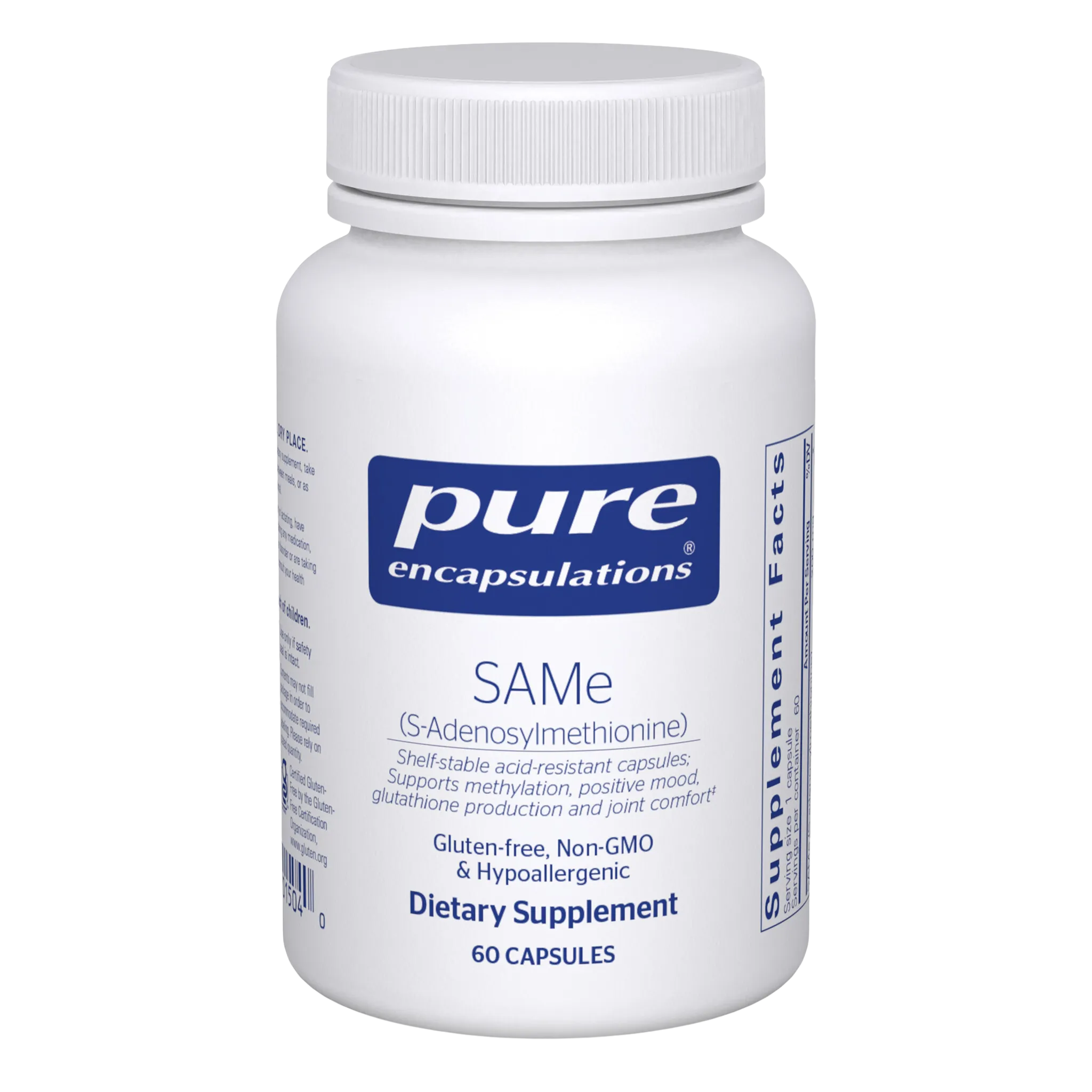
To overcome these significant hurdles, high-quality SAMe supplements must be meticulously formulated. The Pure Encapsulations SAMe formula utilizes an enhanced stability form (S-adenosyl-L-methionine disulfate tosylate) and is typically delivered in specialized capsules designed to protect the compound from stomach acid. This ensures that the SAMe survives the gastric environment and is successfully absorbed in the alkaline environment of the small intestine. Because of these absorption challenges, taking SAMe on an empty stomach—ideally 30 to 60 minutes before meals—is highly recommended to maximize its uptake into the bloodstream.
Clinical Dosing Strategies
Because of its low baseline absorption, oral doses of SAMe must be relatively high to achieve therapeutic effects, particularly for severe symptoms. For the management of major depressive disorder and severe cognitive dysfunction, clinical trials often utilize dosages ranging from 800 mg to 1,600 mg per day. For joint comfort and osteoarthritis, dosages typically range from 600 mg to 1,200 mg daily. However, it is always recommended to start at a lower dose (e.g., 200 mg to 400 mg daily) and slowly titrate upwards under the guidance of a healthcare professional to assess tolerance.
Timing your doses is also critical for success. Because SAMe increases the synthesis of stimulating neurotransmitters like dopamine and norepinephrine, taking it late in the day can lead to severe insomnia and sleep disruptions. Therefore, it is generally advised to split your daily dosage, taking the first dose upon waking in the morning and the second dose around midday or early afternoon. It is also important to note that while some patients notice improvements in mood within 10 to 14 days, the full structural benefits for joint health and mitochondrial repair may take several weeks or even months of consistent use to become fully apparent.
Critical Contraindications and Interactions
While SAMe is a naturally occurring compound, its potent effects on neurotransmitters and methylation pathways mean it must be treated with the same respect as a pharmaceutical drug. There are several critical contraindications and potential drug interactions that patients must be aware of:
Bipolar Disorder: SAMe is strictly contraindicated for individuals with bipolar disorder unless used under close psychiatric supervision. Because it aggressively increases monoamine levels, it can precipitate dangerous manic or hypomanic episodes.
Serotonin Syndrome Risk: Combining SAMe with other serotonergic medications—such as SSRIs, SNRIs, MAOIs, tricyclic antidepressants, or supplements like 5-HTP—carries a risk of serotonin syndrome. This is a potentially life-threatening condition characterized by confusion, agitation, tremors, and autonomic instability. Always consult your doctor before combining these agents.
Parkinson's Disease Medications: SAMe can methylate levodopa (a common Parkinson's medication), accelerating its breakdown and significantly diminishing its effectiveness. Patients taking levodopa should avoid SAMe.
Pre-Surgery: Due to its effects on neurotransmitter activity and potential mild blood-thinning properties, healthcare providers generally recommend discontinuing SAMe at least 24 to 48 hours prior to any scheduled surgery.

Follow the Science: Clinical Evidence for SAMe
Efficacy in Major Depressive Disorder and Mood
The scientific literature supporting the use of SAMe for mood disorders is extensive and robust. Because patients with severe depression frequently exhibit lower levels of SAMe in their cerebrospinal fluid, replenishing these levels has been a major focus of psychiatric research. In a massive 2025 network meta-analysis published in Psychological Medicine, researchers analyzed 192 trials involving 17,437 patients to evaluate 44 different nutraceuticals for depressive disorders. The findings were striking: SAMe was identified as one of the four most effective nutraceuticals available. As a monotherapy, it significantly outperformed placebos, and when used as an adjunctive therapy alongside prescription antidepressants, it showed highly robust efficacy, leading to higher response and remission rates than using antidepressants alone.
These findings are supported by a 2024 systematic review by Limveeraprajak et al., which assessed 23 trials comprising 2,183 participants. The researchers concluded that SAMe monotherapy offers a "moderate therapeutic benefit" in alleviating depressive symptoms and possesses a highly favorable acceptability profile, meaning patients were much less likely to drop out of the trials due to adverse side effects compared to those taking standard pharmaceutical antidepressants. This makes SAMe an incredibly valuable tool for patients with Long COVID and mental health struggles who may be highly sensitive to the side effects of traditional psychiatric medications.
Cognitive Decline and Alzheimer's Models
Beyond mood, SAMe is actively being researched for its potential to halt cognitive decline and protect against neurodegenerative diseases like Alzheimer's. Its mechanism involves reducing oxidative stress, maintaining neuronal membrane fluidity, and regulating the production of toxic proteins. A 2023 Phase II clinical trial protocol was recently launched to rigorously test SAMe's direct impact on Alzheimer's biomarkers. The trial administers 400 mg/day of oral SAMe for 180 days to patients with mild cognitive impairment, with the primary objective of measuring the reduction of plasma p-tau181, a key blood biomarker for Alzheimer's progression.
Preclinical data strongly supports these human trials. In studies utilizing 3xTg mouse models of Alzheimer's disease, SAMe supplementation successfully restored acetylcholine concentrations, improved cognitive performance, and notably reversed the overexpression of specific genes responsible for producing toxic beta-amyloid plaques. While more large-scale human trials are needed, these findings suggest that SAMe's ability to support methylation and antioxidant defense may offer profound neuroprotective benefits for patients experiencing severe, long-term cognitive dysfunction.
Joint Health and Liver Function
The clinical evidence for SAMe extends well beyond the brain. In the realm of joint health, a meta-analysis involving 11 studies demonstrated that SAMe offered statistically significant support for joint function and comfort. Clinical trials frequently show that dosages of 400 to 1,200 mg daily for up to 84 days are comparable in efficacy to standard NSAIDs for reducing the pain and stiffness associated with osteoarthritis, providing a much safer long-term option for patients with sensitive gastrointestinal tracts.
Furthermore, SAMe is a cornerstone therapy for various hepatic conditions. In a systematic review of patients suffering from cholestatic liver disease, those treated with a combination of Ursodeoxycholic acid (UDCA) and 1,200 mg/day of SAMe achieved a significantly higher "total effective rate" regarding improved liver enzymes and reduced clinical symptoms (such as severe itching and fatigue) compared to those receiving UDCA monotherapy. By bypassing defective liver enzymes and directly fueling the transsulfuration pathway, SAMe proves to be a powerful intervention for restoring hepatic health and systemic detoxification.
The Path Forward
Validating the Metabolic Struggle
Living with invisible, complex chronic illnesses like Long COVID, ME/CFS, and dysautonomia is an exhausting daily battle. When your energy is depleted at a cellular level and your brain feels clouded by relentless fog, it is easy to feel overwhelmed and dismissed by a medical system that often relies on standard, surface-level testing. But your symptoms are real, they are physiological, and they are deeply rooted in the complex biochemistry of your cells. The disruption of your one-carbon metabolism, the depletion of your SAMe reserves, and the resulting oxidative stress are tangible, measurable phenomena that validate your experience.
A Comprehensive Management Strategy
While the science behind SAMe is incredibly promising, it is important to remember that no single supplement is a miracle cure for complex conditions. Healing requires a comprehensive, multi-faceted approach. SAMe works best when integrated into a broader management strategy that includes aggressive rest, meticulous pacing to avoid post-exertional malaise, symptom tracking, and targeted support for other biological systems (such as managing autonomic dysfunction with therapies like Pyridostigmine or combating oxidative stress with powerful antioxidants). By addressing your health from multiple angles, you can slowly begin to rebuild your cellular resilience.
Exploring Your Options
If you are struggling with profound fatigue, cognitive dysfunction, low mood, or joint pain, supporting your body's methylation and glutathione pathways may be a critical step forward. Pure Encapsulations SAMe provides a highly stable, meticulously formulated option to help restore these vital biochemical processes. As always, because of its potent effects and potential interactions, please consult with your healthcare provider before adding SAMe to your regimen, especially if you are taking prescription antidepressants.