Can Saccharomyces boulardii Support Gut Health and Immunity in Long COVID?
March 6, 2026
Saccharomyces boulardiiLong COVIDGut Health
Share:
Disclaimer: The information provided here is for educational purposes only and is not intended as medical advice. It should not be used to diagnose, treat, cure, or prevent any medical condition. Instead, use it as a starting point for discussion with your healthcare provider. Always consult with a qualified healthcare provider before starting any new medication, supplement, device, or making changes to your health regimen.
Months or even years after an acute viral infection, many individuals living with complex chronic conditions like Long COVID, myalgic encephalomyelitis/chronic fatigue syndrome (ME/CFS), and mast cell activation syndrome (MCAS) find themselves battling a relentless array of debilitating symptoms. Among the most frustrating and pervasive of these are severe gastrointestinal distress, unpredictable food reactions, and profound fatigue. When traditional medical tests return "normal" results, it is easy to feel dismissed. However, emerging research is shining a spotlight on a critical, often overlooked battleground in chronic illness: the gut microbiome and the integrity of the intestinal barrier.
For patients navigating the complex web of post-viral syndromes, restoring gut health is not just about alleviating occasional digestive upset; it is about addressing systemic inflammation at its source. This is where specialized therapeutic interventions come into play. One such intervention is Saccharomyces boulardii, a unique, non-pathogenic probiotic yeast that operates entirely differently from standard bacterial probiotics. By actively fortifying the gut lining, neutralizing pathogens, and modulating the mucosal immune system, this resilient yeast offers a targeted approach to managing the gastrointestinal and systemic symptoms that characterize Long COVID and related conditions.
TL;DR
Saccharomyces boulardii is a unique probiotic yeast that supports gut health without permanently altering your microbiome.
It helps repair the intestinal barrier, reducing "leaky gut" and systemic inflammation linked to chronic conditions.
Unlike many bacterial probiotics, it is histamine-neutral, making it a safer choice for MCAS patients.
It can be taken alongside antibiotics to support digestion and maintain gut health during treatment.
What is Saccharomyces boulardii?
The Discovery and Nature of a Probiotic Yeast
To understand the therapeutic power of Saccharomyces boulardii (often abbreviated as S. boulardii), we must first look at its unique biological classification. Unlike the vast majority of probiotics on the market—which are typically bacterial strains like Lactobacillus or Bifidobacterium—S. boulardii is a microscopic, non-pathogenic yeast. It was first isolated in 1923 by French scientist Henri Boulard, who observed that people in Southeast Asia who chewed on the skins of lychee and mangosteen fruits did not develop cholera during an outbreak. This discovery led to the identification of a resilient, eukaryotic organism that possesses remarkable gastrointestinal survival skills. Because it is a yeast, it is structurally larger and more complex than bacteria, and crucially, it is naturally resistant to all antibacterial antibiotics.
In a healthy human body, the gastrointestinal tract is home to trillions of microorganisms that live in a delicate, symbiotic balance. This microbiome is responsible for breaking down food, synthesizing essential vitamins, and communicating with the immune system. While S. boulardii is not a permanent resident of the human gut flora—meaning it does not colonize the digestive tract long-term—it acts as a powerful, transient visitor. As it passes through the gastrointestinal system, it exerts profound trophic (growth-promoting) and immunomodulatory effects on the intestinal mucosa before being naturally excreted. This transient nature is highly beneficial, as it allows the yeast to perform its therapeutic duties without permanently altering the baseline architecture of the host's microbiome.
The Role of Secretory IgA in Mucosal Immunity
One of the primary natural functions of S. boulardii is its interaction with the gut's immune defenses, specifically through the stimulation of secretory Immunoglobulin A (sIgA). The mucosal lining of the gastrointestinal tract is the body's largest interface with the outside world, constantly exposed to dietary antigens, toxins, and potential pathogens. To manage this massive surface area, the immune system deploys sIgA as its first line of defense. sIgA is the most abundant antibody in mucosal secretions. It functions through a process known as "immune exclusion," where it binds to harmful bacteria, viruses, and toxins in the gut lumen, creating a hydrophilic shell around them. This helps prevent these dangerous agents from adhering to or invading the delicate epithelial cells that line the intestines.
When S. boulardii enters the gut, its rugged cell wall structure interacts directly with dendritic cells—specialized immune sentinels that sample the gut environment. According to immunological research, the yeast induces the maturation of these dendritic cells, which in turn signal plasmatic cells in the lamina propria to drastically increase the secretion of sIgA into the mucus layer. This dynamic upregulation of sIgA is not just a general immune boost; it is highly targeted. For example, when the gut is exposed to specific bacterial toxins, S. boulardii amplifies the sIgA response specifically directed at neutralizing those exact threats. By bolstering this first-line defense, the yeast helps maintain a peaceful, non-inflammatory environment within the gastrointestinal tract.
Enzymatic Support and Nutrient Breakdown
Beyond its immunological roles, S. boulardii functions as a metabolic powerhouse within the small intestine. The yeast naturally secretes a variety of beneficial enzymes, including polyamines like spermine and spermidine, which are critical for the rapid turnover and repair of enterocytes (intestinal cells). Furthermore, it upregulates the production of the host's own brush-border enzymes, such as lactase, sucrase, and maltase. These enzymes are located on the microvilli of the intestinal lining and are essential for the final stages of carbohydrate digestion.
In a healthy state, this enzymatic support ensures that nutrients are efficiently broken down and absorbed into the bloodstream. When digestion is complete and efficient, it helps prevent undigested food particles from fermenting in the lower gut, which can otherwise lead to bloating, gas, and the proliferation of opportunistic, gas-producing bacteria. By enhancing the enzymatic capacity of the brush border, S. boulardii helps maintain a smooth, highly functional digestive process, setting the stage for optimal nutrient absorption and overall metabolic health.
How Chronic Illness Impacts the Gut Microbiome
Viral Persistence and Microbiome Shifts in Long COVID
The pathophysiology of Long COVID is incredibly complex, but a growing body of evidence points to the gastrointestinal tract as a central hub of ongoing dysfunction. During an acute SARS-CoV-2 infection, the virus binds to ACE2 receptors, which are highly expressed along the lining of the intestines. This direct viral invasion triggers severe localized inflammation and dramatically alters the composition of the gut microbiome—a state known as dysbiosis. Recent clinical studies have shown that even months after the acute infection has cleared, Long COVID patients exhibit a persistent depletion of beneficial, commensal bacteria, particularly those that produce short-chain fatty acids (SCFAs) like butyrate.
Simultaneously, there is an overgrowth of opportunistic pathogens. This microbial imbalance creates a vicious cycle. The loss of butyrate-producing bacteria is particularly devastating because butyrate is the primary fuel source for the cells lining the colon. Without adequate butyrate, the intestinal cells become starved and stressed, leading to a breakdown of the tight junctions that hold them together. This breakdown results in increased intestinal permeability, commonly referred to as "leaky gut." When the gut barrier is compromised, bacterial endotoxins, such as lipopolysaccharides (LPS), leak from the gut lumen into the systemic bloodstream, driving the chronic, low-grade neuroinflammation that fuels debilitating Long COVID symptoms like brain fog and severe fatigue.
The Gut-Brain Axis and ME/CFS Pathophysiology
This phenomenon of gut barrier dysfunction is not unique to Long COVID; it is also a well-documented hallmark of myalgic encephalomyelitis/chronic fatigue syndrome (ME/CFS). The gut and the brain are intimately connected via the gut-brain axis, a bidirectional communication network involving the vagus nerve, immune signaling, and microbial metabolites. In ME/CFS, the translocation of LPS and other bacterial toxins across a leaky gut lining triggers systemic oxidative stress. The immune system responds by releasing pro-inflammatory cytokines, which can cross the blood-brain barrier and activate microglia (the brain's resident immune cells).
This state of chronic neuroinflammation is hypothesized to be a primary driver of post-exertional malaise (PEM) and cognitive dysfunction in ME/CFS patients. Furthermore, gut dysbiosis impairs the biosynthesis of crucial neurotransmitters. For instance, a significant portion of the body's serotonin is produced in the gut. When the intestinal environment is inflamed and dysbiotic, the pathways that synthesize serotonin and dopamine are disrupted, contributing to the mood disturbances, sleep irregularities, and autonomic nervous system imbalances (such as those seen in dysautonomia and POTS) that frequently plague this patient population.
Mast Cell Activation Syndrome (MCAS) and Histamine Overload
The disruption of the gut microbiome also has profound implications for patients dealing with mast cell activation syndrome (MCAS) and histamine intolerance. Mast cells are immune cells stationed throughout the body, including a massive concentration in the gut mucosa. Their job is to release inflammatory mediators, like histamine, in response to threats. In MCAS, these cells become hyper-reactive, degranulating inappropriately in response to everyday foods, stress, or environmental triggers. This hyper-reactivity is severely exacerbated by gut dysbiosis.
Many opportunistic bacteria that overgrow in a dysbiotic gut possess an enzyme called histidine decarboxylase, which converts dietary histidine into histamine. This creates a massive, localized histamine dump in the digestive tract. If the gut lining is damaged, the body's natural ability to produce Diamine Oxidase (DAO)—the enzyme responsible for breaking down extracellular histamine—is severely impaired. This creates a perfect storm: the dysbiotic bacteria are producing excess histamine, the damaged gut cannot clear it, and the leaky barrier allows it to flood into the bloodstream, triggering systemic allergic-like reactions, flushing, tachycardia, and severe gastrointestinal cramping.
Saccharomyces boulardii: Supporting Gut Barrier and Immune Function
Fortifying the Intestinal Barrier and Tight Junctions
When the gastrointestinal tract is compromised by chronic illness, Saccharomyces boulardii steps in as a highly targeted, multi-mechanistic repair agent. One of its most critical roles is the restoration of the intestinal barrier. As discussed, a "leaky gut" allows toxins to fuel systemic inflammation. S. boulardii directly combats this by promoting the expression and assembly of crucial structural proteins that form the tight junctions between intestinal cells. Research published in the American Journal of Physiology demonstrates that the yeast actively upregulates the synthesis of zonula occludens-1 (ZO-1), occludin, and E-cadherin.
Furthermore, S. boulardii secretes a specific 54 kDa serine protease that actively inhibits the phosphorylation of myosin light chain (MLC). In the presence of enteropathogens, MLC phosphorylation is the exact biochemical trigger that causes tight junctions to pull apart. By blocking this kinase activation, the yeast physically prevents the junctions from opening, thereby halting the translocation of lipopolysaccharides (LPS) into the bloodstream. This mechanical sealing of the gut lining is a vital first step in turning off the systemic inflammatory alarm that drives symptoms in Long COVID and ME/CFS.
Modulating Histamine and Supporting MCAS
For patients with MCAS and histamine intolerance, finding a safe probiotic is notoriously difficult, as many bacterial strains (like certain Lactobacillus species) actually produce histamine. S. boulardii is uniquely beneficial here because, as a yeast, it lacks the hdcA gene required to synthesize histamine. It is completely histamine-neutral. More importantly, comprehensive trophic reviews have shown that S. boulardii actively stimulates the intestinal mucosa to increase the production and release of Diamine Oxidase (DAO).
By upregulating DAO activity, S. boulardii provides the body with the exact enzymatic tool it needs to degrade excess extracellular histamine in the gut. Additionally, the yeast acts as a potent binder for specific biotoxins. Mold toxicity is a common root-cause trigger for MCAS, and S. boulardii has been shown to bind directly to mycotoxins like gliotoxin and ochratoxin A, allowing them to be safely excreted rather than absorbed. By clearing these triggers and boosting histamine degradation, the yeast helps lower the baseline reactivity of mast cells, providing significant relief from unpredictable flares.
Amplifying sIgA and Neutralizing Pathogens
The immunomodulatory power of S. boulardii is perhaps best highlighted by its profound effect on secretory IgA (sIgA). In the context of chronic viral persistence or opportunistic bacterial overgrowth, the mucosal immune system is often exhausted. S. boulardii acts as an immunological primer. It secretes a small molecule known as S. boulardii anti-inflammatory factor (SAIF), which blocks the NF-κB inflammatory pathway, reducing tissue-damaging cytokines like IL-8 and TNF-α. While it calms this destructive inflammation, it simultaneously signals dendritic cells to ramp up sIgA production.
This amplified sIgA response is crucial for clearing lingering pathogens. The yeast itself also participates in pathogen clearance through a mechanism known as "agglutination." The outer cell wall of S. boulardii is remarkably sticky, allowing it to bind directly to the fimbriae (appendages) of pathogenic bacteria like E. coli and Salmonella, as well as opportunistic fungi like Candida albicans. Once bound, these pathogens cannot adhere to the intestinal wall and are safely swept out of the body during normal bowel movements. This dual action—boosting the host's sIgA antibodies while physically sweeping away pathogens—makes S. boulardii an exceptional tool for resolving the deep-seated dysbiosis seen in complex chronic conditions.
Symptoms Saccharomyces boulardii May Help Manage
Targeted Symptom Relief for Chronic Conditions
Occasional Diarrhea and Loose Stools: Research suggests S. boulardii may help reduce the duration and severity of diarrhea by neutralizing bacterial toxins, restoring water and electrolyte balance in the colon, and accelerating the repair of damaged intestinal cells.
Antibiotic-Associated Gastrointestinal Distress: Because it is a yeast, S. boulardii survives antibacterial treatments. It may help prevent the severe dysbiosis, cramping, and secondary infections (like C. difficile) that frequently occur during and after courses of antibiotics.
Histamine Flares and Food Sensitivities: By upregulating the DAO enzyme and avoiding histamine production, the yeast helps the body clear excess dietary and microbially-produced histamine, reducing symptoms like post-meal flushing, tachycardia, and abdominal pain in MCAS patients.
Brain Fog and Cognitive Fatigue: By sealing the tight junctions in the gut (reducing "leaky gut"), S. boulardii prevents neurotoxic lipopolysaccharides (LPS) from entering the bloodstream, thereby lowering the systemic neuroinflammation that drives cognitive dysfunction in Long COVID and ME/CFS.
Bloating and Gas: The yeast enhances the production of brush-border enzymes (like lactase and sucrase), improving the breakdown and absorption of carbohydrates before they can be fermented by opportunistic, gas-producing bacteria in the lower intestine.
Travel-Related Digestive Upset: When exposed to novel pathogens in foreign environments, the yeast's ability to rapidly boost sIgA and physically bind to enteropathogens may help prevent the onset of traveler's diarrhea and acute gastroenteritis.
Practical Considerations: Forms, Dosing, and Absorption
Understanding the CNCM I-3799 Strain
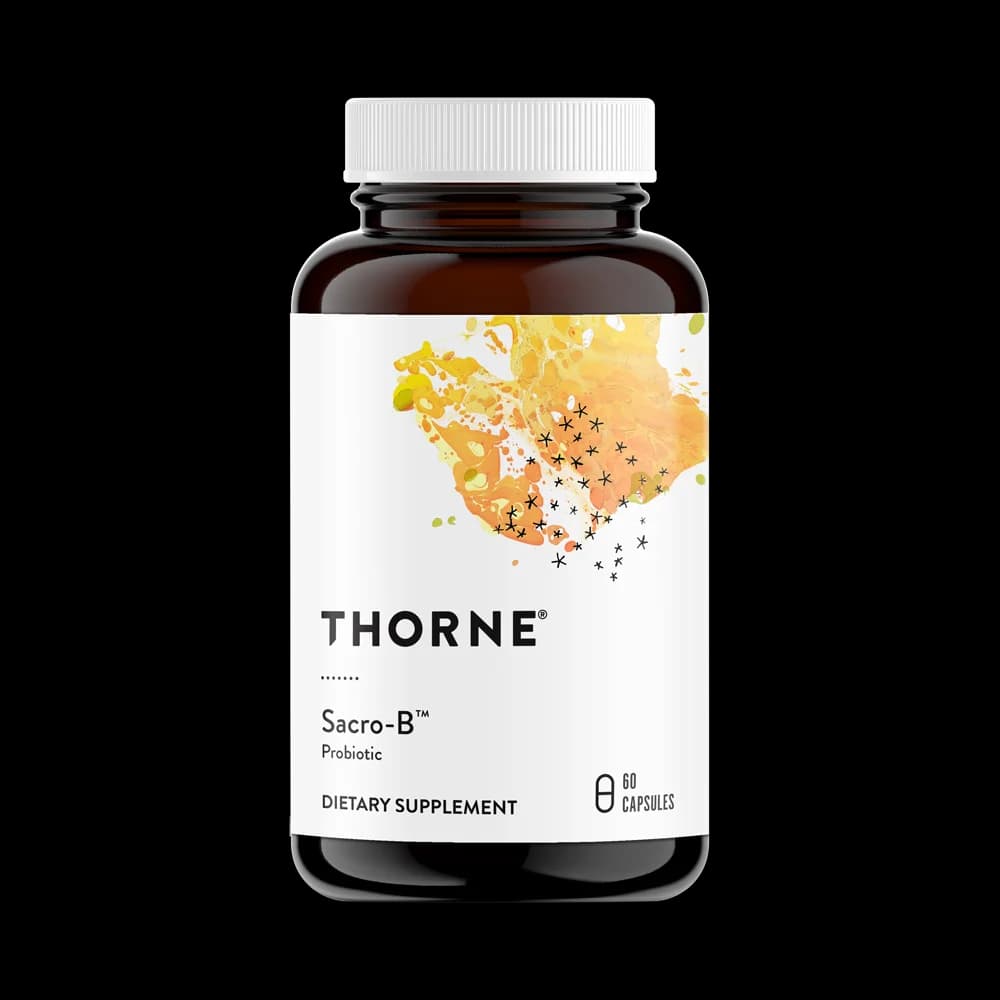
When incorporating Saccharomyces boulardii into a management plan, the specific strain and formulation matter immensely. Thorne’s Sacro-B™ utilizes the highly researched CNCM I-3799 strain. This specific patented strain (often associated with the Lynside® Pro SCB raw material) has been rigorously tested in clinical settings for its exceptional survivability. Unlike many fragile bacterial probiotics, the CNCM I-3799 strain is highly resilient to the harsh, acidic environment of the stomach and the degrading effects of bile salts in the upper intestine. This ensures that the guaranteed 5 billion CFUs (colony-forming units) per capsule actually reach the lower gastrointestinal tract alive and metabolically active.
Furthermore, this specific strain is exceptionally shelf-stable. It does not require refrigeration, making it an ideal, practical choice for patients who struggle with the cognitive load of complex supplement routines, or for those who need reliable gastrointestinal support while traveling. Because S. boulardii is a transient yeast, it does not permanently colonize the gut. It typically takes about 3 to 5 days of consistent daily dosing to reach steady-state therapeutic levels in the colon, and it is entirely cleared from the system within 2 to 5 days after supplementation is stopped. This means that consistent, daily use is required to maintain its barrier-healing and sIgA-boosting benefits.
Dosing Strategies and Antibiotic Co-Administration
One of the most profound practical advantages of S. boulardii is its absolute resistance to antibacterial antibiotics. For patients with chronic illnesses who frequently require antibiotics for secondary infections (or specific protocols for conditions like SIBO or Helicobacter pylori), standard probiotics are often destroyed before they can provide any benefit. S. boulardii can—and should—be taken concurrently with antibiotics to protect the gut lining and help prevent antibiotic-associated diarrhea. The standard suggested use is 1 capsule (250 mg / 5 billion CFUs) taken one to three times daily between meals, though practitioners may adjust this based on the severity of dysbiosis.
When starting S. boulardii, especially for patients with severe MCAS or significant fungal overgrowth (like Candida), it is crucial to employ a "start low and go slow" approach. Because the yeast aggressively competes with and kills off pathogenic fungi and bacteria, it can trigger a Herxheimer (die-off) reaction. As pathogens die, they release intracellular toxins that can cause a temporary, acute spike in fatigue, brain fog, or gastrointestinal discomfort. Titrating the dose slowly allows the body's detoxification pathways to clear these metabolites without overwhelming the system.
Safety Profile and Contraindications
While S. boulardii is widely considered exceptionally safe and well-tolerated for the vast majority of people, there are specific, critical contraindications. The product is derived from yeast, so it is strictly contraindicated in individuals with a known history of hypersensitivity or true allergy to yeast products. Furthermore, because it is a live, active fungus, it carries a rare but serious risk of fungemia (fungal infection of the blood) in highly specific populations.
Patients who are severely immunocompromised, critically ill in the intensive care unit, or who have an indwelling central venous catheter (such as a PICC line or port) should absolutely avoid S. boulardii unless explicitly directed and monitored by their primary care physician. The risk arises from the potential of the live yeast to translocate from the gut or be accidentally introduced into the bloodstream via the catheter. Additionally, as with all targeted supplements, individuals who are pregnant or nursing must consult their healthcare practitioner before initiating use to ensure it aligns with their comprehensive medical care.
Follow the Science
Clinical Trials on Diarrhea and Gastrointestinal Repair
The clinical efficacy of Saccharomyces boulardii, particularly the CNCM I-3799 strain, is supported by decades of robust scientific literature. A benchmark multicenter, randomized, double-blind, placebo-controlled trial published in The Pediatric Infectious Disease Journal (2020) evaluated the CNCM I-3799 strain in 100 children suffering from acute diarrhea. The researchers found that the administration of the yeast significantly reduced the time to recovery. The probiotic group recovered in an average of 65.8 hours, compared to 95.3 hours for the placebo group—a statistically significant reduction of nearly 30 hours (p = 0.0001). Furthermore, the time before the normalization of stool consistency was reduced by 23.5 hours, demonstrating the strain's rapid ability to repair the mucosal barrier and restore fluid balance.
Another randomized, double-blind trial published in Pediatric Gastroenterology, Hepatology & Nutrition (2021) investigated the use of CNCM I-3799 in combination with a bacterial strain for acute watery diarrhea. The study highlighted the importance of early intervention: when the probiotic was administered within 24 hours of symptom onset, it cut the duration of diarrhea by over 25 hours compared to the placebo. Crucially, during a 3-month follow-up period, the patients who received the yeast showed significantly lower rates of recurrent diarrhea, suggesting that the intervention provided lasting improvements to the resilience of the gut microbiome.
Microbiome Modulation in COVID-19 and Long COVID
Recent research has directly investigated the role of S. boulardii in the context of SARS-CoV-2 infection. A prospective comparative study published in Ter Arkh (Maev et al., 2022) evaluated the use of S. boulardii CNCM I-745 in hospitalized COVID-19 patients receiving aggressive antibiotic therapy. The goal was to prevent the severe dysbiosis that frequently precedes Long COVID. The results were striking: only 13.3% of the patients receiving the yeast probiotic developed diarrhea, compared to 30.0% in the standard-care control group. Additionally, the overall duration of hospital stays was significantly shorter for the probiotic group, underscoring the systemic benefits of protecting the gut-lung axis during viral immune responses.
The broader implications of microbiome modulation for Long COVID were further validated by the landmark SIM01 randomized controlled trial, published in The Lancet Infectious Diseases. While this trial utilized a multi-strain synbiotic formulation, it proved the foundational concept that correcting gut dysbiosis directly alleviates systemic post-viral symptoms. Patients receiving the microbiome-modifying therapy reported significantly higher rates of improvement in profound Long COVID symptoms compared to a placebo, including fatigue (Odds Ratio 2.27), memory loss (OR 1.97), and difficulty concentrating (OR 2.64). These findings strongly support the use of targeted agents like S. boulardii to seal the gut barrier, lower neuroinflammation, and address the root causes of complex chronic illness.
The Path Forward
Validating the Gut-Body Connection
Living with conditions like Long COVID, ME/CFS, dysautonomia, and MCAS often feels like an uphill battle against an invisible enemy. The profound fatigue, unpredictable gastrointestinal distress, and cognitive fog are not just "in your head"—they are the tangible results of complex, systemic physiological disruptions. Validating the role of the gut microbiome and intestinal barrier integrity in these conditions is a crucial step toward reclaiming your quality of life. By understanding how viral persistence and inflammation damage the gut, we can begin to utilize targeted, science-backed tools to rebuild that foundation.
Saccharomyces boulardii represents a powerful, specialized intervention in this healing process. By actively repairing tight junctions, amplifying protective sIgA antibodies, and providing a safe, histamine-neutral way to clear pathogens, it addresses the root mechanisms of leaky gut and immune dysregulation. However, it is important to remember that true management of complex chronic illness requires a comprehensive approach. Supplements are most effective when integrated into a broader strategy that includes careful pacing, nervous system regulation, dietary modifications, and ongoing symptom tracking. Always consult with your healthcare provider before introducing new supplements to ensure they align safely with your unique medical history and current treatments.