Can Resveratrol Support Endothelial and Mitochondrial Health in Long COVID and ME/CFS?
March 5, 2026
ResveratrolLong COVIDME/CFS
Share:
Disclaimer: The information provided here is for educational purposes only and is not intended as medical advice. It should not be used to diagnose, treat, cure, or prevent any medical condition. Instead, use it as a starting point for discussion with your healthcare provider. Always consult with a qualified healthcare provider before starting any new medication, supplement, device, or making changes to your health regimen.
Months or even years after an initial viral infection, many individuals find themselves battling a complex web of debilitating symptoms, from profound exhaustion to cognitive dysfunction. If you are living with Long COVID, myalgic encephalomyelitis/chronic fatigue syndrome (ME/CFS), or dysautonomia, you are likely intimately familiar with the frustration of a body that no longer produces energy the way it used to. The profound fatigue and brain fog you experience are not merely in your head; they are rooted in measurable physiological disruptions at the cellular level. Emerging research points to profound dysfunction within the mitochondria—the powerhouses of our cells—and the endothelium, the delicate lining of our blood vessels.
As researchers untangle the complex pathophysiology of these invisible illnesses, certain natural compounds have emerged as powerful tools for cellular rehabilitation. Resveratrol, a potent polyphenol naturally found in the skins of red grapes and Japanese knotweed, has captured the attention of the medical community for its unique ability to interact with our cellular longevity pathways. By targeting the very mechanisms that post-viral syndromes disrupt, resveratrol offers a promising avenue for supporting mitochondrial biogenesis, reducing vascular inflammation, and restoring healthy blood flow to the brain and body.
What is Resveratrol?
The Plant Kingdom's Defense Molecule
Resveratrol is a naturally occurring polyphenolic compound, specifically classified as a stilbenoid, which functions as a phytoalexin in the plant kingdom. Plants produce phytoalexins as a direct defense mechanism in response to severe environmental stressors, such as fungal infections, ultraviolet radiation, physical injury, or drought. When consumed by humans, resveratrol acts as a mild biological stressor, triggering a cascade of highly beneficial adaptive responses within our cells. This concept, known as hormesis, explains how a small amount of biological stress can stimulate the body's intrinsic repair and maintenance systems, ultimately leading to enhanced cellular resilience and longevity.
Historically, resveratrol gained international attention during the investigation of the "French Paradox"—the observation that French populations exhibited low rates of cardiovascular disease despite consuming diets high in saturated fats. Researchers traced this protective effect back to the resveratrol content in red wine. In the human body, resveratrol is highly lipophilic, meaning it is fat-soluble and readily interacts with lipid membranes. However, its natural botanical form is notoriously difficult for the human digestive system to absorb efficiently, a challenge that modern nutraceutical science has had to overcome to unlock its full therapeutic potential.
The AMPK and SIRT1 Longevity Pathways
At the molecular level, resveratrol is most famous for its ability to activate a highly interconnected signaling axis that governs cellular energy and longevity. The first major player in this axis is AMP-activated protein kinase (AMPK), an enzyme that serves as the master energy sensor of the cell. When cellular energy (ATP) drops, AMPK is activated to stimulate energy-producing pathways like fatty acid oxidation and glucose uptake. Resveratrol acts by mildly inhibiting mitochondrial ATP production, which temporarily raises the AMP-to-ATP ratio and forces the robust activation of AMPK. This activation subsequently increases the intracellular levels of NAD+ (nicotinamide adenine dinucleotide), a crucial coenzyme required for all cellular metabolism.
The elevation of NAD+ is the critical trigger for the second major player: Sirtuin 1 (SIRT1). SIRT1 is a NAD+-dependent protein deacetylase, meaning it removes acetyl groups from other proteins to alter their function, effectively turning specific longevity and repair genes on or off. SIRT1 cannot function without a sufficient supply of NAD+. By activating AMPK and boosting NAD+ levels, resveratrol provides the essential fuel that SIRT1 needs to initiate widespread cellular repair, reduce oxidative stress, and promote metabolic homeostasis across multiple organ systems.
The Master Regulator of Mitochondria: PGC-1α
The ultimate target of the AMPK and SIRT1 pathways is a protein called PGC-1α (Peroxisome proliferator-activated receptor gamma coactivator 1-alpha). PGC-1α is widely recognized by molecular biologists as the master regulator of mitochondrial biogenesis, the complex process by which cells build brand new, healthy mitochondria. For PGC-1α to reach its maximum biological activity, it must undergo two distinct modifications: it must be phosphorylated by AMPK and deacetylated by SIRT1. Resveratrol is unique in its ability to facilitate both of these modifications simultaneously, ensuring that PGC-1α is fully activated and ready to initiate cellular repair.
Once activated, PGC-1α travels directly into the cell nucleus, where it coordinates the expression of downstream transcription factors like NRF-1, NRF-2 (Nuclear Respiratory Factors), and TFAM (Mitochondrial Transcription Factor A). These factors are responsible for transcribing both nuclear and mitochondrial DNA, effectively synthesizing new mitochondrial mass. Furthermore, this pathway upregulates the electron transport chain to increase oxidative phosphorylation and boosts intrinsic antioxidant enzymes like superoxide dismutase (SOD2) to neutralize reactive oxygen species (ROS) before they can cause cellular damage.
How Long COVID and ME/CFS Impact Cellular Health
Viral Persistence and Mitochondrial Exhaustion
In complex chronic conditions like Long COVID and ME/CFS, the cellular energy pathways described above become profoundly dysregulated. Recent reviews highlight that SARS-CoV-2 infection can lead to sustained mitochondrial dysfunction, driven by the viral spike protein's interaction with host cells. The virus essentially hijacks the mitochondria, disrupting the delicate balance of mitochondrial fusion and fission, and impairing mitophagy, the vital process by which cells clear out damaged and dying mitochondria. This leads to a dangerous accumulation of dysfunctional mitochondria that leak reactive oxygen species (ROS) into the cell while failing to produce adequate ATP for basic biological functions.
This mitochondrial failure forces the cells to undergo metabolic reprogramming, shifting away from efficient oxygen-based energy production (oxidative phosphorylation) toward a highly inefficient process called glycolysis—a phenomenon often referred to as the Warburg effect. Consequently, patients experience the hallmark symptom of post-exertional malaise (PEM), where even minor physical or cognitive exertion leads to a severe crash. Their cells simply cannot generate the energy required to meet the demand, resulting in a buildup of lactic acid and profound systemic exhaustion. To understand more about the origins of these post-viral symptoms, you can read our detailed guide on What Causes Long COVID?.
Endothelial Dysfunction and Microclots
Beyond the mitochondria, the vascular system bears a massive burden in post-viral syndromes. The endothelium, the single layer of delicate cells lining the interior of all blood vessels, is responsible for regulating blood flow, vascular tone, and preventing abnormal clotting. In Long COVID, the virus directly binds to ACE2 receptors on endothelial cells, causing widespread damage, cellular death, and severe inflammation known as endotheliopathy. This endothelial dysfunction is a primary driver of the microclots frequently observed in Long COVID patients, which physically block the tiny capillaries and prevent oxygen from reaching muscle and brain tissue.
Furthermore, this vascular damage severely disrupts the production of nitric oxide (NO), a crucial signaling molecule that tells blood vessels to dilate and relax. When the endothelium is inflamed, the delicate balance of the renin-angiotensin system (RAS) is thrown off, leading to chronic vasoconstriction. This persistent narrowing of the blood vessels is a primary mechanism behind the poor tissue perfusion and orthostatic intolerance seen in dysautonomia and postural orthostatic tachycardia syndrome (POTS), leaving patients dizzy, lightheaded, and fatigued whenever they stand up.
Neuroinflammation and the Brain Fog Connection
The combination of mitochondrial failure and endothelial damage creates a perfect storm for neuroinflammation, the primary culprit behind the debilitating cognitive dysfunction often referred to as "brain fog." When the blood-brain barrier is compromised by persistent endothelial inflammation, systemic inflammatory cytokines can easily infiltrate the central nervous system. This triggers the aggressive activation of microglial cells, the brain's resident immune cells, which abandon their normal maintenance duties and instead release neurotoxic chemicals that further drive oxidative stress within the brain.
Studies indicate that this chronic neuroinflammation suppresses functional neurogenesis and severely impairs the synaptic communication between neurons. For patients, this manifests as severe memory deficits, difficulty concentrating, word-finding issues, and an overwhelming sense of cognitive fatigue that makes reading a book or holding a conversation feel insurmountable. The interconnected nature of these neurological, vascular, and metabolic symptoms highlights why a multi-systemic approach is absolutely necessary for healing, a concept we explore further in our article on Can Long COVID Trigger ME/CFS? Unraveling the Connection.
Resveratrol: Supporting Mitochondrial and Vascular Function
Restoring the AMPK-SIRT1-PGC-1α Axis
Given the profound cellular deficits seen in Long COVID and ME/CFS, resveratrol's ability to artificially stimulate the body's energy and repair pathways makes it a highly compelling therapeutic candidate. By acting as a metabolic stressor, resveratrol re-engages the AMPK pathway, which is often sluggish or entirely suppressed in patients with chronic fatigue. This activation effectively mimics the biological benefits of caloric restriction or fasting, forcing the cell to prioritize energy production and clear out the cellular debris left behind by viral infections through enhanced autophagy.
More importantly, by boosting NAD+ levels and activating SIRT1, resveratrol facilitates the full activation of PGC-1α. This directly combats the mitochondrial exhaustion seen in post-viral syndromes by stimulating robust mitochondrial biogenesis. By replacing damaged, ROS-leaking mitochondria with fresh, highly efficient powerhouses, resveratrol helps restore the cell's ability to produce ATP via oxidative phosphorylation. This metabolic restoration is crucial for raising a patient's baseline energy threshold and defending against the severe energy crashes characteristic of post-exertional malaise.
Enhancing eNOS and Nitric Oxide Production
Resveratrol also exerts profound protective effects on the vascular endothelium, directly addressing the poor blood flow and microvascular issues native to dysautonomia and POTS. At the cellular level, resveratrol strongly upregulates the expression and enzymatic activity of endothelial nitric oxide synthase (eNOS), the critical enzyme responsible for producing healthy nitric oxide. In ME/CFS and Long COVID, high levels of oxidative stress often cause eNOS to become "uncoupled," meaning the enzyme malfunctions and produces harmful superoxide free radicals instead of the necessary nitric oxide.
Resveratrol actively prevents this uncoupling and helps restore the delicate balance of the BH4/BH2 pathway, ensuring that blood vessels receive the chemical signals required to properly dilate. This improved vasodilation helps counteract the chronic vasoconstriction of POTS, allowing for better oxygen delivery to starving muscle and brain tissues. Furthermore, by improving the sheer flow of blood and reducing endothelial stickiness, resveratrol helps reduce the sheer stress that contributes to the formation of persistent microclots in the capillary beds.
Calming Neuroinflammation via NF-κB Suppression
To combat the neuroinflammation driving brain fog, resveratrol utilizes its potent anti-inflammatory properties to modulate the immune system's response at the genetic level. Research highlights that resveratrol effectively suppresses the NF-κB (nuclear factor kappa B) signaling pathway, which acts as the master switch for inflammatory cytokine production in the human body. By inhibiting NF-κB, resveratrol helps quiet the "cytokine storms" and chronic low-grade inflammation that keep post-viral patients locked in a state of perpetual illness.
Furthermore, resveratrol's unique ability to cross the blood-brain barrier allows it to directly interact with the central nervous system. It helps shift microglial cells from their aggressive, pro-inflammatory "M1" phenotype back to their protective, tissue-repairing "M2" phenotype. By neutralizing reactive oxygen species within the brain and calming these hyperactive immune cells, resveratrol creates an environment conducive to neuronal healing and cognitive recovery. This profound metabolic and inflammatory modulation shares similarities with the mechanisms discussed in our post on Metformin: Long COVID Risk Reduction and Diabetes Management.

Symptoms Resveratrol May Help Manage
Targeted Symptom Relief
Because resveratrol operates at the foundational level of cellular energy production and vascular health, its therapeutic benefits can ripple outward to address a wide array of complex chronic illness symptoms. While it is not a definitive cure, supporting these underlying physiological pathways can significantly improve daily quality of life and functional capacity. If you are currently navigating the complex diagnostic process, you may find our comprehensive guide on How Does a Doctor Diagnose Long COVID? helpful in understanding these distinct symptom clusters.
Brain Fog and Cognitive Dysfunction: By enhancing eNOS activity and increasing nitric oxide production, resveratrol helps dilate cerebral blood vessels. This improves blood flow and oxygen delivery directly to the frontal cortex, targeting the physiological root of post-viral brain fog, memory deficits, and difficulty concentrating.
Post-Exertional Malaise (PEM): Through the robust activation of the AMPK-SIRT1-PGC-1α axis, resveratrol stimulates mitochondrial biogenesis. Increasing the total number of healthy, ATP-producing mitochondria can help raise your baseline energy threshold, potentially reducing the severity, duration, and frequency of exertion-induced crashes.
Orthostatic Intolerance and POTS: Resveratrol's ability to heal the vascular endothelium and restore proper blood vessel dilation helps counteract the abnormal vascular tone seen in dysautonomia. This can lead to more stable blood pressure regulation, reduced blood pooling in the extremities, and less dizziness upon standing.
Chronic Systemic Inflammation: By suppressing the NF-κB signaling pathway, resveratrol acts as a powerful systemic anti-inflammatory agent. This helps quiet the persistent immune activation, joint aches, and muscle pain frequently reported by patients with Long COVID, MCAS, and ME/CFS.
Cardiometabolic Dysregulation: Resveratrol promotes healthy lipid metabolism and insulin sensitivity by activating the AMPK energy sensor. This is particularly beneficial for patients experiencing new-onset metabolic issues or weight resistance post-infection, a complex topic we cover extensively in Diabetes and Long COVID: A Pandemic Within a Pandemic.
Practical Considerations: VESIsorb®, Dosing, and Absorption
The Bioavailability Challenge of Standard Resveratrol
Despite its incredible therapeutic potential in laboratory and cellular settings, standard resveratrol supplements face a massive physiological hurdle in human application: extremely poor bioavailability. Resveratrol is a highly lipophilic (fat-soluble) molecule and possesses almost zero solubility in water. This makes it incredibly difficult for the aqueous, water-rich environment of the human gastrointestinal tract to break down and absorb the compound efficiently. Without the presence of dietary fats, standard resveratrol powder simply passes through the digestive tract unabsorbed.
Furthermore, standard resveratrol undergoes rapid and extensive "first-pass" metabolism in the liver and intestines. This means that even if you take a massive dose of standard resveratrol powder, the body's detoxification enzymes rapidly break it down into inactive metabolites and excrete it before it can ever reach the systemic bloodstream to exert its cellular benefits. This biological barrier is why many early clinical trials using standard powders failed to replicate the miraculous results seen in petri dishes.
How the VESIsorb® Colloid Delivery System Works
To overcome this profound biological barrier, Swiss researchers developed the VESIsorb® delivery system, a patented, lipid-based "Self-Emulsifying Drug Delivery System" (SEDDS). When a VESIsorb capsule enters the water-rich environment of the stomach, it spontaneously self-assembles into a nano-colloid system. It forms uniformly dispersed, water-soluble droplets (micelles) that are less than 100 nanometers in diameter, with the highly pure resveratrol trapped safely at the core. This effectively mimics the body's natural process of digesting fats, pre-emulsifying the nutrient for immediate uptake.
In a landmark laboratory dissolution study, resveratrol formulated with the VESIsorb system demonstrated 100% dissolution in an aqueous environment, compared to less than 1% for standard powder. These microscopic droplets easily diffuse across the "unstirred water layer" of the GI tract mucosa, allowing the resveratrol to be directly absorbed into the bloodstream. This technology completely eliminates the need to consume the supplement with a high-fat meal and provides a sustained release of the bioactive compound over time, preventing rapid spikes and crashes in blood plasma levels.
Dosing, Timing, and Crucial Medication Interactions
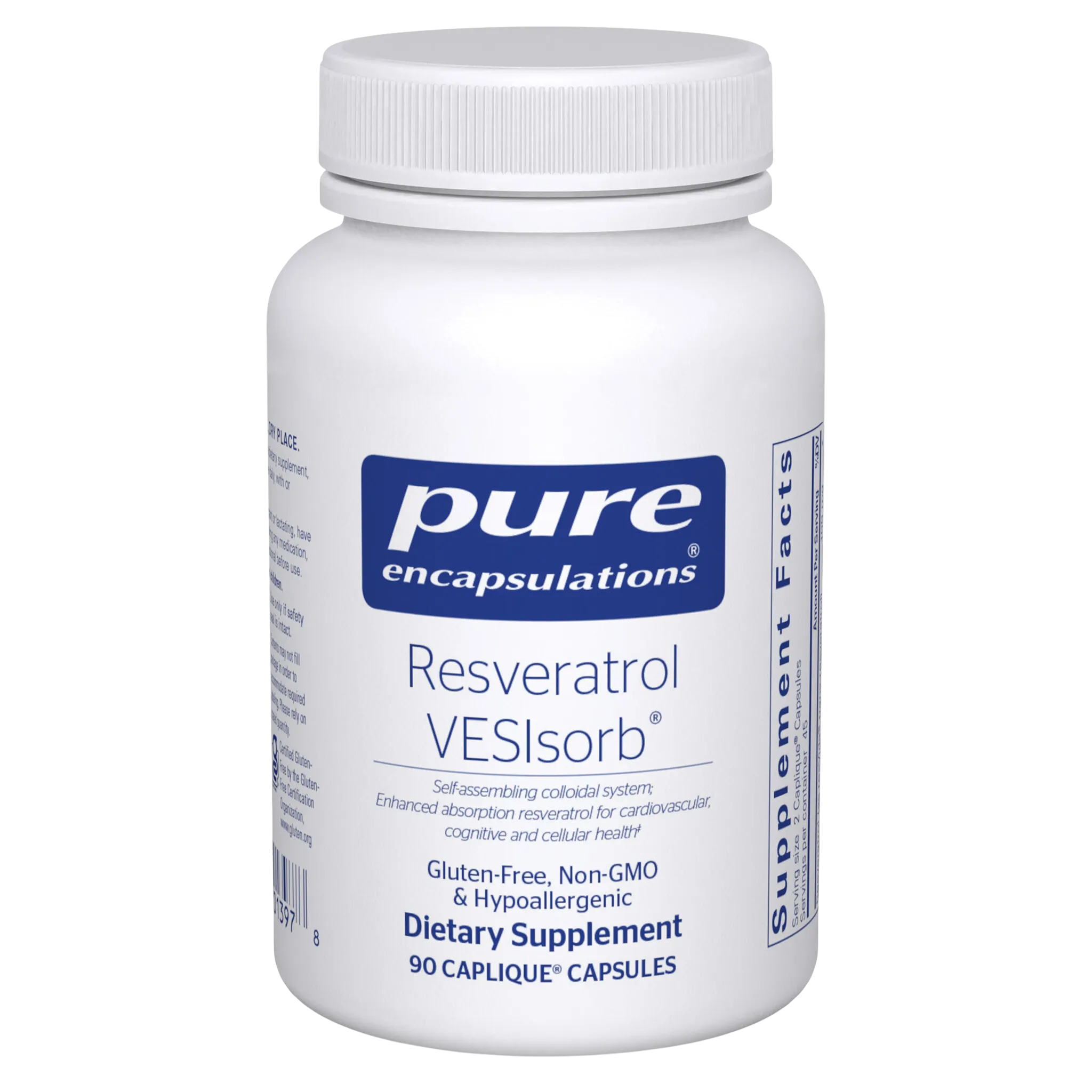
Because the VESIsorb system dramatically enhances absorption, therapeutic blood-plasma levels can be achieved with much smaller, gentler doses. Each capsule of Resveratrol VESIsorb® by Pure Encapsulations offers 50 mg of highly pure 99% trans-resveratrol (resVida®), with a suggested use of two capsules daily. Trans-resveratrol is the biologically active isomer of the compound, offering vastly superior stability and efficacy compared to the cheaper cis-resveratrol forms found in lower-quality supplements.
However, because resveratrol is a highly potent biologically active compound, safety and drug interactions must be carefully considered. Resveratrol strongly inhibits several Cytochrome P450 (CYP) liver enzymes, particularly CYP3A4 and CYP2C9, which are responsible for metabolizing roughly 50% of all prescription drugs. This inhibition can cause dangerous buildups of medications like statins, calcium channel blockers, and immunosuppressants in the bloodstream. Furthermore, resveratrol naturally suppresses platelet aggregation; combining it with anticoagulants (like Warfarin) or NSAIDs significantly elevates the risk of severe bleeding. It is strictly contraindicated for individuals with hormone-sensitive conditions or those preparing for surgery, making it absolutely imperative to consult your healthcare provider before beginning supplementation.

Follow the Science
Clinical Insights into Cerebral Blood Flow
The scientific literature supporting resveratrol's mechanisms is robust, particularly regarding its profound impact on vascular and cognitive health. In a double-blind, placebo-controlled crossover study published in the American Journal of Clinical Nutrition, researchers investigated the acute effects of oral trans-resveratrol on cerebral blood flow in healthy adults. Using advanced near-infrared spectroscopy, the study found that doses of 250 mg and 500 mg resulted in a dose-dependent increase in cerebral blood flow during demanding cognitive tasks.
Participants in this study showed sustained, measurable increases in oxygenated hemoglobin specifically in the frontal cortex. This provides compelling clinical evidence that resveratrol can actively enhance oxygen delivery to the brain under stress, a mechanism highly relevant for POTS and Long COVID patients battling severe brain fog and executive dysfunction. The ability to physically increase blood perfusion to the brain validates the experiences of dysautonomia patients and highlights the importance of targeted vascular therapies.
Resveratrol in Post-Viral and Metabolic Research
In the context of post-viral syndromes, resveratrol is rapidly gaining traction as a targeted intervention for mitochondrial restoration. A recent comprehensive review published in MDPI identified sustained mitochondrial dysfunction and reactive oxygen species (ROS) as a unifying mechanism in Long COVID. The researchers highlighted the absolute necessity of mitochondria-targeted interventions—including antioxidants and NAD+ precursors—to restore cellular bioenergetics and resolve persistent multisystem symptoms.
Furthermore, the specific resVida® compound utilized in the VESIsorb formulation has been clinically validated for its metabolic benefits. In a 30-day randomized double-blind crossover trial involving 150 mg of resVida resveratrol, supplementation successfully promoted AMPK, SIRT1, and PGC-1α activity, indicating profound support for mitochondrial function. The trial also noted improvements in healthy blood flow, adipose tissue lipolysis, and hepatic lipid content, showcasing its broad cardiometabolic benefits. For those wondering about the timeline of recovery and ongoing research, our article How Long Does Long COVID Last? provides further context on the chronic nature of these cellular disruptions and the path toward healing.
The Path Forward
A Comprehensive Approach to Healing
Living with a complex chronic condition like Long COVID, ME/CFS, or dysautonomia is an exhausting, unpredictable journey that requires immense resilience. It is entirely valid to feel overwhelmed by the profound fatigue, cognitive challenges, and lack of easy answers that accompany these invisible illnesses. While there is no single miracle cure or quick fix, understanding the cellular mechanisms driving your symptoms—like mitochondrial exhaustion and endothelial dysfunction—empowers you to make targeted, science-backed decisions about your health and treatment plan.
Resveratrol, particularly in a highly bioavailable form like VESIsorb®, represents a powerful tool for supporting your body's intrinsic repair pathways. By promoting mitochondrial biogenesis, encouraging healthy blood flow, and calming neuroinflammation, it targets the very physiological deficits that post-viral syndromes exploit. However, supplements are most effective when integrated into a comprehensive management strategy that includes aggressive pacing, nervous system regulation, and meticulous symptom tracking.
Partnering with Your Care Team
Because resveratrol has potent biological effects and interacts with many common prescription medications, it is crucial to consult your healthcare provider before adding it to your regimen. Together, you can review your current medications, assess your specific symptoms, and determine if this powerful polyphenol is the right fit for your unique physiological needs. Healing is a marathon, not a sprint, and finding the right combination of support is a vital step forward.
Sources
Complications of COVID-19 on the Central Nervous System: Mechanisms and Potential Treatment for Easing Long COVID
Effects of resveratrol on cerebral blood flow variables and cognitive performance in humans
Resveratrol improves health and survival of mice on a high-calorie diet
Enhancing the bioavailability of resveratrol by combining it with piperine
Resveratrol interactions with CYP450 enzymes and implications for drug metabolism
Endothelial dysfunction in Long COVID and the role of resveratrol