Can Quercetin + Nettles Calm Mast Cells in Long COVID and MCAS?
March 6, 2026
QuercetinStinging NettleLong COVID
Share:
Disclaimer: The information provided here is for educational purposes only and is not intended as medical advice. It should not be used to diagnose, treat, cure, or prevent any medical condition. Instead, use it as a starting point for discussion with your healthcare provider. Always consult with a qualified healthcare provider before starting any new medication, supplement, device, or making changes to your health regimen.
Months or even years after a mild acute infection, many people find themselves battling a bewildering array of unpredictable symptoms. Heart palpitations, sudden allergic reactions to previously safe foods, crushing fatigue, and severe brain fog become daily realities. For those living with Long COVID, myalgic encephalomyelitis/chronic fatigue syndrome (ME/CFS), and mast cell activation syndrome (MCAS), the immune system seems to be stuck in a continuous, hyperactive loop. It is a profoundly frustrating and debilitating experience, especially when standard blood tests often return "normal" results, leaving patients feeling unheard and without clear medical answers.
In the search for validating, science-backed strategies to calm this systemic inflammation, researchers and clinicians are increasingly turning to targeted botanical compounds. Among the most promising are quercetin and stinging nettle (Urtica dioica). While these natural compounds have been used for decades to manage seasonal allergies, modern clinical research is uncovering their profound ability to stabilize mast cells, neutralize oxidative stress, and modulate the exact inflammatory pathways disrupted by complex chronic illnesses. By understanding the intricate biochemical mechanisms of Quercetin + Nettles, we can better appreciate how this synergistic blend may help restore immune balance and improve quality of life for those navigating the complexities of post-viral syndromes.
What is Quercetin + Nettles?
Quercetin is a naturally occurring polyphenol flavonoid found abundantly in foods such as red onions, apples, berries, capers, and cruciferous vegetables. In a healthy body, flavonoids act as powerful antioxidants and immune modulators, helping cells defend against environmental stressors and free radical damage. However, in the context of clinical immunology, quercetin is most highly regarded for its potent anti-allergic and anti-inflammatory properties. It functions as a master regulator of the immune response, specifically targeting the behavior of mast cells—the frontline defenders of our immune system that release histamine and other inflammatory mediators when triggered.
At the molecular level, quercetin operates through several highly specific intracellular pathways to prevent the release of inflammatory chemicals. Unlike conventional over-the-counter H1-antihistamines (such as cetirizine or loratadine), which merely block histamine from binding to its receptors after it has already been released into the bloodstream, quercetin operates prophylactically at the source. It actively prevents the degranulation of mast cells entirely. According to recent pharmacological research, quercetin achieves this by inhibiting the influx of intracellular calcium ($Ca^{2+}$), which is a necessary step for the vesicles containing histamine to fuse with the cell membrane and release their contents. By blocking the PLCγ-IP3R signaling pathway, quercetin effectively keeps the mast cell membrane stable and intact.
Furthermore, 2024 studies have revealed that quercetin acts as an agonist for the CMRF35-like molecule-1 (CLM-1), an inhibitory receptor located on the surface of mast cells. By selectively binding to this receptor with high affinity, quercetin triggers a cascade of intracellular events, including SHP-1 phosphorylation, which subsequently inhibits the downstream MyD88/IKK/NF-κB signaling pathway. This fundamentally halts the transcription of pro-inflammatory cytokines at the genetic level, preventing the delayed release of inflammatory signals like Interleukin-6 (IL-6) and Tumor Necrosis Factor-alpha (TNF-α). This deep, genetic-level modulation makes quercetin an invaluable tool for supporting a normal inflammatory response.
Stinging nettle (Urtica dioica) is a prominent botanical remedy with a long history of traditional use for inflammatory conditions, joint pain, and seasonal allergic rhinitis. While the plant is famous for the stinging hairs on its fresh leaves, the carefully extracted compounds from its leaves and roots offer a complex matrix of bioactive phytochemicals, including flavonoids, phenolic acids (like chlorogenic and caffeic acid), and specific alkaloids. In a healthy immune system, these compounds work synergistically to support respiratory health and maintain a balanced response to environmental allergens.
Modern in vitro and in silico studies have illuminated the precise pharmacological mechanisms by which nettle extract combats systemic inflammation. One of its primary roles is acting as a natural antagonist to the Histamine-1 (H1) receptor. A pivotal 2009 in vitro study demonstrated that nettle extract successfully blocks histamine production and release by acting as both an antagonist and a negative agonist against the H1 receptor. This means it not only blocks the receptor from being activated by circulating histamine but also actively dials down the receptor's baseline activity, providing a dual layer of protection against allergic cascades.
Beyond histamine regulation, stinging nettle directly interrupts central inflammatory pathways by inhibiting the synthesis of prostaglandins. It actively inhibits the cyclooxygenase enzymes (COX-1 and COX-2), which are the same enzymes targeted by non-steroidal anti-inflammatory drugs (NSAIDs) like ibuprofen to reduce pain and inflammation. Furthermore, nettle extract inhibits Hematopoietic Prostaglandin D2 synthase (HPGDS), an enzyme responsible for producing Prostaglandin D2, a primary pro-inflammatory mediator specifically linked to allergic rhinitis and airway inflammation. By targeting these multiple enzymatic pathways simultaneously, stinging nettle provides a broad-spectrum approach to calming an overactive immune system.
When combined, Quercetin + Nettles creates a highly synergistic blend that addresses immune dysregulation from multiple angles. While quercetin stabilizes the mast cell membrane to prevent the initial release of inflammatory mediators, stinging nettle works downstream to block the receptors of any histamine that does manage to escape, while simultaneously inhibiting the enzymes that produce pain-inducing prostaglandins. This multi-targeted approach is particularly relevant for individuals dealing with complex chronic illnesses, where a single mechanism of action is rarely sufficient to calm the systemic storm of inflammation.
Moreover, nettle extract is naturally rich in Vitamin C, which further enhances the antioxidant capacity of the blend. Vitamin C is known to support the function of diamine oxidase (DAO), the primary enzyme responsible for breaking down extracellular histamine in the gut. By providing both the flavonoids needed for cellular stability and the essential nutrients required for histamine degradation, this combination offers a comprehensive, natural approach to supporting the body's resilience against environmental challenges and internal inflammatory triggers.
How Long COVID and MCAS Impact Immune and Inflammatory Pathways
To understand why Quercetin + Nettles is so relevant for chronic illness, we must first examine how conditions like Long COVID and ME/CFS disrupt the body's natural immune balance. When an individual is infected with a virus like SARS-CoV-2, the immune system mounts a massive defense, deploying inflammatory cytokines and activating mast cells to clear the pathogen. In a healthy recovery, this response eventually subsides. However, in Long COVID, this inflammatory response fails to turn off. Recent 2023 research indicates that the SARS-CoV-2 spike protein can persist in human CD16+ monocytes for up to 15 months post-infection, causing continuous "pyroptosis"—an inflammation-triggered cell death that keeps the immune system in a state of chronic high alert.
This persistent viral presence and ongoing inflammation frequently trigger or exacerbate mast cell activation syndrome (MCAS). In MCAS, the mast cells become hyper-responsive, degranulating inappropriately in response to minor triggers like temperature changes, stress, certain foods, or mild exertion. Clinical studies have shown that the symptoms of Long COVID—such as brain fog, severe fatigue, gastrointestinal distress, and unpredictable allergic reactions—closely mirror the classic presentation of MCAS. The mast cells are essentially stuck in a hyperactive loop, constantly flooding the bloodstream with histamine, tryptase, and leukotrienes, which drives the debilitating symptoms experienced by patients.
Once mast cells become dysregulated, a vicious cycle of systemic inflammation takes hold. The constant release of histamine causes blood vessels to dilate and become "leaky," leading to fluid retention, sudden drops in blood pressure, and the rapid heart rate characteristic of postural orthostatic tachycardia syndrome (POTS) and other forms of dysautonomia. This vascular permeability also allows inflammatory cytokines to cross the blood-brain barrier, triggering neuroinflammation. This neuroinflammatory state is a primary driver of the profound cognitive impairment, or "brain fog," and the sensory overload frequently reported by those living with ME/CFS and Long COVID.
Furthermore, the continuous release of mast cell mediators depletes the body's natural antioxidant reserves, leading to severe oxidative stress. This oxidative stress damages mitochondria, the energy-producing powerhouses of our cells. When mitochondria are damaged by free radicals and inflammatory cytokines, they cannot produce sufficient adenosine triphosphate (ATP). This cellular energy crisis manifests clinically as crushing, unrefreshing fatigue and post-exertional malaise (PEM), where even minor physical or cognitive exertion leads to a disproportionate and prolonged worsening of symptoms. The body simply lacks the clean energy required to function, while simultaneously burning through resources to fight a perceived ongoing threat.
Another critical pathophysiological mechanism in Long COVID is widespread endothelial dysfunction and the formation of micro-clots. The endothelium, the delicate inner lining of blood vessels, is highly vulnerable to damage from circulating spike proteins and chronic oxidative stress. When the endothelium is damaged, it triggers the coagulation cascade. Recent research has highlighted that Long COVID is heavily driven by redox abnormalities that promote the formation of amyloid fibrin micro-clots. These microscopic clots trap inflammatory molecules and block the tiny capillaries responsible for delivering oxygen and nutrients to tissues, including the brain and muscles.
This micro-vascular starvation further exacerbates the mitochondrial energy crisis and perpetuates the cycle of fatigue and tissue damage. The presence of these micro-clots also keeps the immune system agitated, as the body continuously attempts to break them down without success. In this complex web of mast cell hyperactivation, neuroinflammation, mitochondrial dysfunction, and endothelial damage, it becomes clear why single-target pharmaceutical interventions often fall short, and why multi-targeted, synergistic approaches are necessary to support systemic recovery.
Quercetin + Nettles: Supporting Mast Cell Stability and Inflammation
The primary therapeutic angle of Quercetin + Nettles in the context of chronic illness is its profound ability to stabilize mast cells and halt the inflammatory cascade at its source. Quercetin achieves this through direct kinase inhibition. It specifically inhibits protein kinase C (PKC)—particularly the PKC-theta isoenzyme—as well as Lyn-kinase, both of which are critical signaling molecules required for IgE-mediated mast cell activation. By blocking these kinases, quercetin effectively cuts the communication lines within the mast cell, preventing it from responding to the erratic triggers common in MCAS and Long COVID.
In laboratory settings, quercetin has proven to be exceptionally potent. Studies utilizing human cultured mast cells have shown that quercetin can be significantly more effective than prescription mast cell stabilizers like cromolyn sodium, blocking the secretion of leukotrienes—powerful inflammatory lipid mediators—as well as reducing key Long COVID cytokines like TNF-α and IL-8. By suppressing these preformed and newly synthesized mediators, quercetin helps quiet the systemic alarm bells ringing throughout the body.
While quercetin works to keep the mast cell vault locked, stinging nettle acts as a secondary defense system in the tissues and bloodstream. When mast cells do inevitably degranulate due to the intense pressures of chronic illness, they release an enzyme called mast cell tryptase, which triggers a wild cascade of chemokines and leukotrienes. Urtica dioica has been shown to directly inhibit this tryptase enzyme, effectively halting the degranulation process mid-stream. The IC50 value for this inhibition was measured at 172 ± 28 µg/mL, demonstrating a potent, targeted effect.
Furthermore, a 2024 computational molecular dynamics study evaluated the specific phytochemicals in nettle against known therapeutic targets of allergic rhinitis and systemic inflammation. The study identified that compounds like alpha-tocotrienol and amentoflavone exhibit remarkably high binding affinities for multiple inflammatory receptors, including the Histamine Receptor 1 (HR1), the Neurokinin 1 Receptor (NK1R, linked to airway inflammation), and the Cysteinyl Leukotriene Receptor 1 (CLR1, which contributes to mucosal swelling). By binding to these receptors, nettle's phytochemicals block the inflammatory mediators from attaching and causing tissue damage, providing crucial relief from the allergy-like symptoms of MCAS.
Beyond mast cell stabilization, Quercetin + Nettles provides vital support for the cardiovascular and endothelial systems heavily impacted by Long COVID. Quercetin is a potent scavenger of free radicals, specifically neutralizing superoxide anions and peroxynitrites. By reducing this oxidative burden, quercetin helps protect the delicate mitochondrial membranes, supporting the restoration of normal ATP energy production and helping to alleviate the crushing fatigue associated with ME/CFS. This antioxidant defense is crucial for breaking the cycle of cellular exhaustion.
Excitingly, 2023 and 2024 research has identified quercetin as a compound that can actively bind to and inhibit the persistent SARS-CoV-2 spike protein. By interfering with the spike protein's ability to interact with human ACE2 receptors, quercetin may help reduce long-term immune exhaustion. Additionally, quercetin has been shown to inhibit protein disulfide isomerase (PDI), an enzyme intimately involved in platelet-mediated thrombin formation. By inhibiting PDI, quercetin may help improve the coagulation abnormalities and micro-clotting frequently found in post-acute sequelae of SARS-CoV-2 (PASC) subjects, thereby restoring proper blood flow and oxygen delivery to oxygen-starved tissues.

Symptoms Quercetin + Nettles May Help Manage
Because Quercetin + Nettles operates on fundamental pathways of immune regulation, mast cell stability, and oxidative stress, it can help manage a wide array of interconnected symptoms. Here are the specific symptoms this synergistic blend may help alleviate:
Unpredictable Allergic Reactions and Food Sensitivities: By acting as a potent mast cell stabilizer and preventing the release of histamine, quercetin helps reduce the sudden, erratic allergic responses (flushing, hives, itching) that are hallmark features of MCAS. Stinging nettle provides additional support by blocking the H1 receptors from any circulating histamine.
Brain Fog and Cognitive Impairment: The systemic inflammation driven by mast cell degranulation often crosses the blood-brain barrier, causing neuroinflammation. By inhibiting the nuclear translocation of NF-κB and dampening the release of cytokines like IL-6 and TNF-α, quercetin helps reduce this neuroinflammatory burden, supporting clearer thinking and improved cognitive stamina.
Chronic Fatigue and Post-Exertional Malaise (PEM): Oxidative stress damages mitochondria, leading to the severe energy deficits seen in ME/CFS and Long COVID. Quercetin's powerful antioxidant properties neutralize free radicals, protecting mitochondrial integrity and supporting more efficient ATP energy production, which may help raise the threshold for PEM crashes.
Sinus Congestion and Allergic Rhinitis: Stinging nettle has been clinically shown to inhibit Hematopoietic Prostaglandin D2 synthase (HPGDS), an enzyme linked directly to allergic rhinitis. This helps reduce nasal inflammation, airway hyperresponsiveness, and the excessive mucus production often triggered by environmental stressors.
Joint and Muscle Pain: The continuous release of prostaglandins drives systemic pain and body aches. Nettle extract actively inhibits the COX-1 and COX-2 enzymes—the primary drivers of prostaglandin synthesis—providing a natural, botanical approach to managing the widespread musculoskeletal pain frequently reported by Long COVID patients.
Cardiovascular Symptoms and Poor Circulation: By inhibiting protein disulfide isomerase (PDI) and reducing endothelial oxidative stress, quercetin supports healthy blood flow and may help mitigate the micro-clotting abnormalities associated with Long COVID, potentially alleviating symptoms like cold extremities and exercise intolerance.
Practical Considerations: Forms, Dosing, and Absorption
While the clinical potential of quercetin is vast, its use as a dietary supplement has historically been limited by a challenging pharmacokinetic profile. In its pure, unformulated state (known as quercetin aglycone), quercetin exhibits very poor water solubility and high lipophilicity. Furthermore, it undergoes extensive first-pass metabolism in the intestines and liver. Pharmacokinetic studies estimate that the bioavailability of standard, unformulated quercetin aglycone in healthy human subjects is only between 3% and 17%. This means that if you take a standard quercetin capsule, a significant majority of it may be excreted before it ever reaches your systemic circulation to exert its therapeutic effects.
The absorption rate of quercetin depends heavily on its chemical structure, specifically whether it is bound to sugar molecules (glycosides). For example, quercetin glucosides found naturally in onions are actively transported across the small intestine lining via the sodium-dependent glucose transporter (SGLT1), leading to rapid absorption with peak plasma concentrations reached in just 0.7 to 2 hours. Conversely, quercetin rutinosides (found in apples) require fermentation by gut microbiota in the colon before they can be absorbed, delaying peak concentrations by 7 to 9 hours. Understanding these dynamics is crucial for optimizing supplementation.
Because quercetin is highly lipophilic (fat-loving), its absorption can be significantly enhanced by the presence of dietary fat. Research suggests that taking a quercetin supplement alongside a high-fat meal can increase the maximum plasma concentration ($C_{max}$) compared to taking it with a fat-free meal. Therefore, to maximize the efficacy of Quercetin + Nettles, it is highly recommended to take the supplement with a meal that contains healthy fats, such as avocado, olive oil, nuts, or fatty fish.
Additionally, modern supplement formulations often pair quercetin with other compounds to improve its stability and uptake. The inclusion of stinging nettle in this blend is not only therapeutically synergistic but also practically beneficial. Nettle extract is naturally rich in Vitamin C, and research indicates that Vitamin C helps protect quercetin from rapid oxidative degradation in the digestive tract, thereby preserving its structural integrity and enhancing its overall bioavailability and effectiveness once absorbed.
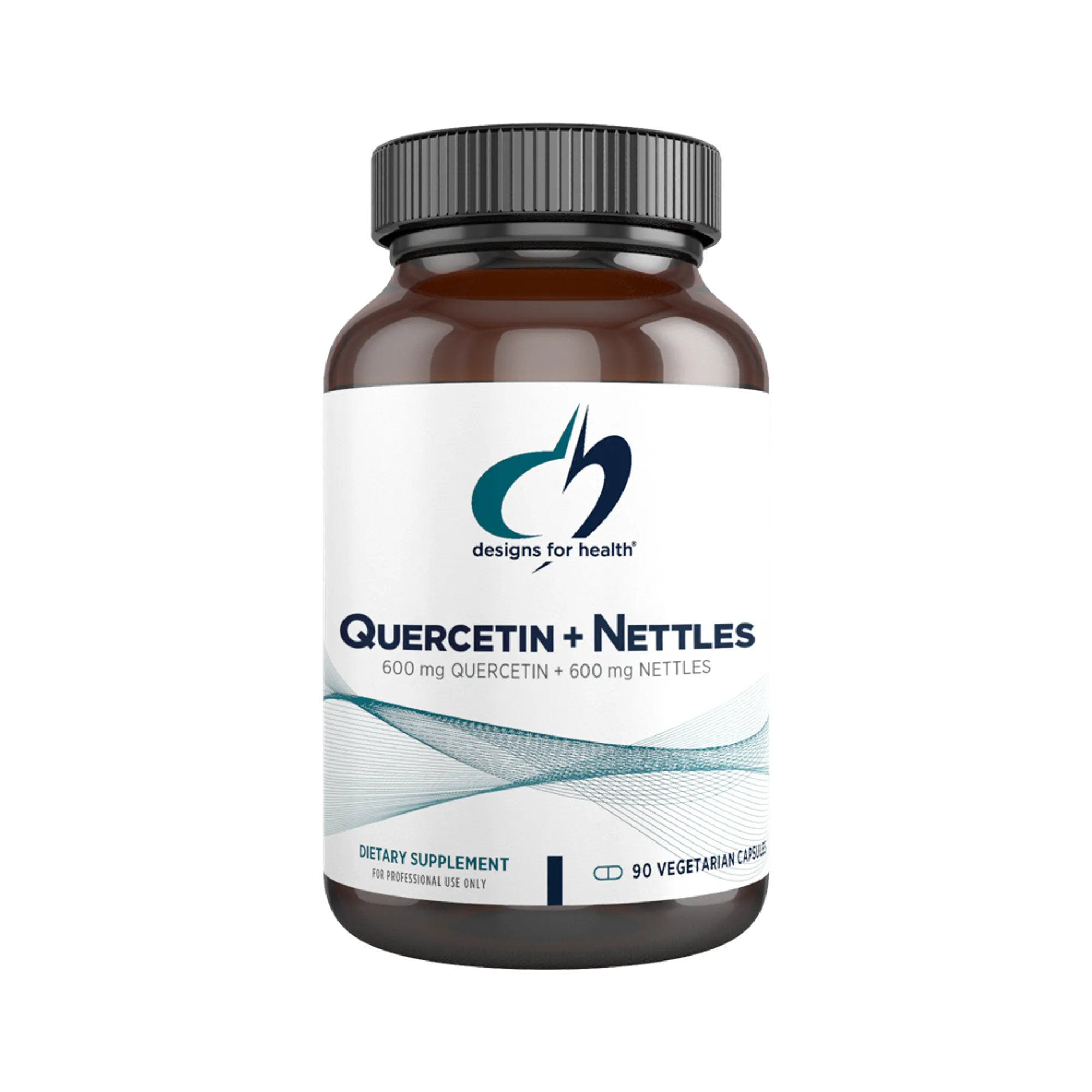
Quercetin exhibits a complex elimination profile characterized by prolonged body residence. While the basic terminal elimination half-life of pure quercetin is relatively short (averaging about 3.5 hours), the actual systemic half-life—the time it takes for the metabolized conjugates to be eliminated from the body—is much longer, ranging between 11 to 28 hours due to enterohepatic recirculation. Because of this, standard therapeutic dosing for chronic histamine regulation and mast cell stabilization is typically divided throughout the day. A common protocol is taking 500 mg to 1000 mg daily, divided into two doses (e.g., morning and evening) to maintain steady plasma levels. The Quercetin + Nettles blend provides 600 mg of each ingredient per serving, making it an ideal, potent daily dose.
Regarding safety, both quercetin and stinging nettle are generally well-tolerated with a strong safety profile. However, because quercetin can inhibit certain cytochrome P450 enzymes in the liver (specifically CYP3A4), it may interact with medications metabolized by these pathways, potentially altering their blood levels. This includes certain blood thinners, antibiotics, and immunosuppressants. Additionally, because stinging nettle can have mild diuretic and blood pressure-lowering effects, individuals taking antihypertensive medications or diuretics should monitor their responses closely. As always, it is imperative to consult with a healthcare provider before introducing new supplements, especially when managing complex chronic conditions and multiple prescription medications.

Follow the Science
The scientific community's interest in quercetin surged dramatically during the COVID-19 pandemic, leading to robust clinical trials that established its efficacy in modulating viral and inflammatory responses. A highly significant 2023 randomized controlled trial published in Frontiers in Medicine evaluated the use of quercetin in outpatients with acute COVID-19. The intervention group received standard care plus 500 mg of a highly bioavailable quercetin formulation daily. The results were striking: by day 7, 68% to 76% of patients in the quercetin group achieved viral negativity, compared to just 24% to 32% in the control group. Furthermore, the quercetin group saw a statistically significant drop in serum Lactate Dehydrogenase (LDH)—a key biomarker of tissue damage and inflammation—demonstrating quercetin's powerful ability to halt the hyperinflammatory cascade.
Building on this foundation, researchers are now actively trialing quercetin for Long COVID. A current 2024 clinical trial (NCT06974058) is evaluating a standardized supplement containing bioactive quercetin for patients experiencing mild to moderate Long COVID symptoms, including fatigue, brain fog, and muscle pain. The trial tracks improvements in overall symptom burden and serum inflammatory markers over an 8-week period. Interestingly, quercetin's biological activity is considered so potent that major pharmaceutical trials for Long COVID (such as the LC-REVITALIZE trial testing repurposed drugs) explicitly list quercetin under their exclusion criteria, prohibiting participants from taking it to avoid skewing the trial data with its strong anti-inflammatory effects.
The clinical evidence supporting stinging nettle for allergic and inflammatory conditions is equally compelling, grounded in decades of research. A foundational randomized, double-blind study published in Planta Medica evaluated the use of freeze-dried Urtica dioica in the treatment of allergic rhinitis. Subjects took the extract when allergy symptoms appeared and rated their symptoms after one hour. Global assessments indicated that nettle was significantly more effective than the placebo, with 58% of the treatment group rating it as "moderately or highly effective," compared to only 37% of the placebo group.
More recently, a 2017 randomized, double-blind, placebo-controlled trial published in the Iranian Journal of Pharmaceutical Research investigated the efficacy of Urtica dioica root extract in 74 patients with a positive skin prick test for allergic rhinitis. Patients received 150 mg of the extract or a placebo daily for one month. While both groups showed decreased symptom severity on surveys, the objective laboratory findings strongly favored the nettle group. Patients treated with Urtica dioica exhibited a statistically significant reduction in mean nasal smear eosinophil count (p < 0.01)—a direct, objective marker of localized allergic inflammation. The extract was also shown to be exceptionally well-tolerated, confirming its safety and efficacy as a supportive therapy for histamine-driven conditions.
The intersection of Long COVID and Mast Cell Activation Syndrome is a rapidly evolving area of research that heavily supports the use of mast cell stabilizers like quercetin. A comprehensive 2023 review in the Asia Pacific Allergy journal highlighted that Long COVID is intrinsically associated with immune system dysregulation and MCAS. The researchers noted that patients with Long COVID exhibit symptoms identical to MCAS, driven by excessive inflammatory cytokine release and organ dysfunction. The authors strongly advocated for the early diagnosis and treatment of MCAS in Long COVID patients, specifically recommending the use of antihistamines and mast cell stabilizers to alleviate symptoms, reduce systemic complications, and improve the overall quality of life. This clinical consensus firmly positions Quercetin + Nettles as a highly relevant and scientifically grounded intervention for post-viral recovery.
The Path Forward
Living with a complex chronic condition like Long COVID, ME/CFS, or MCAS is an incredibly challenging journey. The unpredictability of symptoms—where a seemingly normal day can suddenly be derailed by a severe flare-up of brain fog, fatigue, or allergic reactions—can feel deeply isolating. It is vital to know that your symptoms are real, they are rooted in measurable physiological and biochemical disruptions, and you are not alone in navigating this landscape. The hyperactive immune responses, the persistent inflammation, and the cellular energy deficits are complex mechanisms that require patience, compassion, and targeted support to unravel.
While there is no single "cure" for these multifaceted conditions, understanding the underlying science of mast cell activation and systemic inflammation empowers you to make informed decisions about your care. Supplements like Quercetin + Nettles offer a science-backed, botanical approach to addressing these root mechanisms. By stabilizing mast cells, blocking histamine receptors, and neutralizing oxidative stress, this synergistic blend provides a foundational layer of support to help calm the systemic storm and improve your daily quality of life.
It is important to remember that supplements are just one piece of a comprehensive, holistic management strategy. True recovery and symptom management require a multi-pronged approach. This includes meticulous symptom tracking to identify your unique MCAS triggers, adopting a low-histamine or anti-inflammatory diet if appropriate, and strictly adhering to pacing strategies to prevent post-exertional malaise (PEM) crashes. Integrating Quercetin + Nettles into a broader protocol that respects your body's energy envelope can maximize its therapeutic benefits and support long-term resilience.
Because every individual's biochemistry and illness presentation is unique, what works profoundly for one person may require adjustment for another. Always consult with a knowledgeable healthcare provider—especially one literate in complex chronic illnesses—before starting any new supplement regimen. They can help you determine the optimal dosing, ensure there are no contraindications with your current medications, and integrate this powerful botanical blend safely into your personalized care plan.