Can Probiotic Synergy™ Spheres Support Gut Health and Fatigue in Long COVID and ME/CFS?
March 6, 2026
Probiotic SynergyLong COVIDME/CFS
Share:
Disclaimer: The information provided here is for educational purposes only and is not intended as medical advice. It should not be used to diagnose, treat, cure, or prevent any medical condition. Instead, use it as a starting point for discussion with your healthcare provider. Always consult with a qualified healthcare provider before starting any new medication, supplement, device, or making changes to your health regimen.
In the months following a viral infection, many patients find themselves battling a confusing array of new symptoms. What might have started as a respiratory illness suddenly transforms into profound fatigue, unpredictable food intolerances, daily bloating, and a heavy, persistent brain fog. For individuals living with Long COVID, myalgic encephalomyelitis/chronic fatigue syndrome (ME/CFS), and dysautonomia, these gastrointestinal and neurological symptoms are not just frustrating—they are debilitating. You might find yourself wondering why your body suddenly reacts to foods you have eaten your whole life, or why a simple meal leaves you feeling exhausted and inflamed. These experiences are entirely valid, and modern science is increasingly pointing to a central culprit: the gut microbiome.
The connection between our gut and our brain is a complex, bidirectional highway, and when a virus disrupts this delicate ecosystem, the systemic fallout can be severe. Restoring this balance is a critical component of managing complex chronic illnesses. However, simply taking any off-the-shelf probiotic is rarely enough, as the harsh environment of the human stomach destroys most beneficial bacteria before they ever reach the intestines. This is where advanced formulations like Probiotic Synergy™ spheres come into play. By utilizing patented microencapsulation technology, this specific blend of targeted probiotic strains is designed to survive the journey through the digestive tract, delivering live, immune-modulating bacteria directly to the gut to support healing from the inside out.
What are Probiotic Synergy™ Spheres?
The Microscopic Ecosystem Within
To understand how a probiotic supplement works, we must first understand the natural function of the gut microbiome in a healthy body. The human gastrointestinal tract is home to trillions of microorganisms, including bacteria, viruses, and fungi, which collectively form the microbiome. This microscopic ecosystem is not merely a passive passenger; it is a highly active, essential organ that interacts constantly with our human cells. In a healthy state, beneficial commensal bacteria perform critical biochemical functions that our own bodies cannot execute. They ferment indigestible dietary fibers into short-chain fatty acids (SCFAs), such as butyrate, which serve as the primary energy source for the cells lining our colon.
Beyond energy production, the microbiome is deeply intertwined with the human immune system. In fact, over 70% of the body's immune cells reside in the gut-associated lymphoid tissue (GALT). Beneficial bacteria act as instructors for these immune cells, teaching them the difference between harmless food proteins and dangerous pathogens. They regulate the production of anti-inflammatory cytokines and maintain the integrity of the intestinal barrier, ensuring that toxins and undigested food particles remain inside the digestive tract rather than leaking into the bloodstream. When this system is balanced, it supports optimal digestion, robust immune defense, and clear cognitive function via the gut-brain axis.
The Probiotic Synergy™ Formulation
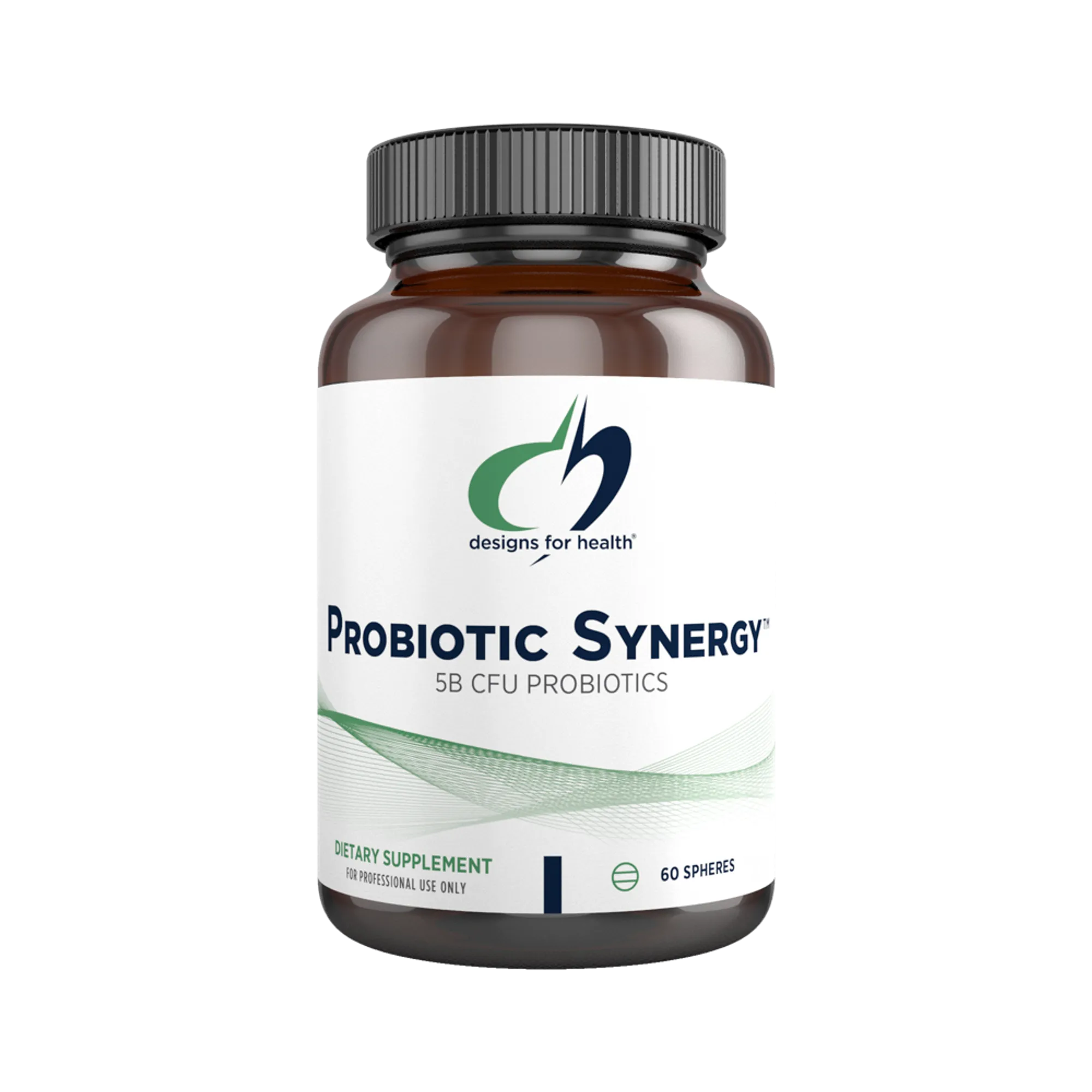
Probiotic Synergy™ by Designs for Health is a specialized formulation designed to directly support and replenish this vital ecosystem. It contains a proprietary blend of eight highly researched probiotic strains, delivering 5 billion colony-forming units (CFUs) per dose. This diverse blend includes specific species from the Bifidobacterium and Lactobacillus genera, such as B. lactis, L. acidophilus, L. rhamnosus, and L. reuteri. Each of these strains has been selected for its unique, synergistic ability to modulate immune responses, crowd out opportunistic pathogens, and support the production of essential metabolic byproducts in the lower intestines.
The formulation also includes Streptococcus thermophilus, a powerful transient probiotic strain. At a molecular level, S. thermophilus is highly efficient at producing the enzyme lactase, which breaks down lactose into simple sugars. For patients who have developed sudden dairy sensitivities or lactose intolerance following a viral infection, the inclusion of this strain can significantly aid in digestion and reduce the gastrointestinal discomfort, bloating, and gas associated with impaired nutrient breakdown. Together, these strains work in concert to promote a diverse and thriving gut flora.
The Challenge of Gastric Survival
One of the most significant hurdles in probiotic supplementation is the hostile environment of the human stomach. The stomach operates at a highly acidic pH, typically ranging from 1.5 to 3.0, which is designed by nature to act as a barrier against foodborne pathogens. Unfortunately, this highly acidic gastric juice does not differentiate between harmful bacteria and beneficial probiotics. When consumed in standard, unencapsulated vegetable capsules, the lipid bilayers of probiotic cell membranes are rapidly destroyed by hydrogen ions and digestive enzymes like pepsin.
Research indicates that free, unprotected probiotic cells experience massive die-offs in the stomach, often suffering log reductions that leave less than 20% of the bacteria viable by the time they reach the intestines. To combat this biological challenge, Probiotic Synergy™ utilizes a patented delivery system in the form of microencapsulated spheres. These spheres act as a physical and chemical shield, buffering the fragile organisms against stomach acid and ensuring that a concentrated, highly viable dose of live bacteria successfully reaches the targeted release site in the lower gastrointestinal tract.
How Long COVID and ME/CFS Impact the Gut Microbiome
The Dysbiosis Signature of Chronic Illness
In complex chronic conditions like Long COVID, ME/CFS, and mast cell activation syndrome (MCAS), the delicate balance of the gut microbiome is severely disrupted, a state known as gut dysbiosis. When investigating what causes Long COVID, researchers have consistently identified a distinct "microbial signature" in patients. This signature is characterized by a profound depletion of beneficial, anti-inflammatory bacteria—most notably SCFA-producing species like Faecalibacterium prausnitzii and Bifidobacterium—and a simultaneous overgrowth of opportunistic, pro-inflammatory pathogens such as Streptococcus and Ruminococcus gnavus.
This dysbiosis is not merely a side effect of being ill; it is a core driver of systemic symptoms. In Long COVID, viral RNA and antigens from SARS-CoV-2 can persist in the gut tissue for months or even years after the acute infection. This persistent viral reservoir continually primes the immune system, creating localized inflammation that further decimates beneficial bacterial populations. Without adequate Bifidobacterium and Lactobacillus species to produce butyrate, the cells lining the colon are starved of their primary energy source, leading to a cascade of structural and immunological failures throughout the body.
Intestinal Permeability and Systemic Inflammation
The depletion of butyrate-producing bacteria directly compromises the integrity of the intestinal epithelial barrier. In a healthy gut, tight junction proteins (such as zonulin-1 and occludin) act like molecular glue, keeping the cells of the gut lining tightly bound together. However, chronic inflammation and oxidative stress cause these tight junctions to degrade, resulting in increased intestinal permeability, commonly referred to as "leaky gut." This phenomenon is heavily implicated in the gastrointestinal symptoms seen with Long COVID.
When the gut barrier becomes permeable, microscopic bacterial endotoxins, such as lipopolysaccharides (LPS) from the cell walls of pathogenic bacteria, leak out of the digestive tract and into the systemic bloodstream. The immune system recognizes these translocated toxins as a massive threat, triggering a widespread, chronic inflammatory response. This constant influx of toxins forces the immune system into a state of hyper-vigilance, driving the systemic inflammation, joint pain, and profound fatigue that characterize post-viral syndromes. It creates a vicious cycle where inflammation worsens leaky gut, which in turn drives more inflammation.
The Gut-Brain Axis and Neuroinflammation
The consequences of gut dysbiosis extend far beyond the digestive tract, profoundly impacting the central and autonomic nervous systems via the gut-brain axis. The gut and the brain are in constant communication through the vagus nerve and various biochemical signaling pathways. When pro-inflammatory cytokines and translocated bacterial toxins enter the bloodstream, they can cross the blood-brain barrier and activate microglia, the resident immune cells of the brain. This results in neuroinflammation, which is increasingly recognized as the primary biological mechanism behind cognitive dysfunction, or "brain fog."
Furthermore, this neuroinflammatory state disrupts the hypothalamic-pituitary-adrenal (HPA) axis and the autonomic nervous system, contributing heavily to the development of dysautonomia and Postural Orthostatic Tachycardia Syndrome (POTS). When patients ask, can Long COVID trigger ME/CFS?, the answer lies heavily in this gut-brain disruption. The loss of beneficial microbes also impairs the metabolism of tryptophan, shunting it away from the production of serotonin (a crucial neurotransmitter for mood and sleep) and toward the production of neurotoxic kynurenine metabolites, further exacerbating the debilitating neurological fatigue seen in these conditions.
Probiotic Synergy™: Supporting Microbiome Restoration
Suppressing Inflammation via Histamine and TNF-α Pathways
Supplementing with the targeted strains in Probiotic Synergy™ offers a mechanistic approach to interrupting the vicious cycles of dysbiosis and inflammation. One of the most fascinating mechanisms belongs to Lactobacillus reuteri. Certain strains of L. reuteri possess a highly specialized genetic sequence known as the hdc gene cluster. This cluster allows the bacteria to convert the dietary amino acid L-histidine into bacteria-derived histamine in the gut. While systemic histamine is associated with allergic reactions and MCAS, this localized, bacteria-derived histamine binds specifically to histamine type 2 (H2) receptors on human myeloid cells in the intestinal lining.
When L. reuteri binds to these H2 receptors, it triggers an intracellular signaling cascade that suppresses mitogen-activated protein (MAP) kinase activation. This potent interaction directly inhibits the production of Tumor Necrosis Factor-alpha (TNF-α), one of the body's most aggressive pro-inflammatory cytokines. By downregulating TNF-α at the mucosal level, L. reuteri helps to extinguish the localized "fire" in the gut, reducing the inflammatory burden that drives systemic symptoms in Long COVID and ME/CFS patients. Additionally, L. reuteri ferments glycerol to synthesize reuterin, a broad-spectrum antimicrobial compound that actively disrupts the cellular processes of opportunistic pathogens, helping to rebalance the microbiome.
Fortifying the Intestinal Barrier
To combat the structural damage of "leaky gut," the formulation relies heavily on Lactobacillus rhamnosus and Lactobacillus acidophilus. At a cellular level, L. rhamnosus secretes specific functional proteins, known as p40 and p75. These soluble mediators actively bind to the Epidermal Growth Factor Receptor (EGFR) on human intestinal epithelial cells. This activation stimulates intracellular signaling pathways that prevent cellular apoptosis (programmed cell death) and actively upregulate the production of tight junction proteins like ZO-1 and occludin, effectively patching the microscopic holes in the gut lining.
Simultaneously, L. rhamnosus utilizes specialized hair-like appendages called SpaCBA pili to adhere strongly to the intestinal mucus. This physical adhesion competitively excludes harmful bacteria from binding to the gut wall. Meanwhile, L. acidophilus acts on the innate immune system by modulating Nuclear Factor kappa B (NF-κB) signaling pathways. By suppressing NF-κB activation in epithelial cells, L. acidophilus prevents the excessive release of interleukin-8 (IL-8), further protecting the structural integrity of the intestinal barrier from inflammatory degradation and halting the translocation of endotoxins into the bloodstream.
Priming the Immune System and T-Cell Modulation
The Bifidobacterium species in Probiotic Synergy™, particularly B. lactis and B. longum, act as master regulators of the adaptive immune system. B. lactis interacts directly with Toll-like receptor 2 (TLR2) on the surface of intestinal dendritic cells. This interaction is crucial because dendritic cells are the "scouts" of the immune system. When primed by B. lactis, these dendritic cells are driven into a tolerogenic state, meaning they promote immune tolerance rather than hyper-reactivity. They begin to secrete anti-inflammatory cytokines like IL-10 and TGF-β.
This cytokine shift is vital for patients with post-viral immune dysregulation, as it promotes the differentiation and expansion of regulatory T cells (Tregs). Tregs are responsible for calming down overactive immune responses and preventing the body from attacking its own tissues. Furthermore, clinical studies have demonstrated that Bifidobacterium strains stimulate mucosal B cells in the Peyer's patches of the gut, dramatically increasing the production of secretory IgA (sIgA). Secretory IgA acts as the first line of defense, binding to viral particles and pathogenic bacteria in the gut lumen and neutralizing them before they can cause harm or trigger systemic inflammation.

Symptoms Probiotic Synergy™ May Help Manage
Targeting the Root of Systemic Symptoms
Because the gut microbiome influences virtually every system in the body, restoring its balance can have profound downstream effects. While probiotics are not a cure for complex chronic illnesses, the targeted strains in Probiotic Synergy™ address the underlying dysbiosis and intestinal permeability that drive many debilitating daily symptoms. By reducing mucosal inflammation, fortifying the gut barrier, and modulating the gut-brain axis, this formulation may help manage a wide spectrum of issues experienced by patients with Long COVID, ME/CFS, and dysautonomia.
Here are the specific symptoms that the mechanisms of Probiotic Synergy™ may help alleviate:
Gastrointestinal Distress (Bloating, Gas, and Irregularity): By crowding out gas-producing pathogenic bacteria and introducing S. thermophilus to aid in lactose digestion, the blend helps reduce daily bloating, abdominal pain, and unpredictable bowel habits.
Brain Fog and Cognitive Dysfunction: By repairing the gut barrier and preventing bacterial endotoxins (LPS) from entering the bloodstream, the probiotics reduce the neuroinflammation that travels via the vagus nerve, potentially improving mental clarity and focus.
Post-Exertional Malaise (PEM): By supporting the production of short-chain fatty acids (SCFAs) like butyrate, the microbiome can better regulate systemic energy metabolism and reduce the inflammatory cytokine storms that often trigger severe crashes after physical or cognitive exertion.
Immune Hyper-Reactivity and Food Sensitivities: By expanding regulatory T cells (Tregs) and increasing secretory IgA, the probiotic strains help calm an overactive immune system, potentially reducing the severity of sudden, post-viral food intolerances and sensitivities.
Systemic Joint and Muscle Aches: By downregulating aggressive pro-inflammatory pathways (such as TNF-α and NF-κB) at the mucosal level, the overall systemic inflammatory burden is lowered, which can help alleviate the diffuse, migrating body pain common in ME/CFS.
Practical Considerations: Forms, Dosing, and Absorption
The Science of Microencapsulated Spheres
When evaluating a probiotic supplement, the total CFU count on the bottle is far less important than the number of viable bacteria that actually survive to reach your intestines. As discussed, stomach acid is lethal to unprotected bacteria. Probiotic Synergy™ utilizes an advanced microencapsulation technology that forms protective spheres around the live cultures. These spheres are typically constructed from pH-responsive biomaterials, such as alginate (a seaweed-derived polysaccharide) or specialized protein matrices, which act as a physical buffer against gastric juices.
In the highly acidic environment of the stomach (pH 1.5-3.0), the polymeric matrix of the sphere remains tightly cross-linked, preventing hydrogen ions and digestive enzymes from penetrating the core and destroying the bacterial DNA. In vitro digestion models have shown that while free, unencapsulated probiotic cells suffer massive log reductions (often dropping below 20% viability), microencapsulated spheres can maintain 80% to 100% cell viability throughout gastric digestion. Once the spheres pass into the small intestine, where the pH neutralizes to around 7.4, the matrix naturally swells and dissolves, releasing the preserved, live bacteria exactly where they can adhere to the mucosal lining and begin colonization.
Optimal Dosing and Timing
The suggested use for Probiotic Synergy™ is to take one sphere per day. Because the spheres are designed to protect the bacteria from stomach acid, the timing of the dose is somewhat more flexible than with traditional free-powder probiotics. However, it is generally recommended to take the sphere with a meal. Consuming the probiotic alongside food helps to naturally buffer stomach acid and provides the bacteria with dietary fibers and prebiotics from your meal, which they can immediately begin fermenting upon release in the intestines.
It is important to understand that reshaping the gut microbiome is a marathon, not a sprint. While some patients may notice improvements in acute gastrointestinal symptoms like bloating within a few weeks, modulating the immune system and repairing a permeable gut lining takes time. Clinical trials investigating probiotics for post-viral fatigue typically run for 3 to 6 months. Consistency is key, and patients should commit to long-term supplementation to see the full systemic benefits of microbiome restoration.
Safety, Interactions, and Biomarkers
Probiotic Synergy™ is generally well-tolerated, but patients with complex chronic illnesses should always introduce new supplements cautiously. When you first introduce potent probiotic strains, you may experience a temporary increase in gas, bloating, or mild changes in bowel habits. This is often a sign that the beneficial bacteria are actively crowding out pathogenic species, a process sometimes referred to as a mild Herxheimer or "die-off" reaction. These symptoms typically subside within a few days to a week as the ecosystem stabilizes.
For patients working closely with a healthcare provider, tracking specific biomarkers can help measure the effectiveness of the intervention. Advanced comprehensive stool testing can monitor the rebound of beneficial Bifidobacterium and Lactobacillus species, as well as the reduction of inflammatory markers like fecal calprotectin. Additionally, blood tests measuring zonulin levels can provide insight into the healing of the intestinal barrier (leaky gut). Always consult with your healthcare provider before starting a new supplement, especially if you are severely immunocompromised or taking immunosuppressive medications.

Follow the Science
Clinical Trials in Post-Viral Syndromes
The scientific community is rapidly accumulating clinical evidence supporting the use of specific probiotic strains for managing post-acute infection syndromes. A landmark randomized, double-blind, placebo-controlled trial known as the SIM01 study investigated the effects of a targeted synbiotic formulation (containing Bifidobacterium strains) on 463 patients with Long COVID. Over the course of 6 months, patients receiving the intervention reported statistically significant improvements in severe fatigue, memory loss, difficulty concentrating, and gastrointestinal upset compared to the placebo group. The researchers noted that specific strains correlated with specific symptom relief, highlighting the targeted nature of microbiome therapy.
Furthermore, a recent 2025 clinical trial focused on adults formally diagnosed with post-COVID chronic fatigue syndrome utilized a targeted blend containing Lactobacillus rhamnosus, Bifidobacterium lactis, and Bifidobacterium longum—strains prominently featured in Probiotic Synergy™. The study demonstrated that participants receiving the supplementation experienced notable improvements in post-exercise recovery and significant reductions in post-exertional malaise (PEM). The data suggested that the probiotic supplementation positively influenced brain metabolism, increasing key metabolites that support cognitive function and reducing the severity of brain fog.
Evidence for ME/CFS and Tryptophan Metabolism
In the realm of myalgic encephalomyelitis/chronic fatigue syndrome (ME/CFS), multi-strain probiotic interventions have shown remarkable promise in modulating the gut-brain axis. A 12-week prospective clinical pilot study involving ME/CFS patients with co-occurring irritable bowel syndrome utilized a high-dose multi-strain formula including Lactobacillus and Bifidobacterium species. The researchers found that the probiotic dramatically improved gut dysbiosis and successfully modulated tryptophan metabolism, shifting it away from neurotoxic pathways and toward beneficial serotonin production.
The clinical outcomes of this trial were striking. Fatigue Severity Scale (FSS) scores saw a highly significant 40.3% reduction by week 12. Remarkably, 97.5% of the patients achieved the diagnostic threshold for fatigue remission by the end of the trial, compared to only 45% at baseline. Another 6-month double-blind pilot study investigating patients with post-infectious fatigue found that a multi-strain preparation led to superior improvements in mood, overall quality of life, and significant reductions in both fatigue and depression severity scores compared to a placebo, further cementing the role of the microbiome in neurological recovery.
Mechanistic Proof of Delivery Systems
Beyond the clinical outcomes, the physical science of probiotic delivery has been rigorously tested. Studies evaluating the survival of Lactobacillus rhamnosus using standardized digestion models have proven the necessity of microencapsulation. In these trials, free, unencapsulated bacteria lost over 50% of their viability during simulated gastric digestion, with less than 20% surviving the subsequent intestinal phase. Conversely, microencapsulated spheres maintained near-total viability, successfully buffering the acidic pH and ensuring that a therapeutic dose of live cells was released into the simulated intestinal fluid. This robust mechanistic data underscores why the delivery system of Probiotic Synergy™ is critical to its clinical efficacy.
The Path Forward
Validating the Gut-Immune Connection
Living with a complex chronic condition often means navigating a maze of invisible, unpredictable symptoms that can leave you feeling disconnected from your own body. If you have been struggling with sudden digestive issues, profound fatigue, and cognitive dysfunction following a viral illness, it is vital to know that these symptoms are not in your head—they are deeply rooted in your biology. The scientific consensus is clear: the disruption of the gut microbiome is a central driver of systemic inflammation and neuro-immune dysfunction. By acknowledging this connection, we open the door to targeted, biologically grounded management strategies.
A Comprehensive Management Strategy
While restoring the microbiome is a powerful step, it is important to remember that supplements are just one piece of a broader, comprehensive approach to healing. Managing conditions like Long COVID and ME/CFS requires a multifaceted strategy. This includes strict pacing to avoid post-exertional malaise, tracking your symptoms to identify hidden food or environmental triggers, and working closely with a knowledgeable healthcare provider to explore what drugs are used for COVID long haulers when appropriate. Learning how can you live with long-term COVID involves patience, self-compassion, and utilizing the best available science to support your body's natural healing mechanisms.
Explore Probiotic Synergy™
If you are ready to support your gut health, fortify your intestinal barrier, and modulate your immune system with a scientifically backed, targeted delivery system, discuss this formulation with your medical team.