Can ProbioMed™ Infant Prevent Immune Dysregulation and Support Early Gut Health?
March 6, 2026
ProbioMed InfantInfant Gut HealthImmune Dysregulation
Share:
Disclaimer: The information provided here is for educational purposes only and is not intended as medical advice. It should not be used to diagnose, treat, cure, or prevent any medical condition. Instead, use it as a starting point for discussion with your healthcare provider. Always consult with a qualified healthcare provider before starting any new medication, supplement, device, or making changes to your health regimen.
For parents living with complex chronic conditions like Long COVID, mast cell activation syndrome (MCAS), or dysautonomia, the concept of immune dysregulation is a daily, debilitating reality. When you understand firsthand how profoundly a disrupted immune system can impact your quality of life, it is entirely natural to look at your newborn and wonder how to protect their developing immune system from a similar fate. The foundation of lifelong immune resilience isn't built in adulthood; it is programmed during the first few months of life, primarily within the infant gut.
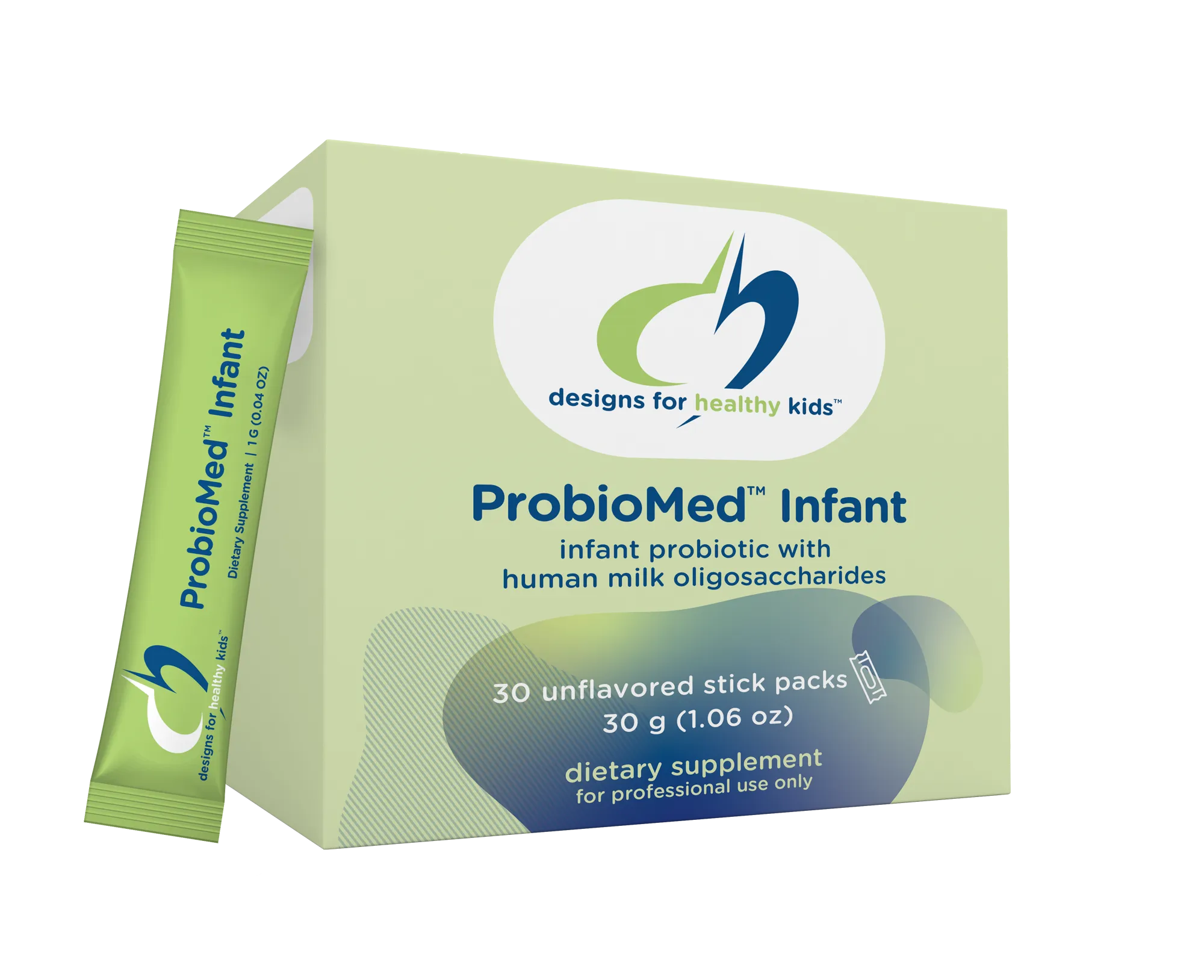
In recent years, pediatric immunology has undergone a paradigm shift, recognizing that the infant gastrointestinal tract is the primary training ground for the immune system. For formula-fed infants, or those born via Cesarean section or exposed to early antibiotics, this critical microbial ecosystem can become imbalanced—a state known as dysbiosis. ProbioMed™ Infant by Designs for Health is a targeted synbiotic formula designed to bridge this gap. By delivering a precise blend of keystone probiotic strains, human milk oligosaccharides (HMOs), and digestive enzymes, it aims to gently promote gastrointestinal microbial balance, support healthy immune function, and lay the groundwork for long-term health.
TL;DR
The infant gut microbiome is crucial for developing lifelong immune resilience and managing inflammation.
ProbioMed™ Infant provides targeted probiotics and HMOs to support healthy gut bacteria in formula-fed babies.
Synbiotic supplements may help manage digestive discomfort and support immune tolerance in infants.
Always consult your pediatrician before introducing new supplements to your infant's routine.
What is ProbioMed™ Infant?
The Foundation of Early Immunity
ProbioMed™ Infant is a specialized, synergistic nutritional supplement meticulously formulated to support the developing gastrointestinal and immune systems of infants, particularly those who are formula-fed. At its core, this unflavored, powder-filled stick pack delivers 5 billion colony-forming units (CFUs) of beneficial bacteria per serving. Unlike generic adult probiotics that are simply scaled down in dosage, this formulation features a highly specific, diverse blend of seven well-researched Lactobacillus and Bifidobacterium strains that naturally co-evolve with the human infant.
The infant gut is not merely an organ for digesting food; it is the largest immune organ in the body. During the first few months of life, the mucosal lining of the intestines is rapidly colonized by microbes. These early colonizers act as biological translators, teaching the infant's naïve immune cells how to differentiate between harmless environmental proteins (like food) and dangerous pathogens. By providing a robust dose of these keystone bacteria, ProbioMed™ Infant helps establish a healthy microbial baseline, crowding out potential pathogens and initiating the critical cross-talk between the gut and the immune system.
Mimicking the Complexity of Breast Milk
What truly sets this formulation apart is its inclusion of Human Milk Oligosaccharides (HMOs) and a specialized infant digestive enzyme blend. In nature, breast milk is a highly complex, living fluid. It contains not only maternal antibodies and nutrition but also prebiotics—specifically HMOs—that the infant cannot actually digest. Instead, these complex carbohydrates serve as the exclusive food source for beneficial gut bacteria. By including HMOs, ProbioMed™ Infant provides both the "seed" (the probiotic bacteria) and the "fertilizer" (the HMOs) required to cultivate a thriving microbiome.
Furthermore, formula-fed infants often struggle with the complex proteins and carbohydrates found in cow's milk or soy-based formulas, leading to colic, gas, and intestinal discomfort. To address this, ProbioMed™ Infant incorporates a digestive enzyme blend modeled directly after the constituents of human breast milk. This includes Protease, Alpha-Galactosidase, and Lactase, which work synergistically to break down macronutrients, easing the digestive burden on the infant's immature gastrointestinal tract and encouraging optimal nutrient absorption.
The First 1,000 Days Window
In the fields of pediatrics and immunology, the period from conception to a child's second birthday is known as the "first 1,000 days." This is a highly plastic, non-repeatable window of developmental opportunity. The microbial colonization that occurs during this time permanently "imprints" or programs the trajectory of the immune system. If this window is missed due to a lack of beneficial bacteria, the immune system may default to a hyper-reactive state.
Research indicates that establishing a healthy microbiome during this critical window is essential for supporting long-term immune health and may help reduce the risk of immune-mediated conditions. By proactively supporting the infant gut with the specific strains and prebiotics found in ProbioMed™ Infant, caregivers can help ensure that the immune system receives the proper education it needs to function optimally throughout the child's life, rather than constantly fighting chronic, low-grade inflammation.
How Infant Gut Dysbiosis Impacts Lifelong Health
The Loss of Keystone Bacteria
To understand the profound importance of early gut health, we must examine the modern epidemic of infant gut dysbiosis. In industrialized nations, the natural transfer of maternal microbes to the infant has been severely disrupted by rising rates of Cesarean sections, the widespread use of perinatal antibiotics, and the historical lack of HMOs in standard infant formulas. Researchers at Stanford Medicine have documented that Bifidobacterium infantis—a keystone species absolutely central to infant immune development—is rapidly fading away from the microbiomes of modern infants.
When these foundational bacteria are lost, the ecological niche within the infant gut is quickly filled by opportunistic, potentially pathogenic bacteria, often from the Proteobacteria phylum. This state of microbial imbalance, or dysbiosis, deprives the developing immune system of essential biochemical signals. Without the continuous production of beneficial metabolites by keystone bacteria, the infant's immune cells are left unguided, leading to a state of systemic vulnerability and inflammation.
Immune Dysregulation and the "Atopic March"
The consequences of this early dysbiosis extend far beyond simple infant colic or gas; they lay the groundwork for lifelong immune dysregulation. In a healthy infant gut, beneficial bacteria ferment HMOs to produce Short-Chain Fatty Acids (SCFAs) like butyrate and acetate. These SCFAs are critical for inducing Regulatory T cells (Tregs), which act as the "brakes" of the immune system. When dysbiosis occurs and SCFA production drops, the infant's immune system skews toward pro-inflammatory Th2 and Th17 pathways.
This Th2/Th17 skewing is the primary driver of the "Atopic March"—the classic progression of allergic diseases that begins with infant eczema, advances to food allergies, and often culminates in allergic asthma and allergic rhinitis. For families already navigating the complexities of adult immune disorders, this pattern is deeply concerning. The hyper-reactive immune state established in infancy mirrors the foundational immune dysregulation seen when asking what causes Long COVID or MCAS, where the body loses its ability to tolerate harmless stimuli and remains locked in a state of chronic alarm.
The Gut-Barrier Breakdown and Chronic Illness
Beyond allergies, infant dysbiosis physically compromises the integrity of the intestinal lining. Beneficial bacteria are responsible for stimulating the production of mucin and maintaining the tight junction proteins that seal the gut barrier. In the absence of these microbes, the infant develops increased intestinal permeability, commonly known as "leaky gut." This allows endotoxins, undigested food proteins, and bacterial fragments to translocate directly into the bloodstream.
This constant leakage triggers chronic, low-grade systemic inflammation. Recent studies published in Cell have highlighted how profound gut dysbiosis and the resulting systemic inflammation are deeply intertwined with complex post-viral syndromes in adults. When we consider how a doctor diagnoses Long COVID, they often look for markers of this exact type of systemic, gut-driven inflammation. By allowing dysbiosis to persist in infancy, we inadvertently leave the door open for a lifetime of heightened susceptibility to autoimmune conditions, severe viral responses, and chronic fatigue syndromes.
ProbioMed™ Infant: Supporting Microbiome and Immune Maturation
B. infantis and the HMO Utilization Pathway
The therapeutic power of ProbioMed™ Infant lies in its specific, mechanistic interactions at the cellular level. The formula includes 0.5 billion CFUs of Bifidobacterium infantis (Bi-26), a strain uniquely genetically equipped to metabolize Human Milk Oligosaccharides. B. infantis possesses specialized ATP-binding cassette (ABC) transporters and saccharolytic enzymes, such as α-fucosidases and α-sialidases. These precise molecular tools allow the bacterium to bind, internalize, and completely ferment the complex HMOs provided in the supplement and in breast milk.
As B. infantis digests these HMOs, it initiates a profound biochemical cascade. The fermentation process yields high volumes of Short-Chain Fatty Acids (SCFAs), particularly acetate, alongside lactic acid and indolelactate (ILA). These metabolites cross the gut barrier and actively upregulate Interferon-beta (IFNβ) and Interleukin-10 (IL-10), powerful signaling molecules that successfully "silence" the pro-inflammatory Th2 and Th17 responses, steering the infant away from autoimmunity and allergies.
L. rhamnosus GG and Immune Tolerance
Another critical component of this blend is Lactobacillus rhamnosus GG (0.6 billion CFUs), one of the most extensively researched probiotic strains in pediatric immunology. At the molecular level, L. rhamnosus GG interacts directly with the dendritic cells lining the infant's intestinal mucosa. By binding to specific Toll-like receptors (TLRs) on these immune cells, the bacteria stimulate a Th1 (anti-microbial) response, which effectively counterbalances the hyperactive Th2 (pro-allergic) response that drives conditions like eczema and cow's milk protein allergy.
Clinically, this mechanism accelerates what immunologists call "oral tolerance"—the immune system's learned ability to tolerate an allergen without launching a massive inflammatory attack. This process alters specific T-cell subsets, markedly reducing the proportion of recently activated transitional CD45RA+RO+ T cells, thereby calming the systemic immune response.
Human Milk Oligosaccharides as Molecular Decoys
The inclusion of HMOs in ProbioMed™ Infant serves a dual purpose: they are not only food for the probiotics but also active immune defenders in their own right. Many dangerous viral and bacterial pathogens must physically attach to glycans (sugar structures) on the surface of the infant's intestinal cells to cause an infection.
Because of this structural mimicry, HMOs act as molecular "decoys." Pathogens mistakenly bind to the free-floating HMOs in the gut lumen instead of attaching to the intestinal walls. Once bound to the HMOs, the pathogens are safely flushed out of the infant's system in their stool. Additionally, approximately 1% of these HMOs are absorbed into the infant's systemic circulation, where they interact directly with macrophages and neutrophils, reducing systemic inflammatory responses even outside the gastrointestinal tract.
Digestive Enzymes for Nutrient Absorption
Finally, the supplement addresses the immediate mechanical challenges of infant digestion. Formula-fed infants often lack the mature enzymatic pathways required to efficiently break down complex proteins and sugars. ProbioMed™ Infant includes an Infant Enzyme Blend consisting of Protease (2000 HUT), Alpha-Galactosidase (25 GalU), and Lactase (25 ALU).
Protease works to cleave complex formula proteins into smaller, easily absorbed peptides and amino acids, reducing the likelihood of intact proteins triggering an immune response in the gut. Lactase specifically targets lactose, the primary sugar in milk, breaking it down into glucose and galactose to help manage gas and osmotic diarrhea. Alpha-Galactosidase breaks down complex carbohydrates that can otherwise ferment in the lower intestine and cause severe bloating and colic. Together, these enzymes ensure that the infant extracts maximum nutritional value from their formula while maintaining intestinal comfort.

Symptoms and Conditions ProbioMed™ Infant May Help Manage
Gastrointestinal and Digestive Comfort
By restoring microbial balance and providing enzymatic support, ProbioMed™ Infant targets several common gastrointestinal challenges faced by formula-fed infants:
Infant Colic and Excessive Crying: The Alpha-Galactosidase and Lactase enzymes break down complex carbohydrates and milk sugars, helping to manage the painful gas buildup and bloating that often drive inconsolable crying in colicky infants.
Constipation and Hard Stools: The production of Short-Chain Fatty Acids (SCFAs) by Bifidobacterium strains helps draw water into the colon and stimulates healthy intestinal motility, promoting softer, more regular bowel movements.
Formula Intolerance: Protease enzymes assist in breaking down large, difficult-to-digest cow's milk or soy proteins into smaller peptides, reducing the gastrointestinal distress and inflammation associated with formula transitions.
Diarrhea and Loose Stools: Lactobacillus rhamnosus GG has been clinically shown to support the rapid resolution of infectious diarrhea by crowding out pathogenic bacteria and reinforcing the mucosal barrier.
Immunological and Systemic Support
Beyond digestion, the synbiotic combination of HMOs and keystone probiotics provides foundational support for the developing immune system:
Eczema and Atopic Dermatitis: By balancing the Th1/Th2 immune response and increasing gut barrier integrity, the probiotic strains help calm the systemic inflammation that manifests as dry, itchy, and inflamed skin in infants.
Susceptibility to Respiratory Infections: HMOs act as molecular decoys, neutralizing viral and bacterial pathogens before they can bind to host cells, which has been linked to a reduction in lower respiratory tract infections.
Food Sensitivities: By accelerating "oral tolerance" and reducing intestinal permeability (leaky gut), the formula helps the infant's immune system learn to safely process food proteins without launching a hyper-reactive allergic response.
Post-Antibiotic Dysbiosis: For infants who require early-life antibiotics, the diverse 5 billion CFU blend helps rapidly reseed the gut with beneficial flora, helping to manage the overgrowth of opportunistic pathogens that often follows antibiotic use.
Practical Considerations: Forms, Dosing, and Absorption
The Synergy of Synbiotics
When evaluating infant supplements, it is crucial to understand the concept of a "synbiotic." A synbiotic is a supplement that combines both probiotics (live beneficial bacteria) and prebiotics (the specific fibers or sugars that feed them). ProbioMed™ Infant is a highly engineered synbiotic because it pairs seven diverse Lactobacillus and Bifidobacterium strains directly with Human Milk Oligosaccharides (HMOs).
This synergy drastically improves the bioavailability and survivability of the probiotics. When the bacteria are ingested alongside their preferred food source, they are far more likely to survive the acidic environment of the infant's stomach, successfully adhere to the intestinal walls, and rapidly multiply. Without the accompanying HMOs, many probiotic strains simply pass through the digestive tract without establishing a permanent, beneficial colony.
Optimal Administration and Dosing
ProbioMed™ Infant is designed with practical caregiver administration in mind. It comes in convenient, unflavored, powder-filled stick packs, delivering a precise 1-gram dose (containing 5 billion CFUs and 10 mg of digestive enzymes) per serving. The suggested use is to mix one stick pack per day into breast milk, infant formula, milk, or juice, or as directed by a healthcare practitioner.
Timing and temperature are critical for preserving the viability of the live bacteria and enzymes. The powder should never be mixed into hot liquids or heated in a microwave, as high temperatures will instantly kill the probiotic strains and denature the digestive enzymes, rendering the product ineffective. It is best to mix the powder into lukewarm or room-temperature formula or milk immediately before feeding to ensure maximum potency.
Safety and Tolerability
The strains included in ProbioMed™ Infant have a long history of safe use in pediatric populations and are generally very well tolerated. Because the product actively shifts the microbial balance of the gut, some infants may experience a brief, transient period of mild gas or changes in stool consistency during the first few days of use. This is a normal physiological response as the beneficial bacteria begin to ferment the HMOs and crowd out less desirable microbes.
The product is formulated without listed major allergens, making it suitable for sensitive infants. However, as with any supplement introduced to an infant, it is imperative to consult with a pediatrician or pediatric gastroenterologist before starting, especially for infants born prematurely, those with compromised immune systems, or those currently undergoing medical treatments.

Follow the Science
Clinical Trials on B. infantis and Inflammation
The scientific literature surrounding the specific strains found in ProbioMed™ Infant is robust and rapidly expanding. Introducing a specific B. infantis strain to infants has been shown to help "silence" pro-inflammatory responses by upregulating Interferon-beta (IFNβ).
Furthermore, ongoing clinical data continues to highlight the systemic benefits of these keystone bacteria. A recent double-blind, randomized, placebo-controlled trial evaluated a specific B. infantis strain in young children over a 12-week period. The results were striking: the probiotic group experienced a massive drop in respiratory illnesses (15.0% compared to 42.4% in the placebo group) and a significant reduction in diarrhea incidence. Fecal analysis of the supplemented children also revealed significantly reduced levels of inflammatory markers like calprotectin and IL-1β.
L. rhamnosus GG in Pediatric Allergy
The inclusion of Lactobacillus rhamnosus GG is supported by decades of pediatric immunology research, particularly regarding its ability to accelerate immune tolerance. Infants given an extensively hydrolyzed formula supplemented with L. rhamnosus GG showed remarkable improvements. By the end of the study, 81.5% of the infants in the probiotic group had successfully acquired clinical tolerance to cow's milk, compared to only 53.6% in the control group.
Additionally, a 2020 double-blind, placebo-controlled RCT evaluated 100 infants with CMPA. Infants receiving oral L. rhamnosus GG showed statistically significant improvements in severe gastrointestinal symptoms—such as bloody stool, diarrhea, and abdominal distension—after just 4 weeks compared to the placebo group, underscoring the strain's potent anti-inflammatory properties in the gut mucosa.
The Protective Power of HMOs
The addition of Human Milk Oligosaccharides to infant formulas and supplements represents one of the most significant advancements in pediatric nutrition. A randomized, double-blind, controlled multicenter trial published in mBio (2020) followed healthy infants fed either standard formula or formula supplemented with specific HMOs. By 3 months of age, the microbiota of the HMO group closely resembled that of breastfed infants, dominated by beneficial Bifidobacteriaceae.
Crucially, the clinical outcomes of this microbial shift were profound. The study found that infants who developed this HMO-driven microbiome profile were significantly less likely to require antibiotics or antipyretics for lower respiratory tract infections during their first year of life. This perfectly illustrates how feeding the gut microbiome with targeted prebiotics directly translates to enhanced systemic immune resilience.
The Path Forward
Investing in Lifelong Immune Resilience
For parents navigating the unpredictable waters of chronic illness themselves, worrying about a child's health can be an overwhelming burden. Understanding the intricate connections between what the symptoms of Long COVID are, how MCAS develops, and the foundational role of the infant microbiome can feel daunting. However, this knowledge is also deeply empowering. It shifts the narrative from one of inevitable genetic destiny to one of proactive, modifiable risk.
By recognizing that the "first 1,000 days" represent a critical window for immune education, caregivers can take tangible steps to support their infant's health. You cannot control every environmental exposure or genetic predisposition, but you can actively provide the keystone bacteria and prebiotics necessary to give their developing immune system the best possible training ground.
A Comprehensive Approach to Infant Health
While ProbioMed™ Infant is a powerful tool, it is most effective when viewed as one piece of a comprehensive approach to infant wellness. The goal is not to create a sterile environment, but a balanced one. This involves working closely with your pediatric care team, being mindful of unnecessary early antibiotic use when possible, and understanding how early interventions can help manage the cascading effects that lead people to wonder can Long COVID trigger ME/CFS later in life due to underlying immune vulnerabilities.
If you are exploring ways to gently promote gastrointestinal microbial balance, support healthy immune function, and aid digestive processes for your formula-fed infant, targeted synbiotic supplementation is a science-backed strategy worth discussing with your healthcare provider.