Can Pro-Resolving Mediators Clear the Brain Fog and Inflammation of Long COVID?
March 6, 2026
Pro-Resolving MediatorsLong COVIDBrain Fog
Share:
Disclaimer: The information provided here is for educational purposes only and is not intended as medical advice. It should not be used to diagnose, treat, cure, or prevent any medical condition. Instead, use it as a starting point for discussion with your healthcare provider. Always consult with a qualified healthcare provider before starting any new medication, supplement, device, or making changes to your health regimen.
Months or even years after recovering from an initial SARS-CoV-2 infection, many individuals find themselves trapped in a relentless cycle of debilitating symptoms. The profound exhaustion, unpredictable joint pain, and cognitive impairment often referred to as "brain fog" can make daily life feel like an insurmountable challenge. For patients navigating the complexities of Long COVID, myalgic encephalomyelitis/chronic fatigue syndrome (ME/CFS), and dysautonomia, the search for answers often leads to a frustrating realization: the body's natural healing mechanisms seem to be stalled. The immune system, which should have quieted down after the viral threat passed, remains locked in a state of chronic, low-grade hyper-reactivity.
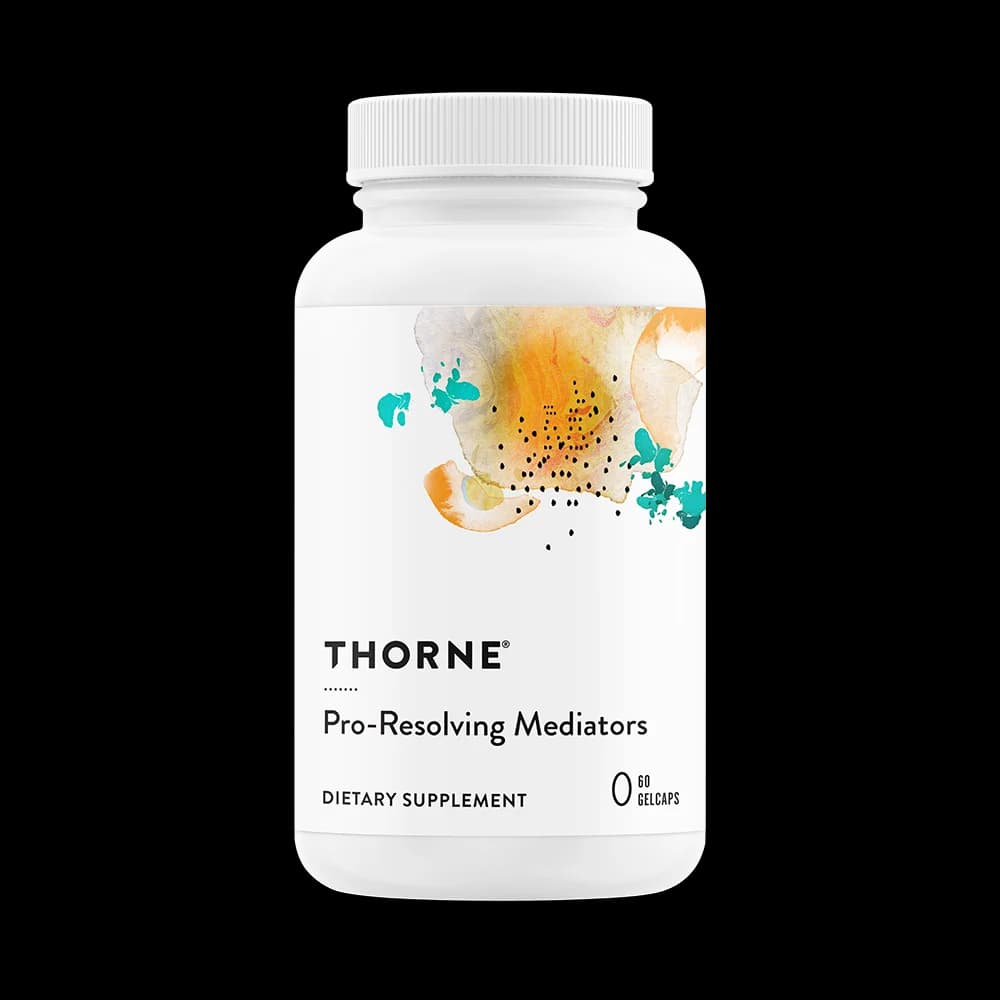
In recent years, a groundbreaking shift in immunology has illuminated exactly why this happens and, more importantly, how we might address it. Scientists have discovered that the end of an inflammatory response is not a passive fading away, but rather a highly active, tightly orchestrated biological process. This process is commanded by a specialized group of lipid molecules known as Pro-Resolving Mediators (PRMs) or Specialized Pro-Resolving Mediators (SPMs). By supplying the body with these exact biochemical "stop signals," targeted supplements like Thorne's Pro-Resolving Mediators aim to clear cellular debris, soothe neuroinflammation, and guide the immune system back to a state of peaceful homeostasis.
TL;DR
Pro-Resolving Mediators (SPMs) are lipid molecules that actively signal the immune system to stop chronic inflammation.
Long COVID and ME/CFS can impair your body's natural ability to produce these vital resolution signals.
SPM supplements bypass enzymatic bottlenecks to support cellular cleanup, brain health, and nervous system regulation.
Always consult your healthcare provider before starting SPMs to ensure they fit your specific recovery plan.
What Are Pro-Resolving Mediators (SPMs)?
Historically, the medical community believed that inflammation simply dissipated on its own once an infection was neutralized or an injury had healed. It was assumed that the immune system's inflammatory signals passively faded away, much like a fire burning itself out when the fuel is gone. However, modern immunological research has completely overturned this paradigm. We now know that the resolution of inflammation is a highly active, energy-dependent, and tightly regulated biochemical process. This active resolution is orchestrated by a superfamily of endogenous, bioactive lipid molecules known as Specialized Pro-Resolving Mediators (SPMs). These molecules act as local hormones, or autacoids, that explicitly signal the immune system to stop the attack, clear out the collateral damage, and begin the process of tissue repair.
Unlike traditional anti-inflammatory medications, such as non-steroidal anti-inflammatory drugs (NSAIDs) or corticosteroids, SPMs do not suppress or paralyze the immune system. Broad immune suppression carries significant risks, including an increased vulnerability to secondary infections and a paradoxical delay in actual tissue healing. Instead of merely blocking the inflammatory cascade, SPMs actively reprogram the immune response. They bind to specific G protein-coupled receptors (GPCRs)—such as FPR2/ALX, GPR32, and ERV1—on the surface of immune cells. This binding event triggers intracellular signaling pathways that downregulate pro-inflammatory cytokines while simultaneously upregulating the cellular machinery required for tissue regeneration and homeostasis.
The body synthesizes these crucial resolution signals directly from dietary polyunsaturated fatty acids (PUFAs), specifically the marine omega-3s eicosapentaenoic acid (EPA) and docosahexaenoic acid (DHA). When a healthy body encounters a stressor, it utilizes specific lipoxygenase (LOX) enzymes—primarily 5-LOX, 12-LOX, and 15-LOX—to convert raw EPA and DHA into active resolution-signaling metabolites. From EPA, the body synthesizes the E-series resolvins, which are potent regulators of local inflammation. From DHA, the body produces D-series resolvins, protectins, and maresins, which are heavily involved in neurological protection and macrophage regulation. This intricate biochemical conversion is why omega-3 fatty acids have long been celebrated for their health benefits, though the true mechanism lies in their downstream SPM metabolites.
However, the conversion of raw EPA and DHA into active SPMs is a multi-step, enzymatically demanding process. Recent clinical literature indicates that this enzymatic pathway can become severely bottlenecked or entirely impaired due to aging, chronic stress, genetic variations in the ALOX genes, or the presence of chronic viral infections. When these LOX enzymes fail to function optimally, the body cannot produce enough SPMs to turn off the inflammatory alarm. This results in a dangerous accumulation of unresolved inflammation, creating the perfect environment for chronic, systemic illnesses to take root and flourish.
To bypass this enzymatic bottleneck, advanced nutritional science has isolated the direct intermediate metabolites, often referred to as "pre-resolvins." Thorne's Pro-Resolving Mediators supplement specifically delivers three of these critical intermediate molecules: 18-HEPE, 17-HDHA, and 14-HDHA. 18-HEPE (18-hydroxyeicosapentaenoic acid) is derived directly from EPA and serves as the immediate precursor to the E-series Resolvins. By providing 18-HEPE directly, the supplement ensures the body has the exact building blocks needed to halt neutrophil infiltration and soothe vascular inflammation without relying on inefficient upstream enzymes.
Similarly, 17-HDHA (17-hydroxydocosahexaenoic acid) and 14-HDHA (14-hydroxydocosahexaenoic acid) are derived from DHA. 17-HDHA is the direct precursor to the D-series Resolvins and neuroprotectins, which are heavily concentrated in the brain and central nervous system. 14-HDHA is the precursor to Maresins, which are specialized mediators that govern the cleanup of dead cellular debris by macrophages. By delivering these three pre-resolvins alongside their parent EPA and DHA molecules, the supplement provides a comprehensive, bioavailable toolkit that empowers the body to actively resolve inflammation and restore cellular harmony.