Can Pregnenolone CRT™ Help Manage Brain Fog and Fatigue in Long COVID and ME/CFS?
March 6, 2026
PregnenoloneLong COVIDME/CFS
Share:
Disclaimer: The information provided here is for educational purposes only and is not intended as medical advice. It should not be used to diagnose, treat, cure, or prevent any medical condition. Instead, use it as a starting point for discussion with your healthcare provider. Always consult with a qualified healthcare provider before starting any new medication, supplement, device, or making changes to your health regimen.
Months or even years after recovering from an initial viral infection, many individuals find themselves battling a complex web of debilitating symptoms. For those living with Long COVID, myalgic encephalomyelitis/chronic fatigue syndrome (ME/CFS), and dysautonomia, the daily reality often involves profound exhaustion, unpredictable autonomic responses, and a pervasive cognitive cloud commonly referred to as "brain fog." When standard blood tests come back "normal," it can be incredibly frustrating to articulate just how fundamentally your body's energy and stress-response systems have changed. However, emerging research into neuroendocrinology is shedding light on the profound hormonal and neurological disruptions that drive these invisible illnesses.
One of the most critical areas of focus is the hypothalamic-pituitary-adrenal (HPA) axis and the foundational hormones that regulate our body's response to stress and inflammation. At the very top of this hormonal cascade sits a remarkable molecule called pregnenolone. Often referred to as the "mother hormone," pregnenolone is essential not only for producing the hormones that manage our daily energy and stress levels but also for directly supporting cognitive function within the brain. In this comprehensive guide, we will explore the intricate biology of pregnenolone, how chronic complex illnesses disrupt its natural production, and how targeted, controlled-release supplementation like Pregnenolone CRT™ may help support hormonal balance and cognitive clarity.
What is Pregnenolone?
The "Mother Hormone" and the Steroid Cascade
To understand the profound impact of pregnenolone, we must first look at its foundational role in human biochemistry. Pregnenolone is an endogenous steroid hormone, meaning it is naturally produced within the body. It is synthesized directly from cholesterol inside the mitochondria, the energy-producing powerhouses of our cells. The conversion of cholesterol to pregnenolone is catalyzed by the cytochrome P450 side-chain cleavage enzyme (CYP11A1), a critical rate-limiting step in steroidogenesis. Because it is the very first hormone created in this pathway, pregnenolone is often referred to as the "master precursor" or "mother hormone."
Once synthesized, pregnenolone serves as the raw material from which almost all other steroid hormones are manufactured. Through various enzymatic pathways in the adrenal glands and gonads, pregnenolone is converted into dehydroepiandrosterone (DHEA), progesterone, estrogens, testosterone, cortisol, and aldosterone. Cortisol is vital for managing acute stress and suppressing inflammation, while aldosterone regulates blood pressure and sodium balance—a critical factor for patients with dysautonomia. By acting as the biological wellspring for these downstream hormones, pregnenolone plays an indispensable role in maintaining systemic hormonal balance, energy metabolism, and stress resilience.
Pregnenolone as a Potent Neurosteroid
Beyond its role as a precursor in the adrenal glands, pregnenolone is uniquely concentrated in the central nervous system (CNS). In fact, the brain contains significantly higher levels of pregnenolone than the bloodstream. Here, it acts independently as a highly active neurosteroid, meaning it directly modulates the excitability of neurons and influences brain function without needing to be converted into other hormones first. In the brain, pregnenolone is frequently converted into its sulfated derivative, pregnenolone sulfate (PregS), which is famous for its "excitatory" and pro-cognitive profile.
At the molecular level, PregS acts as a positive allosteric modulator (PAM) at N-methyl-D-aspartate (NMDA) receptors, which are the primary receptors for glutamate, the brain's main excitatory neurotransmitter. By binding to these receptors, PregS enhances synaptic plasticity, which is the cellular foundation for learning, memory formation, and cognitive clarity. Simultaneously, PregS acts as a negative allosteric modulator (NAM) at GABA-A receptors, subtly reducing inhibitory signaling. This dual mechanism—boosting excitatory pathways while dampening inhibitory ones—tilts the central nervous system toward alertness, focus, and enhanced neurotransmission, making it a critical molecule for maintaining healthy cognitive function.
Mitochondrial Synthesis and Cellular Energy
The relationship between pregnenolone and cellular energy is deeply intertwined with mitochondrial health. Because pregnenolone is synthesized inside the mitochondria, its production is highly dependent on optimal mitochondrial function. In a healthy body, the robust production of pregnenolone signals that the mitochondria are efficiently processing cholesterol and generating adequate adenosine triphosphate (ATP), the body's primary energy currency. When mitochondrial function is robust, the body has the energetic capacity to sustain complex hormonal cascades and maintain homeostasis.
Conversely, when mitochondria are damaged or dysfunctional—a common pathology in complex chronic illnesses—the synthesis of pregnenolone is severely impaired. This creates a systemic bottleneck. Without adequate pregnenolone, the body cannot produce the cortisol needed to manage inflammation, nor can it produce the DHEA and testosterone required for tissue repair and vitality. Understanding this mitochondrial connection is essential for recognizing why pregnenolone depletion is not just a localized hormonal issue, but a reflection of systemic energetic failure that impacts every cell in the body.
How Chronic Illness Impacts Hormonal and Cognitive Function
HPA Axis Dysfunction and Hypocortisolism
In chronic complex conditions like Long COVID and myalgic encephalomyelitis/chronic fatigue syndrome (ME/CFS), the communication network between the brain and the adrenal glands—known as the hypothalamic-pituitary-adrenal (HPA) axis—becomes profoundly dysregulated. When a patient is initially exposed to a viral trigger, such as SARS-CoV-2 or the Epstein-Barr virus (EBV), the body mounts a massive immune response. The HPA axis signals the adrenal glands to pump out high levels of cortisol to manage the acute inflammation and "cytokine storm." However, as the illness becomes chronic, the HPA axis cannot sustain this maximum output. If you are wondering What Causes Long COVID?, this persistent state of immune activation and subsequent HPA axis exhaustion is a leading theory.
Over months or years of chronic biological stress, the continuous exposure to high cortisol causes the glucocorticoid receptors in the brain to downregulate, leading to a state of central HPA axis suppression. This results in hypocortisolism, or abnormally low basal circulating cortisol, which is a hallmark finding in both ME/CFS and Long COVID patients. Without adequate cortisol, the body loses its primary mechanism for controlling systemic inflammation, leading to a vicious cycle of unmitigated immune activation, severe fatigue, and an inability to recover from physical or mental exertion.
The "Pregnenolone Steal" Phenomenon
As the HPA axis struggles to keep up with the chronic demand for cortisol, the body initiates a survival mechanism commonly referred to in functional medicine as the "pregnenolone steal" or "cortisol shunt." Because pregnenolone is the shared precursor for both stress hormones (cortisol) and sex hormones (DHEA, estrogen, testosterone), the body must make a choice during times of prolonged illness. To prioritize survival and manage chronic inflammation, metabolic pathways shift to funnel almost all available pregnenolone into the cortisol production line, effectively "stealing" it away from the production of other vital hormones.
This metabolic shunting leads to widespread endocrine disruption. Patients often experience a severe drop in DHEA, testosterone, and estrogen, which can manifest as symptoms mimicking early menopause, loss of libido, profound muscle weakness, and a diminished capacity for tissue repair. A 2022 review of neuroendocrine adaptations in ME/CFS highlighted these broad steroidomic shifts, noting that the depletion of the pregnenolone-to-DHEA pipeline significantly contributes to the variable and debilitating symptomatology seen in these patient populations.
Neuroinflammation and Cognitive Decline (Brain Fog)
The depletion of pregnenolone does not just affect the adrenal glands; it has devastating consequences for the brain. In conditions like Long COVID and ME/CFS, chronic systemic inflammation frequently crosses the blood-brain barrier, leading to neuroinflammation and the activation of microglia (the brain's resident immune cells). As neuroinflammation rises, the localized synthesis of neurosteroids like pregnenolone plummets. This loss of neurosteroid support removes a critical protective mechanism that normally defends neurons against inflammatory damage and oxidative stress.
Without the excitatory, pro-cognitive effects of pregnenolone sulfate modulating NMDA and GABA receptors, patients experience a drastic reduction in synaptic plasticity and neurotransmission speed. This biological reality is what patients experience as "brain fog"—a debilitating cognitive impairment characterized by memory lapses, difficulty concentrating, word-finding difficulties, and a feeling of mental sluggishness. Research into neuropathology in ME/CFS and Long COVID suggests that restoring these neurosteroid pathways may be essential for repairing diffuse white-matter alterations and alleviating the profound cognitive deficits associated with these conditions.
Pregnenolone CRT™: Supporting Hormonal Balance and Brain Health
Restoring the Cortisol and DHEA Pipeline
When the HPA axis is trapped in a cycle of exhaustion and the "pregnenolone steal" has depleted the body's hormonal reserves, targeted supplementation with Pregnenolone CRT™ can offer foundational support. By providing exogenous pregnenolone, this supplement supplies the adrenal glands with the raw materials they desperately need. Instead of forcing the body to choose between producing cortisol to fight inflammation or producing DHEA for vitality, supplementing pregnenolone helps saturate the upstream pathways. This allows the body to simultaneously manufacture both stress and sex hormones, helping to correct the profound endocrine collapse seen in chronic illness.
This upstream approach is often preferred in functional medicine over prescribing heavy synthetic corticosteroids, which can further suppress the HPA axis over time. By providing the "mother hormone," Pregnenolone CRT™ supports the body's natural, autoregulatory hormone production. It empowers the adrenal glands to synthesize exactly what the body requires in real-time, whether that is cortisol to manage a flare-up of inflammation or aldosterone to help regulate blood volume and manage the orthostatic intolerance frequently seen in dysautonomia and POTS.
Modulating NMDA and GABA Receptors for Cognitive Clarity
One of the most compelling reasons healthcare practitioners recommend pregnenolone for patients with Long COVID and ME/CFS is its direct action as a neurosteroid. Once pregnenolone crosses the blood-brain barrier, it is converted into pregnenolone sulfate, which binds directly to NMDA and GABA-A receptors. By acting as a positive allosteric modulator at NMDA receptors, it increases the channel open probability, allowing for a stronger influx of calcium and a more robust response to glutamate. This mechanism directly enhances long-term potentiation (LTP), the cellular process responsible for memory formation and learning.
Simultaneously, its action as a negative allosteric modulator at GABA-A receptors prevents the brain from becoming overly sedated or sluggish. This precise modulation of neurotransmitter receptors helps to counteract the neuroinflammatory suppression of brain activity. For patients struggling to formulate thoughts or remember daily tasks, this neurosteroid support can promote healthy cognitive function, improve focus, and help lift the pervasive "brain fog" that makes daily living so challenging. If you are navigating these cognitive challenges, understanding How Can You Live with Long-Term COVID often involves exploring these targeted neuro-supportive strategies.
Restoring TRPM3 Ion Channel Function in Immune Cells
In addition to its hormonal and cognitive benefits, pregnenolone may play a highly specific role in immune system regulation for ME/CFS patients. Recent immunological research has identified that natural killer (NK) cells in ME/CFS patients often have impaired Transient Receptor Potential Melastatin 3 (TRPM3) ion channel function. These ion channels are critical for calcium signaling, which allows NK cells to properly identify and eliminate virally infected cells. When TRPM3 channels fail, the immune system becomes dysfunctional, contributing to the chronic viral persistence often suspected in these illnesses.
Fascinatingly, in vitro studies have demonstrated that pregnenolone sulfate is a potent agonist (activator) of TRPM3 ion channels. By binding to these channels, pregnenolone derivatives have the therapeutic potential to restore calcium influx and reactivate natural killer cell function. While this research is still evolving, it suggests that pregnenolone's mechanisms of action extend far beyond simple hormone replacement, potentially offering direct support for the immune dysregulation at the heart of ME/CFS and Long COVID.
The Role of Soy Lecithin in Cellular Delivery
A critical component of Pregnenolone CRT™ is the inclusion of 100 mg of lecithin (from soy). Pregnenolone is a highly lipophilic (fat-soluble) molecule, which makes it notoriously difficult for the water-based environment of the gastrointestinal tract to absorb. Lecithin is a naturally occurring complex of phospholipids, primarily phosphatidylcholine. When combined with pregnenolone, these phospholipids create a protective lipid matrix or liposomal-like structure around the hormone.
This lipid matrix serves two vital functions. First, it protects the pregnenolone from being rapidly destroyed by stomach acid and digestive enzymes. Second, because human cell membranes are also composed of phospholipids, the lecithin matrix allows the pregnenolone to seamlessly fuse with the intestinal lining and enter the lymphatic system. This lecithin-driven transport mechanism significantly enhances the absorption and bioavailability of the supplement, ensuring that the active hormone actually reaches the systemic circulation and the brain where it is needed most.

Symptoms Pregnenolone May Help Manage
Targeted Symptom Support for Complex Illness
Because pregnenolone acts as both a foundational hormone precursor and a direct neurosteroid, its therapeutic reach is incredibly broad. For patients managing the unpredictable and multi-system symptoms of Long COVID, ME/CFS, and dysautonomia, supplementing with a highly bioavailable form of pregnenolone may help manage several debilitating aspects of these conditions. Here are the primary symptoms that Pregnenolone CRT™ may help support:
Cognitive Dysfunction ("Brain Fog"): By converting into pregnenolone sulfate in the brain, it acts as a positive allosteric modulator at NMDA receptors, enhancing glutamate signaling and synaptic plasticity. This mechanism supports memory retention, focus, and mental clarity, directly counteracting the cognitive slowing caused by neuroinflammation.
Severe Fatigue and Low Energy: By supplying the raw materials needed for cortisol and DHEA production, pregnenolone helps restore the HPA axis. This supports mitochondrial energy production and provides the adrenal glands with the resources needed to maintain steady, daily energy levels without relying on synthetic stimulants.
Stress Intolerance and "Crashes": Patients with ME/CFS often experience a blunted cortisol response to stress, leading to post-exertional malaise (PEM) or "crashes" after minor exertion. Pregnenolone supports the body's natural stress-response mechanisms, potentially improving physiological resilience to physical and mental stressors.
Orthostatic Intolerance (Dizziness upon standing): As a precursor to aldosterone, pregnenolone indirectly supports the body's ability to retain sodium and maintain healthy blood volume. This is a critical mechanism for managing the rapid heart rate and dizziness associated with dysautonomia and POTS.
Hormonal Imbalances (Low Libido, Mood Swings): By circumventing the "pregnenolone steal," supplementation allows the body to resume the production of downstream sex hormones like testosterone, estrogen, and progesterone, which helps stabilize mood, support tissue repair, and maintain overall well-being.
Practical Considerations: Forms, Dosing, and Absorption
The Bioavailability Problem of Immediate-Release Pregnenolone
When considering pregnenolone supplementation, the delivery method is just as important as the hormone itself. Standard, over-the-counter oral pregnenolone is typically formulated as an immediate-release (IR) capsule or tablet. Unfortunately, IR pregnenolone has extremely poor systemic bioavailability, often estimated at less than 24%. When swallowed, it undergoes heavy "first-pass metabolism" in the liver and gastrointestinal tract. The liver rapidly processes the hormone, acting almost like a prodrug, and converts the vast majority of the dose into downstream metabolites like progesterone and allopregnanolone before it can ever reach the brain.
This rapid metabolic conversion creates a significant clinical problem known as the "spike and crash" effect. Immediate-release formulations have a very short biological half-life, often around 40 minutes. This causes a sudden, massive spike in blood hormone levels followed by a sharp drop. Because the liver converts so much of it into allopregnanolone—a potent GABAergic, sedative neurosteroid—high doses of IR pregnenolone often cause significant drowsiness, fatigue, or mood fluctuations, rather than the cognitive clarity and energy patients are seeking.
How Controlled-Release Technology (CRT) Mimics Natural Physiology
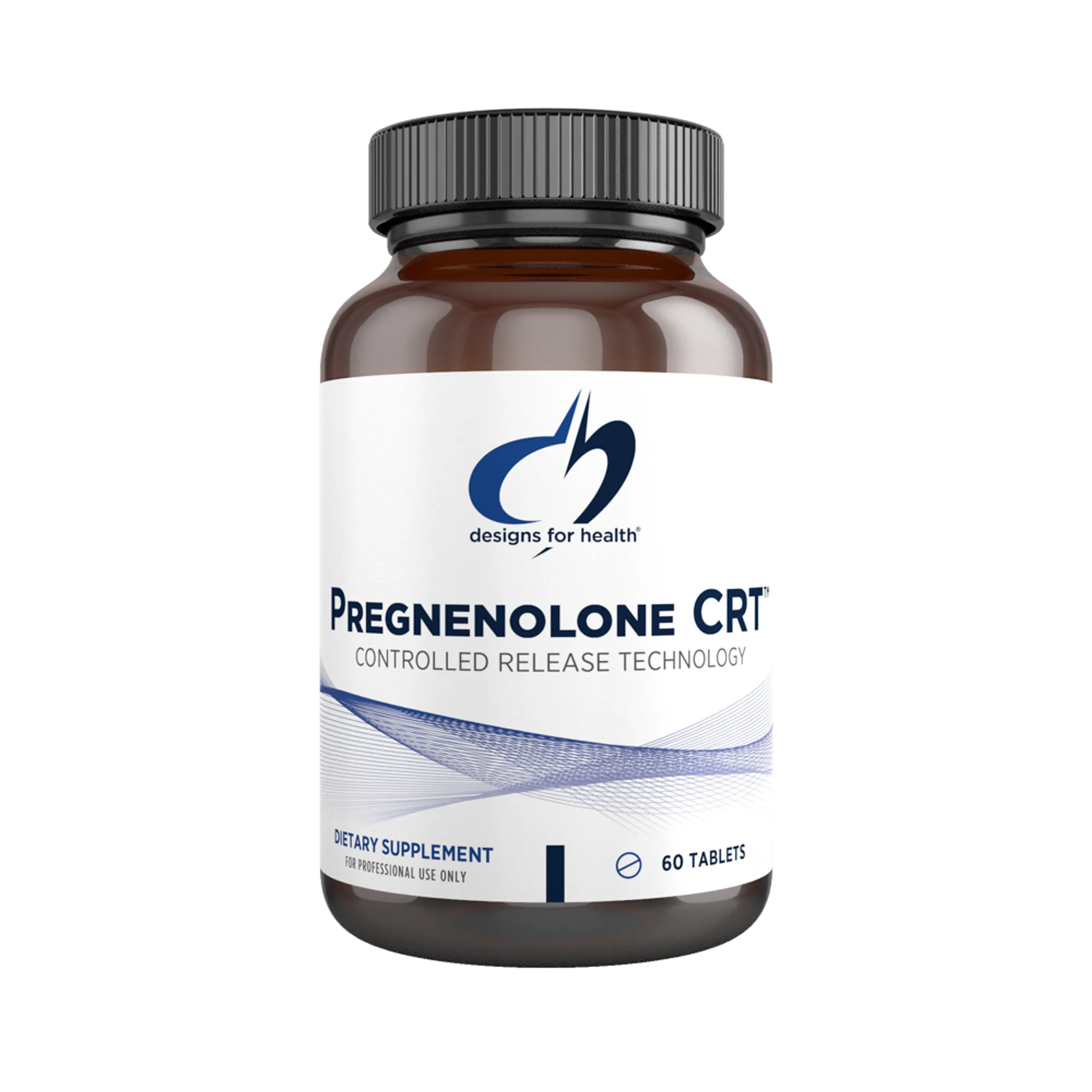
To solve the profound absorption issues of standard pregnenolone, Designs for Health utilizes Controlled-Release Technology (CRT™). This advanced delivery system suspends the micronized hormone within a specialized matrix (supported by the soy lecithin) that resists immediate digestion. Instead of dumping the entire dose into the liver at once, the CRT™ formulation provides a very slow, continuous release of pregnenolone over a 10- to 12-hour period.
This sustained pharmacokinetic profile is crucial for clinical success. By slowly releasing the hormone into the digestive tract, it successfully bypasses a significant portion of the liver's first-pass metabolism, drastically increasing the bioavailability of actual pregnenolone entering the systemic circulation. More importantly, this 12-hour continuous release closely mimics the body's natural, physiological production of hormones. It eliminates the sudden peaks and troughs, prevents the unwanted shunting into sedative metabolites, and provides a stable, steady stream of neurosteroid support throughout the day.
Dosing Strategies, Timing, and Safety Precautions
Pregnenolone CRT™ contains 30 mg of pregnenolone per tablet. The suggested use is to take one tablet per day with a meal, or as directed by your healthcare practitioner. Taking it with a meal that contains healthy fats can further enhance the absorption of this lipophilic hormone. Because the CRT™ technology provides a 10- to 12-hour release, it is generally recommended to take it in the morning to support daytime cognitive function and energy, while avoiding potential interference with sleep architecture at night. It is also important to note that this product contains soy (via the lecithin), which is a necessary consideration for those with severe soy allergies.
While pregnenolone is a natural compound, it acts as a powerful prohormone and carries strict safety considerations. It is strongly contraindicated for individuals with a history of hormone-sensitive cancers (such as breast, prostate, or ovarian cancer) and should not be used during pregnancy or breastfeeding. Furthermore, because pregnenolone sulfate acts as a negative allosteric modulator at GABA-A receptors, it can interact with GABAergic medications (like benzodiazepines) and may lower the seizure threshold. Patients with a history of seizure disorders, or those taking hormone replacement therapies, must consult their healthcare provider before initiating supplementation to ensure it is safe for their specific medical profile.

Follow the Science
Clinical Trials on Cognitive Function and Neuropsychiatric Health
The scientific community has rigorously investigated pregnenolone for its profound effects on the central nervous system, particularly regarding cognitive enhancement and neuropsychiatric health. Because it directly modulates NMDA and GABA receptors, several double-blind, placebo-controlled trials have evaluated its efficacy in treating severe cognitive and mood disorders. For instance, clinical trials targeting schizophrenia and schizoaffective disorder have utilized pregnenolone to address the "negative symptoms" of the disease, which include profound apathy, cognitive blunting, and fatigue—symptoms that closely mirror the cognitive dysfunction seen in ME/CFS and Long COVID.
In these studies, patients receiving pregnenolone demonstrated significant improvements in executive function, working memory, and attention compared to the placebo group. Furthermore, these trials highlighted the excellent safety profile of the hormone when used in controlled settings; even at higher doses, pregnenolone was remarkably well-tolerated without causing adverse metabolic effects like weight gain or cardiovascular strain. This foundational psychiatric research provides strong clinical evidence that elevating brain levels of pregnenolone can directly repair and enhance disrupted cognitive pathways.
Emerging Data on Long COVID, ME/CFS, and HPA Axis Recovery
As the medical understanding of infection-associated chronic illnesses deepens, researchers are increasingly focusing on the steroidomic profiles of patients with Long COVID and ME/CFS. A 2022 comprehensive review published in Frontiers in Neuroendocrinology analyzed the underlying neuroendocrine adaptations in ME/CFS, confirming that severe HPA-axis hypofunction and broad steroid network disruptions are central to the disease pathology. The researchers noted that the depletion of upstream precursors like pregnenolone directly correlates with the severity of fatigue, orthostatic intolerance, and immune dysfunction in these patients.
Furthermore, functional medicine clinical tracking in 2024 and 2025 has shown highly promising real-world data regarding pregnenolone supplementation for post-viral syndromes. Clinical observations suggest that restoring the pregnenolone pipeline helps circumvent the "pregnenolone steal," allowing patients to rebuild their depleted cortisol and DHEA reserves. This multi-system restoration is vital for patients wondering How Long Does Long COVID Last?, as repairing the foundational HPA axis is often a prerequisite for long-term recovery and stabilizing the unpredictable nature of these conditions.
Pharmacokinetic Studies on Sustained Release Delivery
The scientific validation of Controlled-Release Technology (CRT) is equally robust. Historically, the medical community questioned the utility of oral pregnenolone due to its rapid degradation by the liver. However, a 2024 pharmacokinetic pilot study investigated the stability of oral pregnenolone blood levels in humans over a 32.5-hour period. The study concluded that continuous, sustained dosing successfully achieved stable and reliable elevated plasma pregnenolone levels, completely overcoming previous concerns regarding its poor bioavailability and rapid half-life.
Additionally, pharmacological research into lecithin-based liposomal delivery systems has demonstrated that encapsulating pregnenolone structures within a phospholipid matrix exponentially increases the Area Under the Curve (AUC)—a measure of total drug exposure across time. These studies prove that utilizing soy lecithin and controlled-release matrices is not just a marketing claim, but a scientifically validated method for ensuring this critical neurosteroid survives digestion and reaches the cellular targets where it can exert its therapeutic effects.
The Path Forward
Validating the Complexity of Hormonal Disruption
Living with a complex chronic illness like Long COVID, ME/CFS, or dysautonomia is an exhausting journey, often made more difficult by a medical system that struggles to quantify invisible symptoms. When you experience profound brain fog, unrefreshing sleep, and a body that feels like it has forgotten how to produce energy, it is not simply "in your head"—it is a reflection of deep, measurable disruptions in your neuroendocrine system. The exhaustion of your HPA axis and the depletion of foundational hormones like pregnenolone are real, physiological barriers to recovery. Validating this biological reality is the first step toward reclaiming your health. If you are navigating the complexities of the medical system, learning How Does a Doctor Diagnose Long COVID? can help you advocate for the comprehensive hormone testing you deserve.
A Comprehensive Approach to Healing
While Pregnenolone CRT™ offers a scientifically grounded, highly bioavailable method for supporting cognitive function and hormonal balance, it is important to remember that no single supplement is a cure-all. Rebuilding a depleted HPA axis requires a comprehensive, patient-centric approach. Supplementation should be paired with aggressive rest, strict pacing to avoid post-exertional malaise (PEM), nervous system regulation techniques, and ongoing medical supervision. By combining targeted neurosteroid support with holistic management strategies, you can provide your body with the foundational resources it needs to slowly rebuild its resilience and improve your daily quality of life.
Next Steps
If you and your healthcare provider determine that supporting your HPA axis and cognitive function is the right next step for your management plan, high-quality, controlled-release supplementation is essential. Always consult with your medical team before introducing new prohormones, especially if you have a history of hormone-sensitive conditions or are taking prescription medications. Explore Pregnenolone CRT™ to learn more about how this advanced formulation can support your journey toward hormonal balance and cognitive clarity.