Can Pregnancy Support Probiotics Protect the Microbiome in Long COVID?
March 6, 2026
Pregnancy SupportLong COVIDMicrobiome
Share:
Disclaimer: The information provided here is for educational purposes only and is not intended as medical advice. It should not be used to diagnose, treat, cure, or prevent any medical condition. Instead, use it as a starting point for discussion with your healthcare provider. Always consult with a qualified healthcare provider before starting any new medication, supplement, device, or making changes to your health regimen.
Navigating pregnancy is a profound and physically demanding journey under the best of circumstances. But for individuals living with complex chronic conditions like Long COVID, myalgic encephalomyelitis/chronic fatigue syndrome (ME/CFS), dysautonomia, and mast cell activation syndrome (MCAS), the prospect of pregnancy can feel incredibly daunting. These conditions are characterized by systemic inflammation, autonomic nervous system dysfunction, and profound immune dysregulation. When you add the massive hormonal and immunological shifts of pregnancy into the mix, the body's delicate equilibrium is tested even further. Many patients worry not only about how their own bodies will handle the stress of gestation but also about how their chronic illness might impact the developing immune system of their baby.
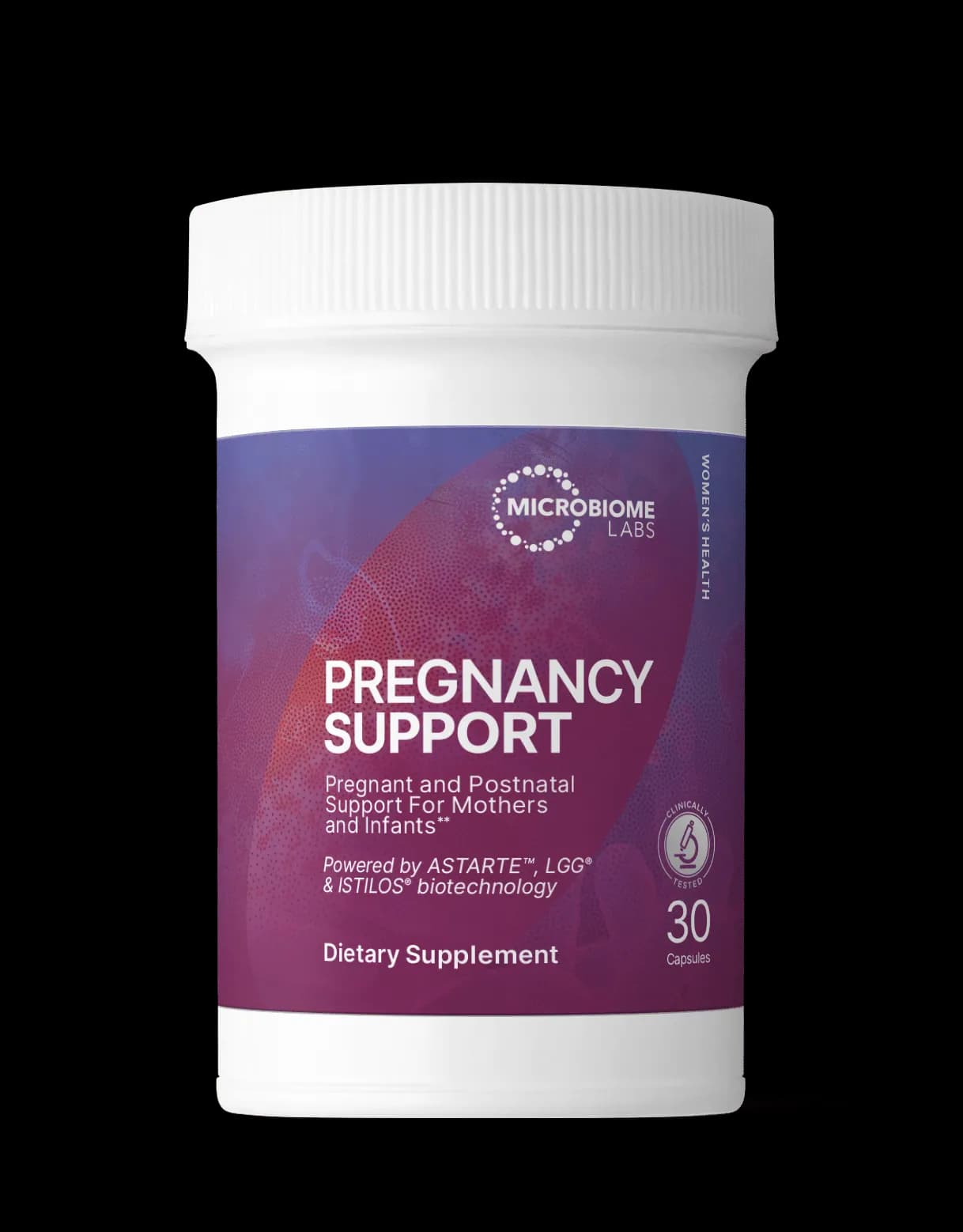
In recent years, groundbreaking research has illuminated a critical intersection between maternal health, infant development, and post-viral syndromes: the human microbiome. We now understand that a healthy pregnancy relies heavily on the intricate balance of bacteria in the mother's gut and vaginal canal. Furthermore, the mother's microbiome serves as the foundational blueprint for the infant's immune system. Pregnancy Support by Microbiome Labs is a highly specialized, clinically researched probiotic blend designed to address this exact intersection. Formulated with targeted strains like LGG® Lactobacillus rhamnosus, the ASTARTE™ vaginal blend, and ISTILOS™ Bifidobacterium infantis, this supplement aims to stabilize the maternal microbiome, reduce localized inflammation, and ensure the successful transfer of beneficial microbes to the baby. For those managing chronic illness, supporting this microbial bridge is a vital step toward a healthier pregnancy and a more resilient postpartum recovery.
What is Pregnancy Support and the Maternal-Fetal Microbiome?
To understand the profound impact of targeted probiotics like Pregnancy Support, we must first explore the natural function of the maternal and infant microbiomes. The human microbiome is a vast ecosystem of trillions of bacteria, viruses, and fungi that live on and inside our bodies, primarily in the gastrointestinal tract and the reproductive system. In a healthy individual, these microbes are not merely passive passengers; they are active participants in human biology. They digest food, synthesize essential vitamins, regulate the immune system, and protect against invasive pathogens. During pregnancy, the maternal microbiome undergoes a dramatic, naturally orchestrated transformation. This shift is designed to support the metabolic demands of the growing fetus and to prepare the mother's body for the eventual transfer of life-sustaining bacteria to the newborn.
At the cellular level, the gut microbiome interacts constantly with the host's immune system. Beneficial bacteria produce metabolites known as short-chain fatty acids (SCFAs), such as butyrate, acetate, and propionate. These SCFAs serve as the primary fuel source for the cells lining the colon (colonocytes) and play a critical role in maintaining the integrity of the intestinal barrier. When the gut barrier is strong, it prevents toxins and undigested food particles from leaking into the bloodstream—a condition often referred to as "leaky gut." In the context of pregnancy, a robust, SCFA-producing gut microbiome helps keep systemic maternal inflammation low, which is crucial for preventing complications and ensuring a stable environment for fetal development.
Furthermore, the maternal gut acts as a biological reservoir for the infant's future microbiome. For decades, the medical community believed that the womb was a completely sterile environment and that infants were only exposed to bacteria during birth. However, emerging research suggests that the microbial seeding process may actually begin before birth, with maternal gut bacteria communicating with the fetal immune system via metabolites that cross the placenta. This early interaction helps "train" the infant's naïve immune system, teaching it to differentiate between harmless environmental proteins and dangerous pathogens, thereby setting the stage for lifelong immune resilience.
While the gut microbiome is characterized by its vast diversity, a healthy vaginal microbiome is entirely different. It is characterized by low bacterial diversity and a heavy dominance of a specific genus of bacteria: Lactobacillus. In a healthy reproductive tract, Lactobacillus species—such as Lactobacillus crispatus, Lactobacillus jensenii, Lactobacillus gasseri, and Lactobacillus rhamnosus—comprise the vast majority of the microbial population. These bacteria are the primary defenders of the female urogenital tract, and their dominance is absolutely essential for a healthy, full-term pregnancy.
The protective mechanism of these vaginal lactobacilli is a fascinating display of biochemical warfare. These bacteria feed on glycogen, a complex sugar secreted by the vaginal epithelial cells under the influence of estrogen. As the lactobacilli ferment this glycogen, they produce copious amounts of lactic acid. This continuous production of lactic acid keeps the vaginal pH at a highly acidic level, typically between 3.8 and 4.5. This acidic environment is incredibly hostile to opportunistic pathogens, yeast (such as Candida albicans), and the bacteria responsible for Bacterial Vaginosis (BV), such as Gardnerella vaginalis. By maintaining this low pH, the lactobacilli create a chemical shield that prevents harmful microbes from ascending into the uterus and threatening the pregnancy.
In addition to lactic acid, specific strains like Lactobacillus jensenii and Lactobacillus crispatus secrete hydrogen peroxide and antimicrobial peptides known as bacteriocins. These compounds act as targeted biological weapons, directly destroying the cell walls of invading pathogens. Furthermore, these beneficial lactobacilli aggressively adhere to the vaginal epithelial lining, forming a dense physical biofilm. This process, known as competitive exclusion, literally leaves no physical space for harmful bacteria or yeast to attach and colonize. When a baby is delivered vaginally, they are coated in this protective Lactobacillus biofilm, which serves as their first major inoculation of immune-modulating bacteria.
The transfer of beneficial bacteria from mother to child does not end at birth; it continues and accelerates through breastfeeding. This process is facilitated by a remarkable biological route known as the entero-mammary pathway. During the late stages of pregnancy and throughout lactation, specialized immune cells in the mother's gut (dendritic cells) reach through the intestinal lining and gently capture live, beneficial bacteria from the maternal gastrointestinal tract. These bacteria are then transported through the lymphatic system and the bloodstream directly to the mammary glands, where they are incorporated into breast milk.
Breast milk is not just a source of nutrition; it is a complex, living fluid designed to engineer the infant's microbiome. Alongside live bacteria, breast milk contains high concentrations of complex carbohydrates called Human Milk Oligosaccharides (HMOs). Interestingly, human infants lack the digestive enzymes required to break down HMOs. Instead, these complex sugars serve as a highly specialized, selective food source for specific beneficial bacteria—most notably, Bifidobacterium infantis. When the infant consumes breast milk, the B. infantis bacteria (transferred from the mother) rapidly consume the HMOs, multiplying exponentially until they dominate the infant's gut. This symbiotic relationship is one of the most highly evolved mechanisms in human biology, ensuring the rapid maturation of the infant's digestive and immune systems.
How Complex Chronic Illness Impacts Pregnancy and the Microbiome
For individuals living with post-viral syndromes, understanding what causes Long COVID often leads directly to the gut. Both Long COVID and ME/CFS are heavily characterized by persistent gut dysbiosis—a state where the delicate balance of the microbiome is thrown into chaos. Landmark longitudinal studies have demonstrated that up to 80% of patients experience Long COVID months after their initial SARS-CoV-2 infection, exhibiting a distinct microbiome profile that is significantly less diverse than that of healthy individuals. This post-viral dysbiosis is marked by a profound depletion of favorable, immunity-boosting bacteria, including Bifidobacterium species, and a simultaneous overgrowth of opportunistic pathogens.
This microbial imbalance creates a vicious cycle of systemic inflammation. Without sufficient populations of beneficial bacteria to produce short-chain fatty acids (SCFAs), the intestinal barrier becomes compromised. This increased intestinal permeability ("leaky gut") allows bacterial endotoxins, such as lipopolysaccharides (LPS), to escape the digestive tract and enter the maternal bloodstream. The immune system recognizes these endotoxins as a threat and launches a systemic inflammatory response, releasing pro-inflammatory cytokines like TNF-alpha and Interleukin-6. In the context of pregnancy, which naturally shifts the immune system toward a pro-inflammatory state at certain stages, this pre-existing post-viral inflammation can severely exacerbate maternal issues, driving many of the symptoms of Long COVID such as debilitating fatigue, brain fog, and joint pain.
Furthermore, this dysbiosis directly impacts the gut-brain axis, a critical communication network between the gastrointestinal tract and the central nervous system. Beneficial gut bacteria are responsible for producing essential neurotransmitters, including Gamma Aminobutyric Acid (GABA) and serotonin. In patients wondering can Long COVID trigger ME/CFS, the depletion of these neurotransmitter-producing microbes is a major shared pathway that contributes to severe neurocognitive symptoms, sleep disturbances, and mood dysregulation. When a patient enters pregnancy with this compromised neuro-immune baseline, the physical and emotional toll can be overwhelming, making targeted microbiome support an essential component of prenatal care.
Dysautonomia, particularly postural orthostatic tachycardia syndrome (POTS), is a prominent and debilitating manifestation of both Long COVID and ME/CFS. POTS is characterized by an abnormal increase in heart rate upon standing, accompanied by blood pooling in the lower extremities, dizziness, and profound fatigue. The pathophysiology of POTS is deeply intertwined with systemic inflammation and endothelial dysfunction—both of which are exacerbated by the gut dysbiosis seen in post-viral syndromes. The inflammatory cytokines leaking from a compromised gut can damage the delicate endothelial cells lining the blood vessels, impairing microcirculation and worsening autonomic instability.
Pregnancy places an immense, unavoidable stress on the cardiovascular and autonomic nervous systems. During gestation, a woman's blood volume increases by up to 50% to support the growing fetus, and her heart rate naturally rises. For a healthy individual, the autonomic nervous system easily adapts to these hemodynamic shifts. However, for a patient with pre-existing POTS or dysautonomia, these changes can be catastrophic. A cross-sectional survey of POTS patients revealed that a staggering 81% reported their autonomic symptoms worsening during pregnancy. The inability of the dysfunctional autonomic nervous system to manage the increased blood volume leads to severe orthostatic intolerance, frequent presyncope (near-fainting), and debilitating crashes.
The connection between the microbiome and dysautonomia during pregnancy is an area of intense clinical interest. Because gut dysbiosis drives the systemic inflammation that damages the vascular endothelium, restoring microbial balance is increasingly viewed as a vital strategy for managing POTS symptoms. By utilizing targeted probiotics to seal the gut barrier and reduce the circulation of inflammatory endotoxins, patients may be able to lower their overall inflammatory burden. This, in turn, can help stabilize the vascular endothelium, improve microcirculation, and provide the autonomic nervous system with a more stable physiological environment during the demanding months of pregnancy.
Perhaps the most concerning aspect of navigating pregnancy with a post-viral syndrome is the potential impact on the developing baby. If a mother's microbiome is severely depleted of beneficial Bifidobacterium and Lactobacillus species due to Long COVID or ME/CFS, she cannot effectively transfer these crucial microbes to her infant. This lack of vertical microbial transmission leaves the infant's gut vulnerable to colonization by environmental pathogens, potentially setting the stage for lifelong immune dysregulation, allergies, and gastrointestinal issues.
This phenomenon was starkly illustrated in a groundbreaking 2025 study published in Frontiers in Microbiology, which detailed the "crossover effect" of maternal COVID-19 infection on the infant's microbiome. Researchers found that infants born to mothers who contracted COVID-19 during pregnancy exhibited a marked reduction in bacterial diversity and richness in their gut microbiomes shortly after birth. Crucially, this destabilization occurred regardless of which trimester the mother was infected in. This data strongly suggests that the maternal dysbiosis triggered by the virus directly compromises the initial establishment of the infant's microbiome.
Furthermore, the systemic inflammation and mast cell activation (MCAS) often seen in Long COVID patients can alter the composition of the vaginal microbiome. Chronic inflammation can disrupt the glycogen-lactic acid cycle, leading to a decrease in protective Lactobacillus species and an increase in vaginal pH. This vaginal dysbiosis not only increases the mother's risk for uncomfortable yeast infections and Bacterial Vaginosis but also increases the risk of premature rupture of membranes and preterm birth. Addressing this complex web of maternal dysbiosis, systemic inflammation, and impaired infant seeding requires a highly targeted, multi-strain probiotic intervention.
Pregnancy Support: Restoring the Microbial Balance
Pregnancy Support is engineered to directly counteract the dysbiosis and immune dysregulation seen in chronic illness by utilizing specific, clinically validated probiotic strains. The first major pillar of this formulation is LGG® (Lacticaseibacillus rhamnosus GG). LGG is one of the most extensively researched probiotic strains in the world, renowned for its profound immunomodulatory properties and its ability to survive the harsh journey through the gastrointestinal tract. At the molecular level, LGG interacts with the host's immune system by binding to specific receptors on the intestinal epithelial cells, triggering a cascade of anti-inflammatory signals that help calm the hyperactive immune responses often seen in Long COVID and MCAS.
One of the key mechanisms of action for LGG is its ability to physically reinforce the gut barrier. LGG bacteria possess highly specialized, hair-like appendages called SpaCBA pili. These pili act like microscopic grappling hooks, allowing the bacteria to firmly adhere to the mucus layer and the epithelial cells of the intestinal wall. Once anchored, LGG stimulates the production of tight junction proteins—the cellular "glue" that seals the gaps between intestinal cells. By repairing these tight junctions, LGG effectively treats "leaky gut," preventing inflammatory endotoxins from escaping into the maternal bloodstream. This reduction in systemic inflammation is crucial for patients managing the overlapping symptoms of ME/CFS and dysautonomia during pregnancy.
Furthermore, LGG has been heavily studied for its role in shaping the infant's immune system via maternal supplementation. Clinical trials have demonstrated that when pregnant women consume LGG during the late stages of gestation, the bacteria successfully transfer to the infant's gut. This early colonization by LGG has been shown to significantly reduce the infant's risk of developing atopic dermatitis (eczema) and other allergic conditions in their first year of life. By modulating the maternal immune system and seeding the infant gut, LGG provides a powerful, dual-action defense against post-viral immune dysfunction.
The second critical component of Pregnancy Support is the inclusion of the ASTARTE™ blend, a proprietary combination of four specific, vaginally derived Lactobacillus strains: Lactobacillus crispatus (LBV 88), Lactobacillus rhamnosus (LBV 96), Lactobacillus gasseri (LBV 150N), and Lactobacillus jensenii (LBV 116). Discovered during a landmark 2007 study on healthy pregnant women, these four strains were identified as the most dominant and beneficial bacteria responsible for maintaining a healthy, pathogen-free vaginal environment capable of supporting a full-term pregnancy. For patients with chronic illness who are prone to systemic inflammation and opportunistic infections, restoring this localized vaginal flora is essential.
This specific 4-strain blend works synergistically to protect the vaginal microbiome through aggressive competitive exclusion and chemical defense. Lactobacillus crispatus and Lactobacillus gasseri are prolific producers of lactic acid. When administered orally, these highly resilient strains survive the digestive tract and migrate to the urogenital area, where they begin fermenting vaginal glycogen. The resulting lactic acid rapidly lowers the vaginal pH, creating an acidic environment that is deeply inhospitable to the yeast species responsible for vaginal candidiasis and the bacteria that cause Bacterial Vaginosis. This stabilization of the vaginal pH is particularly beneficial for patients with MCAS, who often experience severe, localized histamine reactions triggered by minor yeast overgrowths.
Simultaneously, Lactobacillus jensenii and Lactobacillus rhamnosus secrete potent antimicrobial compounds, including hydrogen peroxide and bacteriocins. These natural biological weapons directly target and dismantle the cell walls of invading pathogens, preventing them from ascending the reproductive tract. Clinical trials have shown that oral supplementation with this specific blend significantly reduces the presence of harmful pathogens like Ureaplasma parvum and dramatically lowers the recurrence rates of Bacterial Vaginosis. By fortifying the vaginal canal with these keystone strains, Pregnancy Support ensures that the baby's first massive microbial exposure during a vaginal delivery is overwhelmingly positive and immune-supportive.
The final, and perhaps most specialized, pillar of the Pregnancy Support formulation is ISTILOS™ (Bifidobacterium infantis BIFIN02). Isolated from the intestine of a healthy, breastfed infant, this specific strain is widely considered the most critical beneficial bacteria for the foundational development of a newborn's gut microbiome. As discussed earlier, modern lifestyles, post-viral dysbiosis, and high rates of Cesarean sections have severely disrupted the natural maternal transfer of B. infantis. By supplementing with ISTILOS™ during pregnancy and postpartum, mothers can actively rebuild this crucial microbial reservoir.
The true power of ISTILOS™ lies in its unique genetic capacity to digest Human Milk Oligosaccharides (HMOs). When a mother takes Pregnancy Support, the ISTILOS™ bacteria travel via the entero-mammary pathway into her breast milk. Once the infant consumes the breast milk, the ISTILOS™ strain encounters the HMOs in the infant's gut. Because most other bacteria cannot digest these complex sugars, ISTILOS™ is given a massive competitive advantage. It rapidly ferments the HMOs, producing large quantities of short-chain fatty acids (SCFAs) like acetate and lactate. These SCFAs naturally lower the pH of the infant's colon, creating a hostile environment that crowds out harmful, disease-causing pathogens.
This rapid, HMO-fueled colonization by ISTILOS™ is essential for the maturation of the infant's immune system. The presence of this specific strain stimulates the infant's gut-associated lymphoid tissue (GALT), helping to "train" the naïve immune cells to respond appropriately to environmental stimuli. A 2023 proof-of-concept clinical study confirmed that administering ISTILOS™ to mothers successfully resulted in the recovery of the dosed strains in their infants' fecal samples, proving the viability of this maternal-transfer strategy. For mothers battling the immune dysregulation of Long COVID or ME/CFS, ensuring the successful transfer and colonization of ISTILOS™ provides profound peace of mind that their baby's immune foundation is being actively supported.

Symptoms Pregnancy Support May Help Manage
Pregnancy Support offers a multi-faceted approach to managing the complex symptoms associated with post-viral syndromes and pregnancy. By targeting both the maternal and infant microbiomes, it addresses systemic inflammation, localized vaginal dysbiosis, and foundational immune development.
Vaginal Yeast Discomfort and Dysbiosis: By utilizing the ASTARTE™ blend of Lactobacillus crispatus, gasseri, jensenii, and rhamnosus, this supplement continuously produces lactic acid and hydrogen peroxide. This aggressively lowers the vaginal pH, creating an environment where opportunistic yeast (like Candida) and the bacteria responsible for Bacterial Vaginosis cannot survive or colonize, providing relief from chronic localized itching, burning, and discharge.
Systemic Maternal Inflammation: The LGG® strain utilizes its SpaCBA pili to adhere to the intestinal wall and stimulate the production of tight junction proteins. By sealing a "leaky gut," LGG prevents inflammatory bacterial endotoxins from entering the bloodstream, which helps lower the overall systemic inflammatory burden—a crucial mechanism for managing the overlapping fatigue and joint pain seen in Long COVID and ME/CFS.
Infant Eczema and Atopic Dermatitis Risk: Clinical trials demonstrate that maternal supplementation with LGG® during late pregnancy and breastfeeding successfully transfers the bacteria to the infant. This early colonization helps train the infant's naïve immune system, significantly reducing the hyperactive immune responses that lead to early-life allergic conditions like eczema and atopic dermatitis.
Digestive Instability and Nutrient Absorption: Both LGG® and the Bifidobacterium strains produce beneficial short-chain fatty acids (SCFAs) like butyrate and acetate in the maternal gut. These metabolites nourish the colon cells, reduce intestinal inflammation, and stabilize gut motility, helping to alleviate the chronic bloating, cramping, and unpredictable bowel habits often associated with post-viral dysbiosis and dysautonomia.
Compromised Infant Immune Development: By supplying the highly specialized ISTILOS™ Bifidobacterium infantis strain, the supplement ensures the mother has a reservoir of the exact bacteria needed to digest Human Milk Oligosaccharides (HMOs). When transferred via breast milk, ISTILOS™ rapidly colonizes the infant gut, crowding out harmful pathogens and laying the critical foundation for the baby's lifelong immune and digestive resilience.
Practical Considerations: Forms, Dosing, and Absorption
When evaluating any probiotic supplement, the most critical practical consideration is bioavailability—specifically, the live bacteria's ability to survive the harsh, highly acidic environment of the human stomach and successfully reach the intestines or vaginal tract. Pregnancy Support addresses this challenge through both strain selection and advanced encapsulation technology. The strains chosen for this formulation, particularly LGG®, are naturally highly resilient. LGG exhibits an extraordinary tolerance to gastric acid and bile salts, allowing a high percentage of the colony-forming units (CFUs) to survive transit through the upper gastrointestinal tract.
To further enhance survivability, Microbiome Labs utilizes specialized delayed-release capsules. These capsules are designed to withstand the low pH of stomach acid, remaining intact until they reach the more neutral pH of the small intestine. Once in the intestines, the capsule dissolves, releasing the live bacteria exactly where they are needed most. This targeted delivery system ensures that the delicate Bifidobacterium infantis (ISTILOS™) and the vaginally targeted Lactobacillus strains arrive viable and ready to adhere to the epithelial tissues, maximizing the clinical efficacy of each dose.
Once the bacteria reach the intestines, their ability to colonize depends on their physical characteristics. As previously noted, LGG utilizes its specialized SpaCBA pili to act as microscopic anchors, binding tightly to the intestinal mucus layer. The ASTARTE™ strains (L. crispatus, L. jensenii, L. rhamnosus, L. gasseri) have been clinically studied for their ability to successfully survive the gastrointestinal tract and migrate to the vaginal canal after oral administration. This systemic migration is what allows an oral capsule to effectively modulate the localized vaginal microbiome.
The suggested use for Pregnancy Support is straightforward: take 1 capsule per day, or as directed by your healthcare practitioner. Each capsule contains a proprietary blend totaling 207 mg (approximately 25.1 Billion CFU), which provides a clinically relevant dose of LGG, ISTILOS™, and the ASTARTE™ vaginal blend. Because consistency is key when attempting to shift the microbiome, it is highly recommended to take the supplement at the same time every day to maintain a steady influx of beneficial microbes.
Timing the dosage around meals can further optimize absorption and survivability. While the delayed-release capsule provides significant protection, taking the probiotic alongside a meal or a light snack can naturally buffer stomach acid, creating a gentler environment for the capsule's transit. Additionally, taking the supplement with food provides the bacteria with immediate access to dietary fibers and complex carbohydrates, which they can begin fermenting as soon as they are released in the intestines.
In terms of longitudinal timing, Pregnancy Support is designed to be taken continuously across the entire reproductive timeline. For optimal results, patients should begin supplementation during the preconception phase to establish a healthy vaginal microbiome and lower systemic inflammation before conception occurs. The supplement should be continued throughout all three trimesters of pregnancy to maintain this balance and prepare for birth. Finally, it is crucial to continue taking the supplement postpartum and while breastfeeding, as this is the primary window for transferring the ISTILOS™ strain to the infant via the entero-mammary pathway.
To maximize the efficacy of Pregnancy Support, patients should consider the dietary factors that interact with these specific probiotic strains. The most profound interaction occurs postpartum between the ISTILOS™ strain and human breast milk. Breast milk contains high concentrations of Human Milk Oligosaccharides (HMOs), which act as a highly selective, powerful prebiotic food source specifically for Bifidobacterium infantis. By continuing to take the supplement while breastfeeding, the mother ensures a continuous supply of ISTILOS™ is delivered to the infant, where it will rapidly multiply by feeding on the HMOs in the milk.
For the mother's own gut health, the LGG® and ASTARTE™ strains benefit greatly from a diet rich in diverse prebiotic fibers. Consuming complex carbohydrates, polyphenols, and soluble fibers (found in foods like asparagus, garlic, onions, oats, and berries) provides the necessary fuel for these beneficial bacteria to thrive and produce anti-inflammatory short-chain fatty acids (SCFAs). For patients with Long COVID or ME/CFS who may have dietary restrictions due to MCAS or histamine intolerance, working with a specialized nutritionist to identify safe, tolerable prebiotic foods can significantly enhance the therapeutic impact of the probiotic.
Finally, regarding safety and interactions, the strains in Pregnancy Support are generally recognized as safe (GRAS) and have been extensively studied in pregnant populations without adverse effects. However, when introducing a high-potency, multi-strain probiotic, some individuals may experience temporary, mild digestive adjustments, such as slight bloating or changes in bowel habits, during the first few days of use. This is a normal part of the microbiome shifting. As always, patients managing complex chronic illnesses should consult closely with their healthcare provider or obstetrician before adding any new supplement to their regimen, especially during pregnancy.

Follow the Science
The scientific foundation supporting the use of specific probiotic strains during pregnancy is robust and rapidly expanding. One of the most compelling areas of research involves the use of LGG® to shape the infant immune system and prevent allergic conditions. The landmark Toho University study (Komine et al., 2018) investigated pregnant women who consumed LGG daily from the 33rd week of gestation until parturition. The researchers found that the detection rate of LGG in the infants' feces at 4 months of age was significantly higher in the exposed group. More importantly, this maternal exposure significantly increased the infants' native populations of beneficial Bifidobacterium species. The clinical outcome was profound: the incidence of infant eczema at 1 year of age was significantly lower in the probiotic group, demonstrating LGG's powerful ability to modulate early-life immune responses.
The mechanisms behind infant gut seeding have been further validated by recent research into the ISTILOS™ (Bifidobacterium infantis) strain. A 2023 proof-of-concept clinical study published in the National Library of Medicine investigated the administration of ISTILOS™ alongside other probiotic strains to mothers during the perinatal period. The study meticulously tracked whether administering the probiotic to the mother would result in successful colonization in the infant via breast milk transfer. The results were highly successful, confirming the "recovery of the dosed strains in infant fecal samples." This proves that supplementing the mother is a highly viable and effective strategy for establishing a healthy, pathogen-resistant microbiome in the newborn.
The efficacy of the ASTARTE™ blend (L. crispatus, L. rhamnosus, L. gasseri, L. jensenii) in protecting the vaginal microbiome is supported by multiple randomized controlled trials. These four specific strains were originally identified in a 2007 study by Kiss et al. as the dominant bacteria responsible for maintaining a healthy vaginal environment during the first trimester of pregnancy. Since their discovery, their clinical applications have been extensively tested.
For example, a pilot study by Marschalek et al. (2017) found that these strains can survive the gastrointestinal tract and successfully migrate to the vagina, improving the vaginal microbiota in 63% of the intervention group compared to only 36% in the placebo group. Furthermore, a 2021 study by Schenk et al. demonstrated that a 4-week oral supplementation of this exact blend significantly reduced the presence of Ureaplasma parvum—a pathogen highly associated with adverse reproductive outcomes. In the probiotic group, the relative abundance of the pathogen dropped to a mere 0.77%, compared to 3.52% in the control group, highlighting the blend's powerful competitive exclusion capabilities.
The intersection of post-viral syndromes, the microbiome, and pregnancy is an emerging and critical field of study. Landmark research from the Chinese University of Hong Kong (CU Medicine) has firmly established that Long COVID is driven by persistent gut dysbiosis, characterized by a depletion of beneficial bacteria and an overgrowth of pathogens. Their clinical trials utilizing targeted probiotic interventions have successfully restored gut diversity and led to significant clinical improvements in persistent Long COVID symptoms, including fatigue and brain fog.
This post-viral dysbiosis becomes particularly concerning during pregnancy due to the "crossover effect." A 2025 study published in Frontiers in Microbiology revealed that infants born to mothers who contracted COVID-19 during pregnancy exhibited a marked reduction in bacterial diversity and richness in their gut microbiomes shortly after birth. This underscores the urgent need for maternal microbiome support. By proactively utilizing clinically validated strains like LGG® and ISTILOS™, mothers managing post-viral syndromes can actively combat this dysbiosis, reducing their own systemic inflammation while ensuring their baby receives the critical microbial foundation necessary for a healthy start to life.
The Path Forward
Navigating pregnancy while managing the unpredictable, often debilitating symptoms of Long COVID, ME/CFS, dysautonomia, or MCAS is a profound challenge. It is completely valid to feel overwhelmed by the physical demands of gestation and anxious about how your chronic illness might impact your baby's development. If you are wondering do Long COVID symptoms come and go during pregnancy, the answer is often yes—the hormonal shifts can create a rollercoaster of symptom flares and remissions. However, the rapidly advancing science of the microbiome offers a powerful, actionable pathway for support. By understanding the intricate connections between gut health, systemic inflammation, and the maternal-fetal microbial bridge, you can take proactive steps to protect both your own body and your child's emerging immune system.
While no single intervention is a cure for complex chronic illness, targeted microbiome modulation is a vital piece of a comprehensive management strategy. When learning how can you live with long-term COVID, incorporating meticulous pacing, symptom tracking, and close collaboration with your medical team is essential. Supporting your gut and vaginal flora alongside these practices can help lower your overall inflammatory burden and build a more resilient foundation for pregnancy and postpartum recovery. Pregnancy Support by Microbiome Labs provides a clinically validated, highly specific blend of strains designed to do exactly that—empowering you to nurture your body and your baby from the inside out. As always, please consult with your healthcare provider or obstetrician before beginning any new supplement regimen to ensure it aligns with your unique medical needs.