Can Potassium Aspartate Help Manage Fatigue and Heart Palpitations in Long COVID and POTS?
March 5, 2026
Potassium AspartateLong COVIDPOTS
Share:
Disclaimer: The information provided here is for educational purposes only and is not intended as medical advice. It should not be used to diagnose, treat, cure, or prevent any medical condition. Instead, use it as a starting point for discussion with your healthcare provider. Always consult with a qualified healthcare provider before starting any new medication, supplement, device, or making changes to your health regimen.
Months or even years after a viral infection, many individuals find themselves battling a bewildering array of symptoms, from profound muscle fatigue and brain fog to racing heartbeats that trigger simply by standing up. If you are living with complex chronic conditions like Long COVID, myalgic encephalomyelitis/chronic fatigue syndrome (ME/CFS), or dysautonomia (such as postural orthostatic tachycardia syndrome (POTS)), you are likely intimately familiar with this frustrating reality. Often, standard blood tests return "normal," leaving patients without answers while their daily quality of life remains severely compromised. However, emerging research into cellular metabolism and electrolyte balance is shedding light on why these symptoms persist, pointing toward a critical, often-overlooked mineral: potassium.
While most people associate potassium simply with eating bananas to prevent muscle cramps, its role in the human body is vastly more complex and foundational. At a microscopic level, potassium acts as the electrical current that powers your cells, regulates your heart rhythm, and enables your muscles to contract. In post-viral and autonomic conditions, the body's ability to maintain and utilize this essential mineral can become profoundly dysregulated. This disruption can create a vicious cycle of cellular energy depletion, cardiovascular instability, and debilitating fatigue. In this comprehensive guide, we will explore the intricate science behind potassium aspartate, how chronic illness impacts your cellular potassium levels, and how targeted supplementation might help support your body's recovery and symptom management.
What is Potassium Aspartate?
The Essential Role of Potassium in the Body
Potassium is a vital intracellular mineral and electrolyte that carries a positive electrical charge, known as a cation. In a healthy human body, approximately 98% of all potassium is stored inside the cells, while the remaining 2% circulates in the extracellular fluid and blood plasma. This stark difference in concentration is not an accident; it is a highly controlled physiological state that creates an electrochemical gradient across every cell membrane in your body. This gradient is the fundamental driving force behind numerous biological functions, including the rapid transmission of nerve impulses, the rhythmic contraction of the heart muscle, and the maintenance of healthy blood pressure. Without adequate intracellular potassium, the electrical signaling that coordinates your nervous system and musculature begins to misfire.
Beyond its electrical duties, potassium is an indispensable cofactor in numerous enzymatic reactions and metabolic pathways. It is required for the synthesis of proteins from amino acids and the metabolism of carbohydrates into usable energy. When you consume food, potassium helps facilitate the conversion of glucose into glycogen, which is stored in the liver and muscles for future energy needs. Furthermore, potassium works in a delicate, continuous dance with sodium to maintain isotonicity—the proper balance of water and dissolved solutes inside and outside the cell. This fluid balance is critical for preventing cellular dehydration, regulating blood volume, and ensuring that waste products are efficiently flushed from the tissues.
The Sodium-Potassium Pump: The Cellular Battery
To truly understand how potassium functions, we must look at the microscopic engine that drives cellular life: the Na+/K+-ATPase pump (sodium-potassium pump). Embedded in the membrane of almost every cell, this specialized protein acts as a biological battery charger. Using adenosine triphosphate (ATP)—the primary energy currency of the cell—the pump continuously moves three sodium ions out of the cell while simultaneously pulling two potassium ions inside. Because both sodium and potassium carry a positive charge, this unequal exchange creates a net negative electrical charge inside the cell compared to the outside. This resting membrane potential is what primes nerve and muscle cells to fire into action at a moment's notice.
The operation of the sodium-potassium pump is incredibly energy-intensive, consuming an estimated 20% to 40% of the body's total resting energy expenditure. When a nerve impulse triggers, sodium channels open, allowing sodium to rush into the cell, which flips the electrical charge and creates an action potential. Immediately afterward, potassium channels open, allowing potassium to rush out, resetting the cell's electrical state. The Na+/K+-ATPase pump then works tirelessly to push the sodium back out and bring the potassium back in, restoring the baseline gradient. If this pump fails or lacks the necessary potassium, the cell cannot reset properly, leading to delayed nerve signaling, muscle weakness, and profound systemic fatigue.
Why the Aspartate Form Matters for Energy
When discussing dietary supplements, the form of the mineral is just as important as the mineral itself. Potassium aspartate is a unique, highly bioavailable compound that binds elemental potassium to L-aspartic acid, a naturally occurring amino acid. Unlike standard potassium chloride, which is primarily used to rapidly correct severe blood deficiencies, potassium aspartate is specifically designed to enhance cellular uptake and support energy metabolism. Because the human body readily recognizes and utilizes amino acids, the L-aspartate moiety acts as an efficient molecular carrier, escorting the potassium ions safely through the gastrointestinal tract and directly across the cell membranes where they are needed most.
The true advantage of the aspartate form lies in its dual-action mechanism. Once inside the cell, the compound dissociates. The potassium goes to work maintaining the electrochemical gradient, while the L-aspartic acid enters the mitochondria—the powerhouses of the cell. L-aspartic acid is a crucial intermediate in the Krebs cycle (also known as the citric acid cycle), the complex series of chemical reactions that generates ATP. By providing both the electrolyte needed for the sodium-potassium pump and the metabolic substrate needed to produce the energy that fuels the pump, potassium aspartate offers a synergistic approach to combating cellular exhaustion and supporting optimal muscle and nerve function.
How Chronic Illness Impacts Potassium Levels
Viral Infection and RAAS Disruption in Long COVID
The pathophysiology of Long COVID is incredibly complex, but one of the most significant mechanisms involves the dysregulation of the Renin-Angiotensin-Aldosterone System (RAAS). When the SARS-CoV-2 virus enters the body, it binds to the ACE2 (Angiotensin-Converting Enzyme 2) receptors located on the surface of cells throughout the respiratory and cardiovascular systems. This binding process effectively downregulates or destroys the ACE2 receptors. In a healthy system, ACE2 acts as a critical brake, breaking down an inflammatory hormone called Angiotensin II. Without functioning ACE2 receptors, Angiotensin II levels skyrocket, triggering a cascade of systemic inflammation, widespread vascular constriction, and autonomic nervous system dysfunction.
This unchecked Angiotensin II directly stimulates the adrenal glands to overproduce the hormone aldosterone. Aldosterone's primary job is to regulate blood volume and blood pressure by signaling the kidneys to retain sodium and water. However, this sodium retention comes at a steep physiological cost: for every sodium ion the kidneys save, they are forced to excrete a potassium ion into the urine. In Long COVID patients, this chronic aldosterone overdrive leads to persistent urinary potassium wasting, creating a state known in recent medical literature as "Long COVID hypokalaemia syndrome". This persistent low potassium state directly impairs cardiac function, contributing to the arrhythmias, heart palpitations, and severe exercise intolerance that plague so many long-haulers.
The Wirth-Scheibenbogen Hypothesis in ME/CFS
In myalgic encephalomyelitis/chronic fatigue syndrome (ME/CFS), the potassium crisis frequently occurs inside the muscle cells rather than just in the bloodstream. The highly regarded Wirth-Scheibenbogen hypothesis proposes that ME/CFS is driven by a dysfunction of the ß2-adrenergic receptors, which normally stimulate the Na+/K+-ATPase pump. When these receptors fail to activate the pump properly, the cellular battery dies. Intracellular potassium levels plummet, while intracellular sodium levels dangerously rise. This forces another cellular mechanism, the sodium-calcium exchanger (NCX), to run in reverse, flooding the delicate mitochondria with toxic levels of calcium.
This catastrophic "calcium overload" severely damages the mitochondria, halting ATP production and triggering immense oxidative stress. This intracellular mechanism is now believed to be a primary driver of post-exertional malaise (PEM)—the hallmark symptom of ME/CFS where even minor physical or cognitive exertion leads to a disproportionate and debilitating crash. Because standard blood tests only measure extracellular serum potassium, this profound intracellular depletion often goes entirely undetected by routine medical workups, leaving patients frustrated and without effective treatment strategies. If you want to learn more about the connection between Long COVID and ME/CFS, understanding this shared metabolic dysfunction is a crucial first step.
The High-Salt Diet Paradox in Dysautonomia and POTS
For patients diagnosed with dysautonomia, particularly postural orthostatic tachycardia syndrome (POTS), potassium depletion is often paradoxically worsened by the very treatments prescribed to manage the condition. POTS is characterized by an abnormal increase in heart rate upon standing, often driven by low blood volume (hypovolemia) and blood pooling in the lower extremities. To combat this, cardiologists and neurologists routinely advise POTS patients to dramatically increase their sodium intake—sometimes up to 10 grams per day—and prescribe medications like fludrocortisone, a synthetic aldosterone analog designed to force the kidneys to retain salt and water.
While this approach can successfully expand blood plasma volume and reduce orthostatic dizziness, it creates a severe secondary problem: iatrogenic (medication-induced) hypokalemia. Just as viral-induced aldosterone wastes potassium, synthetic fludrocortisone aggressively flushes potassium out of the body through the urine. Furthermore, flooding the body with massive amounts of sodium without concurrently increasing potassium intake completely skews the vital sodium-to-potassium ratio required for cellular health. This imbalance exacerbates the Na+/K+-ATPase pump dysfunction, leading to worsened heart palpitations, muscle tremors, and profound weakness—symptoms that mimic the underlying dysautonomia itself. Understanding how a doctor diagnoses Long COVID and POTS is essential for navigating these complex treatment trade-offs.
Potassium Aspartate: Supporting Cellular Energy and Cardiovascular Function
Restoring the Electrochemical Gradient
When dealing with the complex, overlapping symptoms of Long COVID, ME/CFS, and POTS, targeted supplementation with potassium aspartate aims to address the root cellular dysfunction. By providing a highly bioavailable source of intracellular potassium, this supplement helps to manually restore the critical electrochemical gradient across the cell membranes. When the Na+/K+-ATPase pump is supplied with adequate potassium ions, it can begin to efficiently clear excess sodium from inside the cell. This restoration of the proper ionic balance is the first crucial step in halting the vicious cycle of cellular damage and dysfunction that drives chronic fatigue and autonomic instability.
Furthermore, by correcting the intracellular sodium overload, adequate potassium levels prevent the sodium-calcium exchanger (NCX) from running in reverse. This protects the delicate mitochondria from toxic calcium flooding, preserving their structural integrity and their ability to generate energy. For patients experiencing severe post-exertional malaise (PEM) or sudden, debilitating muscle weakness, stabilizing this cellular voltage is absolutely paramount. It allows the nervous system to transmit signals smoothly and enables muscle fibers to contract and relax without misfiring or cramping, thereby improving overall physical capacity and endurance.
Fueling the Krebs Cycle with L-Aspartic Acid
The unique structure of potassium aspartate offers a secondary, highly targeted mechanism of action that is particularly beneficial for those suffering from profound metabolic fatigue. As the compound breaks down, the L-aspartic acid component is shuttled directly into the mitochondria, where it actively participates in the Krebs cycle. This cycle is the primary metabolic engine that oxidizes carbohydrates, fats, and proteins to produce ATP. In conditions like ME/CFS and Long COVID, where mitochondrial function is known to be severely impaired by viral persistence and oxidative stress, providing direct metabolic substrates can help bypass some of the damaged enzymatic pathways.
By feeding the Krebs cycle, L-aspartic acid helps to optimize the production of cellular energy, effectively acting as kindling for the mitochondrial fire. This dual-action support—providing both the electrical charge (potassium) and the metabolic fuel (aspartate)—makes this specific form of the mineral highly effective for addressing the deep, unyielding exhaustion that characterizes post-viral syndromes. It supports the body's ability to generate sustained energy throughout the day, potentially reducing the frequency and severity of energy crashes. For practical advice on managing daily energy limits, exploring how you can live with long-term COVID and implementing strict pacing strategies is highly recommended.
Regulating Vascular Tone and Blood Flow
In addition to its metabolic and neuromuscular benefits, potassium plays a critical role in cardiovascular health and the regulation of vascular tone. The endothelial cells that line the inside of your blood vessels rely on potassium channels to control the relaxation and constriction of the smooth muscle walls. When potassium levels are optimal, these channels open, promoting vasodilation (the widening of blood vessels). This mechanism helps to lower systemic blood pressure, improve healthy blood flow to the brain and extremities, and reduce the overall workload on the heart muscle.
For patients with dysautonomia and POTS, who often experience erratic blood pressure fluctuations, vascular pooling, and inappropriate tachycardia, supporting healthy endothelial function is a key management strategy. By counteracting the vasoconstrictive effects of excess sodium and Angiotensin II, potassium helps to stabilize the vascular system. This improved blood flow ensures that oxygen and vital nutrients are efficiently delivered to the brain and peripheral tissues, which can help alleviate the cognitive impairment (brain fog) and chronic dizziness that frequently accompany autonomic dysfunction.

Symptoms Potassium Aspartate May Help Manage
Cardiovascular and Autonomic Symptoms
Because potassium is the primary regulator of electrical conduction in the heart and vascular smooth muscle, targeted supplementation can help manage several distressing cardiovascular symptoms associated with dysautonomia and post-viral illness:
Heart Palpitations and Arrhythmias: By stabilizing the resting membrane potential of cardiac cells, potassium helps prevent the premature or erratic electrical firing that causes the sensation of a racing or skipping heart.
Blood Pressure Fluctuations: Potassium promotes vasodilation and counteracts the hypertensive effects of high sodium intake, helping to maintain a more stable and healthy blood pressure profile.
Orthostatic Intolerance: By supporting healthy endothelial function and vascular tone, potassium assists the blood vessels in adapting to postural changes, potentially reducing the dizziness and lightheadedness experienced upon standing.
Poor Circulation: Improved vasodilation ensures better blood flow to the extremities, which can help alleviate the cold hands and feet frequently reported by patients with autonomic nervous system dysfunction.
Neuromuscular and Energy-Related Symptoms
The Na+/K+-ATPase pump is the foundation of muscle contraction and cellular energy production. Addressing intracellular potassium depletion can yield significant improvements in neuromuscular function and stamina:
Profound Muscle Fatigue: By restoring the cellular battery and preventing mitochondrial calcium overload, potassium aspartate helps muscles sustain activity longer without reaching premature exhaustion.
Post-Exertional Malaise (PEM): The L-aspartic acid component fuels the Krebs cycle, supporting more efficient ATP production and potentially raising the threshold at which physical exertion triggers a metabolic crash.
Muscle Cramps and Spasms: Proper potassium levels ensure that muscle fibers can fully relax after contraction, preventing the painful, involuntary spasms that often occur at night or after mild activity.
General Weakness and Tremors: Stabilizing the electrical signaling between the nervous system and the muscles helps reduce the generalized feeling of heaviness, weakness, and the fine motor tremors associated with cellular hypokalemia.
Practical Considerations: Forms, Dosing, and Absorption
Bioavailability of Potassium Aspartate vs. Other Forms
When selecting a potassium supplement, understanding the differences between the available chemical forms is essential for maximizing benefits and minimizing side effects. Potassium chloride is the most common and inexpensive form, often prescribed in high doses for clinically diagnosed, severe hypokalemia. However, it is notorious for causing significant gastrointestinal distress, including nausea, stomach cramps, and even mucosal ulcers. Furthermore, it introduces a high acid load to the body, which may not be ideal for patients already dealing with systemic inflammation. Potassium citrate, on the other hand, is highly bioavailable and alkaline, making it the preferred choice for preventing kidney stones, but it lacks the specific metabolic benefits required for energy production.
Potassium aspartate stands out as the optimal choice for individuals battling chronic fatigue and neuromuscular symptoms. Because the potassium is chelated (bound) to the amino acid L-aspartic acid, it is exceptionally well-tolerated by the digestive system, drastically reducing the risk of stomach upset. More importantly, this specific amino acid carrier facilitates highly efficient transport across the intestinal wall and directly into the intracellular space. By utilizing a pathway that the body naturally uses to absorb amino acids, potassium aspartate ensures that the mineral reaches the cellular machinery where it is desperately needed to power the sodium-potassium pump and fuel mitochondrial respiration.
Optimal Dosing and Timing Strategies
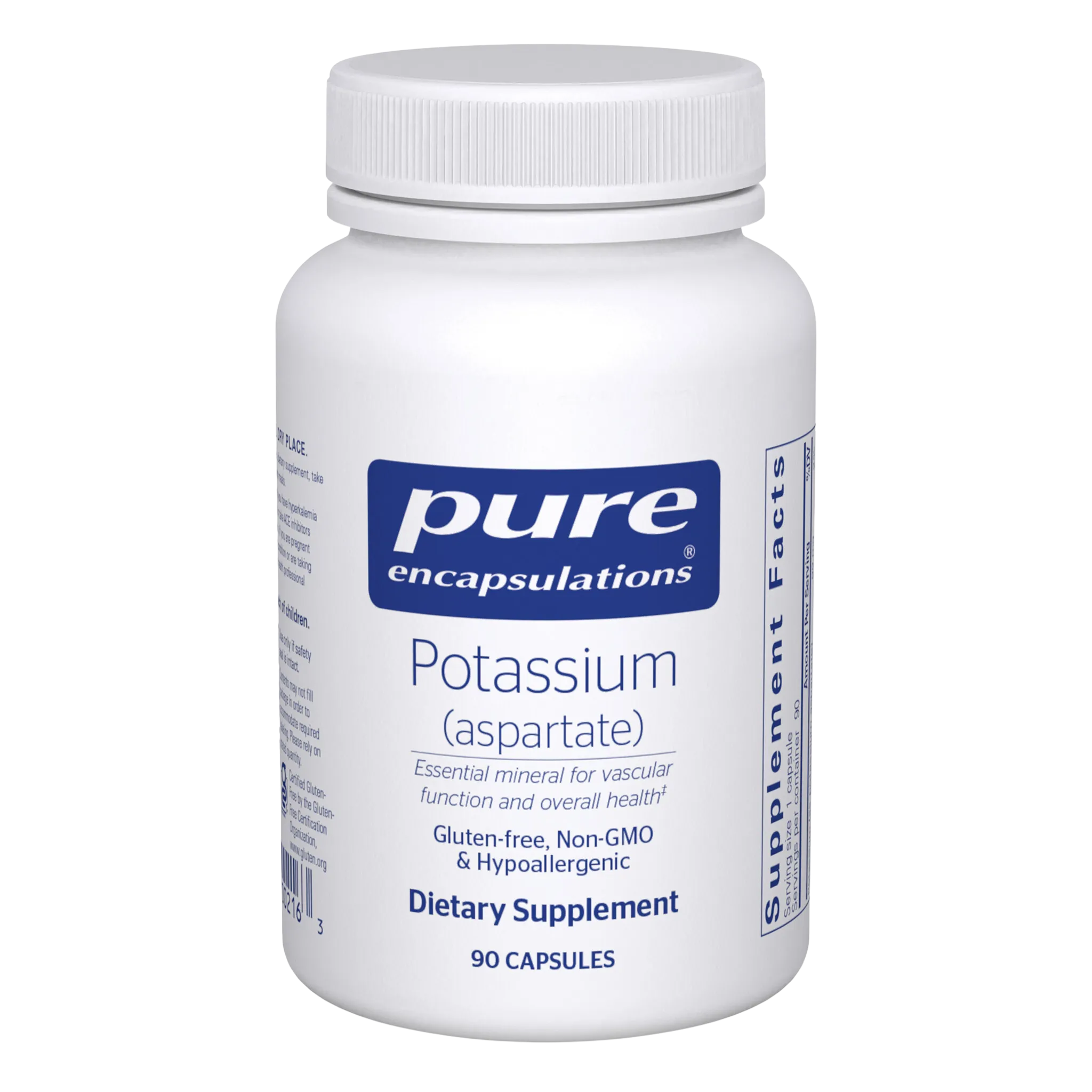
In the United States, over-the-counter potassium supplements in capsule or tablet form are strictly regulated by the FDA and limited to 99 mg of elemental potassium per serving. This regulation is in place to prevent accidental spikes in blood potassium levels, which can be dangerous. The suggested use for this pure encapsulations formula is 1 capsule, taken 1 to 2 times daily. Because potassium is a water-soluble mineral that is rapidly processed by the kidneys, it is generally best to divide your doses throughout the day rather than taking them all at once. This helps maintain a steady, consistent level of potassium in the bloodstream, providing continuous support for your cellular pumps.
To maximize absorption and further minimize any potential for gastrointestinal irritation, it is highly recommended to take potassium aspartate with meals and a full glass of water. Taking it alongside a balanced meal that includes healthy fats and complex carbohydrates can slow the transit time through the digestive tract, allowing for more complete absorption. If you are struggling with changes to your sense of smell and taste due to Long COVID, integrating supplements seamlessly into your modified diet is a practical way to ensure you are meeting your baseline nutritional needs. Always start with the lowest effective dose and monitor your body's response before increasing the frequency.
Crucial Safety Warnings and Drug Interactions
While potassium is an essential nutrient, supplementation must be approached with profound respect and caution, particularly for patients with complex chronic illnesses who are managing multiple prescription medications. The primary risk associated with excessive potassium intake is hyperkalemia—a potentially life-threatening condition where blood potassium levels become dangerously high, leading to severe cardiac arrhythmias and muscle paralysis. Your kidneys are responsible for filtering and excreting excess potassium, so individuals with any form of abnormal kidney function or chronic kidney disease must strictly avoid potassium supplements unless explicitly directed and closely monitored by a nephrologist.
Furthermore, there are several critical drug interactions that every patient must be aware of. You must NOT take potassium supplements if you are currently prescribed ACE inhibitors (e.g., lisinopril), Angiotensin II receptor blockers (ARBs), or potassium-sparing diuretics (such as spironolactone). These medications, frequently used to manage blood pressure or specific hormonal imbalances, fundamentally alter the kidneys' ability to excrete potassium. Combining these drugs with over-the-counter potassium supplements can cause blood levels to spike rapidly and dangerously. Always consult with your prescribing physician or a knowledgeable pharmacist before adding potassium aspartate to your regimen to ensure it is safe for your specific physiological profile.

Follow the Science: Clinical Evidence for Potassium
Cardiovascular Benefits and Blood Pressure Regulation
The scientific literature robustly supports the cardiovascular benefits of targeted potassium supplementation. A major 2017 meta-analysis published in PLOS One, which reviewed 23 randomized controlled trials involving over 1,200 participants, demonstrated that oral potassium supplementation resulted in highly significant reductions in blood pressure. The study found that systolic blood pressure dropped by an average of -4.25 mmHg, and diastolic pressure dropped by -2.53 mmHg compared to placebo groups. These findings underscore potassium's critical role in promoting vasodilation and counteracting the hypertensive, vasoconstrictive effects of high sodium diets—a mechanism that is particularly relevant for dysautonomia patients struggling to balance their electrolyte intake.
Further research highlights a nuanced, dose-dependent relationship. A 2020 dose-response meta-analysis in the AHA Journals revealed a "U-shaped" curve regarding potassium intake and cardiovascular health. The blood pressure-lowering effects were most pronounced in individuals with underlying hypertension and those consuming high-sodium diets. However, the study also noted that excessively high doses could negate these benefits, reinforcing the importance of moderate, targeted supplementation rather than mega-dosing. For patients navigating the complexities of what drugs are used for COVID long haulers, understanding how simple minerals like potassium interact with vascular health is a vital piece of the puzzle.
Autonomic Function and Heart Rate Variability in Long COVID
Recent clinical investigations have begun to directly connect potassium levels to the specific autonomic dysfunctions seen in post-viral syndromes. A pivotal August 2025 retrospective study by Li et al. investigated the link between electrolyte imbalances and cardiac injury in Long COVID patients. The researchers discovered that persistent hypokalemia directly impaired cardiac autonomic function. Remarkably, when patients experiencing arrhythmias and altered heart rate variability (HRV) were given potassium and magnesium supplementation for 14 days, they showed significant improvements. The supplemented group demonstrated enhanced HRV metrics, a reduction in premature heartbeats, and notably lower scores on standardized pain and fatigue questionnaires compared to the control group.
These findings align with broader epidemiological data regarding the prevalence of autonomic dysfunction in the post-COVID population. A comprehensive cohort study of 467 highly symptomatic Long COVID patients found that 31% met the diagnostic criteria for POTS. These individuals exhibited significantly lower physical capacity, shorter 6-minute walk distances, and higher heart rates during exertion than non-POTS long-haulers. Because POTS is characterized by profound cardiovascular instability, characterizing this high-burden phenotype emphasizes the urgent need for physiological interventions. Addressing foundational electrolyte imbalances with highly bioavailable forms like potassium aspartate represents a logical, science-backed approach to stabilizing this severe autonomic dysregulation.
Muscle Function and Hypokalemia Management
The clinical evidence linking potassium to muscle function is deeply rooted in the treatment of specific channelopathies. In conditions like Hypokalemic Periodic Paralysis (HypoPP)—which shares remarkable symptomatic overlap with the sudden, severe muscle weakness seen in ME/CFS crashes—clinical studies demonstrate that targeted potassium supplementation is a frontline treatment. Research indicates that maintaining optimal intracellular potassium levels significantly reduces the frequency of paralytic attacks, improves resting muscle strength, and restores physical functionality. While general idiopathic fatigue in healthy populations may not respond to potassium, the profound, cellular-level exhaustion driven by the Na+/K+-ATPase pump failure in post-viral conditions presents a distinct physiological target where restoring the electrochemical gradient is therapeutically justified.
The Path Forward
Integrating Potassium into a Comprehensive Plan
Living with invisible, unpredictable illnesses like Long COVID, ME/CFS, and POTS is an exhausting, daily battle. It is entirely valid to feel overwhelmed when standard medical advice falls short or when prescribed treatments seem to exacerbate your symptoms. Understanding the profound cellular mechanisms at play—like the failure of the sodium-potassium pump and the disruption of the RAAS pathway—validates that your fatigue and heart palpitations are rooted in deep, physiological dysfunction, not anxiety or deconditioning. While no single supplement is a miracle cure, providing your body with the foundational elements it needs to generate energy and regulate electrical signaling is a powerful step toward reclaiming your quality of life.
Potassium aspartate should be viewed as one highly specific tool within a much broader, comprehensive management strategy. It works best when combined with rigorous symptom tracking, aggressive pacing to avoid post-exertional malaise, and a carefully balanced nutritional plan. If you are currently navigating the complexities of a high-salt diet for dysautonomia, or if you suspect your daily energy crashes are linked to intracellular depletion, optimizing your potassium intake could be the missing link in stabilizing your cellular battery. Because Long COVID symptoms can come and go unpredictably, maintaining a consistent baseline of essential electrolytes is crucial for building physical resilience over time.
Listening to Your Body's Signals
As you explore new management strategies, remember that your body's responses are the ultimate guide. Start slow, monitor how your muscles feel after exertion, and pay close attention to your heart rate variability and orthostatic symptoms. Healing from complex chronic illness is rarely a linear path; it requires patience, self-compassion, and a willingness to adjust your approach as you gather more data about what your unique biology requires. You are the leading expert on your own body, and advocating for comprehensive metabolic support is your right as a patient.
Next Steps in Your Healing Journey
If you are ready to support your cellular energy production, promote healthy muscle contraction, and stabilize your cardiovascular function, consider discussing this bioavailable form of potassium with your medical team. Always consult your healthcare provider before beginning any new supplement, especially to ensure it aligns safely with your current medications and kidney function.
Sources
Postviral Nutrition: Potassium and Post-Viral Autonomic Conditions
PLOS One (2017) - Oral potassium supplementation for management of essential hypertension
AHA Journals (2020) - Potassium Intake and Blood Pressure: A Dose-Response Meta-Analysis
PMC (2017) - Review of the Diagnosis and Treatment of Periodic Paralysis