Can PharmaGABA Calm the Nervous System in Long COVID and ME/CFS?
March 6, 2026
PharmaGABALong COVIDME/CFS
Share:
Disclaimer: The information provided here is for educational purposes only and is not intended as medical advice. It should not be used to diagnose, treat, cure, or prevent any medical condition. Instead, use it as a starting point for discussion with your healthcare provider. Always consult with a qualified healthcare provider before starting any new medication, supplement, device, or making changes to your health regimen.
Months or even years after a viral infection, many patients with complex chronic conditions find themselves trapped in a paradoxical state: profoundly exhausted, yet entirely unable to rest. This "wired but tired" sensation is a hallmark of conditions like Long COVID, myalgic encephalomyelitis/chronic fatigue syndrome (ME/CFS), and dysautonomia. You might feel an internal tremor, a racing heart, or a brain that simply will not shut off, even when your body is demanding sleep. This relentless hyperarousal is not just anxiety; it is a profound biochemical imbalance in the nervous system.
At the center of this neurological storm is a critical molecule called gamma-aminobutyric acid, or GABA. In a healthy body, GABA acts as the nervous system's natural braking system, halting the cascade of stress hormones and allowing the body to enter a restorative parasympathetic state. However, emerging research suggests that chronic neuroinflammation, viral persistence, and gut dysbiosis can severely deplete our natural GABA reserves. In this comprehensive guide, we will explore the intricate biochemistry of GABA, how complex chronic illnesses disrupt its production, and how a naturally fermented supplement like PharmaGABA-250 may help restore autonomic balance, support restful sleep, and calm a hyperactive nervous system.
TL;DR
GABA is a calming neurotransmitter often depleted in chronic conditions like Long COVID and ME/CFS.
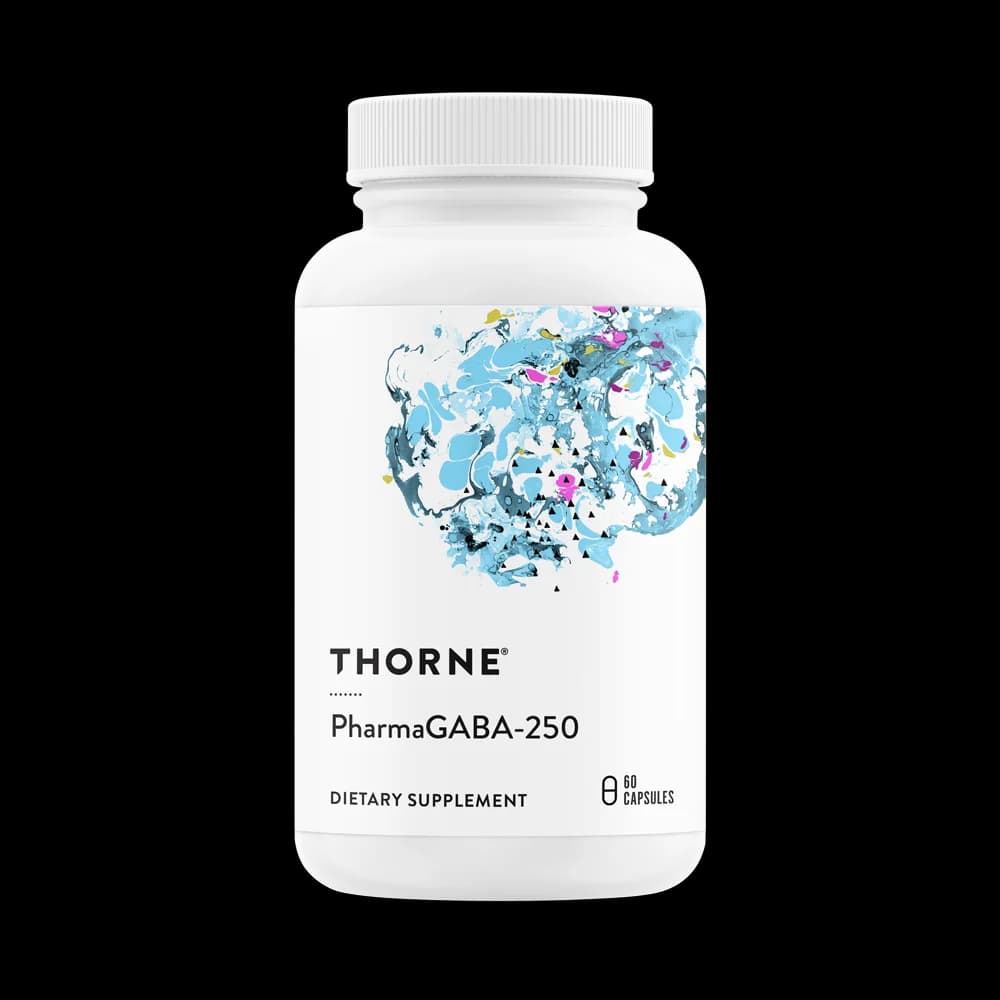
PharmaGABA is a naturally fermented supplement that targets gut receptors to help calm the nervous system.
Research suggests it may help improve sleep, reduce hyperarousal, and support autonomic balance.
Always consult your doctor before starting GABA, especially if taking blood pressure or sedative medications.
What is PharmaGABA?
Gamma-aminobutyric acid (GABA) is a non-proteinogenic amino acid that functions as the primary inhibitory neurotransmitter in the mammalian central nervous system (CNS). To understand GABA, we must first understand its biochemical opposite: glutamate. Glutamate is the brain's main excitatory neurotransmitter, responsible for stimulating neurons, promoting wakefulness, and facilitating rapid cognitive processing. In a healthy nervous system, glutamate and GABA exist in a delicate, tightly regulated seesaw. When a threat or stressor passes, the brain must quickly synthesize GABA to counteract glutamate, preventing the nervous system from burning out.
The synthesis of GABA is a fascinating biochemical process. The body actually creates this calming molecule directly from the stimulating molecule, glutamate. This conversion is catalyzed by an enzyme called glutamic acid decarboxylase (GAD). For GAD to function properly, it requires the active form of vitamin B6 (pyridoxal 5'-phosphate or P5P) as a crucial cofactor. Once synthesized, GABA is packaged into synaptic vesicles and released into the synaptic cleft, where it binds to specific receptors on neighboring neurons to exert its profound calming effects. According to a 2020 systematic review in Frontiers in Neuroscience, GABAergic neurons account for roughly one-third of all synapses in the central nervous system, underscoring its vital role in neural homeostasis.
When GABA is released, it primarily interacts with two distinct classes of receptors, each utilizing a different mechanism to calm the nervous system. The first are GABA-A receptors, which are fast-acting, ligand-gated ion channels. When a GABA molecule binds to a GABA-A receptor, it triggers the channel to open, allowing negatively charged chloride ions to flood into the neuron. This sudden influx of negative charge causes cellular hyperpolarization, meaning the internal environment of the cell becomes so negative that it is physically unable to fire an action potential. This rapid shutdown of electrical signaling is what produces immediate feelings of relaxation and sleepiness.
The second class, GABA-B receptors, operate on a slower, more sustained timeline. These are metabotropic, G-protein-coupled receptors. Instead of directly opening an ion channel, the binding of GABA to a GABA-B receptor sets off a secondary messenger cascade inside the cell. This cascade eventually opens potassium channels (allowing positive ions to exit) and closes calcium channels (preventing positive ions from entering). The result is a prolonged, deep inhibition of the neuron. This slower pathway is crucial for maintaining deep, restorative sleep architectures and preventing the chronic muscle spasticity often seen in neurological disorders.
While we often think of neurotransmitters as existing solely in the brain, a massive portion of the body's GABA is actually produced and utilized in the gastrointestinal tract. The gut is lined with its own complex neural network known as the enteric nervous system (ENS), which operates semi-independently from the brain. Within this environment, beneficial gut bacteria—particularly strains of Lactobacillus and Bifidobacterium—naturally synthesize large quantities of GABA as a byproduct of fermenting dietary fibers.
This gut-derived GABA plays a critical role in local intestinal motility, reducing visceral pain, and modulating the local immune response. Furthermore, this peripheral GABA communicates directly with the brain via the vagus nerve. The vagus nerve acts as a bi-directional superhighway, sensing the calming GABAergic signals in the gut and transmitting them upward to the central nervous system. This gut-vagus-brain pathway is essential for regulating the Hypothalamic-Pituitary-Adrenal (HPA) axis, which controls our systemic response to stress.