Can P-5-P (Active Vitamin B6) Calm the Nervous System in Long COVID and POTS?
March 6, 2026
P-5-PVitamin B6Long COVID
Share:
Disclaimer: The information provided here is for educational purposes only and is not intended as medical advice. It should not be used to diagnose, treat, cure, or prevent any medical condition. Instead, use it as a starting point for discussion with your healthcare provider. Always consult with a qualified healthcare provider before starting any new medication, supplement, device, or making changes to your health regimen.
Months or even years after recovering from an initial SARS-CoV-2 infection, many individuals find themselves trapped in a bewildering maze of unpredictable symptoms. One day, it’s a racing heart and profound dizziness upon standing; the next, it’s a sudden, severe allergic reaction to a food they’ve eaten their entire lives. For patients navigating the complex realities of Long COVID, myalgic encephalomyelitis/chronic fatigue syndrome (ME/CFS), mast cell activation syndrome (MCAS), and dysautonomia, standard blood panels often return completely "normal," leaving them without answers and profoundly invalidated. Learn more about How Does a Doctor Diagnose Long COVID?.
Behind the scenes of these invisible illnesses, however, a profound biochemical disruption is often taking place at the cellular level. The body's autonomic nervous system, immune response, and neurotransmitter production are highly dependent on specific micronutrient "spark plugs" to function correctly. When viral infections, chronic inflammation, or gut dysbiosis deplete these critical cofactors, the systems they support begin to misfire, creating a cascade of debilitating symptoms.
One of the most critical, yet frequently misunderstood, of these cellular spark plugs is Vitamin B6. But simply taking a standard, over-the-counter B-complex may not be the solution—and in some cases, it can actually make symptoms worse. The key lies in understanding the profound difference between inactive, synthetic forms of the vitamin and its biologically active coenzyme form: Pyridoxal-5-Phosphate (P-5-P). In this article, we will explore the deep biochemical mechanisms of P-5-P, how complex chronic illnesses disrupt its pathways, and why this specific nutrient is essential for calming the nervous system, degrading histamine, and supporting overall metabolic recovery.
TL;DR
P-5-P is the active form of Vitamin B6, essential for nervous system and immune health.
Standard B6 (pyridoxine) can build up and may worsen nerve symptoms, making active P-5-P a safer choice.
P-5-P supports GABA production, which may help calm the nervous system and manage dysautonomia symptoms.
It also activates the DAO enzyme, helping your body break down histamine and manage MCAS flares.
What is P-5-P (Pyridoxal-5-Phosphate)?
The Biologically Active Coenzyme
When we talk about Vitamin B6, we are not actually referring to a single molecule. Vitamin B6 is an umbrella term for six related water-soluble compounds, known as vitamers. The most common form found in fortified foods and inexpensive dietary supplements is pyridoxine hydrochloride, a highly stable but biologically inactive synthetic compound. The human body cannot use pyridoxine directly; it must first transport it to the liver to undergo a complex, multi-step conversion process.
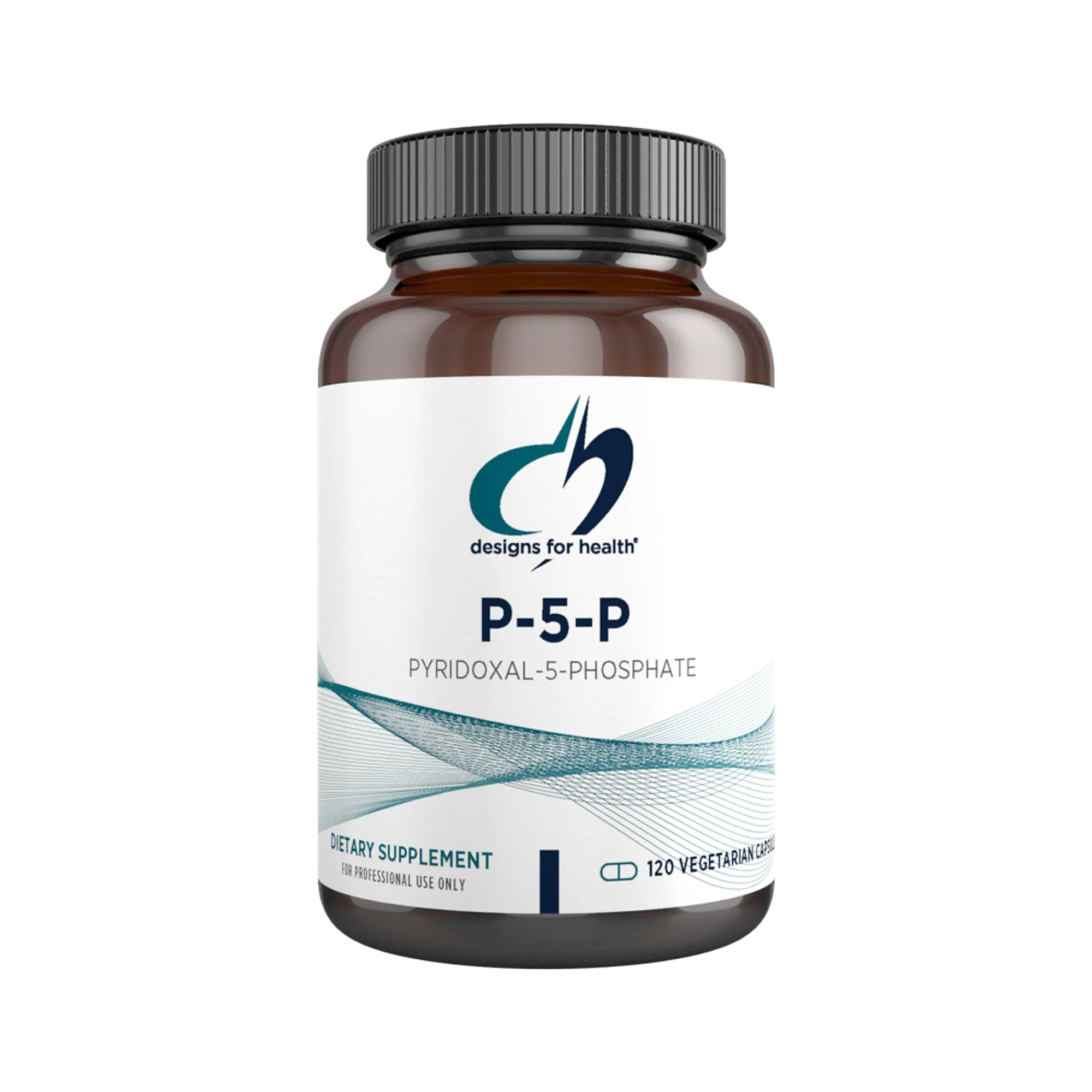
Pyridoxal-5-Phosphate (P-5-P), on the other hand, is the biologically active, coenzyme form of Vitamin B6. It is the exact molecule the body ultimately requires to function. As a coenzyme, P-5-P acts as an indispensable catalyst for over 140 distinct enzymatic reactions throughout the human body, accounting for approximately 4% of all classified enzymatic activities. Without P-5-P, these vital enzymes remain dormant, and the biochemical pathways they control grind to a halt.
The Decarboxylation of Neurotransmitters
To understand how P-5-P regulates the nervous system, we must look at its elegant molecular mechanism. Enzymes responsible for synthesizing our brain's chemical messengers are produced by the body in an inactive state called apoenzymes. When P-5-P enters a cell, it docks into a specific lysine amino acid residue at the enzyme's active site, forming a specialized chemical bond known as a Schiff base.
This Schiff base bond allows P-5-P to act as an "electron sink." In biochemistry, an electron sink stabilizes highly reactive, volatile molecules during chemical reactions. By stabilizing these intermediates, P-5-P allows the enzyme to safely perform decarboxylation—the precise removal of a carboxyl group from an amino acid. This specific decarboxylation process is exactly how the body transforms dietary amino acids into powerful, active neurotransmitters like GABA, serotonin, and dopamine.
Beyond the Brain: Histamine and Metabolism
While its role in neurochemistry is profound, P-5-P's influence extends far beyond the brain. It is a mandatory cofactor in the transsulfuration pathway, a critical segment of the body's methylation cycle. Here, P-5-P drives the conversion of homocysteine—an inflammatory amino acid—into glutathione, the body's master antioxidant. This process is essential for protecting cellular mitochondria and blood vessel linings from oxidative stress.
Furthermore, P-5-P is deeply involved in amino acid and lipid metabolism, ensuring that cells can efficiently convert nutrients into usable adenosine triphosphate (ATP) energy. Most importantly for patients with allergic-type symptoms, P-5-P is the required spark plug for the enzymes that break down and clear histamine from the body, acting as a critical regulator of immune system homeostasis.
How Long COVID and Dysautonomia Impact Vitamin B6 Pathways
Gut Dysbiosis and the Loss of Endogenous P-5-P
The connection between complex chronic illnesses like Long COVID and severe Vitamin B6 depletion often begins in the gastrointestinal tract. Current research points to the gut-brain axis as a primary driver of systemic P-5-P deficiency in post-viral syndromes. Extensive microbiome studies of patients with Long COVID and ME/CFS frequently reveal severe gut dysbiosis, characterized by the eradication of specific beneficial bacteria, notably Bacteroides and Bifidobacterium. Read more about What Causes Long COVID?.
The loss of Bacteroides is highly significant because it is one of only a few known bacterial species capable of producing active P-5-P endogenously within the human gut. When a viral infection like SARS-CoV-2 damages the microbiome and wipes out these bacterial populations, the body essentially loses its internal, 24/7 Vitamin B6 manufacturing facility. This sudden drop in endogenous P-5-P sets off a domino effect that disrupts multiple interconnected bodily systems.
Sympathetic Overdrive and the GABA Deficit in POTS
One of the most immediate consequences of P-5-P depletion is the disruption of the autonomic nervous system, leading to conditions like postural orthostatic tachycardia syndrome (POTS) and general dysautonomia. The autonomic nervous system relies on a delicate balance between excitatory signals (the "fight-or-flight" sympathetic state) and inhibitory signals (the "rest-and-digest" parasympathetic state). This balance is governed by neurotransmitters.
Gamma-aminobutyric acid (GABA) is the central nervous system's primary inhibitory neurotransmitter, responsible for calming neuronal excitability and keeping heart rate and blood pressure regulated. The body creates GABA by converting glutamate (an excitatory neurotransmitter) using an enzyme that strictly requires P-5-P. When P-5-P is depleted, GABA production crashes, leaving excitatory glutamate unchecked. This removes the "brakes" from the nervous system, driving the hyperadrenergic state, rapid heart rate, and profound "wired and tired" feeling characteristic of POTS.
The Histamine Overflow in MCAS
Mast cell activation syndrome (MCAS) is a highly prevalent comorbidity in this patient population. In MCAS, unstable immune cells inappropriately release massive amounts of inflammatory mediators, primarily histamine. To prevent histamine toxicity, the body relies on specific enzymes to constantly break it down and clear it from the bloodstream.
The primary enzyme responsible for degrading dietary histamine in the gut is Diamine Oxidase (DAO). DAO is entirely dependent on P-5-P to function. When post-viral gut dysbiosis depletes P-5-P levels, the DAO enzyme becomes paralyzed. Dietary histamine is no longer broken down; instead, it enters the bloodstream, overflowing the body's "histamine bucket." This excess histamine triggers massive vasodilation (the widening of blood vessels), which severely exacerbates the blood-pooling and tachycardia seen in dysautonomia, creating a vicious, self-perpetuating cycle of inflammation and autonomic dysfunction.
P-5-P: Supporting Neurotransmitter Balance and Histamine Clearance
Restoring the GABAergic Brake System
Targeted supplementation with the active P-5-P form of Vitamin B6 can help support the disrupted biochemical pathways that drive chronic illness symptoms. The most profound mechanism of action is its ability to restore the GABAergic brake system. P-5-P directly binds to and activates Glutamate Decarboxylase (GAD), the specific enzyme responsible for converting excitatory glutamate into calming GABA.
By supporting the GAD enzyme, P-5-P may help lower the toxic accumulation of glutamate in the brain while simultaneously supporting GABA levels. This shift is critical for patients suffering from hyperadrenergic POTS and severe anxiety, as it may help quiet the overactive sympathetic nervous system, reduce neuroinflammation, and provide the physiological signaling required for the body to enter a restorative, parasympathetic state.
Activating the DAO Enzyme for Histamine Degradation
For patients battling MCAS and severe food intolerances, P-5-P acts as the essential spark plug for histamine degradation. By supplying the active coenzyme directly to the gut mucosa, P-5-P binds to the Diamine Oxidase (DAO) apoenzyme, instantly activating it. This allows the digestive tract to efficiently break down biogenic amines and dietary histamine before they can cross into systemic circulation.
Furthermore, P-5-P is also required for the function of Histamine-N-methyltransferase (HNMT), the enzyme responsible for clearing intracellular histamine within the central nervous system. By supporting both the DAO and HNMT pathways simultaneously, P-5-P provides a dual-action approach to lowering the body's total histamine burden, which in turn reduces the vasodilation and vascular permeability that trigger dysautonomia flares.
Fueling Serotonin and Dopamine Synthesis
The profound cognitive fatigue, lack of motivation, and sleep disturbances seen in ME/CFS and Long COVID are heavily linked to the depletion of serotonin and dopamine. P-5-P is the rate-limiting cofactor for Aromatic L-amino acid decarboxylase (AADC), a highly versatile enzyme that drives two distinct pathways. First, AADC uses P-5-P to decarboxylate 5-hydroxytryptophan (5-HTP) directly into serotonin, the neurotransmitter responsible for mood regulation and the precursor to the sleep hormone melatonin.
Simultaneously, the exact same P-5-P-dependent AADC enzyme is used to decarboxylate levodopa (L-DOPA) into dopamine, the neurotransmitter critical for executive function, motor control, and reward-seeking behavior. By ensuring the AADC enzyme is fully saturated with its required P-5-P cofactor, supplementation supports the healthy, balanced production of these vital neurotransmitters, helping to lift the heavy veil of brain fog and restore healthy sleep-wake cycles.
Symptoms P-5-P May Help Manage
Neurological and Autonomic Symptoms
Hyperadrenergic Surges and Tachycardia: By activating the GAD enzyme, P-5-P increases the production of calming GABA, which helps apply the brakes to an overactive sympathetic nervous system, reducing the intensity and frequency of adrenaline dumps and rapid heart rate spikes.
Brain Fog and Cognitive Fatigue: P-5-P is the required cofactor for the AADC enzyme, which synthesizes dopamine and serotonin. Supporting these neurotransmitters may help improve executive function, focus, and mental clarity.
Sleep Disturbances and Insomnia: Serotonin is the direct biochemical precursor to melatonin, the body's primary sleep hormone. By supporting serotonin synthesis, P-5-P indirectly supports the restoration of healthy circadian rhythms and deep, restorative sleep.
Immune and Metabolic Symptoms
Food Intolerances and MCAS Flares: P-5-P is the mandatory spark plug for the DAO enzyme. By supporting DAO, P-5-P may enhance the gut's ability to break down dietary histamine, potentially reducing bloating, flushing, hives, and systemic allergic-type reactions.
Post-Exertional Malaise (PEM): P-5-P drives the transsulfuration pathway, allowing the body to convert homocysteine into glutathione. This master antioxidant protects cellular mitochondria from oxidative stress, supporting more efficient ATP energy production and potentially raising the threshold for exertion.
Small Fiber Neuropathy Symptoms: Unlike inactive pyridoxine, which can cause nerve damage at high doses, supplementing directly with active P-5-P avoids the neurotoxic accumulation of unmetabolized B6, protecting the delicate small nerve fibers that control autonomic function.
Practical Considerations: Forms, Dosing, and the Vitamin B6 Paradox
The Danger of Inactive Pyridoxine Hydrochloride
When considering Vitamin B6 supplementation, understanding the difference between forms is not just a matter of optimization—it is a matter of profound neurological safety. This brings us to the "Vitamin B6 Paradox." For years, scientists were puzzled as to why the symptoms of Vitamin B6 toxicity perfectly mimicked the symptoms of Vitamin B6 deficiency, specifically presenting as severe, length-dependent small fiber neuropathy (numbness, tingling, and burning pain in the extremities).
Recent toxicological research has finally solved this paradox. High doses, or prolonged use, of standard, inactive pyridoxine hydrochloride (found in most cheap supplements and energy drinks) cause a buildup of unmetabolized pyridoxine in the blood. This inactive pyridoxine acts as a competitive inhibitor; it aggressively binds to cellular receptors, blocking the active P-5-P from entering the cells. Essentially, massive doses of inactive pyridoxine suffocate the nerves, starving them of the active P-5-P they need to survive, thereby causing an intracellular deficiency and subsequent nerve damage. Because small nerve fibers control the autonomic nervous system, this pyridoxine-induced neuropathy directly worsens dysautonomia.
Bypassing the Liver's Metabolic Bottleneck
To avoid this toxicity, the liver must convert inactive pyridoxine into P-5-P using two specific enzymes: Pyridoxal kinase (PDXK) and Pyridox(am)ine 5'-phosphate oxidase (PNPO). You can think of the liver as a highly secure processing facility. Inactive pyridoxine arrives at the loading dock, but it cannot enter the bloodstream until it passes through the PNPO assembly line.
However, the PNPO enzyme is incredibly fragile. It is strictly dependent on Riboflavin (Vitamin B2) to function. If a patient has a riboflavin deficiency, liver dysfunction, or genetic mutations affecting the PNPO enzyme, the assembly line breaks down. The inactive pyridoxine piles up on the loading dock, eventually spilling over and causing toxic damage to the peripheral nerves. By supplementing directly with P-5-P, you completely bypass this metabolic bottleneck, helping to ensure that the body receives the active, safe coenzyme regardless of liver health or genetic variations.
Synergistic Cofactors and Absorption
For optimal absorption and utilization, P-5-P should be considered as part of a broader nutritional symphony. Because B vitamins work in tandem, ensuring adequate intake of Riboflavin (Vitamin B2) and Magnesium is crucial, as magnesium itself is a required cofactor for many P-5-P-dependent reactions. When taking P-5-P, timing can be highly individualized. Because it supports both calming GABA and stimulating dopamine, some patients find it provides a gentle energy lift and prefer taking it in the morning, while others find its GABA-enhancing effects deeply relaxing and prefer it in the evening. As always, tracking your specific symptom response is key. Learn more about What Are the Symptoms of Long COVID?.
Follow the Science
Clinical Evidence on DAO and Histamine Elimination
Recent biochemical research has quantified exactly how dependent the DAO enzyme is on active Vitamin B6 for histamine elimination. A pivotal 2024 study published in Clinical Chemistry explored the direct relationship between DAO quantity, histamine elimination ratios, and the influence of functional Vitamin B6. The researchers found that in blood samples with high functional Vitamin B6 levels (>20 µg/L), adding a DAO supplement successfully increased histamine elimination by a significant 20%.
In stark contrast, samples with low Vitamin B6 levels (<7 µg/L) exhibited minimal to no additional histamine elimination, even when a massive dose of supplemental DAO was administered. This clinical data proves a crucial point for MCAS patients: taking expensive DAO supplements or relying on natural DAO production is highly ineffective if the patient has an underlying P-5-P deficiency. Active B6 is an absolute prerequisite for histamine degradation.
The Neurotoxicity of Inactive B6
The shift away from standard pyridoxine toward P-5-P is heavily supported by in vitro toxicological data. A landmark 2017 study published in Toxicology in Vitro investigated the neurotoxic effects of different Vitamin B6 vitamers on human neuronal cells (SH-SY5Y cells). The researchers demonstrated that while inactive pyridoxine induced cell death in a concentration-dependent manner, P-5-P and other active vitamers did not cause cellular toxicity.
This cellular data aligns perfectly with clinical observations, such as a 2017 case report in the Journal of Clinical Neuromuscular Disease which provided objective evidence that severe pyridoxine toxicity directly causes length-dependent, small fiber neuropathy and subsequent dysautonomia. Clinical testing in such patients showed abnormal electromyography and reduced sensory nerve action potentials, reinforcing the critical need to utilize the safe, active P-5-P form.
Anxiety, Seizures, and GABA Modulation
The psychiatric and neurological benefits of P-5-P are well-documented in recent literature. A 2025 systematic review synthesizing decades of data found that Vitamin B6/P-5-P deficiency severely disrupts GABAergic signaling. The clinical trials analyzed demonstrated that targeted P-5-P supplementation can reduce anxiety symptoms by 20% to 30% by directly enhancing GABA-mediated neuronal inhibition.
Furthermore, the absolute necessity of P-5-P for GABA production is highlighted in precision medicine. Research published in MDPI (2024) details how infants with genetic mutations in the PNPO enzyme (preventing the conversion of dietary B6 to P-5-P) suffer from catastrophic, treatment-resistant seizures due to a total lack of GABA. Standard anti-seizure drugs fail, but the direct administration of active P-5-P acts as a precision approach, which research suggests helps manage the seizures by bypassing the genetic defect and supporting GAD enzyme activity.
The Path Forward
A Targeted Approach to Autonomic Healing
Living with conditions like Long COVID, ME/CFS, dysautonomia, and MCAS often feels like fighting a war on multiple fronts. The sheer unpredictability of symptoms—from sudden heart rate spikes to debilitating cognitive fatigue and food reactions—can be incredibly isolating, especially when standard medical tests fail to capture the profound biochemical dysfunction occurring at the cellular level. It is entirely valid to feel frustrated by a medical system that often overlooks the intricate nuances of cellular metabolism and enzyme function. Read more about Do Long COVID Symptoms Come and Go?.
However, understanding the science behind these conditions offers a profound sense of hope. By recognizing that symptoms like hyperadrenergic surges and histamine intolerance are driven by specific enzymatic bottlenecks—such as the depletion of P-5-P—we can begin to address the root causes of autonomic and immune dysfunction. Healing is rarely a linear journey, and there is no single "magic pill" for complex chronic illness. True recovery requires a multi-pronged approach that honors your body's unique limits.
Comprehensive Care and Next Steps
Supplements like P-5-P are most effective when integrated into a comprehensive management strategy that includes aggressive pacing to prevent post-exertional malaise, meticulous symptom tracking, nervous system regulation techniques, and a tailored nutritional approach. By providing your body with the exact, biologically active coenzymes it needs to synthesize calming neurotransmitters and degrade inflammatory histamine, you are laying down the critical biochemical foundation required for cellular repair.
As always, it is essential to consult with a healthcare provider who understands the complexities of post-viral syndromes and dysautonomia before starting any new supplement regimen, especially to ensure proper dosing and avoid interactions with existing medications. If you are ready to explore how active Vitamin B6 can support your neurological and metabolic health, you can view our recommended, highly bioavailable options below.