Can Omega-3s Help Resolve Inflammation in Long COVID and Dysautonomia?
March 6, 2026
OmegAvail Hi-PoOmega-3Long COVID
Share:
Disclaimer: The information provided here is for educational purposes only and is not intended as medical advice. It should not be used to diagnose, treat, cure, or prevent any medical condition. Instead, use it as a starting point for discussion with your healthcare provider. Always consult with a qualified healthcare provider before starting any new medication, supplement, device, or making changes to your health regimen.
Months, or even years, after recovering from a viral infection like COVID-19, many people find themselves fighting a new, unpredictable battle. Debilitating fatigue that leaves you bedbound after a simple walk, sudden heart rate spikes upon standing, severe brain fog that makes reading a single page feel impossible, and unexplained allergic reactions become a daily reality. For those living with Long COVID, myalgic encephalomyelitis/chronic fatigue syndrome (ME/CFS), dysautonomia, and mast cell activation syndrome (MCAS), the search for medical answers can be as exhausting as the conditions themselves. You might be told your lab results look "normal," yet your lived experience is anything but.
A common thread weaving through these complex, interconnected conditions is a state of chronic, unresolved inflammation and profound cellular dysfunction. The body’s immune system, once activated by a trigger, fails to find its way back to baseline. In the quest to manage these debilitating symptoms and restore physiological balance, foundational nutrition plays a critical role. One of the most heavily researched and frequently recommended interventions by specialists in post-viral illness is high-quality Omega-3 fatty acid supplementation.
However, for patients with complex chronic illnesses, a standard, over-the-counter fish oil often isn't enough to move the needle. Understanding how specific, concentrated ratios of EPA and DHA—like those found in OmegAvail™ Hi-Po—work at a molecular level to actively resolve inflammation, protect damaged blood vessels, and stabilize hyperactive immune cells can empower you to make informed decisions about your daily management strategy. By targeting the root mechanisms of cellular health, Omega-3s offer a biologically plausible pathway toward symptom management and improved quality of life.
What Are EPA and DHA Omega-3s?
The Essential Building Blocks of Cellular Membranes
Omega-3 fatty acids, specifically eicosapentaenoic acid (EPA) and docosahexaenoic acid (DHA), are long-chain polyunsaturated fats that are absolutely fundamental to human health and survival. Unlike other types of fats that your body can synthesize from scratch using various dietary inputs, EPA and DHA are classified as "essential." This means your body cannot produce them in meaningful quantities on its own; they must be obtained directly through diet or targeted supplementation. In a healthy, well-functioning body, these fatty acids are incorporated directly into the phospholipid bilayer—the protective, semi-permeable membrane that surrounds and safeguards every single cell in your body.
When EPA and DHA are abundant in these cell membranes, they keep the membrane highly fluid and flexible. This fluidity is not just a structural feature; it is crucial for cellular communication. A flexible membrane allows cellular receptors to function properly, enabling hormones, neurotransmitters, and nutrients to pass in and out of the cell efficiently. DHA, in particular, is highly concentrated in the brain, retina, and nervous system. In the brain, DHA supports the structural integrity of neurons, facilitates the growth of new synaptic connections, and ensures rapid, efficient signal transmission across synapses. Without adequate DHA, cognitive processing slows down, and the brain becomes far more susceptible to oxidative stress and injury.
The Active Resolution of Inflammation
Beyond their vital structural role, EPA and DHA are metabolic powerhouses that govern how the immune system behaves. For decades, the scientific and medical communities believed that inflammation simply faded away passively on its own once a threat (like a viral infection or physical injury) was neutralized. We now understand that this is incorrect. The resolution of inflammation is, in fact, a highly active, tightly regulated biochemical process driven almost entirely by Omega-3 fatty acids. According to landmark research published by the NIH, when the body needs to turn off an immune response, enzymes at the site of inflammation convert EPA and DHA into a specialized class of lipid mediators known as Specialized Pro-resolving Mediators (SPMs).
These SPMs—which include specific molecular families known as resolvins, protectins, and maresins—act as the immune system's definitive "stop signals." They bind to highly specific G protein-coupled receptors on the surface of immune cells, actively halting the influx of inflammatory white blood cells (neutrophils) to the tissue. Furthermore, they signal macrophages (the immune system's "cleanup crew") to undergo a process called efferocytosis. During efferocytosis, macrophages safely consume and clear away cellular debris, dead tissue, and lingering viral fragments without triggering further inflammation.
Lipid Mediator Class Switching
This process relies on a phenomenon called "lipid mediator class switching." During the initial, acute phase of an infection, the body uses Omega-6 fatty acids (like arachidonic acid) to create pro-inflammatory signals (prostaglandins and leukotrienes) that sound the alarm and recruit immune cells. As the battle peaks, the enzymes literally switch their focus, grabbing nearby Omega-3s (EPA and DHA) to synthesize SPMs and initiate the repair phase. Without an adequate, readily available supply of EPA and DHA in the tissues, this class switching cannot occur. The body struggles to produce these crucial SPMs, leaving the immune system stuck in a continuous, damaging loop of chronic inflammation—a hallmark of conditions like Long COVID and ME/CFS.
How Long COVID and Dysautonomia Impact Cellular Health
The Vicious Cycle of Endothelial Dysfunction
In complex chronic conditions like Long COVID and ME/CFS, the body's inflammatory response fails to shut off, leading to widespread systemic damage. During an acute SARS-CoV-2 infection, the virus binds to ACE2 receptors, directly attacking the endothelium—the delicate, single-cell inner lining of your blood vessels. This viral invasion triggers a massive, localized immune response, leading to severe vascular damage, reduced nitric oxide availability, and the formation of microthrombi (microscopic blood clots). In Long COVID, this pro-thrombotic, dysfunctional endothelial state can persist for months or even years. Because the blood vessels are inflamed and stiff, they cannot efficiently deliver oxygen and vital nutrients to the muscles and organs. This cellular starvation directly contributes to the severe fatigue, muscle pain, and debilitating exercise intolerance known as post-exertional malaise (PEM).
This ongoing vascular damage is deeply intertwined with Omega-3 depletion. The standard Western diet is heavily skewed toward Omega-6 fatty acids, which serve as the building blocks for inflammation. When a severe virus triggers the immune system, the body rapidly consumes its available, often limited, Omega-3 stores to try and fight the infection and initiate repair. If these stores are not aggressively replenished, the cell membranes become entirely dominated by Omega-6s. This fuels an ongoing "eicosanoid storm," a state where the body continuously pumps out inflammatory cytokines, keeping the blood vessels inflamed, leaky, and unable to heal.
Neuroinflammation and the Blood-Brain Barrier
The damage caused by this systemic inflammation does not stop at the peripheral blood vessels; it profoundly impacts the central nervous system. Recent advanced neuroimaging studies have established a direct, undeniable link between damaged blood vessels and brain inflammation in Long COVID patients. When the endothelium is dysfunctional, the blood-brain barrier—a highly selective filter that protects the brain from circulating toxins—becomes "leaky" and compromised. Upregulated inflammatory factors and cytokines in the blood plasma cross this broken barrier, activating glial cells (astrocytes and microglia), which are the brain's resident immune cells.
Once activated, these glial cells release their own inflammatory chemicals, creating a localized state of neuroinflammation. This neuroinflammatory cascade is a primary physiological driver of the severe neuropsychiatric symptoms experienced by many patients. It is the biological root of the profound brain fog, cognitive impairment, memory loss, sensory overload, and post-viral depression that make daily functioning so incredibly difficult.
Autonomic Misfiring and Dysautonomia
Furthermore, this systemic and neurological inflammation wreaks havoc on the autonomic nervous system (ANS), leading to various forms of dysautonomia, most notably postural orthostatic tachycardia syndrome (POTS). The ANS controls all the involuntary functions of the body, including heart rate, blood pressure regulation, and digestion. When the nerves of the ANS are inflamed and the blood vessels cannot properly constrict to push blood up to the brain, the delicate balance between the sympathetic ("fight or flight") and parasympathetic ("rest and digest") nervous systems is entirely lost.
Patients with POTS typically exhibit highly erratic sympathetic overactivity, resulting in massive heart rate spikes simply from standing up. They also demonstrate very low heart rate variability (HRV) and poor vagal tone, meaning their bodies are locked in a state of constant physiological stress and cannot easily return to a resting state.
Mast Cell Hyperactivity and Lipid Mediators
For patients dealing with mast cell activation syndrome (MCAS), the depletion of Omega-3s creates a highly volatile, reactive cellular environment. Mast cells are key immune cells stationed throughout the body that release chemical mediators (like histamine) when triggered by allergens, stress, or viruses. When mast cell membranes are deficient in EPA and DHA and overloaded with Omega-6 arachidonic acid, they become structurally unstable and hyper-responsive. Upon activation, they rapidly metabolize those Omega-6s into potent, pro-inflammatory lipid mediators (such as Prostaglandin D2 and Leukotriene C4). This massive release drives the widespread allergic-type reactions, flushing, gastrointestinal distress, swelling, and pain characteristic of an unpredictable MCAS flare.
OmegAvail™ Hi-Po: Supporting Resolution and Repair
Reversing the Inflammatory Cascade
Supplementing with a high-concentration, balanced Omega-3 formula like OmegAvail™ Hi-Po provides the exact molecular substrates the body desperately needs to break the cycle of chronic illness. At the cellular level, flooding the system with 1,600 mg of EPA and DHA physically alters the composition of your cell membranes. The Omega-3s actively displace pro-inflammatory Omega-6 arachidonic acid from the phospholipid bilayer. By fundamentally altering this crucial Omega-6 to Omega-3 ratio, you effectively cut off the supply line that the body uses to manufacture inflammatory cytokines and prostaglandins.
More importantly, this massive influx of EPA and DHA allows the body to finally resume the production of Specialized Pro-resolving Mediators (SPMs). As detailed in a comprehensive 2024 study published in MDPI, these SPMs are not just passive anti-inflammatories; they actively trigger the "resolution phase" of the immune response. They bind to specific receptors to signal macrophages to clear out persistent viral fragments, degrade inflammatory mRNA, and safely remove cellular debris. This effectively programs the hyperactive immune system to stand down, stop attacking healthy tissue, and begin the arduous process of cellular repair and regeneration.
Cardiovascular and Autonomic Support
For patients battling dysautonomia and POTS, high-dose Omega-3s offer profound, targeted cardiovascular and neurological support. EPA and DHA directly improve microcirculatory function by increasing the endothelial production of nitric oxide, a vital signaling molecule that relaxes and dilates blood vessels. This vasodilatory effect directly counteracts the endothelial dysfunction, vascular stiffness, and micro-clotting seen in Long COVID, significantly improving the delivery of oxygen and nutrients to starved muscle tissues and organs.
Furthermore, Omega-3s act directly on the autonomic nervous system to restore balance. By integrating deeply into cardiac cell membranes, EPA and DHA modulate ion channels and calcium regulatory proteins, essentially acting as a natural, stabilizing pacemaker for the heart. Clinical research has shown that Omega-3s directly stimulate the vagus nerve, which enhances parasympathetic tone (the "rest and digest" system) and significantly increases heart rate variability (HRV). By calming the sympathetic nervous system, Omega-3s help mitigate the exaggerated, exhausting heart rate spikes that POTS patients experience upon standing or changing posture.
Stabilizing Mast Cells and Neuroinflammation
In the context of MCAS, Omega-3s act as powerful, natural mast cell stabilizers. By replacing Omega-6s in the mast cell membrane, EPA and DHA physically disrupt the assembly of "lipid rafts"—the specialized signaling platforms required for the mast cell to degranulate. By dismantling these rafts, Omega-3s blunt the cell's ability to inappropriately release massive amounts of histamine and inflammatory leukotrienes, leading to fewer and less severe mast cell flares.
Simultaneously, the high concentration of DHA in OmegAvail™ Hi-Po is uniquely equipped to cross the blood-brain barrier to combat neuroinflammation. Once inside the brain, DHA is converted into a highly specific SPM called Protectin D1 (also known in this context as Neuroprotectin D1). Neuroprotectin D1 actively resolves the activation of glial cells, protects neurons from oxidative stress, and prevents further neural damage. This targeted neuroprotective action is absolutely vital for clearing the persistent brain fog, reducing sensory overload, and alleviating the cognitive fatigue that so often accompany post-viral syndromes.

Symptoms Omega-3s May Help Manage
Based on their extensive mechanisms of action, high-concentration EPA and DHA Omega-3s may help manage several debilitating symptoms associated with complex chronic conditions. Here is a breakdown of how they target specific symptom clusters:
Neurological and Cognitive Symptoms
Severe Brain Fog and Cognitive Impairment: By crossing the blood-brain barrier and converting into Neuroprotectin D1, DHA actively reduces neuroinflammation, calms activated glial cells, and supports the structural integrity of neurons, leading to improved focus, memory, and mental clarity.
Mood Instability, Depression, and Anxiety: By lowering the systemic Omega-6 to Omega-3 ratio, EPA helps regulate the Hypothalamus-Pituitary-Adrenal (HPA) axis, reducing the neuro-inflammatory drivers that frequently cause post-viral depression and severe anxiety.
Sensory Overload: By stabilizing neural membranes and improving synaptic transmission, DHA helps the brain process incoming stimuli more efficiently, potentially reducing the overwhelming sensitivity to light, sound, and touch.
Cardiovascular and Autonomic Symptoms
Postural Tachycardia (POTS Spikes): Omega-3s integrate into cardiac cell membranes to modulate electrical signaling and stimulate the vagus nerve. This helps increase heart rate variability (HRV) and calms the abnormal, exhausting heart rate spikes that occur upon standing.
Post-Exertional Malaise (PEM) and Severe Fatigue: By improving endothelial function, reducing micro-clotting, and increasing nitric oxide production, EPA helps restore proper microcirculation. This ensures that oxygen and nutrients can efficiently reach exhausted muscle tissues during and after exertion, potentially raising the threshold for a PEM crash.
Shortness of Breath (Dyspnea): By resolving vascular inflammation in the pulmonary capillaries, Omega-3s can help improve oxygen exchange in the lungs, reducing the sensation of "air hunger."
Immunological and Pain Symptoms
Unpredictable MCAS Flares: Flooding mast cell membranes with EPA and DHA displaces pro-inflammatory Omega-6s and disrupts lipid rafts, physically stabilizing the cell and drastically reducing the massive release of histamine and inflammatory prostaglandins.
Joint Pain and Muscle Aches (Myalgia): The conversion of EPA and DHA into Specialized Pro-resolving Mediators (SPMs) actively signals the immune system to halt the infiltration of inflammatory white blood cells into joints and muscle tissues, significantly reducing systemic, widespread pain.
Chronic Swelling and Edema: By restoring vascular integrity and reducing the permeability of blood vessels, SPMs help prevent the leakage of fluid into surrounding tissues, reducing unexplained swelling.
Practical Considerations: Forms, Dosing, and Absorption
Understanding Bioavailability: Triglycerides vs. Ethyl Esters
When choosing an Omega-3 supplement, the amount of EPA and DHA printed on the label is only part of the equation. The molecular form of the oil dictates how well your body can actually absorb and utilize those fatty acids. Dietary fats naturally exist in a triglyceride (TG) structure, meaning three fatty acids are attached to a glycerol backbone. Our digestive systems have evolved over millions of years to process this specific form highly efficiently.
However, to purify fish oil, remove heavy metals like mercury, and concentrate the EPA and DHA levels, many manufacturers use a molecular distillation process that replaces the glycerol backbone with an ethanol molecule. This creates a synthetic Ethyl Ester (EE) form. While much cheaper to produce, pharmacokinetic studies show that EE forms are significantly harder for the body to digest. Pancreatic enzymes must work overtime to cleave the ethanol bond before the Omega-3s can be absorbed, leading to poor bioavailability. OmegAvail™ Hi-Po is formulated using the highly bioavailable triglyceride (TG) form. Premium manufacturers take an extra, costly step to re-esterify the purified oil back into its natural triglyceride state. Research consistently demonstrates that triglyceride forms yield up to 70% higher absorption rates compared to ethyl esters, ensuring that the high doses of EPA and DHA actually reach your cells.
Optimal Dosing and the "Fatty Meal" Effect
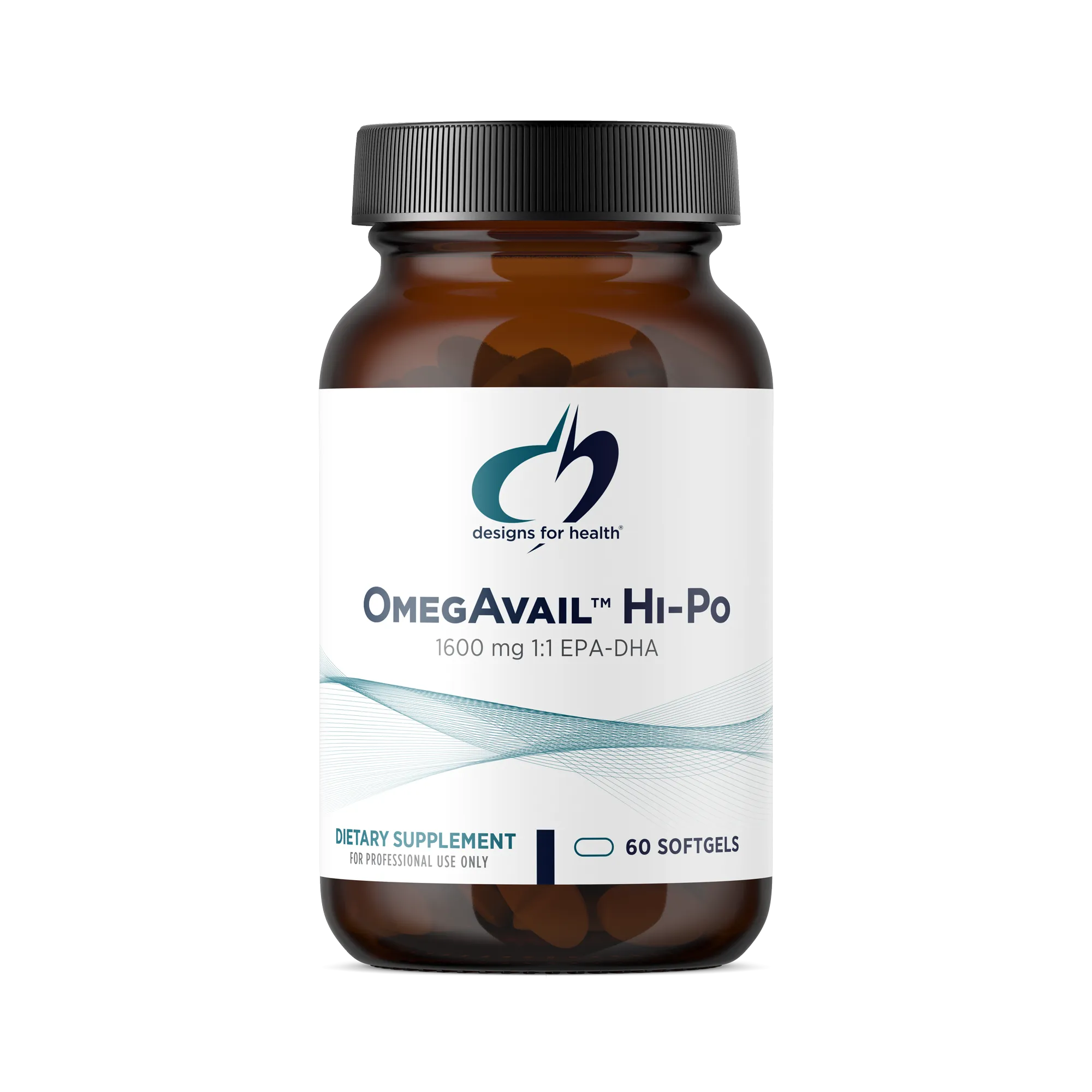
OmegAvail™ Hi-Po provides a highly potent 1,600 mg of combined EPA and DHA per two-softgel serving, in a carefully balanced 1-to-1 ratio. This balanced ratio is ideal for addressing the complex nature of post-viral syndromes, providing equal support for systemic, vascular inflammation (driven primarily by EPA) and neurocognitive symptoms (supported heavily by DHA). For patients dealing with severe dysautonomia, Long COVID, or ME/CFS, functional medicine practitioners often recommend 1 to 2 grams of combined EPA/DHA daily to achieve therapeutic blood levels and shift the Omega-3 index.
To maximize absorption, it is absolutely crucial to take your Omega-3 supplement with a meal that contains healthy dietary fats (such as avocado, olive oil, eggs, or nuts). The presence of dietary fat in the stomach triggers the release of pancreatic lipases and bile salts, which are biologically required to properly emulsify and absorb the Omega-3s in the intestines. Taking any fish oil supplement on an empty stomach drastically reduces its bioavailability, meaning you could be wasting a significant portion of the dose.
Safety, Purity, and Histamine Concerns for MCAS
For patients with mast cell activation syndrome (MCAS), the purity and freshness of a fish oil supplement are paramount. Fish naturally develop high levels of histamine if not processed or flash-frozen immediately after catching. Furthermore, fish oil supplements are highly susceptible to oxidation (going rancid). Consuming an oxidized or high-histamine fish oil will act as an immediate trigger, worsening inflammation and causing an MCAS flare rather than resolving it. OmegAvail™ Hi-Po is rigorously tested for purity, heavy metals, and oxidation markers, making it a safer, cleaner choice for highly sensitive individuals. However, if you have a known, severe IgE-mediated fish allergy, you should consult your provider about vegan, algae-based Omega-3 alternatives.
Additionally, because Omega-3s naturally improve blood flow, reduce blood viscosity, and have mild anti-platelet (blood-thinning) effects, they can interact with prescription blood thinners (like warfarin, Plavix, or Eliquis) or high, daily doses of NSAIDs. If you are currently on anticoagulant therapy, have a bleeding disorder, or have an upcoming surgery, you must discuss Omega-3 supplementation with your healthcare provider to ensure safe dosing and prevent excessive bleeding.

Follow the Science: Omega-3s and Chronic Illness
Clinical Trials in Long COVID and Post-Viral Syndromes
The scientific and medical communities are increasingly recognizing the profound therapeutic potential of Omega-3s for post-viral syndromes. A massive, landmark 2023 retrospective cohort study analyzed the electronic health records of over 2.2 million COVID-19 patients. The researchers compared those who received Omega-3 supplementation with those who did not. The findings were striking: patients taking Omega-3s had a significantly lower risk of developing post-COVID psychiatric sequelae. Specifically, they showed a reduced risk of developing depression (Hazard Ratio 0.828), anxiety disorders (HR 0.833), and insomnia (HR 0.679), as well as a reduced risk of prolonged myalgia (muscle pain).
In the realm of ME/CFS, the "Omega-3 Hypothesis" has been explored and debated for decades. Early pilot trials, such as those conducted by Dr. Basant Puri in 2004, demonstrated that high-dose, ultra-pure EPA supplementation could lead to marked, rapid improvements in cognitive dysfunction ("brain fog"), sleep quality, and severe fatigue in ME/CFS patients. The underlying biological theory is that persistent viral infections block the specific enzymes (like delta-6-desaturase) needed to convert short-chain dietary fats into anti-inflammatory long-chain fatty acids. This enzymatic blockade makes direct, high-dose EPA/DHA supplementation necessary to bypass the broken pathway and restore cellular membrane function.
Evidence for Dysautonomia, POTS, and HRV
Some of the most compelling and actionable recent data centers on the use of Omega-3s to regulate the autonomic nervous system. A highly significant 2022 clinical analysis published in MDPI investigated treatments for adolescents who developed POTS or Inappropriate Sinus Tachycardia following a COVID-19 infection. The study found that supplementing with 1 to 2 grams of Omega-3s daily yielded a massive reduction in the orthostatic heart rate increment—the abnormal, defining spike in heart rate upon standing. Specifically, Omega-3 supplementation reduced the heart rate increase from an average of 44.0 beats per minute (bpm) down to 25.6 bpm. By dropping this increment below the diagnostic threshold, Omega-3s effectively helped reverse the primary physiological symptom of POTS.
Similarly, extensive research on patients with various forms of cardiac autonomic dysfunction has shown that Omega-3s act as powerful, natural modulators of vagal tone. A randomized, double-blind controlled trial in 2018 involving patients on chronic dialysis demonstrated that 2 grams of marine Omega-3s daily significantly improved heart rate variability (HRV) indices and decreased resting baseline heart rates. This data strongly validates the use of high-quality Omega-3s as a foundational, evidence-based tool for calming the sympathetic nervous system and restoring autonomic balance in dysautonomia patients.
The Path Forward
Validating Your Experience
Living with complex, invisible conditions like Long COVID, ME/CFS, POTS, and MCAS often feels like navigating a dark maze without a map. The profound exhaustion that follows minor exertion, the unpredictable and terrifying heart rate spikes, and the thick cognitive fog are incredibly challenging. It is important to know that these symptoms are not in your head; they are rooted in measurable, physiological dysfunction, driven by damaged blood vessels, hyperactive immune cells, and chronic cellular inflammation. While the lack of definitive, quick-fix cures in modern medicine can be deeply frustrating, understanding the underlying mechanisms of your symptoms gives you actionable, science-backed targets for management.
A Comprehensive Strategy for Healing
High-quality, concentrated Omega-3 supplementation is a powerful, biologically plausible tool to help break the vicious cycle of chronic inflammation. By providing your body with the exact EPA and DHA molecules it needs to produce specialized pro-resolving mediators, stabilize volatile mast cells, and support autonomic nerve function, you are laying down the essential foundational building blocks for cellular repair. Over time, shifting your cellular membranes away from a pro-inflammatory state can help raise your baseline and improve your daily quality of life.
However, it is crucial to remember that supplements are just one piece of a much larger puzzle. They work best as part of a comprehensive, multi-system management approach that includes strict energy pacing to avoid PEM crashes, detailed symptom tracking, aggressive electrolyte and fluid management for dysautonomia, and personalized medical care. Always consult with your healthcare provider before starting any new supplement regimen, especially to ensure it aligns safely with your current medications and specific, individual health needs.