Can Omega-3 with CoQ10 Support Energy and Resolve Inflammation in Long COVID and ME/CFS?
March 6, 2026
Omega-3CoQ10Long COVID
Share:
Disclaimer: The information provided here is for educational purposes only and is not intended as medical advice. It should not be used to diagnose, treat, cure, or prevent any medical condition. Instead, use it as a starting point for discussion with your healthcare provider. Always consult with a qualified healthcare provider before starting any new medication, supplement, device, or making changes to your health regimen.
Months or even years after recovering from an initial viral infection, many individuals find themselves battling an unpredictable and debilitating array of symptoms. The profound exhaustion, cognitive impairment, and autonomic nervous system dysfunction associated with conditions like Long COVID and myalgic encephalomyelitis/chronic fatigue syndrome (ME/CFS) can completely derail a person's quality of life. For those suffering from these invisible illnesses, the search for validating answers and effective management strategies is often frustrating and exhausting. When cellular energy production falters and systemic inflammation becomes chronic, the body loses its ability to heal and maintain homeostasis.
In the pursuit of restoring cellular vitality and calming hyperactive immune responses, targeted nutritional support plays a foundational role. Two of the most extensively researched compounds for addressing these specific physiological breakdowns are Omega-3 fatty acids and Coenzyme Q10 (CoQ10). While they are often discussed separately, their biochemical synergy offers a unique, multi-targeted approach to supporting mitochondrial health, resolving neuroinflammation, and promoting cardiovascular function. By combining the heart-healthy, inflammation-resolving power of essential fatty acids with the potent antioxidant and ATP-generating capabilities of CoQ10, patients may find a valuable tool in their comprehensive symptom management toolkit.
What is Omega-3 with CoQ10?
The Active Resolution of Inflammation: Omega-3s and SPMs
To understand the power of Omega-3 fatty acids, specifically eicosapentaenoic acid (EPA) and docosahexaenoic acid (DHA), we must look beyond the outdated concept that they merely "block" inflammation. Historically, science viewed the end of an inflammatory response as a passive fading away of immune activity. However, recent immunological discoveries have revealed that the resolution of inflammation is a highly active, tightly regulated biological process. EPA and DHA serve as the essential, foundational precursors to highly potent, localized signaling molecules known as Specialized Pro-resolving Mediators (SPMs).
These SPMs—which include Resolvins, Protectins, and Maresins—operate at sub-nanomolar concentrations to actively terminate ongoing inflammation and stimulate tissue repair. When a healthy body encounters an injury or infection, SPMs signal polymorphonuclear neutrophils (the white blood cells that swarm an injury site and cause collateral tissue damage) to stop infiltrating the tissue. Furthermore, studies published in the Journal of Alzheimer's Disease demonstrate that these mediators stimulate macrophages to switch from a pro-inflammatory state to a tissue-protective state. This initiates a process called efferocytosis, where macrophages actively ingest and clear out dead cells, cellular debris, and lingering microbes, effectively cleaning up the battlefield and allowing tissues to return to homeostasis.
The Electron Transport Chain and Cellular Energy: CoQ10
Coenzyme Q10 (CoQ10), also known as ubiquinone, is a highly lipophilic (fat-soluble), vitamin-like molecule found naturally in nearly every cellular membrane in the human body. Its most critical role takes place inside the mitochondria, the powerhouses of our cells. Here, CoQ10 is an indispensable component of the mitochondrial electron transport chain (ETC), the primary biochemical pathway responsible for synthesizing Adenosine Triphosphate (ATP), the fundamental energy currency of the cell. Without adequate CoQ10, the entire process of cellular respiration grinds to a halt, leading to profound energy deficits in high-demand organs like the heart, brain, and skeletal muscles.
At a molecular level, the ETC consists of a series of protein complexes embedded in the inner mitochondrial membrane. Because of its unique chemical structure—a benzoquinone ring attached to a polyisoprenoid tail—CoQ10 acts as a highly mobile biological shuttle. It accepts electrons from Complex I (NADH dehydrogenase) and Complex II (succinate dehydrogenase) and physically ferries them through the hydrophobic lipid bilayer to Complex III. As medical research indicates, this transfer of electrons is directly coupled to the pumping of protons across the mitochondrial membrane, creating the electrochemical gradient required for ATP Synthase (Complex V) to generate ATP.
The Synergy of Lipids and Antioxidants
Beyond its role in energy production, CoQ10 in its reduced form (ubiquinol) serves as a potent, endogenous lipophilic antioxidant. The mitochondrial ETC is a highly volatile environment that naturally "leaks" electrons, creating dangerous reactive oxygen species (ROS) or free radicals. CoQ10 directly scavenges these free radicals, preventing them from causing oxidative damage to mitochondrial DNA, cellular membranes, and vital proteins. Furthermore, CoQ10 is uniquely capable of regenerating other essential antioxidants, such as Vitamin E and Vitamin C, back to their active states after they have neutralized free radicals.
The combination of Omega-3s and CoQ10 is not merely a matter of convenience; it is a profound biochemical synergy. Because CoQ10 is highly fat-soluble and possesses a large molecular weight, its absorption in the human digestive tract is notoriously poor when taken as a dry powder. However, when CoQ10 is suspended in a lipid base—such as the high-quality EPA and DHA found in fish oil—the body is stimulated to secrete bile salts. These bile salts emulsify the fats and form mixed micelles, which encapsulate the CoQ10 molecules and allow them to efficiently cross the intestinal lining. This lipid-based delivery mechanism dramatically maximizes the bioavailability and therapeutic effectiveness of CoQ10 while simultaneously delivering the inflammation-resolving benefits of Omega-3s.
How Chronic Illness Impacts Cellular Energy and Inflammation
Viral Persistence and the Inflammatory Loop
In complex chronic conditions like Long COVID, myalgic encephalomyelitis/chronic fatigue syndrome (ME/CFS), and mast cell activation syndrome (MCAS), the body's natural homeostatic mechanisms become severely derailed. One of the primary drivers of this dysfunction is the persistence of viral particles or chronic immune activation long after an initial infection has cleared. If you are wondering What Causes Long COVID?, researchers increasingly point to a vicious cycle of unresolved inflammation. When the immune system remains locked in a hyper-vigilant state, it continuously churns out pro-inflammatory cytokines like TNF-α and IL-6, creating a systemic inflammatory loop that the body struggles to turn off.
This chronic inflammatory state rapidly depletes the body's natural reserves of Omega-3 fatty acids and their SPM derivatives. Without sufficient EPA and DHA to produce Resolvins and Protectins, the immune system lacks the "stop signals" required to halt leukocyte infiltration and initiate tissue repair. As a result, patients experience widespread systemic symptoms, ranging from severe joint and muscle pain to persistent vascular inflammation. This ongoing immune battle consumes massive amounts of cellular energy, leaving the patient profoundly depleted and vulnerable to the debilitating crashes known as post-exertional malaise (PEM).
Mitochondrial Dysfunction and ATP Depletion
The impact of chronic illness on cellular energy production is devastating. Recent reviews in the International Journal of Molecular Sciences highlight that both Long COVID and ME/CFS are characterized by profound mitochondrial dysfunction. Viral proteins, such as the SARS-CoV-2 spike protein, can directly interact with mitochondrial membranes, disrupting the delicate balance of fusion and fission, impairing mitophagy (the clearance of damaged mitochondria), and triggering a massive increase in mitochondrial reactive oxygen species (mtROS). This oxidative stress damages the electron transport chain, specifically impairing the function of the protein complexes that rely on CoQ10.
As the ETC becomes damaged and inefficient, the mitochondria struggle to maintain the proton motive force required for ATP synthesis. The body is essentially trying to run a high-demand electrical grid on a failing generator. This catastrophic drop in ATP production is the physiological root of the crushing, unremitting fatigue that patients experience. Furthermore, the excessive oxidative stress rapidly depletes the body's endogenous stores of CoQ10, as the molecule is consumed in its antioxidant capacity faster than it can be regenerated or synthesized. This creates a vicious cycle: low CoQ10 leads to less ATP and more oxidative damage, which in turn further depletes CoQ10 and worsens mitochondrial health.
The Gut-Brain Axis and Neuroinflammation
The consequences of unmitigated inflammation and mitochondrial failure extend far beyond physical fatigue; they deeply impact the central nervous system. Many patients struggle to understand What Is “Brain Fog” and Cognitive Dysfunction in Long COVID?. At a cellular level, brain fog is often driven by neuroinflammation and a breakdown of the blood-brain barrier. Microglia, the resident immune cells of the brain, become chronically activated by systemic inflammatory signals and oxidative stress. When activated, microglia release neurotoxic cytokines that impair neuronal communication, disrupt neurotransmitter balance, and slow down cognitive processing speeds.
The brain is an incredibly energy-demanding organ, consuming roughly 20% of the body's ATP despite accounting for only 2% of its weight. It is also highly enriched in lipids, particularly DHA, which is critical for maintaining neuronal membrane fluidity and synaptic function. In chronic illness, the combination of ATP depletion (due to CoQ10 deficiency) and lipid peroxidation (due to oxidative stress) starves the brain of energy and damages its structural integrity. This dual metabolic and inflammatory crisis manifests clinically as memory lapses, difficulty concentrating, word-finding difficulties, and the profound cognitive exhaustion that so many patients report.
Omega-3 with CoQ10: Supporting Energy and Resolving Inflammation
Restoring the Proton Motive Force for ATP Synthesis
Supplementing with a high-quality Omega-3 and CoQ10 formulation offers a targeted, mechanistic approach to reversing the cellular deficits seen in chronic illness. By providing exogenous CoQ10, we directly supply the mitochondria with the essential electron shuttles required to repair the electron transport chain. As CoQ10 integrates into the inner mitochondrial membrane, it restores the efficient transfer of electrons from Complexes I and II to Complex III. This, in turn, reactivates the active pumping of protons into the intermembrane space, rebuilding the critical electrochemical gradient known as the proton motive force.
With a robust proton gradient re-established, ATP Synthase (Complex V) can resume its function as a biological turbine, rapidly phosphorylating ADP back into ATP. Clinical studies evaluating CoQ10 supplementation have demonstrated that restoring these levels can lead to measurable increases in cellular ATP production. For patients suffering from the profound energy deficits of ME/CFS and Long COVID, this restoration of bioenergetic capacity is crucial for alleviating physical fatigue, improving exercise tolerance, and raising the threshold at which post-exertional malaise (PEM) is triggered.
Activating Macrophage Phagocytosis with SPMs
Simultaneously, the high doses of EPA and DHA provided in the formulation work to actively dismantle the systemic inflammatory loop. Once absorbed, these essential fatty acids are enzymatically converted into Specialized Pro-resolving Mediators (SPMs) at the sites of tissue inflammation. These SPMs bind to specific G protein-coupled receptors on the surface of immune cells, orchestrating a profound shift in immune behavior. They downregulate the activation of NF-κB, a major transcription factor responsible for producing pro-inflammatory cytokines, thereby cooling the systemic inflammatory fire.
More importantly, research published in PLoS ONE highlights that specific Omega-3 enriched oils potently upregulate SPM formation, which reprograms macrophages to initiate efferocytosis. By stimulating these immune cells to actively clear out cellular debris, oxidized lipids, and lingering viral proteins, Omega-3s help to resolve the chronic immune activation that drives symptoms in conditions like MCAS and Long COVID. This active resolution process is essential for repairing damaged endothelial tissues and restoring normal vascular permeability.
Antioxidant Defense and Free Radical Neutralization
The synergistic combination of CoQ10 and Omega-3s provides an unparalleled defense against the oxidative stress that ravages cells during chronic illness. As the mitochondria ramp up ATP production, they inevitably produce reactive oxygen species (ROS). However, the supplemented CoQ10, rapidly converted to its reduced ubiquinol form in the body, acts as a frontline lipophilic antioxidant. It directly neutralizes superoxide radicals and prevents the devastating process of lipid peroxidation, which otherwise destroys the delicate phospholipid bilayers of cellular membranes.
This antioxidant protection is particularly vital for preserving the integrity of the Omega-3 fatty acids themselves. EPA and DHA are highly polyunsaturated, making them incredibly susceptible to oxidative damage. By co-administering CoQ10 with fish oil, the CoQ10 protects the fragile Omega-3 molecules from oxidizing before they can be incorporated into cell membranes or converted into SPMs. This synergistic relationship helps ensure that both compounds reach their target tissues intact, maximizing their therapeutic potential to lower systemic oxidative stress biomarkers and protect mitochondrial DNA from further damage.
Cardiovascular and Endothelial Support
For patients dealing with dysautonomia and Postural Orthostatic Tachycardia Syndrome (POTS), cardiovascular support is paramount. Omega-3 fatty acids are widely recognized for their ability to promote healthy blood vessel function, reduce arterial stiffness, and maintain normal levels of cholesterol and triglycerides. They achieve this by enhancing endothelial nitric oxide production, which promotes vasodilation and improves blood flow to oxygen-starved tissues.
CoQ10 complements this by ensuring the heart muscle (the myocardium)—which has one of the highest concentrations of mitochondria in the body—has the immense ATP reserves required to pump efficiently. Furthermore, CoQ10 prevents the oxidation of LDL cholesterol, a key driver of vascular inflammation. Together, this formulation supports robust cardiovascular health, improves microcirculation, and helps stabilize the autonomic nervous system's control over heart rate and blood pressure, offering tangible relief for those navigating complex cardiovascular symptoms.

Symptoms Omega-3 with CoQ10 May Help Manage
Cognitive and Neurological Symptoms
The brain is highly vulnerable to oxidative stress and energy depletion. By supporting mitochondrial function and resolving neuroinflammation, Omega-3 with CoQ10 targets several debilitating cognitive symptoms:
Brain Fog and Cognitive Dysfunction: DHA is a critical structural component of neuronal membranes, while CoQ10 provides the ATP necessary for rapid neurotransmitter firing. Together, they help clear the cognitive haze, improve focus, and support memory retention.
Neurological Fatigue: By reducing microglial activation and lowering neurotoxic cytokines in the brain, this combination helps alleviate the profound mental exhaustion that occurs after minimal cognitive exertion.
Mood Instability and Anxiety: Chronic neuroinflammation is strongly linked to mood disorders. The SPM derivatives of Omega-3s actively resolve this inflammation, supporting a more stable and resilient mood profile.
Headaches and Migraines: CoQ10 is frequently recommended by neurologists for migraine prophylaxis. By stabilizing mitochondrial function and reducing vascular inflammation, it may help decrease the frequency and severity of chronic headaches.
Systemic and Energy-Related Symptoms
At the systemic level, restoring cellular bioenergetics and clearing out cellular debris can have a profound impact on physical functioning and recovery:
Profound Physical Fatigue: By directly repairing the electron transport chain and increasing total cellular ATP output, CoQ10 addresses the root metabolic cause of persistent, unremitting exhaustion.
Post-Exertional Malaise (PEM): Enhancing mitochondrial efficiency raises the body's energy threshold, potentially reducing the severity of crashes and shortening recovery times after physical or mental exertion.
Muscle Pain and Weakness: CoQ10 is essential for skeletal muscle function. Supplementation can help relieve the deep muscle aching and weakness often associated with mitochondrial myopathy and statin use.
Cardiovascular Symptoms (Palpitations/Tachycardia): By supporting endothelial health, improving blood flow, and providing the heart muscle with adequate ATP, this synergy helps stabilize cardiovascular function in patients with dysautonomia and POTS.
Joint Pain and Systemic Inflammation: The high doses of EPA and DHA actively convert into Resolvins, which halt leukocyte infiltration and reduce the localized swelling and pain associated with chronic inflammatory responses.
Practical Considerations: Forms, Dosing, and Absorption
Overcoming the Bioavailability Barrier
One of the most significant challenges in clinical nutrition is ensuring that therapeutic compounds actually reach their target tissues. CoQ10, in its pure crystalline powder form, has a high molecular weight and is incredibly hydrophobic (water-repelling). When taken as a dry capsule, standard oral absorption is very slow and inefficient, with the vast majority of the nutrient passing through the digestive tract unabsorbed. This is why simply taking a cheap, dry CoQ10 supplement often yields disappointing clinical results for patients desperately seeking energy support.
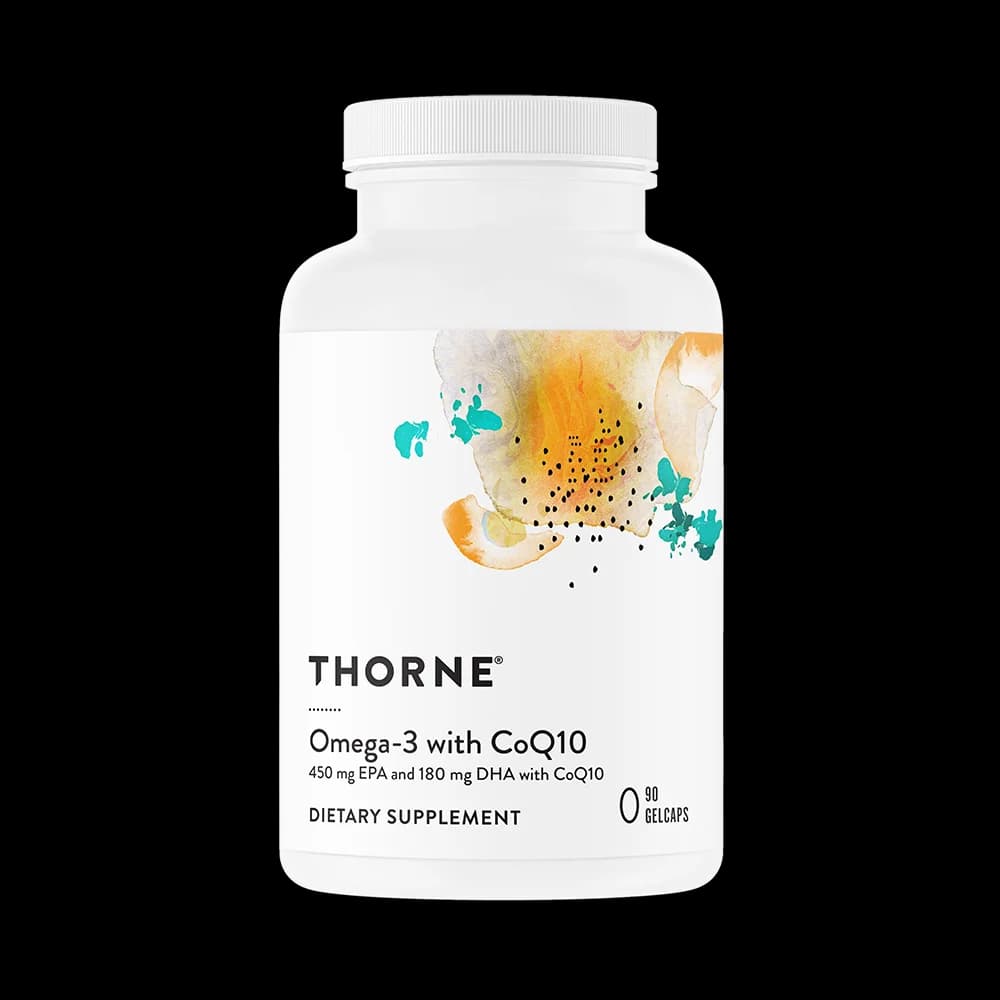
To overcome this bioavailability barrier, CoQ10 must be consumed with dietary fats. Thorne’s Omega-3 with CoQ10 ingeniously solves this problem by suspending the CoQ10 directly within a matrix of high-quality fish oil. Pharmacokinetic studies demonstrate that when CoQ10 is combined with lipids like EPA and DHA, it forms an emulsion in the gastrointestinal tract. This allows the creation of mixed micelles, which ferry the CoQ10 across the water layer of the intestinal lining and into the lymphatic system, dramatically increasing peak plasma concentrations and overall absorption (Area Under the Curve).
Optimal Dosing and Timing Strategies
For individuals managing complex chronic illnesses, dosing must be consistent and strategic. The suggested use for Thorne’s Omega-3 with CoQ10 is to take 1 gelcap two to three times daily, or as recommended by a healthcare practitioner. Because the formula relies on lipid absorption, it is highly recommended to take these gelcaps alongside meals that contain some healthy fats (such as avocado, olive oil, or nuts) to further stimulate bile production and maximize micelle formation.
Timing can also play a role in symptom management. Because CoQ10 actively enhances cellular energy production, some patients find that taking their doses earlier in the day (with breakfast and lunch) provides a sustained energy lift without interfering with sleep architecture at night. It is also important to set realistic expectations; while some cardiovascular and inflammatory markers may improve quickly, rebuilding mitochondrial density and restoring deep cellular energy reserves is a gradual process. Patients should typically commit to a consistent supplementation protocol for 8 to 12 weeks before fully evaluating its impact on fatigue and brain fog.
Potential Interactions and Contraindications
While Omega-3s and CoQ10 are generally well-tolerated and naturally occurring in the body, there are important practical considerations. The omega-3 fatty acids in this specific formulation are derived from sustainably sourced cold-water fish; therefore, it is contraindicated in individuals with a history of hypersensitivity or severe allergies to fish. Additionally, because Omega-3s have mild blood-thinning properties and support healthy blood flow, patients taking prescription anticoagulants (like warfarin) or antiplatelet medications should consult their physician, as the combination may increase the risk of bleeding.
Conversely, this supplement is highly recommended for individuals taking statin medications for cholesterol management. Statins work by inhibiting the HMG-CoA reductase enzyme, which unfortunately is the exact same biochemical pathway the body uses to synthesize CoQ10. This statin-induced CoQ10 depletion is widely believed to be the cause of statin-related muscle pain (myalgia). Supplementing with CoQ10 can help restore these depleted levels and protect muscle tissue. As always, if you are pregnant, nursing, or managing a complex medical protocol, consult your healthcare provider before introducing new supplements.

Follow the Science
Clinical Trials on CoQ10 in ME/CFS and Long COVID
The scientific community has increasingly focused on mitochondrial resuscitation as a therapeutic target for post-viral fatigue syndromes. A notable clinical trial, The CoSeME Study (NCT05128292), investigated the effects of CoQ10 combined with Selenium in patients with ME/CFS. The 8-week intervention demonstrated that patients experienced a significant improvement in overall fatigue severity and global quality of life. The researchers noted that the combination successfully decreased circulating pro-inflammatory cytokines and improved antioxidant capacity, suggesting a highly beneficial synergistic effect for addressing the oxidative stress inherent in ME/CFS.
Furthermore, systematic analyses evaluated randomized, double-blind trials combining CoQ10 with NADH in ME/CFS cohorts. The data revealed that an 8-week intervention resulted in significantly improved fatigue perception, enhanced sleep quality, and lower maximum heart rates during exercise testing. While a standalone high-dose CoQ10 trial for Long COVID in Denmark did not show immediate curative results in 6 weeks, the broader consensus indicates that CoQ10 is most effective when used synergistically over longer periods to rebuild mitochondrial infrastructure.
Omega-3s, Neuroinflammation, and Systemic Recovery
The clinical evidence supporting Omega-3 fatty acids for cardiovascular and neurological health is vast and robust. A 2024 double-blind, randomized-controlled trial (NCT05121766) evaluated high-dose Omega-3 supplementation (2,100 mg per day of EPA + DHA) in healthcare workers suffering from Long COVID. While the 12-week study proved the intervention was highly safe and tolerable, it highlighted that Omega-3s alone are not a magic bullet for instantly curing post-viral fatigue. Instead, clinical nutritionists emphasize that Omega-3s serve as a critical background therapy to systematically lower neuro-inflammation via the gut-brain axis over time.
This is supported by research published in Circulation Research, which demonstrated a dose- and time-dependent increase in blood SPM concentrations following marine oil supplementation. This increase directly correlated with the enhanced ability of immune cells to clear out bacteria and a distinct drop in leukocyte adhesion molecules, preventing dangerous blood vessel plaque formation. By actively resolving systemic inflammation, Omega-3s create the physiological environment necessary for cellular repair and recovery.
Real-World Evidence and Patient Outcomes
Beyond controlled clinical trials, real-world patient data provides invaluable insights into the management of complex chronic illnesses. A major study recently assessed patient-reported outcomes for both ME/CFS and Long COVID. The study confirmed the massive symptom overlap between the two conditions, particularly regarding fatigue, PEM, and brain fog. Crucially, the data revealed that patients self-reported tangible, real-world improvements in their daily functioning and symptom severity when utilizing targeted mitochondrial supports like CoQ10, validating the clinical utility of these supplements in comprehensive management protocols.
The Path Forward
Validating the Chronic Illness Experience
Living with a complex chronic condition like Long COVID, ME/CFS, or dysautonomia is an arduous and often isolating journey. The profound fatigue, the unpredictable cognitive fog, and the constant battle against post-exertional crashes are very real, physiologically grounded experiences—not simply manifestations of anxiety or deconditioning. If you are struggling to navigate this landscape, it is essential to know that your symptoms are valid, and the scientific community is rapidly uncovering the mitochondrial and inflammatory mechanisms driving them. If you are wondering Can Long COVID Trigger ME/CFS? Unraveling the Connection, you are not alone in seeking these complex answers.
A Synergistic Approach to Healing
While there is no single miracle cure for these intricate illnesses, healing is possible through a comprehensive, multi-targeted approach. Supplements like Omega-3 with CoQ10 represent a powerful tool in this strategy, offering a synergistic way to actively resolve systemic inflammation, protect against oxidative stress, and rebuild the cellular energy reserves necessary for recovery. However, supplementation must be combined with aggressive pacing, meticulous symptom tracking, and a supportive medical team to truly move the needle on your health.
As you continue to build your personalized management toolkit, we encourage you to explore high-quality, science-backed formulations that address the root causes of cellular dysfunction. Always consult with your healthcare provider before starting any new supplement regimen to ensure it aligns safely with your unique medical history and current treatments.
Sources
Circulation Research (2019) - Enriched Marine Oil Supplements Increase Peripheral Blood SPMs
Journal of Alzheimer's Disease (2015) - SPMs from Omega-3 Fatty Acids Improve Amyloid-β Phagocytosis
PLoS ONE (2020) - Protective activities of distinct omega-3 enriched oils
Neuro Endocrinology Letters (2009) - Coenzyme Q10 deficiency in ME/CFS
Pharmaceutics (2025) - Lipid-Based Auto-Emulsifying Drug Delivery Systems for CoQ10
NCBI - The Electron Transport Chain and Cellular Respiration