Can Nutrient 950® with Vitamin K Help Manage Fatigue in Long COVID and ME/CFS?
March 5, 2026
Nutrient 950Long COVIDME/CFS
Share:
Disclaimer: The information provided here is for educational purposes only and is not intended as medical advice. It should not be used to diagnose, treat, cure, or prevent any medical condition. Instead, use it as a starting point for discussion with your healthcare provider. Always consult with a qualified healthcare provider before starting any new medication, supplement, device, or making changes to your health regimen.
Living with a complex chronic illness often feels like trying to run a marathon with a twisted ankle and a backpack full of rocks. Months or even years after an initial viral infection, many people continue to fight debilitating symptoms under the umbrella of Long COVID, myalgic encephalomyelitis/chronic fatigue syndrome (ME/CFS), dysautonomia, and mast cell activation syndrome (MCAS). You might find yourself wondering why your body hasn't bounced back, or why profound exhaustion, brain fog, and unpredictable heart rates have become your new normal. It is a deeply frustrating reality, especially when standard blood tests often return "normal" results, leaving you without clear answers or actionable treatment plans.
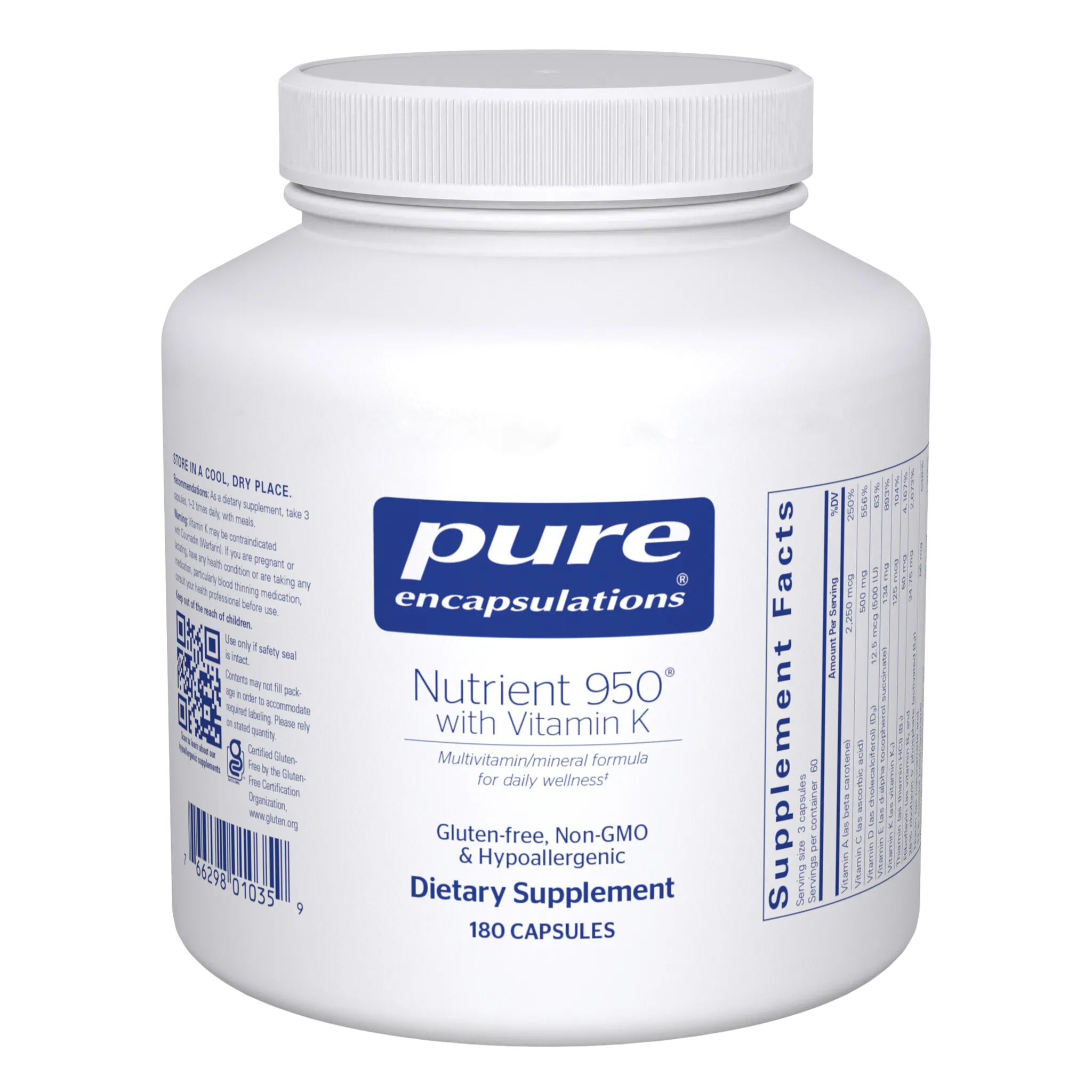
However, emerging research into the pathophysiology of post-viral syndromes reveals that the body is not simply "tired"—it is fundamentally depleted at a cellular level. Chronic inflammation, immune dysregulation, and autonomic nervous system dysfunction place an immense metabolic demand on your cells, rapidly burning through essential vitamins, minerals, and antioxidants. When these micronutrient stores are exhausted, the biological engines that produce energy and regulate your immune system begin to stall. This is where comprehensive, clinically formulated nutritional support becomes a critical piece of the management puzzle. In this article, we will explore how Nutrient 950® with Vitamin K by Pure Encapsulations provides a highly bioavailable, scientifically grounded approach to replenishing the exact cellular pathways disrupted by complex chronic illness.
TL;DR
Nutrient 950® provides highly bioavailable, activated micronutrients to support cellular recovery in complex chronic illnesses.
Activated B vitamins and chelated minerals bypass absorption bottlenecks, directly supporting mitochondrial energy and the autonomic nervous system.
Vitamin K2 and D3 work synergistically to support bone health, cardiovascular function, and immune modulation.
The iron-free formula is gentle on the gut and safe for patients managing dysautonomia and MCAS.
What is Nutrient 950® with Vitamin K?
A Comprehensive Approach to Micronutrient Repletion
To understand the value of a clinical-grade supplement, we must first look at how vitamins and minerals function in a healthy body. Micronutrients are not just passive building blocks; they are active, essential cofactors that drive thousands of biochemical reactions every single second. From the synthesis of neurotransmitters in your brain to the generation of adenosine triphosphate (ATP) in your mitochondria, your cells rely on a steady, uninterrupted supply of these compounds. Nutrient 950® with Vitamin K is designed to provide this comprehensive baseline. Unlike standard over-the-counter multivitamins that often use cheap, poorly absorbed ingredients, this formula is engineered specifically for individuals whose biochemical pathways require optimal, highly bioavailable support.
This particular formulation stands out because it combines a broad spectrum of essential vitamins and minerals with a specialized blend of Vitamin K1 and Vitamin K2 (including both menaquinone-4 and menaquinone-7), alongside Vitamin D3. In a healthy physiological state, these nutrients work in perfect synergy to maintain bone density, regulate calcium metabolism, and modulate the immune system. Furthermore, the formula includes a robust 500 mg dose of Vitamin C and a proprietary blend of mixed carotenoids (lutein, lycopene, and zeaxanthin) to provide aggressive antioxidant protection against the free radical damage that naturally occurs during cellular metabolism.
The Power of Activated Vitamins
One of the most critical distinctions of Nutrient 950® is its use of "activated" B vitamins. In nature, the vitamins we consume in food are often in inactive forms. Once ingested, they must travel to the liver, where specific enzymes convert them into their active, coenzyme states before the cells can actually use them. For example, standard folic acid (Vitamin B9) must be converted into 5-methyltetrahydrofolate (5-MTHF) by the MTHFR enzyme. However, up to 40% of the population carries genetic variations in the MTHFR gene that severely impair this conversion process. When you add the metabolic stress of a chronic illness like Long COVID, these enzymatic bottlenecks can become completely overwhelmed.
By providing pre-activated vitamins—such as Metafolin® (L-5-MTHF), methylcobalamin (active B12), pyridoxal 5' phosphate (active B6), and riboflavin 5' phosphate (active B2)—this supplement entirely bypasses the liver's enzymatic conversion steps. The nutrients are delivered in the exact molecular format that your cells require to immediately plug into the methylation cycle and mitochondrial energy production pathways. This direct delivery system is profoundly important for patients with ME/CFS and dysautonomia, whose cellular machinery is already struggling to keep up with basic metabolic demands.
Chelated Minerals for Maximum Bioavailability
The second major distinction lies in the delivery of its minerals. Many commercial supplements utilize inorganic mineral salts, such as magnesium oxide or zinc sulfate. These forms are notoriously difficult for the human gastrointestinal tract to absorb. They frequently bind to "anti-nutrients" in our food, such as phytic acid found in grains, which blocks their uptake and causes them to be excreted. Furthermore, inorganic salts often pull water into the intestines, leading to uncomfortable gastrointestinal side effects like cramping and diarrhea—symptoms that patients with dysautonomia and MCAS are already all too familiar with.
Nutrient 950® utilizes chelated minerals, such as zinc picolinate, magnesium citrate, and copper glycinate. Chelation is a process where a mineral ion is chemically bound to an organic molecule, typically an amino acid or an organic acid. This creates a stable, neutral-charge ring structure that protects the mineral as it travels through the harsh, acidic environment of the stomach. Because the body recognizes the organic amino acid wrapper, the mineral can bypass standard, easily blocked absorption pathways and instead utilize highly efficient active transport routes in the small intestine. Clinical research demonstrates that chelated minerals offer vastly superior bioavailability and cellular uptake compared to their inorganic counterparts, ensuring that the nutrients actually reach the tissues where they are desperately needed.
How Long COVID and ME/CFS Impact Cellular Nutrition
The Methylation Cycle Block and Oxidative Stress
To grasp why comprehensive nutritional support is so vital, we must examine how conditions like Long COVID, ME/CFS, and dysautonomia disrupt the body at a molecular level. One of the leading biochemical theories in ME/CFS research is the "Methylation Cycle Block" hypothesis. The methylation cycle is a continuous biochemical loop responsible for producing cellular energy, synthesizing neurotransmitters, and, crucially, generating glutathione—the body's master antioxidant. When the body is subjected to severe physical or viral stress, such as a SARS-CoV-2 infection, the resulting systemic inflammation can cause this cycle to stall.
When the methylation cycle is blocked, glutathione production plummets. Without adequate glutathione, the body loses its primary defense against reactive oxygen species (ROS). These highly unstable molecules begin to run rampant, causing widespread oxidative stress that damages cellular membranes, proteins, and DNA. This unchecked oxidative stress is a primary driver of the profound, unyielding fatigue and post-exertional malaise (PEM) that define ME/CFS and Long COVID. The body becomes trapped in a vicious cycle: the illness depletes the nutrients needed to run the methylation cycle, and the stalled cycle generates further oxidative damage that exacerbates the illness.
Gastrointestinal Dysfunction and Malabsorption
Another critical factor is the profound impact these conditions have on the gastrointestinal system. The autonomic nervous system controls the involuntary functions of the gut, including motility and the secretion of digestive enzymes. In patients with dysautonomia, particularly Postural Orthostatic Tachycardia Syndrome (POTS), autonomic neuropathy frequently leads to conditions like gastroparesis (delayed stomach emptying) or rapid intestinal transit. When food does not move through the digestive tract at the proper speed, the small intestine cannot effectively extract and absorb essential vitamins and minerals.
Furthermore, many patients battling Long COVID and MCAS develop severe food intolerances or histamine sensitivities. To manage their symptoms, they are often forced to adopt highly restrictive diets, such as low-histamine or low-FODMAP protocols. While learning to eat nutritionally with these restrictions is possible, these diets inherently limit the natural intake of a broad spectrum of micronutrients. This combination of impaired gut motility, systemic inflammation, and dietary restriction creates a perfect storm for chronic, subclinical malabsorption, leaving the patient starved of the very cofactors needed for recovery.
The Vicious Cycle of Mitochondrial Exhaustion
At the heart of cellular energy production are the mitochondria, the microscopic powerhouses residing within nearly every cell. The mitochondria rely on a complex sequence of enzymatic reactions, known as the Krebs cycle and the electron transport chain, to convert the food we eat into ATP. These pathways are entirely dependent on a continuous supply of B vitamins (particularly B1, B2, B3, and B5), magnesium, and potent antioxidants.
In post-viral syndromes, chronic neuroinflammation and immune dysregulation physically damage the mitochondrial membranes. The mitochondria become inefficient, leaking electrons and generating even more oxidative stress. To compensate for this inefficiency, the surviving mitochondria must work in overdrive, rapidly burning through the body's available stores of B vitamins and magnesium. If these nutrients are not aggressively replenished, the mitochondrial engines simply burn out, leading to the catastrophic cellular energy crashes that patients experience after minimal physical or cognitive exertion.
Nutrient 950® with Vitamin K: Supporting Systemic Recovery
Vitamin K2 and D3 for Immune Modulation and Bone Health
Supplementing with Nutrient 950® provides a multi-targeted approach to restoring these disrupted pathways. One of the most powerful components of this specific formula is the inclusion of Vitamin K2 (as menaquinone-4 and menaquinone-7) alongside Vitamin D3. While Vitamin K is historically known for its role in blood clotting, modern research reveals that Vitamin K2 is a profound regulator of calcium metabolism and immune function. It acts as an essential cofactor for the enzyme gamma-glutamyl carboxylase. This enzyme activates a protein called osteocalcin, which acts like a biological magnet, drawing calcium out of the bloodstream and binding it securely into the bone matrix.
Simultaneously, Vitamin K2 activates Matrix Gla Protein (MGP), a powerful inhibitor of vascular calcification. By activating MGP, Vitamin K2 ensures that calcium does not inappropriately deposit into the soft tissues and arterial walls—a crucial protective mechanism for cardiovascular health in dysautonomia patients. Furthermore, recent clinical studies have demonstrated that Vitamin K2 actively suppresses the NF-κB signaling pathway, which is a primary driver of chronic, systemic inflammation. By downregulating this pathway, Vitamin K2 provides a unique, "immune-calming" effect that helps mitigate the hyperactive immune responses seen in Long COVID and MCAS.
Activated B Vitamins for Energy and Neurological Function
To directly address the Methylation Cycle Block, Nutrient 950® supplies high doses of activated B vitamins. The inclusion of Metafolin® (L-5-MTHF) and methylcobalamin (B12) provides the exact methyl donors required to restart the stalled methylation gears. By bypassing the MTHFR genetic bottleneck, these active vitamins facilitate the conversion of inflammatory homocysteine back into methionine, effectively lowering systemic inflammation and enabling the body to resume the synthesis of vital neurotransmitters like serotonin and dopamine.
Additionally, the formula provides robust doses of activated Vitamin B2 (riboflavin 5' phosphate) and activated Vitamin B6 (pyridoxal 5' phosphate). Active B2 is the critical cofactor required by the enzyme glutathione reductase, which recycles oxidized, "used-up" glutathione back into its active, protective state. Meanwhile, active B6 is essential for the maintenance of the myelin sheath (the protective coating around nerves) and the regulation of the autonomic nervous system. Together, this activated B-complex acts as the biochemical spark plug needed to reignite mitochondrial ATP production and clear the neurological fog.
Chelated Zinc and Magnesium for Autonomic Balance
The chelated minerals in this formula play an equally vital role in stabilizing the nervous and immune systems. Magnesium, provided here as highly bioavailable magnesium citrate, is required for over 300 enzymatic reactions, including the stabilization of ATP molecules. In the context of dysautonomia and POTS, magnesium is critical for regulating the autonomic nervous system; it acts as a natural calcium channel blocker, helping to relax overactive blood vessels and soothe the sympathetic "fight-or-flight" response that drives rapid heart rates and palpitations.
Zinc, provided as highly absorbable zinc picolinate, is a foundational mineral for immune resilience and mucosal barrier integrity. Chronic viral infections heavily deplete intracellular zinc levels. By replenishing zinc, the body can better regulate the function of T-cells and natural killer cells, helping to protect against the opportunistic infections that frequently plague patients with compromised immune systems. Furthermore, zinc is essential for maintaining the tight junctions in the gut lining, helping to combat the "leaky gut" permeability often associated with MCAS and chronic inflammation.
Antioxidant Defense via Mixed Carotenoids and Vitamin C
Finally, Nutrient 950® delivers a powerful antioxidant shield to protect the newly repaired cellular machinery. The inclusion of 500 mg of Vitamin C (ascorbic acid) provides immediate, water-soluble antioxidant defense, neutralizing the reactive oxygen species generated by neuroinflammation. Vitamin C is also a necessary cofactor for the synthesis of collagen, supporting the structural integrity of blood vessels—a key consideration for patients with hypermobile Ehlers-Danlos Syndrome (hEDS), which frequently co-occurs with POTS.
Complementing the Vitamin C is a proprietary blend of mixed carotenoids, including lutein, lycopene, and zeaxanthin. These fat-soluble antioxidants specifically target and protect the lipid-rich membranes of the cells and mitochondria. By helping to reduce lipid peroxidation, these carotenoids ensure that the mitochondrial walls remain intact and functional, halting the vicious cycle of oxidative damage and allowing the cells to finally begin the slow process of metabolic recovery.
Symptoms Nutrient 950® May Help Manage
Targeting the Multisystem Impact of Chronic Illness
Because Nutrient 950® with Vitamin K addresses foundational cellular pathways, it can help manage a wide array of interconnected symptoms experienced by patients with complex chronic conditions. While no supplement is a cure, replenishing these critical cofactors can significantly improve quality of life.
Debilitating Fatigue and Post-Exertional Malaise (PEM): By supplying the activated B vitamins and chelated magnesium required for the Krebs cycle, this formula supports the mitochondria's ability to generate ATP, potentially raising the baseline energy threshold and reducing the severity of cellular crashes after exertion.
Brain Fog and Cognitive Dysfunction: The activated forms of folate (5-MTHF) and B12 (methylcobalamin) cross the blood-brain barrier to support the synthesis of neurotransmitters and the maintenance of healthy nerve sheaths, helping to clear the neurological fog and improve focus.
Orthostatic Intolerance and Palpitations: Highly bioavailable magnesium citrate helps regulate autonomic nervous system tone, soothing the hyperactive sympathetic responses that drive the rapid heart rates and dizziness characteristic of dysautonomia and POTS.
Immune Dysregulation and Frequent Infections: The robust combination of Vitamin C, zinc picolinate, and Vitamin D3 bolsters both the innate and adaptive immune responses, helping the body fend off opportunistic pathogens and regulate hyperactive mast cells.
Joint and Bone Pain: The specialized inclusion of Vitamin K1 and K2 ensures that calcium is properly directed into the bone matrix rather than depositing in soft tissues, supporting skeletal health and potentially alleviating the deep, aching bone pain associated with chronic systemic inflammation.
Practical Considerations: Forms, Dosing, and Absorption
Understanding Bioavailability and Absorption Pathways
When incorporating a comprehensive multivitamin like Nutrient 950® into your daily routine, understanding how to maximize its absorption is key to reaping the clinical benefits. The suggested use is to take 3 capsules one to two times daily with meals. This divided dosing strategy is highly intentional. The human body can only absorb a certain amount of water-soluble vitamins (like Vitamin C and the B-complex) at any given time; whatever is not immediately utilized or stored is excreted in the urine. By splitting the dose throughout the day, you maintain a steady, continuous supply of these essential cofactors in your bloodstream, helping to avoid the metabolic dips that can trigger fatigue.
Furthermore, taking the capsules with a meal is critical for the absorption of the fat-soluble components of the formula, specifically Vitamins A, D, E, and K, as well as the mixed carotenoids. These specific nutrients require the presence of dietary fat to stimulate the release of bile acids from the gallbladder. The bile acids emulsify the vitamins, allowing them to cross the intestinal wall and enter the lymphatic system. Taking this supplement on an empty stomach will severely limit the bioavailability of these crucial immune-modulating and bone-supporting compounds.
Tolerability, Safety, and Iron-Free Benefits
One of the most important practical features of this specific Nutrient 950® formulation is that it is entirely iron-free. While iron deficiency is remarkably common in patients with POTS and dysautonomia, supplementing with iron when it is not clinically required can be actively harmful. Excess, unbound iron in the bloodstream acts as a powerful pro-oxidant, triggering a chemical reaction (the Fenton reaction) that generates massive amounts of tissue-damaging free radicals. Furthermore, excess iron in the gut can feed pathogenic bacteria, exacerbating the dysbiosis often seen in MCAS. By utilizing an iron-free baseline formula, patients can safely replete their other micronutrients without risking iron toxicity, allowing them to target iron deficiency separately and precisely under the guidance of a healthcare provider.
Navigating Potential Interactions
While Nutrient 950® is formulated for excellent tolerability, it is vital to be aware of potential drug interactions, particularly regarding Vitamin K. Because Vitamin K plays a foundational role in the blood coagulation cascade, supplementing with it can directly interfere with the efficacy of certain anticoagulant medications, most notably Warfarin (Coumadin). If you are taking blood-thinning medications for cardiovascular conditions or microclotting issues related to Long COVID, you must consult your prescribing physician before introducing a supplement containing Vitamin K. Additionally, when beginning a high-dose activated B-vitamin protocol, some patients with severe methylation blocks may experience a temporary exacerbation of symptoms (often called "over-methylation" or a detox reaction) as their cellular pathways suddenly come back online. Starting with a lower dose and slowly titrating up can help mitigate this transition.
Follow the Science
Clinical Trials on Multivitamins in Post-Viral Fatigue
The scientific community has increasingly focused on the role of targeted micronutrient therapy in managing the profound fatigue associated with post-viral syndromes. A foundational prospective study by Maric et al. (2014) evaluated the impact of a daily multivitamin and mineral supplement on women diagnosed with ME/CFS. The researchers found that after two months of supplementation, the patients experienced a massive, statistically significant increase in superoxide dismutase (SOD) activity—a primary marker of the body's antioxidant capacity. Concurrently, the patients reported significant decreases in subjective fatigue, sleep disorders, and autonomic nervous system symptoms, highlighting the direct link between micronutrient repletion and the reduction of oxidative stress.
More recently, a 2023 randomized, double-blind, placebo-controlled trial by Lacasa et al. investigated the effects of a multivitamin complex combined with beta-glucan in patients with ME/CFS. Over the 36-week trial, the active treatment group demonstrated a statistically significant improvement in cognitive fatigue and a reduction in daytime sleep dysfunction compared to the placebo group. Furthermore, large-scale observational data, such as the LINCOLN Nationwide Survey (2022), has underscored that while general multivitamins are helpful, targeted formulations that address specific metabolic deficits (such as endothelial dysfunction and oxidative stress) yield superior clinical outcomes in Long COVID patients.
The Evidence Behind Vitamin K2 and Bone-Immune Crosstalk
The inclusion of Vitamin K2 (Menaquinone-7) in this formula is backed by robust clinical data demonstrating its profound impact on systemic health beyond simple bone density. A landmark three-year randomized, double-blind trial by Knapen et al. evaluated the effects of MK-7 supplementation on postmenopausal women. The study not only confirmed that MK-7 provided statistically significant protection against bone loss, but it also revealed a remarkable cardiovascular benefit. The participants taking MK-7 experienced a significant decrease in inactive Matrix Gla Protein (MGP) and a measurable reversal in arterial stiffness, effectively restoring elasticity to their blood vessels. This vascular protection is highly relevant for dysautonomia patients struggling with blood pooling and endothelial dysfunction.
Validating the Need for Activated Nutrients in Dysautonomia
Research specifically targeting the dysautonomia population heavily validates the need for comprehensive screening and supplementation. A pivotal study by Oner et al. (2014) compared adolescents with POTS to healthy controls and discovered that nearly half (47.2%) of the POTS patients had a clinically significant Vitamin B12 deficiency, compared to just 18% of the healthy group. Similarly, research by Antiel et al. (2011) on patients with chronic fatigue and orthostatic intolerance found high prevalences of hypovitaminosis D and iron insufficiency, noting a statistically significant association between low Vitamin D levels and the inability to stand without severe dizziness. These findings reinforce the clinical reality that dysautonomia is frequently driven or exacerbated by profound, measurable micronutrient gaps.
The Path Forward
Building a Foundation for Chronic Illness Management
Living with invisible, unpredictable illnesses like Long COVID, ME/CFS, and dysautonomia is an exhausting journey that tests your physical and emotional resilience every single day. It is completely valid to feel overwhelmed by the sheer number of symptoms you are trying to manage. While no single supplement can act as a magic cure for these complex neuro-immune conditions, rebuilding your cellular foundation is a critical and necessary step toward reclaiming your quality of life. By providing your mitochondria and immune system with the exact, highly bioavailable cofactors they need to function, you are giving your body the biological tools it requires to begin the slow process of healing.
A Validating Approach to Healing
Nutrient 950® with Vitamin K is designed to be one powerful piece of a much larger, comprehensive management strategy. True recovery requires a multifaceted approach that includes aggressive rest, meticulous pacing to avoid post-exertional crashes, symptom tracking, and working closely with a medical team that understands the nuances of post-viral illness. We encourage you to discuss comprehensive micronutrient testing with your healthcare provider to identify your specific metabolic needs. By addressing the root cellular depletions driving your symptoms, you can build a stronger, more resilient foundation for your ongoing health journey.
Sources
Maric, D., et al. (2014). Multivitamin mineral supplementation in patients with chronic fatigue syndrome. Medical Science Monitor.
Antiel, R. M., et al. (2011). Iron insufficiency and hypovitaminosis D in adolescents with chronic fatigue and orthostatic intolerance. Southern Medical Journal.
Jarjour, I. T., & Jarjour, L. K. (2013). Low iron storage and mild anemia in postural tachycardia syndrome in adolescents. Clinical Autonomic Research.
DiNicolantonio, J. J., et al. (2021). Magnesium and zinc bioavailability and clinical efficacy. Open Heart / BMJ.