Can Nattokinase Help Dissolve Microclots in Long COVID and ME/CFS?
March 5, 2026
NattokinaseLong COVIDME/CFS
Share:
Disclaimer: The information provided here is for educational purposes only and is not intended as medical advice. It should not be used to diagnose, treat, cure, or prevent any medical condition. Instead, use it as a starting point for discussion with your healthcare provider. Always consult with a qualified healthcare provider before starting any new medication, supplement, device, or making changes to your health regimen.
Months or even years after a mild SARS-CoV-2 infection, millions of people find themselves trapped in a cycle of debilitating fatigue, severe cognitive impairment, and post-exertional malaise (PEM). For a long time, standard blood tests returned normal results, leaving patients frustrated, dismissed, and without answers. However, groundbreaking research has revealed a hidden vascular pathology driving these symptoms: microscopic, amyloid-like blood clots that stubbornly resist the body's natural breakdown processes.
As researchers and clinicians search for ways to dismantle these persistent microclots and restore healthy blood flow, a powerful enzyme derived from a traditional Japanese food has taken center stage. Nattokinase, specifically the highly purified NSK-SD form, is a potent fibrinolytic agent that actively degrades the structural proteins of blood clots. In this comprehensive guide, we will explore the biochemistry of nattokinase, its role in cardiovascular health, and the emerging science behind its potential to support patients navigating the complex realities of Long COVID, ME/CFS, and dysautonomia.
What is Nattokinase?
The Origins of a Powerful Proteolytic Enzyme
Nattokinase is a highly potent, naturally occurring proteolytic (protein-digesting) enzyme that has garnered significant attention in cardiovascular medicine. It is extracted from natto, a traditional Japanese dish made by fermenting boiled non-GMO soybeans with the probiotic bacterium Bacillus subtilis var. natto. Discovered in 1987 by Japanese researcher Dr. Hiroyuki Sumi, who was searching for natural thrombolytic (clot-dissolving) agents, nattokinase demonstrated a remarkable ability to break down artificial blood clots in laboratory settings. Structurally, it is a serine protease consisting of 275 amino acids, and unlike many other enzymes, it maintains its stability and activity when absorbed through the human gastrointestinal tract. This oral bioavailability makes it a unique and accessible tool for supporting systemic vascular health without the need for intravenous administration.
The Mechanics of Direct and Indirect Fibrinolysis
To understand how nattokinase works, we must first understand how the body naturally manages blood clots. When a blood vessel is injured, the body forms a clot using a tough, fibrous protein called fibrin, which creates a mesh-like scaffold to stop bleeding. Once the injury heals, the body releases an enzyme called plasmin to dissolve the fibrin mesh—a process known as fibrinolysis. Nattokinase is extraordinary because it possesses both direct and indirect fibrinolytic capabilities. According to research published in Biomarker Insights, nattokinase can directly hydrolyze (cleave) the cross-linked fibrin proteins, actively dismantling the clot's structural integrity at a molecular level.
Beyond its direct action, nattokinase acts as a powerful catalyst for the body's own endogenous clot-busting systems. It actively cleaves and inactivates Plasminogen Activator Inhibitor-1 (PAI-1), a molecule that normally suppresses the body's natural clot-dissolving enzymes. By neutralizing PAI-1, nattokinase allows for the uninhibited release of tissue plasminogen activator (t-PA) from vascular endothelial cells. Furthermore, studies in the International Journal of Molecular Sciences demonstrate that it converts endogenous prourokinase into active urokinase (uPA), another critical enzyme that helps convert dormant plasminogen into active plasmin. This multi-pathway approach ensures a robust and comprehensive degradation of excess fibrin in the bloodstream.
Beyond Clot Busting: Cardiovascular and Endothelial Support
The benefits of nattokinase extend far beyond its ability to break down fibrin; it is a multifaceted agent that supports overall cardiovascular and endothelial health. The endothelium, the delicate inner lining of blood vessels, plays a crucial role in regulating blood pressure, inflammation, and cellular transport. Nattokinase has been shown to exhibit anti-platelet activity, meaning it helps prevent blood platelets from inappropriately clumping together (aggregation) by blocking the formation of thromboxane B2. This reduces blood viscosity, allowing blood to flow more smoothly through the circulatory system, which is vital for delivering oxygen and nutrients to oxygen-starved tissues.
Additionally, nattokinase fragments act as natural Angiotensin-Converting Enzyme (ACE) inhibitors. In the body, ACE is responsible for converting angiotensinogen into angiotensin II, a potent vasoconstrictor that narrows blood vessels and raises blood pressure. By inhibiting this conversion, nattokinase promotes vasodilation, helping to maintain blood pressure levels already within a normal range. A 2023 systematic review and meta-analysis confirmed that nattokinase supplementation significantly supports healthy systolic and diastolic blood pressure. Together, these mechanisms create a comprehensive profile of cardiovascular support, addressing both the physical obstructions (fibrin) and the functional dynamics (vasodilation and viscosity) of blood flow.
How Long COVID and ME/CFS Impact Blood Flow and Coagulation
The Discovery of Amyloid Microclots
The pathophysiology of Long COVID has puzzled the medical community, but a major breakthrough occurred when Professor Resia Pretorius and Professor Douglas Kell identified the presence of widespread, persistent microclots in the blood plasma of Long COVID patients. Unlike standard blood clots that form in response to an acute injury, these are "fibrinaloid" or "amyloid" microclots. Research suggests that the highly inflammatory environment triggered by the SARS-CoV-2 infection, combined with the lingering presence of the viral spike protein, causes normal circulating fibrinogen to misfold. This misfolding transforms the proteins into dense, amyloid-like structures that are incredibly resistant to the body's natural fibrinolytic breakdown processes.
These microclots are not just inert blockages; they are active participants in the ongoing cycle of chronic illness. Because they cannot be easily degraded by endogenous plasmin, they circulate continuously, acting as what Professor Pretorius describes as "garbage bags." As they roll through the bloodstream, they trap inflammatory cytokines, autoantibodies, and viral debris within their dense amyloid mesh. This creates a persistent state of systemic inflammation and immune dysregulation, which is a hallmark of complex chronic conditions. For a deeper understanding of the underlying triggers of these conditions, you can explore our detailed guide on What Causes Long COVID?.
Endothelial Dysfunction and the "Garbage Bag" Effect
The presence of these amyloid microclots severely disrupts the function of the vascular endothelium. Healthy endothelial cells are responsible for maintaining a smooth, non-thrombogenic surface that allows blood to flow freely. However, in Long COVID and myalgic encephalomyelitis/chronic fatigue syndrome (ME/CFS), the constant friction and inflammatory signaling from these circulating microclots cause widespread endothelialitis (inflammation of the blood vessel lining). This ongoing damage triggers a vicious cycle: the inflamed endothelium releases more clotting factors like von Willebrand factor (vWF), which in turn promotes further platelet hyperactivation and microclot formation.
Recent literature published in ScienceDirect highlights that this pro-thrombotic state is a primary driver of the unexplained symptoms affecting daily life for millions. The hyperactivated platelets bind to the microclots, creating larger aggregates that further damage the delicate capillary networks. This widespread vascular dysfunction helps explain why many patients experience symptoms that mimic cardiovascular disease, despite having normal results on standard echocardiograms and macro-vascular imaging. The pathology is happening at a microscopic level, hidden from conventional diagnostic tools.
Hypoxia, Ischemia-Reperfusion Injury, and PEM
The most devastating consequence of these microclots is their impact on cellular oxygen delivery. As the microclots and hyperactivated platelets aggregate, they physically clog the tiny capillaries responsible for delivering oxygen to muscle and brain tissue. This creates a state of localized hypoxia (oxygen starvation) at the cellular level. When tissues are deprived of oxygen, mitochondrial energy production plummets, leading to the profound, debilitating fatigue that characterizes these illnesses. If you are wondering how these overlapping conditions interact, read our article: Can Long COVID Trigger ME/CFS? Unraveling the Connection.
Furthermore, this intermittent blockage of capillaries leads to a phenomenon known as ischemia-reperfusion injury. When a microclot temporarily blocks a capillary (ischemia) and then eventually dislodges, the sudden rush of oxygen back into the tissue (reperfusion) generates a massive wave of oxidative stress and reactive oxygen species (ROS). This oxidative damage is believed to be a primary physiological driver of post-exertional malaise (PEM) or "crashes." When a patient exerts themselves, their body demands more oxygen, but the clogged capillaries cannot meet the demand, resulting in severe metabolic fallout and a worsening of symptoms that can last for days or weeks.
Nattokinase: Supporting Fibrinolytic Activity and Microclot Degradation
Direct Degradation of Amyloid Structures
Given the stubborn, amyloid nature of the microclots found in Long COVID and ME/CFS, traditional medical approaches have often fallen short. Standard prescription anticoagulants (like aspirin, clopidogrel, or apixaban) are designed to prevent the formation of new clots by inhibiting platelet activation or blocking specific coagulation cascade factors. However, they do not possess the enzymatic ability to actively break down existing amyloid structures. This is where nattokinase represents a paradigm shift in therapeutic strategy. Because nattokinase is a potent serine protease, it has the unique mechanical ability to directly cleave the misfolded fibrin bonds that hold these microclots together.
A groundbreaking in-vitro laboratory study published by researchers from the University of Liverpool and Stellenbosch University provided quantifiable evidence of this mechanism. Using automated fluorescence microscopy and specialized amyloid-binding dyes, researchers observed the real-time breakdown of Long COVID microclots when exposed to nattokinase. The study demonstrated that nattokinase acts rapidly, with a half-life for noticeable clot reduction of approximately two hours. At specific doses, researchers recorded a roughly 50% drop in the median microclot count, proving mechanically that nattokinase successfully degrades these specific fibrinaloid structures without over-digesting normal, healthy plasma proteins.
Restoring Capillary Flow and Cellular Oxygenation
By actively dismantling the amyloid microclots, nattokinase helps clear the microscopic blockages within the capillary networks. This restoration of capillary patency is critical for reversing the localized hypoxia that drives severe chronic illness symptoms. As the capillaries open up, red blood cells can once again flow freely, delivering vital oxygen and nutrients to oxygen-starved muscle tissues and neurons. This improved perfusion directly supports mitochondrial function, as the mitochondria require a steady supply of oxygen to produce adenosine triphosphate (ATP), the cellular energy currency.
Furthermore, the reduction in microclot burden helps alleviate the physical stress on the vascular endothelium. As the "garbage bags" of trapped inflammatory cytokines are cleared from the circulation, the widespread endothelialitis begins to subside. This allows the blood vessels to regain their natural elasticity and responsiveness, improving overall autonomic regulation. For patients suffering from dysautonomia and POTS (Postural Orthostatic Tachycardia Syndrome), improving endothelial function and blood volume distribution is a critical step in managing symptoms like dizziness and tachycardia. You can learn more about managing these chronic symptoms in our guide on How Can You Live with Long-Term COVID.
Managing the "Toxification" or Herxheimer-Like Response
While the degradation of microclots is the ultimate goal, the process itself can be physically demanding. Professor Resia Pretorius has noted in NIH presentations that patients beginning fibrinolytic enzyme therapy often report a temporary worsening of symptoms—a phenomenon sometimes referred to as "toxification" or a Herxheimer-like reaction. As nattokinase breaks open the dense amyloid microclots, the inflammatory molecules, autoantibodies, and viral debris that were trapped inside are suddenly released back into the systemic circulation.
This sudden influx of inflammatory mediators can trigger a temporary, acute immune response, making the patient feel as though they are experiencing a viral relapse or a severe crash. It is crucial for patients and practitioners to understand this mechanism so they do not prematurely abandon the therapy, mistaking the toxification response for a negative side effect of the supplement itself. To mitigate this, many functional medicine practitioners recommend starting with a very low dose of nattokinase and titrating up slowly, allowing the body's detoxification pathways (like the liver and lymphatic system) time to clear the released debris without becoming overwhelmed.

Symptoms Nattokinase May Help Manage
Targeting Vascular and Cognitive Dysfunction
The systemic benefits of nattokinase are directly tied to its ability to restore microvascular blood flow and reduce thrombo-inflammation. By addressing the root cause of capillary hypoxia and endothelial dysfunction, nattokinase supplementation may help alleviate a wide range of debilitating symptoms associated with Long COVID, ME/CFS, and dysautonomia. While individual responses vary, patient-reported outcomes and emerging clinical data suggest significant potential for symptom management.
Here are the primary symptoms that nattokinase may help manage, based on its physiological mechanisms of action:
Post-Exertional Malaise (PEM): By clearing microclots and improving capillary oxygen delivery, nattokinase may help reduce the severe ischemia-reperfusion injury and oxidative stress that triggers PEM after physical or cognitive exertion.
Brain Fog and Cognitive Impairment: The brain is highly sensitive to oxygen deprivation. Improving cerebral microcirculation helps restore the oxygen and glucose delivery required for optimal neuronal function and neurotransmitter synthesis.
Severe Fatigue: Restoring blood flow allows mitochondria to receive the oxygen necessary for efficient ATP (energy) production, addressing fatigue at the cellular level rather than just masking it with stimulants.
Cold Extremities and Poor Circulation: Nattokinase's vasodilation properties and ability to reduce blood viscosity help improve peripheral blood flow, alleviating the cold hands and feet commonly seen in dysautonomia and POTS.
Elevated Blood Pressure: Through its ACE-inhibitor-like fragments and fibrin-degrading activity, nattokinase supports the maintenance of healthy blood pressure levels by reducing vascular resistance.
Muscle Pain and Aching: By resolving localized tissue hypoxia and clearing trapped lactic acid and inflammatory cytokines from muscle beds, nattokinase may help reduce chronic myalgia and muscle stiffness.
Practical Considerations: Forms, Dosing, and Absorption
The NSK-SD Advantage: Purified and Standardized
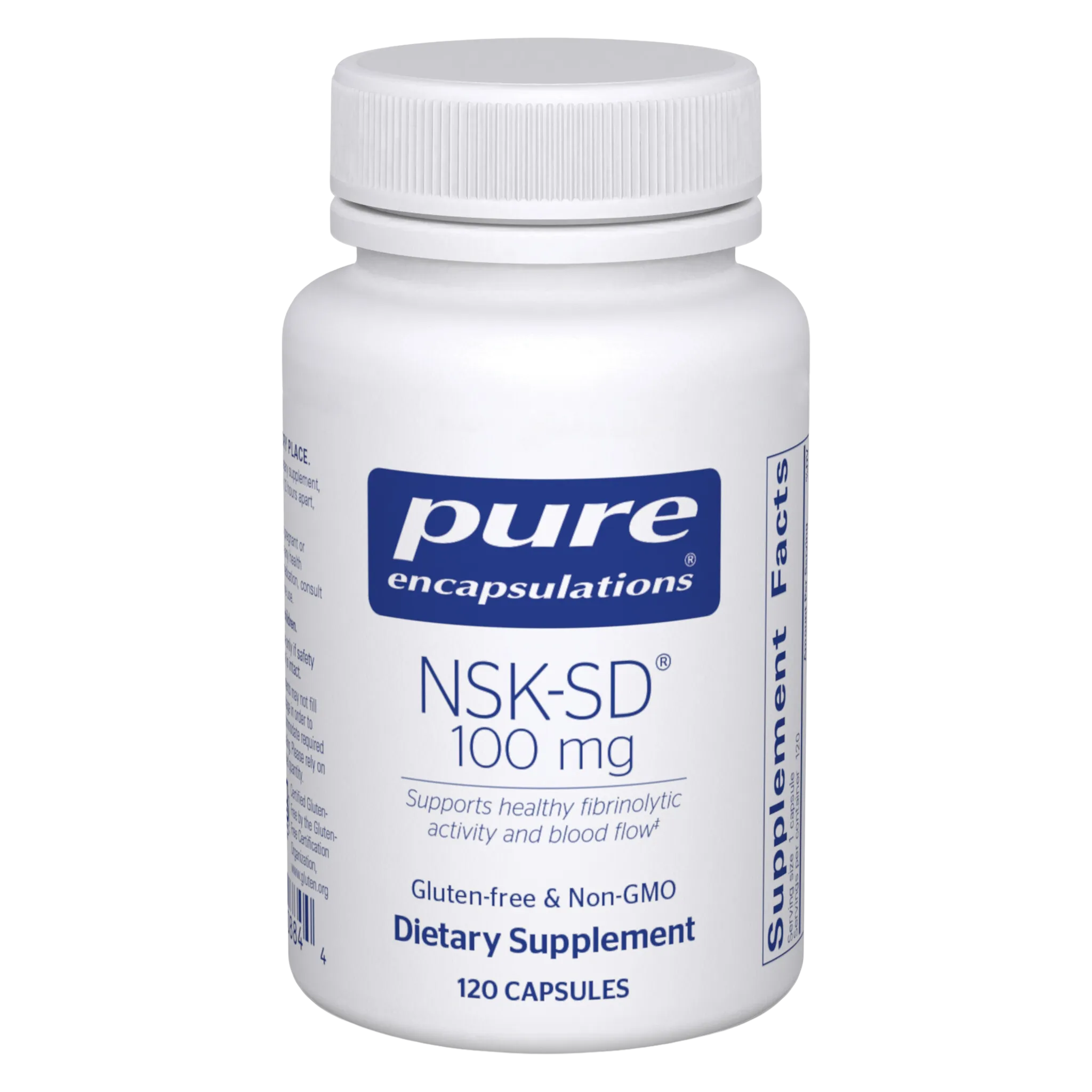
Not all nattokinase supplements are created equal. NSK-SD® is a specific, patented, and highly purified form of nattokinase produced by Japan Bio Science Laboratory (JBSL), and it is the form utilized by Pure Encapsulations. One of the most critical distinctions of NSK-SD is the complete removal of Vitamin K2. Natural natto food and unpurified nattokinase extracts contain high levels of Vitamin K2, which actively promotes blood coagulation and can directly interfere with blood-thinning medications like Warfarin. NSK-SD utilizes a patented process to eliminate Vitamin K2, ensuring that the supplement strictly promotes fibrinolytic activity without contradictory coagulation signaling.
Furthermore, NSK-SD is the most extensively researched form of nattokinase, boasting rigorous standardization. It is guaranteed to be free of artificial additives, common allergens (though it is derived from soy), and environmental contaminants. This professional-grade standardization ensures that every capsule delivers a precise, reliable dose of enzymatic activity, which is crucial for patients managing complex, sensitive chronic illnesses where consistency is key to avoiding symptom flares.
Understanding Fibrinolytic Units (FU) and Dosage
Nattokinase dosage is not typically measured in milligrams, but rather in Fibrinolytic Units (FU), which quantifies the enzyme's active clot-dissolving power. The standard commercial dose, including the Pure Encapsulations NSK-SD formulation, is 2,000 FU per capsule (equivalent to 100 mg). The general suggested use is one capsule taken twice daily, 12 hours apart, to maintain a consistent level of enzymatic activity in the bloodstream. Because it is a systemic enzyme, it is highly recommended to take nattokinase on an empty stomach (with or between meals) so that the enzyme is absorbed directly into the bloodstream rather than being utilized to digest food proteins in the stomach.
While 2,000 to 4,000 FU daily is the standard for general cardiovascular maintenance and mild blood flow support, recent clinical studies on atherosclerosis have explored much higher doses (up to 10,800 FU daily) for significant lipid lowering and plaque reduction. However, patients with Long COVID or ME/CFS should approach dosage carefully. Due to the "toxification" effect of dissolving microclots, starting with a lower dose (such as 2,000 FU once daily) and slowly titrating up under medical supervision is often the safest approach to minimize acute Herxheimer-like reactions. If you are navigating the complexities of diagnosis and treatment planning, consider reading How Does a Doctor Diagnose Long COVID?.
Safety, Contraindications, and Drug Interactions
While nattokinase is generally safe and well-tolerated by healthy individuals, its potent fibrinolytic nature requires strict safety considerations, particularly regarding bleeding risks. Nattokinase actively breaks down fibrin, meaning it can significantly heighten the risk of internal bleeding, bruising, or prolonged bleeding from minor cuts. It is strictly contraindicated for individuals with a history of bleeding disorders, intracranial hemorrhage, peptic ulcers, or those scheduled for upcoming surgeries. Furthermore, it is not recommended for pregnant or lactating women due to a lack of comprehensive safety data in these populations.
The most critical safety warning involves drug interactions. Concurrent use of nattokinase with prescription anticoagulants (like Warfarin, Heparin, or Apixaban) or antiplatelet drugs (like Aspirin or Clopidogrel) creates a compounded, synergistic bleeding risk that can be life-threatening. Research published in ResearchSquare has explored "Triple Anticoagulant Therapy" for Long COVID, but combining nattokinase with these pharmaceutical regimens must be strictly avoided unless explicitly directed and heavily monitored by a specialized hematologist or cardiovascular physician. Always consult your healthcare provider before introducing systemic enzymes into your protocol.

Follow the Science
In-Vitro Evidence for Microclot Degradation
The scientific foundation for using nattokinase in complex chronic illness is rapidly expanding, moving from theoretical models to quantifiable laboratory data. The most compelling evidence for Long COVID comes from the 2024 in-vitro study by the Kell and Pretorius research groups. By utilizing advanced fluorescence microscopy, the researchers proved that recombinant nattokinase successfully degrades the specific fibrinaloid amyloid structures found in Long COVID plasma. The data revealed a staggering 70% to 80% reduction in the fluorescent intensity of the clots, indicating a profound breakdown of their dense amyloid core, with a rapid half-life of just two hours.
This laboratory evidence aligns with emerging real-world data. A recent study published in PubMed Central detailing patient-reported outcomes found that individuals utilizing over-the-counter fibrinolytic enzymes, including nattokinase and lumbrokinase, reported noticeable perceived improvements in their core Long COVID and ME/CFS symptoms, particularly regarding fatigue, brain fog, and the severity of post-exertional malaise. While large-scale, double-blind randomized controlled trials are still needed to establish formal clinical guidelines, this data provides a strong mechanistic rationale for its use.
Human Trials on Peripheral Blood Flow and Vasoconstriction
Beyond microclots, the specific NSK-SD formulation has a robust portfolio of human clinical trials demonstrating its efficacy in promoting peripheral blood flow. In a randomized, double-blind, placebo-controlled crossover study (Luchi et al., 2006), healthy subjects were given a single 2,000 FU dose of NSK-SD. Using the PeriScan PIM II method to measure microcirculation, researchers observed a statistically significant increase in blood flow to the fingers and the backs of the hands for up to three hours post-consumption compared to the placebo group.
More recently, a 2023 double-blind crossover study (Nara et al.) investigated nattokinase's ability to combat cold-induced vasoconstriction. Subjects who consumed NSK-SD prior to immersing their hands in a cold water bath demonstrated a significantly faster recovery of skin temperature in their extremities compared to the placebo group. This study led to functional health claims in Japan recognizing NSK-SD's ability to maintain peripheral body temperature by actively improving microvascular blood flow—a finding highly relevant for dysautonomia patients struggling with temperature dysregulation and cold extremities.
Meta-Analyses on Cardiovascular Health and Blood Pressure
The broader cardiovascular benefits of nattokinase are supported by extensive systematic reviews. A 2023 meta-analysis published in Reviews in Cardiovascular Medicine evaluated multiple randomized controlled trials and confirmed that nattokinase serves as an effective adjunctive therapy for managing hypertension. The aggregated data showed that daily supplementation significantly reduced both systolic and diastolic blood pressure, likely due to the enzyme's ability to cleave plasma fibrinogen and exert ACE-inhibitor-like effects on the vascular endothelium.
Furthermore, a landmark 2022 clinical trial involving 1,062 participants demonstrated that high-dose nattokinase (10,800 FU/day) over 12 months led to massive improvements in lipid profiles and atherosclerosis markers. Participants experienced a nearly 36% reduction in carotid plaque size and significant drops in LDL cholesterol and triglycerides. While this high dosage is primarily targeted at severe atherosclerosis rather than Long COVID microclots, it underscores the profound, dose-dependent impact that nattokinase can have on systemic vascular remodeling and overall cardiovascular wellness.
The Path Forward
A New Perspective on Vascular Health
Living with Long COVID, ME/CFS, or dysautonomia often feels like an uphill battle against an invisible enemy. The discovery of amyloid microclots has finally provided a tangible, physiological explanation for the debilitating fatigue, brain fog, and PEM that so many patients experience. It validates that these symptoms are not psychological, but rather the result of profound vascular and endothelial dysfunction. Understanding the mechanics of your illness is the first step toward reclaiming your quality of life, and targeting these microscopic blockages offers a promising new avenue for therapeutic intervention.
Integrating Enzyme Therapy Safely
While nattokinase represents a powerful tool for supporting healthy blood flow and fibrinolytic activity, it is not a standalone cure. It should be integrated into a comprehensive management strategy that includes aggressive pacing, symptom tracking, autonomic nervous system regulation, and targeted nutritional support. Because of its potent effects on coagulation, it is imperative to work closely with a knowledgeable healthcare provider who can help you navigate dosage, monitor for the "toxification" response, and ensure there are no dangerous interactions with your current medications. With patience, careful management, and science-backed tools, there is hope for restoring balance to your vascular system.
Sources
Technology Networks: New Discoveries in Blood Clots Through Long COVID Research
ScienceDirect: Mechanisms of long COVID and the path toward therapeutics
Nattiase Science: Nattokinase Dissolves Long-COVID Microclots: New Study
NIH VideoCast: Thrombotic Endothelialitis and Microclots in Long COVID (Prof. Resia Pretorius)
PubMed Central: Patient-reported treatment outcomes in ME/CFS and long COVID