Can MicroDefense w/Oregano Support Gut Healing for Long COVID Patients?
March 5, 2026
MicroDefense w/OreganoLong COVIDGastrointestinal Health
Share:
Disclaimer: The information provided here is for educational purposes only and is not intended as medical advice. It should not be used to diagnose, treat, cure, or prevent any medical condition. Instead, use it as a starting point for discussion with your healthcare provider. Always consult with a qualified healthcare provider before starting any new medication, supplement, device, or making changes to your health regimen.
For many individuals navigating the complex landscape of Long COVID, myalgic encephalomyelitis/chronic fatigue syndrome (ME/CFS), and dysautonomia, the battle often feels like it is being fought on multiple fronts. While debilitating fatigue, brain fog, and rapid heart rates frequently take center stage, a silent but equally disruptive struggle is often occurring in the gastrointestinal tract. Patients frequently report new, unpredictable digestive symptoms—from profound bloating and food sensitivities to post-infectious irritable bowel syndrome (IBS)—that seem to emerge out of nowhere following a viral infection. This is not a coincidence, nor is it merely a secondary annoyance; emerging clinical research increasingly points to the gut microbiome as a central driver of systemic chronic illness.
The gastrointestinal tract is home to trillions of microorganisms that dictate everything from our immune responses to our neurotransmitter production. When a viral infection like SARS-CoV-2 damages this delicate ecosystem, it can trigger a cascade of inflammation that radiates throughout the entire body. Addressing this root-cause dysfunction requires more than just symptom management; it requires targeted, scientifically grounded interventions to restore microbial balance and heal the intestinal barrier. MicroDefense w/Oregano by Pure Encapsulations is a specialized botanical blend formulated to do exactly that. By combining potent plant extracts like berberine, artemisia, and oregano oil, this supplement offers a multifaceted approach to rehabilitating the gut microbiome and supporting the foundational health of patients with complex chronic conditions.
TL;DR
Gut dysbiosis and leaky gut are key drivers of systemic inflammation in Long COVID and ME/CFS.
MicroDefense w/Oregano uses botanical extracts to support microbiome balance and repair the intestinal barrier.
Ingredients like berberine and oregano oil may help manage bloating, brain fog, and food sensitivities.
Consult your healthcare provider before starting potent antimicrobial blends, especially if taking other medications.
What is MicroDefense w/Oregano?
A Synergistic Botanical Blend for the Microbiome
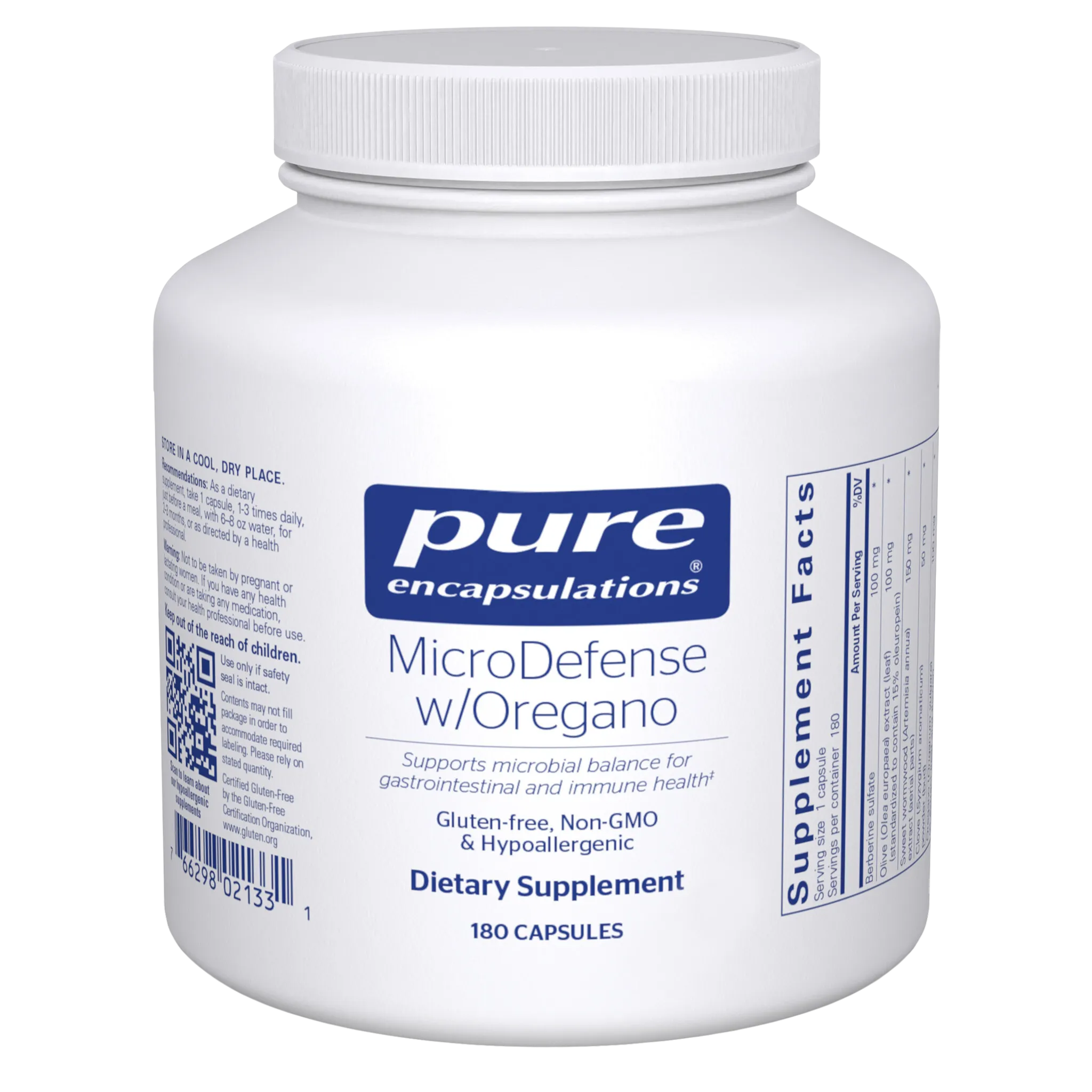
MicroDefense w/Oregano is a highly targeted dietary supplement designed to promote a balanced gastrointestinal microbiome and support healthy digestive function. Rather than relying on a single compound, this formulation utilizes a synergistic blend of extensively researched botanical extracts, including berberine sulfate, olive leaf extract, sweet wormwood (Artemisia annua), clove powder, and grapefruit extract. In a healthy body, the gut microbiome functions essentially as an invisible organ, housing a vast community of bacteria, fungi, and viruses that work in harmony to digest food, synthesize essential vitamins, and train the immune system. When this ecosystem is balanced, beneficial bacteria keep opportunistic pathogens in check, ensuring that the intestinal environment remains stable and the physical barrier of the gut lining remains intact.
However, maintaining this balance requires a complex interplay of biochemical signals and antimicrobial defenses. The ingredients in MicroDefense w/Oregano are specifically selected for their ability to interact with these microbial pathways at the molecular level. These botanicals do not act as indiscriminate antibiotics that wipe out all bacteria; instead, they function as selective modulators. They contain active phenolic compounds, alkaloids, and flavonoids that naturally inhibit the proliferation of harmful microbes while simultaneously creating an environment where beneficial, health-promoting bacteria can thrive. This selective modulation is crucial for patients looking to restore their gastrointestinal health without causing further collateral damage to their delicate internal ecosystems.
The Power of Artemisia and Oregano Oil
Sweet wormwood (Artemisia annua) has been utilized in traditional medicine for thousands of years, but modern pharmacology has only recently uncovered the profound mechanisms behind its efficacy. The plant's primary active compound, artemisinin, is globally recognized for its potent antimalarial properties, but recent 2025 multi-omics research has revealed its powerful role in gut health. At the cellular level, artemisinin acts as an immunomodulator and a prebiotic-like agent. It actively remodels the gut microbiota by decreasing the abundance of inflammatory Firmicutes bacteria while promoting beneficial Bacteroidetes. Furthermore, human gut bacteria actively biotransform artemisinin into novel therapeutic metabolites that help soothe intestinal inflammation and upregulate the body's natural antioxidant defense systems, including Superoxide Dismutase (SOD) and Glutathione Peroxidase.
Oregano oil, derived from the Origanum vulgare plant, is another cornerstone of this formulation, offering intense antioxidant and microbial-balancing properties. Its therapeutic power is driven by high concentrations of specific phenolic compounds, most notably carvacrol and thymol. In vitro and animal research demonstrates that these compounds exert their effects by directly interacting with the lipid bilayers of microbial cell membranes. The hydroxyl groups in carvacrol diffuse through the cell membranes of opportunistic pathogens, promoting severe membrane permeability. This causes the leakage of vital intracellular ions, effectively neutralizing the pathogen. Remarkably, while it aggressively targets harmful bacteria and fungal biofilms, studies indicate that oregano oil largely preserves beneficial, short-chain fatty acid-producing bacteria like Lactobacillus and Bifidobacterium.
Berberine Sulfate and Olive Leaf Extract
Berberine sulfate is a highly concentrated, naturally occurring pentacyclic isoquinoline alkaloid extracted from plants like the Berberis species. In the realm of functional medicine, berberine is celebrated for its remarkable metabolic and antimicrobial properties. At the molecular level, berberine is a potent activator of AMP-activated protein kinase (AMPK), the primary energy-sensing enzyme in our cells. By activating AMPK, berberine helps regulate cellular energy homeostasis, reduces lipid synthesis, and exerts powerful systemic anti-inflammatory effects. Within the gastrointestinal tract, research suggests that berberine inhibits the cell division of harmful bacteria by halting the assembly of the FtsZ protein, a critical component of bacterial replication, thereby acting as a highly effective microbial-balancing compound.
Complementing berberine is olive leaf extract, which is standardized to contain the active constituent oleuropein. Oleuropein is a phenolic glucoside renowned for its ability to maintain healthy G.I. microorganism balance and support robust immune function. When consumed, oleuropein interacts synergistically with the gut microbiome. Specific beneficial gut bacteria produce enzymes that degrade oleuropein into hydroxytyrosol, an extraordinarily potent antioxidant with near-perfect bioavailability. Clinical studies suggest that this biotransformation allows olive leaf extract to actively suppress the synthesis of pro-inflammatory cytokines, such as Interleukin-1β and TNF-α, by downregulating the NF-κB signaling pathway. This makes it an invaluable tool for calming the chronic, low-grade inflammation often found in the guts of patients with complex chronic illnesses.
How Long COVID Impacts the Gastrointestinal System
Viral Reservoirs and Gut Dysbiosis
To understand why a botanical blend like MicroDefense w/Oregano is so relevant for chronic illness, we must examine how conditions like Long COVID fundamentally alter the gastrointestinal system. While COVID-19 is primarily known as a respiratory virus, the SARS-CoV-2 virus has a profound affinity for the gut. The virus binds to ACE2 receptors, which are highly expressed on the enterocytes (the cells lining the intestines). Recent clinical research indicates that in many Long COVID patients, the virus may establish a persistent viral reservoir in the gut tissue, hiding there for months or even years. This persistent viral presence keeps the local immune system in a state of chronic activation, leading to ongoing tissue damage and profound alterations in the microbial landscape.
This chronic intestinal battle results in a state of severe gut dysbiosis—a harmful imbalance between beneficial and pathogenic microorganisms. Extensive microbiome studies have shown that Long COVID patients consistently exhibit a marked depletion of crucial, health-promoting bacteria, particularly Faecalibacterium prausnitzii and Bifidobacterium species. These bacteria are responsible for producing short-chain fatty acids (SCFAs) like butyrate, which are essential for feeding the cells of the gut lining and keeping inflammation in check. Simultaneously, there is an overgrowth of opportunistic, pro-inflammatory pathogens. This microbial shift is not just a side effect; it is a primary driver of the Gastrointestinal Symptoms Seen with Long COVID, including severe bloating, new-onset food intolerances, and post-infectious IBS.
The Threat of "Leaky Gut" and Endotoxemia
The depletion of beneficial bacteria and the persistent local inflammation caused by viral reservoirs inevitably lead to the degradation of the intestinal barrier, a condition commonly referred to as "leaky gut" or increased intestinal permeability. The cells of the intestinal lining are normally held tightly together by structural proteins called tight junctions (such as ZO-1 and occludin). However, the inflammatory cytokines triggered by SARS-CoV-2 and the lack of protective SCFAs cause these tight junctions to break apart. When the barrier is compromised, the gut becomes hyper-permeable, allowing microscopic particles that should remain in the digestive tract to escape into the systemic circulation.
Once the barrier is breached, bacterial endotoxins—specifically lipopolysaccharides (LPS) from the cell walls of Gram-negative bacteria—translocate into the bloodstream. This phenomenon, known as metabolic endotoxemia, is catastrophic for patients already struggling with chronic illness. The immune system detects these circulating toxins and mounts a massive, systemic inflammatory response. Researchers have detected elevated levels of microbial translocation markers, such as lipopolysaccharide-binding protein (LBP), in the blood of Long COVID patients, directly linking their gut dysfunction to their systemic symptoms. This continuous loop of gut permeability and systemic inflammation is a core mechanism behind What Causes Long COVID? and why symptoms can be so relentless.
The Gut-Brain Axis and Systemic Symptoms
The consequences of gut dysbiosis and leaky gut extend far beyond the digestive tract, profoundly impacting neurological function via the gut-brain axis. The gut and the brain are in constant two-way communication through the vagus nerve and various biochemical signaling pathways. When systemic inflammation originates from a leaky gut, pro-inflammatory cytokines can cross the blood-brain barrier, leading to neuroinflammation. This neuroinflammatory state is heavily implicated in the severe cognitive fatigue, memory issues, and "brain fog" that are hallmark symptoms of Long COVID and ME/CFS. The gut is no longer just digesting food; it is actively broadcasting distress signals to the central nervous system.
Furthermore, the gut microbiome is responsible for synthesizing the precursors to essential neurotransmitters. For instance, the vast majority of the body's serotonin is produced in the gastrointestinal tract. Dysbiosis alters tryptophan metabolism, significantly reducing the production of serotonin and other vital neurochemicals. This reduction in neurotransmitter synthesis impedes proper vagus nerve signaling and can impair hippocampal function, exacerbating mood disorders, anxiety, and dysautonomia. Understanding this profound interconnectedness helps explain Can Long COVID Trigger ME/CFS? Unraveling the Connection, as the gut-brain axis serves as the superhighway for translating localized intestinal damage into debilitating, body-wide neurological syndromes.
MicroDefense w/Oregano: Supporting Microbiome Balance and Gut Barrier Integrity
Berberine's Role in AMPK Activation and SCFA Production
MicroDefense w/Oregano counteracts the vicious cycles of dysbiosis and leaky gut through several precise, molecular mechanisms. Berberine sulfate plays a leading role in this restorative process. Interestingly, berberine has relatively low systemic bioavailability, meaning it does not absorb efficiently into the bloodstream. However, recent 2025 pharmacological reviews emphasize that this is actually a therapeutic advantage. Because berberine remains concentrated in the intestinal lumen, it exerts intense, localized anti-inflammatory and immunomodulatory activity directly on the gut lining. It acts as a powerful prebiotic-like agent, significantly increasing the abundance of SCFA-producing bacteria and enriching Akkermansia muciniphila, a keystone bacterial species famous for enhancing protective mucus production in the gut.
By promoting these beneficial bacterial populations, berberine dramatically increases the intraluminal concentration of butyrate. Butyrate is the primary fuel source for colonocytes (the cells of the colon lining) and is essential for activating anti-inflammatory regulatory T (Treg) cells. Furthermore, berberine directly suppresses the PLA2-COX-2-PGE2-EP2 inflammatory pathway in the colon. By halting the production of pro-inflammatory cytokines locally, berberine helps to extinguish the inflammatory fire that degrades the intestinal barrier, thereby cutting off the root source of metabolic endotoxemia and systemic chronic inflammation.
Oregano Oil and Artemisia for Pathogen Control and Tight Junction Repair
While berberine nourishes the beneficial flora, oregano oil and artemisia work aggressively to control opportunistic pathogens and physically repair the intestinal barrier. The carvacrol in oregano oil is highly effective at penetrating and disrupting the sticky, protective biofilms that pathogenic bacteria and fungi use to shield themselves from the immune system. By dismantling these biofilms and increasing microbial cell membrane permeability, oregano oil rapidly reduces the populations of endotoxin-producing bacteria like E. coli and Klebsiella. Animal models have demonstrated that supplementation with oregano essential oil significantly decreases serum endotoxin levels, providing a direct clinical marker that leaky gut is being reversed.
Beyond pathogen control, these botanicals actively stimulate the genetic expression of the structural proteins needed to heal a leaky gut. Studies show that oregano oil significantly increases the mRNA expression of Zonula Occludens-1 (ZO-1), Occludin, and Claudin-1—the exact tight junction proteins that are destroyed by viral inflammation. This architectural improvement not only seals the gut barrier, helping to prevent LPS translocation, but also vastly increases the surface area for proper nutrient absorption, which is critical for patients battling severe fatigue and malnutrition.
Olive Leaf Extract for Immune Modulation and Antioxidant Defense
The inclusion of olive leaf extract in MicroDefense w/Oregano provides a critical layer of immune modulation and antioxidant defense. The chronic inflammation seen in Long COVID and MCAS generates massive amounts of oxidative stress, which damages cellular DNA, proteins, and lipids. The active constituent, oleuropein, and its highly bioavailable microbial metabolite, hydroxytyrosol, act as potent free radical scavengers. They neutralize these damaging oxidative molecules before they can cause further tissue destruction in the gastrointestinal tract. This antioxidant capacity is vital for protecting the newly repaired tight junctions from being immediately degraded by ongoing oxidative stress.
Moreover, olive leaf extract actively modulates the gut-immune axis. It influences the proliferation and activity of key immune cells, including lymphocytes and Natural Killer (NK) cells located in the gut-associated lymphoid tissue (GALT). Ex vivo studies on inflammatory bowel conditions have shown that oleuropein rapidly reduces the mRNA expression of powerful inflammatory mediators like IL-8 and IL-1β. By regulating the balance between anti-inflammatory and pro-inflammatory cytokines, olive leaf extract helps the immune system respond appropriately to remaining pathogens without triggering the excessive, damaging hyper-inflammation that characterizes mast cell activation syndrome (MCAS) and Long COVID flare-ups.

Symptoms MicroDefense w/Oregano May Help Manage
Gastrointestinal and Systemic Relief
By targeting the root causes of gut dysbiosis, intestinal permeability, and localized inflammation, the botanical blend in MicroDefense w/Oregano can help manage a wide array of symptoms associated with complex chronic illnesses. Because the gut microbiome influences nearly every system in the body, restoring microbial balance often yields both digestive and systemic benefits.
Post-Infectious IBS and Severe Bloating: By utilizing oregano oil and clove to disrupt pathogenic biofilms and reduce populations of gas-producing bacteria, this supplement helps alleviate the painful bloating, distension, and irregular bowel habits characteristic of post-viral dysbiosis and Small Intestinal Bacterial Overgrowth (SIBO).
"Brain Fog" and Cognitive Fatigue: By repairing the intestinal tight junctions (healing "leaky gut"), berberine and artemisia may help prevent bacterial endotoxins (LPS) from leaking into the bloodstream. This halts the systemic inflammatory cascade that crosses the blood-brain barrier, thereby reducing the neuroinflammation responsible for profound cognitive impairment.
Food Sensitivities and MCAS Triggers: Olive leaf extract and berberine exert strong immunomodulatory effects, downregulating the pro-inflammatory cytokines that keep the gut's immune system in a hyper-reactive state. Calming this local immune response can help raise the threshold for mast cell degranulation, potentially easing the severity of new-onset food intolerances.
Systemic Joint and Muscle Pain: The systemic circulation of inflammatory cytokines originating from the gut often manifests as widespread musculoskeletal pain. By increasing the production of anti-inflammatory short-chain fatty acids (SCFAs) like butyrate, this botanical blend helps shift the entire body toward a less inflamed state, which may alleviate chronic pain symptoms.
Practical Considerations: Forms, Dosing, and Absorption
Understanding Bioavailability and Biotransformation
When evaluating botanical supplements, understanding bioavailability—how much of a substance enters systemic circulation—is crucial. Interestingly, key ingredients in MicroDefense w/Oregano, particularly berberine sulfate and oleuropein, are known for their relatively low systemic absorption. In the context of gastrointestinal health, this is a distinct therapeutic advantage. Because these compounds are not rapidly absorbed into the bloodstream, they remain highly concentrated within the intestinal lumen. This allows them to exert their potent antimicrobial, anti-inflammatory, and tissue-repairing effects directly on the gut lining and the microbiome where they are needed most.
Furthermore, these botanicals rely heavily on microbial biotransformation to unlock their full potential. Recent pharmacological research highlights that the human gut microbiome actively metabolizes compounds like artemisinin and oleuropein into novel, highly active secondary metabolites (such as sulfated artemisinin and hydroxytyrosol). This creates a beautiful, mutualistic cycle: the botanical extracts help shape a healthier microbiome, and in return, the healthier microbiome ferments the botanicals into powerful, bioavailable antioxidants that protect the entire body. This underscores the importance of taking these supplements consistently to allow this microbial synergy to develop.
Optimal Dosing and Administration
For optimal efficacy, the suggested use for MicroDefense w/Oregano is to take 1 vegetarian capsule daily, just before a meal, with 6-8 oz of water. Taking the supplement shortly before eating allows the botanical extracts to mix with the incoming food, ensuring they are distributed evenly throughout the digestive tract as the meal is processed. The presence of food, particularly healthy fats, can also gently stimulate bile production, which may aid in the breakdown and utilization of the fat-soluble components within the oregano oil and clove powder.
Consistency is key when attempting to remodel the gut microbiome and repair intestinal permeability. The manufacturer recommends a sustained protocol of 2-3 months. Healing a leaky gut and shifting the balance of trillions of microorganisms is not an overnight process; it requires sustained, daily intervention to upregulate tight junction proteins and permanently alter the microbial landscape. Patients should track their digestive and systemic symptoms closely during this period to gauge their individual response to the botanical blend.
Safety, Contraindications, and Pulsed Protocols
While botanical extracts are natural, they are highly potent and must be respected as powerful therapeutic agents. Because oregano oil and berberine possess strong antimicrobial properties, extended, continuous use beyond the recommended 2-3 month window without a break could potentially stress the liver's detoxification pathways or inadvertently suppress beneficial flora. For this reason, many functional medicine practitioners recommend "pulsed" protocols—such as taking the supplement for 8-12 weeks, followed by a 2-4 week cessation period, often accompanied by prebiotic and probiotic support to reinforce the newly balanced microbiome.
It is also important to note specific contraindications. MicroDefense w/Oregano features a warning that it is not to be taken by pregnant or lactating women, as certain botanical alkaloids can cross the placental barrier or enter breast milk. Additionally, because berberine can influence blood sugar metabolism and liver enzymes, patients taking prescription medications for diabetes, hypertension, or those on immunosuppressants should exercise caution. As always, it is imperative to consult with a knowledgeable healthcare provider before introducing a powerful antimicrobial blend into your regimen, especially when managing complex conditions like Long COVID or dysautonomia.

Follow the Science
Clinical Evidence for Botanical Antimicrobials
The use of botanical extracts for gastrointestinal disorders is supported by a robust and growing body of clinical evidence. A landmark open-label study published in Global Advances in Health and Medicine evaluated the efficacy of herbal therapies—specifically formulations containing oregano oil, berberine, and other extracts—against the standard pharmaceutical antibiotic Rifaximin for the treatment of Small Intestinal Bacterial Overgrowth (SIBO). The researchers found that the herbal therapy achieved a 46% resolution rate (a negative follow-up breath test), compared to only 34% in the Rifaximin group. Furthermore, for patients who failed to respond to the pharmaceutical antibiotic, the herbal rescue therapy was effective in over 57% of those crossover cases, highlighting the profound clinical power of these plant-based antimicrobials.
More recently, a 2025 real-world clinical practice study evaluating comprehensive protocols that included oregano oil and berberine for SIBO patients found staggering results regarding symptom management. After 90 days of targeted intervention, 72.6% of the participants reported meaningful clinical improvement in debilitating symptoms like severe bloating, abdominal pain, and unpredictable diarrhea. These clinical outcomes validate the mechanistic data, proving that selective botanical modulation can help resolve dysbiosis and provide substantial quality-of-life improvements for patients suffering from chronic gastrointestinal distress.
Microbiome Modulation and Long COVID Research
The scientific community is increasingly recognizing the microbiome as a primary therapeutic target for post-viral syndromes. A 2025 prospective cohort study published in Cell iScience analyzed hundreds of patients with Long COVID and discovered that oral and gut microbiome differences were strongly associated with specific symptom clusters, completely independent of viral persistence. The researchers concluded that bacterial dysbiosis is a major contributor to Long COVID heterogeneity and explicitly suggested that the microbiome must be a target for future therapeutic strategies. This aligns perfectly with the mechanisms of MicroDefense w/Oregano.
Furthermore, research into the specific ingredients continues to unveil their complex interactions with the gut-immune axis. A 2025 ex vivo multi-omics study demonstrated that Artemisia annua uniquely interacts with human gut bacteria to drive significant microbial shifts, decreasing inflammatory phyla while increasing beneficial taxa. Similarly, extensive reviews on berberine highlight its ability to heal the intestinal barrier and halt metabolic endotoxemia. Together, this scientific literature paints a clear picture: targeted botanical interventions that support microbiome balance and repair leaky gut are critical tools in the fight against the systemic inflammation driving complex chronic illnesses.
The Path Forward
Rebuilding the Gut Foundation
Living with the unpredictable and often debilitating symptoms of Long COVID, ME/CFS, and dysautonomia is an exhausting journey. When new, frustrating gastrointestinal issues emerge on top of profound fatigue and brain fog, it is easy to feel overwhelmed by a body that seems to be constantly malfunctioning. However, it is vital to remember that these symptoms are not in your head; they are rooted in complex, measurable physiological disruptions, particularly within the gut microbiome. Understanding that your digestive tract may be harboring viral reservoirs or suffering from increased permeability provides a tangible target for healing. By focusing on rebuilding the foundational health of your gut, you are taking a crucial step toward lowering systemic inflammation and supporting your body's overall recovery.
Healing a dysbiotic gut and repairing a compromised intestinal barrier takes time, patience, and a comprehensive approach. Supplements like MicroDefense w/Oregano are powerful tools, but they are most effective when integrated into a broader management strategy. This includes pacing to manage post-exertional malaise, identifying and removing dietary triggers, prioritizing nervous system regulation, and working closely with a medical team that understands the nuances of post-viral illness. As you navigate How Can You Live with Long-Term COVID, remember that restoring microbial balance is a marathon, not a sprint, but every step toward a healthier gut is a step toward reclaiming your quality of life.
Comprehensive Care and Next Steps
If you are struggling with persistent gastrointestinal symptoms, systemic inflammation, or suspect that gut dysbiosis is playing a role in your chronic illness, targeted botanical support may be a valuable addition to your protocol. Always consult with your healthcare provider before starting any new supplement, especially potent antimicrobial blends, to ensure it aligns with your specific medical history and current medications.