Can Metabolic Synergy™ Support Energy Production and Glucose Metabolism in Long COVID?
March 6, 2026
Metabolic SynergyLong COVIDME/CFS
Share:
Disclaimer: The information provided here is for educational purposes only and is not intended as medical advice. It should not be used to diagnose, treat, cure, or prevent any medical condition. Instead, use it as a starting point for discussion with your healthcare provider. Always consult with a qualified healthcare provider before starting any new medication, supplement, device, or making changes to your health regimen.
Months or even years after a mild acute SARS-CoV-2 infection, millions of people find themselves trapped in a state of profound exhaustion, cognitive dysfunction, and metabolic chaos known as Long COVID. For those living with complex chronic conditions like Long COVID, myalgic encephalomyelitis/chronic fatigue syndrome (ME/CFS), and dysautonomia, the most debilitating symptom is often post-exertional malaise (PEM)—a severe energy crash that occurs after minor physical or mental exertion. But what drives this relentless fatigue? Emerging research points to a profound disruption at the cellular level: the body’s inability to efficiently convert food into usable energy, coupled with sudden, new-onset insulin resistance.
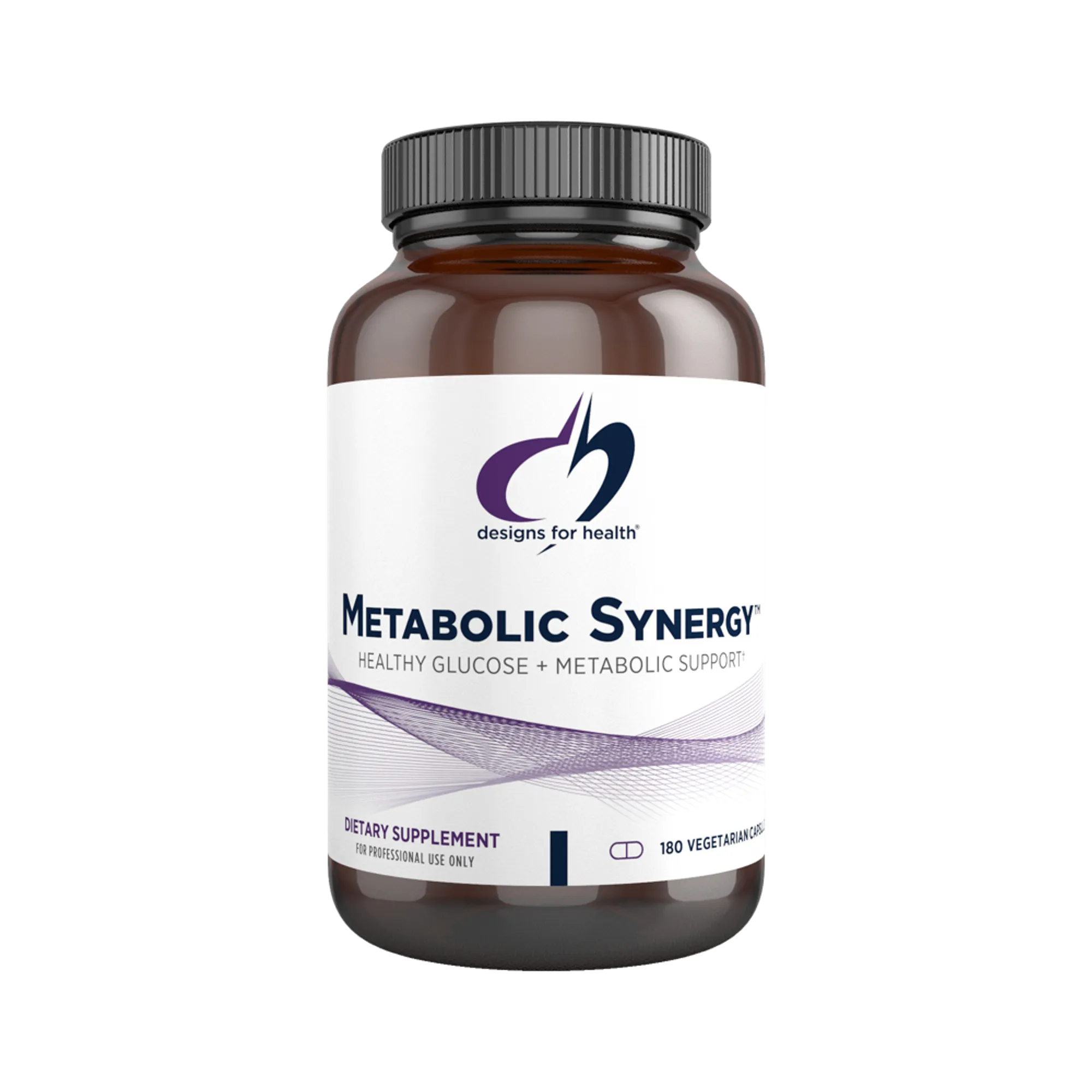
When the cellular engines—the mitochondria—are damaged by viral persistence, chronic inflammation, or oxidative stress, the entire metabolic system falters. This is where targeted nutritional support becomes a critical component of a comprehensive management strategy. Metabolic Synergy™ by Designs for Health is a specialized formula designed to support healthy glucose and insulin metabolism while aiding the conversion of carbohydrates into energy. By providing highly bioavailable nutrients essential for the tricarboxylic acid (TCA) cycle, including R-lipoic acid, benfotiamine, taurine, and chelated minerals, this supplement aims to address the foundational metabolic derangements seen in post-viral syndromes.
TL;DR
Long COVID and ME/CFS disrupt cellular energy and insulin sensitivity, driving severe fatigue and post-exertional malaise.
Metabolic Synergy™ provides targeted nutrients like R-lipoic acid and benfotiamine to support mitochondrial energy production.
Ingredients like taurine and chelated chromium may help stabilize cellular function and support healthy blood sugar.
Always consult your healthcare provider before starting new supplements, especially if taking blood sugar medications.
What is Metabolic Synergy™?
A Comprehensive Metabolic Toolkit
At its core, Metabolic Synergy™ is a meticulously formulated blend of vitamins, minerals, and amino acids designed to support the body's primary energy-producing pathways and maintain healthy blood glucose levels. In a healthy body, the food we eat—specifically carbohydrates, fats, and proteins—must be broken down and converted into adenosine triphosphate (ATP), the universal energy currency of the cell. This conversion process is highly complex and relies on a series of enzymatic reactions that require specific nutritional cofactors to function smoothly. When these cofactors are depleted, energy production stalls, and metabolic byproducts accumulate, leading to systemic fatigue and cellular stress.
Metabolic Synergy™ provides these essential cofactors in their most biologically active forms. The formula includes a robust B-vitamin complex featuring benfotiamine (a highly absorbable, lipid-soluble derivative of vitamin B1), riboflavin, niacin, and methylated folate. It also contains targeted metabolic antioxidants like R-lipoic acid, taurine, and carnosine, alongside a specialized blend of trace minerals including chromium, zinc, selenium, manganese, and molybdenum. Together, these ingredients work synergistically to support the intricate machinery of the mitochondria and the delicate balance of insulin signaling.
Fueling the Tricarboxylic Acid (TCA) Cycle
To understand how this supplement functions, we must look at the molecular level, specifically at the tricarboxylic acid (TCA) cycle (also known as the Krebs cycle or citric acid cycle). Located deep within the mitochondria, the TCA cycle is a series of chemical reactions that strips high-energy electrons from the carbon bonds of our food. These electrons are then fed into the electron transport chain to manufacture ATP. However, the TCA cycle cannot operate without specific "spark plugs" or coenzymes. For example, before carbohydrates can enter the TCA cycle, they must be converted from pyruvate into acetyl-CoA by an enzyme called the pyruvate dehydrogenase (PDH) complex.
This critical bottleneck—the PDH complex—absolutely requires both thiamine (vitamin B1) and lipoic acid to function. If these nutrients are missing, the conversion halts, the TCA cycle is starved of fuel, and the cell cannot produce aerobic energy. Metabolic Synergy™ supplies benfotiamine and R-lipoic acid to directly support this enzymatic gateway, ensuring that carbohydrates are efficiently funneled into the mitochondria rather than being shunted into inefficient, fatigue-inducing anaerobic pathways.
The Power of Chelated Minerals and Insulin Sensitization
Beyond energy production, Metabolic Synergy™ plays a vital role in supporting glucose metabolism and insulin sensitivity. Insulin is the hormone responsible for unlocking cells so that glucose can enter and be used for fuel. When cells become resistant to insulin, glucose builds up in the bloodstream, leading to systemic inflammation and depriving the brain and muscles of necessary energy. Trace minerals, particularly chromium, are essential for maintaining the sensitivity of these cellular locks.
The formula utilizes true mineral chelates (such as TRAACS® Chromium Nicotinate Glycinate Chelate). Chelation is a process where an inorganic mineral is chemically bound to an organic molecule, like an amino acid, making it dramatically easier for the digestive tract to absorb. Once absorbed, chromium binds to a peptide inside the cell to form chromodulin. Chromodulin then attaches to the insulin receptor, amplifying its signal and keeping the cellular doors open longer, thereby promoting efficient glucose uptake and stable energy levels throughout the day.
How Long COVID and ME/CFS Impact Cellular Energy and Glucose Metabolism
The Viral Hijacking of Mitochondria
To understand why nutrients like those in Metabolic Synergy™ are so relevant to complex chronic illnesses, we must examine how conditions like Long COVID and ME/CFS fundamentally alter cellular metabolism. Recent state-of-the-art metabolomic profiling has confirmed that these conditions are not simply the result of deconditioning or psychological stress; they are profound, systemic metabolic diseases. When the body is subjected to a severe viral infection like SARS-CoV-2, the virus can directly infiltrate host cells and "hijack" the mitochondria, suppressing mitochondrial gene expression and actively inhibiting the oxidative phosphorylation complex to favor viral replication over host energy production.
This viral interference, combined with chronic immune activation and systemic inflammation, leads to a catastrophic drop in cellular energy. A 2024 study published in the Journal of Proteome Research analyzed plasma from Long COVID patients and identified dozens of altered metabolites strictly related to mitochondrial dysfunction, proving that this cellular damage persists long after the acute virus has cleared. The mitochondria become swollen, their internal structures (cristae) degrade, and they lose the ability to efficiently recycle themselves, trapping the patient in an intracellular state of energy starvation.
The TCA Cycle Blockade and Post-Exertional Malaise
The hallmark symptom of both ME/CFS and Long COVID is post-exertional malaise (PEM), a devastating crash in physical and cognitive function following minor exertion. This phenomenon is directly tied to a dysfunction within the TCA cycle. Research, including a landmark 2016 study by Fluge and Mella, has demonstrated a functional impairment of the pyruvate dehydrogenase (PDH) complex in ME/CFS patients. Because this crucial gateway is blocked, cells cannot efficiently feed carbohydrates into the TCA cycle.
When a healthy person exerts themselves, their TCA cycle ramps up to meet the increased energy demand. In patients with ME/CFS and Long COVID, the blocked TCA cycle forces the body to immediately switch to an emergency backup system: anaerobic glycolysis. This inefficient process rapidly generates high amounts of systemic lactate and causes an accumulation of TCA cycle intermediates, like succinate, which spill into the bloodstream. This metabolic traffic jam induces muscle burning, heavy limbs, cellular hypoxia, and the profound exhaustion that characterizes a PEM crash. The body is essentially starving for energy while simultaneously drowning in metabolic waste.
New-Onset Insulin Resistance and Metabolic Derangement
Compounding the energy crisis is the alarming rate of metabolic dysregulation observed in post-viral syndromes. A 2024 prospective observational study revealed that up to 75% of non-diabetic patients who developed Long COVID progressed to clinical diabetes within one year of their acute infection. SARS-CoV-2 can directly damage the pancreatic beta cells responsible for producing insulin, while the persistent elevation of pro-inflammatory cytokines (like IL-6) actively drives peripheral insulin resistance in the muscles and liver.
When cells become resistant to insulin, they cannot absorb the glucose required to fuel the brain and body. This systemic and brain-specific insulin resistance prevents neurons from effectively utilizing energy, leading to neuronal impairment, severe cognitive dysfunction ("brain fog"), and affective symptoms like depression and anxiety. The combination of a blocked TCA cycle and severe insulin resistance creates a vicious cycle of energy depletion, oxidative stress, and worsening chronic illness symptoms.
Metabolic Synergy™: Supporting Cellular Energy and Insulin Sensitivity
R-Lipoic Acid and Benfotiamine: Unblocking the Krebs Cycle
Metabolic Synergy™ provides a targeted approach to addressing the specific metabolic blockades seen in Long COVID and ME/CFS. The inclusion of R-lipoic acid (50 mg) and benfotiamine (25 mg) directly targets the impaired pyruvate dehydrogenase (PDH) complex. R-lipoic acid is the naturally occurring, biologically active isomer of alpha-lipoic acid. It acts as an essential cofactor for the PDH enzyme, helping to "unblock" the gateway to the TCA cycle. By facilitating the conversion of pyruvate into acetyl-CoA, R-lipoic acid helps restore the forward momentum of the Krebs cycle, allowing the body to shift away from inefficient anaerobic metabolism and resume producing aerobic ATP.
Benfotiamine, a highly bioavailable, lipid-soluble derivative of vitamin B1 (thiamine), works in tandem with R-lipoic acid. Standard thiamine is notoriously difficult to absorb, but benfotiamine can easily cross cell membranes and the blood-brain barrier. Inside the mitochondria, thiamine is required to activate transketolase and alpha-ketoglutarate dehydrogenase—critical enzymes that keep the TCA cycle turning. By supplying these two essential cofactors, Metabolic Synergy™ supports the restoration of cellular energy production, potentially mitigating the severe energy crashes associated with post-exertional malaise.
Taurine: Stabilizing the Electron Transport Chain
Another crucial component of Metabolic Synergy™ is taurine (750 mg). While often recognized as an ingredient in energy drinks, taurine is actually one of the most abundant free amino acids in high-energy tissues like the brain and skeletal muscles. Recent metabolomic studies have identified severe taurine depletion as a major predictive biomarker for Long COVID severity and ME/CFS metabolic derangement. Inside the mitochondria, taurine conjugates with mitochondrial tRNA to stabilize Complex I of the electron transport chain.
Without adequate taurine, the electron transport chain becomes unstable, leading to "electron leaks" that generate massive amounts of destructive reactive oxygen species (ROS). Taurine also regulates the alkaline matrix pH of the mitochondria, which is necessary for efficient fatty acid oxidation (burning fat for fuel). By replenishing taurine levels, this formula helps stabilize the ATP manufacturing process, buffers the mitochondria against oxidative stress, and supports the body's ability to sustain energy output during physical or cognitive exertion.
Chromium and Targeted Insulin Support
To support healthy insulin sensitivity often affected by post-viral inflammation, Metabolic Synergy™ utilizes chromium (200 mcg as TRAACS® Chromium Nicotinate Glycinate Chelate). Chromium's primary mechanism of action involves the chromodulin pathway. When insulin binds to a cell's receptor, it triggers the uptake of chromium, which forms the active chromodulin complex. This complex then binds to the intracellular domain of the insulin receptor, amplifying its tyrosine kinase activity.
Essentially, chromium keeps the insulin signaling cascade "turned on" longer and stronger. It also inhibits PTP-1B, an enzyme that prematurely deactivates insulin receptors, and stimulates the translocation of GLUT4 transporters to the cell surface to pull glucose out of the blood. By enhancing insulin sensitivity at the cellular level, the chromium, zinc, and specialized antioxidants (like carnosine) in Metabolic Synergy™ help ensure that the glucose circulating in the bloodstream actually makes it inside the cells where it can be converted into much-needed energy.
Symptoms Metabolic Synergy™ May Help Manage
Targeting the Energy Crisis
By providing the specific cofactors required for the TCA cycle and insulin signaling, the ingredients in Metabolic Synergy™ may help manage several debilitating symptoms associated with complex chronic conditions:
Profound Fatigue and PEM: By supplying R-lipoic acid and benfotiamine to unblock the pyruvate dehydrogenase complex, the formula supports aerobic ATP production, potentially reducing the reliance on anaerobic glycolysis that triggers post-exertional malaise crashes.
Muscle Weakness and Heaviness: Taurine and R-lipoic acid help stabilize the electron transport chain and reduce the accumulation of toxic lipid metabolites and lactic acid in muscle tissue, alleviating the "leaden" feeling commonly reported by patients.
Brain Fog and Cognitive Dysfunction: Benfotiamine easily crosses the blood-brain barrier to support localized energy production in the central nervous system, while improved insulin sensitivity ensures neurons receive the glucose they need to function clearly.
Addressing Metabolic and Neurological Symptoms
The systemic benefits of improved metabolic function extend beyond just energy production, impacting cardiovascular and neurological health:
Blood Sugar Fluctuations: The highly bioavailable chelated chromium and zinc amplify insulin receptor activity, helping to stabilize blood glucose levels and help manage the energy crashes associated with dysglycemia.
Neuropathic Pain and Tingling: Both benfotiamine and R-lipoic acid have well-documented neuroprotective properties, helping to support the body's response to oxidative damage to peripheral nerves and reduce symptoms of small fiber neuropathy often seen in Long COVID.
Dysautonomia and Palpitations: Taurine plays a critical role in regulating intracellular calcium and buffering the autonomic nervous system, which may help calm the exaggerated sympathetic responses seen in conditions like POTS.

Practical Considerations: Forms, Dosing, and Absorption
The Advantage of True Chelates and Lipid-Soluble Vitamins
When dealing with chronic illness, digestion and absorption are often compromised due to gut dysbiosis or autonomic dysfunction. Metabolic Synergy™ addresses this by utilizing highly bioavailable forms of its key nutrients. The minerals in this formula—including chromium, zinc, selenium, manganese, and molybdenum—are provided as true chelates (using the patented TRAACS® system). Chelation binds the inorganic mineral to an organic amino acid (like glycine), allowing it to bypass the standard, often inefficient mineral absorption pathways in the gut and be actively transported into the bloodstream.
Similarly, the formula utilizes benfotiamine rather than standard thiamine hydrochloride. Standard water-soluble thiamine is poorly absorbed in the intestines, requiring massive doses to achieve therapeutic levels in the blood. Benfotiamine is a synthetic, lipid-soluble (fat-soluble) derivative that easily penetrates cell membranes. Research demonstrates that benfotiamine achieves plasma thiamine levels roughly five times higher than standard thiamine, making it vastly superior for targeting neurological symptoms and crossing the blood-brain barrier.
Optimal Timing and Dosage
The suggested use for Metabolic Synergy™ is 6 capsules per day, or as directed by a healthcare practitioner. Because this is a comprehensive, multi-nutrient formula, it is generally recommended to split the dosage throughout the day (e.g., 3 capsules with breakfast and 3 capsules with lunch) rather than taking all 6 at once. This split dosing helps maintain steady blood levels of water-soluble B-vitamins and provides continuous support for glucose metabolism across multiple meals.
Because the formula contains fat-soluble vitamins (A, D, K, E) and lipid-soluble benfotiamine, it should always be taken with a meal that contains some healthy dietary fat to maximize absorption. Taking it with food also minimizes the risk of nausea, which can sometimes occur when taking high doses of B-vitamins or zinc on an empty stomach. Patients typically need to take mitochondrial and metabolic support supplements consistently for 4 to 12 weeks before noticing significant improvements in baseline energy levels and a reduction in PEM severity.
Safety and Potential Interactions
While the ingredients in Metabolic Synergy™ are generally well-tolerated, the formula's specific mechanisms require careful consideration. Because R-lipoic acid, chromium, and taurine actively improve insulin sensitivity and lower blood glucose levels, patients who are currently taking prescription medications for diabetes (such as insulin or sulfonylureas) must consult their doctor before starting this supplement. The combination could potentially lead to hypoglycemia (dangerously low blood sugar) if medication dosages are not adjusted.
Additionally, the formula contains 75 mcg of iodine and 100 mcg of selenium, which actively influence thyroid function. Patients with pre-existing autoimmune thyroid conditions (like Hashimoto's or Graves' disease) should monitor their thyroid panels. As always, because post-viral syndromes involve complex systemic dysregulation, it is crucial to work with a healthcare provider who can tailor the dosage to your specific metabolic needs and monitor your progress through targeted lab testing.
Follow the Science
Clinical Evidence for R-Lipoic Acid and Benfotiamine
Similarly, the efficacy of lipid-soluble vitamin B1 for post-viral neurological symptoms was highlighted in a 2024 randomized controlled trial by Tehrani et al.. The study evaluated 66 Long COVID patients suffering from severe fatigue and brain fog. The group receiving high-dose thiamine demonstrated significantly faster symptom improvement than the control group, with major reductions in fatigue, myalgia, and sleep disturbances starting within just two weeks. By week seven, the recovery rate in the B1 group was double that of the control group, validating the critical role of thiamine derivatives like benfotiamine in restoring central nervous system energy.
Taurine as a Predictive Biomarker
Chromium and Insulin Resistance
The Path Forward
Validating the Metabolic Reality of Chronic Illness
If you are living with Long COVID, ME/CFS, or dysautonomia, it is vital to understand that your profound exhaustion is not in your head—it is in your cells. The crushing weight of post-exertional malaise, the cognitive fog, and the sudden fluctuations in your energy levels are the direct result of a measurable, physiological energy crisis. Your mitochondria are struggling to turn the food you eat into the energy you need, and your metabolic pathways are fighting against viral-induced roadblocks. Acknowledging this metabolic reality is the first step toward reclaiming your health.
A Comprehensive Approach to Recovery
While there is no single miracle cure for complex post-viral conditions, targeted nutritional therapy offers a powerful tool for rebuilding your cellular foundation. By providing the exact cofactors your body needs—like R-lipoic acid, benfotiamine, taurine, and chelated chromium—Metabolic Synergy™ supports the unblocking of the TCA cycle and the restoration of healthy insulin signaling. However, supplements must be part of a broader, comprehensive management strategy that includes aggressive pacing to avoid PEM, symptom tracking, and working closely with a medical professional who understands the nuances of metabolic dysfunction.
Disclaimer: This blog is for educational purposes only and does not constitute medical advice. Always consult your healthcare provider before starting any new supplement, especially if you have a chronic illness, are taking blood sugar-lowering medications, or have a history of thyroid dysfunction.