Can Magnesium Glycinate Support Energy and Calm the Nervous System in Long COVID and POTS?
March 5, 2026
Magnesium GlycinateLong COVIDME/CFS
Share:
Disclaimer: The information provided here is for educational purposes only and is not intended as medical advice. It should not be used to diagnose, treat, cure, or prevent any medical condition. Instead, use it as a starting point for discussion with your healthcare provider. Always consult with a qualified healthcare provider before starting any new medication, supplement, device, or making changes to your health regimen.
Months or even years after a viral infection, many patients find themselves trapped in a body that no longer feels like their own. You might be dealing with a heart that races simply from standing up, a profound, crushing fatigue that worsens after minor exertion, or sudden allergic reactions to foods you have eaten your entire life. When standard blood panels come back "normal," it is easy to feel dismissed by the medical system, leaving you searching for answers to explain the debilitating symptoms of Long COVID, myalgic encephalomyelitis/chronic fatigue syndrome (ME/CFS), dysautonomia, and mast cell activation syndrome (MCAS).
However, these invisible illnesses are rooted in very real, measurable physiological disruptions at the cellular level. One of the most critical, yet frequently overlooked, pieces of this complex puzzle is intracellular mineral depletion, particularly involving magnesium. Magnesium is not just a simple vitamin; it is a fundamental biological spark plug required for over 600 enzymatic reactions in the human body, including the generation of cellular energy and the regulation of the autonomic nervous system. In this comprehensive guide, we will explore how Magnesium Glycinate, a highly bioavailable chelated form of this vital mineral, interacts with your cellular pathways to support mitochondrial function, calm sympathetic nervous system overdrive, and help you live with long-term COVID.
TL;DR
Magnesium glycinate may support cellular energy and nervous system balance in complex chronic conditions.
Intracellular magnesium depletion is linked to symptoms of Long COVID, ME/CFS, and POTS.
The glycinate form is highly bioavailable and gentle on the digestive tract.
Always consult a healthcare provider before starting new supplements.
What is Magnesium Glycinate?
The Dual-Synergy of Magnesium and Glycine
In a healthy human body, magnesium is the fourth most abundant mineral and is absolutely indispensable for sustaining life. However, not all magnesium supplements are created equal. Magnesium Glycinate (also known as magnesium bisglycinate) is a unique, highly bioavailable chelated compound where one magnesium ion is chemically bound to two molecules of the amino acid glycine. This specific molecular structure creates a "dual-synergy" mechanism of action, meaning that both the magnesium ion and the glycine molecules exert active, beneficial physiological effects once they enter the bloodstream. According to research on magnesium, it enhances exercise performance by increasing glucose availability in the blood, muscle, and brain.
The addition of glycine is particularly important for patients dealing with neurological and autonomic symptoms. Glycine acts as an inhibitory neurotransmitter in the central nervous system, meaning it helps to calm hyperactive electrical signaling in the brain and spinal cord. When combined with magnesium, which is a natural muscle relaxant and nervous system depressant, the resulting compound provides a profound stabilizing effect on the body's stress response. Research indicates that magnesium supplementation can have a beneficial effect on subjective anxiety and stress. This helps shift the body out of a chronic "fight-or-flight" sympathetic state and into a restorative "rest-and-digest" parasympathetic state.
The Spark Plug of Cellular Energy (ATP)
At the microscopic level, magnesium's most critical role is its involvement in the mitochondria, the powerhouses of our cells. The mitochondria are responsible for converting the food we eat into adenosine triphosphate (ATP), the universal "energy currency" that fuels every biological process, from a heartbeat to a conscious thought. However, ATP is biologically inactive and highly unstable on its own. For ATP to be utilized by the body, it must bind to a magnesium ion, creating a biologically active complex known as Mg-ATP. Systematic reviews demonstrate that magnesium supplementation is often studied for its effects on subjective anxiety and stress.
Furthermore, magnesium is a non-negotiable prerequisite for the actual production of ATP. Inside the mitochondrial matrix, free magnesium ($Mg^{2+}$) acts as a vital cofactor that activates three major rate-limiting dehydrogenases in the Krebs cycle: pyruvate dehydrogenase, isocitrate dehydrogenase, and 2-oxoglutarate dehydrogenase (OGDH). Without adequate magnesium, the metabolic breakdown of glucose physically halts, bringing cellular respiration to a grinding stop. Additionally, magnesium is required to catalyze the terminal step of oxidative phosphorylation by activating $F_0/F_1$-ATP synthase, the specific mitochondrial enzyme responsible for phosphorylating adenosine diphosphate (ADP) into ATP. In short, if the mitochondria are the engine of the human body, magnesium is the spark plug that ignites the fuel.
Neurological Regulation and the Autonomic Nervous System
Beyond energy production, magnesium plays a pivotal role in regulating the autonomic nervous system and maintaining healthy neuromuscular function. In the brain, magnesium acts as a natural gatekeeper for the N-methyl-D-aspartate (NMDA) receptors. These receptors are responsible for excitatory, stress-inducing signals and the amplification of chronic pain. When magnesium levels are sufficient, the mineral sits inside the NMDA receptor channel, physically blocking the influx of calcium and preventing excessive nerve firing. Neurological research highlights that elevating brain magnesium enhances learning and memory by increasing functional presynaptic release sites and upregulating NMDA receptors.
At the tissue level, magnesium is essential for smooth and skeletal muscle relaxation. It modulates the beta-adrenergic receptor pathways and regulates calcium influx into muscle cells. While calcium triggers muscle fibers to contract, magnesium is required to push that calcium back out of the cell, allowing the muscle to relax. This delicate balance between calcium and magnesium dictates the rhythm of our heart, the tone of our blood vessels, and the relaxation of our skeletal muscles. When this balance is disrupted by chronic illness, it can lead to the severe muscle cramping, spasms, and cardiovascular irregularities frequently seen in dysautonomia and Long COVID.
How Complex Chronic Illness Impacts Magnesium Levels
The Vicious Cycle of Viral Infection and Oxidative Stress in Long COVID
To understand what causes Long COVID, we must examine the profound metabolic and inflammatory toll that the initial SARS-CoV-2 infection takes on the body. Viral infections trigger a massive immune response, often resulting in a "cytokine storm," severe oxidative stress, and widespread endothelial dysfunction (damage to the lining of the blood vessels). This intense immunological battle rapidly depletes the body's intracellular stores of essential minerals, particularly magnesium. A 2022 review explored the possible application of melatonin in managing Long COVID, highlighting the need for targeted interventions against post-viral sequelae.
This depletion creates a vicious cycle. Magnesium naturally modulates the immune system by reducing the activation of nuclear factor kappa B (NF-kB), a protein complex that controls the transcription of DNA, cytokine production, and cell survival. When magnesium is depleted by the initial viral attack, NF-kB becomes overactive, leading to a continuous, uninhibited release of pro-inflammatory cytokines. This chronic neuroinflammation is a primary driver of the brain fog, cognitive impairment, and persistent fatigue that Long COVID patients endure. Furthermore, the body requires magnesium to activate Vitamin D; supplementing high doses of Vitamin D for immune support without adequate magnesium can paradoxically drain magnesium reserves further, worsening post-viral symptoms.
Mitochondrial Dysfunction and the ME/CFS Energy Crisis
Many patients wonder, can Long COVID trigger ME/CFS? The answer is a resounding yes, and mitochondrial dysfunction is a massive overlapping factor. ME/CFS is characterized by a profound cellular energy crisis and post-exertional malaise (PEM), where even minor physical or cognitive exertion leads to a debilitating crash. Because magnesium is strictly required for the mitochondria to produce ATP, an intracellular deficiency directly impairs the electron transport chain. Without enough magnesium to stabilize the Mg-ATP complex or activate Krebs cycle enzymes, the cells cannot meet the energy demands of daily life.
In this state of mitochondrial failure, the body is forced to switch from efficient aerobic respiration to inefficient anaerobic glycolysis, producing lactic acid as a byproduct. This explains the heavy, burning sensation in the muscles and the profound physical exhaustion experienced by ME/CFS patients after minimal activity. Landmark research published in The Lancet demonstrated that ME/CFS patients frequently exhibit significantly lower red blood cell (intracellular) magnesium levels than healthy controls. This intracellular depletion drives a self-perpetuating cycle of poor ion transport, increased oxidative stress, and early cellular apoptosis (cell death), cementing the chronic fatigue state.
Dysautonomia, POTS, and the Hyperadrenergic State
Dysautonomia, and specifically Postural Orthostatic Tachycardia Syndrome (POTS), involves a severe dysregulation of the autonomic nervous system. POTS patients frequently suffer from a "hyperadrenergic" state, meaning their sympathetic nervous system is in chronic overdrive, constantly flooding the body with adrenaline and norepinephrine. This leads to the hallmark symptoms of POTS: an abnormal spike in heart rate upon standing, heart palpitations, tremors, and severe anxiety. Magnesium deficiency acts as a massive accelerant for this autonomic dysfunction. Without sufficient magnesium to block the excitatory NMDA receptors, the nervous system remains trapped in a hyper-excitable loop, amplifying every stress signal.
Furthermore, POTS is heavily influenced by cardiovascular dynamics and blood vessel tone. Magnesium acts as a natural calcium channel blocker, helping the smooth muscles lining the blood vessels to relax and dilate. When magnesium is low, calcium dominates, causing the blood vessels to constrict inappropriately and the heart muscle to become highly irritable. Cardiology experts specializing in POTS frequently note that while standard serum magnesium blood tests may appear "normal," POTS patients often suffer from severe intracellular magnesium depletion, which directly contributes to their debilitating tachycardia and orthostatic intolerance.
Mast Cell Activation Syndrome (MCAS) and Histamine Overload
Patients with Long COVID, ME/CFS, and POTS frequently develop a comorbid condition known as Mast Cell Activation Syndrome (MCAS). Mast cells are white blood cells that act as the immune system's first responders. In MCAS, these cells become hyper-responsive and inappropriately degranulate, releasing excessive amounts of chemical mediators like histamine, leukotrienes, and cytokines into the bloodstream. This triggers multi-systemic allergic reactions, hives, gastrointestinal distress, and profound neuroinflammation. Magnesium deficiency is a known, potent trigger for mast cell destabilization.
Mast cell degranulation is highly dependent on the influx of intracellular calcium. Because magnesium naturally antagonizes calcium, a deficiency allows cytosolic calcium to rise unchecked, destabilizing the mast cell membrane and facilitating rapid, unprovoked degranulation. Animal studies on dietary magnesium restriction have shown that just four days of a magnesium-restricted diet causes a rapid and dangerous increase in mast cell proliferation and systemic histamine release. Additionally, magnesium is a mandatory cofactor for the enzymes that break down histamine (like DAO and HNMT); without it, histamine accumulates in the tissues, creating a state of chronic allergic inflammation.
Magnesium Glycinate: Supporting Cellular Energy, Nervous System Balance, and Mast Cell Stability
Restoring the Mitochondrial ATP Production Line
Supplementing with Magnesium Glycinate offers a multi-targeted approach to addressing the complex pathophysiology of infection-associated chronic illnesses. By providing a highly bioavailable source of this essential mineral, patients can begin to restore the disrupted biochemical pathways that drive their symptoms. The most immediate and profound impact of magnesium repletion occurs within the mitochondria. By restoring the intracellular pool of free magnesium ($Mg^{2+}$), the mitochondria can successfully restart the Krebs cycle and the electron transport chain. Magnesium activates the critical dehydrogenase enzymes required to break down glucose and provides the necessary stabilization for the newly synthesized ATP molecules, forming the active Mg-ATP complex.
This restoration of cellular bioenergetics is crucial for patients suffering from the crushing fatigue and post-exertional malaise (PEM) characteristic of Long COVID and ME/CFS. As the mitochondria regain their ability to produce ATP efficiently via aerobic respiration, the body relies less on inefficient anaerobic glycolysis. This reduces the toxic buildup of lactic acid in the tissues, alleviating the heavy, aching muscle pain that often accompanies chronic fatigue. Research indicates that magnesium supplementation may help manage subjective anxiety and stress, which can be beneficial for patients rebuilding their tolerance to daily activities.
Calming Sympathetic Overdrive in POTS and Dysautonomia
For patients battling dysautonomia and POTS, Magnesium Glycinate serves as a powerful, natural nervous system stabilizer. The dual-synergy of this specific supplement form is highly therapeutic: the magnesium ion physically blocks the excitatory NMDA receptors, preventing the influx of calcium that causes nerve hyper-excitability, while the glycine molecule acts as an inhibitory neurotransmitter, actively calming the brain and spinal cord. This combined action helps to dampen the excessive release of adrenaline and norepinephrine, pulling the patient out of the chronic "fight-or-flight" state that drives their tachycardia and anxiety.
Cardiovascularly, magnesium's role as a natural calcium channel blocker is vital for managing POTS symptoms. By regulating calcium influx into the smooth muscle cells of the blood vessels and the heart, magnesium promotes vasodilation and prevents the irritable, rapid heart contractions (palpitations) that occur upon standing. Clinical guidelines from dysautonomia specialists frequently recommend magnesium supplementation to help stabilize heart rate, reduce the frequency of adrenaline surges, and alleviate the severe muscle cramping and tension headaches that often plague patients with autonomic nervous system dysfunction.
Natural Mast Cell Stabilization and Histamine Degradation
In the context of Mast Cell Activation Syndrome (MCAS), Magnesium Glycinate acts as a foundational, natural mast cell stabilizer. By restoring the proper balance of intracellular magnesium to calcium, the supplement helps to fortify the mast cell membrane, raising the threshold required for degranulation. A 2025 in vitro study published in Cellular Physiology and Biochemistry demonstrated that magnesium provides direct, dose-dependent stabilization of mast cells, significantly inhibiting the exocytosis of inflammatory mediators. At optimal concentrations, signs of mast cell degranulation were partially or entirely absent.
Furthermore, magnesium supplementation directly supports the body's ability to clear excess histamine. Magnesium is a required cofactor for the production of Diamine Oxidase (DAO), the primary enzyme responsible for degrading histamine in the digestive tract. It is also crucial for the synthesis of S-adenosylmethionine (SAMe), the major methyl donor utilized by the Histamine-N-Methyltransferase (HNMT) enzyme to break down histamine in the liver and central nervous system. By supporting these enzymatic degradation pathways, magnesium helps to lower the overall systemic histamine burden, reducing the frequency and severity of allergic flares, hives, and neuroinflammatory brain fog.

Symptoms Magnesium Glycinate May Help Manage
Neurological and Cognitive Symptoms
Because magnesium is deeply involved in neurotransmitter regulation and neuroinflammation, supplementing with the highly bioavailable glycinate form can target several debilitating cognitive and neurological issues:
Brain Fog and Cognitive Impairment: By reducing NMDA receptor excitotoxicity and suppressing the NF-kB inflammatory pathway, magnesium may help lower neuroinflammation, improving mental clarity and focus.
Severe Insomnia and Unrefreshing Sleep: The glycine component acts as an inhibitory neurotransmitter, lowering core body temperature and calming the central nervous system to promote deep, restorative slow-wave sleep.
Chronic Anxiety and "Wired but Tired" Sensations: By buffering the HPA axis and lowering cortisol secretion, magnesium glycinate may help shift the body out of sympathetic overdrive, reducing the physical sensations of panic and anxiety.
Migraines and Tension Headaches: Magnesium acts as a natural vasodilator and calcium channel blocker, which may help prevent the cerebral blood vessel spasms and muscle tension that trigger severe headaches in dysautonomia patients.
Cardiovascular and Autonomic Symptoms
For those wondering what drugs are used for COVID long haulers to manage heart symptoms, magnesium is often a first-line nutritional intervention alongside pharmaceuticals due to its profound cardiovascular benefits:
Postural Tachycardia and Palpitations: By regulating the sodium-potassium pump and acting as a calcium antagonist, magnesium stabilizes the electrical conductivity of the heart, which may help reduce abnormal heart rhythms and racing upon standing.
Adrenaline Surges: Magnesium dampens the hyperadrenergic response seen in POTS, which may help reduce the sudden, inappropriate spikes in adrenaline that cause tremors, sweating, and chest tightness.
Blood Pressure Fluctuations: By promoting the relaxation of smooth muscle in the vascular walls, magnesium helps to normalize blood vessel tone, which may help prevent the severe vasoconstriction that can drive erratic blood pressure readings.
Musculoskeletal and Allergic Symptoms
The physical toll of chronic illness often manifests in the muscles and the immune system. Magnesium glycinate addresses these systemic issues at the cellular level:
Post-Exertional Malaise (PEM) and Muscle Fatigue: By restoring the Mg-ATP complex and restarting aerobic mitochondrial respiration, magnesium may help reduce lactic acid buildup and provide the cellular energy needed to recover from exertion.
Muscle Cramping, Spasms, and Twitching (Fasciculations): Magnesium pushes calcium out of the muscle cells after a contraction; restoring this mineral balance may help stop the involuntary spasms and painful cramps common in hypermobility and POTS.
Allergic Flares and Histamine Intolerance: By stabilizing the mast cell membrane and acting as a cofactor for DAO and HNMT enzymes, magnesium may help reduce spontaneous degranulation and accelerate the breakdown of circulating histamine.
Practical Considerations: Forms, Dosing, and Absorption
The Bioavailability Advantage of Amino Acid Chelates
When selecting a magnesium supplement, the "form" of the mineral—meaning the molecule it is bound to—dictates how well your body can absorb and utilize it. Inorganic salts like magnesium oxide have an extremely high elemental magnesium content but incredibly poor bioavailability. Clinical trials have shown that magnesium enhances exercise performance by increasing glucose availability in the blood, muscle, and brain.
In contrast, Magnesium Glycinate is an organic amino acid chelate. In this form, the magnesium ion is tightly bound to two molecules of glycine, protecting it from degradation by stomach acid. This unique structure allows the compound to be absorbed through specialized dipeptide pathways in the small intestine, rather than relying on the easily saturated ion channels used by cheaper magnesium salts.
Avoiding the Osmotic Trap: Why Glycinate is Safer for POTS
For patients with dysautonomia and POTS, the gastrointestinal tolerability of a supplement is not just a matter of comfort—it is a critical safety consideration. POTS management heavily relies on maintaining high blood volume through aggressive sodium and fluid intake. Forms like magnesium citrate and magnesium oxide act as osmotic laxatives. If a POTS patient takes these forms and develops diarrhea, the rapid loss of fluids and electrolytes can drastically lower their blood volume, triggering a severe flare of tachycardia, presyncope, and orthostatic intolerance.
Magnesium Glycinate is heavily favored by dysautonomia clinics because its amino-acid chelate structure prevents this osmotic effect. It is the most well-tolerated form of magnesium available, making it highly unlikely to cause loose stools or gastrointestinal distress. This allows patients with sensitive stomachs, Irritable Bowel Syndrome (IBS), or hypermobile Ehlers-Danlos Syndrome (hEDS) gastroparesis to successfully correct their intracellular magnesium deficiencies without compromising their strict hydration and blood volume requirements. If you are learning to eat nutritionally with changes to your sense of smell and taste due to Long COVID, a gentle supplement like glycinate ensures you absorb the nutrients without upsetting your digestive tract.
Dosing Strategies and Synergistic Cofactors
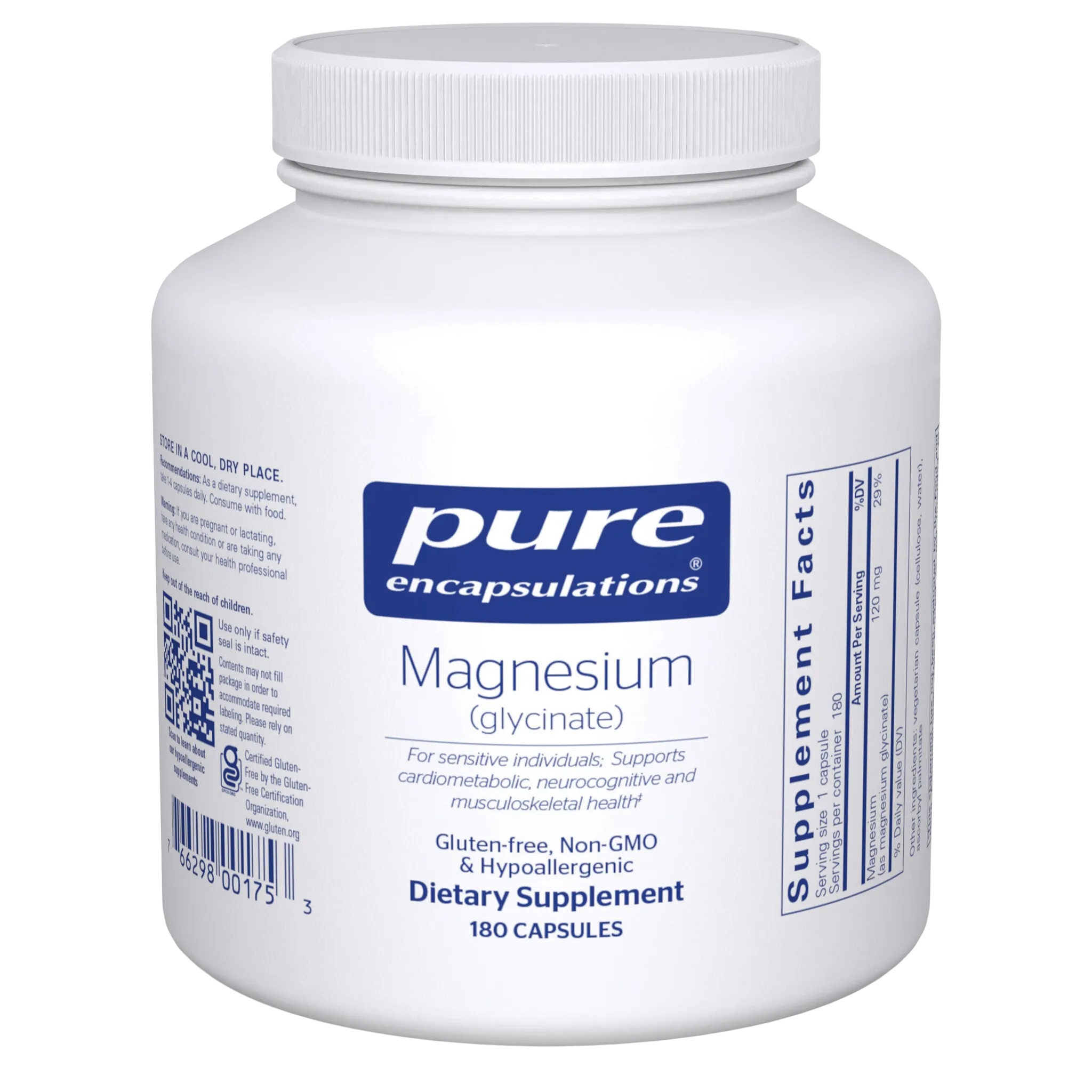
The suggested use for Pure Encapsulations Magnesium (Glycinate) is 1-4 capsules daily with food, providing 120 mg to 480 mg of elemental magnesium. Because magnesium glycinate has a calming, sleep-promoting effect due to the glycine component, many specialists recommend taking the majority of the dose in the evening, about 1 to 2 hours before bed, to support restorative sleep. However, for patients dealing with severe daytime POTS adrenaline surges or muscle cramping, the dose can be divided throughout the day. Taking the supplement with food can further enhance absorption and minimize any potential, albeit rare, mild stomach upset.
Magnesium does not operate in a vacuum; it requires synergistic cofactors to function optimally. For instance, magnesium is essential for the activation of Vitamin D, and conversely, adequate Vitamin D is required for the efficient intestinal absorption of magnesium. Additionally, Vitamin B6 is known to facilitate the cellular uptake of magnesium, helping to drive the mineral inside the red blood cells where it is needed most. Patients managing MCAS or Long COVID should discuss comprehensive nutritional panels with their healthcare provider to ensure they are balancing their magnesium intake with adequate sodium, potassium, and calcium, as these electrolytes work together to maintain the body's electrical gradients.
Safety, Contraindications, and Drug Interactions
While Magnesium Glycinate is generally very safe and well-tolerated, there are important clinical considerations. The kidneys are responsible for filtering and excreting excess magnesium from the blood. Therefore, patients with chronic kidney disease or severe renal impairment must avoid high-dose magnesium supplementation unless strictly monitored by a nephrologist, as they are at risk for magnesium toxicity (hypermagnesemia), which can cause dangerous drops in blood pressure and respiratory depression.
Additionally, magnesium can interact with certain medications. It can bind to certain classes of antibiotics (such as tetracyclines and fluoroquinolones), preventing their absorption; these medications should be taken at least 2 hours before or 4-6 hours after a magnesium supplement. Magnesium can also enhance the effects of calcium channel blockers and muscle relaxants, potentially leading to excessive blood pressure drops or weakness. Always consult with your prescribing physician or a knowledgeable functional medicine practitioner before adding magnesium to your complex chronic illness protocol.

Follow the Science
Clinical Trials in ME/CFS and Long COVID
The scientific foundation for using magnesium in infection-associated chronic illness dates back decades and continues to evolve. A landmark 1991 randomized, double-blind, placebo-controlled trial published in The Lancet by Cox et al. investigated the role of magnesium in ME/CFS. The researchers found that ME/CFS patients had significantly lower red blood cell magnesium levels than healthy controls. When 15 patients were treated with intramuscular magnesium sulfate for six weeks, 12 reported significant improvements in energy levels, emotional state, and pain reduction, compared to only 3 out of 17 patients in the placebo group. This study cemented the theory that intracellular magnesium depletion is a major driver of the ME/CFS energy crisis.
More recently, researchers have turned their attention to the role of magnesium in Long COVID. A 2023 randomized, double-blind clinical trial (NCT05630339) tested the efficacy of administering magnesium chloride alongside Vitamin D to Long COVID patients over four months. The intervention group showed a statistically significant decrease in depressive symptoms and a marked reduction in post-COVID clinical manifestations compared to the placebo group. The researchers concluded that correcting the dual deficiency of magnesium and Vitamin D helps to dismantle the pro-inflammatory and pro-thrombotic microenvironment that perpetuates Long COVID symptoms.
Head-to-Head Bioavailability Studies
The superiority of chelated magnesium forms like glycinate over inorganic salts is well-documented in pharmacokinetic literature.
Emerging Research on Mast Cell Stabilization
The connection between magnesium and mast cell activation is a rapidly growing area of immunological research. A breakthrough 2025 in vitro study published in Cellular Physiology and Biochemistry utilized differential-interference contrast microscopy to directly observe the effects of magnesium on rat peritoneal mast cells. The researchers found that magnesium provides direct, dose-dependent stabilization of mast cells. When incubated with high concentrations of magnesium, the percentage of degranulating mast cells plummeted from 94% down to just 21%, with signs of exocytosis completely halted.
This cellular data is supported by animal studies on dietary magnesium restriction, which demonstrate that just four days of a magnesium-deficient diet triggers a rapid, dangerous increase in mast cell proliferation and systemic histamine release. When magnesium is reintroduced, histamine levels quickly drop back to baseline. These findings provide a clear, mechanistic explanation for why MCAS patients frequently experience severe allergic flares when their mineral levels are depleted by stress or viral infection.
The Path Forward
Validating the Invisible Struggle
Living with conditions like Long COVID, ME/CFS, POTS, and MCAS is a daily battle against an invisible enemy. When your heart races, your energy crashes, and your body reacts to its environment with severe inflammation, it is easy to feel overwhelmed and isolated. Many patients ask, is Long COVID considered a disability? The reality is that the profound cellular dysfunction driving these conditions is incredibly disabling, and your symptoms are valid, measurable, and real. Understanding the biochemical "why" behind your symptoms—such as the depletion of intracellular magnesium and the resulting mitochondrial failure—is the first empowering step toward reclaiming your health.
Building a Comprehensive Management Strategy
While Magnesium Glycinate is a powerful tool for supporting cellular energy, calming the autonomic nervous system, and stabilizing mast cells, it is not a standalone cure. Complex chronic illnesses require a comprehensive, multidisciplinary management strategy. Magnesium supplementation should be integrated alongside strict pacing to avoid post-exertional malaise, aggressive hydration and sodium loading for POTS, dietary modifications for MCAS, and ongoing medical care. By addressing the root cellular deficiencies, you provide your body with the foundational building blocks it needs to repair and stabilize.
Taking the Next Step
If you are struggling with the hyperadrenergic surges of dysautonomia, the crushing fatigue of ME/CFS, or the neuroinflammation of Long COVID, correcting intracellular mineral depletion is a critical component of your recovery journey. Pure Encapsulations Magnesium (Glycinate) offers a highly bioavailable, gentle, and effective way to support your mitochondria and calm your nervous system without upsetting your digestive tract. Always remember to consult with your healthcare provider before starting any new supplement, especially if you have complex cardiovascular or renal conditions.