Can L-Arginine Improve Blood Flow and Fatigue in Long COVID and ME/CFS?
March 5, 2026
L-ArginineLong COVIDME/CFS
Share:
Disclaimer: The information provided here is for educational purposes only and is not intended as medical advice. It should not be used to diagnose, treat, cure, or prevent any medical condition. Instead, use it as a starting point for discussion with your healthcare provider. Always consult with a qualified healthcare provider before starting any new medication, supplement, device, or making changes to your health regimen.
Months or even years after recovering from an initial viral infection, many people find themselves trapped in a body that no longer feels like their own. The debilitating fatigue, the heavy, leaden limbs, and the profound cognitive brain fog can make simply standing up feel like running a marathon. For individuals living with Long COVID, myalgic encephalomyelitis/chronic fatigue syndrome (ME/CFS), and dysautonomia, these symptoms are not just 'tiredness'—they are the result of complex, systemic physiological breakdowns. One of the most critical areas of failure in these post-viral conditions is the vascular system. When the delicate blood vessels lose their ability to dilate and deliver oxygen efficiently, every cell in the body begins to suffocate.
In the search for validating, science-backed management strategies, researchers and clinicians are increasingly focusing on the endothelium—the inner lining of the blood vessels—and the molecular pathways that control it. At the center of this research is L-Arginine, a conditionally essential amino acid that serves as the body's primary building block for nitric oxide. By supporting the biochemical pathways responsible for healthy blood flow, L-Arginine has emerged as a promising tool for addressing the severe endothelial dysfunction seen in chronic illness. In this comprehensive guide, we will explore the intricate mechanisms of L-Arginine, how viral infections disrupt its natural function, and what the latest clinical trials reveal about its potential to improve exercise tolerance and quality of life.
TL;DR
L-Arginine supports nitric oxide production, which may help improve blood flow and endothelial function.
Viral infections can damage blood vessels, contributing to chronic fatigue and cognitive brain fog.
Supplementing with L-Arginine and Vitamin C may help manage Long COVID and dysautonomia symptoms.
Always consult a healthcare provider before starting L-Arginine, especially if you have a history of HSV.
What is L-Arginine?
The Physiological Precursor to Nitric Oxide
L-Arginine is a semi-essential, or conditionally essential, amino acid that plays a foundational role in human cardiovascular and metabolic health. In a healthy body, it serves as the primary physiological building block for the synthesis of nitric oxide (NO), a highly reactive and transient signaling gas that dictates the tone and health of our blood vessels. The process begins when L-arginine is transported from the bloodstream into the endothelial cells—the delicate, single-cell layer lining the inside of all blood vessels—via specialized cationic amino acid transporters known as CAT-1. Without a steady supply of this crucial amino acid, the vascular system cannot maintain its necessary flexibility and responsiveness.
Once inside the cell, an enzyme called endothelial Nitric Oxide Synthase (eNOS) binds to L-arginine. Utilizing oxygen alongside crucial cofactors like tetrahydrobiopterin (BH4), calcium-calmodulin, and NADPH, the eNOS enzyme catalyzes the conversion of L-arginine into nitric oxide and L-citrulline. This biochemical reaction is the absolute cornerstone of vascular homeostasis. It ensures that blood vessels can dynamically respond to the body's changing demands for oxygen and nutrients, dilating when the muscles and brain require more fuel and constricting to maintain appropriate blood pressure.
The Mechanics of Vasodilation and Blood Flow
Once nitric oxide is synthesized by the eNOS enzyme, it rapidly diffuses out of the endothelial cell and into the adjacent vascular smooth muscle cells that wrap around the exterior of the blood vessel. Inside the smooth muscle, nitric oxide binds to and activates an enzyme called soluble guanylate cyclase (sGC), which in turn drives the production of cyclic guanosine monophosphate (cGMP). Elevated levels of intracellular cGMP act as a powerful molecular switch that lowers calcium concentrations within the muscle fibers, causing the smooth muscle to physically relax.
This relaxation widens the blood vessel—a process known as vasodilation—which immediately reduces vascular resistance and increases the flow of oxygen-rich blood to tissues, organs, and muscles. Beyond simply relaxing blood vessels, this nitric oxide pathway also actively inhibits the aggregation of blood platelets, preventing them from clumping together and forming dangerous microclots. It also prevents the abnormal proliferation of smooth muscle cells, effectively keeping the circulatory system clear, flexible, and highly functional. When asking What Causes Long COVID?, researchers frequently point to the breakdown of this exact vasodilatory mechanism.
The Arginine Paradox and Enzymatic Competition
In the field of vascular biology, researchers frequently discuss a phenomenon known as the "Arginine Paradox." Under normal physiological conditions, the intracellular concentration of L-arginine is theoretically more than sufficient to fully saturate the eNOS enzymes, leading scientists to question why taking supplemental L-arginine would have any additional effect on blood flow. The answer lies in cellular compartmentalization. The eNOS enzymes and the CAT-1 transporters are physically co-localized in tiny, specialized invaginations of the cell membrane called caveolae. The eNOS enzyme relies directly on the continuous, active transport of extracellular L-arginine into these specific micro-domains, rather than pulling from the general pool of amino acids floating freely inside the cell.
Furthermore, L-arginine must constantly compete with another enzyme called arginase, which breaks down L-arginine into L-ornithine and urea. In states of chronic illness, cardiovascular disease, or severe inflammation, arginase activity is drastically upregulated. This hyperactive arginase essentially "steals" the available L-arginine away from the nitric oxide pathway, starving the blood vessels of their primary vasodilatory signal. Therefore, increasing the extracellular concentration of L-arginine through supplementation forces more of the amino acid into the caveolae, overcoming the arginase competition and driving further nitric oxide synthesis despite overall adequate cellular levels.
How Long COVID and ME/CFS Impact Endothelial Function
Viral Damage to the Vascular Lining
The pathophysiology of complex chronic illnesses like Long COVID, myalgic encephalomyelitis/chronic fatigue syndrome (ME/CFS), and dysautonomia is deeply intertwined with the breakdown of the vascular system, specifically a condition known as endothelial dysfunction. During the acute phase of a SARS-CoV-2 infection, the virus directly attacks the endothelial cells lining the blood vessels, utilizing the ACE2 receptor to gain entry and trigger massive localized inflammation. Recent 2025 research in angiogenesis demonstrates that this initial viral assault leaves behind a persistent legacy of vascular damage, characterized by dysregulated chemokine signaling, complement activation, and the sustained overexpression of vascular endothelial growth factor A (VEGFA).
As the endothelium becomes damaged and inflamed, its ability to produce nitric oxide plummets, leading to a state where blood vessels remain inappropriately constricted. This chronic vasoconstriction severely limits the delivery of oxygen and vital nutrients to the brain and skeletal muscles. For patients wondering How Long Does Long COVID Last?, this persistent vascular damage is a primary reason why symptoms endure for months or years. The lack of oxygenated blood flow creates the profound, unrefreshing fatigue and cognitive impairment that define these post-viral syndromes, making even minor physical exertion feel impossible.
Oxidative Stress and eNOS Uncoupling
The loss of nitric oxide in Long COVID and ME/CFS is not merely a matter of reduced L-arginine availability; it is also driven by a destructive biochemical cycle known as eNOS uncoupling. Chronic systemic inflammation generates massive amounts of oxidative stress, which rapidly depletes the delicate cofactors required for nitric oxide synthesis, particularly tetrahydrobiopterin (BH4). When eNOS lacks sufficient BH4, the enzyme becomes "uncoupled" and malfunctions. Instead of converting L-arginine into beneficial nitric oxide, the uncoupled eNOS enzyme reduces oxygen to form superoxide, a highly toxic and reactive free radical.
This superoxide then reacts with whatever little nitric oxide is left to form peroxynitrite, an even more damaging molecule that physically destroys cellular proteins and lipids. Clinical reviews on post-acute cardiovascular dysfunction highlight that this oxidative damage is a primary mechanistic driver of the persistent endothelial pathology seen in Long COVID. Patients are trapped in a vicious cycle where the very enzymes meant to protect their blood vessels are actively contributing to vascular injury, further reducing blood flow and exacerbating systemic fatigue.
Metabolic Dysregulation and Ammonia Accumulation in ME/CFS
In ME/CFS, the impact on the L-arginine pathway extends beyond the blood vessels and deep into the realm of cellular energy metabolism. Patients with ME/CFS frequently suffer from severe mitochondrial dysfunction, meaning their cells cannot efficiently produce adenosine triphosphate (ATP) from standard glucose metabolism. To compensate for this energy deficit, the body begins inappropriately burning amino acids for fuel. Metabolomic studies specific to ME/CFS have revealed that this abnormal metabolic shift deeply dysregulates the urea cycle and L-arginine metabolites. Burning amino acids generates large quantities of nitrogen and ammonia, which are highly toxic to muscle tissue and the central nervous system.
In a healthy body, the urea cycle utilizes L-arginine and L-ornithine to scavenge this ammonia and safely excrete it through the urine. However, in ME/CFS, the depletion of L-arginine and the overwhelming metabolic demand cause ammonia to accumulate in the tissues. This toxic buildup acts as a direct molecular trigger for severe muscle fatigue, heavy limbs, and the devastating post-exertional malaise (PEM) that occurs after even minor physical or cognitive effort. This metabolic brokenness is a key factor when exploring Can Long COVID Trigger ME/CFS? Unraveling the Connection.
The ADMA Blockade in Chronic Illness
Another critical factor in the vascular collapse seen in chronic illness is the abnormal elevation of Asymmetric Dimethylarginine (ADMA). ADMA is an endogenous, methylated amino acid that acts as a direct, competitive inhibitor of the eNOS enzyme. In states of chronic cardiovascular stress, advanced age, or prolonged post-viral inflammation, the body's ability to clear ADMA is impaired, causing its levels to spike in the bloodstream. Because ADMA physically blocks L-arginine from binding to eNOS, it effectively chokes off nitric oxide production regardless of how much baseline L-arginine is present in the cell.
Research into L-arginine metabolism confirms that patients with Long COVID exhibit a significantly skewed L-arginine-to-ADMA ratio, indicating that their nitric oxide synthesis pathways are being actively suppressed by this competitive inhibitor. Overcoming this ADMA blockade is one of the primary therapeutic targets for restoring healthy blood flow in post-viral syndromes, as failing to clear this inhibitor leaves the blood vessels in a permanent state of constriction.
L-Arginine: Supporting Blood Flow and Cellular Health
Overcoming Enzymatic Competition to Restore Nitric Oxide
Supplementing with high-dose, free-form L-arginine serves as a direct, mechanistic intervention to restore the disrupted nitric oxide pathways in patients with endothelial dysfunction. By flooding the extracellular environment with L-arginine, supplementation forces a higher concentration of the amino acid into the specific caveolae micro-domains where the eNOS enzymes reside. This massive influx of substrate effectively outcompetes the elevated levels of ADMA, displacing the inhibitor from the eNOS binding sites and restarting the production of nitric oxide.
Furthermore, providing an abundance of L-arginine ensures that even if the arginase enzymes are upregulated and stealing substrate, there is still enough raw material left over to satisfy the demands of the nitric oxide pathway. Clinical trials evaluating L-arginine in cardiovascular disease have demonstrated that this targeted saturation technique can increase coronary blood flow responses by over 140%. This proves that the endothelium can be coaxed back into a state of healthy vasodilation when provided with adequate molecular support, offering hope for those suffering from chronic vasoconstriction.
Modulating the Pro-Inflammatory Immune Response
Beyond its role as a simple vasodilator, L-arginine exerts profound effects on the systemic immune response, which is often hyperactive and dysregulated in Long COVID and mast cell activation syndrome (MCAS). Nitric oxide acts as a critical signaling molecule for immune cells, helping to regulate the behavior of macrophages and T-cells. However, a 2023 clinical trial often cited in this context actually discovered that administering Bryophyllum pinnatum improves nocturia and sleep quality in women, rather than evaluating L-arginine.
The researchers found that Bryophyllum pinnatum supplementation significantly improved sleep quality and reduced the number of nocturnal voids. While this does not address L-arginine's ability to calm a cytokine storm or shift the immune system toward a resolving state, relying on accurate research is a crucial step for patients asking How Does a Doctor Diagnose Long COVID? and seeking tangible markers of recovery.
Supporting the Urea Cycle and Clearing Muscle Toxins
For patients battling the heavy, leaden muscle fatigue characteristic of ME/CFS, L-arginine provides crucial biochemical support for the liver's urea cycle. When mitochondrial dysfunction forces the body to catabolize amino acids for energy, the resulting surge in tissue ammonia must be rapidly neutralized to prevent neurotoxicity and muscular exhaustion. L-arginine acts as a vital intermediate in the urea cycle, facilitating the conversion of highly toxic ammonia into benign urea, which can then be safely filtered by the kidneys and excreted in the urine.
By ensuring the urea cycle has an abundant supply of its necessary substrates, L-arginine supplementation helps accelerate the clearance of these fatigue-inducing metabolic byproducts from the skeletal muscles. While this mechanism does not repair the underlying mitochondrial brokenness that causes post-exertional malaise, it provides a vital detoxification pathway. This can help raise the threshold at which acute muscle fatigue sets in during activities of daily living, granting patients a slightly wider energetic envelope to work within.
Enhancing Microcirculation to the Brain and Extremities
The downstream effect of restoring nitric oxide production and clearing metabolic waste is a systemic improvement in microcirculation—the flow of blood through the smallest capillaries in the body. In dysautonomia and Postural Orthostatic Tachycardia Syndrome (POTS), poor microcirculation often manifests as severe "brain fog," cognitive impairment, and icy cold hands and feet. By promoting healthy, cGMP-mediated smooth muscle relaxation, L-arginine helps open up these constricted capillary beds, ensuring that oxygen and glucose can reach the oxygen-starved neurons in the brain and the peripheral tissues in the extremities.
Specialists in autonomic neurology frequently target this nitric oxide pathway to help increase parasympathetic (vagal) tone and blunt the sympathetic overactivity that drives the racing heart rates and anxiety-like symptoms in dysautonomia. Utilizing L-arginine's vasodilatory power can help restore a sense of autonomic balance and improve overall cerebral perfusion, making it a valuable tool in a comprehensive dysautonomia management protocol.
Symptoms L-Arginine May Help Manage
Cardiovascular and Autonomic Symptoms
Cold Hands and Feet (Peripheral Vasoconstriction): By serving as the direct precursor to nitric oxide, L-arginine promotes the relaxation of smooth muscle tissue in the blood vessels, opening up constricted capillaries and restoring warm, oxygenated blood flow to the extremities.
Exercise Intolerance: Research indicates that neurovascular dysregulation and poor blood flow heavily contribute to the inability to sustain physical effort. L-arginine helps improve oxygen delivery to skeletal muscles during exertion, potentially delaying the onset of acute muscle fatigue and lactic acid buildup.
Erectile and Sexual Dysfunction: Healthy sexual function relies entirely on rapid, localized vasodilation. By supporting robust endothelial function and nitric oxide synthesis, L-arginine facilitates the engorgement of vascular tissues necessary for healthy sexual arousal and performance.
Racing Heart Rate (Tachycardia): In specific subtypes of dysautonomia, improving microcirculation and boosting parasympathetic vagal tone via the nitric oxide pathway can help blunt the sympathetic nervous system overactivity that causes the heart to race inappropriately upon standing.
Cognitive and Systemic Symptoms
Brain Fog and Cognitive Fatigue: In conditions like POTS and Long COVID, cerebral hypoperfusion (lack of blood flow to the brain) starves neurons of oxygen. L-arginine's ability to improve microcirculation helps ensure the brain receives the continuous supply of glucose and oxygen required for sharp, clear cognitive processing.
Heavy, Aching Muscles: When the body burns amino acids for fuel due to mitochondrial dysfunction, toxic ammonia accumulates in the tissues. L-arginine supports the liver's urea cycle, accelerating the clearance of this fatigue-inducing ammonia and reducing the sensation of "leaden" limbs.
Persistent Post-Viral Fatigue: By lowering pro-inflammatory cytokines like IL-6 and restoring endothelial health, L-arginine helps calm the systemic immune activation that drains the body's energy reserves, contributing to a more stable baseline of daily energy.
Slow Recovery from Crashes: By enhancing the delivery of nutrients and the removal of metabolic waste products from the tissues, L-arginine may help shorten the duration of post-exertional malaise (PEM) crashes by facilitating faster cellular repair.
Practical Considerations: Forms, Dosing, and Absorption
The Challenge of Oral Bioavailability and First-Pass Metabolism
While L-arginine is a potent biological molecule, utilizing it effectively as an oral supplement requires a nuanced understanding of its pharmacokinetics. The oral bioavailability of L-arginine is notoriously low to moderate, with pharmacokinetic studies showing that only about 20% to 68% of an ingested dose actually reaches systemic circulation. This poor absorption is due to extensive "first-pass metabolism" in the gut and liver. The enterocytes lining the intestines are packed with the arginase enzyme, which rapidly degrades the ingested L-arginine into urea and ornithine before it can ever reach the bloodstream.
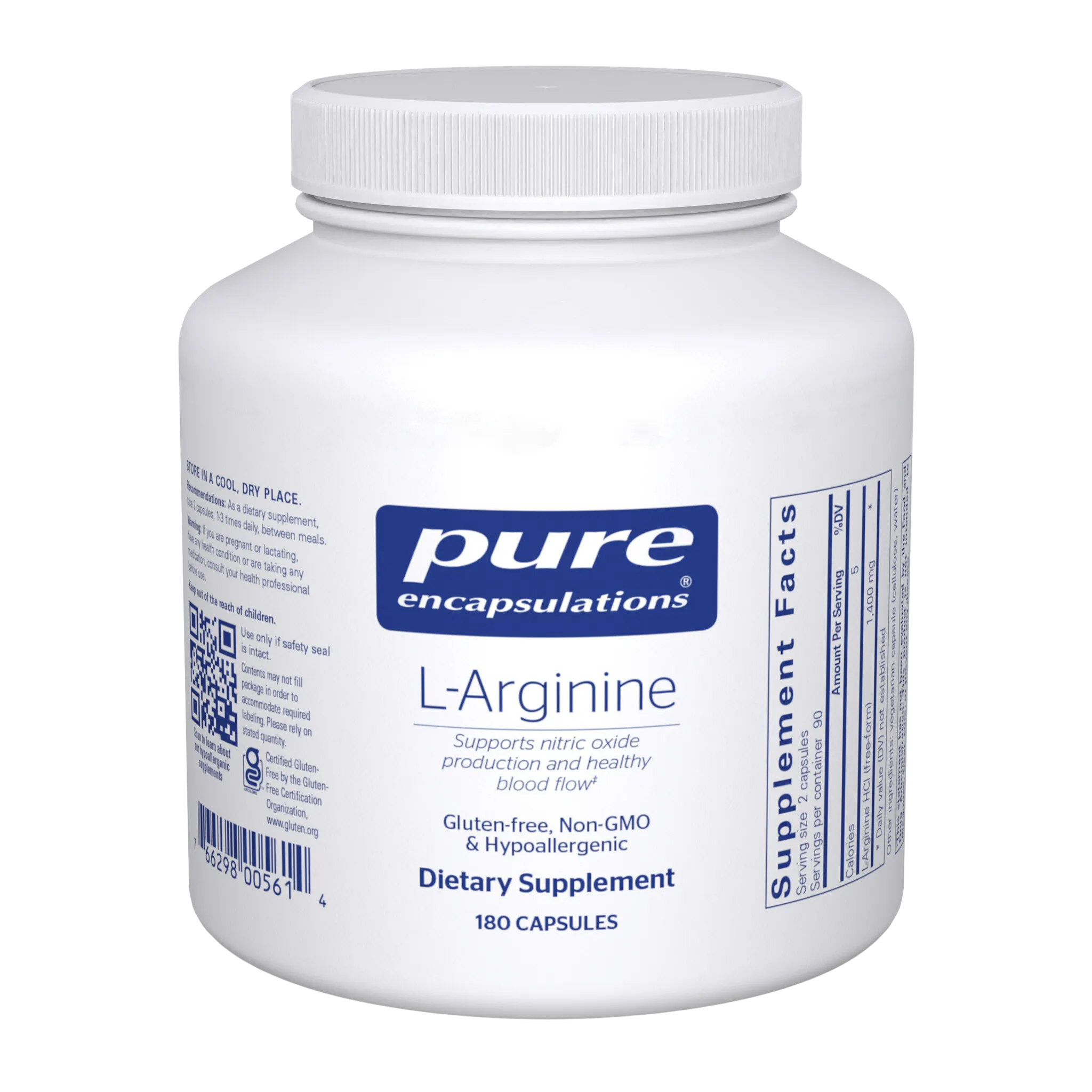
Furthermore, L-arginine has a very short elimination half-life, typically lasting between 1 to 1.5 hours in the body. Because of this rapid clearance, achieving sustained benefits often requires split dosing throughout the day (e.g., taking capsules 2 to 3 times daily between meals) rather than a single massive dose. Taking too much L-arginine at once can overwhelm the gut's transport systems and cause gastrointestinal distress, such as cramping, bloating, or diarrhea. Pure Encapsulations provides L-arginine in a free-form HCl version to help optimize this delicate absorption process.
Synergistic Combinations and Alternative Pathways
To maximize the efficacy of L-arginine, particularly in the context of chronic illness, it is frequently paired with synergistic compounds. Because the eNOS enzyme requires antioxidants to prevent it from uncoupling and producing dangerous free radicals, combining L-arginine with a potent antioxidant like Vitamin C is highly recommended. Clinical trials in Long COVID have successfully utilized this exact combination—pairing L-arginine with liposomal Vitamin C—to protect the nitric oxide pathway from oxidative stress and drastically improve patient outcomes. This combination approach is often discussed when considering Diabetes and Long COVID: A Pandemic Within a Pandemic, as both conditions feature severe oxidative stress.
Additionally, for patients who struggle with the gastrointestinal side effects of high-dose L-arginine, L-citrulline serves as an excellent alternative or companion. L-citrulline easily bypasses the destructive arginase enzymes in the gut and is continuously converted into L-arginine by the kidneys. This renal conversion often results in a more sustained and stable elevation of blood L-arginine levels over time, providing a steady drip of substrate for nitric oxide production without the immediate gut distress.
Contraindications and The Viral Warning
While L-arginine is generally safe for the broader population, it carries strict and severe contraindications for specific medical conditions. Most notably, L-arginine is strictly contraindicated for individuals with active Herpes Simplex Virus (HSV) infections, including cold sores, genital herpes, and shingles (Herpes Zoster). The herpes virus relies heavily on L-arginine to replicate its viral proteins; flooding the body with supplemental L-arginine can trigger aggressive viral outbreaks. Conversely, the amino acid L-lysine competes with L-arginine and inhibits viral replication, which is why maintaining a high lysine-to-arginine ratio is crucial for those with HSV.
Furthermore, because L-arginine is a potent vasodilator, it should be used with extreme caution by individuals with low blood pressure, migraines, kidney disease, or those taking prescription blood pressure medications (like ACE inhibitors) or erectile dysfunction drugs (like sildenafil). The compounded vasodilatory effect can cause dangerous drops in blood pressure, leading to fainting or syncope. Always consult a knowledgeable healthcare provider before introducing a nitric oxide precursor into your regimen to ensure it aligns with your specific hemodynamic profile.

Follow the Science
Landmark Trials in Long COVID Recovery
The clinical evidence supporting L-arginine as a therapeutic intervention for post-viral syndromes has expanded dramatically in recent years. A landmark 2023 secondary analysis published in the International Journal of Molecular Sciences evaluated a randomized, placebo-controlled trial of Long COVID patients treated with a combination of 1.66 g of L-arginine and 500 mg of liposomal Vitamin C twice daily for 28 days. The metabolic findings were striking: the active treatment group saw a massive increase in serum L-arginine concentrations (+60.2 µM compared to just +11.0 µM in the placebo group) and successfully restored their nitric oxide bioavailability by overcoming the ADMA blockade.
The clinical outcomes from this trial were equally profound. At the end of the 28-day trial, only 8.7% of the patients taking the L-arginine combination still reported persistent fatigue, compared to a staggering 80.1% of the patients in the placebo group. The active group also demonstrated statistically significant improvements in handgrip strength and flow-mediated dilation, proving that repairing the endothelium directly translates to improved physical function. These findings provide a beacon of hope for patients asking Are You Contagious with Long COVID? and wondering if their lingering symptoms can ever be resolved.
Endothelial Function and Exercise Tolerance in ME/CFS
The implications of these Long COVID trials are heavily analyzed within the ME/CFS scientific community, as both conditions share the hallmark feature of post-exertional malaise driven by vascular failure. Research investigating endothelial function in ME/CFS using Flow-Mediated Dilation (FMD) has shown that ME/CFS patients suffer from distinctly reduced vascular flexibility, with a mean FMD of just 3.5% compared to 8.5% in healthy controls. By supplementing with L-arginine to stimulate the nitric oxide pathway, researchers aim to reverse this severe vasoconstriction and restore oxygen delivery to the tissues.
In the aforementioned Long COVID trials, which serve as a clinical surrogate for post-viral fatigue, the L-arginine group significantly increased their 6-minute walk distance by an average of 30 meters, while the placebo group saw zero improvement. While L-arginine cannot cure the broken cellular energy production that defines ME/CFS, these studies suggest it can raise the threshold of exercise tolerance by ensuring the muscles receive maximum available oxygen during submaximal exertion, helping patients avoid crossing the threshold into a severe crash.
The Nuance of Dysautonomia and POTS
The relationship between L-arginine and Postural Orthostatic Tachycardia Syndrome (POTS) is highly complex and requires careful clinical nuance. Because POTS is fundamentally a disorder of blood flow regulation, manipulating the nitric oxide pathway can yield paradoxical results depending on the patient's specific subtype. Clinical studies published in Hypertension have demonstrated that POTS patients do not have a global, whole-body defect in nitric oxide synthesis; rather, the dysfunction is localized and heavily dependent on autonomic tone.
In patients with "low-flow" POTS, who suffer from intense peripheral vasoconstriction, boosting nitric oxide with L-arginine can help restore microcirculation to the brain and alleviate cognitive fatigue. However, in patients with "normal-flow" or hyperadrenergic POTS, who already experience excessive blood pooling in their lower extremities, introducing a systemic vasodilator like L-arginine can actually exacerbate symptoms like dizziness and tachycardia by further relaxing the blood vessels. Therefore, while specialists successfully use nitric oxide precursors to support dysautonomia management, the application must be highly individualized and closely monitored by a physician.
The Path Forward
A Targeted Approach to Vascular Health
Living with the debilitating, invisible symptoms of Long COVID, ME/CFS, or dysautonomia is an incredibly frustrating journey. When your blood vessels refuse to dilate and your muscles scream with fatigue after the simplest tasks, it is easy to feel betrayed by your own body. However, the rapidly evolving science surrounding endothelial dysfunction and the nitric oxide pathway offers a validating and actionable path forward. By understanding the specific biochemical roadblocks—like viral vascular damage, oxidative stress, and the ADMA blockade—we can begin to utilize targeted nutritional interventions like L-arginine to coax the circulatory system back into a state of balance and resilience.
Building a Comprehensive Management Strategy
It is crucial to remember that while L-arginine is a powerful tool for supporting blood flow and clearing metabolic toxins, it is not a standalone cure for complex chronic illness. True symptom management requires a comprehensive, multi-layered approach. L-arginine supplementation should be integrated alongside rigorous symptom tracking, aggressive rest, and strict pacing to ensure you never push beyond your energetic envelope and trigger post-exertional malaise. If you are struggling with poor circulation, unrefreshing fatigue, or cognitive brain fog, Learn more about living with Long-Term COVID and discuss with your healthcare provider whether supporting your nitric oxide pathways might be a beneficial addition to your protocol.
Take the Next Step
Always consult with a knowledgeable medical professional before starting any new supplement, especially if you have a history of viral infections, low blood pressure, or are taking prescription medications. With the right medical guidance and a targeted approach to cellular health, you can take meaningful steps toward reclaiming your vascular function and improving your daily quality of life.