Can L-Arginine Plus Support Blood Flow and Energy in Long COVID and Dysautonomia?
March 6, 2026
L-ArginineLong COVIDDysautonomia
Share:
Disclaimer: The information provided here is for educational purposes only and is not intended as medical advice. It should not be used to diagnose, treat, cure, or prevent any medical condition. Instead, use it as a starting point for discussion with your healthcare provider. Always consult with a qualified healthcare provider before starting any new medication, supplement, device, or making changes to your health regimen.
Months or even years after an acute viral infection, many individuals find themselves battling a complex web of debilitating symptoms. For patients living with Long COVID, myalgic encephalomyelitis/chronic fatigue syndrome (ME/CFS), and dysautonomia, the struggle often centers around a profound lack of energy, severe post-exertional malaise (PEM), and unpredictable cardiovascular symptoms like rapid heart rate and dizziness. While the root causes of these conditions are multifaceted, emerging research consistently points to a critical underlying factor: damaged blood vessels and impaired circulation. When the microscopic vessels that deliver oxygen and nutrients to your tissues stop functioning correctly, every system in the body suffers the consequences.
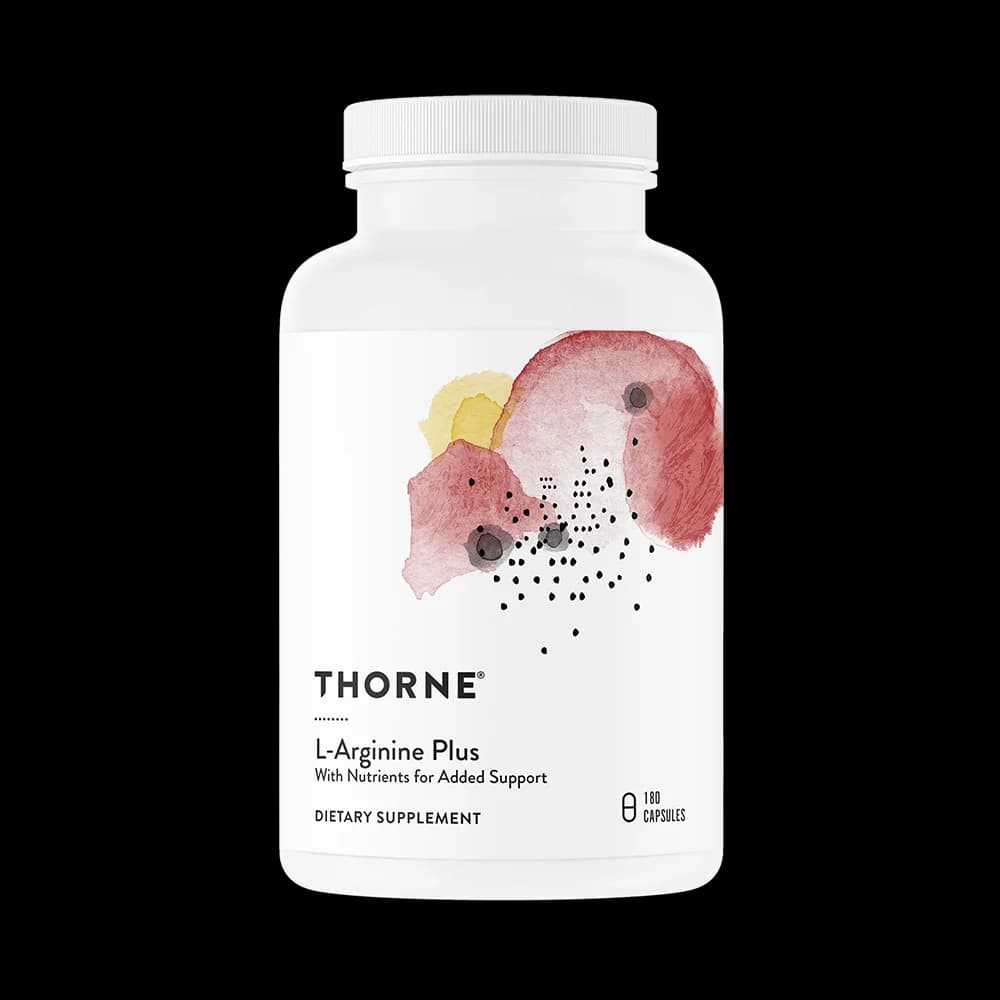
In the search for targeted, science-backed management strategies, the focus has increasingly turned toward supporting the endothelium—the delicate inner lining of our blood vessels. This is where L-arginine, a conditionally essential amino acid, plays a starring role. As the primary building block for nitric oxide, L-arginine is essential for keeping blood vessels relaxed, open, and healthy. In this comprehensive guide, we will explore how Thorne's L-Arginine Plus combines this crucial amino acid with a synergistic blend of antioxidants and sustained-release technology to support cardiovascular health, optimize blood flow, and potentially alleviate some of the heavy burdens of complex chronic illness.
TL;DR
L-arginine supports nitric oxide production, which is essential for healthy blood flow and vascular function.
Viral infections can damage blood vessels and deplete L-arginine, contributing to fatigue and poor circulation.
Sustained-release L-arginine combined with antioxidants may help support endothelial health and manage chronic symptoms.
Always consult a healthcare provider before starting L-arginine, especially if you have dysautonomia or viral reactivations.
What is L-Arginine and How Does It Work?
The Building Block of Nitric Oxide
In a healthy human body, L-arginine is classified as a conditionally essential amino acid. This means that under normal circumstances, your body can synthesize enough of it on its own. However, during times of severe physical stress, chronic illness, trauma, or rapid growth, the body's demand for L-arginine far exceeds its ability to produce it, making it essential to obtain through diet or targeted supplementation. As a fundamental building block of protein, L-arginine is deeply involved in cellular metabolism, immune system regulation, and the formation of collagen, which is necessary for tissue repair and wound healing.
Beyond its role in protein synthesis, L-arginine possesses a unique and vital function: it is the exclusive biological precursor to nitric oxide (NO). Nitric oxide is a highly reactive, short-lived gas that acts as a crucial signaling molecule throughout the cardiovascular and nervous systems. Without an adequate supply of L-arginine, the body simply cannot manufacture enough nitric oxide to maintain healthy blood vessel function, leading to a cascade of circulatory and metabolic issues.
The eNOS Pathway and Vasodilation
To understand how L-arginine works, we must look at the microscopic lining of our blood vessels, known as the endothelium. Embedded within these endothelial cells is a specialized enzyme called endothelial nitric oxide synthase (eNOS). When stimulated by blood flow or specific cellular signals, eNOS catalyzes a complex biochemical reaction, stripping a nitrogen atom from circulating L-arginine and combining it with oxygen to create nitric oxide. This process requires several essential cofactors, including tetrahydrobiopterin (BH4) and calcium, to function correctly.
Once synthesized, nitric oxide rapidly diffuses out of the endothelial cells and into the adjacent smooth muscle cells that wrap around the blood vessels. Inside the muscle cells, NO activates an enzyme called soluble guanylyl cyclase (sGC), which dramatically lowers intracellular calcium levels. This sudden drop in calcium forces the smooth muscle to relax, a process known as vasodilation. By widening the blood vessels, nitric oxide lowers blood pressure, helps keep platelets from clumping together, and ensures a smooth, optimized delivery of oxygen and nutrients to tissues throughout the body.
The L-Arginine Paradox
For decades, vascular biologists were puzzled by a phenomenon known as the "L-arginine paradox." Laboratory tests showed that the baseline levels of L-arginine already present inside human cells were theoretically more than enough to keep the eNOS enzyme fully saturated and working at maximum capacity. Therefore, providing extra L-arginine through supplements shouldn't logically increase nitric oxide production.
Researchers eventually solved this paradox by discovering two key mechanisms. First, the eNOS enzyme is physically located in tiny pockets of the cell membrane where it relies heavily on fresh L-arginine being actively transported in from the bloodstream, rather than using the stagnant pool of amino acids already inside the cell. Second, during states of cardiovascular disease or chronic inflammation, the body produces high levels of an endogenous inhibitor called ADMA (asymmetric dimethylarginine). ADMA aggressively blocks the eNOS enzyme. Supplementing with extra L-arginine effectively outcompetes the ADMA, kicking it out of the enzyme's binding site and restoring healthy nitric oxide production.