Can L-5-MTHF Support Brain Fog and Endothelial Health in Long COVID and ME/CFS?
March 6, 2026
L-5-MTHFLong COVIDME/CFS
Share:
Disclaimer: The information provided here is for educational purposes only and is not intended as medical advice. It should not be used to diagnose, treat, cure, or prevent any medical condition. Instead, use it as a starting point for discussion with your healthcare provider. Always consult with a qualified healthcare provider before starting any new medication, supplement, device, or making changes to your health regimen.
Months or even years after a mild viral infection, many individuals find themselves trapped in a body they no longer recognize. You might be dealing with debilitating brain fog that makes reading a single email feel like running a marathon, or a heavy, crushing fatigue that worsens exponentially after minor exertion—a hallmark symptom known as post-exertional malaise (PEM). When you visit your healthcare provider, your standard blood panels often come back completely normal, leaving you without answers and questioning your own reality. This is the frustrating, invisible reality of living with complex chronic conditions like Long COVID, myalgic encephalomyelitis/chronic fatigue syndrome (ME/CFS), and dysautonomia.
However, emerging research is beginning to illuminate the hidden biochemical disruptions driving these symptoms. Scientists are increasingly looking beyond standard lab tests and diving deep into cellular metabolism, specifically focusing on a critical pathway known as the methylation cycle. At the heart of this cycle is a nutrient you may have heard of, but perhaps not in its most crucial form: L-5-MTHF, or biologically active folate. For individuals with genetic variations in how their bodies process standard folic acid, supplementing with L-5-MTHF can be a vital key to supporting cellular energy, promoting blood vessel health, and potentially easing the neurological fog that defines post-viral syndromes.
TL;DR
L-5-MTHF (active folate) supports cellular energy and may help manage symptoms of Long COVID and ME/CFS.
It bypasses common MTHFR genetic variations, delivering active folate directly to your cells.
Supplementation may help lower homocysteine, supporting vascular health and reducing brain fog.
Always work with a healthcare provider to determine the right dosage and co-factors like B12.
What is L-5-MTHF?
Folate, commonly known as Vitamin B9, is an essential water-soluble nutrient required for life. In a healthy body, it is responsible for synthesizing DNA, dividing cells, and producing the chemical messengers in our brain. However, the terminology surrounding this vitamin is often confusing, and the distinctions are biologically critical. Folate is the umbrella term for the nutrient found naturally in foods like leafy green vegetables and legumes. Folic acid, on the other hand, is a fully synthetic molecule created in a laboratory, commonly used to fortify processed grains and cereals. While folic acid is cheap and stable, it is biologically inert; the human body cannot use it in its synthetic form.
Before your cells can utilize synthetic folic acid or even dietary folate, your liver and intestines must convert it through a complex, multi-step enzymatic assembly line. The final, pristine product that emerges at the end of this biological assembly line is L-5-Methyltetrahydrofolate (L-5-MTHF). This is the bioidentical, active form of folate that actually circulates in your human bloodstream. Unlike synthetic folic acid, L-5-MTHF does not require any metabolic activation. It is immediately ready to cross cell membranes, enter the brain, and perform its vital biochemical duties. For patients dealing with severe energy deficits, bypassing this metabolic assembly line is a profound advantage.
To understand why L-5-MTHF is so crucial, we must explore a microscopic engine inside your cells called the methylation cycle, which is a core component of Folate-Mediated One-Carbon Metabolism (FOCM). The methylation cycle is essentially a biochemical transfer system. It involves taking a single carbon atom attached to three hydrogen atoms—known as a methyl group—and passing it from one molecule to another. This simple act of passing a methyl group acts as an "on/off" switch for over 200 different cellular processes. It turns genes on and off, builds immune cells, and generates the protective coating around your nerves.
L-5-MTHF serves as the primary "methyl donor" in this cycle. Its most important job is to deliver a methyl group to a potentially toxic amino acid called homocysteine. Through the action of an enzyme called methionine synthase, L-5-MTHF hands its methyl group over to homocysteine, instantly neutralizing its toxicity and converting it into a highly beneficial amino acid called methionine. Methionine is then transformed into S-adenosylmethionine (SAMe), which is the master methyl donor for the entire human body. Without a steady supply of L-5-MTHF, this entire methionine cycle grinds to a halt, leading to a catastrophic breakdown in cellular maintenance and energy production.
The conversion of raw folate into active L-5-MTHF relies heavily on a specific enzyme called methylenetetrahydrofolate reductase, or MTHFR. The instructions for building this enzyme are carried in the MTHFR gene. However, genetic variations—or polymorphisms—in this gene are incredibly common. It is estimated that up to 40% of the population carries at least one mutation in the MTHFR gene, most notably the C677T or A1298C variants. If you inherit these mutations, your MTHFR enzyme may be misshapen, reducing its ability to create active folate by anywhere from 30% to 70%.
You can think of the MTHFR enzyme as a toll booth on a busy metabolic highway. If the toll booth is understaffed due to a genetic mutation, traffic backs up for miles. The raw materials (folic acid) cannot get through, and the destination (your cells) is starved of the active L-5-MTHF it desperately needs. This genetic bottleneck leaves individuals highly vulnerable to oxidative stress and cellular dysfunction. By supplementing directly with L-5-MTHF, you effectively act as a helicopter, flying over the backed-up toll booth and dropping the essential active folate directly into the cells where it is needed, helping to bypass the genetic bottleneck.
How Chronic Illness Impacts Folate Pathways
When a complex chronic illness like Long COVID or ME/CFS takes hold, the body's metabolic pathways are thrown into chaos. Research into what causes Long COVID has revealed that the initial SARS-CoV-2 viral infection places an immense, unprecedented demand on the host's cellular machinery. Viruses cannot replicate on their own; they must hijack the host's Folate-Mediated One-Carbon Metabolism (FOCM) to synthesize the building blocks needed for viral RNA. This parasitic hijacking rapidly depletes the body's native stores of active folate and other crucial methyl donors, leaving the patient in a severe state of metabolic depletion long after the acute virus has been cleared.
This post-viral depletion is not just a temporary inconvenience; it triggers a domino effect of cellular failures. Without adequate L-5-MTHF to keep the one-carbon metabolism running, the body loses its ability to produce glutathione, the master antioxidant responsible for neutralizing cellular exhaust. As glutathione levels plummet, oxidative stress skyrockets, causing severe damage to the mitochondria—the microscopic power plants inside our cells. This mitochondrial destruction is a primary driver of the profound, crushing fatigue and post-exertional malaise (PEM) that so many patients experience, highlighting why understanding if Long COVID can trigger ME/CFS is a critical area of neuroimmune research.
One of the most devastating consequences of this post-viral oxidative stress occurs within the endothelium, the delicate inner lining of our blood vessels. In a healthy state, an enzyme called endothelial nitric oxide synthase (eNOS) produces Nitric Oxide (NO), a protective gas that keeps blood vessels relaxed, wide open, and free of clots. To do this, eNOS requires a specific helper molecule called tetrahydrobiopterin, or BH4. However, the massive inflammation triggered by conditions like Long COVID and ME/CFS rapidly oxidizes and destroys BH4, converting it into a useless form called BH2.
When BH4 is depleted, a disastrous biochemical event occurs: the eNOS enzyme becomes "uncoupled." Instead of acting as a factory that produces protective Nitric Oxide, the broken eNOS machinery starts churning out superoxide, a highly reactive and destructive free radical. This creates a vicious, self-perpetuating cycle of vascular damage. The blood vessels constrict, blood flow to the brain and muscles is severely restricted, and the environment becomes highly prone to clotting. This endothelial dysfunction is a core mechanism explaining why patients experience dizziness, rapid heart rates upon standing, and profound cognitive impairment.
The breakdown of the folate cycle and the uncoupling of eNOS are intimately connected through a toxic amino acid called homocysteine. As we established earlier, L-5-MTHF is required to neutralize homocysteine. When active folate is depleted by viral hijacking or blocked by an MTHFR mutation, homocysteine levels rise rapidly in the bloodstream. Elevated homocysteine is a known vascular toxin; it acts like microscopic sandpaper, scraping and damaging the delicate endothelial lining of the blood vessels and further accelerating the destruction of BH4.
This vascular damage triggers the body's coagulation system, leading to the formation of fibrin amyloid microclots. These microscopic blood clots trap inflammatory molecules and block the tiny capillaries responsible for delivering oxygen to the brain and muscles. When your muscles are starved of oxygen, even walking up a flight of stairs forces them to rely on anaerobic energy production, resulting in a massive buildup of lactic acid and triggering a severe PEM crash. The combination of high homocysteine, uncoupled eNOS, and microclotting creates a perfect storm of systemic oxygen deprivation, driving the most debilitating symptoms of Long COVID.
L-5-MTHF: Supporting Cellular and Vascular Repair
Supplementing with high-dose L-5-MTHF offers a targeted, mechanistic intervention to break the vicious cycle of vascular inflammation. When introduced into the body, L-5-MTHF acts as a powerful cellular rescue agent for the damaged endothelium. Its most profound mechanism of action is its ability to salvage and recycle BH2 back into the essential BH4. By restoring the cellular pool of BH4, L-5-MTHF may help "recouple" the eNOS enzyme. This supports the reduction of destructive superoxide and encourages the production of healthy, vasodilating Nitric Oxide.
The restoration of Nitric Oxide production is a game-changer for patients suffering from dysautonomia and tissue hypoxia. As Nitric Oxide levels rise, the constricted blood vessels finally begin to relax and dilate, restoring healthy blood flow to the oxygen-starved brain and skeletal muscles. This improved microcirculation may help flush out accumulated lactic acid and inflammatory cytokines, supporting the management of post-exertional malaise. By supporting the endothelium from the inside out, L-5-MTHF helps to stabilize the autonomic nervous system, reducing the erratic heart rate spikes and blood pressure drops characteristic of Postural Orthostatic Tachycardia Syndrome (POTS).
Beyond supporting the eNOS enzyme, L-5-MTHF directly addresses the toxic accumulation of homocysteine. Because L-5-MTHF is already in its fully active, bioavailable form, it completely bypasses any genetic MTHFR bottlenecks the patient may have. It immediately enters the stalled methylation cycle, donating its methyl groups to the methionine synthase enzyme. This action rapidly neutralizes circulating homocysteine, converting it safely back into methionine. Clinical studies have consistently shown that targeted L-5-MTHF supplementation dramatically lowers homocysteine levels, removing the "microscopic sandpaper" that damages the vascular lining.
By helping to clear homocysteine from the bloodstream, L-5-MTHF may remove a major trigger for the coagulation cascade. Lowering homocysteine reduces the hyperactivation of platelets and helps to discourage the ongoing formation of fibrin amyloid microclots. This antithrombotic effect is crucial for Long COVID and ME/CFS patients, as it helps to keep the microscopic capillary beds open and functioning. Furthermore, because homocysteine is known to cross the blood-brain barrier and induce neuroinflammation, helping to clear it from the system may provide significant relief to the central nervous system, supporting the calming of hyperactive microglial cells in the brain.
The benefits of L-5-MTHF extend deeply into neurological health and cognitive function. When L-5-MTHF successfully restarts the methylation cycle by converting homocysteine into methionine, it triggers the downstream production of S-adenosylmethionine (SAMe). SAMe is the absolute prerequisite for the synthesis of monoamine neurotransmitters, including serotonin, dopamine, and norepinephrine. These chemical messengers are responsible for regulating mood, focus, motivation, and the sleep-wake cycle—all of which are severely disrupted in post-viral syndromes.
Without adequate L-5-MTHF, the brain simply cannot manufacture enough dopamine or serotonin, leading to profound depression, apathy, and the heavy, sluggish cognitive impairment commonly referred to as brain fog. By supplying the brain with the active folate required to synthesize these vital neurotransmitters, L-5-MTHF may help lift the neurological fog. Patients often report improved mental clarity, better emotional resilience, and a reduction in the severe neurological fatigue that makes basic cognitive tasks feel impossible. This neurological support is why many functional medicine practitioners consider active folate a foundational tool when exploring how to live with long-term COVID.

Symptoms L-5-MTHF May Help Manage
Because L-5-MTHF operates at the foundational level of cellular metabolism, vascular health, and neurotransmitter synthesis, its benefits can ripple outward to alleviate a wide array of complex symptoms. While it is not a standalone solution, restoring active folate pathways can significantly improve quality of life. Here are the primary symptoms L-5-MTHF may help manage:
Debilitating Brain Fog: By helping to clear neurotoxic homocysteine from the central nervous system and fueling the synthesis of dopamine and serotonin, L-5-MTHF may help reduce neuroinflammation and support mental clarity, focus, and memory recall.
Post-Exertional Malaise (PEM): By helping to recouple the eNOS enzyme and support Nitric Oxide production, L-5-MTHF may improve microvascular blood flow. This helps ensure oxygen reaches skeletal muscles during minor exertion, helping to reduce the anaerobic lactic acid buildup that triggers severe crashes.
POTS and Dysautonomia Symptoms: Supporting the endothelial lining and improving vasodilation may help stabilize blood pressure and reduce the erratic, racing heart rates associated with autonomic nervous system dysfunction upon standing.
Chronic, Unrefreshing Sleep: The methylation cycle is required to produce serotonin, which is the direct precursor to melatonin, the body's primary sleep hormone. Supporting methylation can help regulate disrupted circadian rhythms and improve sleep architecture.
Mood Disturbances and Anxiety: By ensuring a steady supply of SAMe, L-5-MTHF supports the balanced production of mood-regulating neurotransmitters, helping to alleviate the severe depression, apathy, and neurological anxiety often seen in chronic illness.
Cold Limbs and Poor Circulation: By helping to lower homocysteine and reduce the tendency for microclot formation, L-5-MTHF may help open up the tiny capillaries in the extremities, supporting blood flow to cold hands and feet.
Practical Considerations: Forms, Dosing, and Absorption
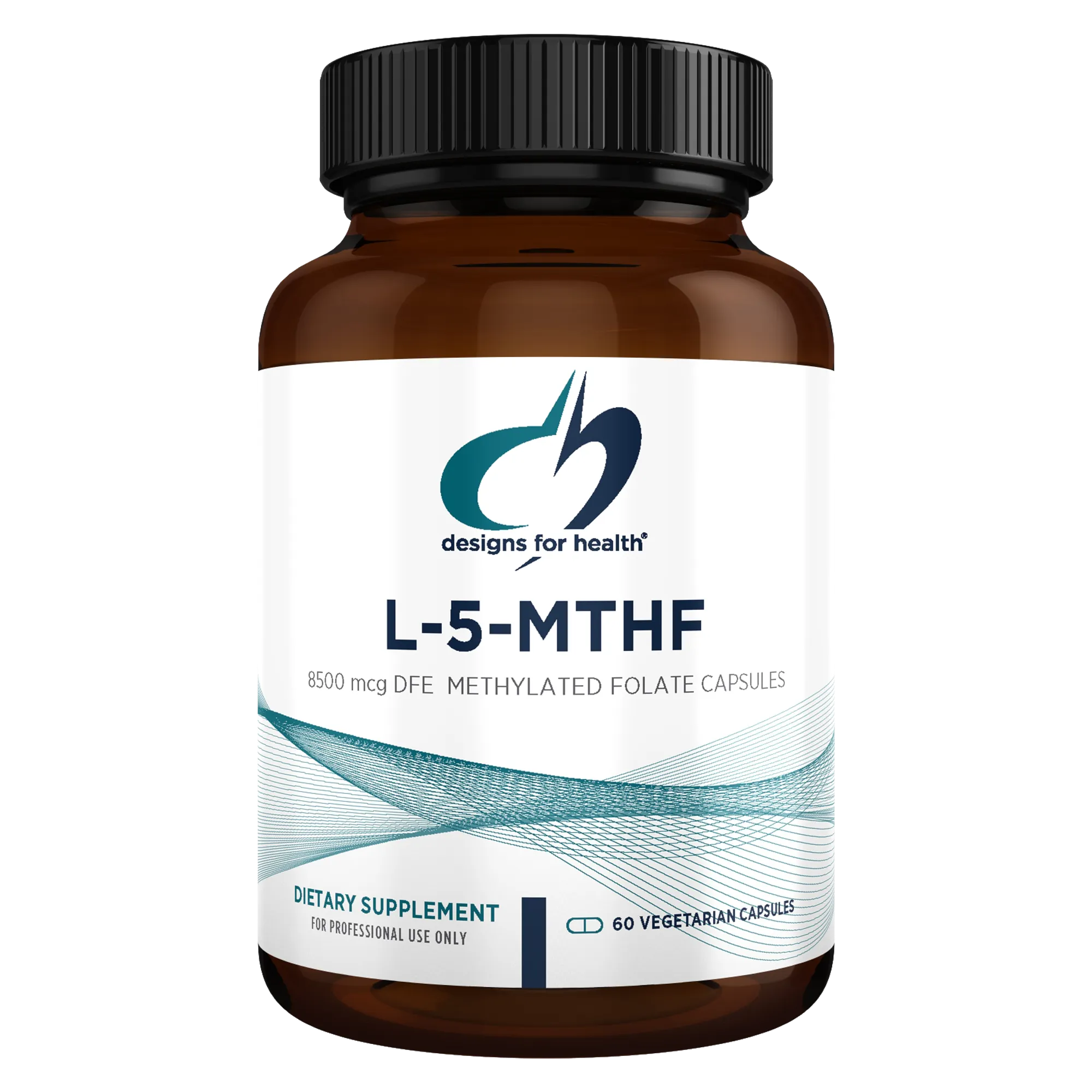
When selecting a folate supplement, the specific chemical form is the most critical factor for success, especially for individuals with chronic illness. The L-5-MTHF 8500 MCG formula utilizes Quatrefolic®, a patented glucosamine salt form of [6S]-5-methyltetrahydrofolate. Historically, active folate supplements were bound to calcium salts, which had limited solubility in water and variable absorption rates in the gut. Quatrefolic® represents a significant advancement in bioavailability; because it is bound to a glucosamine salt, it is highly water-soluble, allowing it to be rapidly and efficiently absorbed through the intestinal wall and into the bloodstream.
This superior bioavailability ensures that the high dose of 5 mg (8,500 mcg DFE) is actually utilized by the cells rather than being excreted. The "[6S]" designation is also crucial—it indicates that the supplement contains only the natural, biologically active isomer of folate that the human body recognizes. In contrast, many cheaper supplements use a mixed (racemic) form containing both [6S] and [6R] isomers. The [6R] isomer is biologically inactive and can actually compete with the active form for cellular receptors, reducing the overall efficacy of the supplement. By providing pure, bioidentical Quatrefolic®, this formula supports maximum therapeutic impact.
One of the most significant dangers of taking standard synthetic folic acid is the development of Unmetabolized Folic Acid (UMFA) syndrome. Because the human liver has a very limited capacity to process synthetic folic acid—especially in the presence of MTHFR mutations—high doses quickly saturate the conversion enzymes. This causes raw, synthetic folic acid to spill over and build up in the bloodstream. This unmetabolized folic acid is not just useless; it is actively harmful. It binds to the folate receptors on your cells, effectively blocking the active L-5-MTHF from getting inside, thereby worsening your cellular folate deficiency.
Furthermore, high levels of UMFA can mask the hematological signs of a severe Vitamin B12 deficiency. It can correct the appearance of red blood cells on a standard lab test while allowing irreversible neurological damage from the B12 deficiency to continue undetected. Because L-5-MTHF is already fully active, it does not contribute to UMFA syndrome and does not mask B12 deficiencies, making it a vastly safer and more effective choice for long-term supplementation in complex chronic illness protocols.
It is biologically imperative to understand that L-5-MTHF does not work in isolation; it is part of a highly interdependent enzymatic network. Its primary function—donating a methyl group to homocysteine—is entirely dependent on the presence of Vitamin B12 (specifically in its active forms, methylcobalamin or adenosylcobalamin). Vitamin B12 acts as the essential co-factor for the methionine synthase enzyme. If you are deficient in B12, the enzyme cannot function, and the L-5-MTHF becomes trapped in the bloodstream, unable to pass on its methyl group. This phenomenon is known in biochemistry as the "folate trap."
Therefore, when taking a high-dose L-5-MTHF supplement, practitioners almost universally recommend ensuring adequate B12 status simultaneously. Additionally, the broader methylation cycle relies on other essential co-factors, including Vitamin B6 (P5P), Riboflavin (Vitamin B2), and magnesium. A comprehensive approach to managing post-viral syndromes often involves supporting the entire B-vitamin complex to ensure that once the L-5-MTHF restarts the methylation engine, the downstream pathways have the necessary nutrients to keep running smoothly.
While the L-5-MTHF 8500 MCG formula provides a robust, therapeutic dose designed to rapidly correct severe deficiencies and lower high homocysteine, clinical application requires care. In patients with ME/CFS or Long COVID who have been stuck in a state of hypomethylation for years, suddenly introducing a massive influx of methyl donors can trigger a phenomenon known as "overmethylation." As the cellular engines suddenly roar back to life, the body may rapidly begin detoxifying stored cellular waste and producing a surge of excitatory neurotransmitters.
This rapid shift can temporarily exacerbate symptoms, leading to sudden insomnia, heightened anxiety, irritability, muscle aches, or a temporary worsening of brain fog. To mitigate this, functional medicine practitioners often advise a "start low and go slow" approach. Patients may begin by opening the capsule and taking a fraction of the powder, slowly titrating the dose upward over several weeks as their body adjusts to the restored metabolic pathways. Always work closely with a healthcare provider to determine the optimal dosing schedule and to monitor your response to active methylation support.

Follow the Science
The clinical superiority of L-5-MTHF over synthetic folic acid is well-documented in cardiovascular and metabolic research. A landmark prospective study by Di Minno et al. (2015) investigated the effects of cyclic 5-MTHF supplementation on patients with elevated homocysteine. The researchers found that after just one month of targeted 5-MTHF therapy, total homocysteine levels plummeted by an astonishing 54.4% (from an average of 31.6 μmol/L down to 14.4 μmol/L). Over a two-year follow-up period utilizing cyclical dosing, the overall reduction in toxic homocysteine held steady at approximately 60%, demonstrating the profound, long-lasting metabolic correction provided by the active isomer.
Further supporting this, a 2024 study published in Frontiers in Endocrinology tracked patients with severe hyperhomocysteinemia and highly prevalent MTHFR mutations. Following three months of targeted 5-MTHF and one-carbon cycle micronutrient support, circulating homocysteine dropped from a dangerous 27.4 µM to a healthy 10.7 µM. This drop highlights that bypassing the MTHFR genetic bottleneck with bioavailable L-5-MTHF is a highly efficient strategy for supporting the clearance of vascular toxins and encouraging endothelial homeostasis.
The intersection of genetics, folate metabolism, and post-viral syndromes is a rapidly expanding field of neuroimmune research. Groundbreaking work from the ME/CFS Gene Study at Nova Southeastern University has begun aiming to map the genomes of up to 10,000 ME/CFS patients. Early analyses of this crowd-sourced genetic database have revealed a disproportionately high prevalence of heritable defects in the MTHFR gene among the ME/CFS population. This provides hard statistical evidence supporting the hypothesis that underlying metabolic bottlenecks make specific individuals highly susceptible to severe, chronic illness following a viral trigger like Epstein-Barr Virus or SARS-CoV-2.
Moreover, recent metabolomic studies analyzing the cerebrospinal fluid of ME/CFS patients have identified profound abnormalities in the central nervous system's folate pathways. Researchers noted an abnormal inverse relationship between elevated serine and decreased levels of 5-MTHF in the brain following exercise. This depletion of active folate in the nervous system points directly to a generalized failure of one-carbon metabolism, providing a clear biological mechanism for the severe neurological exhaustion, cognitive impairment, and post-exertional malaise that define the condition.
The vascular implications of folate deficiency are particularly relevant to Long COVID. A comprehensive paper published in Medical Hypotheses expanded on the biological drivers of Post-Acute Sequelae of COVID-19 (PASC), positing that marginal deficiencies of BH4—exacerbated by MTHFR mutations and viral oxidative stress—cause the persistent uncoupling of the eNOS enzyme. The researchers proposed that clinical treatment protocols must include active methylfolate to recycle BH4, recouple eNOS, and shut down the hyperinflammatory cycle of oxidative stress that drives microclotting and tissue hypoxia.
This aligns with broader research into what drugs are used for COVID long haulers, where the focus is shifting from simple symptom management to addressing the root causes of endothelial dysfunction. By utilizing targeted nutritional interventions like L-5-MTHF to restore Nitric Oxide production and clear homocysteine, practitioners can help repair the microscopic vascular damage that perpetuates the cycle of chronic fatigue and dysautonomia, offering a biologically sound pathway toward recovery.
The Path Forward
Living with a complex chronic illness often feels like navigating a labyrinth in the dark. The sheer unpredictability of symptoms, the crushing weight of post-exertional malaise, and the frequent dismissal by the traditional medical system can leave you feeling isolated and overwhelmed. It is vital to recognize that your symptoms are not in your head; they are the result of profound, measurable biochemical disruptions at the cellular and vascular levels. Understanding the role of the methylation cycle, the MTHFR gene, and endothelial dysfunction provides a validating, scientific framework for the exhaustion and brain fog you experience every day.
While there is no single magic pill that eliminates the complex symptoms of Long COVID, ME/CFS, or dysautonomia, targeted nutritional interventions like L-5-MTHF represent a powerful, foundational piece of the recovery puzzle. By bypassing genetic bottlenecks, clearing toxic homocysteine, and providing the raw materials needed to support damaged blood vessels and synthesize vital neurotransmitters, active folate may help support your body's metabolic engine from the ground up. It is about restoring the fundamental biological pathways that allow your cells to produce energy and protect themselves from oxidative stress.
Supplementation is most effective when integrated into a comprehensive, holistic management strategy. L-5-MTHF should be utilized alongside aggressive rest, strict energy pacing to avoid PEM crashes, and careful symptom tracking to understand your unique triggers. Working with a literate healthcare provider who understands the nuances of methylation, co-factor support (like Vitamin B12), and the "start low and go slow" dosing philosophy is crucial for navigating this complex terrain safely and effectively.
As research continues to unravel the intricate connections between viral infections, genetics, and cellular metabolism, the path forward is becoming clearer. By addressing the root causes of endothelial dysfunction and metabolic failure, you can begin to reclaim your energy and cognitive clarity. If you are ready to support your methylation cycle and vascular health, Explore L-5-MTHF and discuss with your healthcare provider if this powerful, bioactive form of folate is the right addition to your chronic illness management protocol.
Sources
Creative Proteomics. (n.d.). Overview of Methionine Cycle and Folate Metabolism.
Miraglia, N., & Agostinetto, M. (2021). Active Folate Versus Folic Acid: The Role of 5-MTHF in Human Health. Nutrients.
Di Minno, M. N., et al. (2015). Cyclic supplementation of 5-MTHF is effective for the correction of hyperhomocysteinemia. Nutrition Research.
D'Agostino, G., et al. (2024). Hyperhomocysteinemia in hypofertile male patients can be alleviated by supplementation with 5MTHF. Frontiers in Endocrinology.
Chambers, P. (2023). Long COVID, POTS, CFS and MTHFR: Linked by Biochemistry and Nutrition. Journal of Orthomolecular Medicine.
Pretorius, E., et al. (2022). Combined triple treatment of fibrin amyloid microclots and platelet pathology in individuals with Long COVID/ PASC can resolve their persistent symptoms. Research Square.
Cardinali, D. P., et al. (2022). Possible Application of Melatonin and Antioxidants in Long COVID (Endothelial Dysfunction Context). Biomolecules.
MEpedia. (n.d.). ME/CFS Gene Study and the Methylation Cycle Hypothesis.
Jason, L. A., et al. (2023). Predisposing and Precipitating Factors in Epstein–Barr Virus-Caused Myalgic Encephalomyelitis/Chronic Fatigue Syndrome (ME/CFS). Microorganisms.