Can Insomnitol™ Chewables Help Manage Sleep Disturbances in Long COVID and ME/CFS?
March 6, 2026
InsomnitolSleep SupportLong COVID
Share:
Disclaimer: The information provided here is for educational purposes only and is not intended as medical advice. It should not be used to diagnose, treat, cure, or prevent any medical condition. Instead, use it as a starting point for discussion with your healthcare provider. Always consult with a qualified healthcare provider before starting any new medication, supplement, device, or making changes to your health regimen.
For individuals living with complex chronic conditions like Long COVID, myalgic encephalomyelitis/chronic fatigue syndrome (ME/CFS), and dysautonomia, sleep is rarely just "sleep." Instead of waking up feeling refreshed and restored, many patients experience unrefreshing sleep, severe insomnia, or a frustrating phenomenon often described as being "tired but wired." You might spend all day battling profound, debilitating fatigue, only to find that when your head finally hits the pillow, your brain refuses to shut down, your heart races, and restorative rest remains entirely out of reach. This cruel paradox is not a failure of your sleep hygiene; it is a physiological hallmark of neuroinflammation, autonomic nervous system dysfunction, and disrupted neurotransmitter production.
When the body is trapped in a state of chronic illness, the delicate biochemical pathways responsible for winding down the brain and initiating sleep become fundamentally dysregulated. The natural transition from wakefulness to deep, reparative sleep requires a precise symphony of hormones and neurotransmitters, including serotonin, melatonin, and gamma-aminobutyric acid (GABA). When these pathways are compromised by viral persistence, oxidative stress, or overactive stress responses, standard sleep advice falls short. This is where targeted, multi-ingredient nutritional support comes into play. Insomnitol™ Chewables by Designs for Health is formulated to address these specific neurological and hormonal roadblocks, combining melatonin, 5-HTP, L-theanine, inositol, and active vitamin B6 to support the body's natural ability to fall asleep and stay asleep.
TL;DR
Insomnitol™ Chewables combine melatonin, 5-HTP, L-theanine, inositol, and B6 to support restorative sleep.
The formula targets the "tired but wired" feeling common in Long COVID and ME/CFS.
Ingredients work synergistically to calm the nervous system and support natural circadian rhythms.
Chewable format ensures rapid absorption, bypassing common digestive issues in chronic illness.
What is Insomnitol™ Chewables?
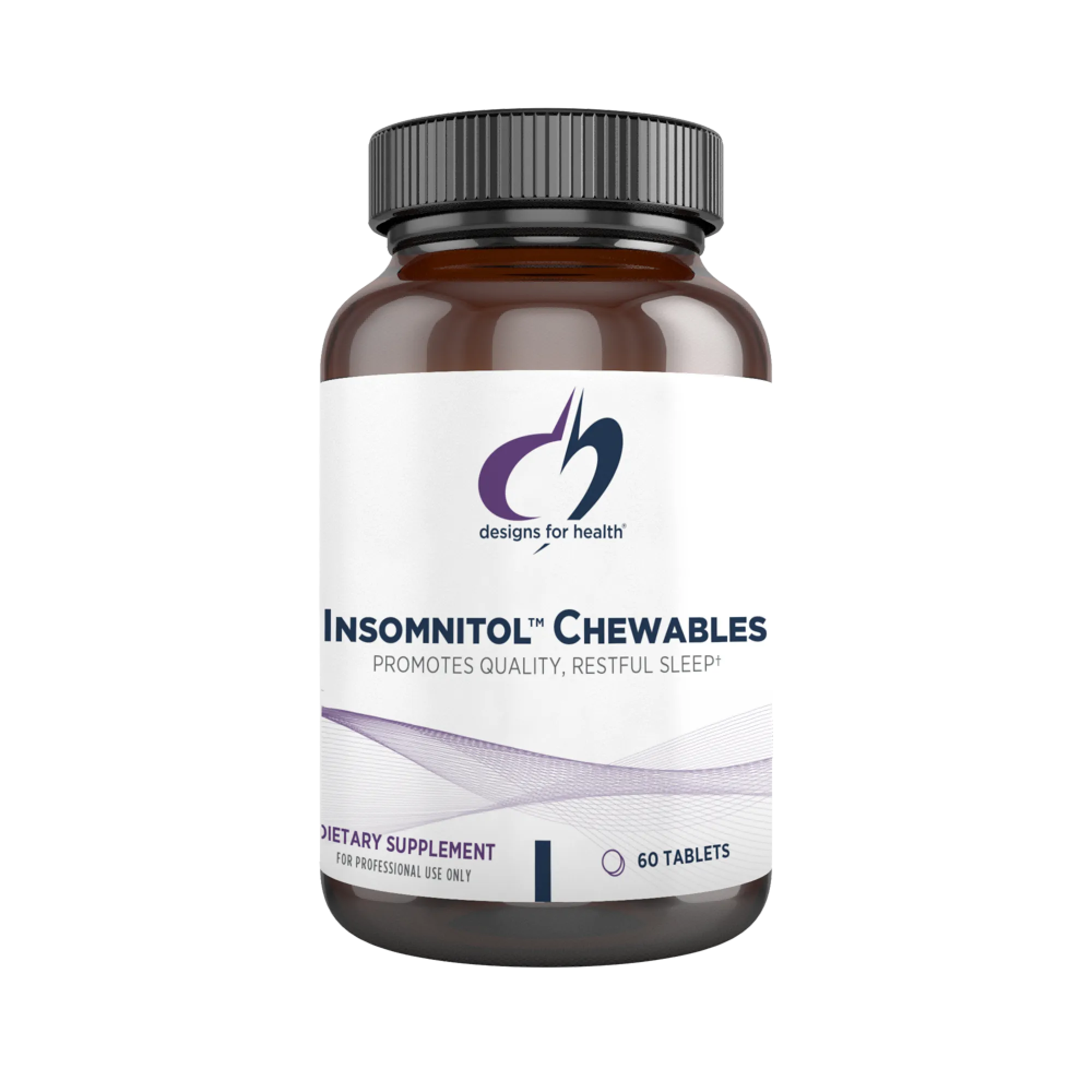
Insomnitol™ Chewables are a comprehensive, lemon-flavored sleep support supplement designed to promote the calming of brain activity and support restorative sleep cycles. Unlike conventional sleep medications or single-ingredient supplements that only target one aspect of insomnia, this formulation utilizes a synergistic blend of five key compounds: melatonin, 5-hydroxytryptophan (5-HTP), L-theanine, inositol, and vitamin B6 (as Pyridoxal-5-Phosphate). Each of these ingredients plays a distinct, scientifically validated role in the complex biochemical cascade that governs human sleep architecture. In a healthy body, sleep is not simply the absence of wakefulness; it is an active, highly regulated neurological process that requires the brain to shift gears, lower excitatory signaling, and produce specific hormones in sequence.
The foundation of this supplement's mechanism lies in its ability to address multiple therapeutic angles simultaneously. First, it provides the direct hormonal signal required to initiate the sleep phase via melatonin, a multifunctional hormone intimately involved in circadian (day/night) biological rhythms. Second, it supplies the specific amino acid precursors and enzymatic cofactors needed to build the brain's natural relaxation chemicals. Finally, it includes compounds that actively dampen excitatory electrical activity in the brain, helping to quiet the racing thoughts and hyperarousal that frequently plague patients with chronic illnesses. By addressing the sleep process from these three distinct angles, the supplement aims to restore the natural physiological transition into rest.
For patients dealing with the complex, multi-systemic symptoms of Long COVID or ME/CFS, this multi-targeted approach is particularly relevant. Chronic illness often depletes the body's natural reserves of neurotransmitter building blocks due to chronic stress and systemic inflammation. By providing these essential compounds in a highly bioavailable, easy-to-absorb chewable format, the body is given the exact raw materials it needs to rebuild its sleep-wake regulatory systems from the ground up.
To understand how this supplement functions, we must look at the molecular level of neurotransmitter synthesis. The brain relies on a specific chemical pathway to produce serotonin, a vital neurotransmitter that regulates mood, emotional stability, and relaxation. Serotonin is also the direct chemical precursor to melatonin. The formula includes 5-HTP, a naturally occurring amino acid that serves as the direct building block for serotonin. By supplying 5-HTP, the supplement effectively bypasses the rate-limiting steps of serotonin production, ensuring the brain has an ample supply of this crucial calming chemical.
However, simply providing the building blocks is not enough; the body also needs the biological tools to assemble them. This is where Vitamin B6, specifically in its biologically active form known as Pyridoxal-5-Phosphate (P5P), becomes essential. P5P is a mandatory coenzyme for the enzyme aromatic L-amino acid decarboxylase (AADC), which is responsible for converting 5-HTP into active serotonin. Without adequate P5P, this conversion process stalls, leading to a buildup of unused precursors and a deficit in both serotonin and downstream melatonin. By pairing 5-HTP with its necessary enzymatic cofactor, the formula ensures that the biochemical assembly line runs smoothly and efficiently.
Furthermore, the inclusion of inositol, a naturally occurring carbocyclic sugar often referred to as vitamin B8, plays a critical role in cellular signaling. Inositol acts as a secondary messenger in the phosphatidylinositol signaling pathway, which is responsible for the signal transduction of several major neurotransmitters, including serotonin. Essentially, while 5-HTP and P5P help manufacture serotonin, inositol ensures that the brain's cells can properly "hear" and process the serotonin signal, maximizing its relaxing and sleep-promoting effects.
Beyond building neurotransmitters, achieving restorative sleep requires actively cooling down the central nervous system. This is achieved through the inclusion of L-theanine, a unique, non-protein amino acid found naturally in green tea leaves. L-theanine has a remarkable ability to cross the blood-brain barrier and interact directly with the brain's glutamate receptors. Glutamate is the central nervous system's primary excitatory neurotransmitter—the chemical responsible for keeping the brain alert, active, and sometimes overstimulated. L-theanine acts as a competitive antagonist at these receptor sites, effectively blocking excess glutamate and preventing the over-activation of excitatory neural pathways.
Simultaneously, L-theanine stimulates the production of gamma-aminobutyric acid (GABA), the brain's primary inhibitory neurotransmitter. GABA acts like a brake pedal for the nervous system, slowing down racing thoughts and easing physical tension. By simultaneously decreasing excitatory signals (glutamate) and increasing inhibitory signals (GABA), L-theanine creates a profound state of mental and physical relaxation without causing the heavy, groggy sedation associated with prescription sleeping pills.
This dual action of building necessary sleep hormones while actively calming neurological hyperarousal makes this combination of ingredients uniquely suited for complex sleep disturbances. It does not force the brain into unconsciousness; rather, it sets the optimal neurochemical stage, allowing the body's natural sleep mechanisms to take over and function as they were designed to do.
How Chronic Illness Impacts Sleep and Circadian Rhythms
In conditions like Long COVID and ME/CFS, the immune system remains in a state of chronic, low-grade activation long after the initial viral trigger has passed. This persistent immune response generates high levels of pro-inflammatory cytokines, such as Interleukin-6 (IL-6) and Tumor Necrosis Factor-alpha (TNF-α), which can cross the blood-brain barrier and trigger neuroinflammation. When the brain is inflamed, its delicate neurochemical balance is severely disrupted. This neuroinflammation is a primary driver of the "tired but wired" phenomenon, a state of hyperarousal where the patient experiences profound physical exhaustion but is neurologically unable to initiate sleep.
At a biochemical level, systemic inflammation actively sabotages the body's ability to produce sleep-regulating neurotransmitters. In a healthy state, the amino acid tryptophan is converted into 5-HTP and then into serotonin. However, research suggests that high levels of inflammatory cytokines activate an enzyme called indoleamine 2,3-dioxygenase (IDO). This enzyme effectively "hijacks" the tryptophan pathway, shunting the raw materials away from serotonin production and instead converting them into the kynurenine pathway, which produces neurotoxic, excitatory compounds. This inflammatory shunt starves the brain of serotonin and melatonin while simultaneously bathing it in stimulating chemicals, making restful sleep nearly impossible.
Furthermore, the profound mitochondrial dysfunction seen in ME/CFS and Long COVID exacerbates this cycle. Mitochondria are the energy-producing factories of the cells. When they are damaged by oxidative stress, they produce excess reactive oxygen species (ROS), further driving inflammation and cellular damage. Recent studies have shown that this mitochondrial impairment directly impacts the brain's ability to clear out metabolic waste during sleep, leading to unrefreshing sleep and worsening cognitive impairment, commonly referred to as brain fog.
Many patients with Long COVID and ME/CFS also develop dysautonomia, most notably Postural Orthostatic Tachycardia Syndrome (POTS). Dysautonomia involves the dysfunction of the autonomic nervous system (ANS), which controls involuntary bodily functions like heart rate, blood pressure, and digestion. The ANS is divided into the sympathetic (fight-or-flight) and parasympathetic (rest-and-digest) branches. In dysautonomia, the sympathetic nervous system often becomes hyperactive, leading to inappropriate surges of adrenaline and norepinephrine, especially at night when the body should be winding down.
This autonomic overdrive is intimately connected to the Hypothalamic-Pituitary-Adrenal (HPA) axis, the body's central stress response system. When the sympathetic nervous system is constantly firing, the HPA axis responds by pumping out cortisol, the primary stress hormone. Elevated nighttime cortisol levels completely disrupt the natural circadian rhythm. Normally, cortisol should peak in the morning to wake you up and drop to its lowest point at night to allow melatonin to take over. In chronic illness, this curve is often flattened or inverted, leading to severe sleep-onset insomnia and frequent nighttime awakenings accompanied by a racing heart and physical anxiety.
The inability to shift from sympathetic dominance to parasympathetic rest prevents the brain from generating the specific electrical frequencies required for sleep. Instead of transitioning smoothly from fast, alert beta brain waves into slower, relaxed alpha and theta waves, the brain remains locked in a high-frequency, vigilant state. This neurological gridlock makes it incredibly difficult for patients to achieve the deep, restorative stages of non-REM sleep, which are crucial for physical tissue repair and immune system regulation.
The cumulative effect of neuroinflammation, the kynurenine shunt, and chronic stress is a profound depletion of the body's serotonin reserves. Because serotonin is the direct, mandatory precursor to melatonin, a deficit in serotonin guarantees a deficit in melatonin. The pineal gland, a small endocrine gland in the brain, relies on this steady supply of serotonin to synthesize and release melatonin in response to darkness. When this supply chain is broken, the biological signal that tells the body it is time to sleep is severely weakened or absent entirely.
This disruption often manifests clinically as a condition known as Delayed Sleep Phase Syndrome (DSPS), which is highly prevalent in the ME/CFS population. Clinical evaluations of ME/CFS patients have demonstrated a phenomenon called delayed Dim Light Melatonin Onset (DLMO). In a healthy individual, the brain begins releasing melatonin around 9:00 PM or 9:30 PM. In many ME/CFS patients, this onset is delayed by several hours, meaning their biological clock does not signal for sleep until well past midnight or even into the early hours of the morning.
This circadian misalignment creates a vicious cycle. The delayed sleep onset leads to fragmented, shortened sleep, which worsens fatigue, exacerbates post-exertional malaise (PEM), and further stresses the HPA axis. The resulting increase in daytime stress hormones then feeds back into the loop, causing even more neuroinflammation and further delaying melatonin production the following night. Breaking this cycle requires targeted interventions that can simultaneously calm the nervous system, bypass the inflammatory serotonin shunt, and provide a strong, unambiguous circadian signal to the brain.
Insomnitol™ Chewables: Supporting Restful Sleep and Brain Calming
The inclusion of melatonin in this formula serves a dual purpose that is highly relevant to chronic complex illnesses. Primarily, melatonin acts as an agonist on the MT1 and MT2 receptors in the brain. Binding to the MT1 receptor actively suppresses the firing of neurons in the suprachiasmatic nucleus (the brain's master clock), promoting sleep onset. Binding to the MT2 receptor helps to phase-shift and synchronize the circadian rhythm. By providing an exogenous source of melatonin, the supplement delivers a clear, powerful signal to the brain that it is time to transition into the sleep phase, helping to correct the delayed Dim Light Melatonin Onset (DLMO) frequently seen in ME/CFS patients.
However, melatonin's role extends far beyond simple sleep regulation; it is one of the most potent, receptor-independent antioxidants in the human body. Recent research highlights melatonin's unique ability to cross cellular membranes and enter directly into the mitochondria. Once inside, it scavenges highly damaging free radicals, restores redox balance, and protects the delicate mitochondrial DNA from oxidative damage. For patients with Long COVID and ME/CFS suffering from severe mitochondrial dysfunction, this "energy rescue" mechanism is vital. By protecting the cellular powerhouses during the night, melatonin helps mitigate the cellular damage that drives profound daytime fatigue and post-exertional malaise (PEM).
Furthermore, melatonin exhibits profound anti-inflammatory and immunomodulatory effects. It actively dampens neuroinflammation by suppressing the NF-κB pathway and inhibiting the NLRP3 inflammasome, which are major drivers of cytokine storms and brain fog. It also helps shift macrophages from an M1 phenotype (pro-inflammatory) to an M2 phenotype (anti-inflammatory, tissue-repairing). By reducing this inflammatory burden overnight, melatonin supports a more restorative sleep architecture and helps lower the overall systemic inflammation that perpetuates chronic illness symptoms.
To address the profound serotonin depletion caused by the inflammatory kynurenine shunt, the formula provides 5-hydroxytryptophan (5-HTP). Because 5-HTP is the direct chemical precursor to serotonin, it effectively bypasses the enzyme (tryptophan hydroxylase) that is often down-regulated by stress and inflammation. Once absorbed, 5-HTP easily crosses the blood-brain barrier, where it is readily available for conversion into serotonin. Experimental studies in invertebrate models have shown that a mixture containing 5-HTP significantly decreases nighttime activity and supports sleep patterns by ensuring the nervous system has adequate precursors to maintain the sleep cycle.
Crucially, the conversion of 5-HTP to serotonin cannot occur without the presence of active vitamin B6. The supplement includes Pyridoxal-5-Phosphate (P5P), the biologically active coenzyme form of B6. P5P is the mandatory cofactor for aromatic L-amino acid decarboxylase (AADC), the specific enzyme that transforms 5-HTP into active serotonin. Studies indicate that a deficiency in active B6 stalls this serotonergic pathway, leading to an accumulation of unused precursors and a severe drop in both serotonin and downstream melatonin. By pairing 5-HTP directly with P5P, the formula ensures that the biochemical assembly line operates at maximum efficiency, independent of the liver's ability to convert standard, inactive B6 vitamins.
This combination is particularly beneficial for patients dealing with the mood disturbances, anxiety, and heightened pain sensitivity often associated with chronic illness. Serotonin plays a major role in modulating central pain pathways. By restoring healthy serotonin levels, 5-HTP and P5P can help alleviate hyperalgesia (heightened sensitivity to pain) and support a more stable, resilient emotional state, which in turn reduces the psychological barriers to falling asleep.
To combat the hyperarousal and autonomic overdrive characteristic of dysautonomia, the formula relies on the unique neurological properties of L-theanine. As a structural analog to glutamate, L-theanine competitively binds to glutamate receptors (such as the NMDA receptor) in the brain. By blocking these receptors, it prevents the over-activation of excitatory neural pathways, effectively turning down the "volume" of the central nervous system. Simultaneously, L-theanine stimulates the production of GABA, the brain's primary calming neurotransmitter, which further slows down racing thoughts and eases physical tension.
The most defining characteristic of L-theanine is its ability to rapidly stimulate alpha brain waves (8–13 Hz). Electroencephalogram (EEG) studies demonstrate that L-theanine induces measurable increases in alpha wave activity within 30 to 40 minutes of ingestion. Alpha waves signify a state of "relaxed alertness"—the exact neurological state required to transition from an anxious, vigilant state (beta waves) into the early stages of sleep (theta waves). By accelerating this transition, L-theanine helps patients break out of the "tired but wired" state, preparing the brain for rest without forcing unnatural, groggy unconsciousness.
Furthermore, L-theanine has been shown to buffer the HPA axis against stress. Clinical research indicates that it can objectively decrease salivary cortisol levels and restore parasympathetic nervous system dominance. For patients with POTS and dysautonomia who experience nighttime adrenaline surges, this ability to lower stress hormones and promote autonomic balance is a critical component of achieving uninterrupted, restorative sleep.
The final piece of the neurochemical puzzle is inositol, a carbocyclic sugar that acts as a vital secondary messenger in the brain. Inositol is a key component of the phosphatidylinositol signaling pathway, which is responsible for the signal transduction of several major neurotransmitters, including serotonin and dopamine. While 5-HTP and P5P work together to manufacture serotonin, inositol ensures that the receiving neurons can properly process and respond to the serotonin signal.
Chronic sleep deprivation and prolonged stress can cause the brain's serotonin receptors to become desensitized, meaning that even if serotonin is present, the cells do not react to it efficiently. Clinical evidence suggests that myo-inositol supplementation may help reverse this receptor desensitization, restoring normal neurotransmitter function and improving both mood and sleep quality. By enhancing the efficiency of cellular communication, inositol maximizes the relaxing effects of the other ingredients in the formula.
Additionally, inositol plays a critical role in the proper functioning of astroglia and microglia, the brain's supportive immune cells. Proper glial cell function is essential for clearing metabolic waste during sleep and maintaining healthy sleep architecture. Research evaluating inositol has demonstrated improvements in subjective sleep quality, total sleep duration, and reductions in sleep disturbances, making it a powerful, synergistic addition to this comprehensive sleep support blend.

Symptoms Insomnitol™ Chewables May Help Manage
Prolonged Sleep Latency (Difficulty Falling Asleep): The combination of melatonin and 5-HTP provides a strong, immediate circadian signal to the brain, while L-theanine rapidly shifts brain waves from alert beta to relaxed alpha, significantly reducing the time it takes to transition from wakefulness to sleep.
The "Tired But Wired" Feeling (Hyperarousal): L-theanine acts as a competitive antagonist at glutamate receptors, blocking excitatory signals, while simultaneously boosting calming GABA levels, effectively cooling down an overstimulated central nervous system.
Frequent Nighttime Awakenings: By supplying 5-HTP and its necessary cofactor P5P, the formula supports a steady, sustained production of serotonin and downstream melatonin, helping to maintain the sleep cycle and reduce fragmented, interrupted sleep.
Unrefreshing Sleep and Morning Brain Fog: Melatonin's potent antioxidant properties protect mitochondrial function and reduce neuroinflammation overnight, supporting the brain's ability to clear metabolic waste and promoting deeper, more restorative sleep phases.
Nighttime Anxiety and Racing Thoughts: Inositol enhances the cellular signaling of serotonin, while L-theanine lowers cortisol levels and buffers the HPA axis, helping to quiet intrusive thoughts and physical anxiety that often spike at bedtime.
Circadian Rhythm Disruption (Delayed Sleep Phase): For patients whose biological clocks are shifted, the targeted dose of melatonin helps to resynchronize the suprachiasmatic nucleus, pulling the sleep onset window back to a normal, healthy hour.
Practical Considerations: Forms, Dosing, and Absorption
When dealing with complex chronic illnesses, the form and delivery method of a supplement can be just as critical as the ingredients themselves. Many patients with Long COVID, ME/CFS, and dysautonomia suffer from gastrointestinal dysfunction, including delayed gastric emptying (gastroparesis) or poor intestinal absorption. The chewable format of Insomnitol™ bypasses some of the initial digestive hurdles associated with standard capsules. By breaking down the tablet in the mouth, the active ingredients are exposed to the mucosal membranes and begin the absorption process more rapidly, ensuring a quicker onset of action—a crucial factor when trying to initiate sleep.
Furthermore, the specific forms of the nutrients utilized in this formula are optimized for high bioavailability. The inclusion of Vitamin B6 as Pyridoxal-5-Phosphate (P5P) is a prime example. Standard B6 supplements use pyridoxine hydrochloride, which must be transported to the liver and enzymatically converted into P5P before the body can use it. In patients with chronic inflammation or liver stress, this conversion process is often impaired. By providing the pre-methylated, biologically active P5P form, the supplement bypasses the liver entirely, delivering the exact coenzyme the brain needs to immediately begin synthesizing serotonin and melatonin.
The lemon-flavored chewable format also improves patient compliance. When managing a chronic illness, pill fatigue is a very real phenomenon. Having a palatable, easy-to-consume option that doesn't require swallowing large capsules with water right before bed—which can lead to disruptive nighttime trips to the bathroom—makes it easier to maintain a consistent, effective sleep hygiene routine.
The timing of administration is critical for maximizing the efficacy of this supplement, particularly because it interacts directly with the body's circadian rhythm. The suggested use is to chew 2 tablets per day 30 to 60 minutes before bedtime. This specific window is based on the pharmacokinetic profiles of the active ingredients. L-theanine, for instance, typically induces measurable increases in alpha brain wave activity within 30 to 40 minutes of ingestion. Taking the supplement within this timeframe ensures that the brain is entering a state of "relaxed alertness" just as you are getting into bed.
Similarly, 5-HTP has a relatively short half-life and reaches peak concentration in the blood within 1 to 2 hours. Timing the dose an hour before bed ensures that the serotonin and subsequent melatonin synthesis pathways are fully primed and active during the critical sleep onset window. For patients dealing with a severely delayed Dim Light Melatonin Onset (DLMO)—where they cannot fall asleep until 2:00 AM or later—it may be beneficial to consult with a healthcare provider about taking the supplement slightly earlier in the evening to help gently phase-shift the biological clock backward over time.
Consistency is also key. While ingredients like L-theanine and melatonin can provide acute, immediate relief for sleep latency, the broader benefits of neurotransmitter rebuilding and mitochondrial protection require sustained use. It may take several weeks of consistent supplementation for the brain's serotonin receptors to re-sensitize and for the circadian rhythm to fully stabilize.
While the ingredients in Insomnitol™ Chewables are naturally occurring and generally well-tolerated, they exert powerful effects on brain chemistry and must be used responsibly. The most critical safety consideration involves the inclusion of 5-HTP. Because 5-HTP directly increases serotonin levels in the brain, it must not be combined with prescription antidepressants (such as SSRIs, SNRIs, or MAOIs) without strict medical supervision. Combining these agents can lead to dangerously high serotonin levels, resulting in a potentially life-threatening condition known as Serotonin Syndrome, which is characterized by confusion, rapid heart rate, muscle spasms, and high blood pressure.
Additionally, while L-theanine and melatonin are not traditional sedatives and do not typically cause morning grogginess, they do promote relaxation and sleepiness. Therefore, this supplement should not be taken before driving or operating heavy machinery. Patients with autoimmune conditions or those taking immunosuppressive medications should also consult their doctor before using melatonin, given its potent immunomodulatory effects.
Finally, because 5-HTP can influence gut motility (as serotonin is heavily involved in digestion), some individuals may experience mild gastrointestinal discomfort, such as nausea or heartburn, when first starting the supplement. Taking the chewables with a small, easily digestible evening snack can help mitigate these effects. Always consult with your healthcare practitioner before adding a new supplement to your regimen, especially if you are managing a complex chronic illness or taking multiple prescription medications.

Follow the Science
The therapeutic potential of melatonin in chronic fatigue and post-viral syndromes is supported by a growing body of clinical literature. A notable 16-week, randomized, double-blind, placebo-controlled trial assessed the effects of melatonin supplementation on patients diagnosed with ME/CFS. The experimental group, receiving a daily oral dose of melatonin, showed a statistically significant reduction in the perception of physical fatigue compared to the placebo group (p < 0.05). They also recorded significant improvements in the physical component summary of their quality-of-life assessments across all follow-up visits, highlighting melatonin's ability to address core ME/CFS symptoms beyond just sleep.
Furthermore, targeted studies have evaluated ME/CFS patients suffering from a delayed Dim Light Melatonin Onset (DLMO). In a highly cited clinical evaluation, 29 patients took oral melatonin exactly 5 hours before their calculated DLMO for 3 months. Following the treatment, the patients' Checklist Individual Strength (CIS) scores improved significantly. Sub-scores for fatigue, concentration, motivation, and physical activity all showed marked improvement, demonstrating the profound impact of correcting circadian misalignment in this patient population.
More recently, a 2025 paper published in PNAS evaluated patient-reported treatment outcomes across large cohorts of ME/CFS and Long COVID patients. In real-world patient tracking, melatonin emerged as a highly utilized and successful intervention specifically for mitigating sleep architecture problems and reducing nighttime awakenings, validating its role as a foundational supportive therapy for post-viral sleep disturbances.
The efficacy of 5-HTP in supporting sleep metrics has been explored in various models. An experimental study investigated the sleep-promoting effects of a GABA and 5-HTP mixture in a fruit fly model. The study found that the combination significantly decreased subjective nighttime activity and improved sleep patterns. This demonstrates 5-HTP's ability to efficiently supply the nervous system with necessary sleep precursors.
L-theanine's ability to promote relaxation without sedation has also been rigorously studied. A prominent randomized, triple-blind, placebo-controlled crossover study observed moderately stressed adults given a 200mg dose of L-theanine. Researchers found that the single dose significantly increased frontal region alpha power over time while objectively decreasing salivary cortisol levels compared to the placebo group. This confirms L-theanine's dual action of stimulating relaxing brain waves while buffering the physiological stress response.
Additionally, EEG studies evaluating L-theanine's effect on mental relaxation found that occipital alpha power values rose significantly within 60 minutes of ingestion. Interestingly, the study noted that L-theanine generated far more alpha waves in high-anxiety participants than in low-anxiety ones, suggesting that the amino acid is particularly effective at cooling down a highly overstimulated, hyperaroused nervous system.
The clinical evidence supporting inositol's role in sleep enhancement is heavily tied to its modulation of neurotransmitter signaling. Research evaluating myo-inositol's impact on sleep quality using the Pittsburgh Sleep Quality Index (PSQI) has found improvements in subjective sleep quality and overall sleep duration compared to placebo.
Finally, the necessity of active Vitamin B6 (P5P) in the sleep cycle is well-established. A cross-sectional observational study analyzing data from the National Health and Nutrition Examination Survey (NHANES) found a strong correlation between serum P5P concentrations and sleep duration. Higher average serum P5P concentrations were heavily correlated with normal, healthy sleep duration, while lower levels were negatively associated with abnormal sleep patterns, underscoring P5P's critical role as the enzymatic gatekeeper for serotonin and melatonin synthesis.
The Path Forward
Living with Long COVID, ME/CFS, or dysautonomia means navigating a complex web of unpredictable and often debilitating symptoms. When sleep—the body's most fundamental mechanism for healing and repair—becomes a source of frustration rather than relief, it can feel incredibly demoralizing. It is important to recognize that the "tired but wired" feeling, the racing heart at 2:00 AM, and the unrefreshing mornings are not personal failings; they are physiological symptoms of a nervous system and immune system caught in a loop of chronic overactivation. Validating this reality is the first step toward finding effective management strategies.
While there is no single miracle cure for the sleep disturbances associated with complex chronic illness, targeted nutritional support can be a powerful tool in your management arsenal. By providing the brain with the exact biochemical precursors it needs to build serotonin and melatonin, while simultaneously cooling down excitatory glutamate pathways, you can help set the stage for restorative rest. However, supplements are most effective when integrated into a comprehensive approach. Combining targeted support with strategic pacing, nervous system regulation techniques, and careful symptom tracking can help you slowly rebuild a healthier sleep architecture.
As you navigate your path forward, remember that rebuilding depleted neurotransmitter pathways and phase-shifting a disrupted circadian rhythm takes time and consistency. Be patient with your body as it utilizes these new biological tools. Always work closely with a knowledgeable healthcare provider who understands the nuances of post-viral syndromes and dysautonomia to ensure that any new intervention is safe and appropriate for your specific clinical picture.
If you are struggling with prolonged sleep latency, hyperarousal, or unrefreshing sleep, targeted neurotransmitter support may help you reclaim your nights. Explore Insomnitol™ Chewables to learn more about how this synergistic blend of melatonin, 5-HTP, L-theanine, inositol, and P5P can support your body's natural ability to fall asleep and stay asleep.
Sources
Possible Application of Melatonin in Long COVID (Biomolecules, 2022)
Patient-reported treatment outcomes in ME/CFS and long COVID (PNAS, 2025)
A Comprehensive Review of Nutritional Influences on the Serotonergic System (Nutrients, 2023)
L-Theanine and Alpha Brain Waves Clinical Trial Data (Pure Prescriptions)
Effects of L-Theanine on Mental Relaxation and Alpha Waves (KoreaMed)
Systematic Review of L-Theanine and Stress (Taylor & Francis)
Inositol and Neurotransmitter Receptor Desensitization (Psychiatry Redefined)