Can Bacillus subtilis HU58 Support Gut Health and Immunity in Long COVID?
March 6, 2026
Bacillus subtilis HU58Long COVIDLeaky Gut
Share:
Disclaimer: The information provided here is for educational purposes only and is not intended as medical advice. It should not be used to diagnose, treat, cure, or prevent any medical condition. Instead, use it as a starting point for discussion with your healthcare provider. Always consult with a qualified healthcare provider before starting any new medication, supplement, device, or making changes to your health regimen.
Months or even years after an acute viral infection, many individuals find themselves battling a complex web of debilitating symptoms. Conditions like Long COVID, myalgic encephalomyelitis/chronic fatigue syndrome (ME/CFS), mast cell activation syndrome (MCAS), and dysautonomia often leave patients searching for answers as they navigate severe fatigue, brain fog, and unpredictable gastrointestinal distress. While the triggers for these conditions are multifaceted, emerging clinical research continually points back to one foundational system: the gut microbiome. When the delicate balance of our intestinal flora is disrupted, it can trigger a cascade of systemic inflammation and immune dysregulation that perpetuates chronic illness.
In the search for targeted, science-backed solutions, spore-based probiotics have emerged as a powerful tool for microbiome rehabilitation. Among these, Bacillus subtilis HU58 stands out. Unlike traditional probiotics that often perish in the harsh environment of the stomach, HU58 is a highly resilient, single-strain probiotic designed to survive digestion, colonize the gut, and actively repair the intestinal barrier. By producing over two dozen beneficial metabolites and directly modulating the immune system, this unique bacterial strain offers a promising approach to addressing the root-cause gastrointestinal dysfunction seen in complex chronic conditions.
TL;DR
Bacillus subtilis HU58 is a resilient, spore-based probiotic that survives digestion to support gut health.
It may help repair the intestinal barrier and reduce systemic inflammation linked to chronic conditions.
Research suggests it supports microbiome diversity by crowding out harmful bacteria and promoting beneficial flora.
HU58 may help manage symptoms of Long COVID, ME/CFS, and dysautonomia by targeting gut dysbiosis.
What is Bacillus subtilis HU58?
The Resilient Nature of Spore-Based Probiotics
Bacillus subtilis is a Gram-positive, rod-shaped bacterium naturally found in soil and the healthy human gastrointestinal tract. The specific strain known as HU58 was originally isolated from the gut of a healthy human volunteer by researchers at Royal Holloway, University of London. What sets Bacillus subtilis apart from conventional vegetative probiotics, such as many Lactobacillus or Bifidobacterium strains, is its remarkable ability to form a protective outer shell known as an endospore. This biophysical adaptation is crucial for its survival and therapeutic efficacy.
An endospore is a dormant, highly resilient, and non-reproductive structure that acts as a biological armor. When the bacterium senses environmental stress—such as a lack of nutrients or extreme shifts in pH—it encases its genetic material and essential enzymes within this tough, multi-layered protein coat. This endospore protects the organism from extreme heat, pressure, dehydration, and, most importantly for human health, the highly acidic environment of the stomach and the antimicrobial effects of bile salts in the upper intestine. Because of this inherent stability, Bacillus subtilis HU58 boasts a near 100% survivability rate through the harsh gastric passage, ensuring that the full clinical dose reaches the lower gastrointestinal tract intact.
Once the spores reach the nutrient-rich, hospitable environment of the large intestine, they undergo a process called germination. The spores shed their protective coating, return to their active (vegetative) state, and begin to colonize the gut lining. During this active phase, Bacillus subtilis forms protective biofilms along the intestinal mucosa, interacts directly with the host's immune cells, and begins to exert its broad-spectrum health benefits before eventually resporulating and exiting the body. This transient colonization is what makes spore-based probiotics so effective at reconditioning the gut environment.
A Factory for Beneficial Metabolites
Beyond its impressive survivability, Bacillus subtilis HU58 functions as a microscopic biochemical factory within the gut. Once metabolically active, it produces more than two dozen health-promoting metabolites that are essential for human physiology. Among the most critical of these are short-chain fatty acids (SCFAs), particularly acetate, propionate, and butyrate. Through the fermentation of dietary fibers, HU58 can significantly increase the production of these SCFAs, which serve as the primary energy source for colonocytes (the cells lining the colon) and play a vital role in maintaining the structural integrity of the gut barrier.
In addition to SCFAs, Bacillus subtilis synthesizes a variety of essential vitamins and enzymes. It is a well-documented producer of Vitamin K2 (specifically the menaquinone-7 or MK-7 form), which is crucial for bone health and cardiovascular function. The bacterium also secretes a suite of digestive enzymes, including amylase, protease, and lipase, which assist the host in breaking down complex carbohydrates, proteins, and fats, thereby enhancing nutrient absorption. Furthermore, it is often claimed to produce specialized proteolytic enzymes like nattokinase, which may support healthy blood flow through the breakdown of fibrin.
Perhaps most importantly for individuals dealing with gut dysbiosis, Bacillus subtilis HU58 secretes potent antimicrobial peptides known as bacteriocins. Compounds such as amicoumacin A act as targeted natural antibiotics within the gut, actively suppressing the overgrowth of opportunistic pathogens and harmful bacteria. By selectively inhibiting these detrimental microbes, HU58 creates a hospitable environment for beneficial commensal bacteria to thrive, thereby promoting profound microbial diversity and restoring a healthy balance to the gastrointestinal ecosystem.
How Long COVID and Chronic Illness Impact the Gut
Viral Persistence and the Gut Microbiome
To understand why a targeted probiotic like Bacillus subtilis HU58 is relevant for complex chronic illnesses, we must first examine how conditions like Long COVID and ME/CFS impact the gastrointestinal system. The gut microbiome is deeply intertwined with our systemic immune response. In a healthy state, a diverse array of gut bacteria helps regulate immune function, keeping inflammation in check. However, acute viral infections, such as SARS-CoV-2, can severely disrupt this delicate ecosystem, leading to a state of profound dysbiosis—an imbalance where harmful bacteria outnumber beneficial ones.
In the context of Long COVID, research has shown that the virus can persistently infect the enterocytes (the cells lining the intestines) long after the acute respiratory infection has cleared. The SARS-CoV-2 virus binds to ACE2 receptors, which are highly expressed in the gut lining. This persistent viral presence triggers localized inflammation and alters the composition of the microbiome. Studies have consistently demonstrated that individuals with Long COVID exhibit a marked reduction in beneficial, butyrate-producing bacteria and an overgrowth of opportunistic pathogens. This dysbiosis is not merely a side effect; it is a driving factor that perpetuates systemic symptoms. You can learn more about this connection in our article on What Causes Long COVID?.
Similarly, in ME/CFS, researchers have identified distinct alterations in the gut microbiome, noting reduced microbial diversity and a lack of anti-inflammatory bacterial strains. This microbial imbalance deprives the body of essential metabolites, particularly short-chain fatty acids like butyrate, which are necessary for regulating energy metabolism and keeping the immune system calm. The resulting metabolic dysfunction contributes heavily to the debilitating post-exertional malaise (PEM) and severe fatigue that characterize the condition.
The Vicious Cycle of Leaky Gut and Systemic Inflammation
One of the most devastating consequences of gut dysbiosis and chronic localized inflammation is the breakdown of the intestinal barrier, a condition commonly referred to as "leaky gut" or increased intestinal permeability. The gut lining is composed of a single layer of epithelial cells held together by complex protein structures called tight junctions. These junctions act as a highly selective gateway, allowing essential nutrients to pass into the bloodstream while blocking toxins, undigested food particles, and pathogenic bacteria.
When the gut is inflamed due to viral persistence or microbial imbalance, the body releases a protein called zonulin, which signals the tight junctions to open. As these junctions loosen, the intestinal barrier becomes compromised. This allows lipopolysaccharides (LPS)—toxic structural components of Gram-negative bacteria—to leak out of the gut and into systemic circulation. This phenomenon, known as metabolic endotoxemia, triggers a massive, systemic immune response. The immune system recognizes these circulating toxins as a severe threat, leading to chronic, widespread inflammation that can affect every organ system in the body.
This systemic inflammation is a hallmark of complex chronic illness. It drives the production of pro-inflammatory cytokines like Interleukin-6 (IL-6) and Tumor Necrosis Factor-alpha (TNF-α), which cross the blood-brain barrier and induce neuroinflammation. This neuroinflammatory state is largely responsible for the severe cognitive dysfunction, or "brain fog," that patients with Long COVID and ME/CFS frequently experience. The continuous leakage of toxins from the gut creates a vicious cycle: systemic inflammation further damages the gut lining, which in turn allows more toxins to escape, perpetuating the illness indefinitely.
Dysautonomia, MCAS, and the Gut-Brain Axis
The impact of a compromised gut barrier extends far beyond digestion, profoundly affecting the autonomic nervous system and mast cell function. The gut and the brain are in constant communication via the vagus nerve, a critical component of the parasympathetic nervous system. When the gut is inflamed and leaky, the resulting systemic inflammation and circulating endotoxins can irritate and disrupt vagal nerve signaling. This disruption is a primary driver of dysautonomia, including Postural Orthostatic Tachycardia Syndrome (POTS), where the autonomic nervous system fails to properly regulate heart rate, blood pressure, and digestion.
Furthermore, the gut is home to a massive population of mast cells, which act as the immune system's first responders. In a healthy gut, these cells help defend against pathogens. However, in a state of dysbiosis and increased permeability, the constant influx of toxins and inflammatory signals causes these mast cells to become hyperactive and unstable. They begin to degranulate inappropriately, releasing floods of histamine and other inflammatory mediators into the bloodstream. This localized gut reaction quickly escalates into systemic Mast Cell Activation Syndrome (MCAS), leading to widespread allergic-type reactions, food sensitivities, and further autonomic dysfunction. Understanding Gastrointestinal Symptoms Seen with Long COVID is crucial for recognizing these interconnected conditions.
Bacillus subtilis HU58: Supporting Gut Barrier and Immune Function
Reinforcing Tight Junctions and Reversing Leaky Gut
Bacillus subtilis HU58 offers a highly targeted, mechanistic approach to repairing the foundational damage seen in chronic illness, starting with the physical restoration of the gut barrier. As discussed, increased intestinal permeability is a primary driver of systemic inflammation. HU58 directly addresses this by stimulating the intestinal epithelial cells to upregulate the production of critical tight junction proteins. In vitro studies utilizing human colonic epithelial cells have demonstrated that specific strains of B. subtilis can increase Trans-Epithelial Electrical Resistance (TEER)—a primary clinical measurement of barrier strength—by up to 50%.
This increase in barrier integrity is driven by the significant upregulation of key structural proteins, specifically Zonula Occludens-1 (ZO-1), occludin, and claudin-1. By promoting the expression of these proteins, HU58 physically tightens the gaps between the intestinal cells, effectively "plugging the leaks" in the gut lining. This physical repair prevents the translocation of lipopolysaccharide (LPS) toxins into the bloodstream. In a landmark 30-day human clinical trial, participants taking a spore-based probiotic featuring B. subtilis HU58 experienced a remarkable 42% reduction in circulating endotoxins following a high-fat challenge meal, compared to a 36% increase in the placebo group.
By halting metabolic endotoxemia at its source, HU58 cuts off the continuous supply of toxins that fuel systemic inflammation. This reduction in circulating LPS is critical for patients with Long COVID, ME/CFS, and dysautonomia, as it directly reduces the inflammatory burden on the vagus nerve and the central nervous system, helping to calm autonomic dysfunction and alleviate neuroinflammation-driven brain fog.
Modulating the Immune Response and Lowering Inflammation
Beyond physical barrier repair, Bacillus subtilis HU58 acts as a profound immunomodulator. The immune system in patients with complex chronic illness is often stuck in a hyperactive, pro-inflammatory state. HU58 helps to re-educate the localized immune tissue in the gut (the gut-associated lymphoid tissue, or GALT), promoting a shift from an inflammatory to a regulatory immune response. At the cellular level, B. subtilis has been shown to prevent the degradation of IκB, which in turn limits the nuclear translocation of NF-κB—a master genetic switch that triggers the production of inflammatory cytokines.
By inhibiting the NF-κB pathway, HU58 is thought to downregulate the systemic release of pro-inflammatory markers such as Interleukin-6 (IL-6) and Tumor Necrosis Factor-alpha (TNF-α). Because TNF-α is known to directly weaken intestinal tight junctions, suppressing its production provides a dual benefit: it lowers systemic inflammation while simultaneously protecting the newly repaired gut barrier from further degradation.
For patients dealing with Mast Cell Activation Syndrome (MCAS), Bacillus subtilis is often said to offer an additional layer of targeted support. It is sometimes claimed that it produces a specialized exopolysaccharide (EPS) that halts mast cell degranulation. By acting as an immunomodulatory "brake," HU58 may help stabilize hyperactive mast cells, potentially reducing the severity of histamine-driven symptoms and food sensitivities.
Competitive Exclusion and Microbiome Reconditioning
Finally, Bacillus subtilis HU58 acts as an intestinal "policeman," actively reconditioning the microbiome through a process known as competitive exclusion. In a dysbiotic gut, opportunistic pathogens and overgrown bacteria consume essential nutrients and secrete toxins that perpetuate illness. HU58 utilizes microbial interference therapy by secreting potent, targeted antimicrobial peptides (bacteriocins) such as amicoumacin A. These compounds selectively target and suppress the overgrowth of harmful bacteria, including pathogenic strains of Clostridium, Klebsiella, and Staphylococcus.
By clearing out these detrimental microbes, HU58 creates physical space and frees up resources within the gastrointestinal tract. Simultaneously, its production of short-chain fatty acids creates an optimal, slightly acidic pH environment that heavily favors the growth of beneficial, commensal bacteria like Bifidobacterium and Faecalibacterium prausnitzii. This dual action—eradicating pathogens while fertilizing beneficial flora—leads to a profound increase in overall microbial diversity. For patients whose microbiomes have been decimated by viral infections, chronic stress, or repeated antibiotic use, this active reconditioning is essential for restoring long-term gastrointestinal and systemic health.
Symptoms Bacillus subtilis HU58 May Help Manage
Because the gut microbiome influences nearly every system in the body, rehabilitating it with Bacillus subtilis HU58 can have far-reaching effects. While it is not a cure for complex chronic conditions, clinical evidence and mechanistic data suggest it may help manage a variety of debilitating symptoms:
Gastrointestinal Distress (Bloating, Diarrhea, Constipation): By actively reconditioning the microbiome, clearing out opportunistic pathogens, and producing digestive enzymes, HU58 helps restore normal bowel motility and significantly reduces bloating and irregular stool consistency.
Food Sensitivities and Intolerances: By physically repairing the tight junctions and reversing "leaky gut," HU58 prevents undigested food proteins from entering the bloodstream, which reduces the immune system's reactive, allergic-type responses to common foods.
Brain Fog and Cognitive Dysfunction: By halting the leakage of lipopolysaccharide (LPS) endotoxins into the bloodstream, HU58 drastically reduces systemic inflammation and the subsequent neuroinflammation that drives severe cognitive impairment and brain fog.
Post-Exertional Malaise (PEM) and Severe Fatigue: HU58 stimulates the growth of beneficial bacteria that produce short-chain fatty acids (like butyrate), which are essential for cellular energy metabolism. Restoring these metabolic pathways can help improve baseline energy levels and mitigate the severity of crashes.
Histamine Reactions and MCAS Symptoms: The specialized exopolysaccharides (EPS) produced by Bacillus subtilis act as an immunomodulatory brake, helping to stabilize hyperactive mast cells and prevent the inappropriate degranulation that causes systemic histamine flares.
Dysautonomia and POTS Symptoms: By healing the gut barrier and lowering systemic inflammatory cytokines (like IL-6 and TNF-α), HU58 reduces the inflammatory burden on the vagus nerve, helping to calm the autonomic nervous system and support better regulation of heart rate and blood pressure.
Practical Considerations: Forms, Dosing, and Absorption
The Bioavailability Advantage of Endospores
When considering probiotic supplementation, bioavailability—the amount of the active ingredient that actually reaches its intended target—is the most critical factor. Traditional vegetative probiotics, such as many over-the-counter Lactobacillus and Bifidobacterium formulations, are highly fragile. They are susceptible to heat, light, and moisture, which is why they often require strict refrigeration. More importantly, the vast majority of these fragile bacteria are destroyed by the highly acidic environment of the stomach (which has a pH of around 2.0) and the antimicrobial bile salts in the upper small intestine. As a result, only a tiny fraction of the ingested dose ever reaches the colon alive.
Bacillus subtilis HU58 entirely bypasses this issue due to its spore-based nature. The rugged endospore acts as an impenetrable shield, providing the bacteria with inherent stability. Because of this biophysical armor, HU58 does not require refrigeration and boasts an exceptional shelf life. Clinical and manufacturer data confirm that spore-based probiotics like HU58 have virtually a 100% survivability rate through the human digestive tract. This means that when you consume a 10 Billion CFU dose, the entirety of that dose successfully reaches the intestines intact, where it can germinate, colonize, and begin its therapeutic work.
Optimal Dosing and Titration Strategies
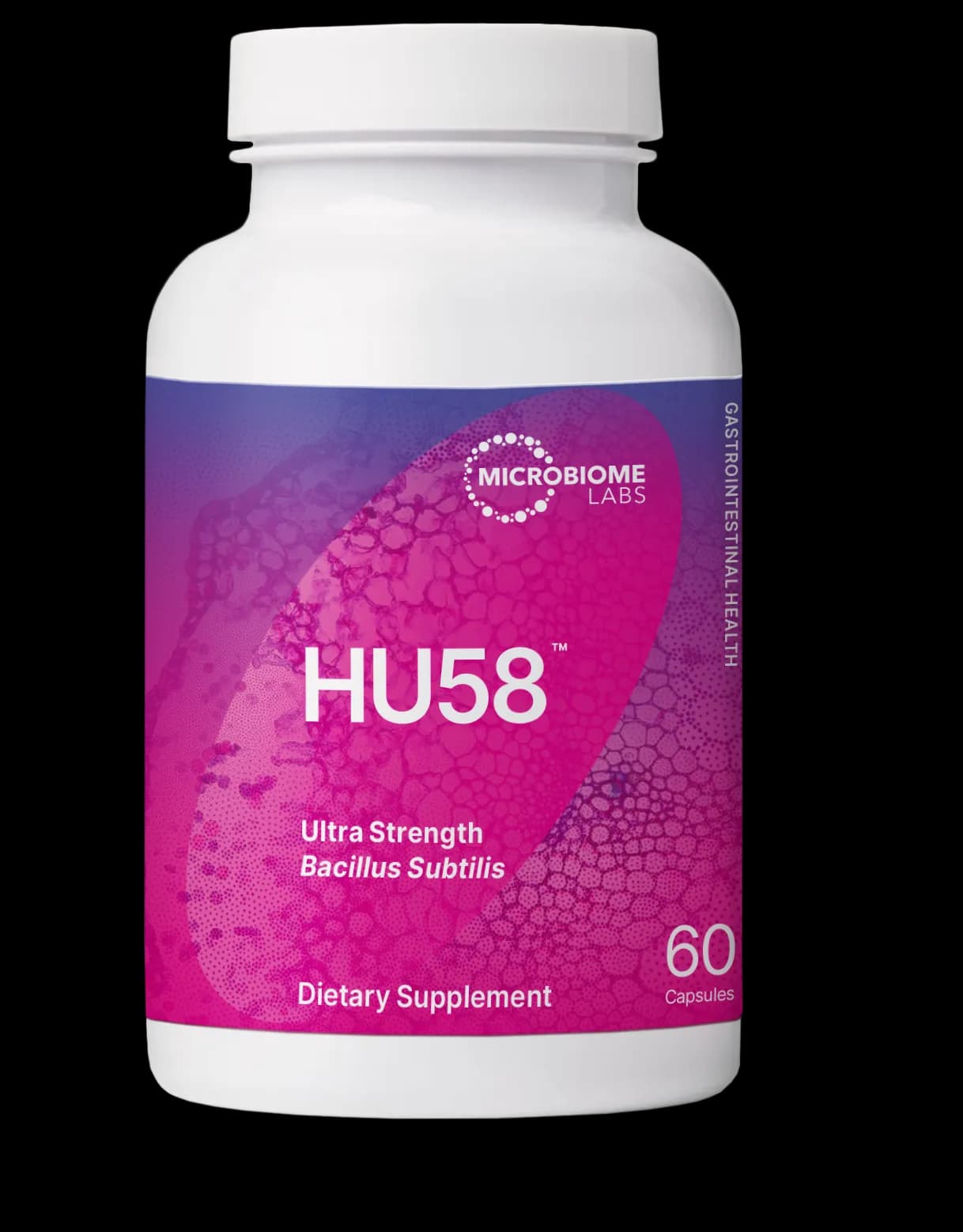
The clinical dosage for Bacillus subtilis HU58 typically ranges from 2 billion to 10 billion Colony Forming Units (CFUs) per day, depending on the severity of the gastrointestinal dysfunction. Standard high-potency formulations, such as the one offered by Microbiome Labs, provide a concentrated dose of 10 Billion CFU per two-capsule serving. Because HU58 is highly active and aggressively targets pathogenic bacteria, it is crucial to introduce it to your system slowly to avoid overwhelming the body.
The suggested use for adults and children over the age of 5 is a careful titration protocol. During Week 1, patients should take just 1 capsule per day with food. Taking the probiotic with a meal is highly recommended, as the presence of food triggers the release of digestive fluids that actually help signal the spores to germinate once they reach the intestines. If the initial dose is well-tolerated, patients can increase to the full dose of 2 capsules per day with food starting in Week 2. HU58 is also highly synergistic and is frequently taken alongside broad-spectrum spore formulas, such as MegaSporeBiotic, to maximize gut barrier repair and microbial diversity.
Safety, Tolerability, and Potential Interactions
Bacillus subtilis is widely recognized as safe, non-pathogenic, and exceptionally well-tolerated in clinical settings. In human trials, including studies involving patients with severe liver conditions, high doses of HU58 (up to 10 billion CFUs daily) were deemed highly safe, with no severe adverse events reported. However, because HU58 actively kills off opportunistic pathogens and yeast in the gut, some individuals may experience transient "die-off" or Herxheimer reactions when first starting the supplement. These mild symptoms can include temporary bloating, stomach cramps, mild flatulence, or changes in bowel movements. These reactions are generally a sign that the microbiome is shifting and typically resolve within a few days to a week as the gut adjusts.
Unlike fragile traditional probiotics, HU58 is highly resilient to many broad-spectrum antibiotics. In fact, clinical protocols often recommend using spore-based probiotics concurrently with antibiotic therapy to prevent the complete decimation of the gut microbiome and to drastically reduce the incidence of antibiotic-associated diarrhea. While HU58 has no listed allergens and is generally safe, it is contraindicated for individuals with a known hypersensitivity to Bacillus species. Furthermore, as with any high-potency live microorganism, severely immunocompromised individuals, those with central venous catheters, or pregnant/nursing women should only use HU58 under the direct supervision and guidance of a qualified healthcare practitioner.
Follow the Science
Clinical Evidence for Gut Barrier Repair
The therapeutic efficacy of Bacillus subtilis HU58 is supported by a robust and growing body of scientific literature, ranging from advanced in vitro models to randomized, double-blind, placebo-controlled human clinical trials. One of the most significant areas of research focuses on its ability to repair intestinal permeability and halt systemic endotoxemia. In a landmark 2017 clinical trial published in the World Journal of Gastrointestinal Pathophysiology, researchers investigated the effects of a spore-based probiotic formulation featuring B. subtilis HU58 on healthy volunteers subjected to a high-fat, high-calorie challenge meal known to induce transient "leaky gut."
The results of this 30-day study were striking. Participants in the probiotic group experienced a massive 42% reduction in circulating lipopolysaccharide (LPS) endotoxins following the challenge meal, indicating a profound strengthening of the gut barrier. In stark contrast, the placebo group experienced a 36% increase in endotoxins. Furthermore, the HU58-supplemented group exhibited a 24% reduction in post-meal triglycerides and significant decreases in systemic inflammatory markers, specifically IL-12p70 and IL-1β. This study provided concrete, in-vivo evidence that Bacillus subtilis spores can effectively plug the leaks in the intestinal lining and prevent the systemic inflammatory cascade triggered by metabolic endotoxemia.
Studies on Post-Viral Fatigue and Immune Function
Beyond physical barrier repair, clinical trials have repeatedly demonstrated the profound immunomodulatory and fatigue-fighting capabilities of Bacillus subtilis, including on the immune function of healthy human subjects and reductions in Interleukin-6 (IL-6) and Tumor Necrosis Factor-alpha (TNF-α).
More recently, the application of Bacillus subtilis has been studied directly in the context of post-viral syndromes, with early trials evaluating patients suffering from severe post-COVID fatigue and muscle weakness given a regimen consisting of systemic enzymes and a specific probiotic complex containing Bacillus subtilis. This emerging clinical data highlights the potential role that targeted microbiome rehabilitation may play in addressing the systemic inflammation and metabolic dysfunction that drive Long COVID and ME/CFS.
The Path Forward
Integrating HU58 into Your Management Plan
Living with complex chronic conditions like Long COVID, ME/CFS, dysautonomia, and MCAS is an incredibly challenging and often isolating experience. The unpredictable nature of symptoms—from severe brain fog and debilitating fatigue to sudden gastrointestinal distress—can make daily life feel like an uphill battle. It is important to validate that these symptoms are not in your head; they are the result of profound, measurable physiological disruptions, often rooted in the gut microbiome and systemic inflammation. Understanding How Can You Live with Long-Term COVID involves recognizing the interconnectedness of these bodily systems.
While there is no single miracle cure for these complex illnesses, targeted nutritional support can be a powerful tool in your overall management strategy. By actively repairing the intestinal barrier, suppressing opportunistic pathogens, and lowering systemic inflammatory cytokines, Bacillus subtilis HU58 addresses the foundational gut dysbiosis that perpetuates chronic illness. When combined with comprehensive medical care, strict symptom tracking, and rigorous pacing to manage post-exertional malaise, rehabilitating your gut microbiome can help lower your overall inflammatory burden and significantly improve your quality of life.
If you are struggling with persistent gastrointestinal symptoms, systemic inflammation, or post-viral fatigue, it may be time to discuss spore-based probiotics with your medical team. Always consult with your healthcare provider before starting any new high-potency supplement, especially if you have a complex medical history or are taking prescription medications.