Can Vitamin D3 Help Manage Long COVID, POTS, and MCAS Symptoms?
March 5, 2026
Vitamin D3Long COVIDDysautonomia
Share:
Disclaimer: The information provided here is for educational purposes only and is not intended as medical advice. It should not be used to diagnose, treat, cure, or prevent any medical condition. Instead, use it as a starting point for discussion with your healthcare provider. Always consult with a qualified healthcare provider before starting any new medication, supplement, device, or making changes to your health regimen.
Months or even years after recovering from an initial viral infection, many individuals find themselves fighting a relentless battle against debilitating symptoms. Conditions like Long COVID, myalgic encephalomyelitis/chronic fatigue syndrome (ME/CFS), postural orthostatic tachycardia syndrome (POTS), and mast cell activation syndrome (MCAS) can completely upend a person's life. When your body feels like it is locked in a constant state of hyper-vigilance, and your energy is depleted by the slightest exertion, finding targeted, cellular-level support becomes a critical priority. Many patients are frustrated by the lack of clear medical answers and are actively seeking scientifically grounded strategies to help manage their complex neuro-immune symptoms.
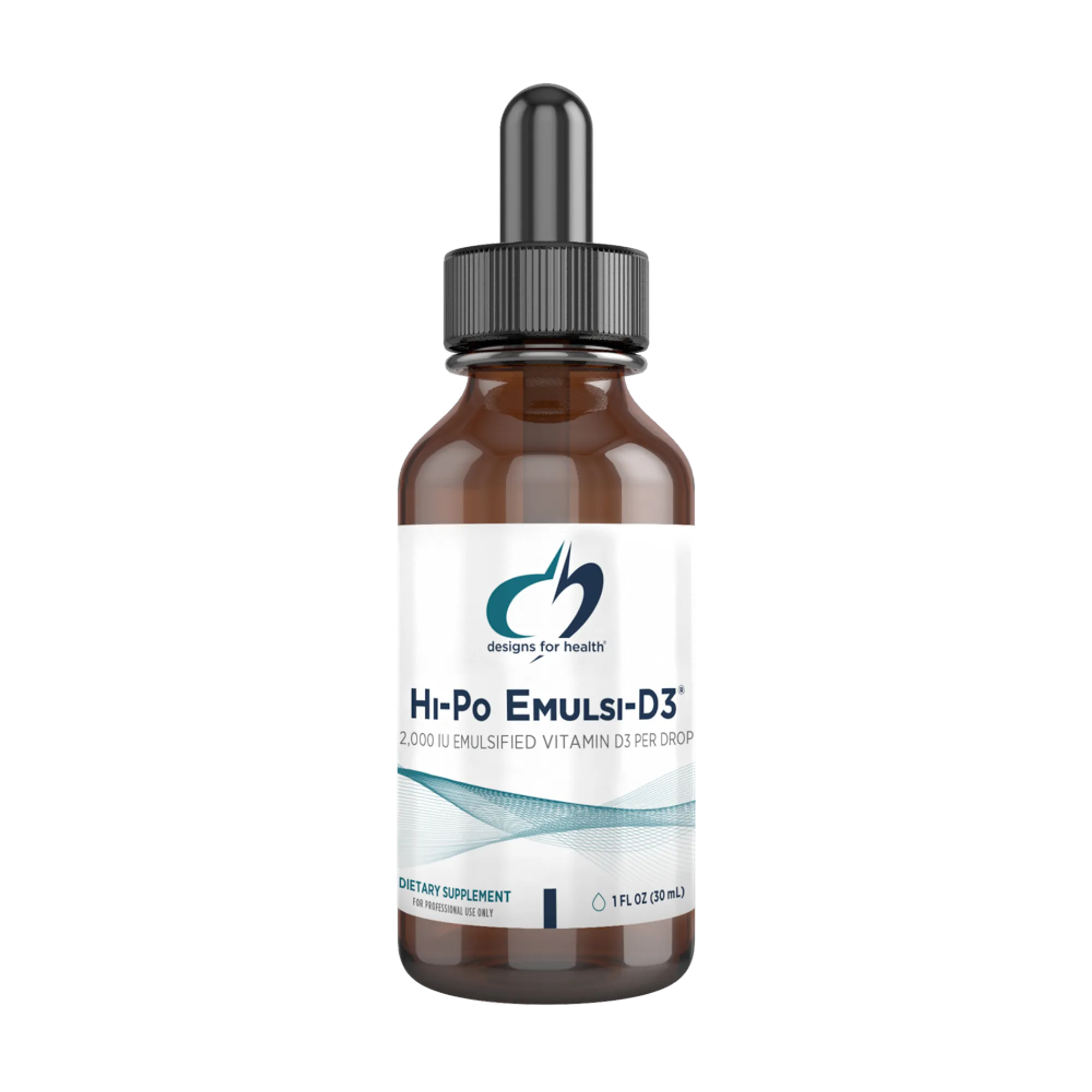
In the search for foundational healing, one of the most heavily researched compounds is Vitamin D3. Far from being just a simple vitamin for bone health, Vitamin D3 acts as a master prohormone that regulates thousands of genes, modulates the immune system, and stabilizes reactive mast cells. However, for patients with compromised digestive systems and chronic inflammation, standard supplements often fail to absorb properly. This is where advanced formulations like Hi-Po Emulsi-D3™ come into play. By utilizing natural emulsion technology, this highly bioavailable liquid supplement bypasses common digestive hurdles, delivering potent, cellular-level support to the immune and autonomic nervous systems.
TL;DR
Vitamin D3 is a vital prohormone supporting immune regulation, mast cell stability, and autonomic nervous system function.
Chronic conditions like Long COVID and MCAS can deplete Vitamin D and severely impair its absorption.
Emulsified Vitamin D3 bypasses digestive issues, offering superior cellular absorption for patients with gut dysfunction.
Pairing Vitamin D3 with Magnesium and Vitamin K2 is essential for safe and effective supplementation.
What is Vitamin D3?
The "Sunshine Hormone" and Cellular Communication
Vitamin D3, scientifically known as cholecalciferol, is widely recognized as a vital daily nutrient, but biologically, it functions as a powerful, systemic prohormone. In a healthy, optimally functioning body, the journey of Vitamin D begins in the skin, where ultraviolet B (UVB) radiation from sunlight converts a cholesterol derivative called 7-dehydrocholesterol into pre-vitamin D3. This unstable compound is then rapidly isomerized by the body's heat into cholecalciferol and transported through the bloodstream to the liver. There, it undergoes its first crucial enzymatic transformation by the enzyme CYP2R1 to become 25-hydroxyvitamin D [25(OH)D], which is the primary circulating form measured in standard blood tests.
However, this circulating form is still biologically inactive and cannot exert physiological effects on its own. To become functional, it must be transported to the kidneys—or directly absorbed into local immune cells like macrophages—where the enzyme CYP27B1 (1α-hydroxylase) converts it into its fully active, hormonal state: 1,25-dihydroxyvitamin D3, also known as calcitriol. This complex, multi-step conversion process highlights exactly why simply taking a basic, low-quality supplement or getting a few minutes of sun exposure doesn't always translate to optimal cellular function. In bodies burdened by chronic illness, oxidative stress, or organ dysfunction, these enzymatic conversion pathways are often severely impaired, leading to a functional deficiency at the cellular level.
The VDR Pathway and Genetic Transcription
Once converted into its active hormonal form, calcitriol acts primarily by binding to the Vitamin D Receptor (VDR), a highly specialized nuclear steroid hormone receptor. The VDR is not just located in the bones; it is found in almost every tissue in the human body, including the brain, the endothelial lining of the heart, and nearly all cells of the immune system. Upon binding with calcitriol, the VDR forms a heterodimer with another receptor known as the Retinoid X Receptor (RXR). This newly formed VDR-RXR complex then physically translocates into the nucleus of the cell, where the true magic of Vitamin D3 occurs.
Inside the nucleus, the VDR-RXR complex binds to specific DNA sequences known as Vitamin D Response Elements (VDREs) located within the promoter regions of target genes. Through this intricate genetic transcription mechanism, Vitamin D3 directly upregulates or suppresses the expression of an estimated 3% of the entire human genome. It turns "on" genes responsible for cellular repair, the production of anti-inflammatory cytokines, and immune regulation, while actively turning "off" the genetic pathways that drive chronic, destructive inflammation. This profound level of genetic control is what elevates Vitamin D3 from a simple nutrient to a master regulator of human physiology.
Calcium Homeostasis and Bone Density
Traditionally, Vitamin D3 is most famous for its non-negotiable role in maintaining systemic calcium and phosphorus homeostasis, which forms the absolute foundation of healthy bone mineral density. When dietary calcium is consumed, it enters the intestines, but it cannot cross the intestinal lining (the enterocytes) efficiently without the active form of Vitamin D. Calcitriol binds to the VDR within these intestinal cells, triggering the production of specific calcium-transporting proteins. First, it upregulates an apical membrane channel called TRPV6, allowing calcium to enter the cell from the digestive tract.
Because free intracellular calcium is highly toxic and can trigger cell death, Vitamin D also stimulates the production of Calbindin-D9k, a specialized ferry protein that safely transports the calcium across the cell interior. Finally, it activates basolateral pumps like PMCA1b to push the calcium into the bloodstream, where it can be utilized for bone mineralization, muscle contraction, and nerve signaling. With widespread demographic trends showing Vitamin D insufficiency, many individuals may struggle to absorb adequate dietary calcium, eventually leading to the dangerous breakdown of bone tissue to maintain essential blood calcium levels.