Can Glucosamine Complex Support Joint Health and Gut Integrity in Long COVID and ME/CFS?
March 5, 2026
GlucosamineLong COVIDME/CFS
Share:
Disclaimer: The information provided here is for educational purposes only and is not intended as medical advice. It should not be used to diagnose, treat, cure, or prevent any medical condition. Instead, use it as a starting point for discussion with your healthcare provider. Always consult with a qualified healthcare provider before starting any new medication, supplement, device, or making changes to your health regimen.
Living with complex chronic conditions like Long COVID, myalgic encephalomyelitis/chronic fatigue syndrome (ME/CFS), dysautonomia, and mast cell activation syndrome (MCAS) often feels like navigating a labyrinth without a map. Patients frequently experience a cascading series of symptoms that seem disconnected—debilitating joint pain, profound post-exertional malaise (PEM), unpredictable gastrointestinal distress, and unyielding brain fog. However, emerging medical research continues to reveal that these seemingly disparate symptoms are often deeply interconnected at the cellular level, driven by systemic inflammation, mitochondrial dysfunction, and the degradation of the body's foundational connective tissues.
When the body is locked in a state of chronic immune activation, the very structures that hold our cells, joints, and organs together can become compromised. This is where targeted nutritional support becomes a vital component of a comprehensive management strategy. Glucosamine, a naturally occurring compound traditionally associated with basic joint care, has been thrust into the spotlight of modern immunological and gastrointestinal research. Specifically, advanced formulations that combine multiple forms of glucosamine—including N-acetyl-D-glucosamine (NAG)—alongside essential cofactors like manganese, are demonstrating profound potential. These complexes go far beyond simple cartilage repair; they actively modulate immune responses, rebuild the protective mucosal barriers of the gut, and provide critical antioxidant defense for struggling mitochondria.
TL;DR
Glucosamine Complex, especially with NAG and manganese, supports joint health and connective tissue repair.
It may help restore the gut mucosal barrier, potentially reducing leaky gut and MCAS symptoms.
Research suggests it modulates immune responses and provides antioxidant defense for mitochondria.
Always consult a healthcare provider before starting, especially if you have shellfish allergies or take blood thinners.
What is Glucosamine Complex?
The Building Blocks of Connective Tissue and the Extracellular Matrix
To understand how a Glucosamine Complex functions within the human body, we must first examine the extracellular matrix (ECM). The ECM is not merely an inert biological scaffolding that holds cells together; it is a highly dynamic, biochemically active environment that dictates cellular behavior, tissue repair, and structural integrity. Within this matrix lie glycosaminoglycans (GAGs) and proteoglycans, which are massive, complex carbohydrate molecules that trap water and provide the spongy, shock-absorbing qualities essential for healthy cartilage, tendons, and ligaments. Research on cartilage metabolism demonstrates that glucosamine is an amino monosaccharide that serves as the absolute foundational building block—the rate-limiting substrate—for the biosynthesis of these critical GAGs.
Without adequate levels of circulating glucosamine, the body simply cannot manufacture the structural components necessary to maintain the integrity of the joints, the elasticity of the blood vessels, or the protective linings of the internal organs. In healthy individuals, chondrocytes (the specialized cells found in healthy cartilage) utilize endogenous glucosamine to continuously rebuild the joint matrix, ensuring smooth, pain-free movement and structural resilience. Furthermore, this matrix extends beyond the joints; it forms the foundational basement membranes of the gastrointestinal tract and the blood-brain barrier, making the synthesis of these tissues vital for systemic health and immune regulation.
The Three Distinct Forms of Glucosamine
Not all glucosamine is created equal, and a comprehensive complex utilizes multiple forms to maximize therapeutic efficacy. Glucosamine sulfate is the most extensively researched form, traditionally stabilized with salts, and is highly regarded in clinical guidelines for its ability to provide the sulfur bonds necessary for strong cartilage cross-linking. Glucosamine hydrochloride (HCl) offers a higher purity of free-base glucosamine because it does not require salt stabilizers, allowing for a more concentrated delivery of the raw amino sugar to the tissues. Together, these two forms work synergistically to provide the bulk raw materials needed for joint repair and maintenance.
The third, and arguably most clinically fascinating form, is N-acetyl-D-glucosamine (NAG). Inside human cells, standard glucosamine must undergo a complex biochemical process where it is phosphorylated and then acetylated to become active. Supplementing directly with NAG completely bypasses this energy-intensive cellular acetylation step. Mechanistic studies on NAG reveal that it modulates T cell differentiation. Additionally, NAG acts as the direct structural precursor to hyaluronic acid, the viscous fluid that lubricates joints and hydrates tissues. Beyond lubrication, NAG is a critical signaling molecule that interacts with the immune system and fuels the production of mucins, the protective proteins that line the respiratory and gastrointestinal tracts.
The Crucial Role of Manganese in Tissue Synthesis
While glucosamine provides the raw building blocks, the body requires specific enzymatic machinery to assemble these blocks into functional tissue. This is where manganese, an essential trace mineral, becomes indispensable. Manganese acts as a mandatory cofactor for glycosyltransferases, the specific enzymes responsible for linking individual sugar molecules together to form the long chains of glycosaminoglycans and proteoglycans. According to the Linus Pauling Institute, without adequate manganese, the cross-linking of these matrices is severely impaired, leading to weak, deformed, or easily degraded structural tissues.
In addition to its role in carbohydrate assembly, manganese is strictly required to activate prolidase, an enzyme that provides the amino acid proline. Proline is a non-negotiable structural component of collagen, the primary protein that gives connective tissues their tensile strength and elasticity. By including manganese as manganese ascorbate, a high-quality glucosamine complex ensures that the body has both the raw materials (glucosamine) and the enzymatic catalysts (manganese) necessary to effectively rebuild cartilage, heal fascial tissue, and maintain the structural integrity of the entire musculoskeletal system.
How Long COVID and ME/CFS Impact Connective Tissue and Inflammation
Viral Pathogenesis and Extracellular Matrix Degradation
In conditions like Long COVID and ME/CFS, the body's structural tissues are often under constant assault. Recent immunological research has illuminated how viral infections can directly and indirectly degrade the extracellular matrix. A 2023 study on ME/CFS and Long COVID demonstrated frequent reactivation of latent viruses, such as Epstein-Barr Virus (EBV) and Herpes Simplex Virus 1 (HSV-1), in these patient populations. These viral reactivations produce proteins that bind to cytoskeletal structures and disrupt mitochondrial dynamics, leading to profound cellular stress and the breakdown of surrounding connective tissues.
Furthermore, this research identified elevated levels of circulating fibronectin—a key glycoprotein of the extracellular matrix—alongside a depletion of natural IgM antibodies responsible for clearing cellular debris. This signature indicates that the foundational matrix of the body is actively breaking down, and the immune system is failing to properly clear the damage. This ongoing degradation of connective tissue can manifest clinically as severe joint pain, muscle aching, and the exacerbation of hypermobility spectrum disorders, which are frequently comorbid with dysautonomia and POTS.
The Vicious Cycle of Neuroinflammation and Cytokine Storms
The pathophysiology of Long COVID and ME/CFS is heavily driven by chronic, unresolved inflammation. When the immune system remains locked in a hyperactive state, it continuously pumps out pro-inflammatory cytokines, particularly Interleukin-1 beta (IL-1β), Interleukin-6 (IL-6), and Tumor Necrosis Factor-alpha (TNF-α). Comprehensive reviews of ME/CFS pathology highlight that these cytokines cross the blood-brain barrier, triggering microglial activation and profound neuroinflammation, which patients experience as debilitating brain fog and cognitive dysfunction.
In the joints and connective tissues, these same cytokines activate matrix metalloproteinases (MMPs)—destructive enzymes that literally chew up collagen and cartilage. This creates a vicious cycle: viral stress triggers cytokine release, cytokines activate MMPs, MMPs destroy the cartilage matrix, and the resulting tissue damage triggers even more inflammation. Simultaneously, this inflammatory storm causes mitochondria to leak highly reactive superoxide radicals, creating massive oxidative stress that further damages cellular DNA and lipid membranes, leading to the profound, systemic fatigue characteristic of post-exertional malaise (PEM).
Gut Permeability, Mucosal Degradation, and MCAS Overlap
The impact of chronic illness extends deeply into the gastrointestinal tract. The gut barrier relies on a thick, robust layer of mucin proteins to separate the microbiome and ingested toxins from the delicate immune cells lining the intestinal wall. In Long COVID and ME/CFS, systemic inflammation rapidly degrades this protective mucin layer, leading to intestinal permeability, commonly known as "leaky gut." When this barrier fails, lipopolysaccharides (LPS) and undigested food particles leak into the bloodstream, triggering a massive, systemic immune response.
This mucosal breakdown is particularly devastating for patients with mast cell activation syndrome (MCAS). Mast cells, which heavily populate the gut lining, become hyper-sensitized by this constant influx of irritants. They degranulate inappropriately, releasing histamine and inflammatory mediators that cause unpredictable food sensitivities, abdominal pain, and systemic allergic-like reactions. The depletion of natural N-acetyl-D-glucosamine (NAG) in the gut means the body cannot synthesize enough new mucin to patch these leaks, leaving the patient trapped in a continuous loop of gut-driven systemic inflammation and mast cell reactivity.
Glucosamine Complex: Supporting Joint Health, Gut Integrity, and Immune Balance
Rebuilding the Cartilage Matrix and Inhibiting Degradation
Supplementing with a comprehensive Glucosamine Complex provides a multi-targeted approach to halting tissue degradation and stimulating repair. At the cellular level, exogenous glucosamine concentrates in the articular cartilage and synovial fluid. Here, it acts as an anabolic stimulant, directly signaling chondrocytes to upregulate the expression of type II collagen and essential proteoglycans. This process physically rebuilds the spongy, shock-absorbing matrix of the joints, helping to alleviate the deep, aching joint pain frequently reported by patients with chronic fatigue and hypermobility syndromes.
Equally important is glucosamine's anti-catabolic effect. In vitro studies of glucosamine suggest it may decrease the expression of inflammatory enzymes, though clinical trials show conflicting results regarding disease progression. By suppressing the activation of matrix metalloproteinases (MMP-1, MMP-3, MMP-13) and aggrecanases, glucosamine may help disarm the enzymes responsible for chewing up the joint tissue. When combined with manganese—which activates the prolidase enzyme necessary for collagen cross-linking—the complex may help slow the active destruction of the joints and provide the exact biochemical environment needed for the structural matrix to heal and stabilize.
N-Acetyl-D-Glucosamine (NAG) and Gut Barrier Restoration
The inclusion of N-acetyl-D-glucosamine (NAG) elevates the formula from a simple joint supplement to a profound gastrointestinal therapeutic. NAG is the direct, rate-limiting precursor for the synthesis of mucins by the goblet cells lining the intestinal tract. By providing high doses of bioavailable NAG, the body is given the raw materials required to rapidly synthesize new mucin proteins, helping to thicken and repair the protective mucus layer of the gut. This fortification supports healing intestinal permeability and helps stop the leakage of endotoxins into the bloodstream.
Furthermore, research into NAG for inflammatory bowel disease demonstrates its ability to disrupt the biofilms of pathogenic bacteria, such as virulent E. coli. By breaking down these protective bacterial shields, NAG may help restore a healthy microbiome balance. For patients managing MCAS and Long COVID gut dysbiosis, this restored mucosal barrier may help prevent irritants from triggering mast cells, leading to a potential reduction in food sensitivities, abdominal cramping, and systemic histamine reactions.
Modulating the Immune Response via O-GlcNAcylation
Beyond structural repair, NAG is a potent immunomodulator. It drives a vital post-translational modification process inside cells known as O-GlcNAcylation. This complex biochemical mechanism regulates the development, proliferation, and activation of immune cells. By enhancing N-glycan branching on cell surfaces, NAG may directly suppress the hyperactivity of pro-inflammatory T-cells (specifically Th1 and Th17 cells) while simultaneously enhancing the activity of anti-inflammatory T-regulatory (Treg) cells, which are crucial for restoring immune tolerance and halting autoimmune-like attacks.
At the genetic level, glucosamine exerts profound anti-inflammatory effects by preventing the nuclear translocation of Nuclear Factor kappa B (NF-κB). NF-κB is the master transcription factor that, when activated, triggers the massive release of cytokines like IL-6 and TNF-α. By blocking this pathway, glucosamine may help stop the inflammatory cascade at its source. This reduction in systemic cytokines is critical for lowering neuroinflammation, potentially alleviating the severe brain fog and cognitive fatigue that plague patients with ME/CFS and Long COVID.
Manganese Superoxide Dismutase (MnSOD) and Mitochondrial Antioxidant Defense
The addition of manganese to the complex provides a critical layer of mitochondrial protection. Manganese is the exclusive and mandatory cofactor for Manganese Superoxide Dismutase (MnSOD or SOD2), the principal antioxidant defense enzyme located entirely within the mitochondrial matrix. Because mitochondria consume vast amounts of oxygen to produce cellular energy (ATP), they continuously leak highly reactive superoxide radicals. In chronic illness, this leakage becomes a flood, leading to severe mitochondrial oxidative stress and energy failure.
Biochemical studies on MnSOD explain that this enzyme catalyzes a rapid redox reaction, neutralizing toxic superoxide radicals by converting them into less harmful hydrogen peroxide, which is then safely processed into water. Without adequate intracellular manganese, MnSOD cannot function, leaving mitochondrial DNA and lipid membranes completely defenseless against oxidative destruction. By ensuring optimal manganese levels, this complex supports robust mitochondrial antioxidant defenses, protecting cellular energy production and helping to mitigate the crushing fatigue associated with post-exertional malaise.

Symptoms Glucosamine Complex May Help Manage
Joint and Musculoskeletal Symptoms
For patients navigating the physical toll of chronic illness, the structural support provided by glucosamine and manganese can address several debilitating musculoskeletal issues. By directly supplying the precursors for cartilage repair and collagen synthesis, this complex targets the physical degradation of the joints.
Deep Joint Pain and Aching: By upregulating type II collagen and inhibiting destructive matrix metalloproteinases, glucosamine helps rebuild the shock-absorbing cartilage matrix, reducing bone-on-bone friction and inflammatory joint pain.
Connective Tissue Laxity: For patients with comorbid hypermobility spectrum disorders or Ehlers-Danlos Syndrome (EDS)—which frequently overlap with dysautonomia—manganese-dependent prolidase activation supports the cross-linking of collagen, potentially improving fascial integrity and joint stability.
Post-Exertional Muscle and Joint Stiffness: By lowering localized levels of Prostaglandin E2 (PGE2) and nitric oxide in the synovial fluid, glucosamine dampens the inflammatory response that often follows physical exertion, aiding in faster recovery and reduced stiffness.
Gastrointestinal and Mucosal Symptoms
The inclusion of N-acetyl-D-glucosamine (NAG) specifically targets the mucosal linings of the body, offering profound support for patients struggling with severe gut dysbiosis, leaky gut, and mast cell reactivity.
Intestinal Permeability (Leaky Gut): NAG serves as the direct building block for mucin proteins. By rapidly thickening the intestinal mucus layer, it helps patch the gut barrier, potentially preventing endotoxins from leaking into the bloodstream.
Food Sensitivities and MCAS Triggers: By restoring the mucosal barrier, NAG may help prevent undigested food particles and bacterial lipopolysaccharides from coming into contact with the hypersensitive mast cells lining the gut wall, thereby potentially reducing unpredictable allergic-like reactions and histamine release.
Abdominal Cramping and IBD-like Symptoms: Through the inhibition of the NF-κB inflammatory pathway and the disruption of pathogenic bacterial biofilms, NAG significantly lowers localized gut inflammation, helping to soothe abdominal pain and normalize bowel function.
Systemic Inflammatory and Neurological Symptoms
Beyond physical structures, the systemic immunomodulatory and antioxidant properties of this complex can help manage the broader, systemic symptoms that define Long COVID and ME/CFS.
Brain Fog and Cognitive Fatigue: By suppressing the production of pro-inflammatory cytokines (like IL-6 and TNF-α) that cross the blood-brain barrier, glucosamine helps lower neuroinflammation, which is a primary driver of cognitive dysfunction and brain fog.
Systemic Fatigue and PEM: The manganese in this complex fuels Manganese Superoxide Dismutase (MnSOD), the frontline antioxidant defense within the mitochondria. By neutralizing superoxide radicals, it protects mitochondrial energy production from oxidative destruction, helping to stabilize energy levels and mitigate crashes.
Autoimmune-like Flare-ups: Through the process of O-GlcNAcylation, NAG helps regulate T-cell differentiation, suppressing the hyperactive Th1 and Th17 cells responsible for autoimmune attacks, while promoting calming T-regulatory cells to restore immune homeostasis.
Practical Considerations: Forms, Dosing, and Absorption
Understanding Bioavailability and Absorption Pathways
When selecting a joint and tissue support supplement, understanding how the body absorbs different forms of the nutrient is critical. Standard forms of glucosamine, such as glucosamine sulfate and glucosamine hydrochloride (HCl), are absorbed in the small intestine via active glucose transport mechanisms (specifically GLUT-2 and GLUT-4 transporters). While their initial absorption rate is high, they undergo extensive first-pass metabolism in the liver. This means that a significant portion of the supplement is broken down before it ever reaches the systemic circulation, resulting in an absolute bioavailability of roughly 10% to 26% in humans. Despite this, clinical studies consistently show that standard doses of 1,500 mg per day are sufficient to achieve therapeutic concentrations in the synovial fluid of the joints.
Conversely, N-acetyl-D-glucosamine (NAG) utilizes a completely different absorption pathway. Research on NAG indicates it modulates T cell differentiation, though other pharmacokinetic studies suggest it is absorbed across the intestinal wall primarily through passive diffusion, bypassing the competitive active transport systems. Furthermore, because NAG is already acetylated, it does not require the energy-intensive cellular processing that standard glucosamine demands. However, free NAG has a relatively short half-life in the bloodstream—approximately 3.6 hours. This rapid clearance means that while NAG is highly bioavailable and immediately useful for mucosal repair, its timing and dosing require strategic consideration to maintain consistent therapeutic levels.
Optimal Dosing Strategies and Timing
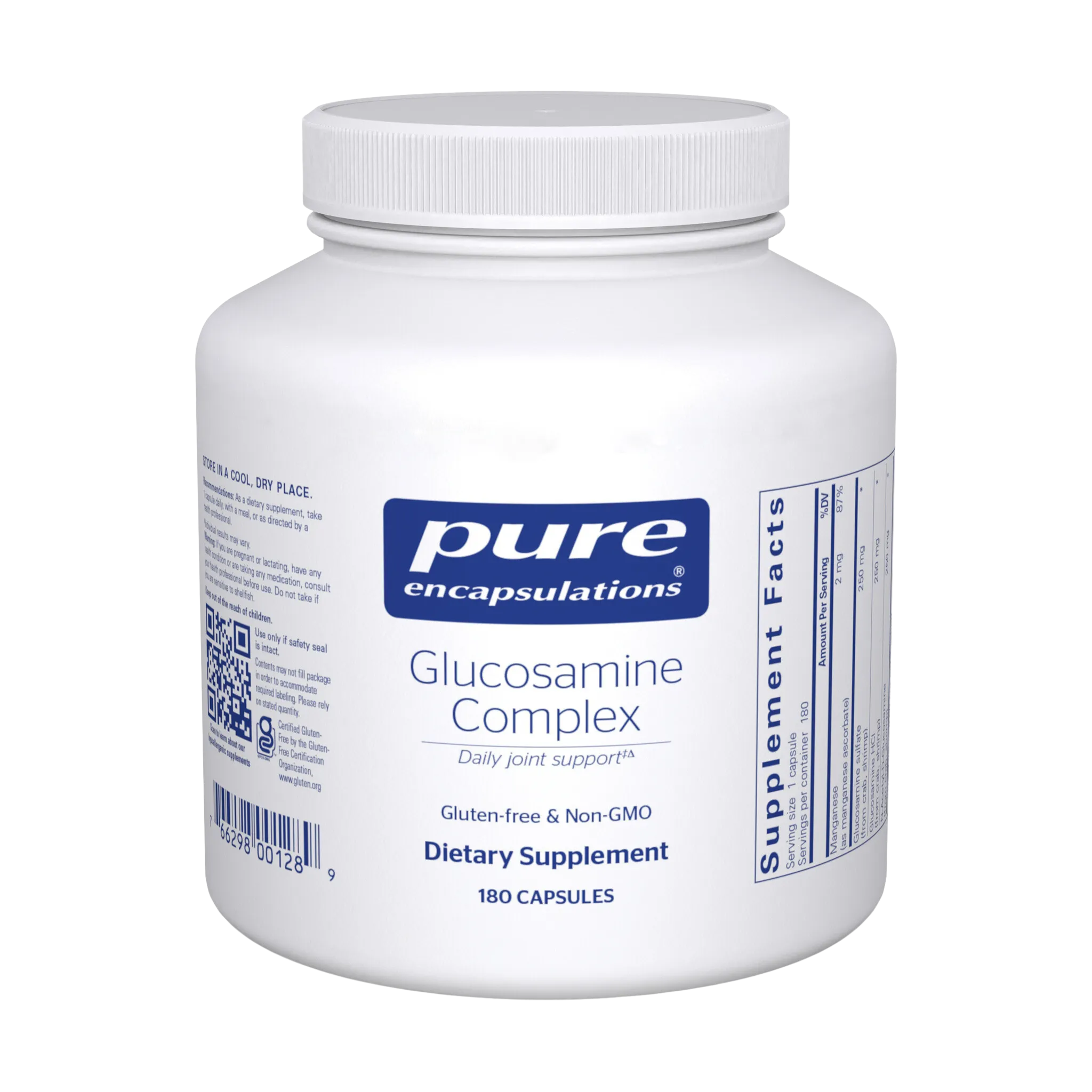
The Pure Encapsulations Glucosamine Complex provides a balanced, comprehensive formula featuring 250 mg of glucosamine sulfate, 250 mg of glucosamine HCl, 250 mg of NAG, and 2 mg of manganese per capsule. The suggested use is typically 1 capsule daily with a meal, though healthcare providers often recommend higher cumulative doses depending on the severity of tissue degradation or gut permeability. Because standard glucosamine has a longer elimination half-life (around 15 hours), it provides sustained baseline support for joint matrix synthesis throughout the day.
However, due to the shorter half-life of NAG, patients utilizing this complex for severe mucosal repair or leaky gut may benefit from splitting their total daily dosage. Taking one capsule in the morning and another in the evening—under the guidance of a medical professional—can help maintain steady-state plasma levels of NAG, ensuring continuous support for mucin production and immune modulation. Regardless of the dosing schedule, it is highly recommended to take glucosamine supplements with food. This not only enhances the absorption of the fat-soluble components of the meal but also mitigates the mild gastrointestinal upset (such as heartburn or nausea) that some individuals experience when taking amino sugars on an empty stomach.
Potential Interactions and Safety Precautions
While glucosamine and manganese are naturally occurring and generally recognized as highly safe, there are several important clinical precautions to consider. First and foremost, the glucosamine in this complex is derived from the chitin of marine exoskeletons (specifically crab and shrimp). Although the allergenic proteins are typically found in the meat of the shellfish rather than the shell, individuals with severe, anaphylactic shellfish allergies are strongly advised to avoid this product and seek out vegan, fermented alternatives to prevent dangerous allergic reactions.
Additionally, glucosamine has a well-documented, major pharmacological interaction with Warfarin (Coumadin) and other anticoagulant medications. Clinical safety reviews warn that co-administration can significantly enhance the blood-thinning effects of these drugs, drastically increasing the risk of severe bruising and internal bleeding; they should not be used together. Finally, while historical concerns suggested that glucosamine might induce insulin resistance, comprehensive modern meta-analyses have shown that oral glucosamine does not significantly alter fasting blood glucose or HbA1c levels in type 2 diabetics. Nonetheless, patients with poorly controlled diabetes or severe metabolic syndrome should routinely monitor their blood sugar when initiating any new amino sugar supplement.

Follow the Science
Clinical Trials on Osteoarthritis and Joint Repair
The clinical efficacy of glucosamine for joint health is supported by decades of robust scientific inquiry. Meta-analyses evaluating over 80 randomized controlled trials, encompassing more than 15,000 participants, have consistently confirmed the structural benefits of glucosamine sulfate. According to the NCBI Bookshelf clinical guidelines, literature to date has not proven glucosamine sulfate supplements to slow disease progression or effectively decrease osteoarthritis-associated pain, with randomized control studies showing conflicting results.
Furthermore, specific trials focusing on N-acetyl-D-glucosamine (NAG) have shown remarkable results for joint mobility. A landmark 16-week, randomized, double-blind, placebo-controlled trial evaluated oral NAG in individuals suffering from joint discomfort. Dosages ranging from 500 mg to 1,000 mg per day resulted in highly significant improvements in knee joint pain and range of motion after just eight weeks. The researchers noted that NAG's ability to act as a direct precursor to hyaluronic acid was likely responsible for the rapid improvement in synovial fluid lubrication and joint comfort, all without any reported adverse clinical reactions.
Emerging Research in Autoimmunity, Gut Health, and Neurodegeneration
Beyond basic joint care, NAG is at the forefront of research into autoimmune and gastrointestinal diseases. In functional gastroenterology, an open-label clinical trial involving 34 adults with severe Inflammatory Bowel Disease (IBD) evaluated the effects of high-dose daily NAG. The results were striking: 88.1% of patients reported reduced IBD symptoms, with over half experiencing major improvements in abdominal pain, diarrhea, and mucosal bleeding. Biopsies confirmed a visible increase in epithelial mucin expression, proving NAG's ability to physically rebuild the gut barrier.
In the realm of neuroimmunology, NAG is being heavily researched as a metabolic therapy for Multiple Sclerosis (MS) and neuroinflammation. In a recent open-label, dose-escalation trial, MS patients were given oral NAG for four weeks. The therapy successfully lowered blood levels of inflammatory cytokines (IFN-γ, IL-17, IL-6) and, crucially, dose-dependently reduced Neurofilament light chain (sNfL), a primary biomarker of neurodegeneration and brain damage. This research suggests that NAG can cross the blood-brain barrier to trigger myelin repair and halt autoimmune attacks on the nervous system, offering profound hope for conditions characterized by severe neuroinflammation.
Viral Pathogenesis and Future Directions for Long COVID and ME/CFS
The intersection of glucosamine research and post-viral syndromes is a rapidly expanding frontier. A 2023 study on ME/CFS and Long COVID identified a pronounced CD8 T-cell dysfunction in both patient populations, indicating severe immune exhaustion and an inability to clear persistent viral antigens. Because NAG directly modulates T-cell differentiation and function via O-GlcNAcylation, researchers are exploring its potential to restore immune competence and help the body finally clear latent viral reservoirs.
Moreover, acute COVID-19 research has highlighted the severe depletion of hyaluronic acid during the initial viral infection, which leads to systemic inflammation and the tissue damage that characterizes Long COVID. Clinical trials (such as NCT04706416) have actively evaluated high-dose NAG as a therapeutic intervention for COVID-19, operating on the rationale that replenishing the direct building block of hyaluronic acid may help repair the extracellular matrix, reduce hyper-inflammation, and potentially stave off long-term post-acute sequelae. As this research evolves, complex formulations of glucosamine and manganese are increasingly viewed not just as joint supplements, but as foundational tools for systemic tissue repair and immune rehabilitation.
The Path Forward
Validating the Chronic Illness Experience
Living with invisible, complex chronic illnesses like Long COVID, ME/CFS, and dysautonomia is an exhausting, full-time job. The profound joint pain, the unpredictable gut reactions from MCAS, and the crushing weight of post-exertional malaise are not just "in your head"—they are the physiological manifestations of systemic inflammation, mitochondrial stress, and the degradation of your body's foundational connective tissues. It is entirely valid to feel frustrated when standard medical tests return "normal" while your daily reality is anything but. Acknowledging the deep, biological roots of your symptoms is the first and most crucial step toward reclaiming your quality of life.
A Comprehensive Approach to Symptom Management
While the science behind Glucosamine Complex, NAG, and manganese is incredibly promising for rebuilding tissue and modulating inflammation, supplements are most effective when integrated into a holistic, comprehensive management plan. Healing the gut barrier and stabilizing the joints requires a multi-faceted approach. We encourage you to explore our resources on How to Maintain Your Independence with Chronic Illness for practical daily strategies, and read our 5 Tips for Surviving the Holidays with a Chronic Illness to learn how to pace yourself during high-stress periods. Combining targeted nutritional support with aggressive rest, nervous system regulation, and symptom tracking provides the best environment for your body to heal.
Next Steps in Your Healing Journey
If you are struggling with persistent joint pain, suspected leaky gut, or the systemic inflammation associated with Long COVID and ME/CFS, providing your body with the exact raw materials it needs to rebuild its extracellular matrix may be a powerful step forward. Always consult with your primary healthcare provider or a specialist before introducing new supplements, especially to ensure they align with your specific medical history, allergies, and current medications.
Sources
Clinical Studies and Meta-Analyses
Mechanistic and Biochemical Research
Effects of Glucosamine and Chondroitin Sulfate on Cartilage Metabolism (Advances in Rheumatology)
A Review of the Catalytic Mechanism of Human Manganese Superoxide Dismutase (Antioxidants)