Can Glucosamine Chondroitin with MSM Relieve Joint Pain in Long COVID and EDS?
March 5, 2026
Glucosamine ChondroitinMSMLong COVID
Share:
Disclaimer: The information provided here is for educational purposes only and is not intended as medical advice. It should not be used to diagnose, treat, cure, or prevent any medical condition. Instead, use it as a starting point for discussion with your healthcare provider. Always consult with a qualified healthcare provider before starting any new medication, supplement, device, or making changes to your health regimen.
Living with complex chronic conditions like Long COVID, myalgic encephalomyelitis/chronic fatigue syndrome (ME/CFS), dysautonomia, and mast cell activation syndrome (MCAS) often means navigating a labyrinth of invisible but profoundly debilitating symptoms. Among the most pervasive and exhausting of these symptoms is severe, unyielding joint pain and connective tissue discomfort. For many patients, this arthralgia is not simply the result of standard mechanical wear and tear or aging; rather, it is a complex structural and inflammatory issue driven by underlying joint hypermobility, aberrant mast cell degranulation, and relentless systemic cytokine storms. When every movement is accompanied by deep tissue aching and stiffness, it can severely limit mobility, drain your already depleted energy reserves, and exacerbate post-exertional malaise (PEM).
When your joints ache constantly and your connective tissues feel fragile, finding targeted, science-backed physiological support is crucial for maintaining your daily function and overall quality of life. The combination of Glucosamine, Chondroitin, and MSM (methylsulfonylmethane) has long been recognized and extensively utilized as one of the most widely researched dietary supplement regimens for managing joint pathology and osteoarthritis. But how exactly do these three distinct compounds work together synergistically at the cellular level, and why are their specific mechanisms of action particularly relevant for the unique pathophysiology of infection-associated chronic illnesses and connective tissue disorders? Let's deeply explore the underlying biochemistry, the latest clinical evidence, and how this powerful structural trio can help rebuild, hydrate, and protect your joints.
TL;DR
Glucosamine, Chondroitin, and MSM work synergistically to support joint structure, hydration, and reduce inflammation.
This combination may help manage joint pain and connective tissue laxity in hypermobility, MCAS, and ME/CFS.
MSM provides essential sulfur to support collagen cross-linking and boost the body's antioxidant defenses.
Consistent daily supplementation for 8-12 weeks is typically needed to experience lasting structural and symptomatic benefits.
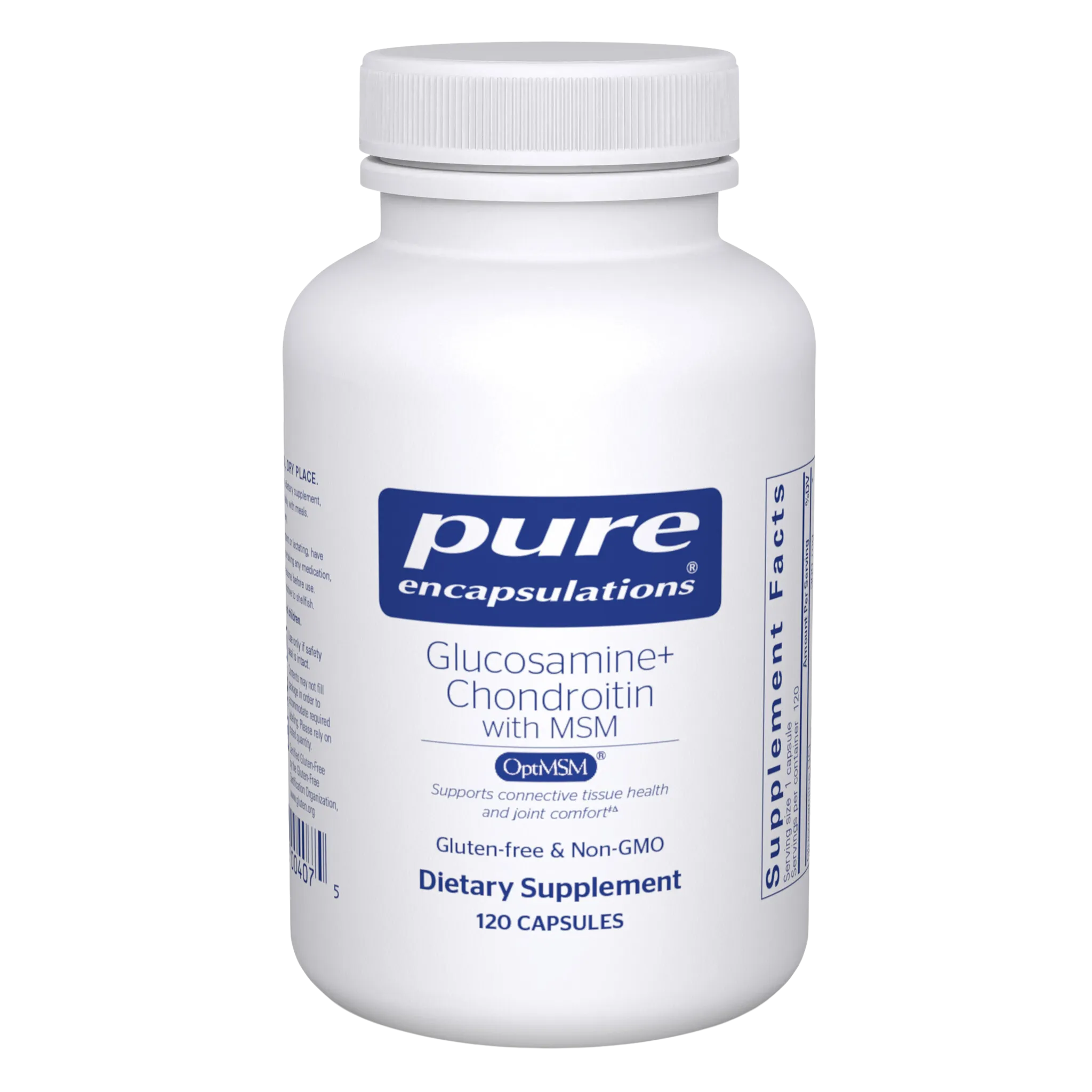
What is Glucosamine Chondroitin with MSM?
The Structural Foundation of Connective Tissue
To understand how this supplement combination works, we must first examine the natural architecture of healthy joints. The ends of our bones are capped with articular cartilage, a smooth, highly specialized connective tissue that provides a frictionless surface for joint movement and acts as a crucial shock absorber. Unlike most tissues in the human body, cartilage is avascular, meaning it lacks a direct blood supply. Instead, it relies entirely on the diffusion of nutrients from the surrounding synovial fluid. The structural integrity of this cartilage is maintained by specialized cells called chondrocytes, which continuously synthesize and remodel the extracellular matrix (ECM)—a dense, complex network composed primarily of water, collagen fibers, and large molecules known as proteoglycans.
Glucosamine is an endogenous, naturally occurring amino sugar that serves as a fundamental biochemical precursor in the human body. At the cellular level, glucosamine is strictly required for the synthesis of glycosylated proteins and lipids. More importantly for joint health, it acts as the primary, rate-limiting building block for the production of glycosaminoglycans (GAGs) and hyaluronic acid. These GAGs are long, unbranched polysaccharides that attach to core proteins to form the massive proteoglycan structures within the cartilage matrix. By providing an abundant supply of this essential raw material, glucosamine actively stimulates chondrocytes to upregulate their anabolic (building) processes, driving the continuous regeneration of the extracellular matrix.
Chondroitin sulfate, on the other hand, is a major, naturally occurring glycosaminoglycan found directly embedded within the cartilage matrix itself. The defining biochemical characteristic of chondroitin molecules is their highly negative electrical charge. Because like charges repel each other, the chondroitin chains fan out, creating massive microscopic spaces within the proteoglycan structure. This negative charge acts as a powerful molecular magnet, attracting and tightly binding large volumes of water into the cartilage matrix. This intense hydration is absolutely critical; it is the trapped water that provides cartilage with its unique elasticity, resilience, and ability to absorb immense mechanical compressive forces during physical movement without rupturing.
The Power of Organic Sulfur and MSM
The third component of this triad is Methylsulfonylmethane (MSM), a naturally occurring, highly bioavailable organic sulfur compound. Sulfur is the third most abundant mineral in the human body and is an absolute biological necessity for the maintenance of healthy connective tissues. Despite its critical importance, sulfur depletion is common, particularly in states of chronic illness, high oxidative stress, or prolonged systemic inflammation, where the body's metabolic demands rapidly outpace dietary intake. MSM serves as a highly efficient, direct donor of this essential organic sulfur, delivering it precisely where it is needed most within the musculoskeletal system.
At the molecular level, the sulfur provided by MSM is strictly required for the proper synthesis and structural cross-linking of collagen, the primary structural protein that forms the scaffolding of all connective tissues, including cartilage, tendons, and ligaments. Sulfur atoms form strong, covalent disulfide bonds between adjacent collagen peptides. These disulfide bridges are what give the collagen network its immense tensile strength, structural integrity, and flexibility. Without adequate sulfur, the newly synthesized collagen fibers remain weak, disorganized, and highly susceptible to mechanical tearing and enzymatic degradation, leading to progressive joint instability and chronic pain.
Beyond its purely structural role, the sulfur donated by MSM is also a critical component of the transsulfuration pathway, a vital biochemical cascade responsible for synthesizing glutathione. Glutathione is widely recognized as the body's master intracellular antioxidant, playing an indispensable role in neutralizing reactive oxygen species (ROS) and mitigating cellular damage. By directly feeding this pathway, MSM ensures that chondrocytes and surrounding joint tissues maintain robust antioxidant defenses, protecting the fragile cartilage matrix from the destructive effects of chronic oxidative stress and systemic inflammation.
A Synergistic Approach to Joint Health
While each of these three compounds offers significant individual benefits, their true therapeutic power lies in their profound biological synergy. When combined, they offer a comprehensive, multi-targeted approach to joint pathology that addresses both the structural and inflammatory components of cartilage degradation. Glucosamine provides the essential raw materials needed to actively build and repair the structural matrix. Chondroitin sulfate ensures that this newly formed matrix retains adequate water, staying properly hydrated, lubricated, and capable of absorbing mechanical shock. Finally, MSM cross-links these newly built structural proteins to ensure long-term stability, while simultaneously neutralizing the local inflammation and oxidative stress that threaten to break the matrix down.
This highly coordinated, three-pronged mechanism of action is precisely why the combination of Glucosamine, Chondroitin, and MSM is considered the gold standard in integrative joint support. Rather than merely masking the sensation of pain like traditional non-steroidal anti-inflammatory drugs (NSAIDs), this synergistic trio works at the fundamental cellular level to alter the actual trajectory of joint health. By simultaneously promoting anabolic tissue regeneration and inhibiting catabolic tissue destruction, it helps to restore the delicate physiological balance required for long-term joint comfort, mobility, and resilience.