Can FloraBoost Support Gut Health and Immunity in Pediatric Long COVID?
March 6, 2026
FloraBoostPediatric Long COVIDGut Microbiome
Share:
Disclaimer: The information provided here is for educational purposes only and is not intended as medical advice. It should not be used to diagnose, treat, cure, or prevent any medical condition. Instead, use it as a starting point for discussion with your healthcare provider. Always consult with a qualified healthcare provider before starting any new medication, supplement, device, or making changes to your health regimen.
Watching a child struggle with the unpredictable, invisible, and debilitating symptoms of Long COVID, myalgic encephalomyelitis/chronic fatigue syndrome (ME/CFS), or dysautonomia is an incredibly challenging journey for any parent or caregiver. Months after recovering from an initial SARS-CoV-2 infection, many children continue to fight severe fatigue, neurocognitive brain fog, and profound gastrointestinal distress. The frustration of navigating a medical system that often lacks clear answers can feel overwhelming, leaving families searching for validating, science-backed management strategies to improve their child's quality of life.
Recent medical research has increasingly pointed to the gastrointestinal tract as a central battleground in these complex chronic conditions. The gut microbiome—a vast ecosystem of microorganisms residing in the digestive tract—plays a critical role in regulating systemic inflammation, nutrient absorption, and immune function. When this delicate balance is disrupted by viral infections or heavy antibiotic use, it can trigger a cascade of chronic symptoms throughout the body. This has led researchers and clinicians to explore targeted microbiome interventions. One such intervention is FloraBoost, a specialized probiotic powder designed specifically for children to deliver beneficial bacteria, protect intestinal integrity, and support immune function.
TL;DR
Gut microbiome disruption is a key driver of pediatric Long COVID and ME/CFS symptoms.
FloraBoost provides targeted probiotics to support gut barrier integrity and immune function.
Specific strains like S. boulardii may help manage gastrointestinal distress and inflammation.
Always consult a pediatrician before adding new supplements to a child's care plan.
What is FloraBoost?
The Foundation of the Pediatric Microbiome
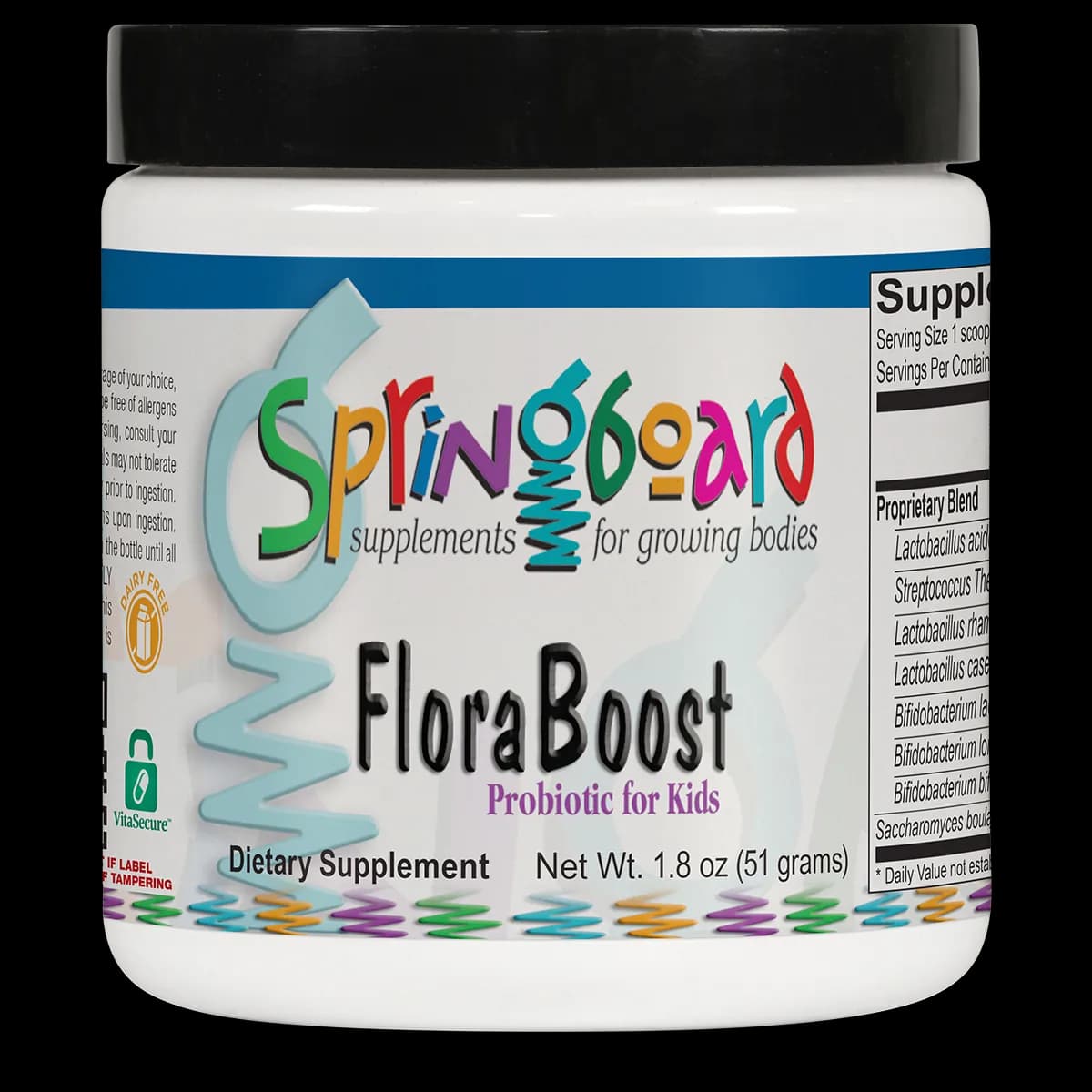
FloraBoost is a specialized, multi-strain probiotic formula designed specifically to support the delicate gastrointestinal environment of children. To understand how a supplement like FloraBoost works, we must first explore the natural function of the gut microbiome in a healthy body. The human gastrointestinal tract is a finely balanced ecosystem where roughly 500 different strains of bacteria, yeasts, and other microorganisms constantly interact, competing for space and nutrients. In a healthy pediatric gut, this microbiome acts as an invisible, highly active organ that regulates digestion, synthesizes essential vitamins, and trains the developing immune system.
Beneficial bacteria are not just passive residents; they are active participants in human biology, communicating directly with the host's cells through complex biochemical signals. The majority of the immune system—approximately 70% to 80%—is housed within the Gut-Associated Lymphoid Tissue (GALT). Here, commensal (friendly) bacteria continuously interact with immune cells, teaching them to distinguish between harmless food proteins and dangerous pathogens. When this ecosystem is thriving, it maintains a state of homeostasis, helping to prevent excessive inflammation while remaining vigilant against infections.
The Synergy of Eight Targeted Strains
FloraBoost delivers a proprietary blend of 5 billion colony-forming units (CFUs) alongside 1 billion CFUs of Saccharomyces boulardii, carefully selecting strains that are proven to survive the harsh, acidic environment of the stomach. The formula includes three strains of Lactobacilli (L. acidophilus, L. rhamnosus, L. casei) and three strains of Bifidobacteria (B. longum, B. bifidum, B. lactis). At the cellular level, these bacteria act as microscopic factories, fermenting dietary fibers that human digestive enzymes cannot break down on their own.
Through this fermentation process, these beneficial bacteria produce vital metabolites known as short-chain fatty acids (SCFAs), particularly butyrate, acetate, and propionate. Butyrate is the primary energy source for colonocytes, the specialized cells lining the colon. By providing this essential fuel, SCFAs allow the colonocytes to maintain a tight, impenetrable barrier against pathogens and toxins. This structural integrity is crucial for helping to prevent the systemic leakage of inflammatory compounds that can trigger widespread immune dysfunction.
The Role of Keystone Species in Digestion
Beyond the core Lactobacilli and Bifidobacteria, FloraBoost includes Streptococcus thermophilus and the beneficial yeast Saccharomyces boulardii. Streptococcus thermophilus is a lactic-acid-producing bacterium that plays a critical role in the enzymatic breakdown of complex sugars. It naturally produces high intracellular levels of β-galactosidase, the exact enzyme required to cleave lactose into easily digestible glucose and galactose molecules, thereby helping to prevent the fermentation that causes gas and bloating.
Meanwhile, Saccharomyces boulardii acts as a transient mucosal guardian. As a non-pathogenic yeast, it secretes specific proteins that neutralize bacterial toxins and physically binds to opportunistic pathogens to sweep them out of the digestive tract before they can adhere to the intestinal walls. Together, these eight strains work synergistically to maintain microflora balance, protect intestinal integrity, and ensure the immune system remains properly calibrated.
How Pediatric Long COVID Impacts the Gut Microbiome
Viral Hijacking via ACE2 Receptors
To understand why probiotics are becoming a focal point in chronic illness recovery, we must examine how conditions like pediatric Long COVID disrupt the body at a cellular level. The intestinal epithelium is heavily lined with Angiotensin-Converting Enzyme 2 (ACE2) receptors, which serve as the primary entry point for the SARS-CoV-2 virus. When the virus binds to these receptors, it not only infects the local cells but also downregulates the ACE2 receptors' normal physiological functions, such as the absorption of vital amino acids like tryptophan.
Tryptophan deficiency directly leads to a lower production of antimicrobial peptides in the gut, creating an environment where opportunistic pathogens can rapidly multiply. This initial viral hijacking initiates a profound state of dysbiosis—a severe imbalance in the gut microbiome. This dysbiosis is a hallmark driver of the Gastrointestinal Symptoms Seen with Long COVID, setting off a vicious cycle of localized inflammation and tissue damage that can persist long after the acute infection has cleared.
The Depletion of Beneficial Bifidobacteria
In pediatric Long COVID, the developing microbiome suffers a severe and measurable loss of keystone bacterial species. Fecal metagenomic analyses of children with Long COVID reveal a marked depletion of Bifidobacterium bifidum, Bifidobacterium adolescentis, and Faecalibacterium prausnitzii. These specific bacteria are the primary producers of anti-inflammatory SCFAs and play a pivotal role in keeping the immune system calm and regulated.
Without these beneficial populations to keep them in check, opportunistic pathobionts—such as Ruminococcus gnavus and Bacteroides vulgatus—begin to overgrow. This microbial shift transforms the gut from a state of regulatory homeostasis into a chronic pro-inflammatory state. This persistent dysbiosis is increasingly recognized as a foundational element in the complex web of Autoimmunity and Immune Dysregulation in Long COVID, driving symptoms that affect multiple organ systems.
Leaky Gut and the Gut-Brain Axis
The loss of SCFA-producing bacteria severely compromises the structural integrity of the intestinal epithelial barrier. Without sufficient butyrate to fuel the colonocytes, the tight junction proteins (such as Occludin and Zonulin) that normally glue the intestinal cells together begin to degrade. This leads to increased intestinal permeability, commonly referred to as "leaky gut," allowing endotoxins like lipopolysaccharides (LPS) from the cell walls of pathogenic bacteria to leak directly into the bloodstream.
This systemic endotoxemia triggers a chronic, body-wide immune response and drives neuroinflammation via the gut-brain axis. The vagus nerve, which connects the gut directly to the brain, transmits these inflammatory signals, leading to the activation of microglial cells in the central nervous system. This neuroinflammatory cascade is a primary driver of the severe neurocognitive symptoms, crushing fatigue, and brain fog that often prompt concerned parents to ask How Does a Doctor Diagnose Long COVID?.
FloraBoost: Supporting Gut Barrier and Immune Function
Saccharomyces boulardii and Immune Modulation
Supplementing with a targeted formula like FloraBoost aims to interrupt these vicious cycles by deploying specific strains with proven mechanisms of action. Saccharomyces boulardii, a highly researched non-pathogenic yeast, exerts powerful immunomodulatory effects within the inflamed gut. At the molecular level, it secretes a 54-kDa serine protease that directly cleaves and degrades bacterial toxins and the host cell receptors they attempt to bind to, effectively neutralizing threats before they cause cellular damage.
Furthermore, S. boulardii actively inhibits major pro-inflammatory signaling cascades, specifically the Nuclear Factor-κB (NF-κB) and Mitogen-Activated Protein Kinase (MAPK) pathways. By blocking these critical inflammatory pathways, the yeast profoundly lowers the secretion of tissue-damaging cytokines like IL-8, TNF-α, and IL-6. It also activates Peroxisome Proliferator-Activated Receptor-gamma (PPAR-γ), a nuclear receptor that plays a vital role in protecting the colon from chronic inflammation and promoting mucosal healing.
Restoring the Intestinal Epithelial Barrier
The specific Lactobacilli and Bifidobacteria strains in FloraBoost work synergistically to support the compromised structural integrity of the gut lining. By fermenting prebiotic fibers into high levels of butyrate, these strains provide the exact cellular energy required for colonocytes to upregulate the expression of vital tight-junction proteins, such as Occludin and Claudin-7. This active support of the mucosal barrier helps seal the "leaky gut," reducing the continuous leakage of endotoxins into the bloodstream.
In addition to structural support, these beneficial strains enhance the gut's localized immune defenses. Research shows that probiotics stimulate the production of secretory Immunoglobulin A (sIgA), the most abundant antibody in the mucosal immune system. sIgA acts as a first line of defense, binding to and neutralizing opportunistic pathogens and large, undigested food proteins before they can breach the gut lining and trigger systemic mast cell activation or autoimmune responses.
Streptococcus thermophilus and Nutrient Cross-Feeding
Streptococcus thermophilus acts as a metabolic engine within the recovering gut ecosystem. Recent microbiological research indicates that certain strains of this bacterium synthesize and secrete folate (Vitamin B9) directly into the intestinal lumen. This locally produced folate acts as a vital nutrient that cross-feeds other beneficial commensal microbes, such as Bacteroides species, amplifying the overall health and diversity of the microbiome through a process known as metabolic cross-feeding.
Furthermore, as a prolific lactic acid-producing bacterium, S. thermophilus rapidly lowers the pH of the surrounding gut environment. This creates a slightly acidic milieu that is highly hospitable to beneficial flora but deeply inhospitable to opportunistic pathogens and yeast overgrowth. By naturally acidifying the gut, S. thermophilus helps to crowd out harmful microbes, paving the way for a more resilient and balanced gastrointestinal ecosystem.

Symptoms FloraBoost May Help Manage
Gastrointestinal Distress and Bowel Irregularity
Abdominal Pain and Cramping: By inhibiting pro-inflammatory cytokines like TNF-α and reducing localized mucosal inflammation, the probiotic strains in FloraBoost help soothe the irritated intestinal lining, helping to alleviate chronic abdominal discomfort.
Diarrhea and Loose Stools: Saccharomyces boulardii is extensively researched for its ability to neutralize enterotoxins and restore normal water and electrolyte absorption in the colon, which may help reduce the duration and frequency of loose stools.
Constipation and Sluggish Motility: The Bifidobacteria strains produce short-chain fatty acids that naturally stimulate healthy gut motility and peristalsis, promoting more regular, predictable, and comfortable bowel movements.
Food Sensitivities and Lactose Intolerance
Lactose Maldigestion: Streptococcus thermophilus produces high intracellular levels of the enzyme β-galactosidase (lactase) directly in the small intestine, breaking down lactose before it can ferment in the colon and cause painful gas or bloating.
Histamine and Mast Cell Reactivity: By actively supporting the tight junctions of the gut barrier, FloraBoost may help prevent large, undigested food proteins from leaking into the bloodstream, which can trigger systemic mast cell degranulation—a crucial consideration for those exploring Ketotifen: Unveiling Relief for the Hidden Battles of MCAS, Long COVID, ME/CFS, and Dysautonomia.
Neurocognitive Symptoms and Fatigue
Brain Fog and Poor Concentration: By supporting the gut barrier and helping to reduce the systemic spread of inflammatory lipopolysaccharides (LPS), the probiotic blend helps reduce the neuroinflammation mediated by the gut-brain axis, potentially improving cognitive clarity.
Post-Exertional Malaise (PEM) and Fatigue: Restoring microbiome balance enhances the absorption of vital micronutrients and reduces the chronic infectious burden on the immune system. This frees up cellular energy and may help mitigate the severe exhaustion seen when Can Long COVID Trigger ME/CFS? Unraveling the Connection is a primary concern.
Practical Considerations: Forms, Dosing, and Absorption
The Advantage of Freeze-Dried Powder Delivery
Because probiotics are living organisms, their manufacturing, storage, and delivery present significant biochemical challenges. For a probiotic supplement to be effective, the bacteria must remain entirely shelf-stable and survive the highly acidic environment of the stomach to reach the intestines alive. The microorganisms in FloraBoost are protected through an advanced lyophilization process, where they are sealed and freeze-dried away from moisture, heat, light, and oxygen.
This specialized freeze-drying process ensures the bacteria remain in a completely dormant state during storage. They only awaken and become metabolically active when they are exposed to moisture and the specific physiological conditions of the gastrointestinal tract. This targeted delivery mechanism ensures maximum survivability, allowing the 5 billion CFUs of bacteria and 1 billion CFUs of yeast to reach the colon where they can exert their maximum therapeutic benefits.
Optimal Dosing and Administration for Children
Administering supplements to children, especially those dealing with the sensory sensitivities often accompanying chronic illness, requires practical and easy-to-tolerate formats. FloraBoost is formulated as an unflavored powder, completely eliminating the need for children to swallow large, uncomfortable capsules. The suggested use is to add one scoop (1.7 grams) to a glass of room-temperature water, milk, juice, or a preferred beverage.
It is absolutely crucial to avoid mixing the probiotic powder into hot liquids, such as warm tea or heated oatmeal, as high temperatures can instantly destroy the delicate freeze-dried organisms before they even reach the digestive tract. Thorough stirring ensures even distribution, and the beverage should be consumed promptly after mixing to ensure the bacteria are delivered effectively to the gut.
Safety, Tolerability, and Antibiotic Co-Administration
FloraBoost is designed with hypoallergenic principles in mind, free from common inflammatory triggers such as gluten, corn, artificial colors, dairy, and nuts, making it highly tolerable for sensitive pediatric patients. One of the unique clinical advantages of including Saccharomyces boulardii in the formula is its biological classification as a yeast. Unlike bacterial probiotics, S. boulardii is naturally resistant to antibacterial antibiotics.
This natural resistance allows S. boulardii to be administered concurrently with necessary antibiotic treatments to help mitigate the massive microbiome disruption and antibiotic-associated diarrhea that often follow such medications. However, as with any medical intervention, caregivers should always consult their healthcare provider to tailor the dosing schedule to the child's specific clinical needs, ensuring it does not interfere with other prescribed treatments.

Follow the Science
Clinical Trials on Microbiome Restoration in Long COVID
The intersection of the gut microbiome and complex chronic illnesses is a rapidly expanding field of clinical research. A 2025 prospective cohort study published in iScience analyzed 349 patients with Long COVID and found that oral and gut microbiome differences were strongly associated with specific symptom clusters. The researchers concluded that bacterial dysbiosis acts as a primary driver of the condition's heterogeneity, independent of viral persistence, highlighting the microbiome as a critical therapeutic target.
Furthermore, robust clinical trials, such as the landmark SIM01 synbiotic trials, have demonstrated the profound efficacy of targeted microbiome support. These trials in adult patients showed that supplementing with a synbiotic containing specific Bifidobacterium strains and prebiotics significantly alleviates fatigue, memory loss, and gastrointestinal upset by increasing overall microbiome diversity and reducing systemic inflammation, offering a science-backed pathway for symptom management.
Evidence for Saccharomyces boulardii in Dysbiosis
Saccharomyces boulardii is one of the most extensively documented and clinically validated probiotics in medical literature. A comprehensive review published in Alimentary Pharmacology & Therapeutics details its profound anti-inflammatory mechanisms, specifically its ability to inhibit the NF-κB and MAPK pathways, thereby significantly reducing tissue damage and inflammation in the colon.
Clinical data also highlights its exceptional efficacy in mitigating antibiotic-associated dysbiosis. According to research published in MDPI, S. boulardii secretes highly specific proteases that directly degrade bacterial toxins. This mechanism has been shown to significantly reduce the incidence of antibiotic-associated diarrhea and helps to rapidly restore the commensal microflora balance after disruptive medical interventions.
Research on Streptococcus thermophilus and Digestion
The therapeutic benefits of Streptococcus thermophilus are officially recognized by major health authorities due to decades of rigorous clinical validation. It is well-established in the scientific community that this bacterium produces high levels of β-galactosidase, actively and efficiently improving lactose digestion in the small intestine, which provides immense relief for individuals suffering from lactose maldigestion.
Additionally, recent studies emphasize its broader role as a keystone species that shapes the entire gut ecology. Research indicates that S. thermophilus enhances the integrity of the intestinal lining and secretes vital nutrients, such as folate, that cross-feed other beneficial bacteria. This metabolic cross-feeding reinforces its position as a critical component of comprehensive gastrointestinal recovery protocols, as detailed in microbiome research insights.
The Path Forward
Validating the Complexities of Pediatric Chronic Illness
Watching a child struggle with the unpredictable, invisible, and debilitating symptoms of Long COVID, ME/CFS, or dysautonomia is an incredibly challenging journey for any parent or caregiver. The frustration of navigating a medical system that often lacks clear answers can feel overwhelming. It is vital to validate that these symptoms—whether they manifest as severe abdominal pain, profound fatigue, or cognitive brain fog—are rooted in real, measurable physiological disruptions, such as profound gut dysbiosis and immune dysregulation.
Acknowledging the biological reality of these complex conditions is the first crucial step toward finding effective, targeted management strategies. You are not simply dealing with a child who is "just tired" or experiencing "growing pains"; you are managing a sophisticated neuro-immune and gastrointestinal challenge that requires compassionate, scientifically grounded care.
A Comprehensive Approach to Healing
While the science supporting targeted probiotics is highly promising and continually evolving, it is important to remember that no single supplement is a miracle cure for complex chronic illnesses. Restoring the pediatric gut microbiome and calming an overactive immune system requires a multifaceted, patient-centric approach. Supplements like FloraBoost serve as one powerful tool within a much broader management strategy.
A comprehensive care plan should also include careful symptom tracking to identify specific food triggers, dietary modifications to support long-term microbiome health, strict pacing to manage the child's energy envelope and help prevent crashes, and ongoing collaboration with knowledgeable medical professionals. By addressing the root causes of dysbiosis at the cellular level, we can begin to rebuild the foundation of health and improve daily functioning.
Next Steps for Caregivers
If your child is navigating the complex gastrointestinal and immunological challenges associated with Long COVID or related chronic conditions, targeted microbiome support may be a valuable addition to their care plan. By delivering a precise, freeze-dried blend of extensively researched Lactobacilli, Bifidobacteria, and Saccharomyces boulardii, FloraBoost is designed to gently but effectively restore intestinal integrity and boost immune function.
Always consult with your pediatric healthcare provider before introducing new supplements to ensure they align with your child's specific medical needs, current medications, and overall treatment protocol. Together with your medical team, you can take proactive steps toward restoring microbiome balance and supporting your child's journey to better health.
Sources
Gut Microbiota and COVID-19: Unraveling the Gut–Lung Axis and Immunomodulatory Therapies
Experimental drug that alters gut microbiome shows promise for long-COVID relief
Saccharomyces boulardii: What Makes It Tick as Successful Probiotic?
Review article: Anti-inflammatory mechanisms of action of Saccharomyces boulardii
Managing Gut Dysbiosis: Clinical Evidence and Perspectives on Saccharomyces boulardii CNCM I-745
Role of nutrient supplements in children with post-COVID condition