Can EpiIntegrity Support Gut Healing and Immune Balance in Long COVID and ME/CFS?
March 5, 2026
EpiIntegrityGastrointestinal HealthLong COVID
Share:
Disclaimer: The information provided here is for educational purposes only and is not intended as medical advice. It should not be used to diagnose, treat, cure, or prevent any medical condition. Instead, use it as a starting point for discussion with your healthcare provider. Always consult with a qualified healthcare provider before starting any new medication, supplement, device, or making changes to your health regimen.
Months, or even years, after an initial viral infection, many individuals with Long COVID and Myalgic Encephalomyelitis/Chronic Fatigue Syndrome (ME/CFS) find themselves battling a complex web of debilitating symptoms. While profound fatigue, post-exertional malaise (PEM), and cognitive dysfunction often take center stage, a significant percentage of patients also struggle with severe, unpredictable gastrointestinal distress. From sudden food intolerances and bloating to systemic mast cell flares, the gut often becomes a central battleground in post-viral chronic illness. But what if these digestive symptoms are not just a side effect, but a core driver of the systemic inflammation keeping you sick?
In the rapidly evolving landscape of post-viral research, scientists are increasingly pointing to the gut microbiome and the intestinal mucosal barrier as primary targets for healing. When the gut lining becomes compromised—a condition commonly known as "leaky gut"—it can trigger a cascade of immune dysregulation, neuroinflammation, and autonomic dysfunction. EpiIntegrity by Pure Encapsulations is a specialized, comprehensive powder formula designed to address this exact pathophysiology. By combining essential amino acids, targeted prebiotics, and clinically studied herbal extracts, it aims to rebuild the mucosal barrier, stabilize overactive mast cells, and restore harmony to the gut-immune axis.
TL;DR
Gut health and the mucosal barrier are core drivers of systemic inflammation in Long COVID and ME/CFS.
EpiIntegrity uses amino acids and botanicals to support the intestinal lining and balance the microbiome.
Ingredients like L-glutamine and DGL may help soothe the gut and reduce gastrointestinal discomfort.
Always consult your healthcare provider before starting new supplements for complex chronic conditions.
What is EpiIntegrity?
The Gut-Immune Connection
To understand the value of a supplement like EpiIntegrity, we must first look at the profound relationship between the digestive tract and the immune system. The gastrointestinal tract is not merely a tube for absorbing nutrients; it is the largest immune organ in the human body. It houses the Gut-Associated Lymphoid Tissue (GALT), a massive network of immune cells that constantly monitors the environment for pathogens, toxins, and dietary antigens. In a healthy state, the GALT maintains a delicate balance, aggressively fighting off dangerous invaders while remaining tolerant to harmless food proteins and beneficial bacteria.
This delicate balancing act relies heavily on the physical integrity of the intestinal mucosal barrier. The gut lining is composed of a single layer of epithelial cells glued together by proteins called tight junctions. Above these cells sits a thick layer of protective mucus. When this barrier is robust, it acts as a highly selective filter. However, when this barrier degrades due to viral infection, chronic stress, or dysbiosis, the immune system is suddenly exposed to a flood of unfiltered debris, leading to chronic, systemic immune activation.
A Synergistic Botanical and Amino Acid Blend
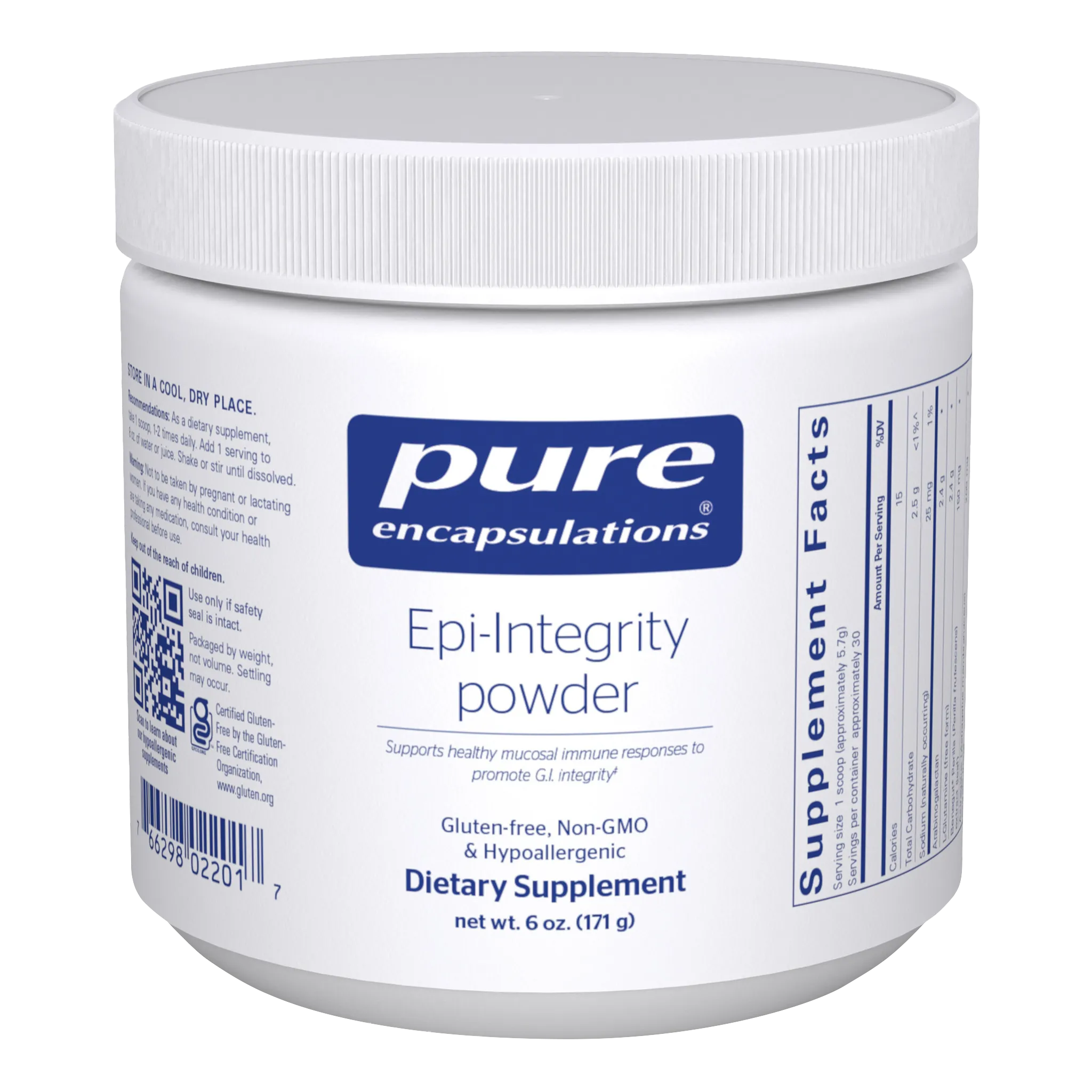
EpiIntegrity is formulated to address the multiple layers of gastrointestinal breakdown simultaneously. Rather than relying on a single mechanism, it utilizes a synergistic blend of five key ingredients: L-glutamine, arabinogalactan, Benegut® (a patented Perilla frutescens extract), astragalus root extract, and deglycyrrhizinated licorice (DGL). Each of these components targets a specific aspect of gut health, from fueling cellular regeneration to modulating the behavior of localized immune cells.
At the foundation of the formula is L-glutamine, an essential amino acid that serves as the primary fuel source for enterocytes, the cells that line the small intestine. Alongside it is arabinogalactan, a complex prebiotic fiber derived from larch trees that acts as targeted fertilizer for the most crucial anti-inflammatory bacteria in the microbiome. Together, these two ingredients work to physically rebuild the structural integrity of the gut wall and cultivate a healthy microbial environment.
Targeting the Mucosal Barrier and Cytokine Balance
The herbal components of EpiIntegrity elevate it from a simple gut-lining support powder to a potent immunomodulatory tool. Benegut® perilla extract and astragalus are included specifically to manage the behavior of the immune cells residing just below the gut lining. These botanicals are clinically recognized for their ability to promote cytokine homeostasis—meaning they help turn down the volume on pro-inflammatory chemical messengers like TNF-alpha and IL-6, which are often chronically elevated in post-viral syndromes.
Finally, the inclusion of deglycyrrhizinated licorice (DGL) provides immediate, soothing support to the protective mucus layer itself. By stimulating the production of healthy mucus, DGL helps shield the delicate epithelial cells from stomach acid and abrasive digestive byproducts, allowing the deeper healing mechanisms of L-glutamine and arabinogalactan to take effect. This comprehensive, multi-tiered approach makes EpiIntegrity a uniquely powerful tool for those navigating the complex gastrointestinal manifestations of chronic illness.
How Chronic Illness Impacts Gastrointestinal Function
Viral Persistence and "Leaky Gut"
In conditions like Long COVID and ME/CFS, the gastrointestinal tract is often subjected to severe and sustained damage. Research indicates that the SARS-CoV-2 virus has a high affinity for the ACE2 receptors, which are densely populated along the intestinal lining. When the virus binds to these receptors, it not only directly damages the epithelial cells but also downregulates the absorption of vital amino acids. Furthermore, studies have shown that viral RNA and antigens can persist in the gut tissue for months, or even years, after the acute infection has passed.
This persistent viral presence triggers the continuous release of a protein called zonulin. Zonulin acts as a biochemical signal that forces the tight junctions between intestinal cells to open and stay open. This phenomenon, clinically referred to as intestinal permeability or "leaky gut," allows undigested food particles, bacterial endotoxins like lipopolysaccharides (LPS), and viral fragments to escape the digestive tract and enter the systemic bloodstream. Once in the blood, these rogue particles are detected by the immune system as a massive, ongoing threat.
The Microbiome Shift and Loss of Key Bacteria
Simultaneously, chronic viral illness causes a catastrophic shift in the gut microbiome. Multi-omic studies have revealed that patients with Long COVID and ME/CFS exhibit a severe, persistent depletion of beneficial, short-chain fatty acid (SCFA) producing bacteria. The most notable casualty is Faecalibacterium prausnitzii, a keystone bacterial strain that is responsible for producing massive amounts of butyrate. Butyrate is an anti-inflammatory compound that normally keeps the gut lining healthy and suppresses localized inflammation.
When F. prausnitzii populations crash, butyrate levels plummet. Without this critical anti-inflammatory molecule, the gut environment becomes highly hostile, allowing opportunistic, pro-inflammatory bacteria to overgrow. This state of severe dysbiosis creates a vicious cycle: the lack of good bacteria weakens the gut barrier further, which increases systemic inflammation, which in turn makes the gut environment even less hospitable to the beneficial microbes trying to survive.
Mast Cell Activation and Systemic Inflammation
The consequences of a leaky gut and a disrupted microbiome extend far beyond the digestive tract. As bacterial endotoxins (LPS) continuously leak into the bloodstream, they trigger a systemic immune panic. This constant state of high alert frequently leads to the development or exacerbation of mast cell activation syndrome (MCAS). Mast cells, which are stationed throughout the body's connective tissues, become hyper-sensitized and begin inappropriately releasing massive amounts of histamine and inflammatory cytokines in response to minor triggers like food, temperature changes, or stress.
This gut-driven systemic inflammation is a primary driver of the neurological and autonomic symptoms seen in post-viral syndromes. The inflammatory cytokines and translocated toxins travel via the bloodstream and the vagus nerve directly to the brain, bypassing the blood-brain barrier to cause profound neuroinflammation. This is why gastrointestinal symptoms in Long COVID are so frequently accompanied by debilitating brain fog, cognitive impairment, and the severe, crushing fatigue characteristic of post-exertional malaise (PEM).
EpiIntegrity: Supporting Gut Integrity and Immune Balance
L-Glutamine and DGL for Mucosal Repair
EpiIntegrity intervenes in this vicious cycle of gut dysfunction through several targeted, mechanistic pathways. The first step in halting systemic inflammation is physically sealing the leaks in the intestinal barrier. L-glutamine acts as the primary metabolic fuel for enterocytes. When supplied in high, therapeutic doses, it provides these cells with the rapid energy required to regenerate damaged tissue. At a molecular level, L-glutamine actively promotes the expression and assembly of critical tight junction proteins, such as Claudin-1 and ZO-1, physically pulling the cellular gaps closed and halting the leakage of endotoxins into the blood.
Working in tandem with L-glutamine is deglycyrrhizinated licorice (DGL). While L-glutamine repairs the cells, DGL repairs the protective shield above them. Research demonstrates that the flavonoid compounds in DGL stimulate the local concentration of prostaglandins in the gut, which in turn accelerates the secretion rate of protective mucus. Crucially, unlike conventional antacids or proton pump inhibitors, DGL achieves this soothing, protective effect without suppressing stomach acid production, ensuring that patients can still properly digest their food and absorb vital nutrients.
Arabinogalactan: Feeding the Keystone Bacteria
To address the severe microbiome depletion seen in Long COVID and ME/CFS, EpiIntegrity utilizes arabinogalactan, a complex polysaccharide prebiotic fiber. Because Faecalibacterium prausnitzii is strictly anaerobic (meaning it dies upon exposure to oxygen), it is incredibly difficult to take as an oral probiotic supplement. The most scientifically viable strategy is to use targeted prebiotics to feed and multiply the surviving F. prausnitzii already residing in the gut.
Arabinogalactan resists digestion in the stomach and small intestine, arriving intact in the colon where it undergoes fermentation. Through a process known as microbial cross-feeding, arabinogalactan first promotes the growth of Bifidobacterium species, which ferment the fiber into acetate. F. prausnitzii then consumes this acetate to produce massive amounts of anti-inflammatory butyrate. This targeted fertilization restores the gut's natural anti-inflammatory tone and helps reverse the dysbiosis driving post-viral symptoms.
Perilla (Benegut) for Mast Cell Stabilization
One of the most unique and powerful aspects of the EpiIntegrity formula is the inclusion of Benegut®, a patented extract of Perilla frutescens. Perilla is highly regarded in the immunology community as a potent, natural mast cell stabilizer. It is rich in specific active flavonoids, primarily vicenin-2 and rosmarinic acid. These compounds work at the cellular level to help prevent mast cells from degranulating—the process by which they burst open and flood the body with histamine and inflammatory chemicals.
By stabilizing these volatile immune cells, Perilla extract directly suppresses the production of pro-inflammatory cytokines like Tumor Necrosis Factor-alpha (TNF-α) and Interleukin-6 (IL-6). Furthermore, ex-vivo studies have demonstrated that the vicenin-2 in Benegut acts as a powerful antispasmodic, relaxing the smooth muscles of the digestive tract to provide rapid relief from the cramping, bloating, and visceral hypersensitivity that plague so many patients with dysautonomia and MCAS.
Astragalus for T-Cell and Macrophage Modulation
Finally, astragalus root extract acts as a profound immunomodulator and adaptogen. In the context of chronic viral illness, the immune system often becomes exhausted, with T-cells losing their ability to function effectively. Astragalus contains unique polysaccharides and saponins (like Astragaloside IV) that actively regulate macrophage function, shifting them from a passive state to an active, pathogen-clearing state. It also rapidly triggers Natural Killer (NK) cells, accelerating their ability to clear persistent viral fragments from the tissues.
Remarkably, astragalus has been shown to upregulate telomerase activity in T-cells. By helping prevent T-cells from DNA damage and cellular senescence, it ensures that the immune system does not become "exhausted" when fighting prolonged, chronic inflammation. Additionally, as an adaptogen, astragalus modulates the hypothalamic-pituitary-adrenal (HPA) axis, helping to regulate cortisol production and combat the profound physical exhaustion associated with post-viral syndromes.
Symptoms EpiIntegrity May Help Manage
Gastrointestinal Symptoms
By targeting the root causes of mucosal breakdown and dysbiosis, EpiIntegrity may help alleviate a wide range of debilitating digestive issues:
Severe Bloating and Distension: The antispasmodic properties of Benegut perilla extract help relax the smooth muscles of the gut, while arabinogalactan reduces ammonia production and balances gas-producing bacteria.
Abdominal Cramping and Pain: DGL soothes the irritated mucosal lining, reducing visceral hypersensitivity and the pain associated with inflamed intestinal tissues.
New-Onset Food Intolerances: By using L-glutamine to physically seal the tight junctions of a "leaky gut," the formula helps prevent undigested food proteins from escaping into the bloodstream and triggering systemic allergic responses.
Post-Meal Fullness and Nausea: Perilla extract has been clinically shown to improve acute postprandial (post-meal) gastrointestinal discomfort, reducing the sensation of early satiety and rumbling.
Systemic and Immune Symptoms
Because the gut is intimately connected to the brain and the systemic immune system, repairing the intestinal barrier can have profound downstream effects on whole-body symptoms:
Brain Fog and Cognitive Dysfunction: By halting the leakage of bacterial endotoxins (LPS) into the blood, the formula reduces the neuroinflammation that travels via the vagus nerve to the brain, helping to clear cognitive clouding.
Mast Cell (MCAS) Flare-Ups: The high concentration of luteolin and rosmarinic acid in the perilla extract acts as a natural mast cell stabilizer, reducing systemic histamine release that causes hives, flushing, and rapid heart rate.
Profound Fatigue and PEM: Astragalus acts as an adaptogen to support the HPA axis and regulate cortisol, while L-glutamine reduces the massive energetic burden placed on the mitochondria by chronic, low-grade immune activation.
Immune Exhaustion: Astragalus polysaccharides stimulate Natural Killer (NK) cell activity and help prevent T-cell senescence, helping an exhausted immune system clear persistent viral fragments.
Practical Considerations: Forms, Dosing, and Absorption
Powder Format and Bioavailability
EpiIntegrity is uniquely formulated as a palatable powder rather than a standard capsule. This delivery method is highly intentional and clinically significant for gastrointestinal healing. When supporting mucosal healing, compounds like L-glutamine and DGL are most effective when they can physically coat the epithelial lining of the esophagus, stomach, and intestines. A powder mixed with water ensures that the active ingredients begin soothing the tissue immediately upon swallowing, providing direct, localized contact with the inflamed mucosa.
Furthermore, therapeutic dosing for gut repair often requires high volumes of amino acids and prebiotics. A single scoop of EpiIntegrity provides 2.4 grams of L-glutamine and 2.4 grams of arabinogalactan. Achieving these clinically relevant doses using capsules would require swallowing an uncomfortably large number of pills daily, which can be difficult for patients dealing with nausea, dysautonomia, or severe fatigue. The powder format ensures optimal bioavailability and patient compliance.
Optimal Timing and Usage
For maximum efficacy in repairing the gut lining, timing is an important consideration. Practitioners generally recommend taking mucosal support powders like EpiIntegrity on an empty stomach, ideally 15 to 30 minutes before a meal, or between meals. Taking it away from complex food proteins allows the L-glutamine to be rapidly absorbed by the enterocytes without competition, and allows the DGL to establish a protective mucus coating before the stomach begins producing high levels of digestive acid.
When initiating a new prebiotic or gut-healing protocol, it is often wise to start with a partial dose (e.g., half a scoop) and gradually titrate up over a week or two. Because arabinogalactan actively feeds and shifts the microbiome, a sudden influx of prebiotics can occasionally cause temporary, mild changes in bowel habits or transient gas as the bacterial populations rebalance. Slow titration allows the gut environment to adapt comfortably.
Potential Sensitivities and Interactions
While EpiIntegrity is generally well-tolerated, patients with complex chronic illnesses should be aware of a few specific biochemical interactions. L-glutamine can be converted by the body into glutamate, an excitatory neurotransmitter. In a small subset of Long COVID and ME/CFS patients who suffer from severe neuro-inflammation, excitotoxicity, or extreme anxiety, high doses of glutamine may temporarily exacerbate neurological symptoms. If you experience increased anxiety or agitation, discontinue use and consult your provider.
Additionally, individuals with active Small Intestinal Bacterial Overgrowth (SIBO) should approach prebiotic fibers with caution. While arabinogalactan is highly beneficial for the large intestine, introducing complex fibers into a small intestine that is already overgrown with bacteria can sometimes exacerbate bloating. It is crucial to work with a healthcare provider to properly sequence your gut healing—often, clearing the overgrowth is required before introducing robust prebiotics. Always consult your medical team before adding new supplements to your regimen.
Follow the Science
Clinical Trials on Perilla and Astragalus
The individual components of EpiIntegrity have been the subject of robust clinical investigation. The patented Perilla frutescens extract, Benegut®, has demonstrated significant efficacy in human trials for gastrointestinal comfort. In a recent double-blind, randomized, placebo-controlled cross-over study, 30 healthy participants with baseline GI discomfort were given 300 mg of Benegut alongside a high-caloric meal. Within just 90 minutes post-meal, overall gastrointestinal discomfort—specifically bloating, burping, and the feeling of fullness—was significantly improved compared to the placebo, highlighting its potent antispasmodic properties.
Astragalus has also shown remarkable potential in supporting those with post-viral fatigue. In a 2024 real-world prospective observational study, 50 participants suffering from significant Long COVID fatigue were administered a standardized astragalus-based extract for four weeks. The study recorded statistically significant improvements, with severe fatigue scores dropping dramatically and visual analog scale (VAS) scores for "brain fog" decreasing by more than half. Furthermore, patients' plasma cortisol levels safely elevated, indicating a successful restoration of HPA-axis function.
Microbiome Research in Post-Viral Syndromes
The connection between the microbiome and post-viral illness is a rapidly expanding field. A comprehensive review in the journal Microbiome noted that patients who develop Long COVID exhibit persistent dysbiosis, specifically the severe depletion of Faecalibacterium prausnitzii. To combat this, researchers have utilized the Simulator of the Human Intestinal Microbial Ecosystem (SHIME®) to study prebiotic interventions such as arabinogalactan fermentation.
L-Glutamine and Intestinal Permeability
The foundational role of L-glutamine in repairing "leaky gut" in chronic fatigue syndromes is often discussed in the functional medicine and clinical nutrition literature.
The Path Forward
Healing the Gut to Heal the Body
Living with the unpredictable and often severe gastrointestinal symptoms of Long COVID, ME/CFS, or MCAS can be incredibly isolating. When your body reacts poorly to foods you once enjoyed, or when severe bloating and cramping accompany your daily fatigue, it is easy to feel betrayed by your own digestive system. It is important to validate that these symptoms are not in your head—they are the result of measurable, physiological disruptions to your mucosal barrier, your microbiome, and your immune system.
Understanding the mechanisms behind "leaky gut" and mast cell activation offers a profound sense of hope. By recognizing that the gut is the central command center for systemic inflammation, we can shift our focus from merely suppressing symptoms to actively repairing the structural foundation of the immune system. Rebuilding the mucosal lining and feeding the keystone bacteria is a biological process that takes time, but it is a critical step toward reclaiming your baseline health.
A Comprehensive Management Strategy
While EpiIntegrity provides a powerful, multi-targeted blend of regenerative amino acids, prebiotics, and immunomodulatory herbs, it is most effective when integrated into a broader, holistic management plan. Healing a complex chronic illness requires a multi-faceted approach. This includes meticulous symptom tracking to identify specific food triggers, practicing strict pacing to avoid post-exertional malaise (PEM), and working with a knowledgeable healthcare provider to manage underlying viral persistence or autonomic dysfunction.
If you are struggling with the intersecting challenges of gastrointestinal distress, systemic inflammation, and profound fatigue, targeted nutritional support can be a vital piece of the puzzle. Always consult with your medical team to ensure that new supplements align with your specific clinical needs, lab results, and overall treatment goals.