Can Vitamin D3 and K2 Synergy Support Recovery in Long COVID and Dysautonomia?
March 5, 2026
Vitamin D3Vitamin K2Long COVID
Share:
Disclaimer: The information provided here is for educational purposes only and is not intended as medical advice. It should not be used to diagnose, treat, cure, or prevent any medical condition. Instead, use it as a starting point for discussion with your healthcare provider. Always consult with a qualified healthcare provider before starting any new medication, supplement, device, or making changes to your health regimen.
Months after recovering from an acute viral infection, many individuals find themselves fighting a new, unpredictable battle. When you are living with complex chronic conditions like Long COVID, myalgic encephalomyelitis/chronic fatigue syndrome (ME/CFS), or dysautonomia, the standard medical advice to "just get some sun and take a vitamin" can feel profoundly dismissive. For those who are largely housebound due to debilitating post-exertional malaise (PEM) or severe orthostatic intolerance, getting adequate sunlight is not just difficult—it is often physically impossible. Yet, the physiological consequences of this forced indoor existence are severe, creating a vicious cycle where nutrient depletion actively exacerbates the very symptoms keeping you bedbound.
In the wake of the COVID-19 pandemic, researchers have begun to uncover the profound immunomodulatory role of Vitamin D, shifting our understanding of this nutrient from a simple bone-builder to a critical neuroactive hormone. But science has also revealed a major caveat: taking Vitamin D in isolation can sometimes do more harm than good if the body lacks the specific co-factors needed to direct it. This is where the synergistic relationship between Vitamin D3 and Vitamin K2 becomes paramount. Together, these two fat-soluble vitamins act as a sophisticated metabolic team, managing calcium distribution, stabilizing hyperactive immune cells, and supporting the autonomic nervous system. In this comprehensive guide, we will explore the intricate biochemistry of this "perfect pair" and examine how targeted supplementation might support your journey toward symptom stabilization.
TL;DR
Vitamin D3 and K2 work together to support immune function and direct calcium to bones, not arteries.
Chronic conditions like Long COVID and POTS often deplete Vitamin D, worsening inflammation and autonomic symptoms.
Emulsified liquid drops bypass digestive issues, ensuring better absorption for patients with gut dysfunction.
Research suggests D3/K2 supplementation may help manage fatigue, mast cell flare-ups, and orthostatic intolerance.
What is Emulsi-D3 Synergy™?
The "Sunshine Hormone" and Its Cellular Reach
While commonly referred to as a vitamin, Vitamin D is actually a potent pro-hormone that influences the genetic expression of thousands of cellular pathways throughout the human body. When your skin is exposed to ultraviolet B (UVB) radiation, it synthesizes a precursor molecule that travels to the liver, where it is converted into 25-hydroxyvitamin D [25(OH)D], the primary circulating storage form. From there, the kidneys convert it into its fully active, steroid-hormone form known as 1,25-dihydroxyvitamin D (calcitriol). This active hormone binds to Vitamin D Receptors (VDRs), which are embedded in the nuclei of almost every cell type in the body, including immune cells, neurons, and cardiovascular tissues.
At the molecular level, Vitamin D acts as a master regulator of calcium homeostasis and immune function. It dramatically increases the efficiency of intestinal calcium absorption, ensuring that the body has the raw materials necessary for skeletal integrity and neuromuscular signaling. However, this increased influx of calcium presents a unique physiological challenge. Once calcium enters the bloodstream, Vitamin D's job is largely complete, leaving the calcium circulating without specific directions on where to deposit. Without a guiding mechanism, this free-floating calcium can inappropriately settle into soft tissues, a phenomenon that leads to severe long-term complications.
The Crucial Role of Vitamin K2
This is exactly where Vitamin K2 enters the biochemical picture. Vitamin K exists in two primary forms: Vitamin K1 (phylloquinone), which is found in leafy green vegetables and primarily manages blood clotting, and Vitamin K2 (menaquinone), which is synthesized by bacteria and found in fermented foods or animal products. Vitamin K2's primary biological role is the activation of specific Vitamin K-Dependent Proteins (VKDPs) through a process called carboxylation. When Vitamin D stimulates the cellular production of these proteins, it leaves them in an inactive, undercarboxylated state. Vitamin K2 acts as the essential biochemical "switch" that turns these proteins on, allowing them to perform their designated tasks.
The two most critical proteins in this process are Osteocalcin, which is produced in the bones, and Matrix Gla Protein (MGP), which is produced in the smooth muscle cells of the blood vessels. When Vitamin K2 activates Osteocalcin, the protein acts like a biological magnet, binding tightly to the circulating calcium and pulling it directly into the bone matrix to increase skeletal density. Simultaneously, activated MGP acts as a potent inhibitor of vascular calcification. It binds to free calcium in the bloodstream, preventing it from depositing into the arterial walls. This dual action is why Vitamin K2 is considered the ultimate "traffic director" for calcium metabolism.
The "Calcium Paradox" and Synergistic Action
The intricate dance between these two nutrients resolves what medical researchers call the "Calcium Paradox"—a dangerous physiological scenario where a patient suffers from simultaneous osteoporosis (calcium leaving the bones) and atherosclerosis (calcium hardening the arteries). For decades, aging populations and those with chronic illnesses were advised to take high doses of calcium and Vitamin D in isolation. We now understand that this well-intentioned advice may have inadvertently driven up cardiovascular risk, as the missing co-factor (K2) allowed that newly absorbed calcium to calcify the vascular system.
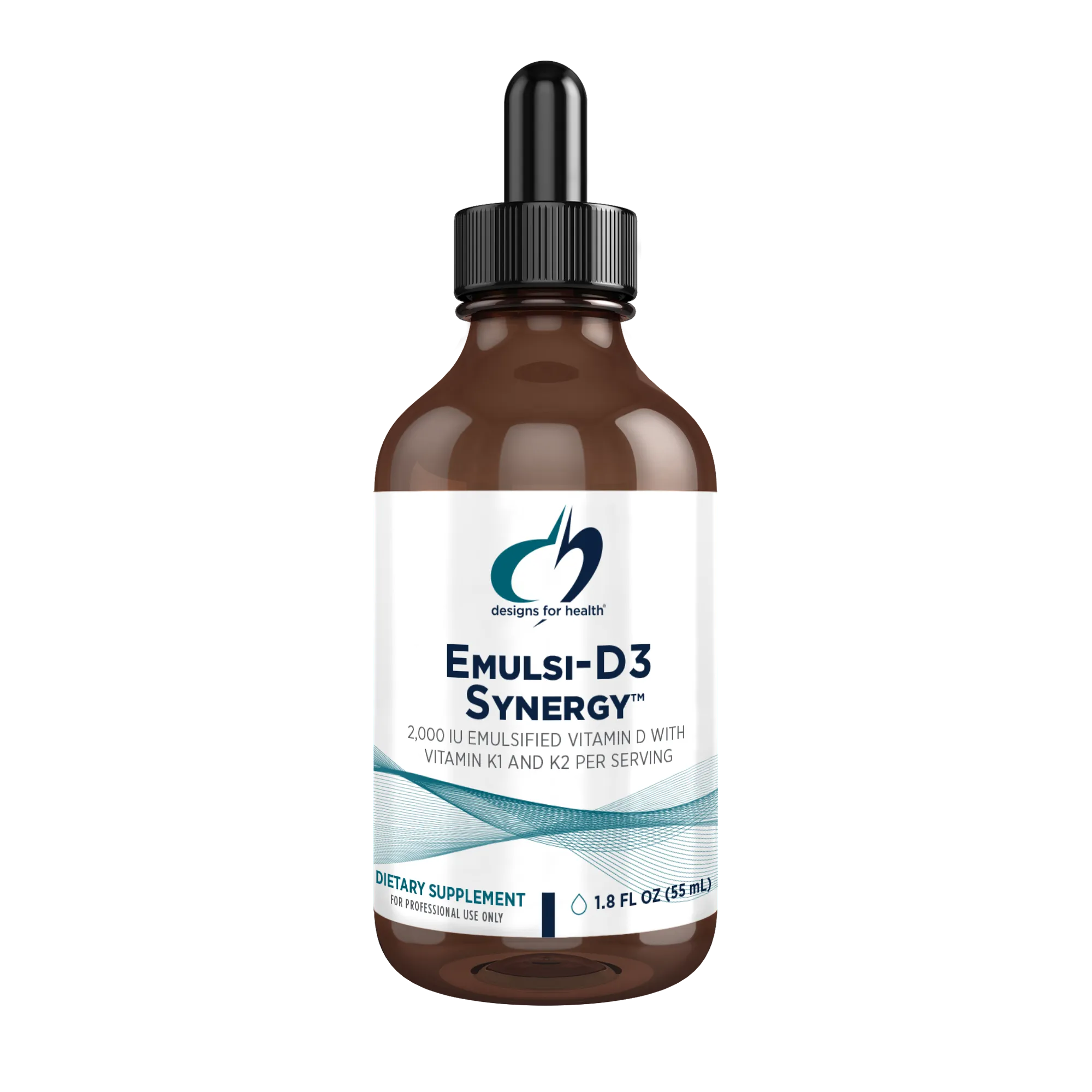
Emulsi-D3 Synergy™ provides a highly bioavailable, emulsified liquid formulation that combines 50 mcg (2,000 IU) of Vitamin D3 with 275 mcg of Vitamin K (including the long-lasting MK-7 form of K2). By delivering these nutrients together, the formula ensures that the body not only absorbs calcium efficiently but also directs it precisely where it belongs. This synergistic action is foundational for maintaining the elasticity of blood vessels, supporting robust bone architecture, and preventing the systemic inflammation that arises when calcium deposits in the wrong tissues.
How Chronic Illness Impacts Vitamin D Levels
The Toll of Long COVID on Immune Reserves
When a patient develops Long COVID, the immune system remains locked in a state of chronic, low-grade activation long after the acute virus has cleared. Recent clinical reviews suggest that this persistent immune dysregulation, potentially driven by viral reservoirs or spike-protein interactions, places an enormous metabolic demand on the body's nutritional reserves. Vitamin D is rapidly consumed during this process because it is required to produce antimicrobial peptides and regulate T-cell responses. As the immune system continuously draws upon the body's Vitamin D stores to fight off perceived threats, circulating levels plummet, leaving the patient severely depleted and vulnerable to further immune dysfunction.
This depletion is not merely a byproduct of the illness; it actively drives the pathology forward. A 2025 prospective study analyzing COVID-19 survivors found that patients with Vitamin D deficiency at hospital discharge had a 1.8 to 2.35 times higher odds of reporting Long COVID symptoms six months later. Even more strikingly, another recent analysis revealed that patients who developed Long COVID had significantly lower median Vitamin D levels compared to those who recovered fully, with deficiency increasing the odds of developing Long COVID signs and symptoms by 5.80 times. This data highlights how critical this hormone is for understanding Long COVID symptoms and immune recovery.
Deconditioning and Deficiency in ME/CFS and POTS
For individuals living with myalgic encephalomyelitis/chronic fatigue syndrome (ME/CFS) and Postural Orthostatic Tachycardia Syndrome (POTS), the barriers to maintaining adequate Vitamin D levels are both environmental and physiological. The hallmark symptom of ME/CFS is post-exertional malaise (PEM), a severe exacerbation of symptoms following minimal physical or cognitive exertion. This debilitating symptom often renders patients housebound or bedbound, completely eliminating their primary source of natural Vitamin D synthesis: sunlight. As a result, studies consistently show that the ME/CFS population is at a highly elevated risk for severe hypovitaminosis D, which compounds their baseline fatigue with secondary muscle weakness and bone pain.
In the context of dysautonomia and POTS, the situation is equally concerning. A study published in Circulation evaluating 180 POTS patients found that 51% of the cohort had severe Vitamin D3 deficiency (under 20 ng/mL), while 56% had insufficient levels. Researchers hypothesize that this widespread deficiency may be linked to cardiovascular deconditioning, as patients with orthostatic intolerance naturally avoid upright activities and outdoor exercise. However, this creates a dangerous feedback loop: the less time spent upright outdoors, the lower the Vitamin D levels drop, which in turn worsens the autonomic dysfunction and makes standing even more difficult.
The Vicious Cycle of Inflammation and Depletion
The intersection of chronic inflammation and nutrient depletion creates a self-perpetuating cycle that is incredibly difficult to break. When Vitamin D levels fall below optimal thresholds, the immune system loses its primary "brake pedal." This allows for the unchecked release of pro-inflammatory cytokines, such as tumor necrosis factor-alpha (TNF-α) and interleukin-6 (IL-6). This systemic inflammation damages the endothelial lining of the blood vessels, increases oxidative stress, and impairs mitochondrial energy production.
Furthermore, chronic inflammation directly interferes with the body's ability to utilize the Vitamin D it does have. Inflammatory cytokines can downregulate the expression of Vitamin D receptors (VDRs) on cell membranes, meaning that even if there is adequate Vitamin D circulating in the blood, the cells become "resistant" to its signaling. This cellular resistance is a key factor in what causes Long COVID to persist for months or years, as the body becomes trapped in a state of hyper-reactivity and metabolic exhaustion that cannot be resolved without targeted, highly bioavailable nutritional intervention.
Emulsi-D3 Synergy™: Supporting Immune and Autonomic Function
Mast Cell Stabilization and Histamine Regulation
Mast Cell Activation Syndrome (MCAS) is a frequent and debilitating comorbidity for patients with Long COVID, ME/CFS, and dysautonomia. In a healthy body, mast cells release histamine and other chemical mediators only when encountering a genuine threat. In MCAS, these cells become hyper-reactive, degranulating inappropriately and flooding the body with inflammatory chemicals. Vitamin D acts as a potent, natural mast cell stabilizer. Mast cells are heavily equipped with Vitamin D Receptors (VDRs), and when Vitamin D binds to these receptors, it sends a powerful calming signal directly to the cell's nucleus, altering its genetic expression to prevent spontaneous degranulation.
At the molecular level, a landmark 2017 study demonstrated that the Vitamin D Receptor forms a physical complex with a specific protein kinase called Lyn. This VDR-Lyn complex actively prevents Lyn from binding to the IgE antibody receptor (FcεRI) on the surface of the mast cell. By blocking this connection, Vitamin D effectively short-circuits the biological pathway that normally triggers the release of histamine. Furthermore, research published in the Journal of Allergy and Clinical Immunology revealed that mast cells contain the CYP27B1 enzyme, allowing them to convert inactive Vitamin D into its active hormonal form internally. This proves that mast cells rely heavily on this specific nutrient to regulate themselves, making Vitamin D supplementation a foundational strategy for managing MCAS flare-ups.
Autonomic Nervous System Modulation
The autonomic nervous system (ANS) relies on a delicate balance of neurotransmitters to regulate heart rate, blood pressure, and blood vessel constriction. In conditions like POTS, this system is severely dysregulated, often resulting in extreme tachycardia (rapid heart rate) upon standing. Vitamin D plays a surprising but critical role in modulating this sympathetic (fight-or-flight) response. It is a neuroactive hormone that directly influences the production and balance of catecholamines, the chemical messengers that drive the autonomic nervous system.
Specifically, animal studies and clinical research indicate that Vitamin D is required for the optimal activity of an enzyme called PNMT (phenylethanolamine N-methyltransferase). This enzyme is responsible for converting norepinephrine into epinephrine. When a patient is deficient in Vitamin D, PNMT activity drops, leading to a relative excess of norepinephrine pooling in the system. This catecholamine imbalance causes alpha-1 adrenergic resistance, meaning the blood vessels fail to constrict properly when the patient stands up. To compensate for this lack of vascular constriction and the resulting drop in blood pressure, the heart is forced to beat excessively fast, triggering the hallmark tachycardia of POTS. By supporting PNMT activity, Vitamin D helps restore this crucial neurotransmitter balance.
Cardiovascular Protection via Matrix Gla Protein
While Vitamin D manages the neurological side of dysautonomia, Vitamin K2 provides essential structural support to the cardiovascular system. Patients with chronic autonomic dysfunction require highly elastic, responsive blood vessels to manage the constant shifts in blood flow required for upright posture. If the arterial walls become stiff or calcified, the autonomic nervous system cannot effectively regulate blood pressure, leading to severe orthostatic intolerance and dizziness.
Vitamin K2 protects this vital vascular elasticity by activating Matrix Gla Protein (MGP). Clinical trials have demonstrated that activated MGP is the most potent known biological inhibitor of vascular calcification. It continuously sweeps the bloodstream, binding to free calcium and preventing it from embedding into the smooth muscle tissues of the arteries. By keeping the arterial walls flexible and free of rigid calcium plaques, Vitamin K2 ensures that the blood vessels can constrict and dilate efficiently on command, providing critical structural support for patients working to manage POTS and dysautonomia.

Symptoms Emulsi-D3 Synergy™ May Help Manage
Targeted Symptom Relief
Because the combination of Vitamin D3 and K2 influences multiple systemic pathways—from immune regulation to vascular elasticity—supplementation may help manage a wide array of overlapping symptoms found in complex chronic illnesses. While not a cure, restoring these vital nutrient levels can significantly improve daily quality of life.
Post-Exertional Malaise (PEM) and Fatigue: By supporting mitochondrial health and reducing the systemic inflammatory burden, optimal Vitamin D levels help lower the metabolic cost of daily activities, potentially reducing the severity and duration of PEM crashes.
Orthostatic Tachycardia and Dizziness: Vitamin D supports the enzymatic conversion of norepinephrine to epinephrine, helping to resolve the catecholamine imbalances that drive POTS, while Vitamin K2 maintains the arterial elasticity required for proper blood pressure regulation upon standing.
Brain Fog and Neurocognitive Issues: Vitamin D receptors are densely packed in the brain's hippocampus. By lowering neuroinflammation and supporting vascular health, this synergistic pair helps protect delicate cerebral blood flow, mitigating the memory impairment and cognitive slowing commonly seen in Long COVID.
Bone and Deep Muscle Pain: Severe Vitamin D deficiency directly causes osteomalacia (softening of the bones) and myopathy (muscle weakness). Supplementing D3 with K2 ensures calcium is properly routed into the skeletal matrix, alleviating the deep, aching bone and muscle pain that often mimics or exacerbates fibromyalgia.
Mast Cell Flare-ups and Histamine Intolerance: By physically binding to mast cell receptors and preventing the Lyn kinase complex from triggering degranulation, Vitamin D acts as a natural stabilizer, reducing the frequency of allergic-type reactions, flushing, and gastrointestinal distress associated with MCAS.
Practical Considerations: Forms, Dosing, and Absorption
The Advantage of Emulsified Liquid Delivery
When dealing with complex chronic illnesses, the gastrointestinal tract is often severely compromised. Conditions like Long COVID and dysautonomia frequently cause gastroparesis, altered gut motility, and malabsorption issues. Because Vitamins D and K are fat-soluble, standard capsule supplements require a robust digestive process—including the release of sufficient bile salts from the gallbladder and lipases from the pancreas—to be properly broken down and absorbed. For patients with autonomic gut dysfunction, these standard pills often pass through the digestive tract largely unabsorbed, rendering them ineffective.
Emulsi-D3 Synergy™ circumvents this problem by utilizing an emulsified liquid delivery system. Emulsification is a process that breaks the fat-soluble vitamins down into microscopic, water-soluble micelles. This pre-digested format bypasses the need for heavy bile and pancreatic enzyme action, allowing the nutrients to be rapidly and passively absorbed directly through the mucosal lining of the digestive tract. This ensures that even patients with severe gastrointestinal distress or malabsorption syndromes can achieve therapeutic blood levels efficiently.
Understanding MK-7 vs. Other Forms of K2
Not all forms of Vitamin K2 are created equal, and their biological efficacy depends heavily on their molecular structure. The two most common forms found in supplements are Menaquinone-4 (MK-4) and Menaquinone-7 (MK-7). While MK-4 is synthesized in animal tissues and has a very short half-life in the human body (requiring multiple doses throughout the day to maintain steady blood levels), MK-7 is derived from bacterial fermentation and possesses a much longer molecular tail.
This structural difference is clinically significant. Pharmacokinetic studies show that MK-7 remains active in the bloodstream for up to 72 hours after ingestion. This extended half-life means that a single daily dose of Emulsi-D3 Synergy™ provides continuous, round-the-clock activation of Matrix Gla Protein and Osteocalcin. This steady state of activation is crucial for patients with cardiovascular and autonomic dysfunction, as it ensures uninterrupted protection against arterial calcification and consistent support for calcium metabolism.
Timing, Co-factors, and Safety Precautions
To maximize the absorption of Emulsi-D3 Synergy™, it is best taken with a meal that contains healthy fats, such as avocado, olive oil, or nuts, which further stimulates the body's natural lipid absorption pathways. Because Vitamin D significantly increases the uptake of calcium, functional medicine practitioners often recommend ensuring adequate Magnesium intake alongside this supplement. Magnesium is a vital co-factor required for the activation of Vitamin D in the kidneys, and a deficiency in magnesium can actually blunt the therapeutic effects of Vitamin D supplementation.
While generally safe and well-tolerated, there is one critical safety contraindication for this supplement. Because Vitamin K plays a role in the blood coagulation cascade, Vitamin K2 supplements are strictly contraindicated for individuals taking Vitamin K antagonist blood thinners, such as Warfarin (Coumadin). Taking K2 will directly neutralize the drug's anti-clotting mechanism. Additionally, patients should work with their healthcare provider to periodically monitor their Serum 25-hydroxyvitamin D [25(OH)D] levels to ensure they stay within an optimal therapeutic range and avoid the risks of hypercalcemia (excess calcium in the blood).

Follow the Science
The 2025 Breakthrough Trial in Long COVID
The clinical understanding of Vitamin D and K2 in post-viral syndromes took a massive leap forward with a groundbreaking randomized controlled trial published in the journal Nutrients in January 2025. In this highly anticipated study, researchers at University Hospitals (Cleveland) enrolled 151 patients suffering from severe Long COVID. The treatment group received a daily synergistic combination of Vitamin K2 MK-7 (240 µg) and Vitamin D3 (50 µg / 2000 IU) over a 24-week period. The results were remarkably positive, providing concrete evidence for this targeted intervention.
The researchers found that the K2/D3 combination therapy resulted in a statistically significant reduction in the total number of Long COVID symptoms compared to the placebo group. Most notably, patients reported profound improvements in body pain and post-exertional malaise (PEM). Blood biomarker analysis revealed the underlying mechanisms behind this relief: the treatment effectively decreased systemic inflammatory markers, lowered oxidized LDL levels, and significantly reduced markers of "gut permeability" and fungal translocation. This study firmly established that the D3/K2 synergy addresses the root inflammatory and mucosal barrier dysfunctions that drive Long COVID pathology.
Evidence in Post-Vaccination ME/CFS
Parallel to the Long COVID findings, researchers in Japan have been investigating the impact of Vitamin D on patients who develop ME/CFS criteria following COVID-19 vaccination. A June 2025 retrospective study published in Nutrition examined 28 such patients, finding that 27 of them had insufficient or deficient Vitamin D levels at their initial visit (mean of 16 ng/mL). The researchers implemented a comprehensive Vitamin D replacement therapy protocol, successfully raising the patients' blood levels to an average of 28 ng/mL.
The clinical outcomes of this replacement therapy were striking. Following the intervention, 82% of the cohort (23 out of 28 patients) experienced such significant symptom reduction that they no longer met the strict diagnostic criteria for ME/CFS. The most dramatic improvements were seen in sleep disturbances, which improved by 71%, and autonomic symptoms, which saw a 68% improvement rate. These findings strongly support the hypothesis that correcting severe Vitamin D deficiency is a mandatory step in managing fatigue with Long COVID and post-vaccination ME/CFS.
Arterial Health and The Rotterdam Study
The cardiovascular benefits of Vitamin K2, which are crucial for dysautonomia patients, are best illustrated by the benchmark Rotterdam Study. This massive, population-based prospective study followed over 4,800 adults for up to 11 years, meticulously tracking their dietary intake of Vitamin K and their cardiovascular outcomes. The researchers discovered a profound inverse relationship between Vitamin K2 consumption and arterial disease, a correlation that was notably absent for Vitamin K1.
The data revealed that participants consuming the highest amounts of Vitamin K2 (at least 32 mcg/day) experienced a staggering 50% reduction in severe aortic calcification and a 50% reduction in cardiovascular death compared to those consuming the least. Furthermore, overall all-cause mortality was reduced by 25% in the high K2 group. This study, alongside subsequent clinical trials like the AVADEC trial, cemented the medical consensus that Vitamin K2 is an indispensable nutrient for maintaining the elastic, compliant blood vessels required for optimal autonomic and cardiovascular health.
The Path Forward
Integrating D3/K2 into Your Management Plan
Living with invisible, complex chronic illnesses like Long COVID, ME/CFS, and dysautonomia is an exhausting journey. When your body feels like it is constantly working against you, and your symptoms fluctuate unpredictably from day to day, finding validating, science-backed management strategies is crucial. It is important to remember that no single supplement is a magic cure for these deeply complex neuroimmune conditions. Recovery and symptom management require a comprehensive, multi-faceted approach that includes aggressive resting, strict pacing, nervous system regulation, and targeted medical care.
However, optimizing your foundational biochemistry is a powerful step in taking back control of your health. By addressing widespread deficiencies and supporting your body with the synergistic power of Vitamin D3 and K2, you are providing your cells with the exact molecular tools they need to stabilize mast cells, regulate autonomic neurotransmitters, and protect vascular elasticity. Emulsi-D3 Synergy™ offers a highly bioavailable, gentle way to restore these critical reserves, even when your digestive system is compromised.
As always, we strongly encourage you to work closely with your healthcare provider to monitor your blood levels and ensure this supplement fits safely into your broader treatment protocol. If you are ready to explore how this synergistic blend can support your immune and cardiovascular health, you can learn more below.
Sources
Association Between Vitamin D Levels and Long COVID Signs and Symptoms (MDPI, 2025)
Abstract 121: Vitamin D Deficiency in Postural Orthostatic Tachycardia Syndrome (Circulation, 2014)
Vitamin D3 maintains mast cell stability by repressing Lyn-dependent signaling (Allergy, 2017)
Is Vitamin D Deficiency Implicated in Autonomic Dysfunction? (Cureus / PMC, 2017)
Menaquinone-7 absorption and metabolism in healthy adults (PMC, 2012)