Can Electrolytes and D-Ribose Support Hydration and Energy in Long COVID?
March 5, 2026
ElectroPure HydrationLong COVIDPOTS
Share:
Disclaimer: The information provided here is for educational purposes only and is not intended as medical advice. It should not be used to diagnose, treat, cure, or prevent any medical condition. Instead, use it as a starting point for discussion with your healthcare provider. Always consult with a qualified healthcare provider before starting any new medication, supplement, device, or making changes to your health regimen.
For individuals living with complex chronic conditions like Long COVID, myalgic encephalomyelitis/chronic fatigue syndrome (ME/CFS), and dysautonomia, the simple act of standing up or completing a minor household task can trigger a cascade of debilitating symptoms. You might experience a racing heart, profound dizziness, or a sudden drain of energy that leaves you housebound for days. These are not signs of deconditioning or anxiety; they are the physiological realities of autonomic nervous system dysfunction and cellular energy failure. When your body cannot properly regulate blood volume or produce enough energy at the mitochondrial level, every system struggles to keep up.
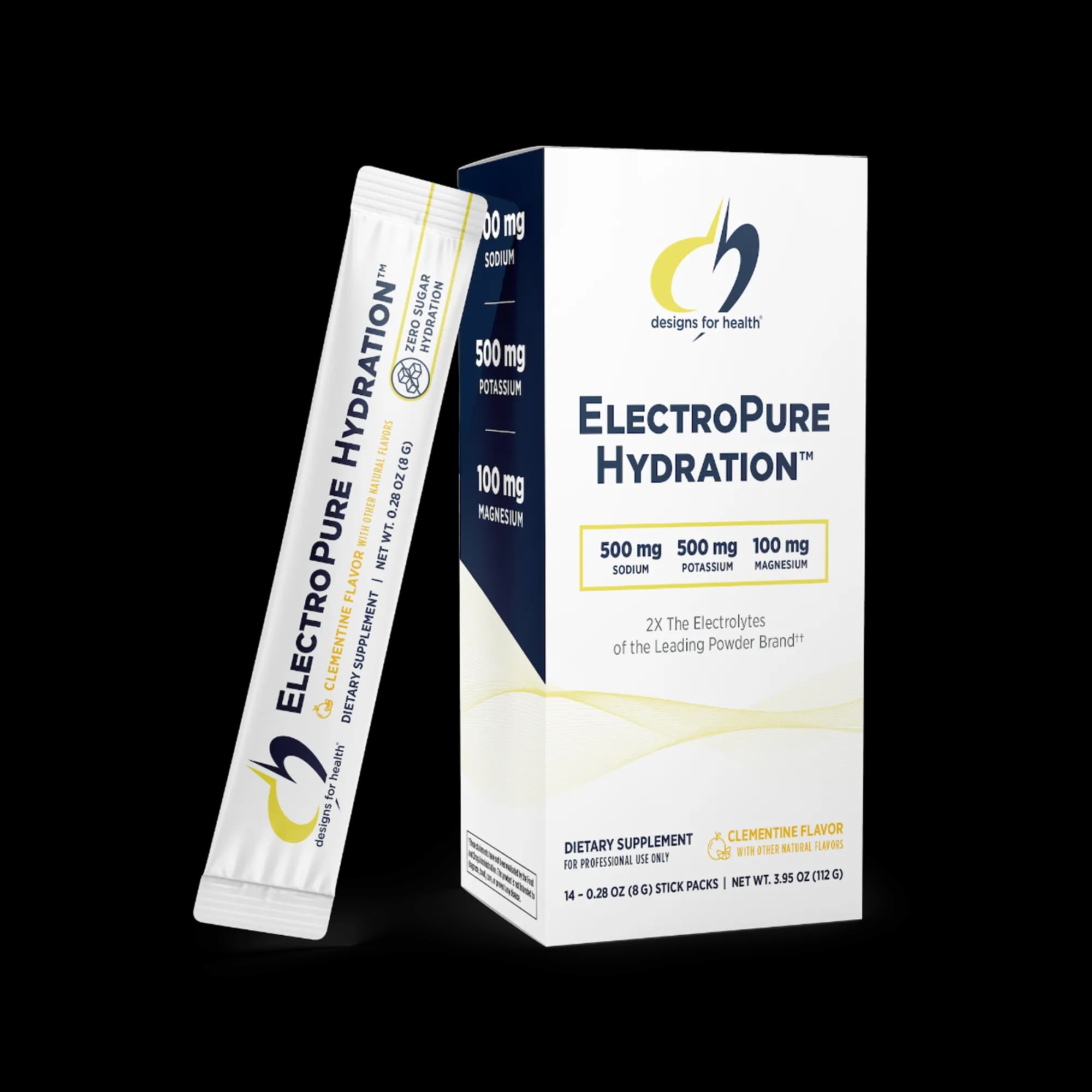
One of the most foundational, yet frequently misunderstood, management strategies for these conditions involves aggressive hydration and targeted metabolic support. It is not just about drinking plain water. True cellular hydration requires a precise balance of electrolytes—specifically sodium and potassium—to maintain blood volume, alongside specific nutrients that fuel the mitochondria. This is where comprehensive formulas like ElectroPure Hydration™ Clementine come into play. By combining a full spectrum of electrolytes with D-ribose, vitamin C, and highly bioavailable magnesium bisglycinate, this formulation addresses multiple overlapping mechanisms of chronic illness, from hypovolemia in Postural Orthostatic Tachycardia Syndrome (POTS) to the cellular energy deficits seen in ME/CFS.
TL;DR
Proper hydration requires a balance of sodium and potassium to support blood volume and vascular tone.
D-ribose may help bypass cellular energy deficits, supporting faster recovery from post-exertional malaise.
Vitamin C and zinc provide antioxidant support to protect blood vessels and improve microvascular blood flow.
Always consult your doctor before starting high-dose electrolyte protocols, especially if you have kidney or heart conditions.
What is ElectroPure Hydration™?
The Foundation of Cellular Hydration and Fluid Balance
To understand how a comprehensive electrolyte formula functions, we must first look at how the body maintains fluid balance at the cellular level. In a healthy body, hydration is not dictated merely by the amount of water consumed, but by the precise concentration of mineral ions—electrolytes—inside and outside the cells. The most critical of these are sodium and potassium. These two minerals operate the sodium-potassium pump (Na+/K+-ATPase), an enzyme found in the membrane of every human cell. This pump constantly moves sodium out of the cell and potassium into the cell, a process that consumes a massive amount of cellular energy but is absolutely vital for maintaining cellular volume, generating electrical nerve impulses, and regulating muscle contractions.
When this delicate balance is maintained, the body can effectively hold onto water in the bloodstream, ensuring adequate blood volume and vascular tone. This allows the heart to pump blood efficiently against gravity, delivering oxygen and nutrients to the brain and other vital organs. Chloride, another essential electrolyte, works alongside sodium to maintain osmotic pressure and acid-base balance in the blood. Without sufficient electrolytes, drinking plain water can actually dilute the blood's mineral concentration, prompting the kidneys to excrete the excess water and leaving the body paradoxically dehydrated at the cellular level.
The Role of D-Ribose in ATP Production
Beyond basic fluid balance, the body requires a constant supply of energy to function. This energy is stored and transported in the form of adenosine triphosphate (ATP), often referred to as the molecular currency of the cell. ATP is synthesized within the mitochondria, the powerhouses of the cells. A crucial structural component of the ATP molecule is a five-carbon sugar called D-ribose. In a healthy metabolic state, the body synthesizes its own D-ribose from glucose through a complex biochemical route known as the pentose phosphate pathway.
However, certain tissues—particularly the heart and skeletal muscles—lack high concentrations of the specific enzymes, such as glucose-6-phosphate dehydrogenase, required to quickly drive this pathway. Under normal conditions, this slow production rate is sufficient. But when cells are subjected to severe metabolic stress, viral infections, or chronic inflammation, ATP is rapidly depleted and breaks down into metabolic byproducts that are washed out of the cell. Because the body cannot synthesize D-ribose fast enough to rebuild these lost ATP molecules, the cells enter a state of profound energy bankruptcy, leading to severe and prolonged fatigue.
Antioxidant Defense and Endothelial Support
The final foundational pillar of cellular health involves protecting the structural integrity of the blood vessels and tissues from oxidative damage. The endothelium is the delicate, single-cell layer that lines the entire vascular system. It is responsible for producing nitric oxide (NO), a signaling molecule that tells blood vessels to dilate and relax, ensuring smooth blood flow. This process requires specific cofactors and a robust antioxidant defense system to protect the endothelial cells from reactive oxygen species (ROS)—unstable molecules that cause cellular damage.
Vitamin C and zinc are two of the body's most potent endogenous antioxidant supporters. Vitamin C is a water-soluble antioxidant that directly scavenges free radicals in the bloodstream and protects tetrahydrobiopterin (BH4), a crucial cofactor needed by the enzyme endothelial nitric oxide synthase (eNOS) to produce nitric oxide. Zinc, meanwhile, is a mandatory structural component for over 300 enzymes, including superoxide dismutase (SOD), one of the body's primary internal antioxidant enzymes. Together, these nutrients maintain the structural integrity of the vascular system, ensuring that oxygen and electrolytes can be efficiently delivered to tissues throughout the body.