Can DHEA Support Energy and Brain Fog in Long COVID and ME/CFS?
March 5, 2026
DHEALong COVIDME/CFS
Share:
Disclaimer: The information provided here is for educational purposes only and is not intended as medical advice. It should not be used to diagnose, treat, cure, or prevent any medical condition. Instead, use it as a starting point for discussion with your healthcare provider. Always consult with a qualified healthcare provider before starting any new medication, supplement, device, or making changes to your health regimen.
Months or even years after a viral infection, many individuals find themselves battling an invisible, debilitating exhaustion that sleep simply cannot fix. If you are living with Long COVID, myalgic encephalomyelitis/chronic fatigue syndrome (ME/CFS), or dysautonomia, you are likely intimately familiar with this profound lack of energy, the cognitive haze of brain fog, and the unpredictable nature of post-exertional malaise (PEM). When your body feels like a battery that refuses to hold a charge, it is natural to search for the biological root cause of this systemic drain. Increasingly, medical researchers and endocrinologists are turning their attention to the body's central stress response system—the hypothalamic-pituitary-adrenal (HPA) axis—and a vital, naturally occurring hormone known as dehydroepiandrosterone, or DHEA.
DHEA is often referred to as the "youth hormone" or a "prohormone" because of its role in generating other essential sex hormones like testosterone and estrogen. However, reducing DHEA to a mere stepping stone drastically underestimates its power. DHEA is a potent neurosteroid and immune modulator that directly influences how our cells produce energy, how our blood vessels constrict, and how our brain protects itself from neuroinflammation. In the context of complex chronic illnesses, where the body is locked in a state of chronic stress and immune dysregulation, the adrenal glands can become exhausted, leading to a precipitous drop in DHEA levels. In this comprehensive guide, we will explore the intricate biochemistry of DHEA, how conditions like Long COVID trigger ME/CFS through adrenal dysfunction, and whether micronized DHEA supplementation might be a missing link in your symptom management strategy.
What is DHEA?
Dehydroepiandrosterone (DHEA) is a pleiotropic, endogenous C-19 steroid hormone. It is the most abundant circulating steroid hormone in the human body, found primarily in its stable, sulfated storage form known as DHEA-S. The vast majority of the body's DHEA is synthesized in the zona reticularis, the innermost layer of the adrenal cortex, which sits atop the kidneys. The biological journey of DHEA begins with cholesterol. Inside the mitochondria of adrenal cells, an enzyme called cytochrome P450scc (CYP11A1) cleaves cholesterol to create pregnenolone. Pregnenolone is then hydroxylated and further modified by the enzyme CYP17A1 to form raw DHEA. Once created, DHEA is rapidly converted by the enzyme sulfotransferase (SULT2A1) into DHEA-S, a hydrophilic molecule that can safely circulate in the bloodstream in high concentrations, acting as a hormonal reservoir.
Historically, endocrinologists viewed DHEA primarily as a metabolic intermediate—a "prohormone" whose sole purpose was to be converted into more potent sex steroids. When DHEA-S travels to peripheral tissues, such as adipose (fat) tissue, muscle, and the gonads, it is converted back into active DHEA by the enzyme steroid sulfatase. From there, local tissue enzymes, including 3β-hydroxysteroid dehydrogenase (3β-HSD) and aromatase, convert DHEA into potent androgens (like testosterone and dihydrotestosterone) and estrogens (like estrone and estradiol). This peripheral conversion is crucial, especially as we age, because it allows individual tissues to produce the exact amount of sex hormones they need for local repair and maintenance without relying entirely on the testes or ovaries.
Modern biochemical research has revealed that DHEA is far more than just a precursor; it possesses profound direct biological activity. At the genomic level, DHEA acts as a ligand for various nuclear hormone receptors, meaning it can enter a cell's nucleus and directly alter gene transcription. Studies have demonstrated that DHEA directly binds to and activates both estrogen receptors (ERα and ERβ) and the androgen receptor (AR). Remarkably, DHEA acts as a full agonist for ERβ, capable of inducing a maximal cellular response comparable to estradiol at physiological concentrations. Furthermore, DHEA activates the Pregnane X Receptor (PXR), a nuclear receptor heavily involved in the metabolism of xenobiotics, drugs, and the clearing of cellular toxins.
Beyond altering gene expression, DHEA rapidly modulates intracellular signaling cascades through cell-surface membrane receptors—a process known as non-genomic action. In cardiovascular tissue, such as the endothelial cells lining our blood vessels, DHEA binds to high-affinity membrane receptors coupled to specific G-proteins. This binding activates a signaling cascade involving MEK/ERK and PI3K pathways, which ultimately stimulates endothelial nitric oxide synthase (eNOS). The result is a rapid increase in nitric oxide (NO) production, triggering vasodilation, improving blood flow, and offering anti-atherosclerotic protection. Additionally, DHEA has been shown to inhibit cyclic nucleotide phosphodiesterase (PDE), leading to the intracellular accumulation of cAMP. This activates Protein Kinase A (PKA), which subsequently downregulates Sterol Regulatory Element-Binding Protein-1 (SREBP-1), effectively suppressing lipogenesis and preventing abnormal fat deposition in the liver.
Perhaps the most fascinating aspect of DHEA is its role as a "neurosteroid." While the adrenal glands produce the bulk of the body's DHEA, the brain and central nervous system (CNS) can synthesize DHEA locally de novo from cholesterol. Within the brain, DHEA and DHEA-S exhibit powerful neuroprotective, pro-cognitive, and anxiolytic (anti-anxiety) effects by interacting directly with neurotransmitter receptors. Both DHEA and DHEA-S act as non-competitive antagonists at the inhibitory γ-aminobutyric acid type A (GABA-A) receptor. By slightly reducing GABAergic inhibitory transmission, DHEA promotes a more excitatory, plastic neural environment conducive to learning and memory formation.
Furthermore, DHEA and DHEA-S are endogenous agonists for the Sigma-1 (σ1) receptor, a unique chaperone protein located in the endoplasmic reticulum of neurons. Activation of the Sigma-1 receptor promotes profound neuroprotection by mitigating cellular stress and preventing calcium overload. DHEA also acts as a positive allosteric modulator of NMDA (glutamate) receptors, optimizing synaptic transmission while simultaneously protecting neurons from NMDA-induced excitotoxicity. Finally, DHEA directly binds to Tyrosine kinase (Trk) receptors—specifically TrkA and TrkC—with exceedingly high affinity. Through this mechanism, DHEA acts as an endogenous neurotrophic factor, similar to Nerve Growth Factor (NGF), stimulating the growth of new axonal neurites and preventing neuronal apoptosis (programmed cell death). This complex web of neurosteroid activity makes DHEA a critical guardian of cognitive health and brain resilience.
How Chronic Illness Impacts the HPA Axis
To understand how chronic illnesses like Long COVID and ME/CFS dismantle the body's energy reserves, we must look at the Hypothalamic-Pituitary-Adrenal (HPA) axis. In a healthy individual, the hypothalamus senses physiological or emotional stress and releases Corticotropin-Releasing Hormone (CRH). This signals the pituitary gland to release Adrenocorticotropic Hormone (ACTH), which finally commands the adrenal glands to pump out cortisol and DHEA. Cortisol manages the acute stress response by mobilizing glucose and suppressing inflammation, while DHEA acts as the crucial counterbalance—supporting tissue repair, neuroprotection, and preventing cortisol from causing excessive catabolic (tissue-breaking) damage. This delicate balance is the foundation of human resilience.
In post-infectious syndromes, this axis frequently collapses into a state of hypofunction. When investigating what causes Long COVID, researchers have observed that severe viral infections, such as SARS-CoV-2 or Epstein-Barr Virus (EBV), can induce profound neuroinflammation that directly damages the hypothalamus or pituitary gland. This short-circuits the signaling pathway to the adrenal glands. The result is a "hypocortisolemic state"—chronically low levels of cortisol and severely blunted DHEA production. Without sufficient adrenal hormones, the body literally lacks the biochemical currency required to manage physical exertion or emotional stress, leading to the profound exhaustion and post-exertional malaise (PEM) that are hallmark symptoms of these diseases. A November 2023 prospective observational study evaluating patients with Long COVID fatigue found that 21.4% of patients exhibited clinically low DHEA-S levels, highlighting the prevalence of this adrenal suppression.
The impact of depleted adrenal hormones extends far beyond fatigue; it is intimately connected to the autonomic nervous system. Dysautonomia, particularly Postural Orthostatic Tachycardia Syndrome (POTS), is highly comorbid with Long COVID and ME/CFS. POTS is characterized by an abnormal spike in heart rate and severe lightheadedness upon standing. There is a direct pathophysiological link between adrenal hypofunction and autonomic instability. When the adrenal glands fail to produce adequate amounts of hormones, patients often suffer from secondary hypovolemia (low blood volume) and poor vascular tone. Because the blood vessels cannot properly constrict to push blood up to the brain against gravity, the body triggers a massive reflex tachycardia (rapid heart rate) to prevent fainting.
Furthermore, when the HPA axis is functionally exhausted due to chronic viral stress, the body attempts to compensate by over-relying on the sympathetic nervous system—the "fight or flight" response. This constant dumping of norepinephrine to maintain basic blood pressure induces a hyperadrenergic state, causing tremors, sweating, anxiety, and worsening orthostatic intolerance. DHEA deficiency exacerbates this autonomic chaos. Because DHEA normally stimulates endothelial nitric oxide synthase (eNOS) to regulate healthy vasodilation and blood flow, its absence leaves the vascular system rigid and unresponsive to postural changes, deepening the severity of dysautonomia symptoms.
Mast Cell Activation Syndrome (MCAS) is another frequent companion to Long COVID and ME/CFS, characterized by the inappropriate release of histamine and inflammatory cytokines from mast cells. The relationship between DHEA and mast cells is a fascinating and complex paradox. On one hand, DHEA acts as a broad immunomodulator that helps maintain the Th1/Th2 immune balance and attenuates the production of pro-inflammatory mediators in macrophages. Research has shown that DHEA can mitigate classical IgE-mediated mast cell degranulation, suppressing the influx of intracellular calcium and decreasing the release of inflammatory markers. In this context, optimal DHEA levels act as a stabilizing force, buffering the immune system against hyper-reactivity.
However, the downstream metabolism of DHEA dictates its ultimate effect on MCAS. Because DHEA is a precursor hormone, it converts into either androgens (testosterone) or estrogens (estradiol). Androgens generally temper the immune system and stabilize mast cells. Estrogen, conversely, is a potent mast cell stimulator. It acts via the ERα receptor to directly enhance mast cell degranulation. For patients with MCAS, estrogen spikes frequently trigger severe flares, hives, and systemic inflammation. If a patient's body preferentially aromatizes DHEA into estrogen, supplementing DHEA could inadvertently worsen MCAS symptoms. Furthermore, studies reveal that DHEA-S can bind to a specific Gq/11 protein-coupled membrane receptor on mast cells, triggering rapid, direct degranulation. This paradox underscores why DHEA cannot be viewed as a simple "cure-all" and must be approached with precision in patients with complex immune dysregulation.
DHEA: Supporting Endocrine and Cellular Function
When navigating the complexities of what drugs are used for COVID long haulers and ME/CFS patients, supporting endocrine balance is often a primary clinical focus. DHEA supplementation aims to correct the disrupted cortisol-to-DHEA ratio that drives chronic fatigue. In a state of chronic illness, even if absolute cortisol levels are low, the ratio of cortisol to DHEA is often heavily skewed toward cortisol. Cortisol is inherently catabolic—it breaks down tissues to mobilize rapid energy. DHEA is anabolic—it promotes cellular repair, protein synthesis, and recovery. By supplementing DHEA, the goal is to buffer the tissue-damaging effects of chronic stress, providing the biological raw materials needed for the body to shift from a state of constant survival and degradation into a state of healing and regeneration.
This anabolic support is particularly crucial for muscle function and energy metabolism. DHEA influences mitochondrial energy production by modulating lipid metabolism and supporting the integrity of cellular membranes. By activating the cAMP/PKA signaling pathway, DHEA helps regulate how cells utilize fats for sustained energy, rather than relying solely on rapid glucose metabolism. For patients experiencing severe post-exertional malaise (PEM), where the cellular "batteries" drain rapidly upon minimal exertion, restoring DHEA levels may help stabilize the baseline energy reserves required for basic daily functioning.
Cognitive dysfunction, commonly described as "brain fog," is one of the most debilitating symptoms of Long COVID and ME/CFS. DHEA's role as a neurosteroid positions it as a powerful tool for supporting cognitive clarity. Because DHEA and DHEA-S readily cross the blood-brain barrier (and are synthesized locally in the CNS), they directly interact with the neural networks responsible for memory, focus, and emotional regulation. By acting as an agonist at the Sigma-1 receptor, DHEA helps mitigate endoplasmic reticulum stress within neurons, a key driver of neuroinflammation and cognitive fatigue.
Furthermore, DHEA's ability to bind to TrkA and TrkC neurotrophin receptors effectively mimics the action of Nerve Growth Factor. This means that DHEA actively stimulates the growth of new synaptic connections and protects existing neurons from the excitotoxic damage often caused by chronic neuroinflammation. By modulating NMDA receptors and slightly dampening the inhibitory tone of GABA-A receptors, DHEA fosters a neural environment that is more alert, plastic, and capable of processing information efficiently. This multimodal neuroprotective action helps explain why clinical trials have noted significant improvements in memory, thinking, and anxiety when DHEA levels are optimized in deficient patients.
For patients battling dysautonomia and POTS, vascular health is paramount. DHEA offers significant cardiovascular support through its direct non-genomic actions on the endothelium—the inner lining of blood vessels. By binding to specific G-protein-coupled receptors on endothelial cells, DHEA rapidly activates the PI3K/Akt pathway, leading to the stimulation of endothelial nitric oxide synthase (eNOS). This enzyme is responsible for producing nitric oxide (NO), a crucial signaling molecule that commands blood vessels to dilate and relax.
In the context of orthostatic intolerance, where blood vessels often struggle to maintain appropriate tone and flow when a patient stands up, optimal nitric oxide production is vital for preventing the pooling of blood in the lower extremities. By enhancing endothelial function and promoting healthy vasodilation, DHEA helps stabilize blood pressure dynamics and improves cerebral perfusion (blood flow to the brain). This improved vascular responsiveness can directly translate to a reduction in the dizziness, lightheadedness, and reflex tachycardia that characterize POTS and related autonomic disorders.
Chronic illnesses like ME/CFS and Long COVID are increasingly viewed through the lens of autoimmunity and persistent immune activation. DHEA plays a critical role in modulating this hyperactive immune response. It helps regulate the delicate balance between Th1 (cellular immunity) and Th2 (humoral immunity) responses. In many chronic fatigue states, there is a dominant, dysfunctional Th2 shift that drives systemic inflammation and allergic hyper-reactivity. DHEA supplementation has been shown to help restore this balance, dampening the excessive production of pro-inflammatory cytokines like IL-6 and TNF-alpha by macrophages.
Recent immunological models, such as the "Hypocortisolemic ASIA" (Autoimmune/Inflammatory Syndrome Induced by Adjuvants) model, propose that chronic viral infections exhaust the adrenal glands, leading to autoimmune hypocortisolism. In this state, the lack of cortisol and DHEA removes the body's natural "brakes" on the immune system, allowing inflammation to run rampant. By carefully replenishing DHEA alongside comprehensive medical management, practitioners aim to restore these natural immune brakes, reducing the systemic inflammatory burden that perpetuates the cycle of chronic illness.

Symptoms DHEA May Help Manage
Because DHEA acts systemically across the endocrine, nervous, and cardiovascular systems, restoring optimal levels can have a wide-ranging impact on the complex symptom clusters seen in chronic illness. While DHEA is not a cure, clinical evidence and functional medicine practice suggest it may help manage the following symptoms in patients with confirmed adrenal hypofunction:
Profound Fatigue and Post-Exertional Malaise (PEM): By restoring the anabolic-to-catabolic hormone balance and supporting mitochondrial lipid metabolism, DHEA provides the cellular raw materials needed to rebuild energy reserves and improve baseline stamina, potentially reducing the severity of PEM crashes.
Brain Fog and Cognitive Dysfunction: Acting as a potent neurosteroid, DHEA crosses the blood-brain barrier to activate Sigma-1 and Trk receptors, promoting neuroprotection, stimulating new synaptic connections, and clearing the neuroinflammation that causes memory lapses and poor concentration.
Orthostatic Intolerance and POTS: Through the rapid activation of endothelial nitric oxide synthase (eNOS), DHEA improves vascular tone, vasodilation, and cerebral blood flow, helping to stabilize blood pressure and reduce the dizziness and rapid heart rate associated with standing.
Mood Disturbances and Anxiety: By acting as a non-competitive antagonist at GABA-A receptors and modulating NMDA receptor activity, DHEA fosters a more resilient, plastic neural environment, which clinical trials have shown can significantly reduce feelings of anxiety, depression, and helplessness.
Joint and Muscle Pain: DHEA's ability to modulate the Th1/Th2 immune balance and suppress the production of pro-inflammatory cytokines by macrophages helps reduce the systemic inflammatory burden that often manifests as deep, aching joint and muscle pain in ME/CFS and Long COVID.
Practical Considerations: Forms, Dosing, and Absorption
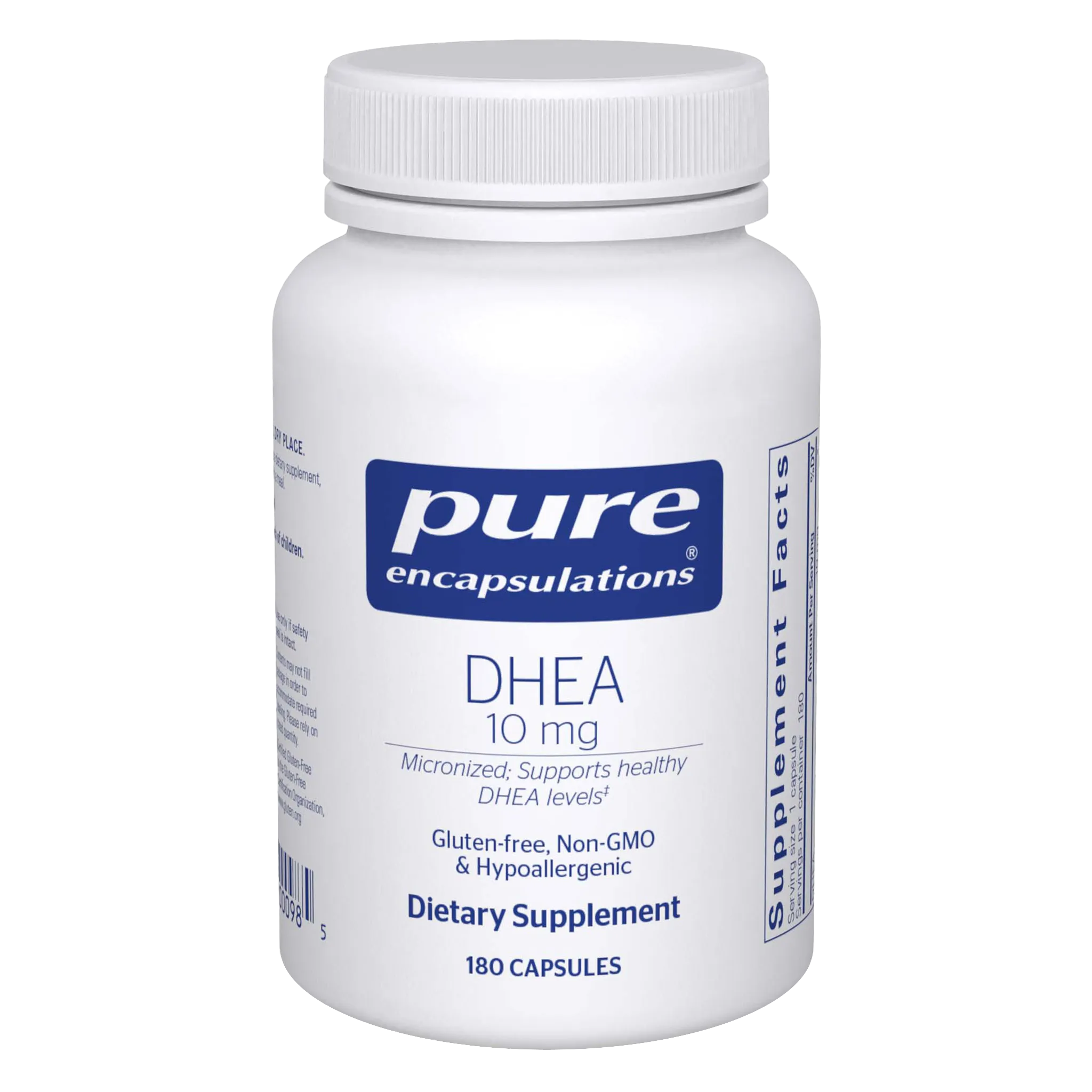
When considering DHEA supplementation, the physical form of the compound is of paramount importance. In its natural, crystalline state, DHEA is a highly lipophilic (fat-loving) molecule that is poorly soluble in water. When taken orally, standard crystalline DHEA undergoes extensive "first-pass" metabolism. This means that as it passes through the gastrointestinal tract and the liver, the vast majority of the hormone is degraded or rapidly metabolized before it can ever reach systemic circulation, resulting in a poor bioavailability of roughly 3% to 10%. To overcome this biological barrier, pharmaceutical and high-quality supplement manufacturers utilize a process called micronization.
Micronization is a mechanical process that reduces the physical particle size of the DHEA powder to microscopic dimensions. By drastically shrinking the particle size, the total surface-area-to-volume ratio is exponentially increased. This allows the micronized DHEA to dissolve rapidly in the aqueous environment of the gut, enabling swift and efficient absorption across the intestinal lining. Clinical pharmacokinetic studies by Casson et al. demonstrated that oral micronized DHEA significantly increases the Area Under the Curve (AUC) for DHEA-S compared to non-micronized forms. Crucially, micronization favors a massive, stable accumulation of the DHEA-S reservoir while mathematically diminishing the unpredictable, rapid bioconversion into raw testosterone, making it a much safer and more predictable option for long-term hormone support.
Because micronized DHEA is highly bioavailable, lower doses are required to achieve clinical targets compared to standard formulations. Dosing strategies generally fall into two categories: physiological and supraphysiological. Physiological dosing aims to restore circulating DHEA and DHEA-S levels to those of a healthy young adult (typically peaking around age 25). For most older adults or patients with post-viral adrenal suppression, an oral dose of 10 mg to 50 mg daily is sufficient to achieve this physiological restoration. Supraphysiological dosing (100 mg to 300 mg daily) intentionally pushes blood levels far beyond natural baselines and is generally reserved for specific, closely monitored clinical interventions, as it carries a much higher risk of side effects.
It is also vital to understand that DHEA absorption exhibits significant sex dimorphism. Pharmacokinetic research indicates that women experience a significantly higher peak concentration (Cmax) and overall absorption of oral DHEA compared to men. Following a single 200 mg dose, studies showed DHEA-S concentrations increased 21-fold in women, compared to only a 5-fold increase in men. Because of this enhanced sensitivity, women typically require lower doses (often starting at 5 mg to 10 mg) to achieve optimal balance. Regarding timing, DHEA should ideally be taken in the morning with a meal containing healthy fats to maximize absorption and to mimic the body's natural diurnal cortisol and DHEA rhythm, which peaks in the early waking hours.
While DHEA is available over-the-counter in the United States, it is a potent steroid hormone and should never be taken blindly without baseline testing and medical supervision. The primary safety concern with DHEA supplementation is its downstream conversion into active sex hormones. If a patient takes too much, or if their unique biochemistry preferentially pushes DHEA down the androgen pathway, they may experience side effects such as cystic acne, hair loss (alopecia), increased facial hair growth (hirsutism) in women, and irritability. Conversely, if DHEA aggressively aromatizes into estrogen, it can cause breast tenderness, mood swings, and weight gain.
For patients with Mast Cell Activation Syndrome (MCAS), this estrogen conversion poses a severe risk. Because estrogen directly stimulates mast cell degranulation via the ERα receptor, inappropriate DHEA supplementation in an estrogen-dominant MCAS patient can trigger massive inflammatory flares and hives. Furthermore, DHEA is strictly contraindicated for individuals with a history of hormone-sensitive cancers (such as breast, ovarian, or prostate cancer), pregnant or lactating women, and individuals with severe liver disease. Always consult with a functional medicine practitioner or endocrinologist to run comprehensive salivary or blood hormone panels before initiating DHEA therapy.

Follow the Science
The scientific investigation into DHEA for chronic fatigue states gained significant momentum in the late 1990s, driven by the discovery of HPA axis dysfunction in these patient populations. The most widely cited clinical trial investigating DHEA as a supportive intervention in ME/CFS is a 1999 pilot study conducted by Himmel and Seligman. In this prospective, 6-month trial, researchers evaluated 23 women diagnosed with CFS who exhibited suboptimal baseline DHEA-S levels (defined as <2.0 µg/mL). The patients were treated with an initial dose of 25 mg/day of oral DHEA, with dosages adjusted based on clinical response and follow-up blood work.
The results of this pilot study were highly promising. After six months of targeted supplementation, the patients experienced statistically significant reductions across multiple symptom domains. Fatigue decreased by 21%, anxiety plummeted by 35%, pain improved by 18%, and memory and cognitive thinking improved by 17% and 26%, respectively. However, it is crucial to note the limitations of this data. Because the study lacked a placebo control group—and because placebo effects are historically prominent in fatigue-related trials—the medical community concluded that larger, randomized controlled trials (RCTs) were necessary. Complicating the landscape, a subsequent 2004 study by Cleare et al. found that a subset of unmedicated CFS patients actually had higher resting DHEA levels that correlated with worse disability, underscoring that DHEA is not universally deficient in all ME/CFS patients and highlighting the absolute necessity of pre-treatment lab testing.
As the medical community races to understand how a doctor diagnoses Long COVID, the neuroendocrine parallels to ME/CFS have become impossible to ignore. Recent literature strongly suggests that the SARS-CoV-2 virus can trigger severe post-viral immune activation that damages the HPA axis. A pivotal November 2023 prospective observational study published in the journal Hormones evaluated 84 patients suffering from severe Long COVID fatigue at an outpatient clinic. The researchers discovered that 40.5% of these patients had at least one diagnosable endocrine disorder, with 21.4% specifically exhibiting clinically low DHEA-S levels.
Furthermore, researchers are investigating the phenomenon of post-steroid adrenal suppression in Long COVID cohorts. During acute, severe COVID-19 infections, many patients are treated with life-saving, high-dose corticosteroids like dexamethasone. A known consequence of prolonged corticosteroid use is the suppression of the pituitary gland's ACTH production, which effectively shuts down the adrenal glands' natural production of cortisol and DHEA. Case reports indicate that months after recovering from the acute virus, some patients' adrenal glands fail to "wake up," leaving them with chronically low DHEA-S and profound, lingering exhaustion.
In 2024, researchers published a groundbreaking theoretical model in Frontiers in Immunology that proposes a unifying root cause for both ME/CFS and Long COVID: Autoimmune/Inflammatory Syndrome Induced by Adjuvants (ASIA) leading to autoimmune hypocortisolism. This model suggests that a hyperactive immune system, combined with the chronic stress of a persistent viral infection, fundamentally exhausts the HPA axis. To combat this, researchers are proposing therapeutic cocktails aimed at "rebooting" the adrenal and pituitary glands. Because external corticosteroids (often used to treat severe inflammation) naturally suppress the body's own DHEA production, co-supplementing DHEA is deemed a critical component of these emerging protocols to prevent further hormonal imbalance and support systemic recovery.
The Path Forward
Living with the unpredictable, systemic drain of Long COVID, ME/CFS, or dysautonomia is an exhausting journey. If you feel like your body's battery is fundamentally broken, your experience is valid, and the emerging science surrounding HPA axis dysfunction proves that this exhaustion is deeply rooted in your biology. While DHEA is a powerful, multimodal hormone that supports energy production, neuroprotection, and vascular health, it is not a standalone cure. It is one piece of a comprehensive, medically supervised puzzle that must include aggressive rest, nervous system regulation, and precise symptom tracking.
Before adding any hormone to your regimen, it is imperative to consult with your healthcare provider to run comprehensive blood or salivary tests for DHEA-S, morning cortisol, and other vital endocrine markers. Blind supplementation can disrupt your delicate hormonal balance, but targeted, data-driven replacement of micronized DHEA may offer a crucial stepping stone toward reclaiming your energy and cognitive clarity.